-
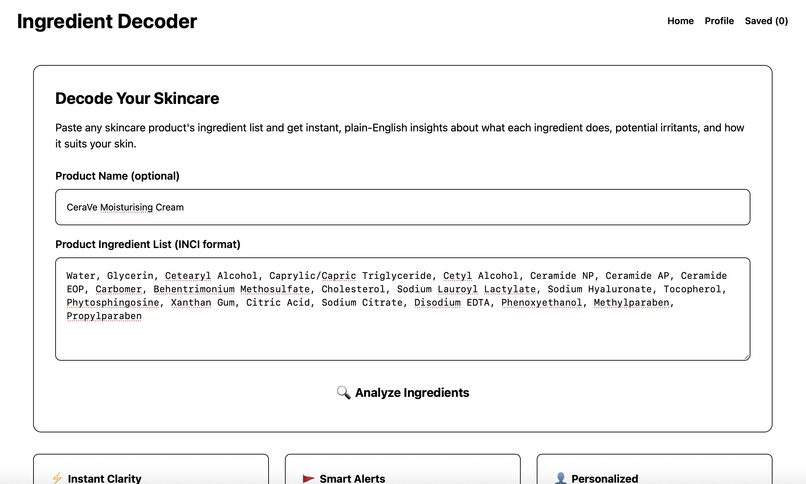
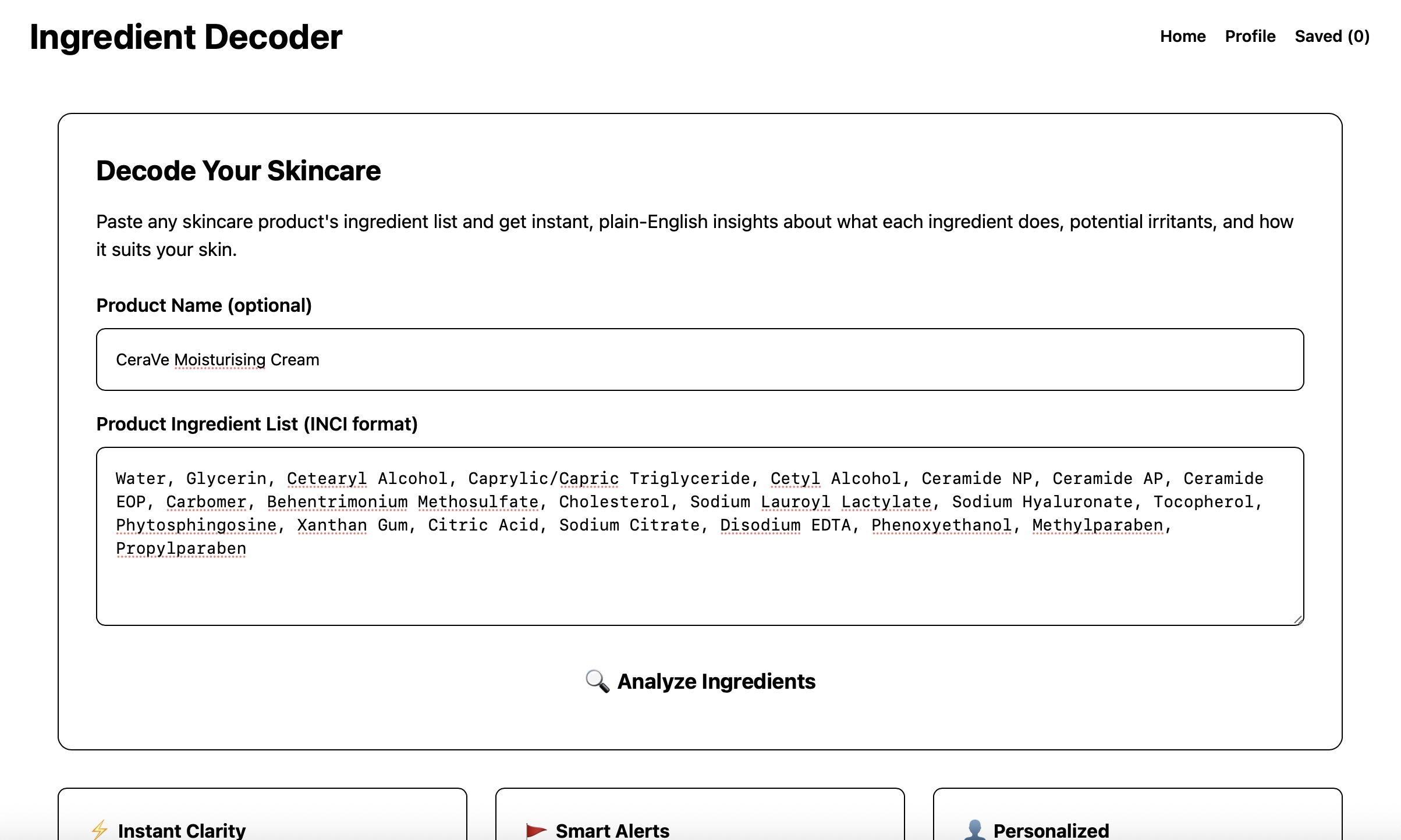
Paste any ingredient list from the product label into the decoder.
-
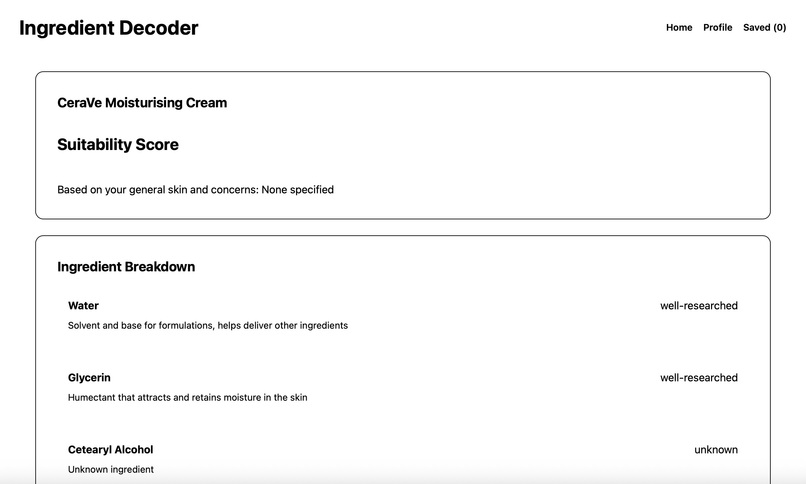
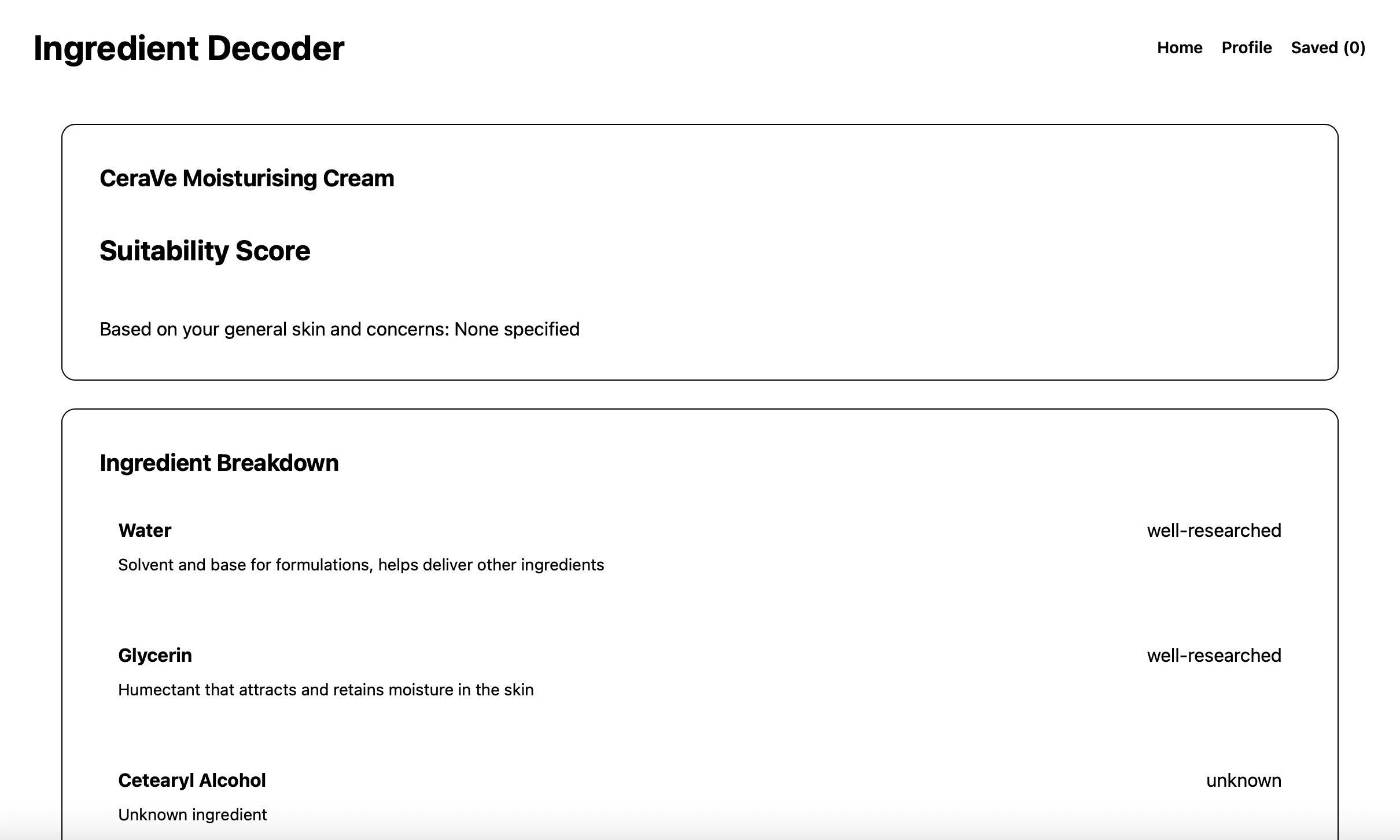
Instant breakdown: every ingredient explained in plain English, with evidence ratings at a glance.
-
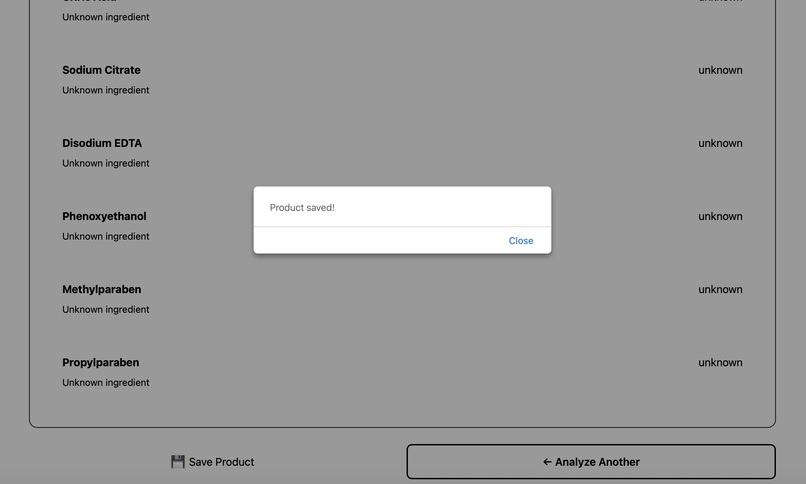
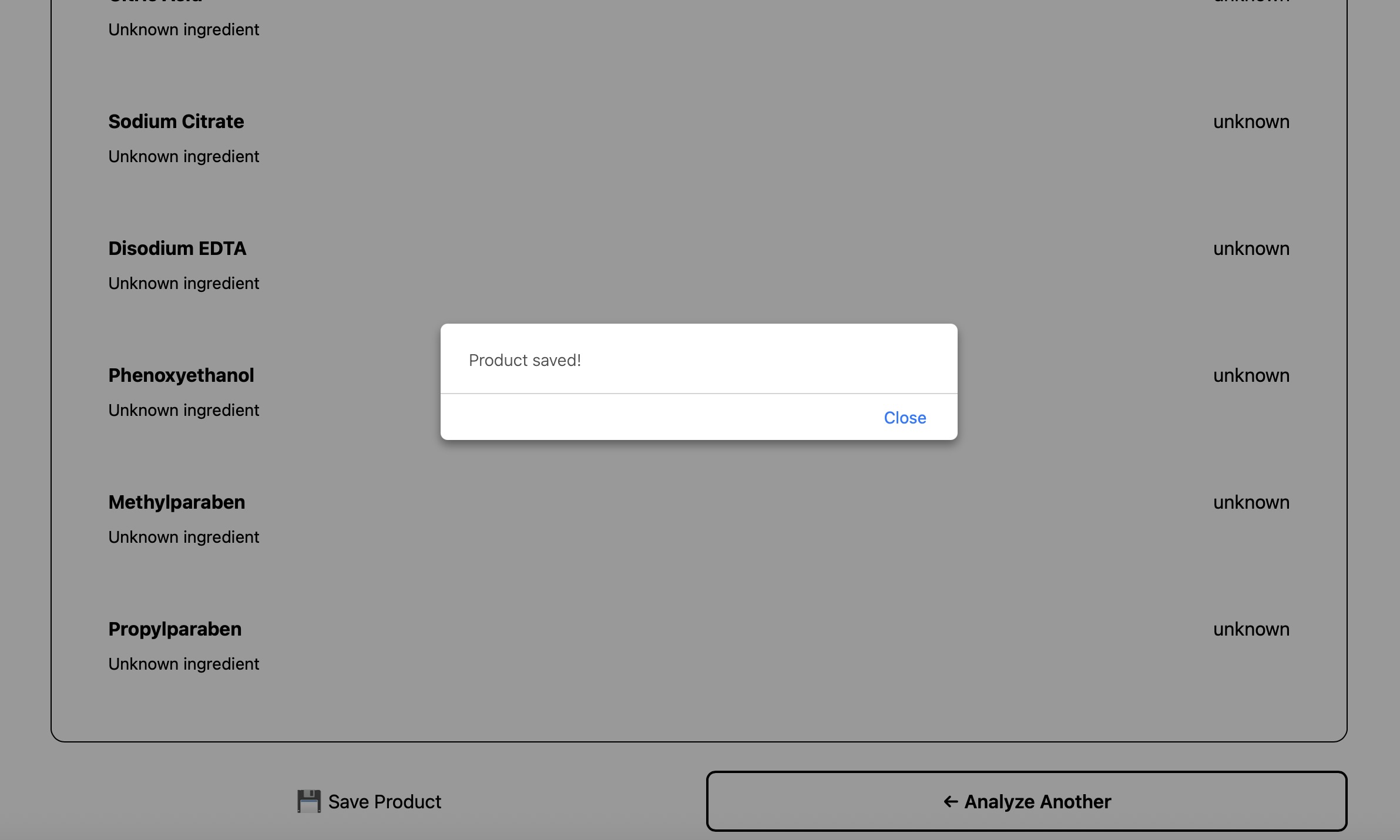
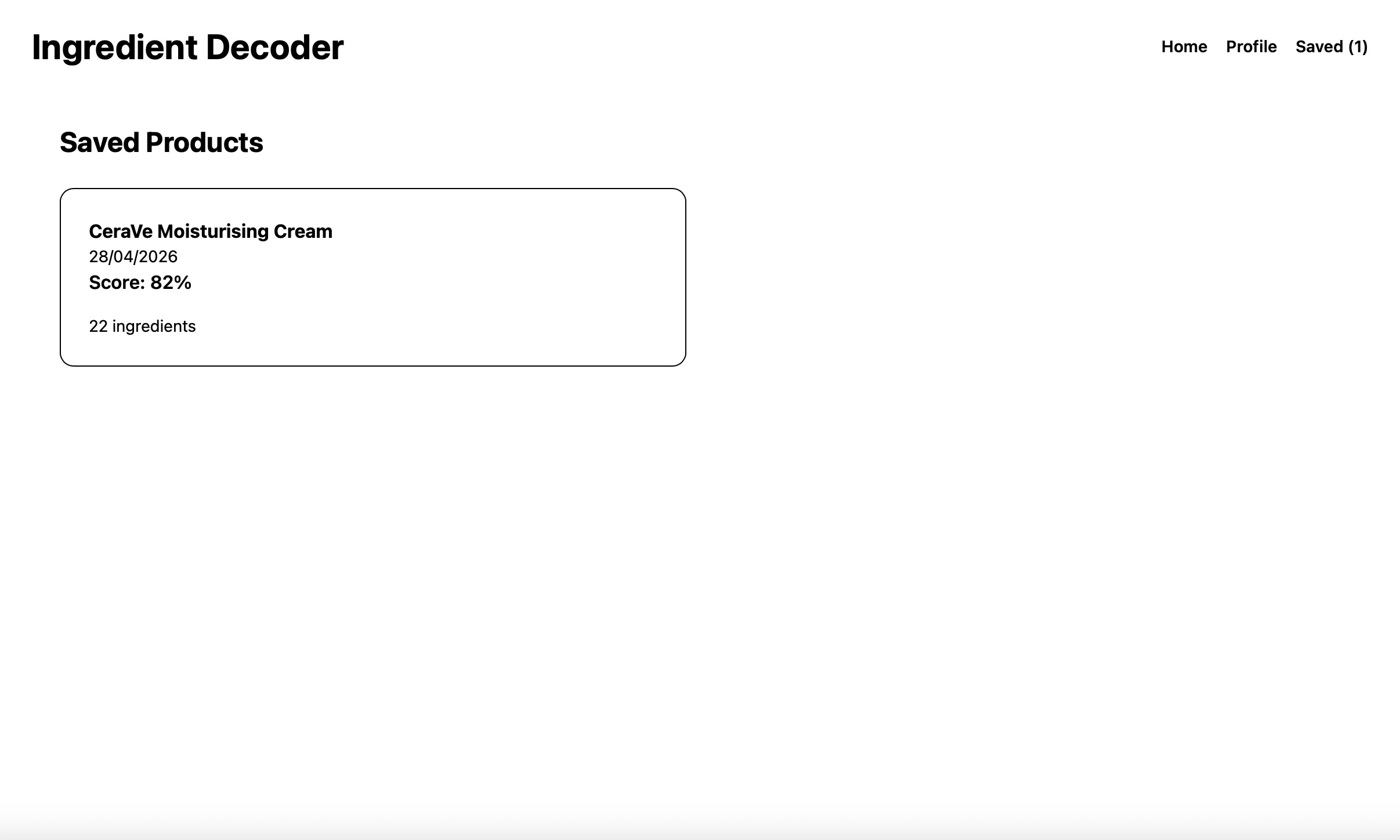
Save any product to your library with one tap, no account required.
-
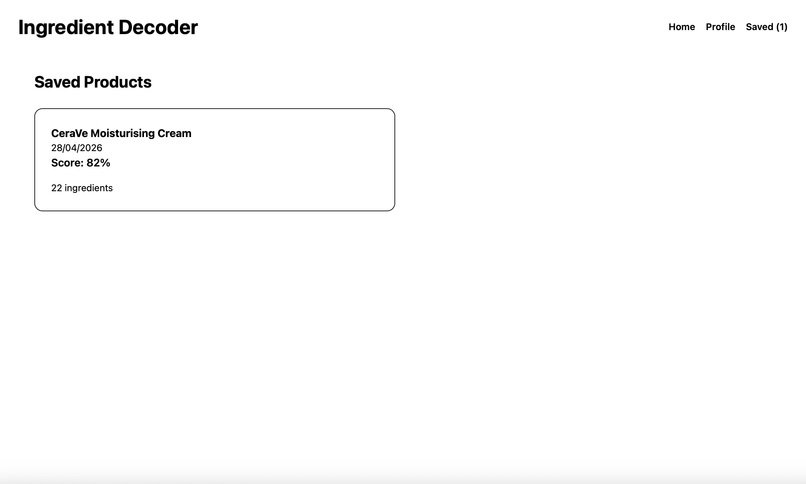
Saved products are scored and dated for easy reference. Here, CeraVe Moisturising Cream scores 82% across 22 ingredients.
-
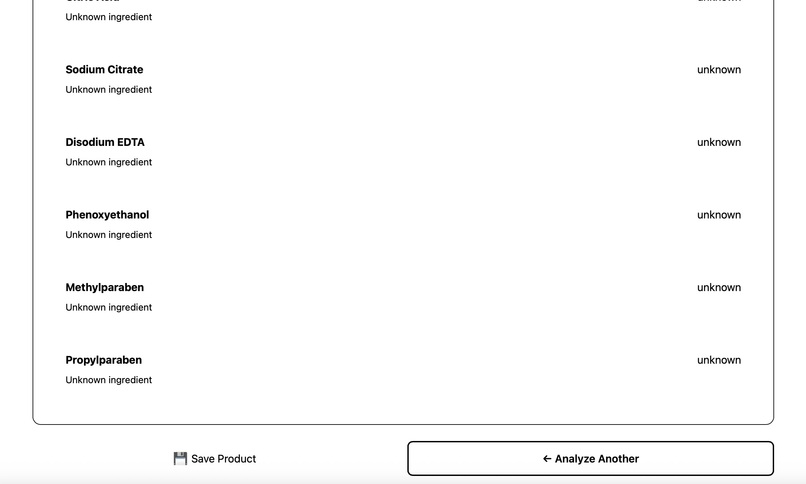
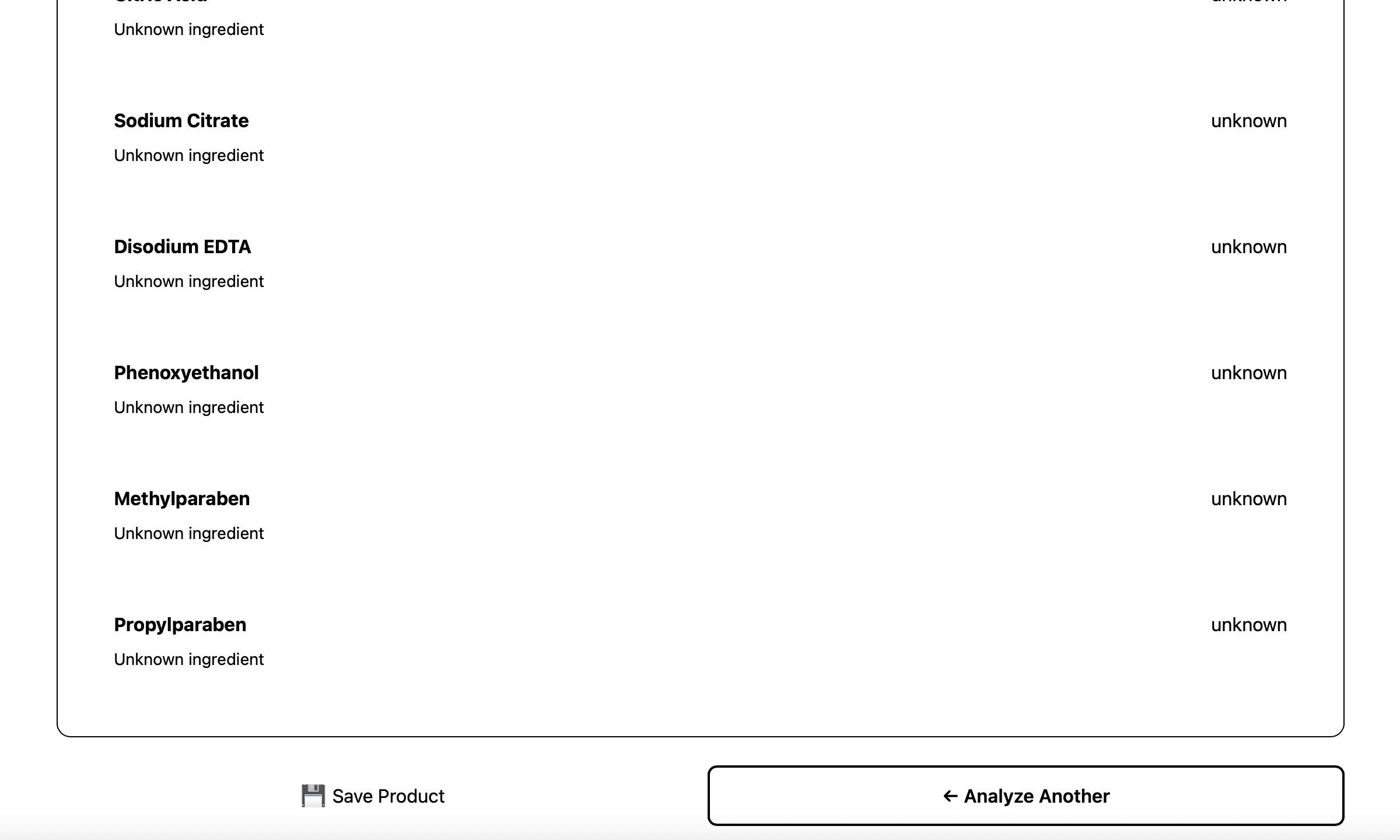
Full ingredient list analysed end-to-end with no ingredient left unexplained, no guesswork needed.
Inspiration
If you look at the ingredients list of a skincare product, you'll most probably find chemical names such as Butylene Glycol, Phenoxyethanol, and Sodium Hyaluronate, which are the names that are completely foreign to the majority of people, written in INCI (International Nomenclature of Cosmetic Ingredients), a standardised format which hardly anyone understands except for a scientist.
One will often decide to Google the ingredients individually, but even then one can easily drift into an ocean of contradictory beauty blogs, sponsored articles, and forum debates. A person with sensitive skin, a known allergy, or a specific concern like acne or ageing might have to spend up to 45 minutes per product and in the end, will probably still have some doubts.
That is where we intervened. Ingredient Decoder was initiated from a very simple question: what if, after pasting an ingredient list, you could instantly learn what is inside, what each ingredient is for, whether these are backed by scientific proof, and most notably, whether the product is right for your skin?
What it does
Ingredient Decoder is a web app where you paste any cosmetic product's ingredient list and receive a full, personalised breakdown in plain English — in about 10 seconds.
Key features:
- Ingredient Parser: paste a raw INCI list and have it automatically split, cleaned, and identified ingredient by ingredient
- Plain-English Explanations: each ingredient gets a one-sentence summary of its role (moisturiser, exfoliant, preservative, fragrance, etc.)
- Evidence Ratings: a simple indicator of whether the ingredient is well-researched, has mixed evidence, or is mostly marketing
- Red Flag Alerts: automatic highlights for known irritants, common allergens, comedogenic ingredients, and potentially harmful preservatives
- Ingredient Conflict Detector: flags combinations known to cause irritation or cancel each other out (e.g. retinol + AHAs)
- Skin Type Personaliser: select your skin type and concerns upfront; the suitability score adjusts accordingly
- Top Ingredients Summary: the most impactful ingredients are surfaced first
- Save & Compare — save multiple products and compare their profiles side by side, no account required
The suitability score is computed as a weighted deduction from a perfect baseline:
$$S = 100 - \sum_{i=1}^{n} w_i \cdot f_i$$
where \( w_i \) is the severity weight of flagged ingredient \( i \) (scaled by concern type and skin type match), and \( f_i \in {0, 1} \) indicates whether the ingredient was detected. A score below 70 triggers a warning.
How we built it
The project is built as a single-page frontend application with no backend or server required:
- Frontend: React (via CDN), Tailwind CSS, and Babel standalone for a clean, responsive UI written entirely in a single HTML file
- Logic: A curated ingredient dictionary maps known INCI names to their function, evidence rating, and warning flags. When a user pastes an ingredient list, it is split, cleaned, and looked up against this dictionary ingredient by ingredient
- Scoring: Each flagged ingredient carries a severity weight; the suitability score is computed client-side as a weighted deduction from 100
- Storage:
localStoragepersists saved products and user skin profiles entirely in the browser — no account, no login, no friction - Hosting: Vercel for fast, free deployment
The entire app runs client-side. There is no API call, no server, and no database — just a single HTML file that works instantly in any browser.
Challenges we ran into
1. Real-world ingredient lists are messy. INCI format has a standard, but brands don't always follow it. Lists come with inconsistent separators, spelling mistakes, trademarked ingredient names, and mixed languages. Parsing them reliably into clean individual ingredient tokens required careful string handling and normalisation logic.
2. Building a meaningful ingredient dictionary. Without an AI layer, the quality of the analysis depends entirely on the curated data. Sourcing accurate function descriptions, evidence ratings, and warning flags for hundreds of common INCI ingredients — cross-referenced against dermatological literature and the EU's CosIng database — was the most time-consuming part of the build.
3. Conflict detection without false positives. Ingredient interaction data isn't neatly organised anywhere publicly. We curated a conflict list manually and erred on the side of softer warnings rather than hard blocks to avoid alarming users unnecessarily.
4. Suitability scoring is inherently subjective. Skin compatibility is not a solved science. We framed the score as a rough guide, not a medical verdict, and surfaced the reasoning behind every deduction so users can make their own call.
Accomplishments that we're proud of
- Shipping a fully functional, zero-infrastructure app in a single HTML file
- Building a clean, intuitive UI that makes ingredient analysis feel effortless
- A save-and-compare system that works entirely in the browser with no account required
- A conflict detection system that catches ingredient combinations most users would never know to look for
What we learned
- Data quality is everything. Without AI, the ingredient dictionary is the product. Investing time in accurate, well-sourced ingredient data made the difference between a toy and a useful tool.
- Transparency builds trust. Showing users why an ingredient was flagged, not just that it was, changed how the tool felt. It went from a black box to a knowledgeable friend.
- Constraints force clarity. Building without a backend or API pushed us to think carefully about what the app truly needed to do, and cut everything else.
What's next for Ingredient Decoder
- AI integration: connect the Claude API to deliver dynamic, real-time analysis beyond the curated dictionary, handling any ingredient including obscure or newly introduced ones
- Browser extension: decode ingredients directly on retailer pages (Sephora, iHerb) without copying and pasting
- Barcode / photo scan: point your camera at a product label and have it parsed automatically
- Personalised ingredient history: track which ingredients appear across everything you've used and spot recurring irritants
- Community flagging: let users upvote or correct ingredient descriptions over time
- Formulator mode: a reverse tool for cosmetic formulators to check a formula for conflicts and compliance before production
Target Users
- Skincare beginners overwhelmed by ingredient lists and unsure what to look for
- People with sensitive skin or allergies who need to quickly screen products for specific irritants
- Skincare enthusiasts who want to go
Built With
- api
- claude
- cosing
- css
- html
- javascript
- localstorage
- react
- tailwind
- vercel

Log in or sign up for Devpost to join the conversation.