-
-
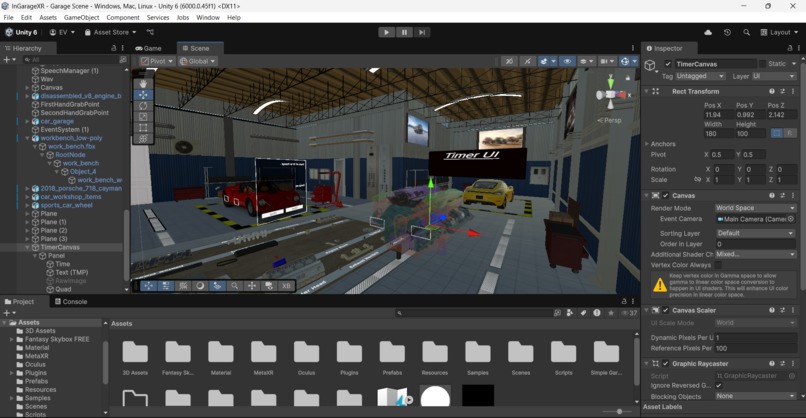
Ingarage Unity Environment
-
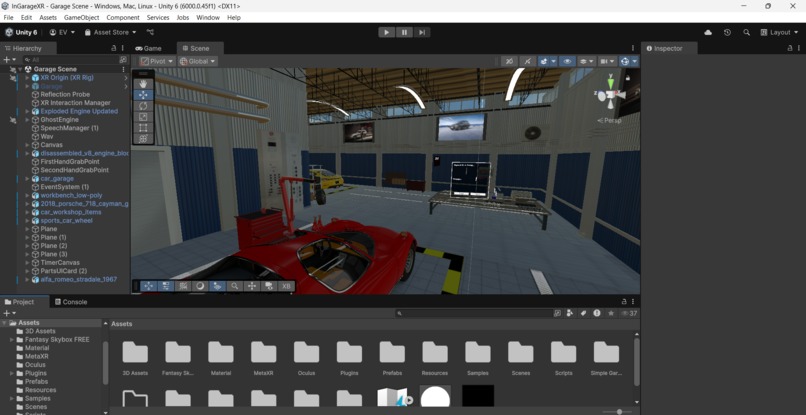
Ingarage Unity Environment
Inspiration
As a young boy growing up in south-west Nigeria, though a south-eastern, I was so interested and fascinated in automobiles and had dreams of not just owning some in future but also understanding the core principles of how the entire automobile system works and maybe build myself one in the future. This dream pushed me into studying Mechanical engineering in the Polytechnic and also proceeding to study the same course in the University of Lagos, UNILAG. During my course of study, I was fortunate to intern in an automobile workshop, one while I was in the polytechnic and the other while I was in the University. However, there was a challenge, becasue I was a student who had just come for a short internship to the workshop, there was a limitation to how much I could learn hands-on in the workshop because many of the car parts especially the engine parts are seen as delicate parts and can't be given to a student like me who has limited knowlege in the field to handle. This resulted in a limitation to the opportunity of learning hands-on since it was my only chance of going practical outside of the four corners of the classroom, which was disheartening. This experience gave birth to another hunger in me, a hunger to help other students and car enthusiasts like myself get hands-on experience not just in the workshop but anywhere they wish. The limitations of achieving my childhood dream, which is to learn, understand and build my customised vehicle myself, are the inspiration behind InGarageXR
What it does
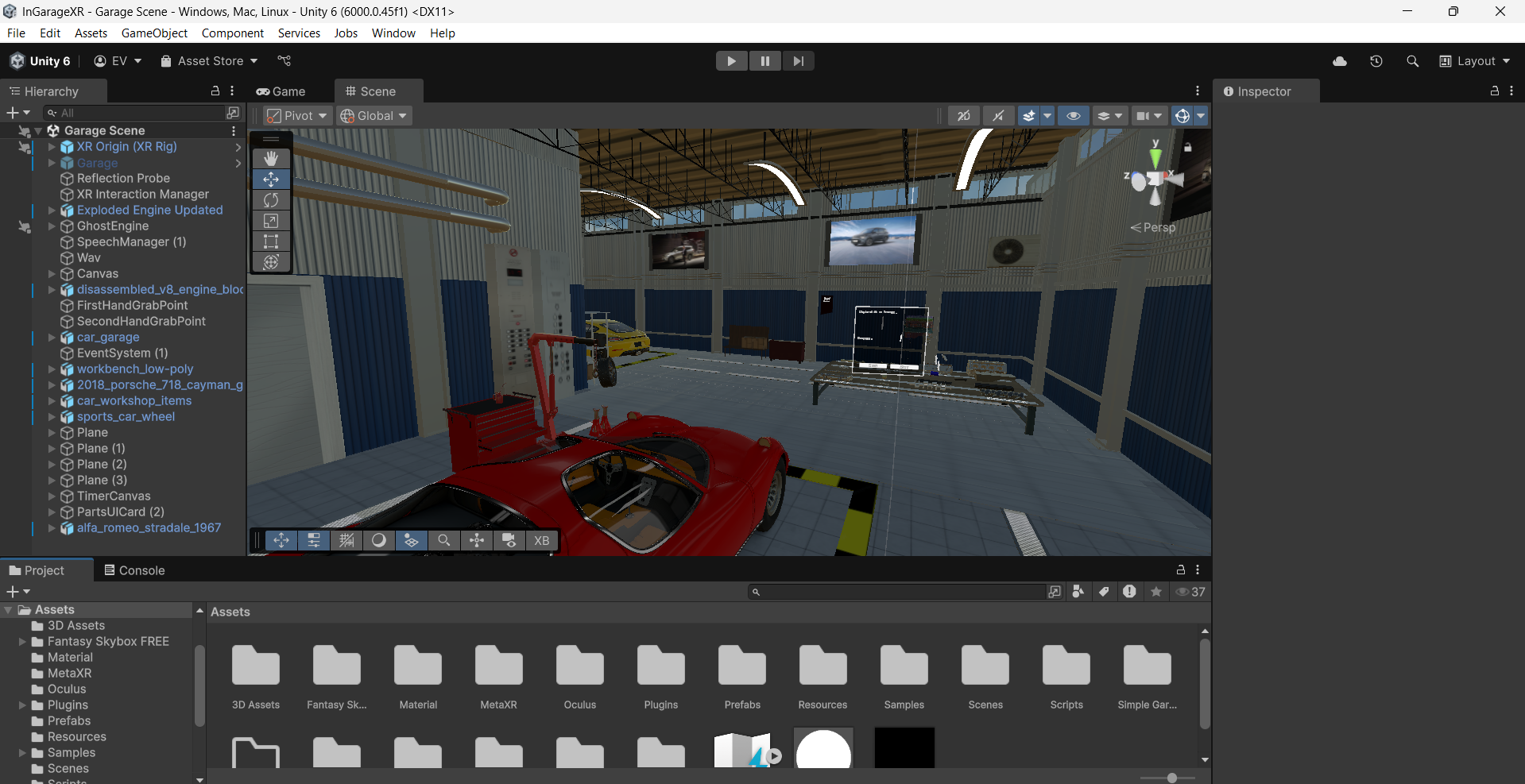
InGarageXR is an immersive virtual reality experience designed to revolutionise how individuals learn automobile repair and maintenance by simulating a fully interactive garage environment. Users ranging from students, trainees, to car enthusiasts gain hands-on experience assembling and diagnosing vehicle components without the need for physical tools or real vehicles.
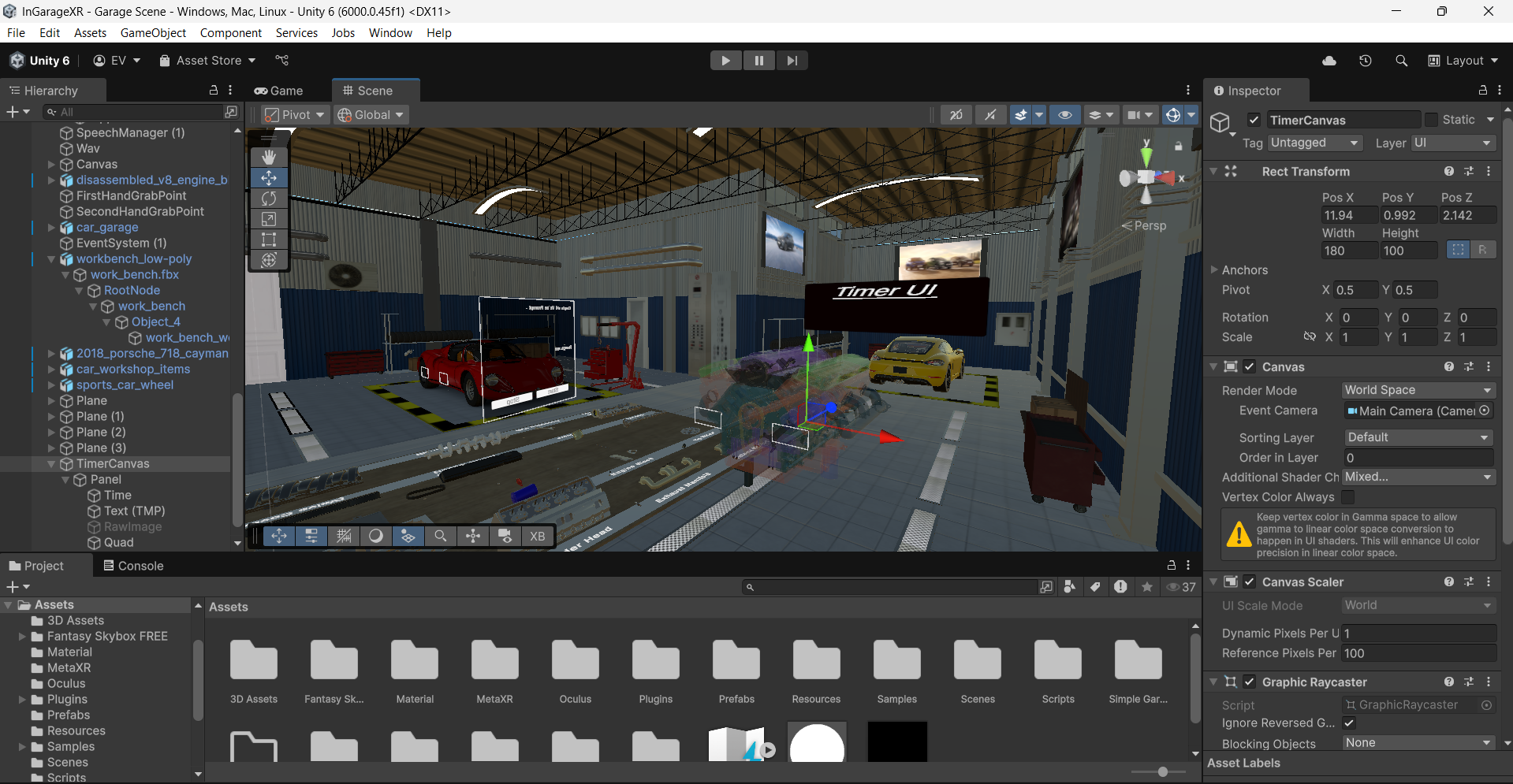
What sets InGarageXR apart is its integration of cutting-edge AI technologies: Speech-to-Text (STT) lets users interact with the system naturally using voice commands. Large Language Models (LLMs) process user prompts in real time, delivering intelligent, context-aware guidance. Text-to-Speech (TTS) enables a conversational, voice-driven learning experience, making complex concepts easy to grasp. A gamified timer system tracks how quickly users complete tasks, encouraging speed, accuracy, and engagement through time-based challenges. Together, these features create an accessible, voice-controlled, and intelligent learning environment that empowers learners regardless of literacy or physical location.
How we built it
InGarageXR was built using the Unity game engine, leveraging its XR Interaction Toolkit to create an immersive and interactive virtual garage environment. Blender for modelling and fine-tuning of free 3D models, and finally, the AI section, which includes: Speech-to-Text (STT) using AI-powered voice recognition to capture spoken prompts. Large Language Models (LLMs) to process natural language inputs and deliver contextual guidance. Text-to-Speech (TTS) to provide real-time, voice-based feedback and instructions, making the experience hands-free and inclusive.
Challenges we ran into
Some of the most difficult challenges I ran into as a solo creator were: Integrating different AI tools and packages like the STT, LLM and TTS into the application. It was challenging since the AI models and packages used were all free versions with limited trials and features. Another challenge faced was getting the realistic 3D models that were used and having to fine-tune them in Blender to achieve the realistic 3D design needed for the application.
Accomplishments that we're proud of
Built a fully functional VR garage that simulates real-world automobile diagnostics and assembly tasks, offering an intuitive hands-on learning experience. Integrated AI technologies (STT, LLM, TTS) to enable seamless voice-controlled interaction, enhancing accessibility and reducing reliance on manual inputs. Developed a gamified task-timer system to measure user performance, increase engagement, and promote progressive skill development. Addressed a real-world educational gap, especially in developing regions where access to auto workshops and training facilities is limited.
What we learned
How to build immersive and interactive experiences using Unity and XR development tools tailored for educational use. The power of combining AI technologies such as Speech-to-Text, LLMs, and Text-to-Speech to create intelligent, voice-driven training environments. The importance of user accessibility and inclusivity, especially for learners with limited access to physical resources or technical literacy. How gamification enhances user motivation, engagement, and performance tracking. Strategies for designing modular and scalable VR systems that can evolve with user needs and hardware capabilities. The value of resilience and iteration, as overcoming technical and design challenges, was key to refining the experience.
What's next for InGarageXR
Expand Vehicle Modules: Introduce more car systems—brakes, suspension, transmission—for comprehensive automotive training. Multi-language Support: Integrate multilingual voice interactions to reach a global audience. AI-Driven Feedback: Implement personalized performance insights using AI to help users track progress and improve. Certification System: Add gamified achievements and digital badges for skill validation and career advancement. Mobile & Standalone VR Compatibility: Optimise for devices like Meta Quest to increase accessibility and reduce hardware barriers. Partnerships with Schools & Institutions: Collaborate with educators, technical schools, and NGOs to bring InGarageXR into formal and informal learning spaces. Community & User Contributions: Enable user-generated content and peer learning to grow a community around the platform.


Log in or sign up for Devpost to join the conversation.