-
-
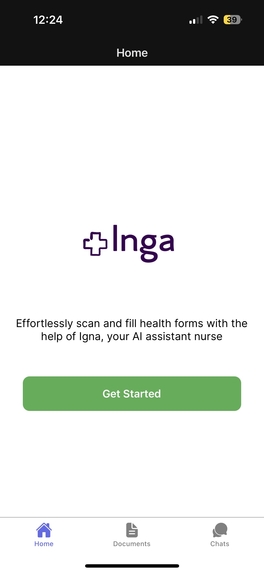
Homescreen
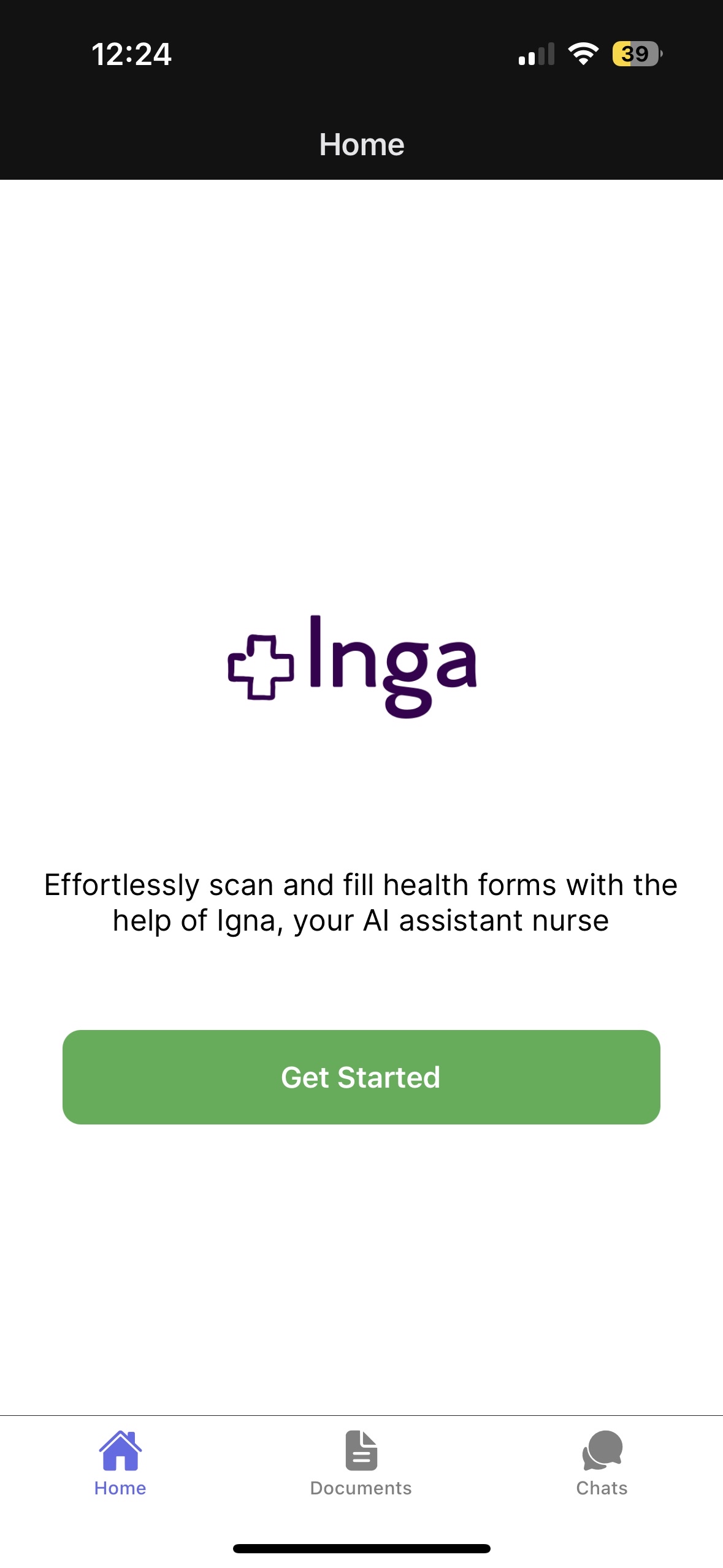
Inspiration
Inspired by the Patient Safety Technology Challenge, we set out to improve healthcare quality and safety, particularly for underserved communities. Language barriers and complex medical forms can directly impact patient outcomes. We wanted to create a tool that makes healthcare information more accessible and reduces the risk of misunderstanding.
What it does
Inga helps patients better understand their health information by allowing them to chat with medical documents in their native language. It improves accessibility for non-native speakers by translating complex terms into simple, clear explanations. Inga also features a step-by-step guided form filler to assist with completing medical forms accurately.
How we built it
Utilized React native, supabase, OpenAI API, and Copilot.
Challenges we ran into
Form filling turned out to be more complex than expected.
We aimed for the LLM to drive a dynamic conversation with the user to guide them through filling out a form, but integrating structured output while keeping the conversation natural was challenging.
We also hoped to integrate a voice assistant feature to further improve accessibility, but faced technical hurdles with real-time voice input and multilingual speech recognition.
Accomplishments that we're proud of
We successfully built a working prototype that allows users to chat with documents in their native language, making complex healthcare information more accessible. Inga was designed with a strong user-first approach, focusing on real-world healthcare needs and accessibility challenges. We also laid a solid foundation for future development, with significant potential to expand features like guided form filling and voice assistance, setting the stage for even greater impact.
What we learned
Building truly accessible technology requires thoughtful language handling, both for translations and for simplifying domain-specific jargon.
Real-time form filling and voice interaction require careful planning to balance user experience, technical feasibility, and accuracy.
Healthcare applications must be incredibly precise, especially when guiding patients through medical information.
What's next for Inga
Moving forward, we plan to expand Inga’s capabilities by fully developing the guided form filling feature, allowing users to complete complex medical forms through a conversational, step-by-step experience. We also aim to integrate a voice assistant to make the platform even more accessible, especially for users with limited literacy or those who prefer spoken interaction. Beyond these features, we envision Inga supporting more languages, connecting with healthcare providers, and helping bridge communication gaps in medical settings around the world.
Built With
- openai
- react


Log in or sign up for Devpost to join the conversation.