-
-
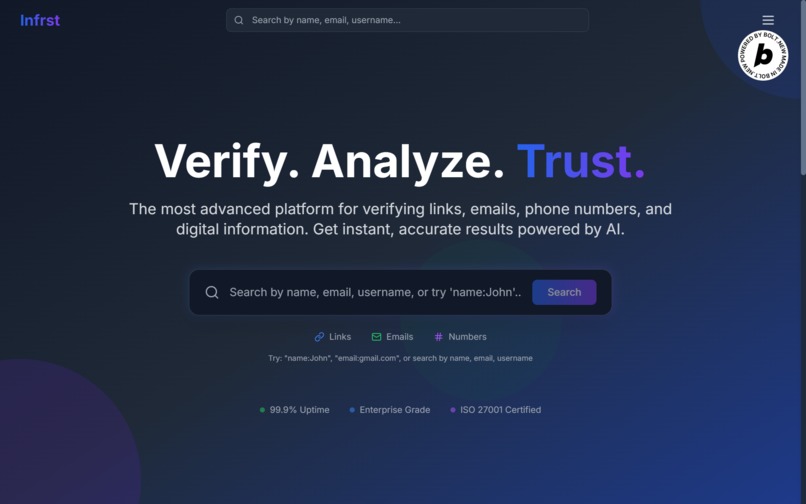
Home | Infrst
-
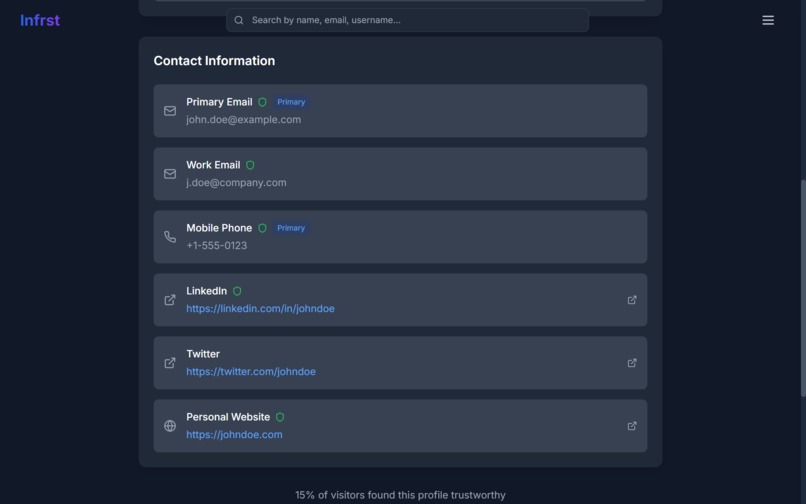
Sample Profile Fields
-
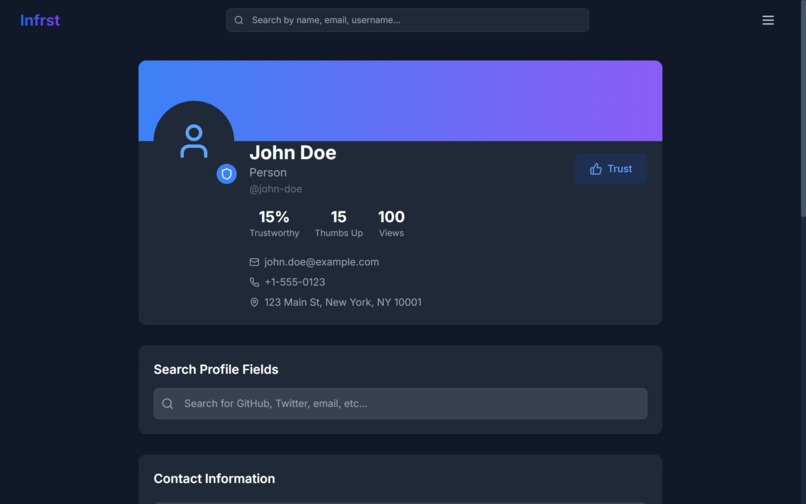
Sample Profile
-
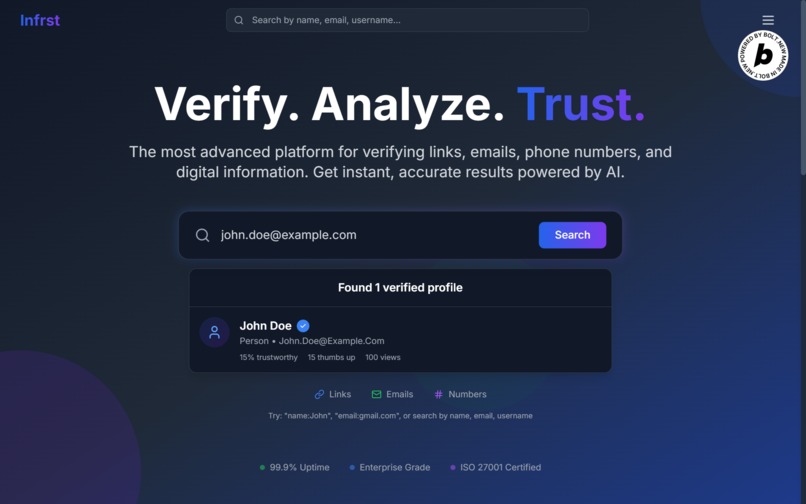
Search
Inspiration
With the rise of the digital era, the world has witnessed an alarming surge in online scams. Ranging from identity theft and OTP fraud to malicious phishing links. Despite increasing digital awareness, these threats persist. Why? Because scammers exploit the one thing technology can’t fully protect: human doubt.
Most scams succeed in moments of uncertainty. Those brief instants where victims pause and think, “What if this is real?” It’s in that hesitation between trust and skepticism that poor decisions happen.
That very moment, the dilemma between risk and opportunity, that inspired me. I wanted to create something that could defuse doubt, and help people distinguish truth from deception. A platform where authenticity is the default, not the exception.
This is how Infrst (short for Information Trust) was born. Not just to prevent scams, but to set a new digital standard for credibility, transparency, and peace of mind.
What it does
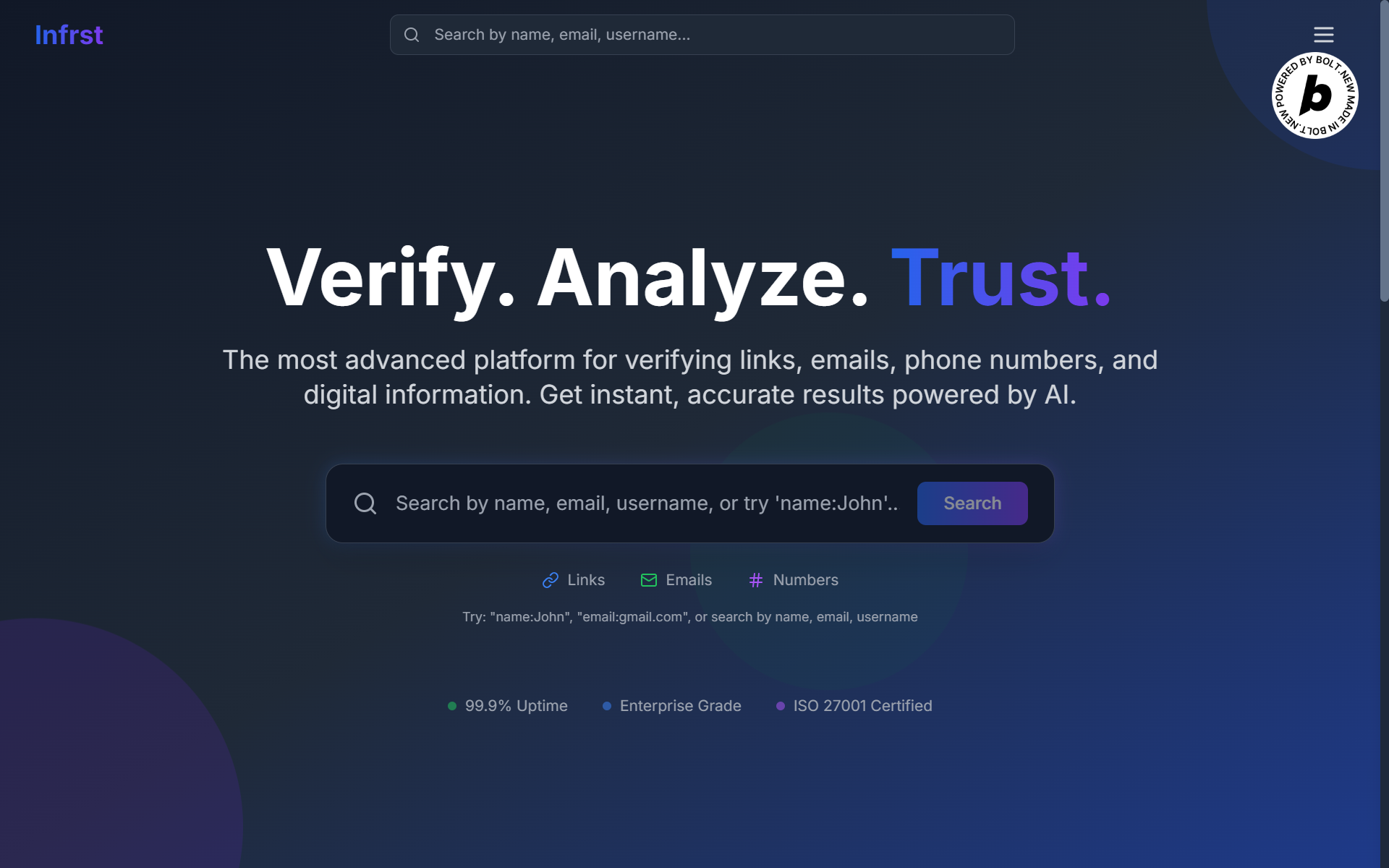
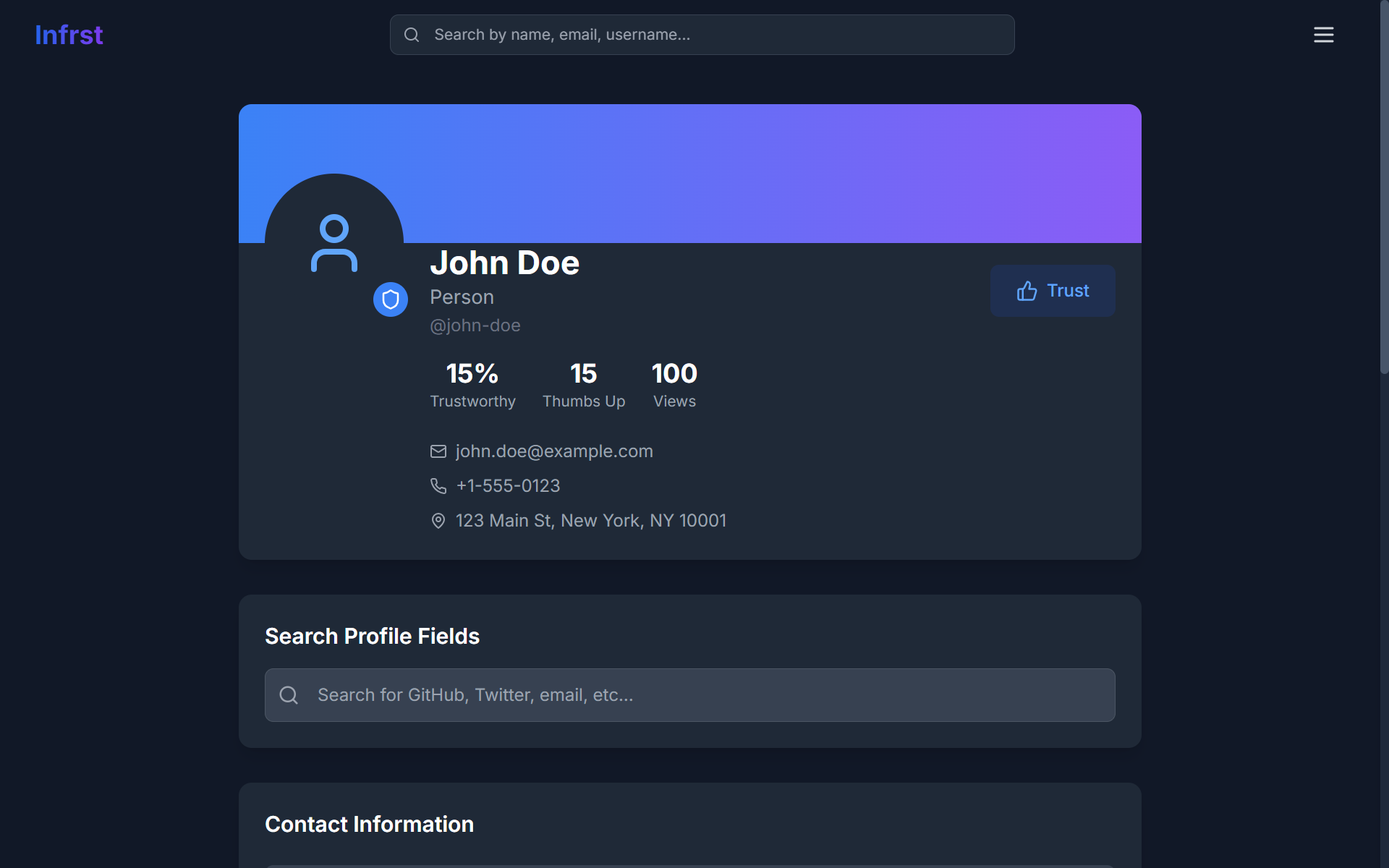
Infrst is a digital identity and trust verification platform for individuals and organizations. Users create a verified trust profile by submitting government-issued ID and supporting documentation. Verification is mandatory and regularly renewed to ensure ongoing authenticity.
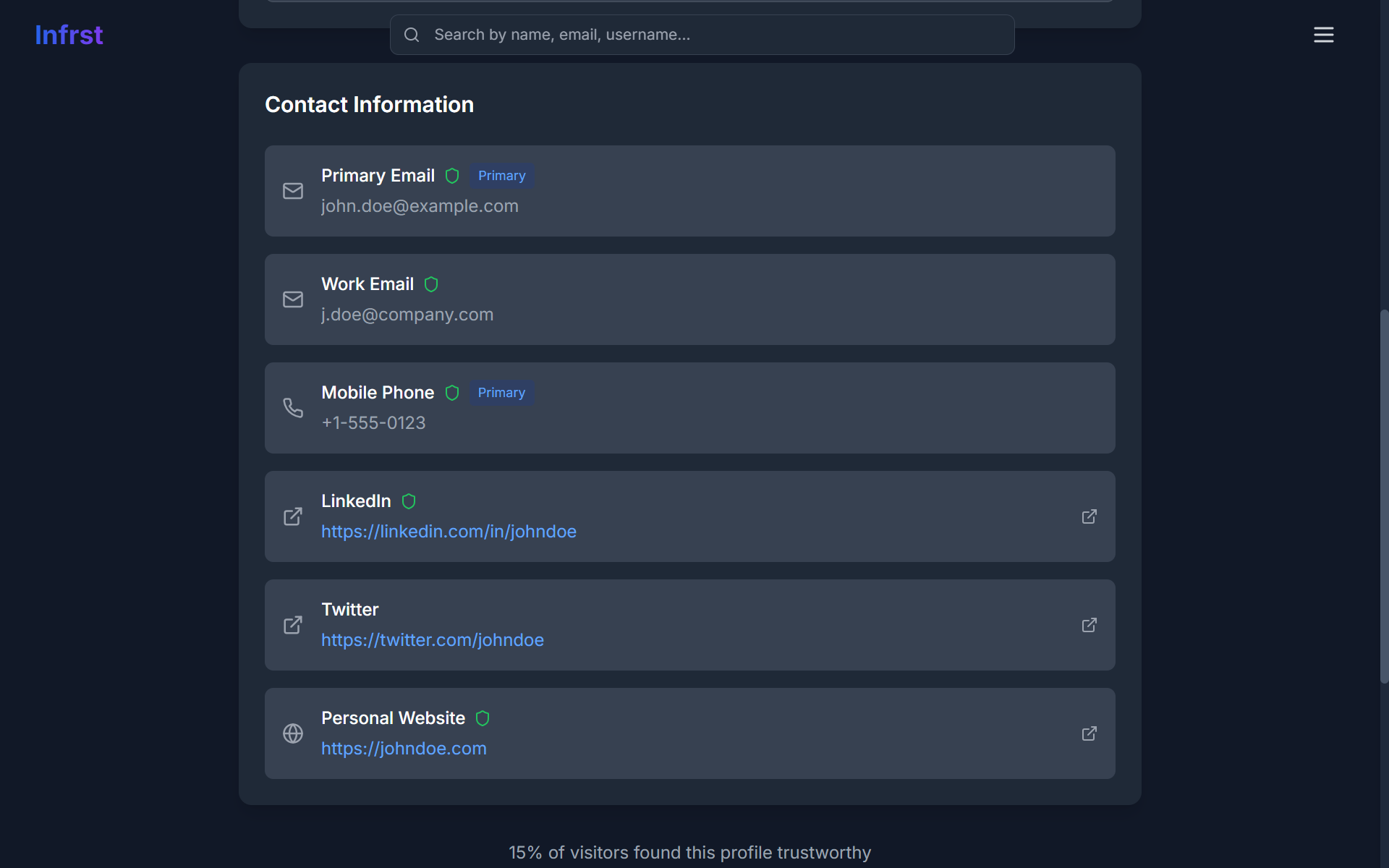
Once verified, users receive a Trust Badge, which appears on their public profile along with confirmed contact points like:
Verified phone numbers
Email addresses
Official social media handles
Website URLs
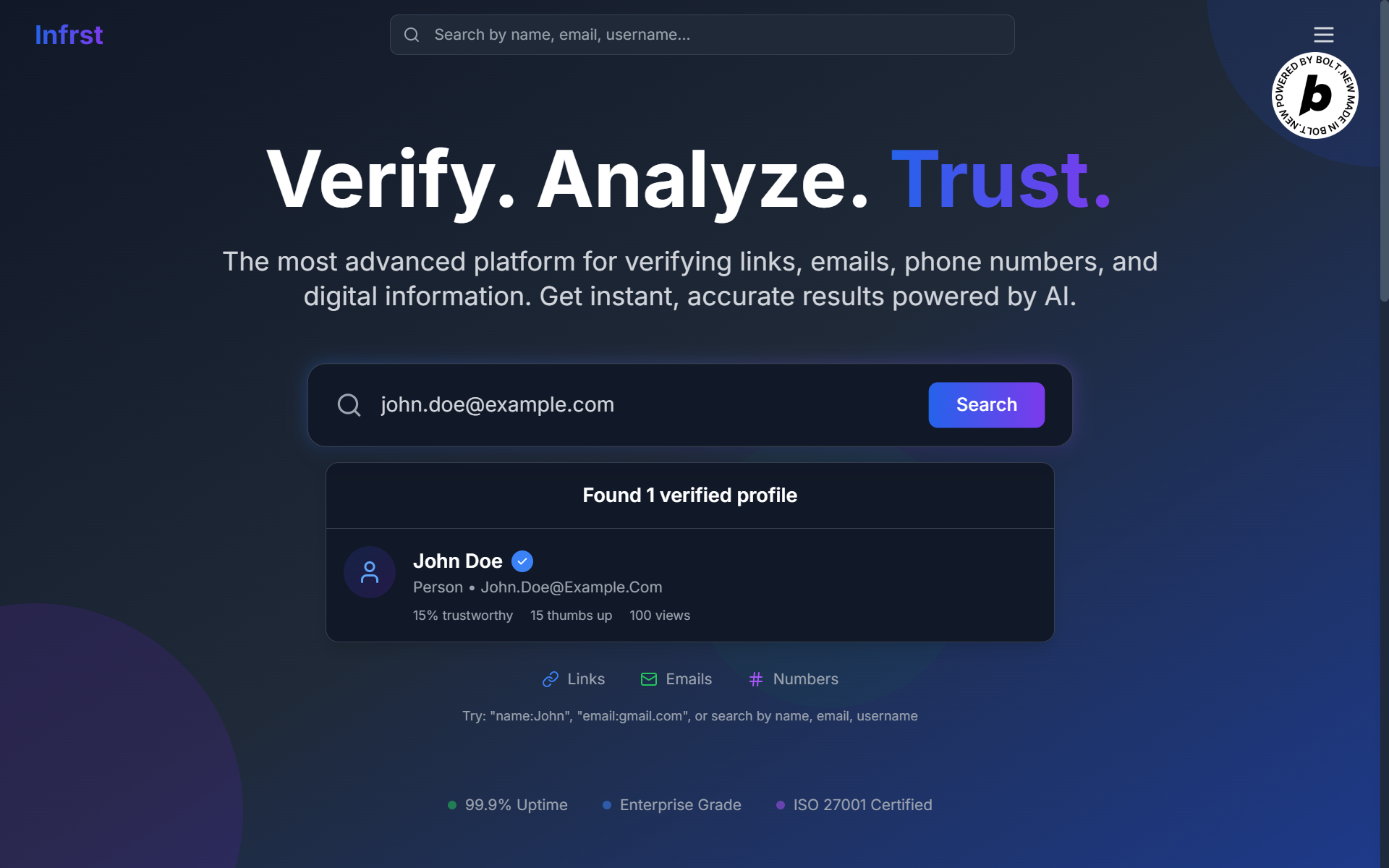
Infrst also includes a real-time trust search engine. Anyone can enter a phone number, email, link, or social handle to check if it’s officially registered and under whose name. Thus, establishing proof of ownership and reducing fraud risk.
Developers and platforms can integrate Infrst via API access, enabling apps (like WhatsApp, Instagram, LinkedIn, etc.) to automatically flag unverified senders or callers. If someone isn’t verified, users are warned before engaging, which helps avoid scams before they happen.
The system uses end-to-end encryption and digital signatures to ensure all identity data is secure and tamper-proof, drawing from blockchain principles without the associated overhead.
How we built it
Used Bolt.new AI to build the initial MVP interface.
Created the basic UI and component structure with Bolt’s tools.
Integrated Supabase for authentication and backend database management.
Deployed the MVP online via Netlify for free.
Challenges we ran into
Building a fully functional MVP with limited technical skills and no team.
Ran out of Bolt.new tokens before completion, halting progress.
Debugging major issues without experience and access to tools or support.
Accomplishments that we're proud of
Developed a working MVP from scratch with user registration, login, and basic profile structure.
Took the first step toward building a platform that could impact online safety on a global scale.
What we learned
Building a real MVP involves far more complexity than anticipated.
The power of prompt engineering: well-crafted AI prompts drastically improve speed and accuracy.
Importance of designing with security and scalability in mind from the start.
What's next for Infrst
Finish the MVP and begin testing with real users for feedback and validation.
Expand development as a startup toward a full-featured app with scalable infrastructure.
Partner with governments, regulators, and organizations like ICANN to promote Infrst as a new global standard for digital trust.
Built With
- ai
- bolt
- cloudinary
- css
- github
- html
- javascript
- jwt
- netlify
- react
- supabase


Log in or sign up for Devpost to join the conversation.