-
-
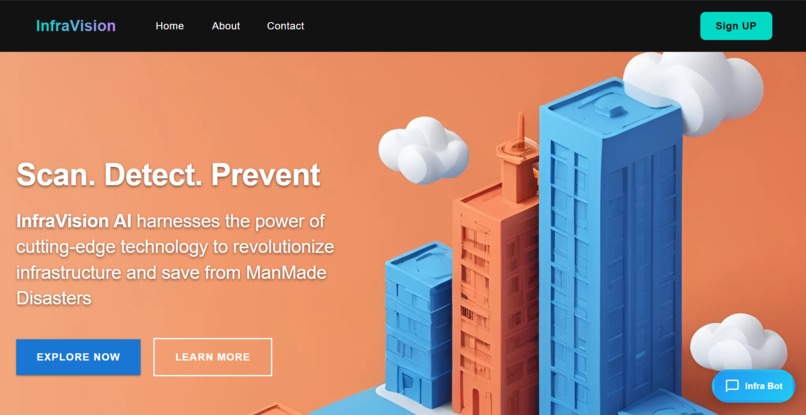
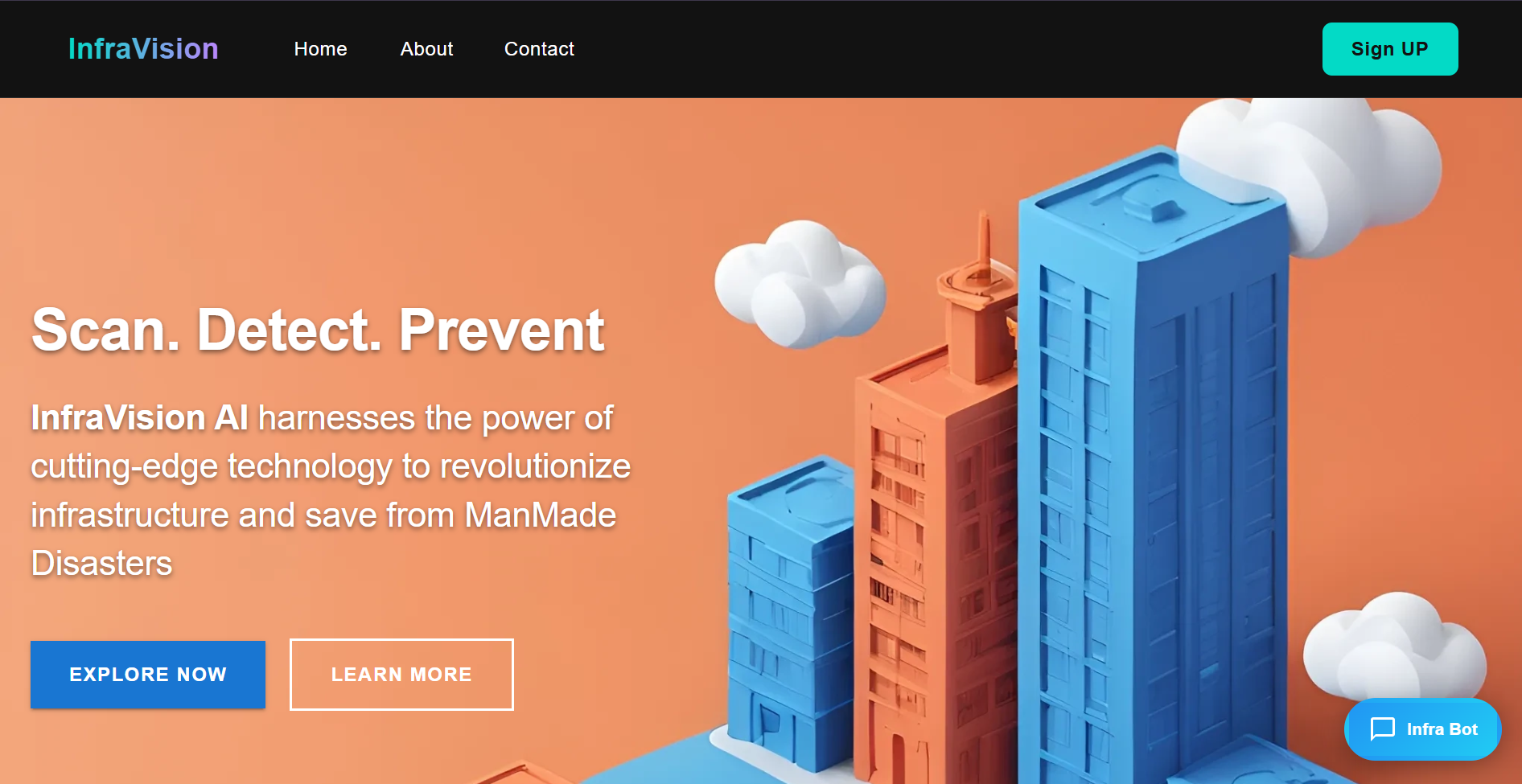
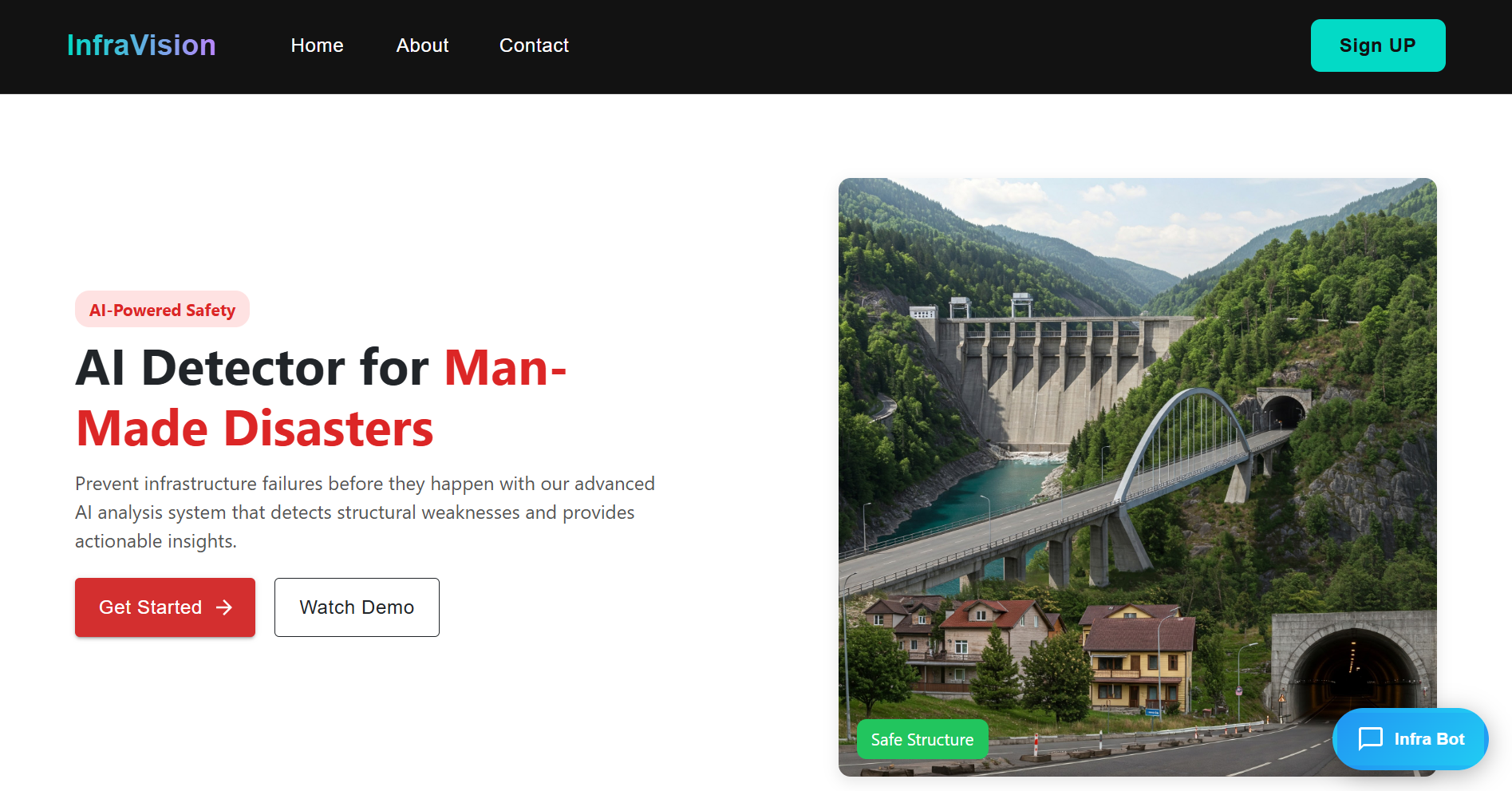
Landing Page
-
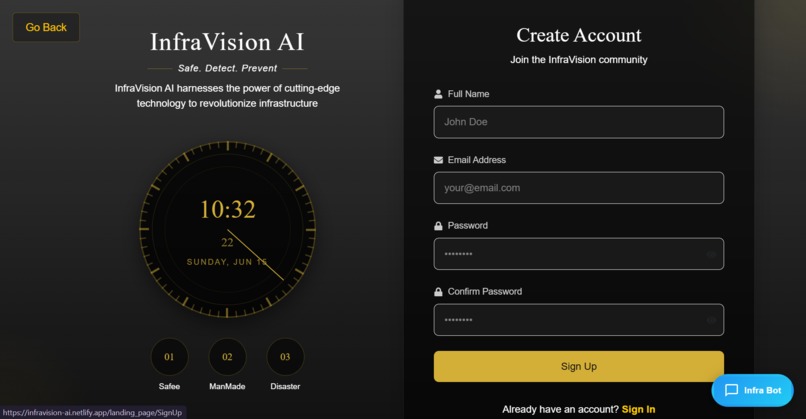
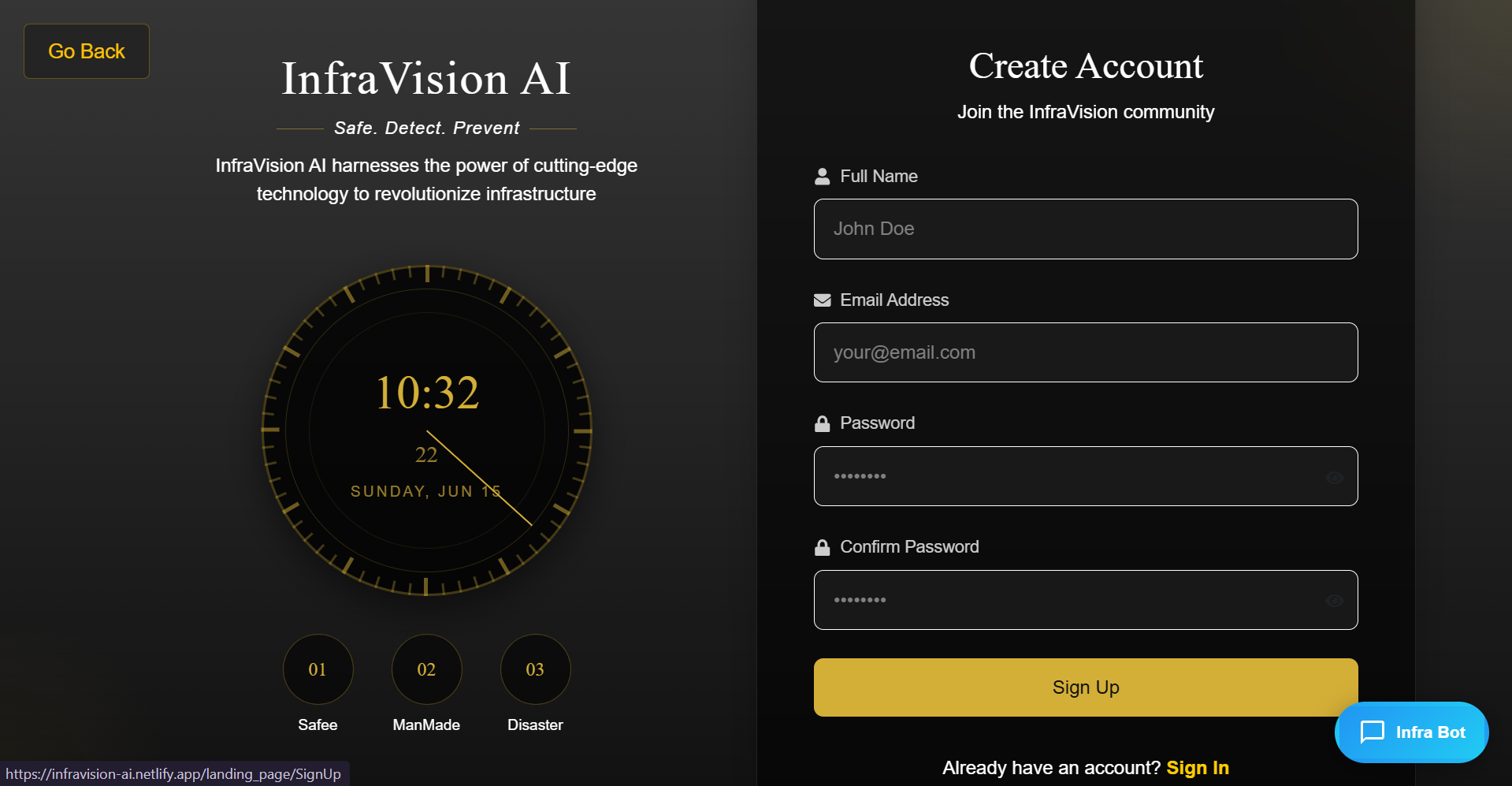
Authentication Page
-
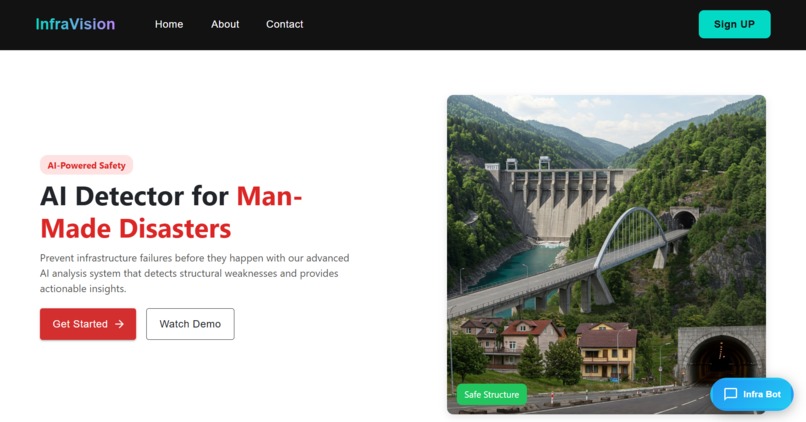
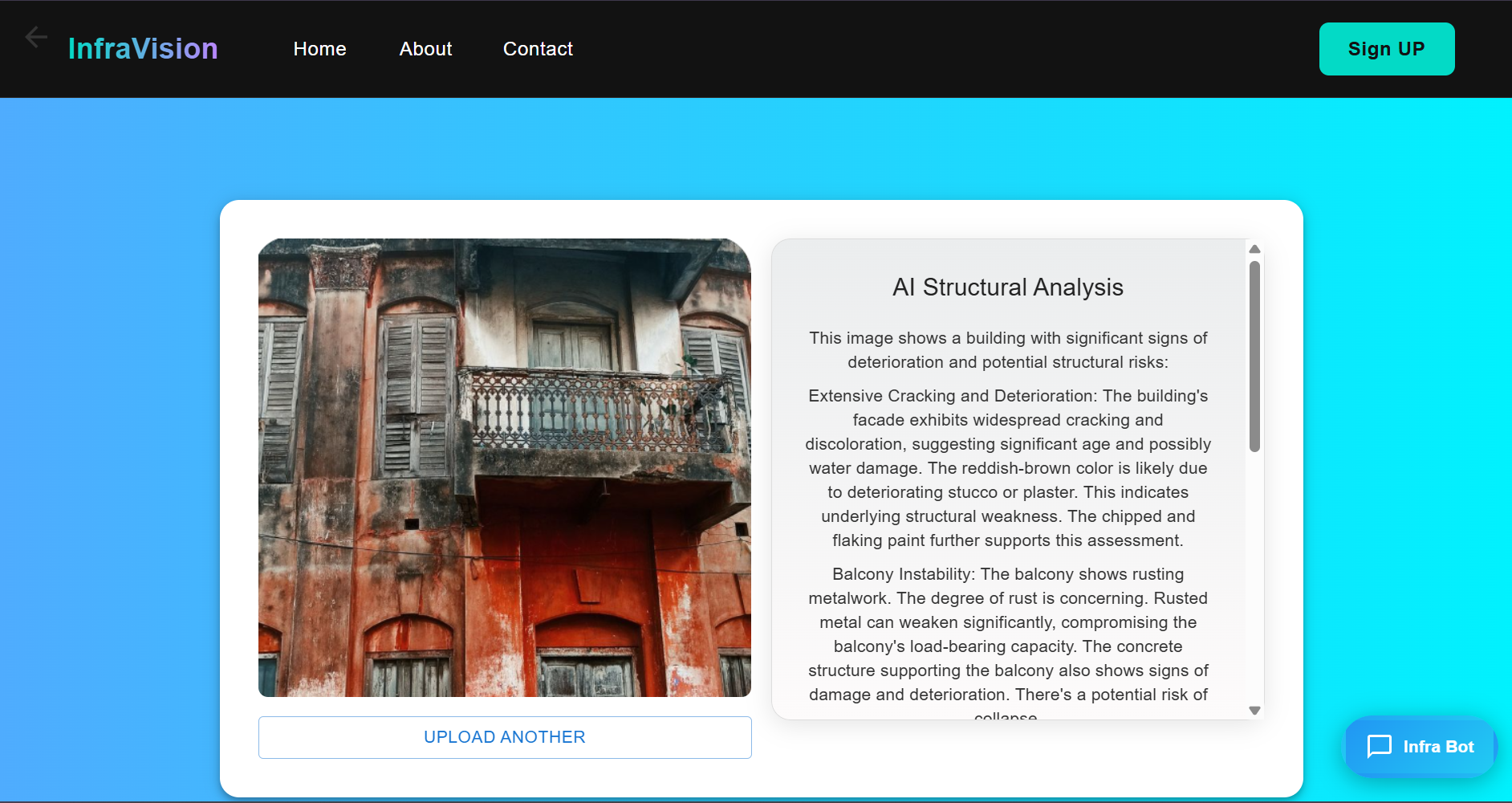
Dashboard
-
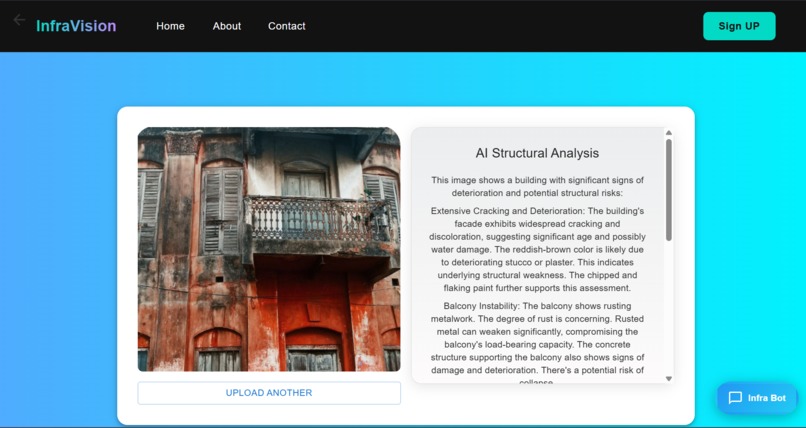
Work
Inspiration
We were inspired by the critical need for efficient infrastructure inspection, especially in regions where traditional assessment is slow, expensive, or inaccessible. Our goal was to build an AI-powered tool that empowers engineers, safety officials, and communities to detect structural damage instantly using just a smartphone.
What it does
InfraVision AI is a mobile-first infrastructure inspection tool that lets users scan structures using their smartphone camera. It detects structural damage in real-time, evaluates risks, and generates 3D visualization safety reports instantly — even in offline environments.
How we built it
We built the entire InfraVision AI MVP from scratch during the hackathon. Key components:
Frontend: Built using React.js with a fully responsive and mobile-first layout.
Camera Scanner: Custom-built real-time camera interface for capturing infrastructure images.
AI Backend: Local LLM Rage Database integrated with Pinecone Vector DB for semantic similarity and fast querying.
Model: Leveraged Gemini 1.5 Flash for intelligent damage analysis and report generation.
Visualization: Generated 3D safety reports with condition ratings.
UX Enhancements: Added smooth visual transitions and responsive design.
Offline Capability: Enabled scanning functionality in low/no-network areas.
Auth: Developed a lightweight login system to manage sessions.
Challenges we ran into
1) Integrating a real-time scanner with LLM-based vector search under time constraints.
2) Optimizing performance for mobile devices while processing high-resolution images.
3) Ensuring accurate AI responses using Pinecone embeddings and Gemini Flash.
4) Building offline functionality without sacrificing user experience.
Accomplishments that we're proud of
1) Created a fully working MVP in limited time.
2) Successfully implemented a real-time camera scanner linked to an AI backend.
3) Achieved accurate detection of infrastructure damages using AI.
4) Built an intuitive and smooth UI/UX with mobile responsiveness.
5) Delivered a functional demo with real-time analysis and visual reporting.
What we learned
1) How to leverage Gemini 1.5 Flash for real-time visual data processing.
2) Efficient use of Pinecone for semantic search and LLM embeddings.
3) Importance of performance tuning in AI apps on mobile devices.
4) Building camera-based interfaces and handling image data processing in React.
What's next for InfraVision AI
1) Integrate more advanced 3D visualization with AR support for guided inspection.
2) Add multi-language support for broader accessibility.
3) Expand AI model training for more diverse structural damage types.
4) Collaborate with civil engineers and municipalities for field testing.
5) Deploy as a scalable PWA for wide adoption in developing regions.


Log in or sign up for Devpost to join the conversation.