-
-
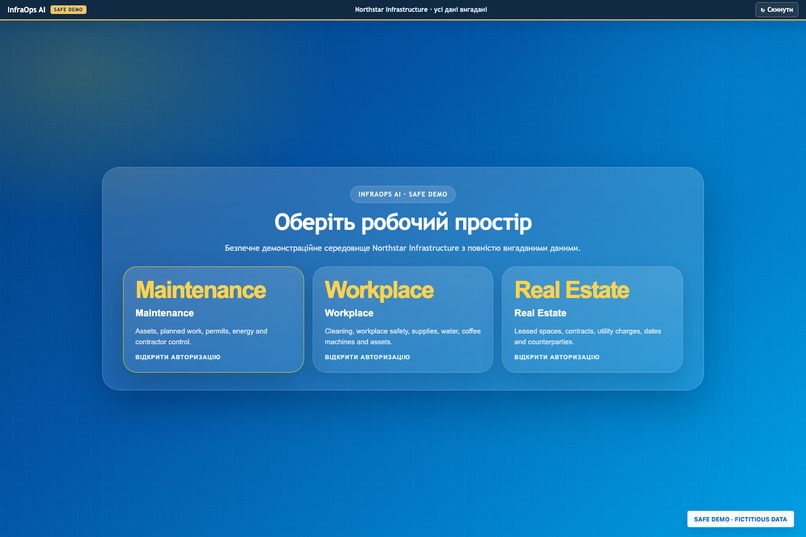
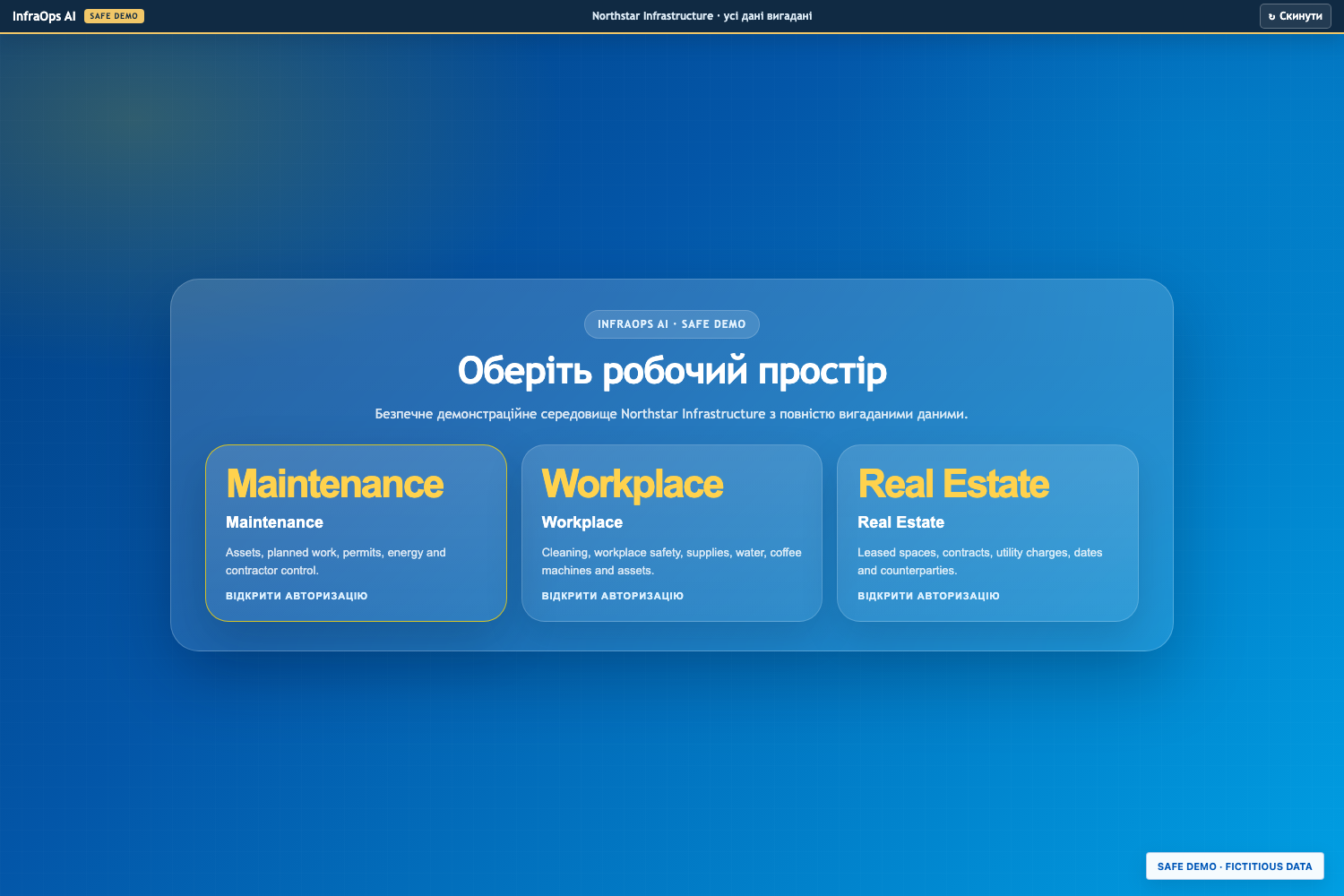
Unified Workspace for Maintenance, Workplace and Real Estate
-
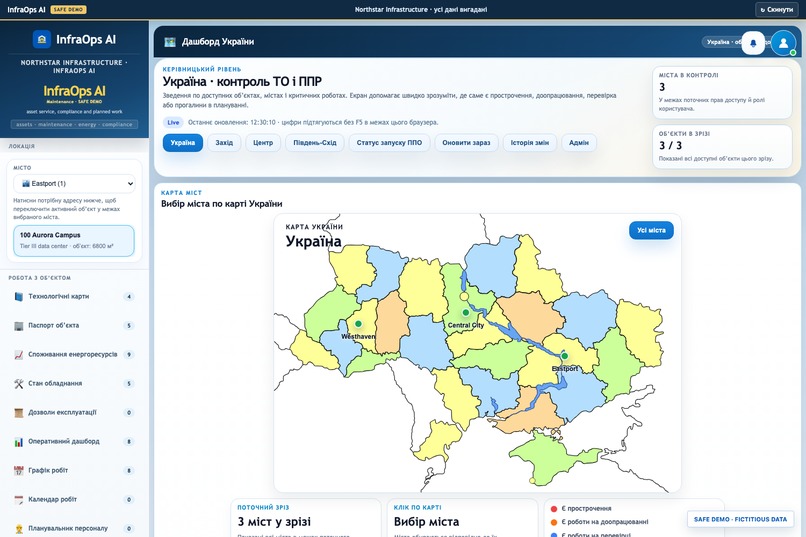
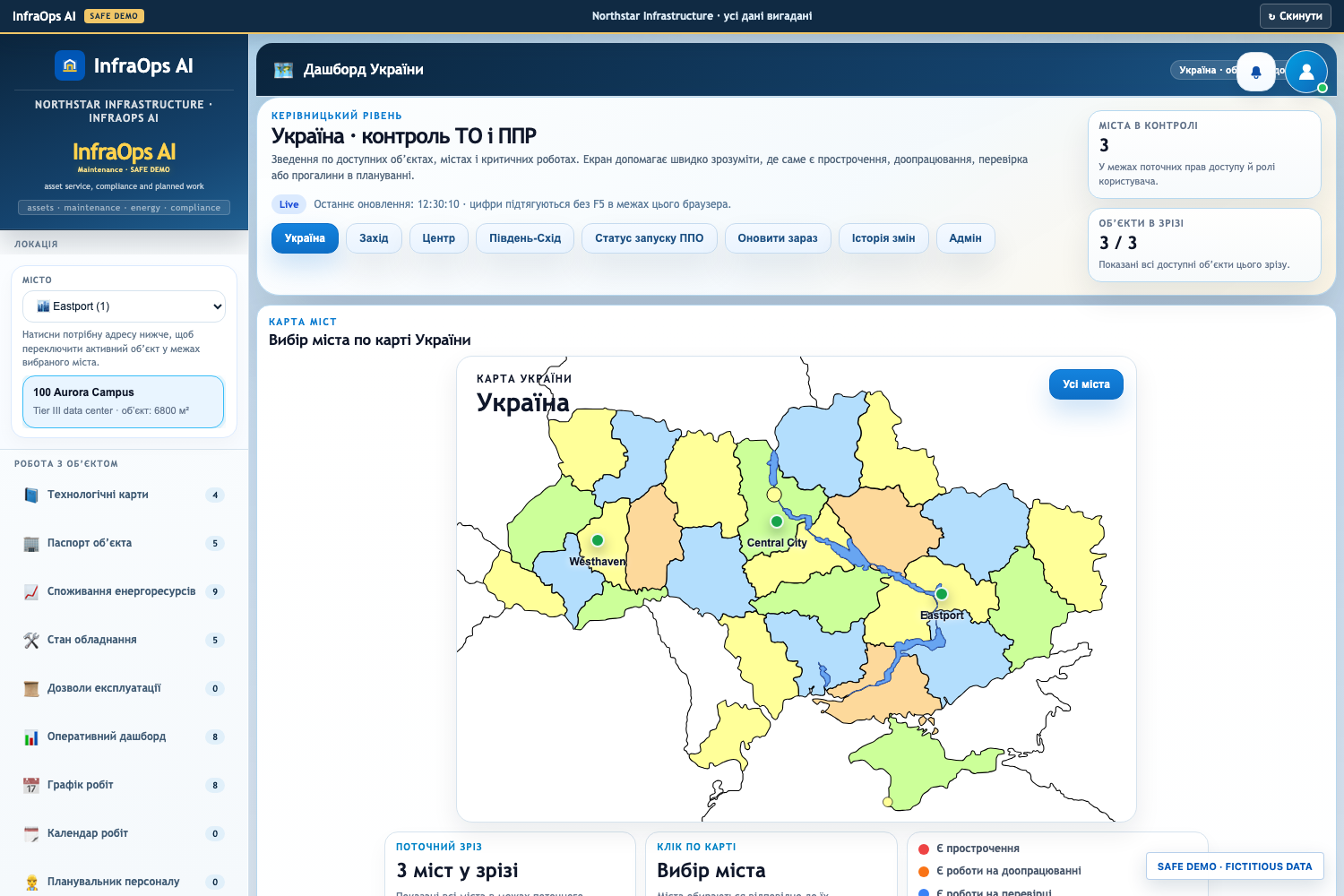
Nationwide Maintenance Management Overview
-
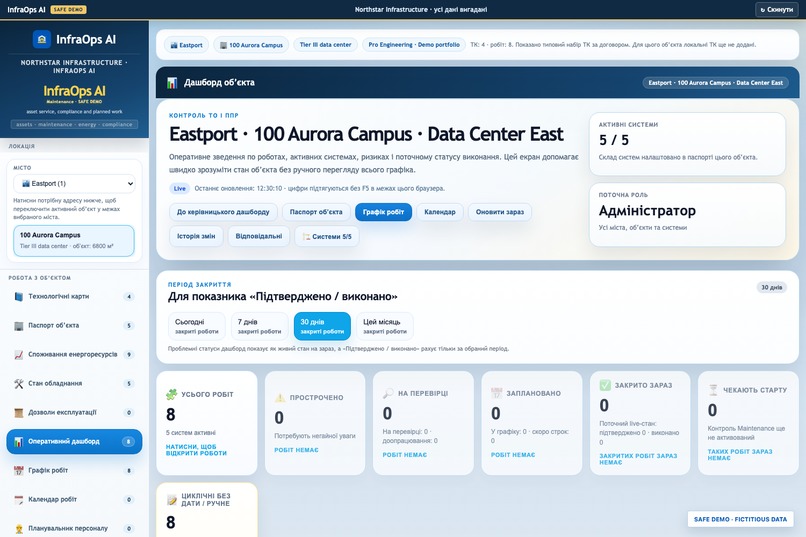
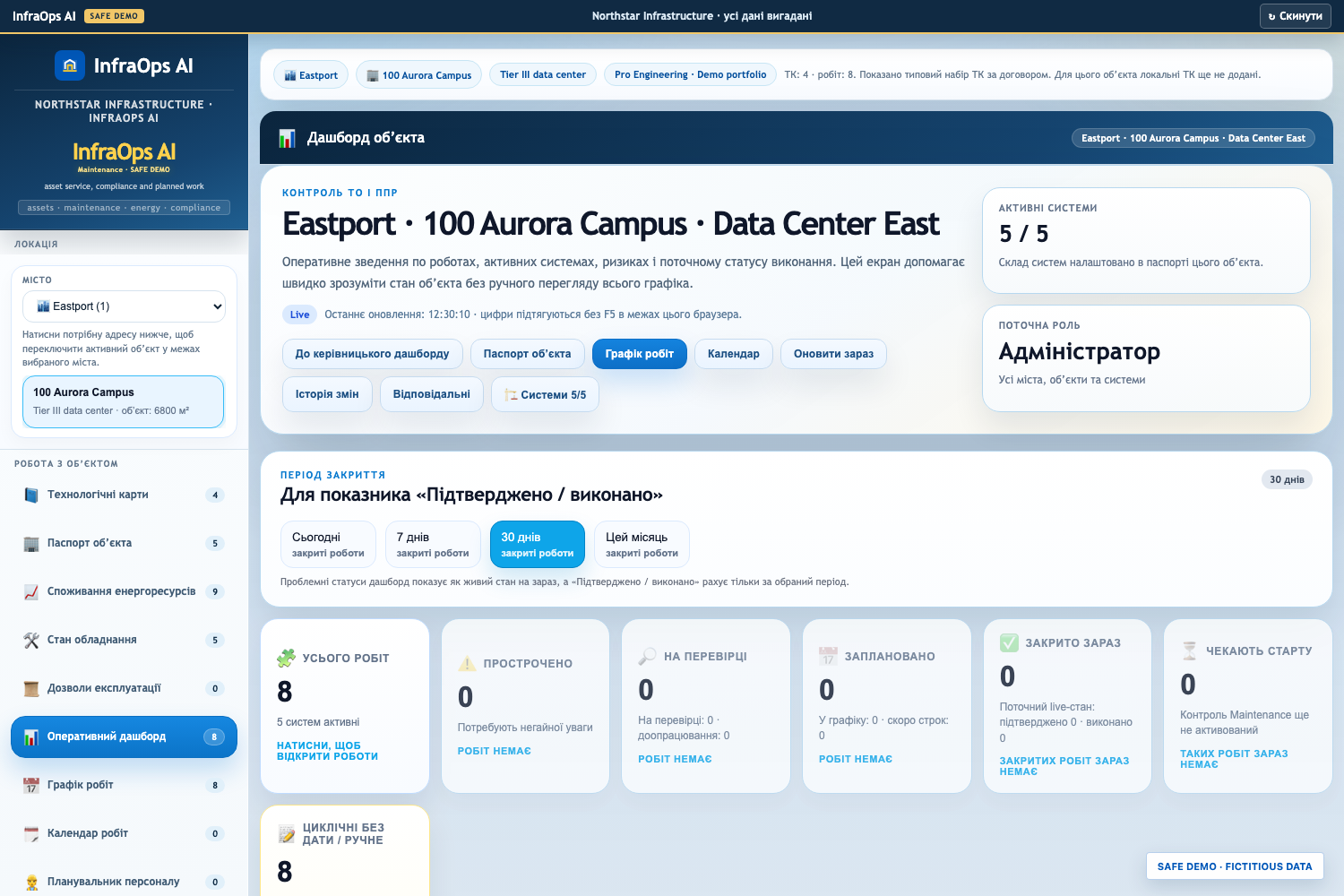
Site Operations and Systems Dashboard
-
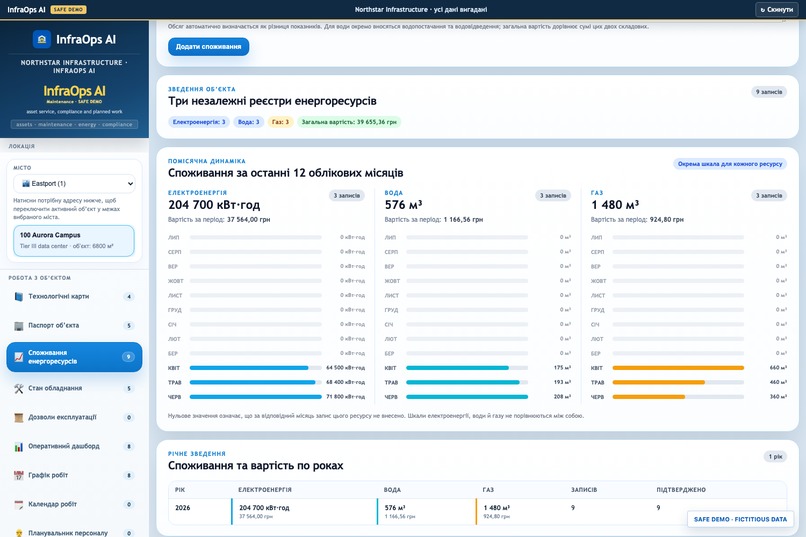
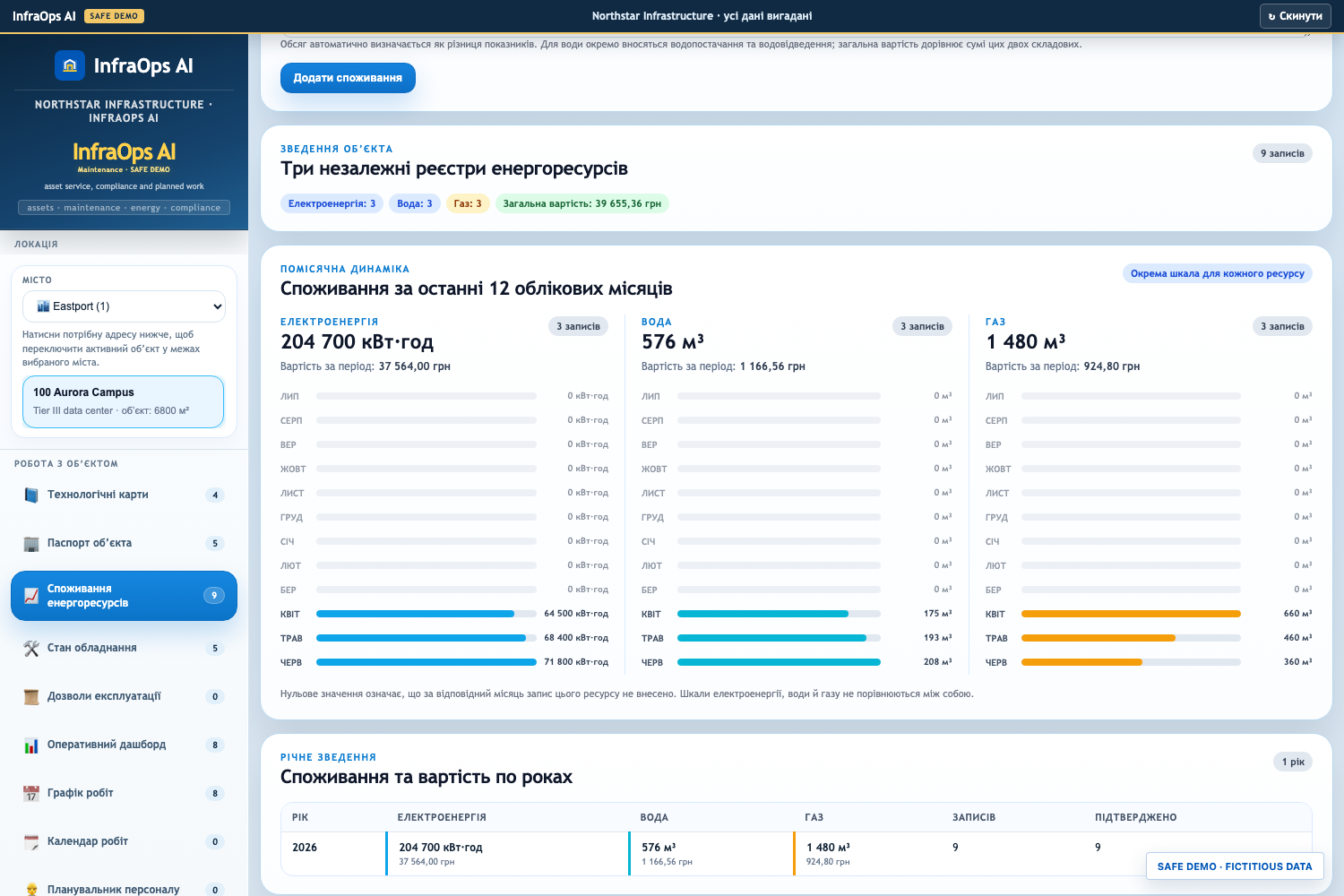
Monthly and Annual Energy Resource Analytics
-
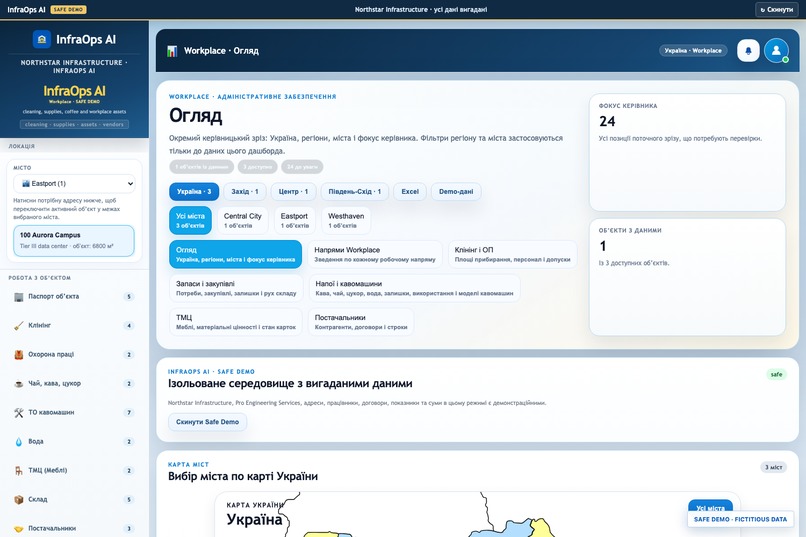
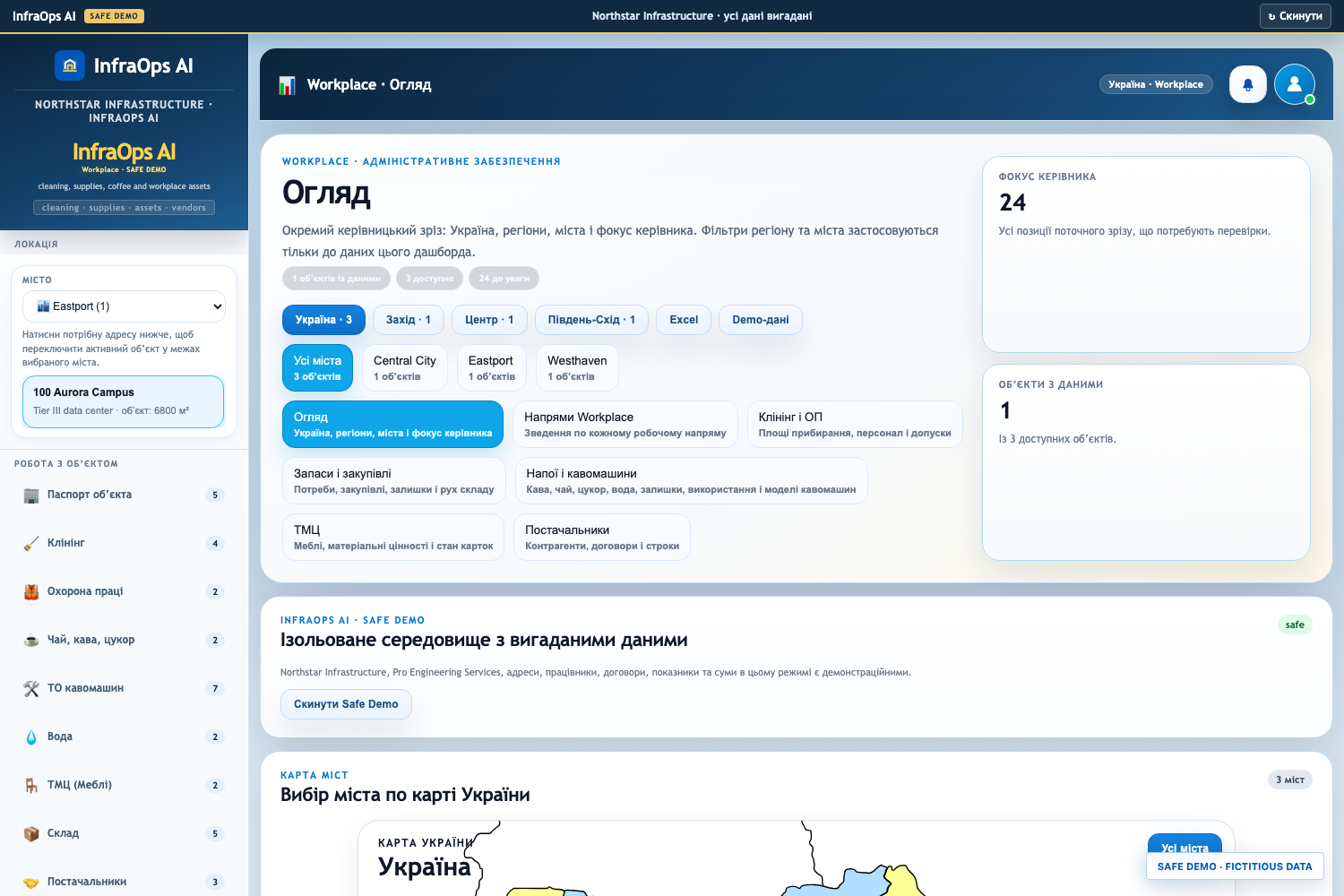
Workplace Operations Management Overview
-
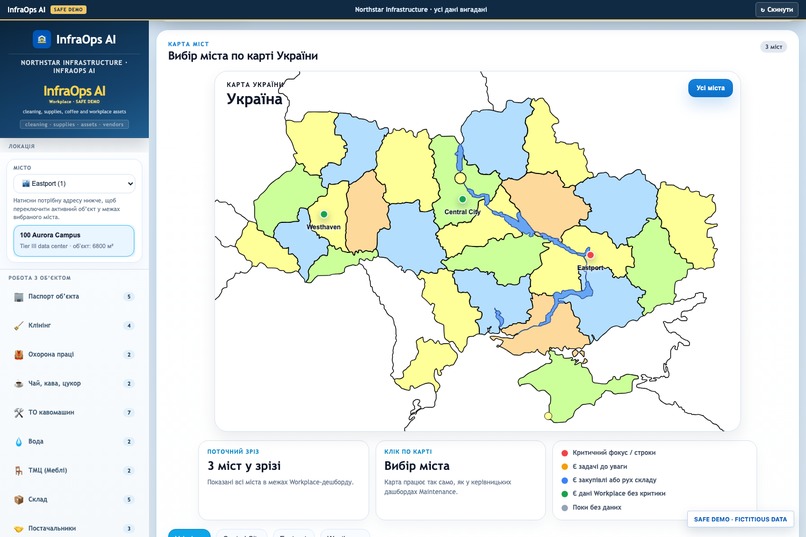
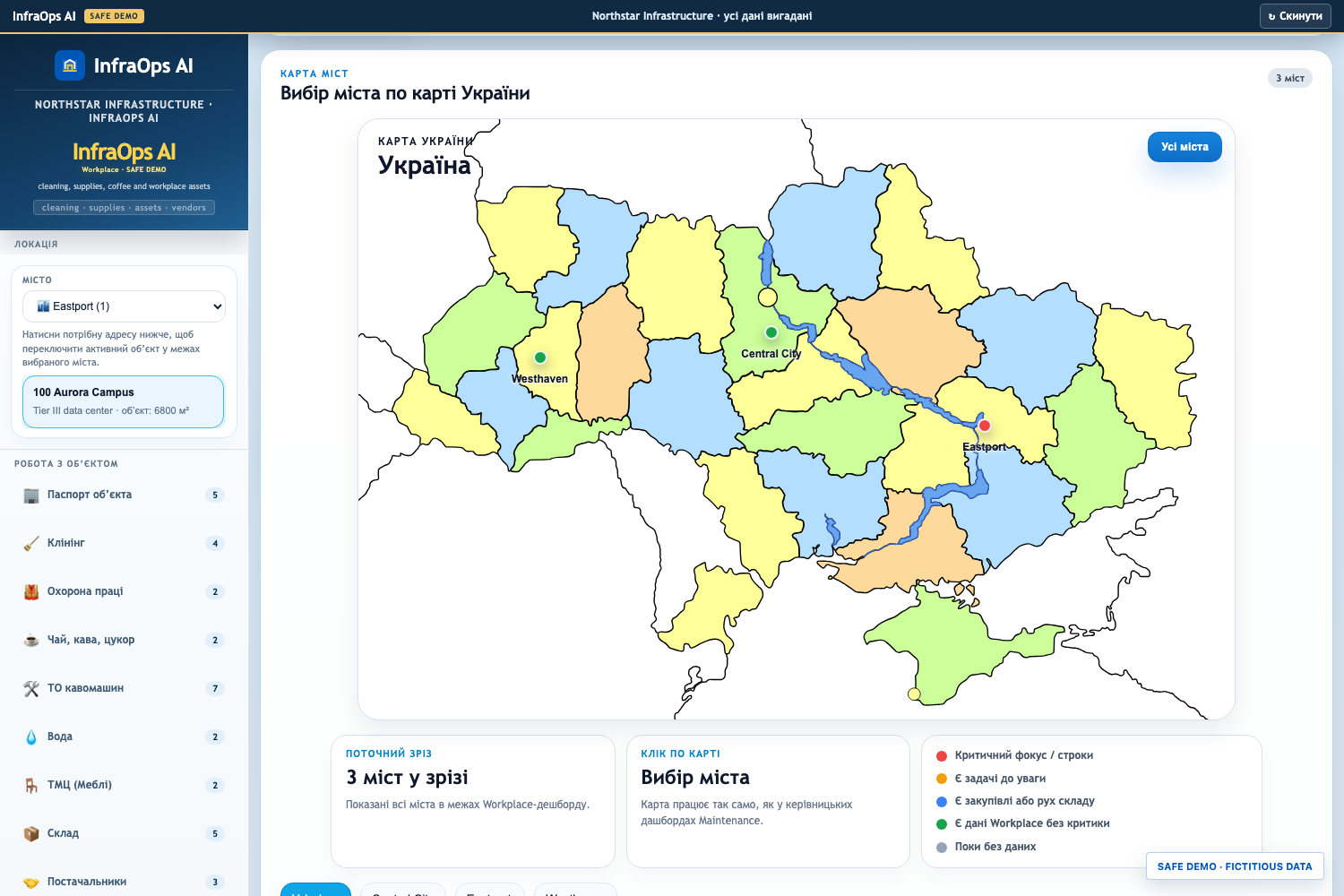
Regional Workplace Services Map
-
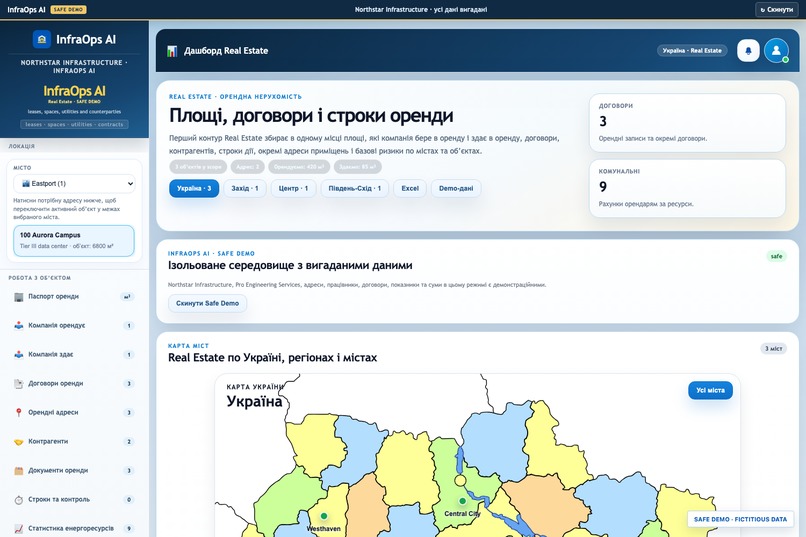
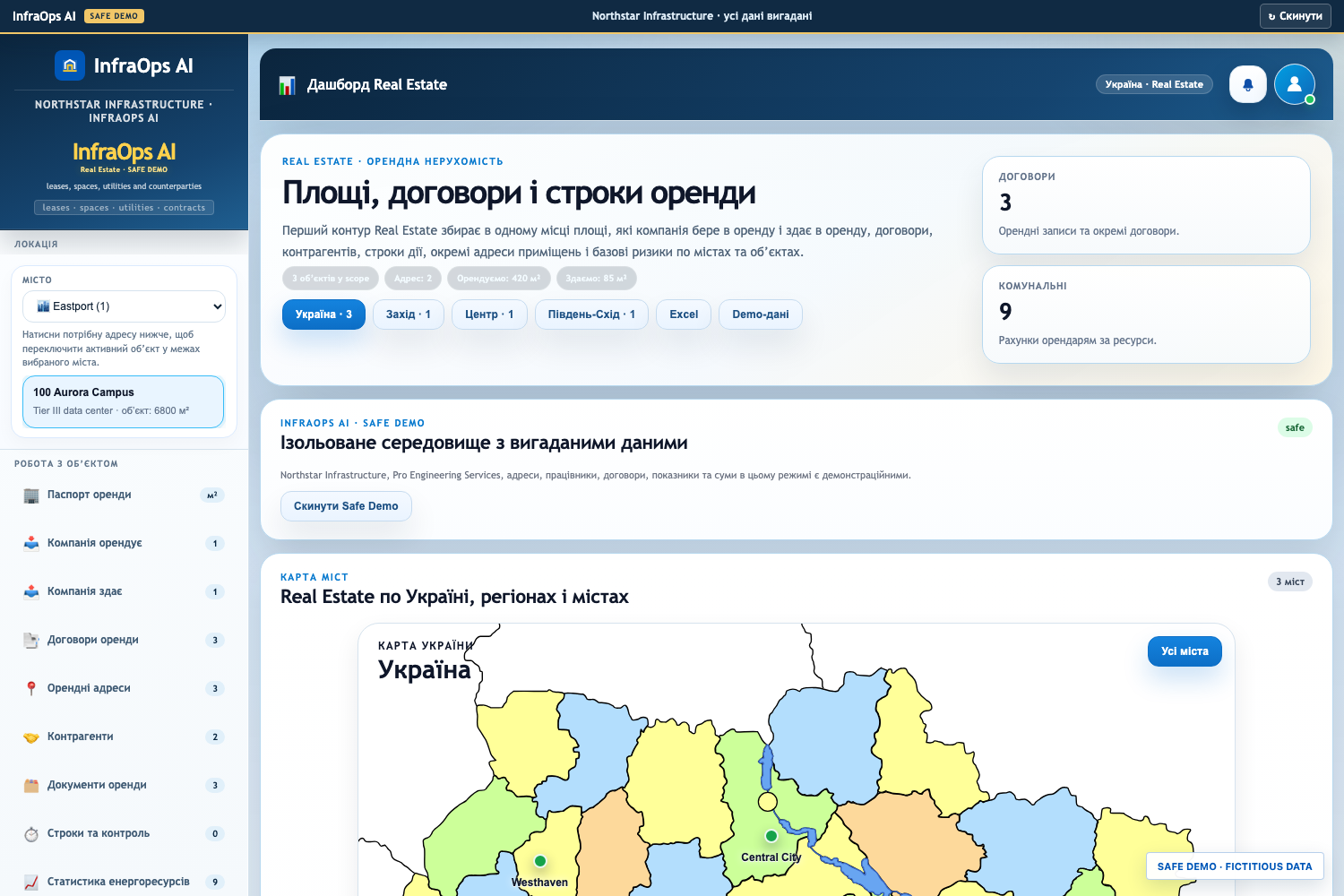
Real Estate Portfolio Management
-
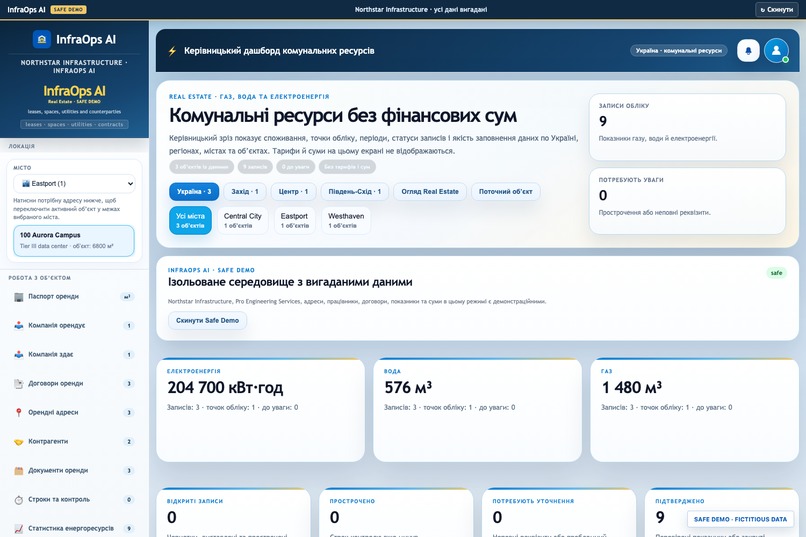
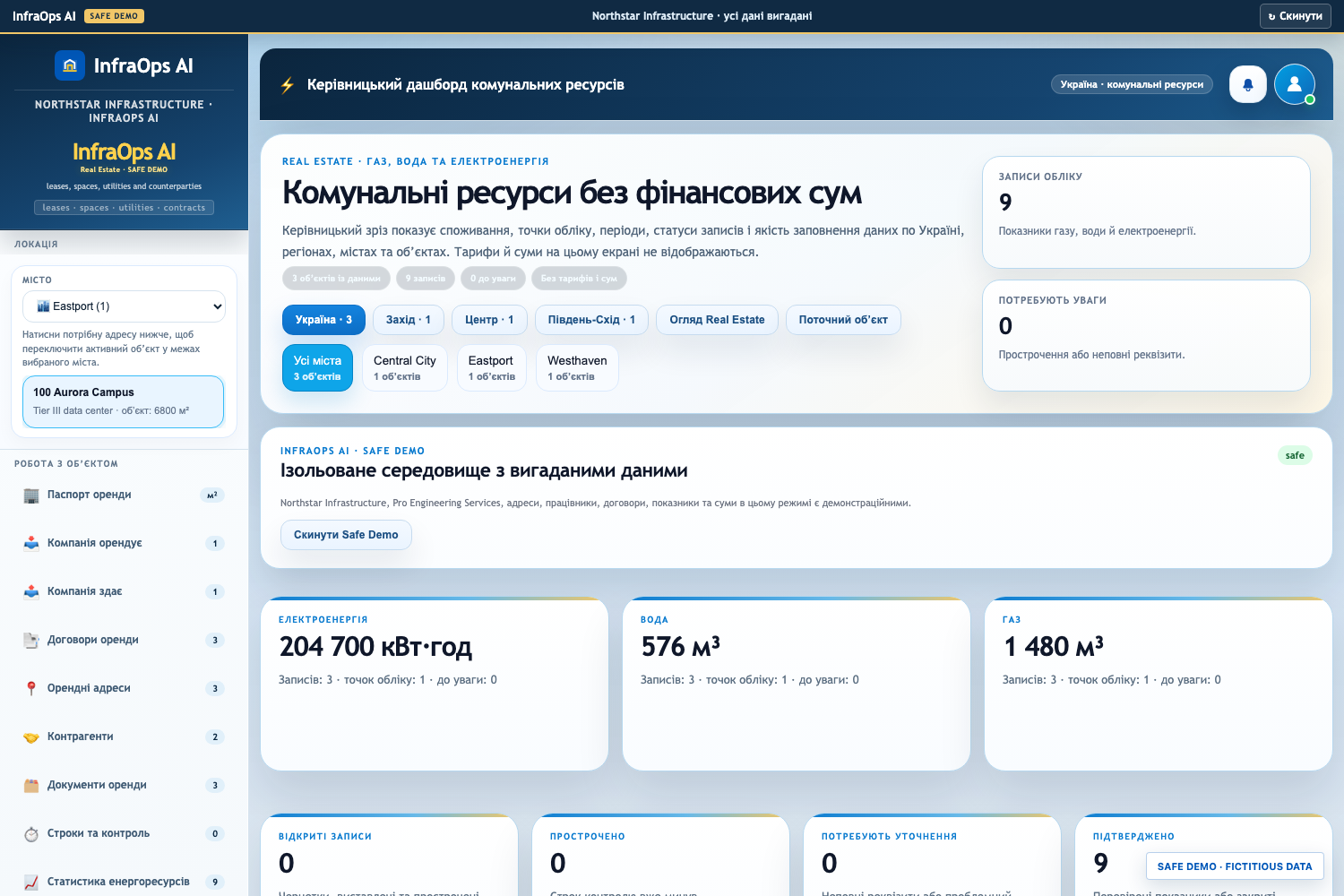
Utility Resource Consumption Overview
Inspiration
InfraOps was inspired by my professional experience in the technical operation of building engineering systems and the coordination of operational processes across multiple facilities.
In my daily work, technical and administrative teams deal with large amounts of information, including:
- maintenance schedules;
- equipment and facility records;
- contractor reports;
- administrative requests;
- technical documentation;
- estimates;
- contracts;
- lease agreements;
- approvals;
- deadlines;
- official correspondence.
In many organizations, this information is distributed across emails, spreadsheets, PDF files, separate databases, and manually maintained tracking tools.
As a result, employees spend significant time searching for information, checking responsibilities, monitoring deadlines, preparing follow-up messages, and collecting project status updates.
I wanted to create a product based on real operational workflows rather than a generic task manager or an abstract software concept.
That idea became InfraOps — one connected workspace for:
- technical maintenance;
- administrative support;
- leased real estate management.
The platform brings together three operational modules:
- SUTO — Technical Maintenance Management System;
- SUAZ — Administrative Support Management System;
- SUON — Leased Real Estate Management System.
The main goal of InfraOps is to help operational teams quickly understand:
- What needs to be done?
- Who is responsible?
- What documents or information are required?
- Which deadlines and unresolved issues need attention?
What it does
InfraOps is a software platform designed to centralize and structure operational processes related to technical maintenance, administrative support, and leased real estate.
The platform is currently a working prototype under active development.
Its purpose is to replace fragmented workflows based on separate emails, spreadsheets, documents, and manual reminders with a connected operational environment.
SUTO — Technical Maintenance Management System
SUTO supports the management of technical maintenance processes.
The module is designed to help users manage:
- facilities and engineering systems;
- equipment records;
- planned and preventive maintenance;
- maintenance schedules;
- work orders;
- maintenance history;
- responsible contractors;
- completion reports;
- technical documents;
- deadlines;
- overdue actions.
SUTO provides a structured view of technical maintenance activities for each facility, engineering system, and equipment unit.
Users can track:
- what work is planned;
- what work is currently in progress;
- what has already been completed;
- which contractor is responsible;
- which documents are required;
- which actions are overdue.
The module can also connect maintenance tasks with reports, estimates, technical comments, and follow-up actions.
SUAZ — Administrative Support Management System
SUAZ supports administrative service processes across facilities, departments, and organizational units.
The module is designed to help users manage:
- administrative support requests;
- request categories;
- priorities;
- responsible employees;
- responsible service providers;
- required materials or services;
- execution deadlines;
- supporting documents;
- approval status;
- completion status;
- communication between requesters and responsible teams;
- recurring administrative activities;
- request history;
- operational reporting.
SUAZ provides a structured workflow from the creation of an administrative request to its assignment, execution, confirmation, and closure.
The module can be used for processes such as:
- organizing access to a facility;
- coordinating service providers;
- arranging materials and supplies;
- supporting workplace and facility needs;
- tracking administrative actions;
- preparing operational requests;
- controlling completion deadlines;
- maintaining supporting documentation.
SUON — Leased Real Estate Management System
SUON supports the management of leased facilities and related obligations.
The module is designed to help users manage:
- leased properties;
- lease agreements;
- landlords;
- contact persons;
- lease periods;
- renewal dates;
- expiration dates;
- tenant and landlord responsibilities;
- property-related documents;
- operational issues at leased facilities;
- payments and supporting records;
- actions assigned to landlords, tenants, or contractors.
SUON helps users understand the current status of each leased facility and monitor the responsibilities of all parties involved.
It provides one place to track:
- key lease information;
- upcoming deadlines;
- unresolved property issues;
- required actions;
- responsible parties;
- supporting documents.
Connected operational workflows
SUTO, SUAZ, and SUON are designed as connected modules rather than three isolated applications.
A single operational task may involve:
- a leased facility in SUON;
- an administrative support request in SUAZ;
- a technical maintenance task in SUTO;
- a contractor;
- supporting documents;
- approvals;
- several deadlines;
- multiple responsible parties.
InfraOps connects these elements within one operational workflow.
For example, when technical work must be performed at a leased facility, the platform can connect:
- the facility and lease information;
- the responsibility of the tenant or landlord;
- the administrative request required to organize access or support;
- the technical maintenance task;
- the responsible contractor;
- the required documents;
- the planned execution date;
- the current completion status.
Current project status
InfraOps is currently a working software prototype under active development.
The current version focuses on:
- structuring operational information;
- connecting the three main modules;
- tracking tasks and responsibilities;
- organizing facility and contractor information;
- monitoring deadlines;
- centralizing supporting documents;
- creating a clear operational workflow.
The current competition version does not yet include AI functionality inside the application.
OpenAI Codex and GPT-5.6 were used as development tools to help create and improve the prototype.
They were not presented as completed user-facing features of the current software.
Future AI-assisted capabilities are part of the product roadmap and are described separately in the “What’s next” section.
How we built it
InfraOps was created as an independent product prototype based on my professional experience in infrastructure operations.
I defined:
- the product concept;
- the purpose of each module;
- the operational workflows;
- the relationships between facilities, equipment, requests, contractors, leases, and documents;
- the business logic;
- the user requirements;
- the demonstration scenarios;
- the interface requirements;
- the final product decisions.
OpenAI Codex was used throughout the development process.
Codex assisted with:
- application structure;
- software architecture;
- code generation;
- frontend implementation;
- backend implementation;
- interface components;
- navigation between modules;
- database logic;
- debugging;
- code refactoring;
- testing;
- interface improvements;
- preparation of demonstration data;
- preparation of the competition version;
- rapid development iterations.
The development process was iterative.
I described the operational problem and the expected result, reviewed the implementation created with Codex, tested the workflow, identified incorrect assumptions, corrected the business logic, and continued improving the product.
This process allowed me to transform practical infrastructure operations experience into a working software prototype.
My primary professional background is not software development.
My role in the project was to provide:
- domain expertise;
- product vision;
- workflow design;
- operational requirements;
- business logic;
- testing scenarios;
- final validation.
Codex supported the technical implementation of these ideas.
The public demonstration uses only fictional organizations, facilities, contractors, people, agreements, and documents.
No confidential employer, customer, contractor, or personal information is included.
Challenges we ran into
Translating real operational processes into software
Infrastructure operations involve many connected processes and responsible parties.
A single task may involve:
- a facility;
- engineering equipment;
- a technical maintenance plan;
- an administrative request;
- a contractor;
- a lease agreement;
- technical documents;
- an estimate;
- an approval;
- several deadlines.
The main challenge was to preserve these relationships while keeping the product understandable and practical.
Connecting three different operational areas
SUTO, SUAZ, and SUON solve different operational problems.
However, they must work as one product.
The platform should not feel like three unrelated applications placed under one name.
The solution was to build shared relationships around:
- facilities;
- tasks;
- contractors;
- responsible parties;
- documents;
- deadlines;
- operational status.
Defining the correct scope
Infrastructure operations can include hundreds of different processes.
Trying to implement everything at once would make the product difficult to understand and difficult to complete.
One of the main challenges was deciding which workflows were essential for the prototype and which should remain part of the future roadmap.
Building without a traditional software engineering background
My professional background is infrastructure operations rather than software engineering.
I had to learn how to:
- describe software requirements clearly;
- structure a digital product;
- review generated code;
- test workflows;
- identify implementation errors;
- separate business logic from interface design;
- work effectively with Codex.
This was both a challenge and an important part of the project.
Protecting confidential information
The product idea was inspired by real professional processes, but the public version could not include real corporate data.
A separate demonstration environment was therefore required.
The demo uses:
- fictional organizations;
- fictional facilities;
- fictional contractors;
- fictional employees;
- fictional agreements;
- fictional documents;
- fictional operational requests.
Privacy and data separation became important product requirements.
Accomplishments that I'm proud of
The main accomplishment is that InfraOps is based on real operational needs rather than an artificial software scenario.
The product reflects the daily work of teams that manage:
- technical maintenance;
- administrative support;
- contractors;
- documents;
- deadlines;
- leased facilities;
- operational responsibilities.
I am especially proud that the platform connects three different operational areas within one product.
SUTO, SUAZ, and SUON are designed to share information and support connected workflows rather than operate as separate systems.
Another important accomplishment is transforming professional domain knowledge into a working software prototype.
InfraOps was created from the perspective of a person who works directly with:
- engineering systems;
- maintenance contractors;
- operational documentation;
- administrative processes;
- leased facilities;
- project deadlines;
- technical and organizational risks.
The project also demonstrates how Codex can help a domain expert participate directly in software creation, even without a traditional software development background.
I am also proud that the competition demo is designed as a safe, independent environment and does not depend on confidential corporate data.
What we learned
I learned that effective software development begins with a clear understanding of the real process being improved.
Codex can generate and modify code, but the quality of the result depends on:
- the accuracy of the requirements;
- the clarity of the workflow;
- the quality of testing;
- the correctness of the business logic;
- continuous review by the product creator.
The most effective development process was:
- identify a real operational problem;
- describe the expected workflow;
- define the required result;
- ask Codex to implement it;
- review the implementation;
- test it using realistic scenarios;
- correct errors and assumptions;
- repeat the process.
I also learned that operational systems must do more than store information.
They must clearly show:
- what requires attention;
- who is responsible;
- which deadline is approaching;
- which documents are missing;
- what action should happen next.
Another important lesson was the need to separate:
- implemented functionality;
- prototype functionality;
- planned functionality.
The current version does not claim to contain AI features that have not yet been implemented.
The project also reinforced the importance of:
- privacy;
- data ownership;
- human oversight;
- clear access controls;
- accurate product communication.
What's next for InfraOps
InfraOps remains under active development.
The next stage is to expand the existing SUTO, SUAZ, and SUON modules and prepare the platform for secure use in real operational environments.
Planned development areas include:
- improved maintenance planning;
- maintenance reporting;
- equipment history;
- administrative request workflows;
- leased property monitoring;
- lease renewal and expiration control;
- contractor and service-provider portals;
- document management;
- approval workflows;
- email integrations;
- calendar integrations;
- mobile access for facility inspections;
- role-based access control;
- audit logs;
- multilingual support;
- integration with enterprise asset-management systems;
- integration with real estate management systems.
Future versions are also planned to include AI-assisted capabilities powered by OpenAI models.
Possible future AI capabilities include:
- preparation of operational summaries;
- analysis of technical and administrative documents;
- extraction of tasks and deadlines from documents;
- identification of overdue actions;
- preparation of draft correspondence;
- comparison of documents and estimates;
- identification of missing information;
- preparation of management reports;
- recommendations for follow-up actions.
These AI-assisted capabilities are part of the product roadmap.
They are not presented as completed functionality in the current competition prototype.
The long-term goal is to create a connected operational platform that helps organizations manage technical maintenance, administrative support, and leased real estate more efficiently.
InfraOps should help operational teams spend less time searching through fragmented information and more time coordinating work, controlling deadlines, and making informed decisions.
Built With
- codex
- gpt-5.6
- openai
- web

Log in or sign up for Devpost to join the conversation.