-
-
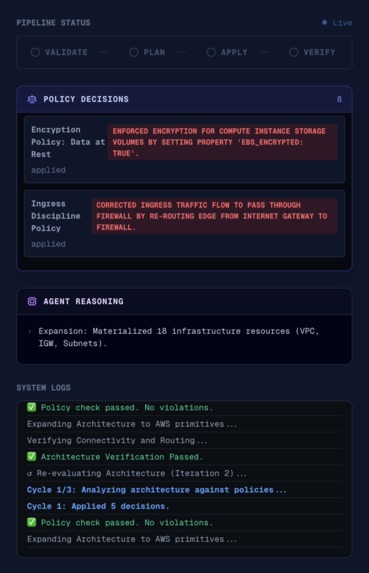
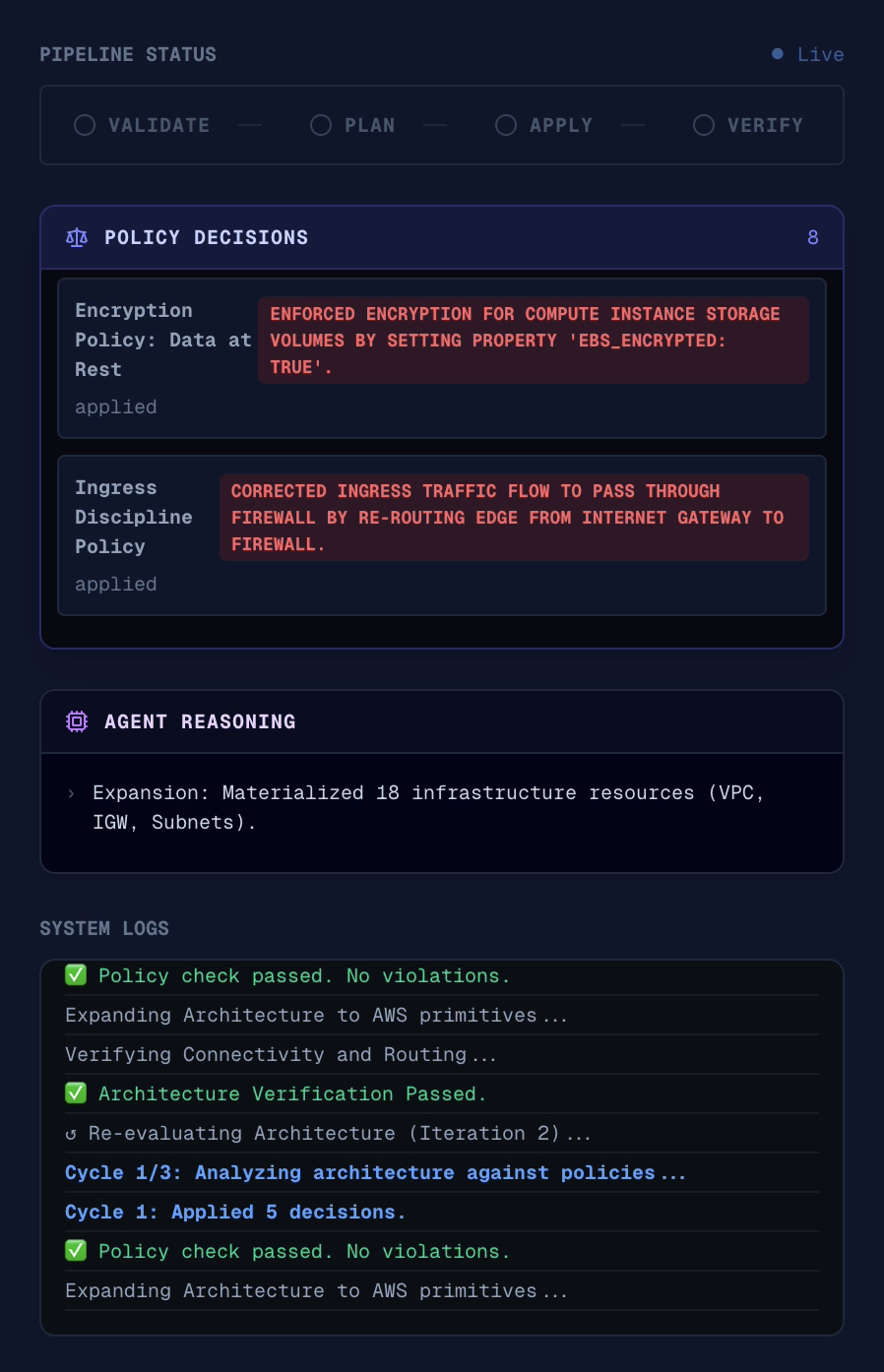
Autonomous validation loop detects risks and refactors architecture before execution.
-
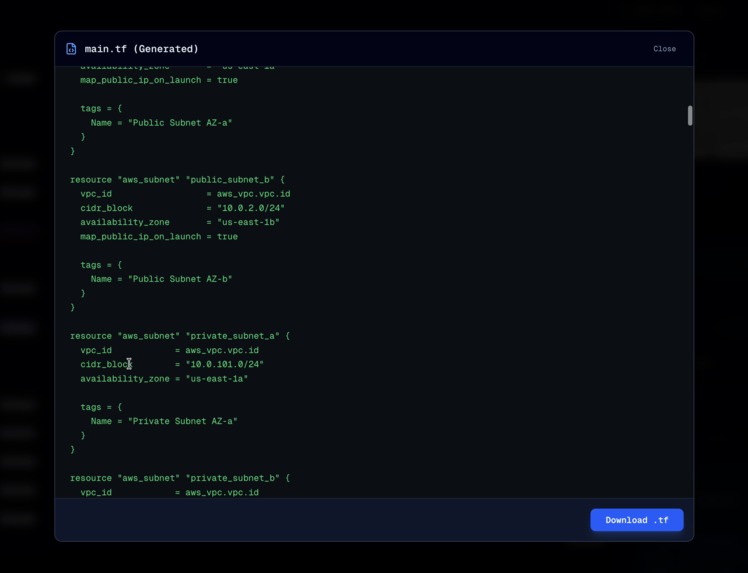
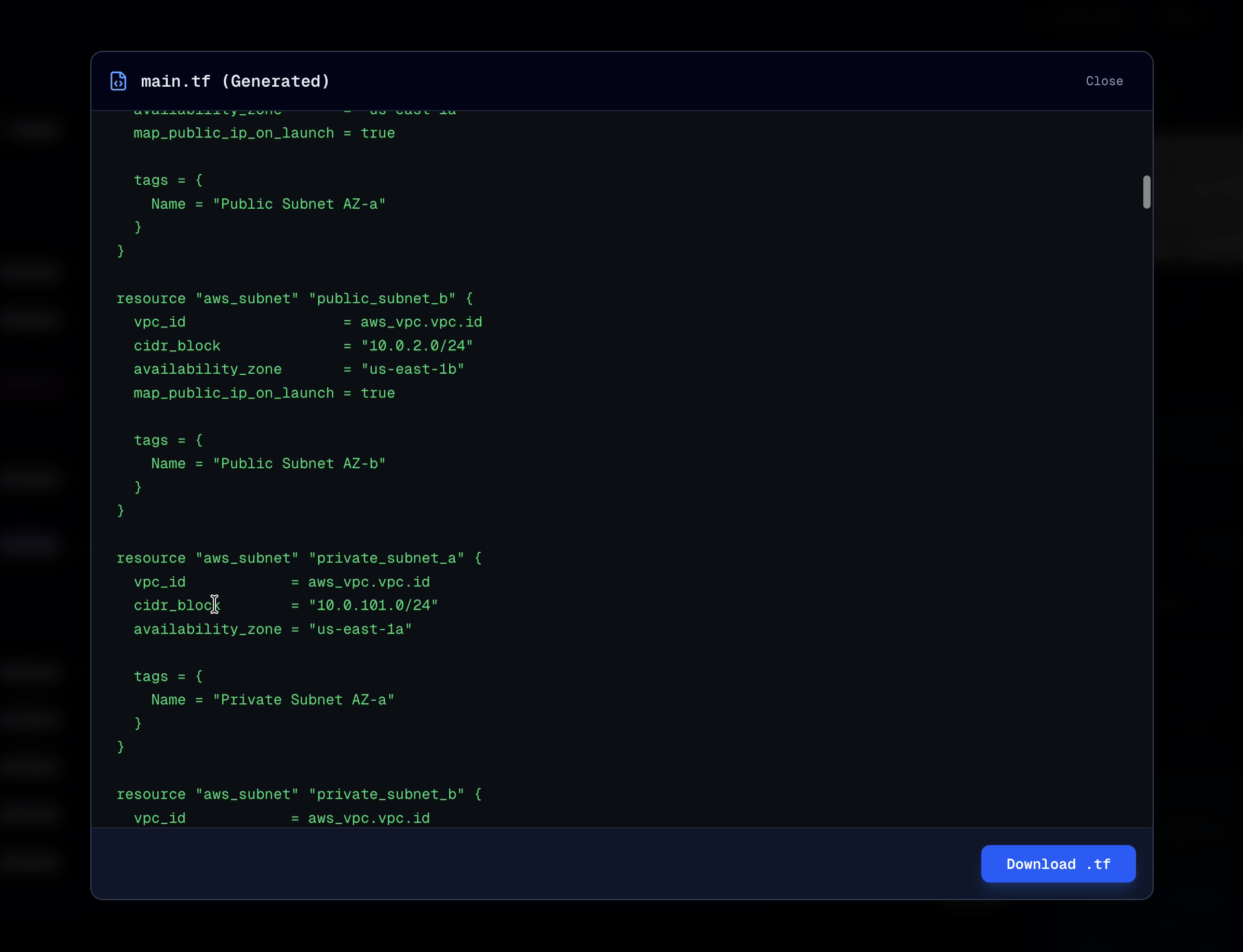
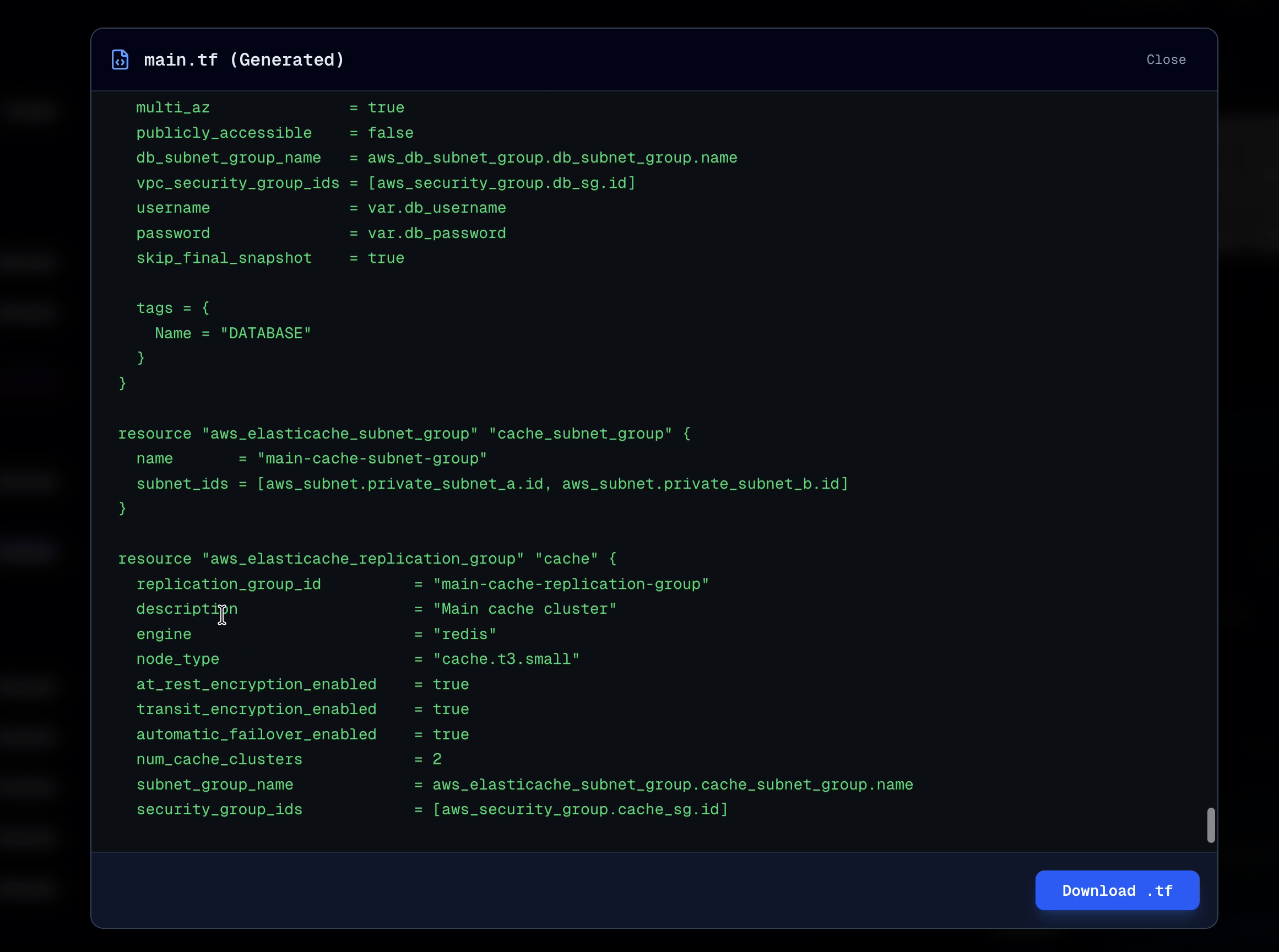
Compiled Terraform artifact produced from a validated infrastructure state.
-
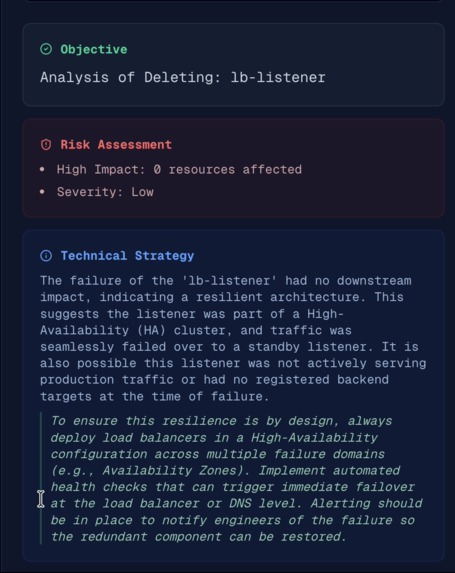
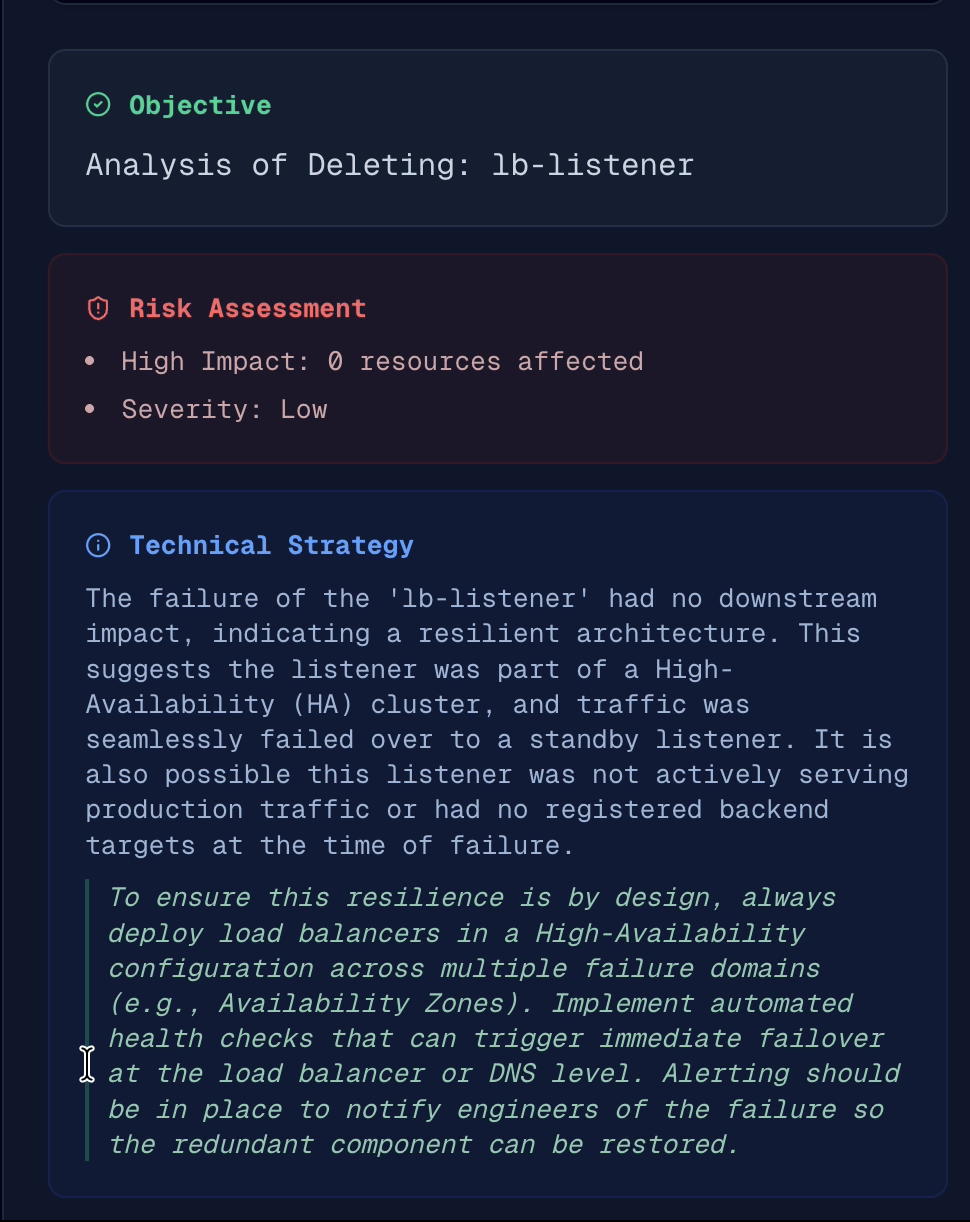
AI simulates cascading failures to reveal infrastructure risk before deployment.
-
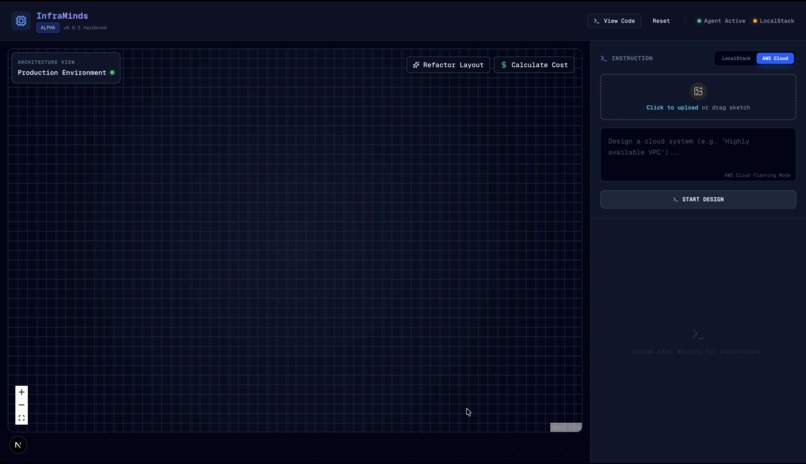
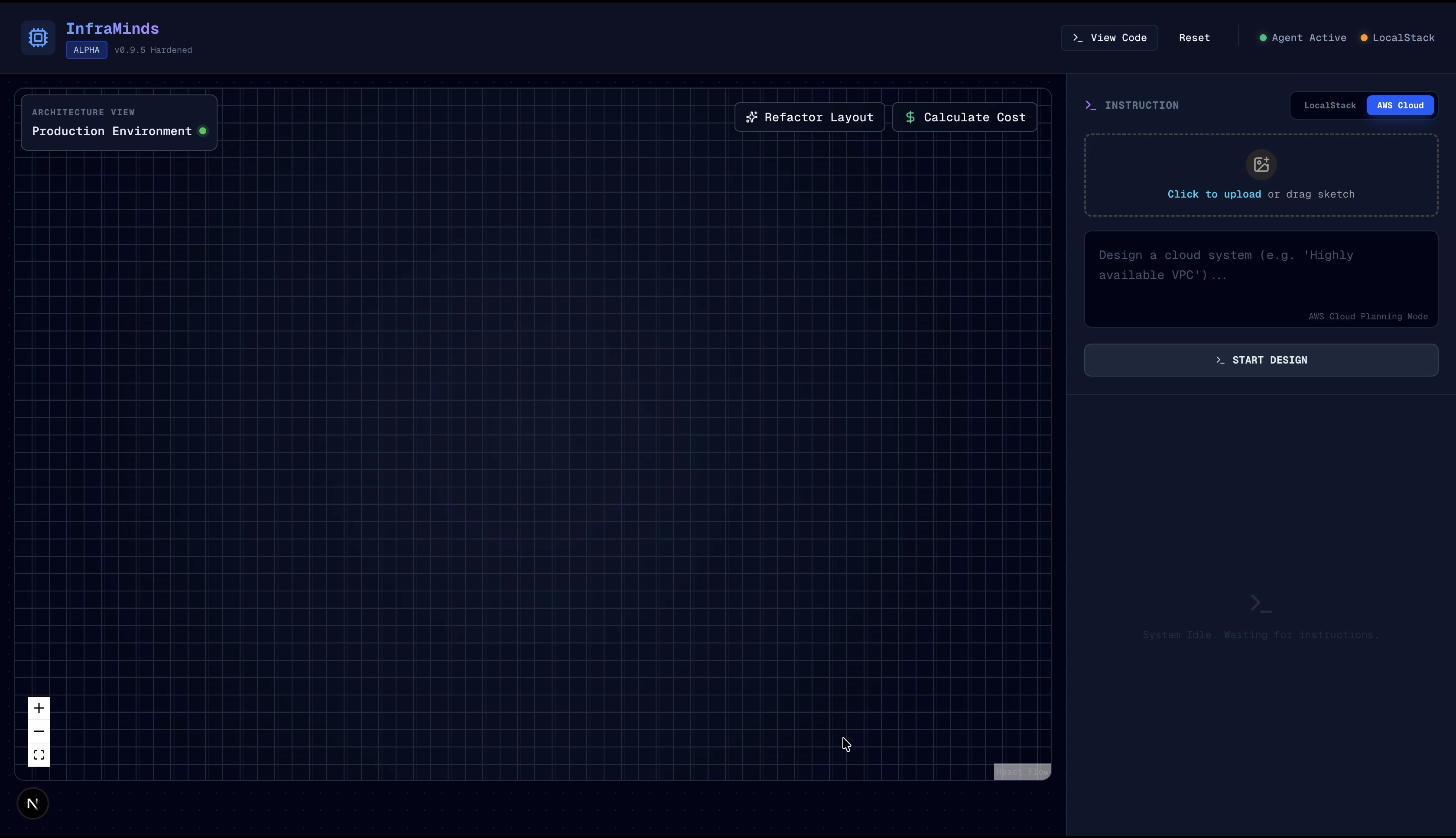
InfraMinds landing experience — where AI transforms intent into verified infrastructure.
-
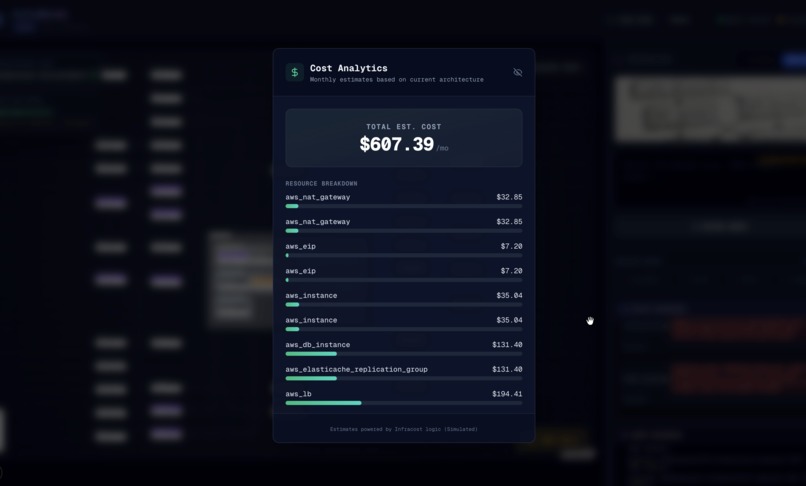
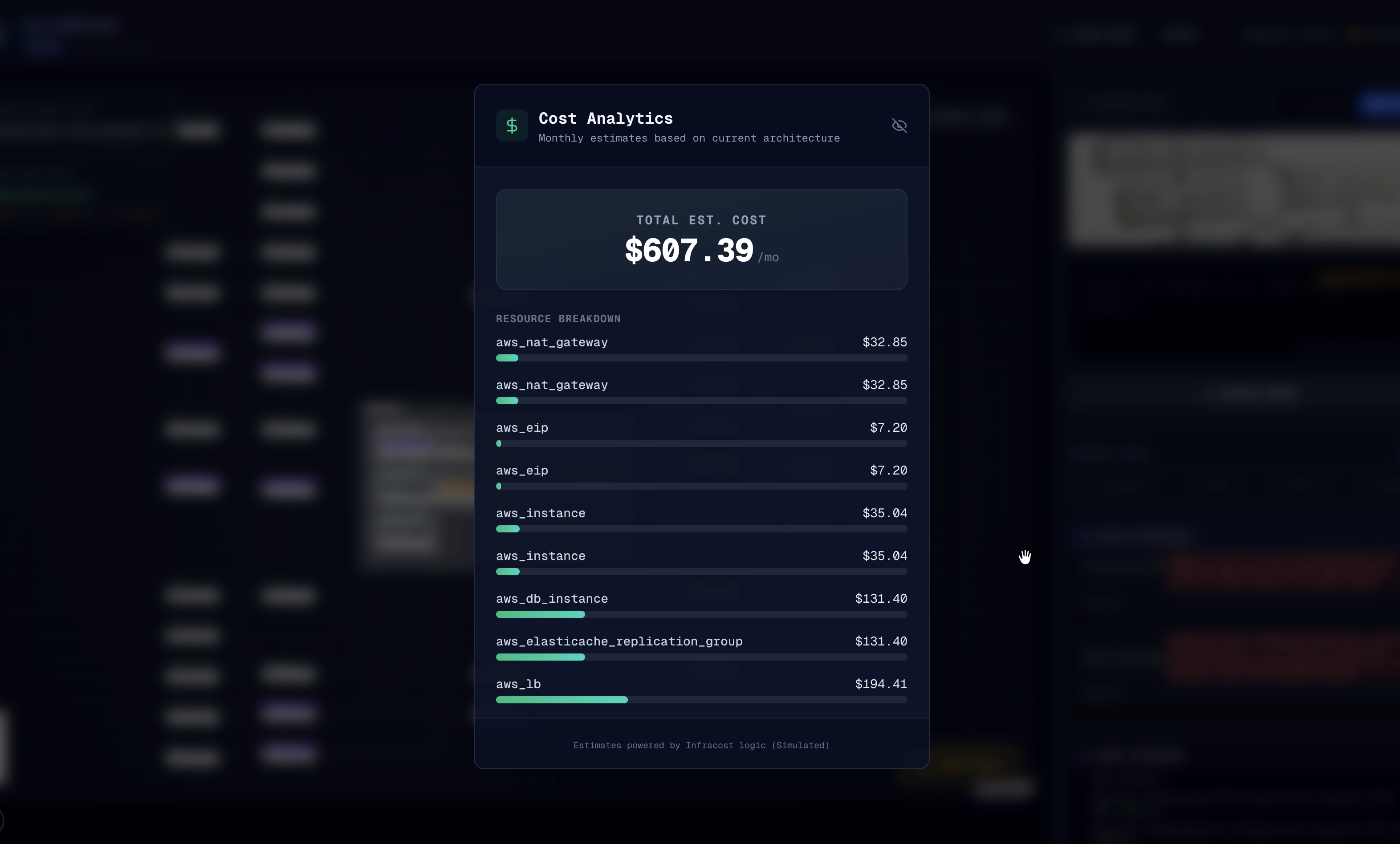
Monthly Cost-Estimation of the Deployable Architecture in AWS
-
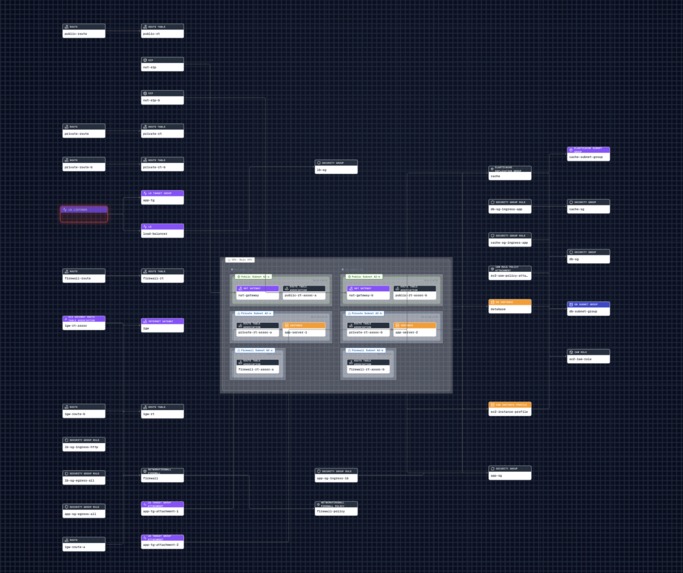
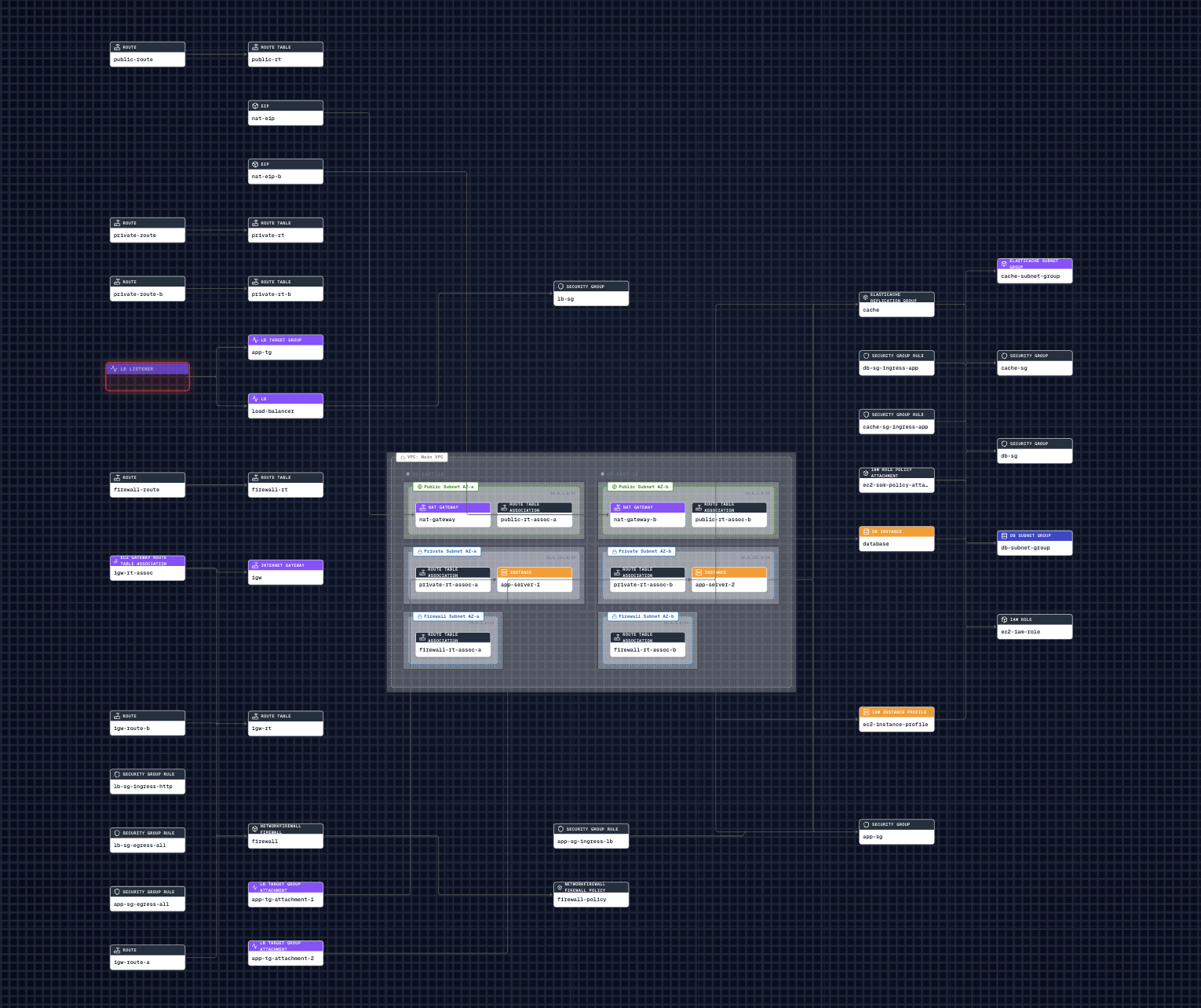
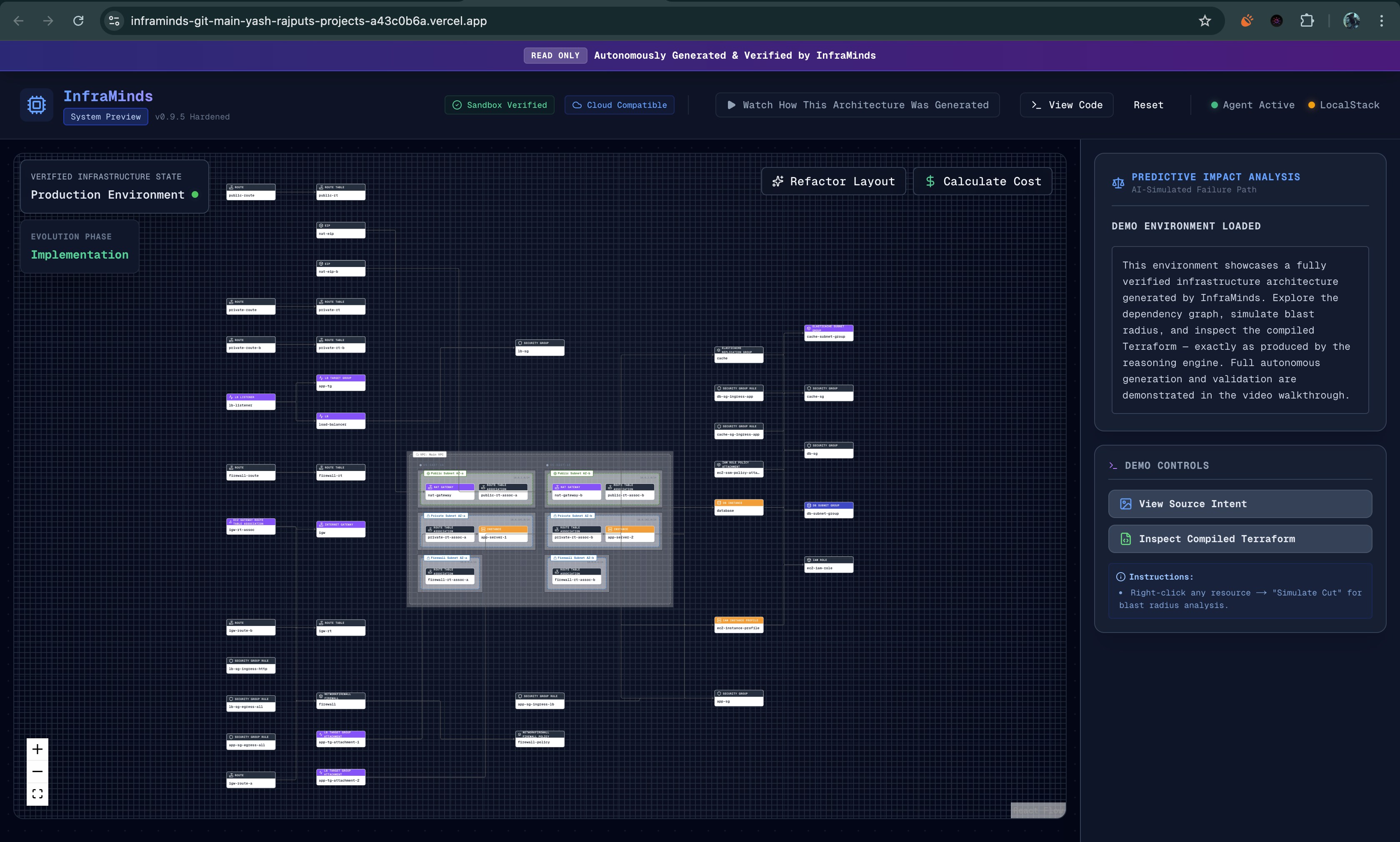
Verified infrastructure graph generated by the autonomous reasoning engine.
-
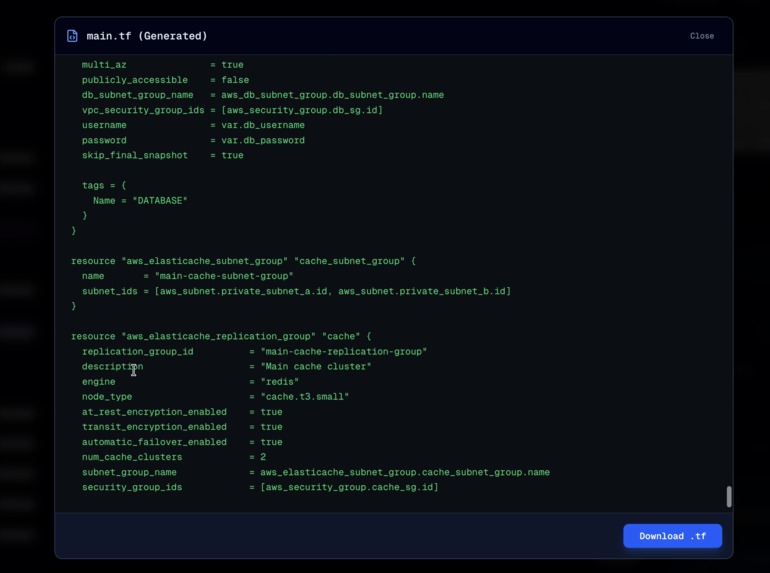
Compiled Terraform artifact produced from a validated infrastructure state.
-
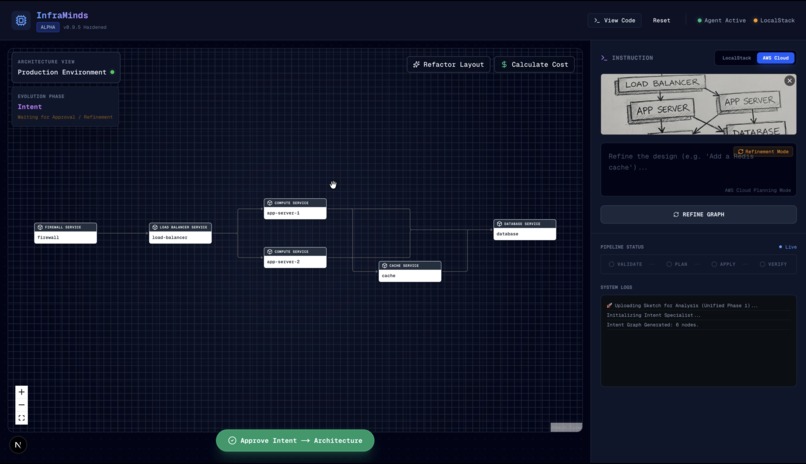
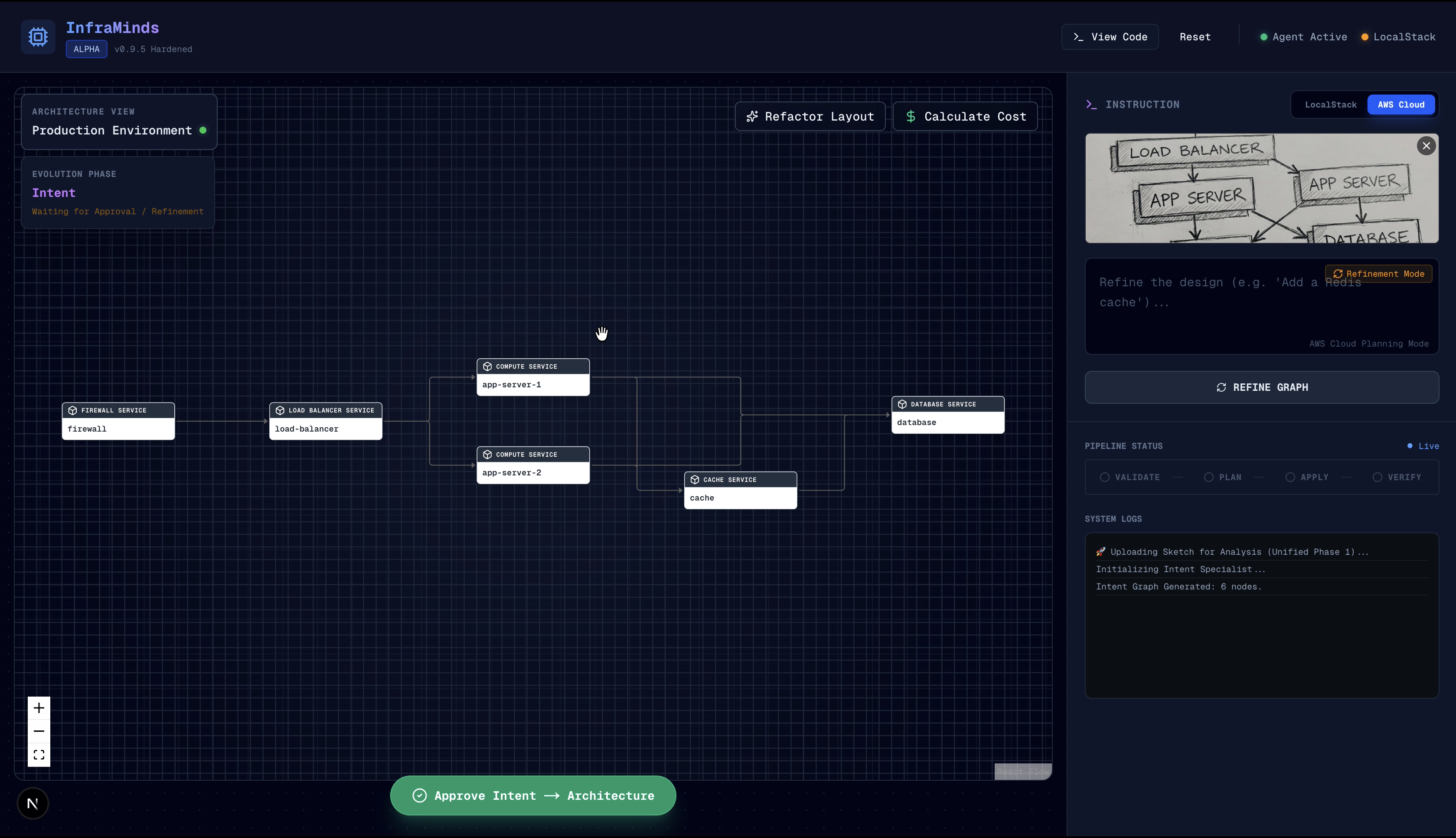
From sketch to structured infrastructure — multimodal intent transformed into a living graph.
-
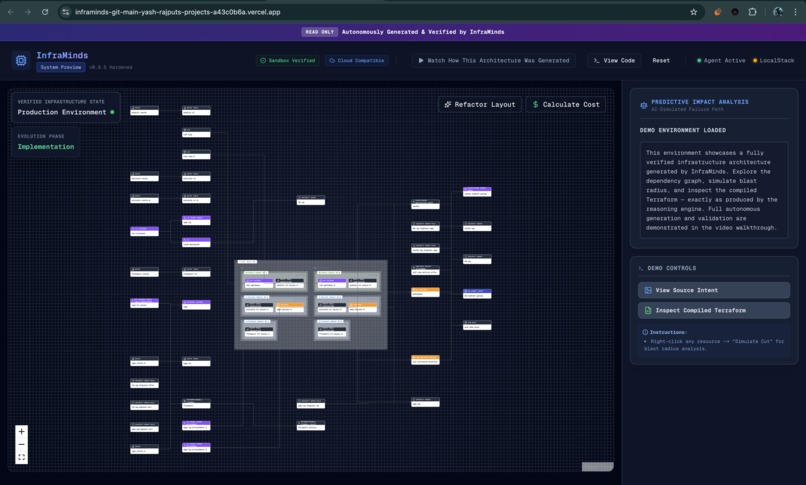
Interactive preview of a verified AI-generated architecture — explore dependencies, simulate blast radius, inspect compiled Terraform.
🎓 InfraMinds: Democratizing Cloud Infrastructure Education with AI
Bridging the gap between theoretical learning and real-world skills through interactive, safe AI simulation.
💡 Inspiration
Cloud infrastructure powers nearly every modern application — yet learning how it works remains inaccessible to many students.
For beginners, infrastructure feels abstract and risky:
- A small mistake can expose a database publicly.
- Real cloud experimentation costs money.
- Tutorials show static diagrams that don’t explain why systems behave the way they do.
Students from under-resourced backgrounds often cannot afford hands-on cloud experimentation, creating a gap between theoretical learning and real-world skills.
I asked myself:
What if students could design infrastructure, see how it behaves, and safely explore failures — without risking real deployments?
InfraMinds was built to make cloud infrastructure interactive, visual, and safe to experiment with.
🛠️ What it does
InfraMinds is an AI-powered cloud architecture learning simulator.
It allows students to:
- 📝 Design cloud systems using natural language or simple diagrams.
- 🕸️ Instantly visualize infrastructure as a dependency graph.
- 🛡️ Detect security risks (e.g., public databases, open ports).
- 💥 Simulate cascading failures using a “Blast Radius” engine.
- 📄 See how real Infrastructure-as-Code (Terraform) is generated.
- 📦 Test designs safely inside a sandbox (LocalStack).
Instead of memorizing concepts, students interact with a living system. Infrastructure is modeled mathematically as a graph:
$$G = (V, E)$$
Where:
- $V$ represents resources (VPCs, subnets, databases, servers)
- $E$ represents dependencies and trust relationships
By reasoning over this graph, InfraMinds shows students:
- What happens if a resource fails.
- How dependencies propagate.
- Why certain designs are insecure.
- How architecture decisions affect reliability and scalability.
This transforms infrastructure from something invisible into something explainable.
🎓 Education Impact
InfraMinds directly addresses educational inequality in cloud learning:
1. Safe Learning Environment
Students can experiment without risking real AWS costs or production mistakes.
2. Visual Understanding
Instead of static slides, learners see how systems behave dynamically.
3. Failure-Based Learning
Students learn by simulating failures — an approach proven to improve retention.
4. Bridging Theory and Industry
InfraMinds connects classroom concepts to real Infrastructure-as-Code workflows. This makes DevOps and cloud engineering more approachable for beginners, especially those who may not have access to paid cloud labs or enterprise tools.
🌍 Social Impact
Infrastructure knowledge is a gateway to high-paying tech careers. However:
- Many students lack safe environments to practice.
- Cloud credits are limited.
- Mistakes in real environments are expensive.
InfraMinds reduces these barriers by:
- ✅ Providing a sandboxed architecture playground.
- ✅ Visualizing security risks before they happen.
- ✅ Teaching responsible infrastructure design.
- ✅ Encouraging experimentation without financial risk.
By lowering entry barriers, InfraMinds promotes equitable access to cloud engineering education.
⚙️ How we built it
InfraMinds was developed as a full-stack AI system:
| Component | Tech Stack | Role |
|---|---|---|
| Frontend | Next.js + React Flow | Interactive graph visualization |
| Backend | FastAPI (Python) | Orchestration logic |
| Graph Engine | NetworkX | Modeling dependencies and blast radius simulation |
| AI Core | Gemini | Multimodal reasoning and architecture generation |
| Infrastructure | Terraform | Infrastructure-as-Code generation |
| Sandbox | LocalStack | Simulating AWS safely locally |
The Reasoning Pipeline:
- Parse user intent (text or diagram).
- Construct an abstract dependency graph.
- Run policy validation.
- Simulate cascading failures.
- Compile verified Terraform code.
- Optionally test inside a sandbox environment.
A lightweight demo version is deployed so judges can safely interact with the system.
🧩 Challenges we ran into
- Translating diagrams into structured systems: Converting visual designs into machine-readable graph structures required careful dependency modeling.
- Preventing AI hallucination: Instead of directly generating infrastructure code, I implemented a graph-first reasoning layer to ensure logical validation before compilation.
- Designing for beginners: Infrastructure is complex. Simplifying interactions without removing technical authenticity required several UI refinements.
- Safe sandbox execution: Integrating Terraform with LocalStack while maintaining isolation required precise configuration management.
🏆 Accomplishments that we're proud of
- 🚀 Built a functioning AI-driven infrastructure reasoning engine.
- 💥 Implemented real blast radius simulation using graph traversal.
- 🛡️ Integrated security validation and self-correction logic.
- 💻 Created both a full technical version and a beginner-friendly demo version.
- 📈 Designed a system with potential to scale into educational platforms and industry tools.
Most importantly, InfraMinds turns infrastructure from something intimidating into something learnable.
📚 What we learned
- Students learn systems better when they can simulate consequences.
- Visual feedback dramatically improves comprehension.
- AI is most effective when combined with structured logic.
- Infrastructure education must prioritize safety and accessibility.
- Technical depth and beginner-friendly design can coexist.
InfraMinds began as an experiment in safer infrastructure learning — but it demonstrated how AI can democratize complex technical education.
🚀 Impact & Future Potential
InfraMinds has the potential to evolve into a cloud education platform for:
- Universities teaching DevOps and distributed systems.
- Bootcamps introducing Infrastructure-as-Code.
- Community colleges expanding cloud curricula.
- Students preparing for cloud certification exams.
Future Roadmap:
- [ ] Guided lesson modes for beginners.
- [ ] Pre-built educational templates.
- [ ] Collaboration features for classroom use.
- [ ] Multi-cloud simulation support.
- [ ] Integration with learning management systems.
InfraMinds can grow from a hackathon project into a scalable educational tool that bridges the gap between theory and industry practice.
Built With
- amazon-web-services
- docker
- fastapi
- generative-ai
- google-gemini
- localstack
- networkx
- next.js
- python
- react
- react-flow
- terraform

Log in or sign up for Devpost to join the conversation.