-
-
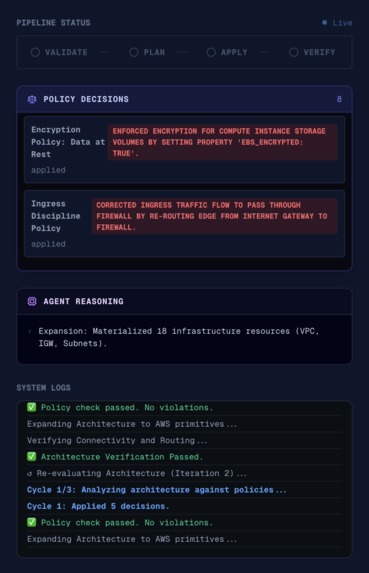
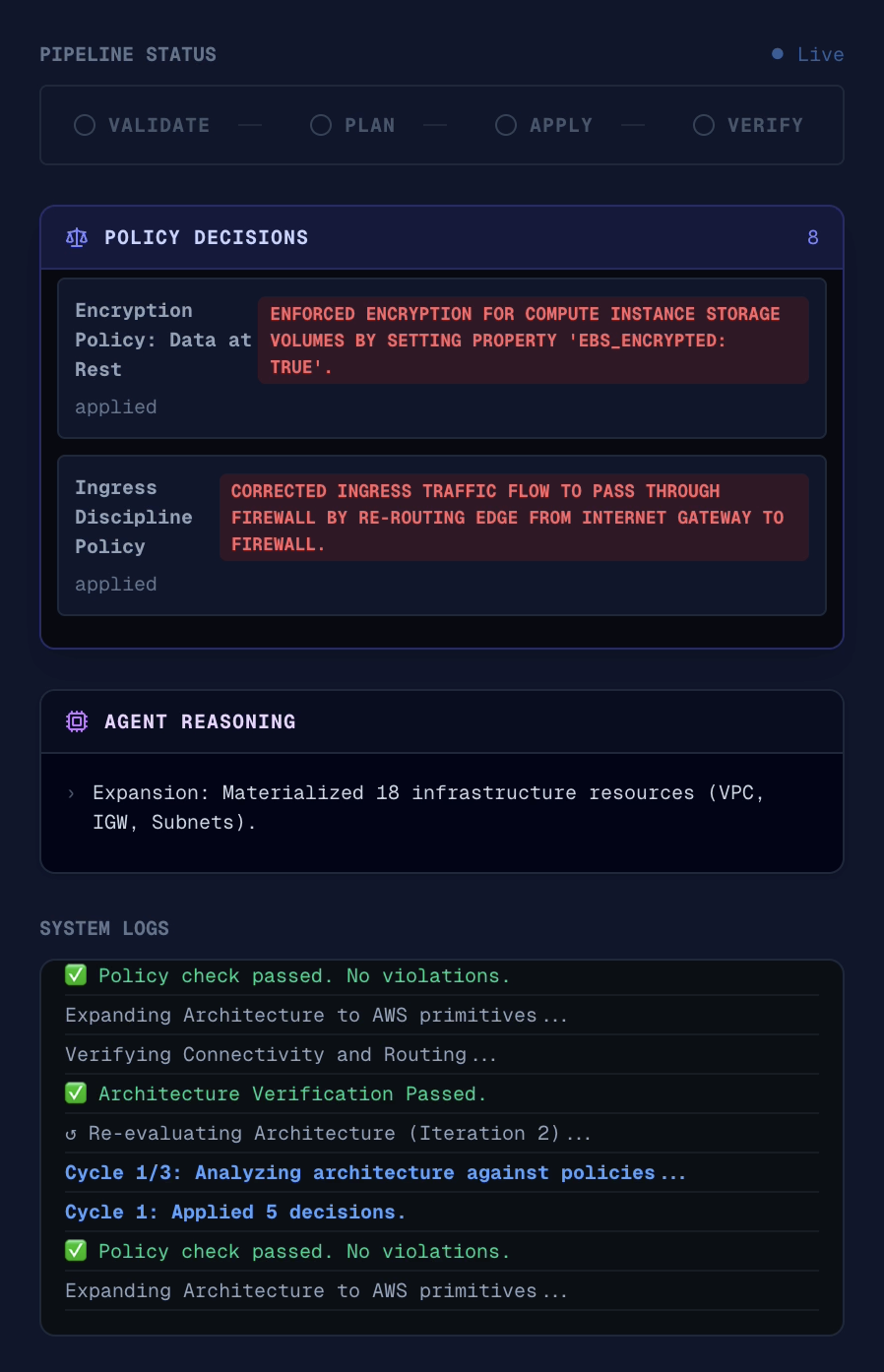
Autonomous validation loop detects risks and refactors architecture before execution.
-
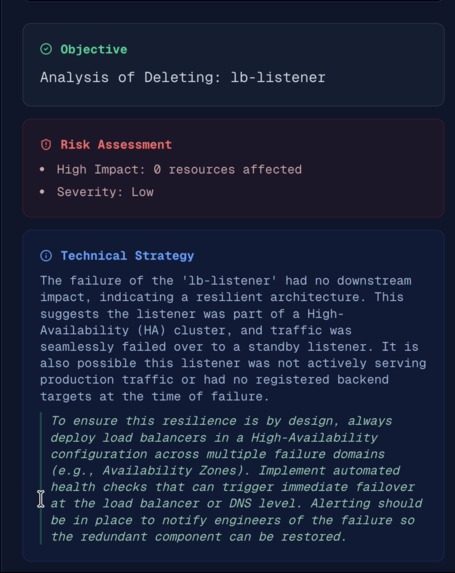
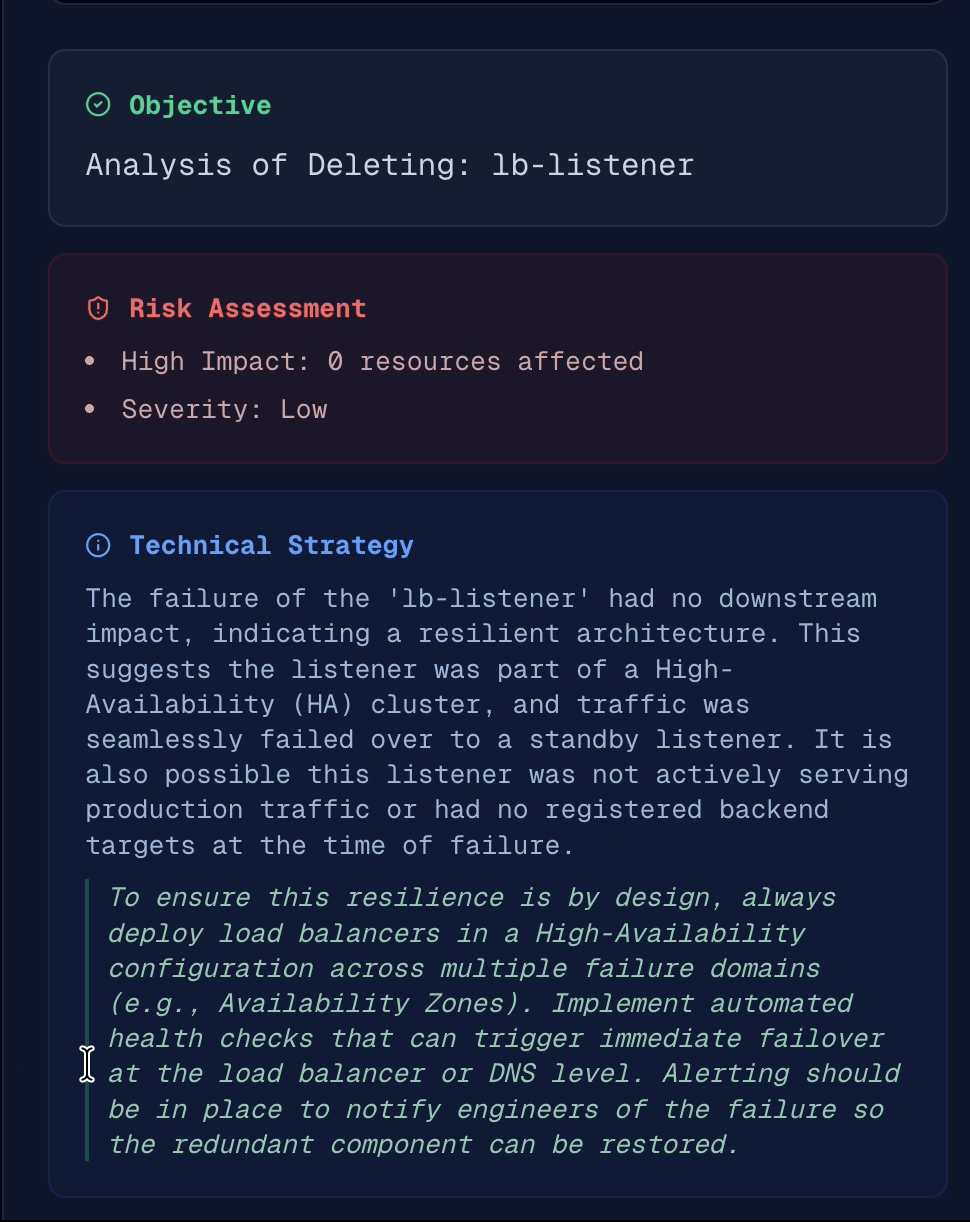
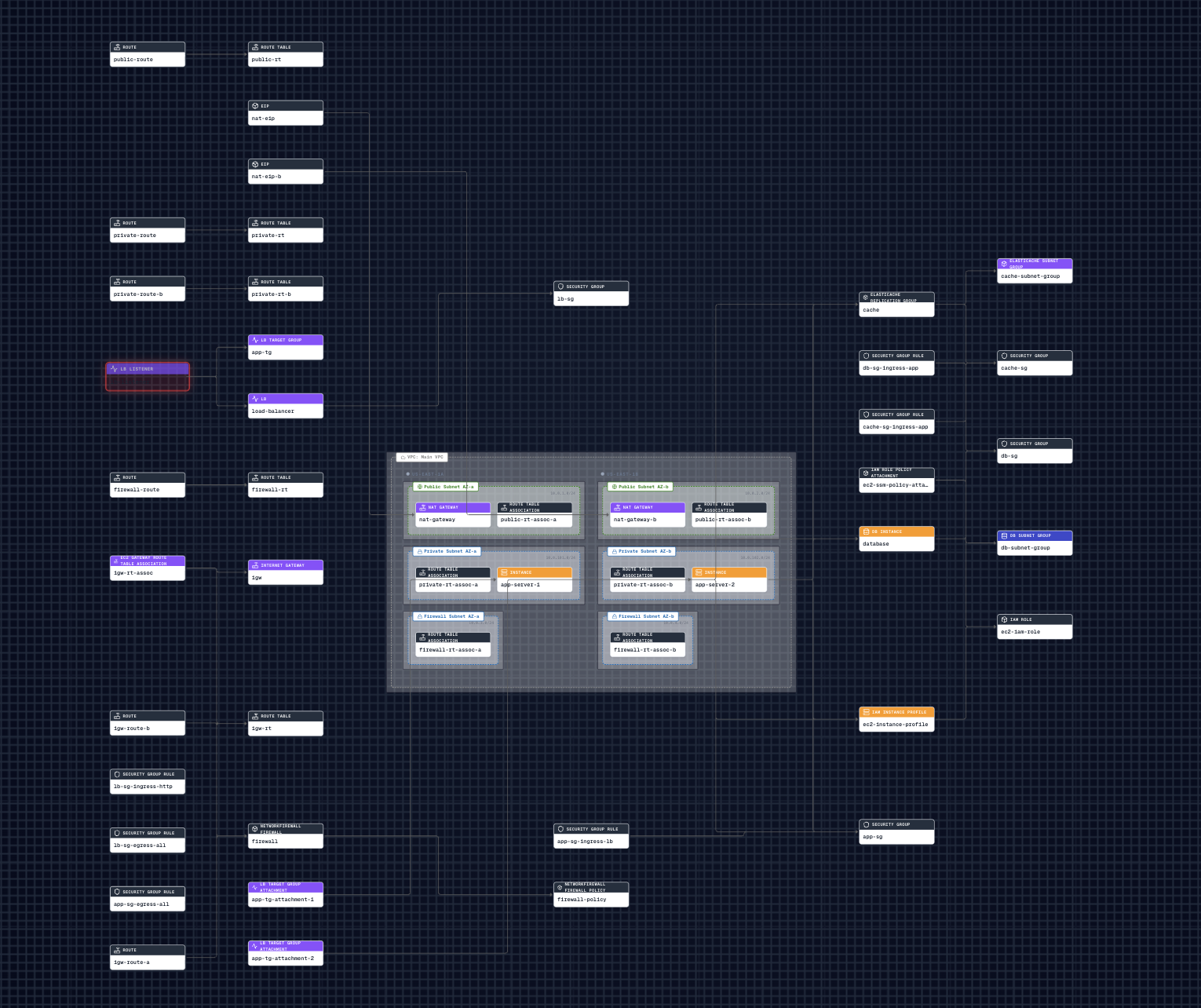
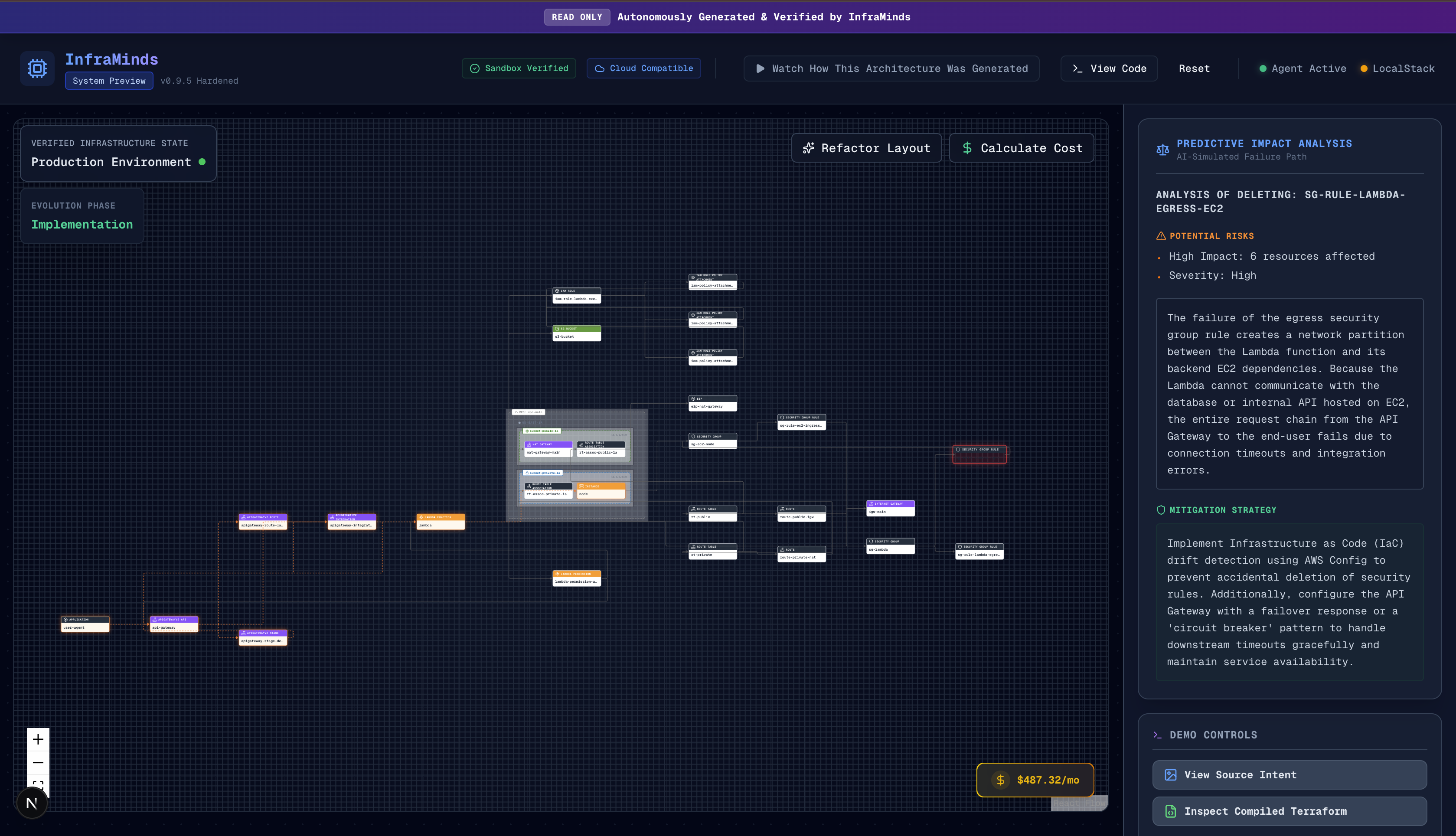
AI simulates cascading failures to reveal infrastructure risk before deployment.
-
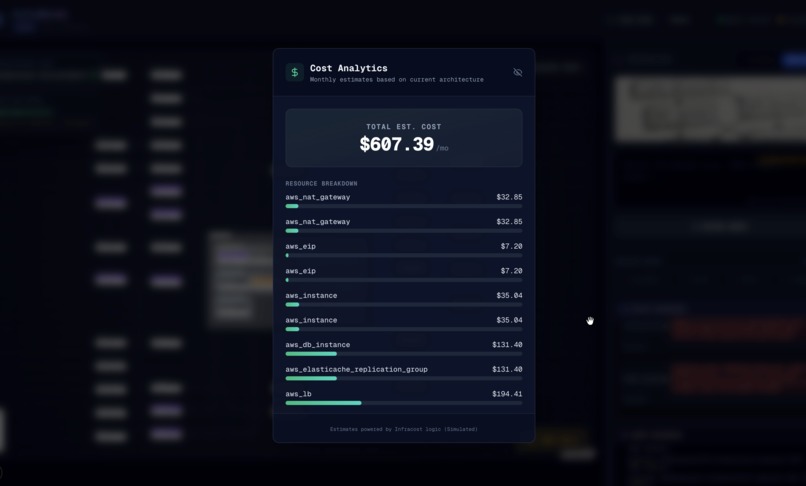
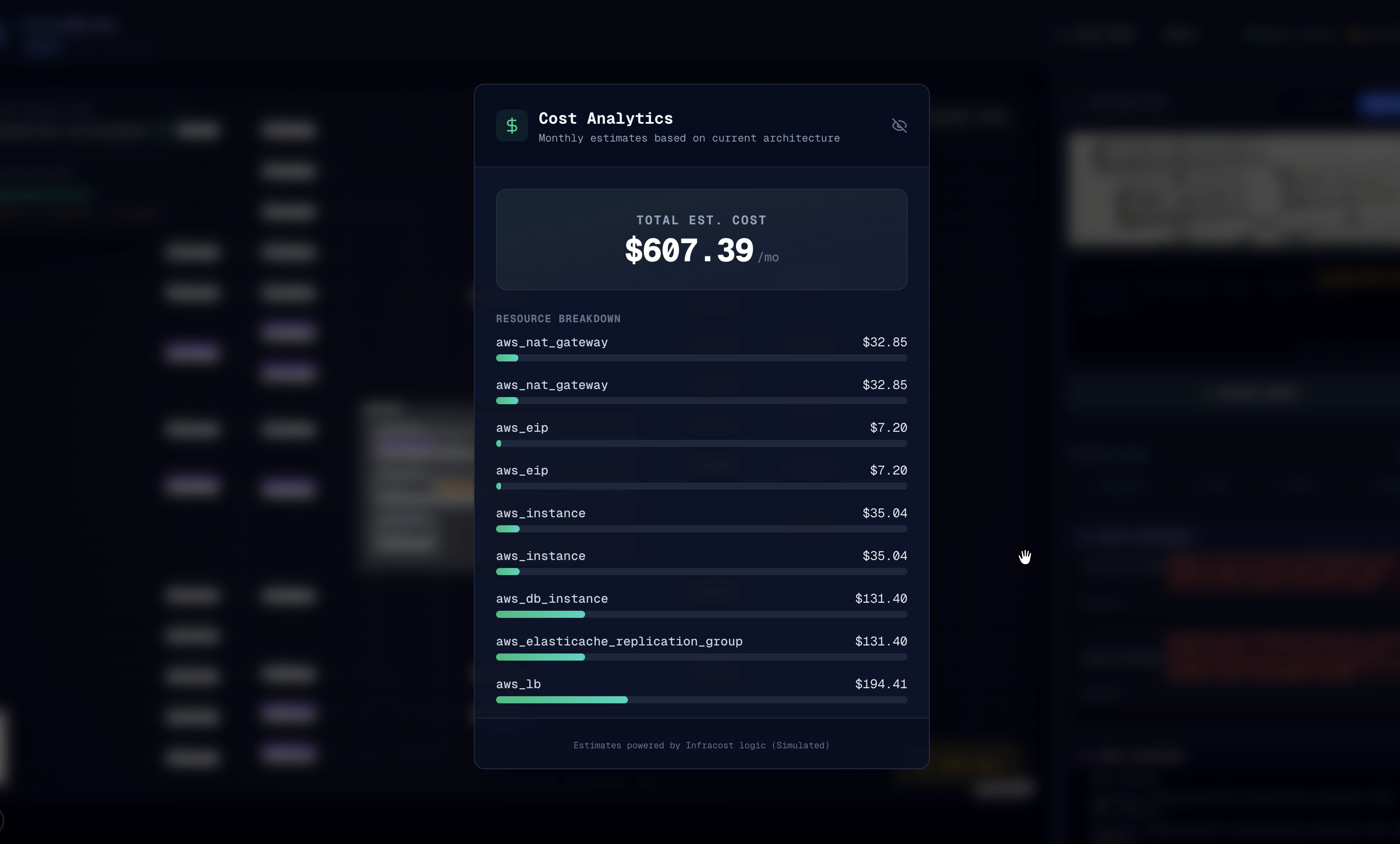
Monthly Cost-Estimation of the Deployable Architecture in AWS
-
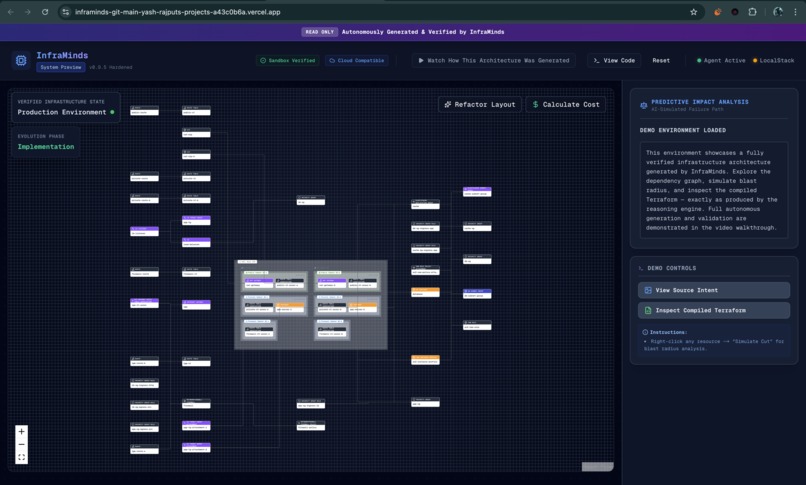
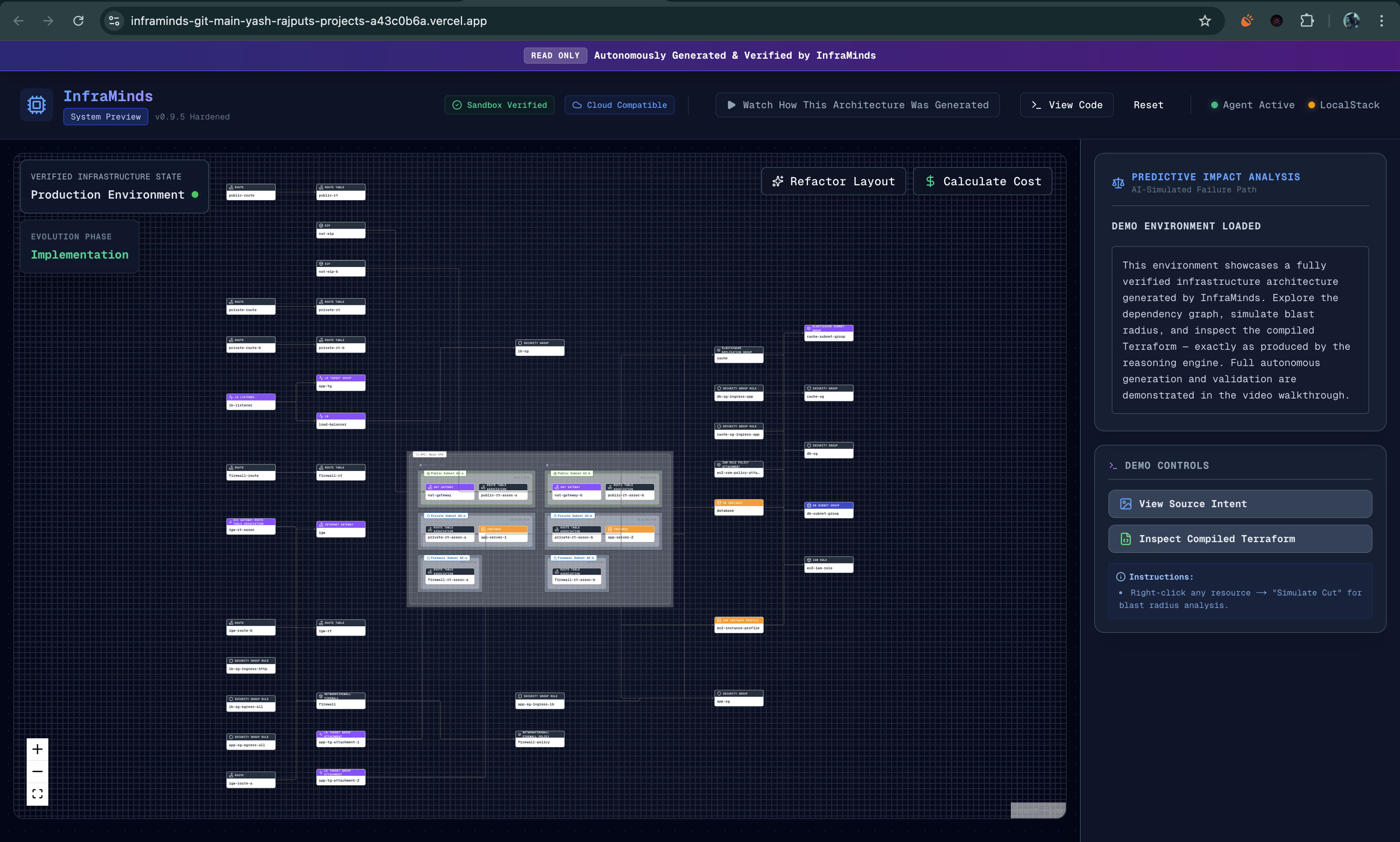
Interactive preview of a verified AI-generated architecture — explore dependencies, simulate blast radius, inspect compiled Terraform.
-
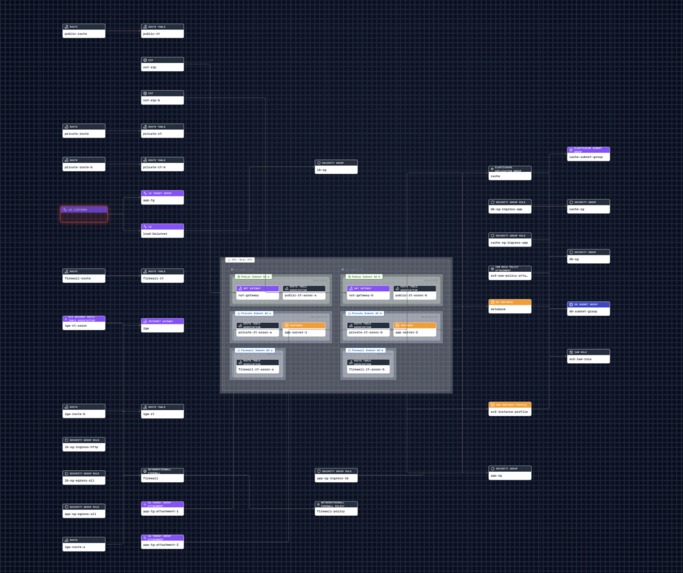
Verified infrastructure graph generated by the autonomous reasoning engine.
-
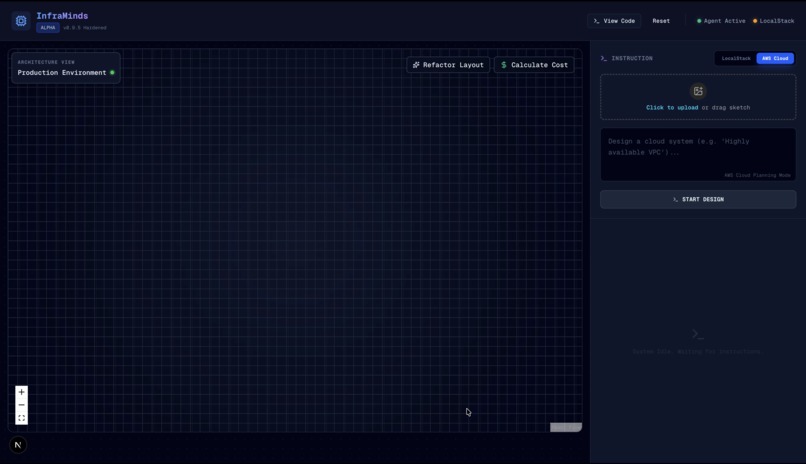
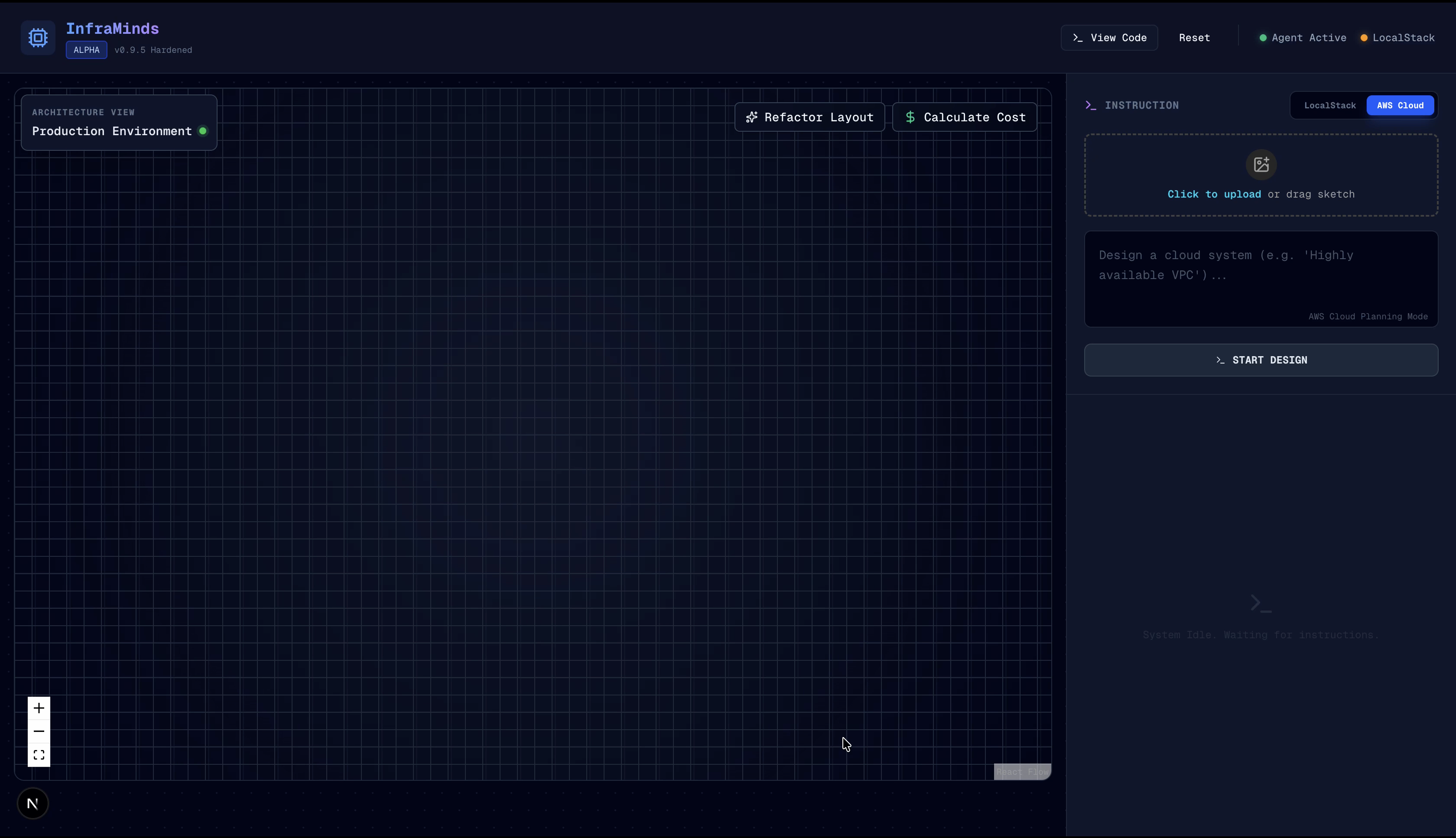
InfraMinds landing experience — where AI transforms intent into verified infrastructure.
-
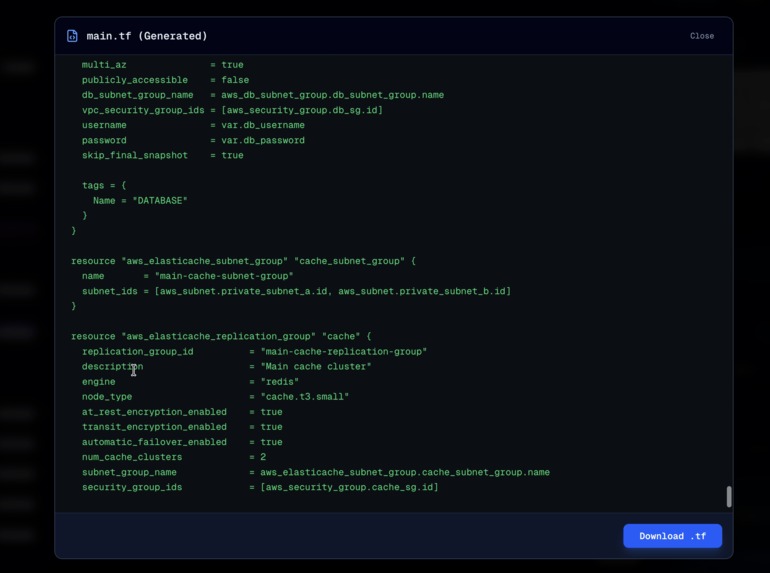
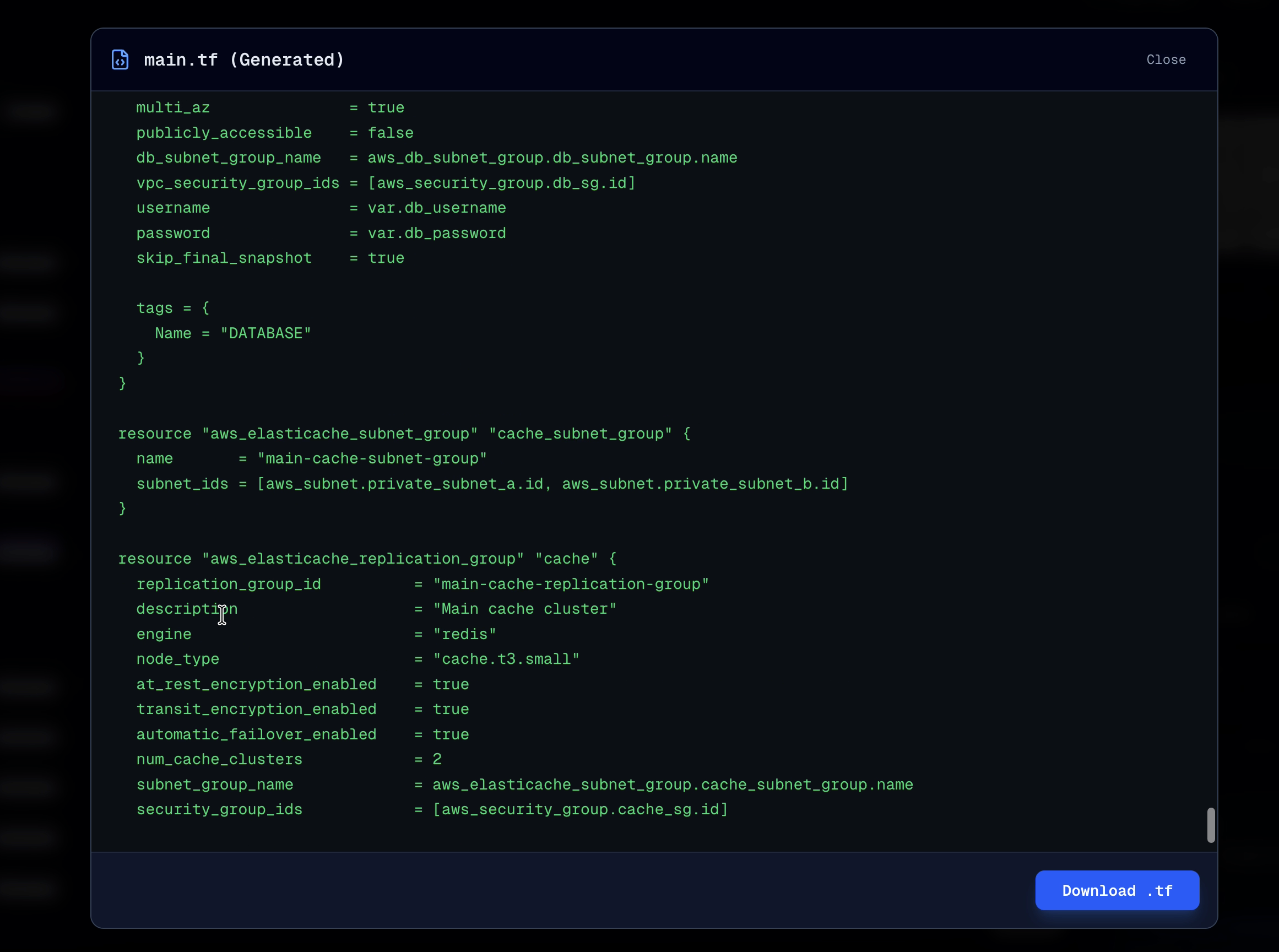
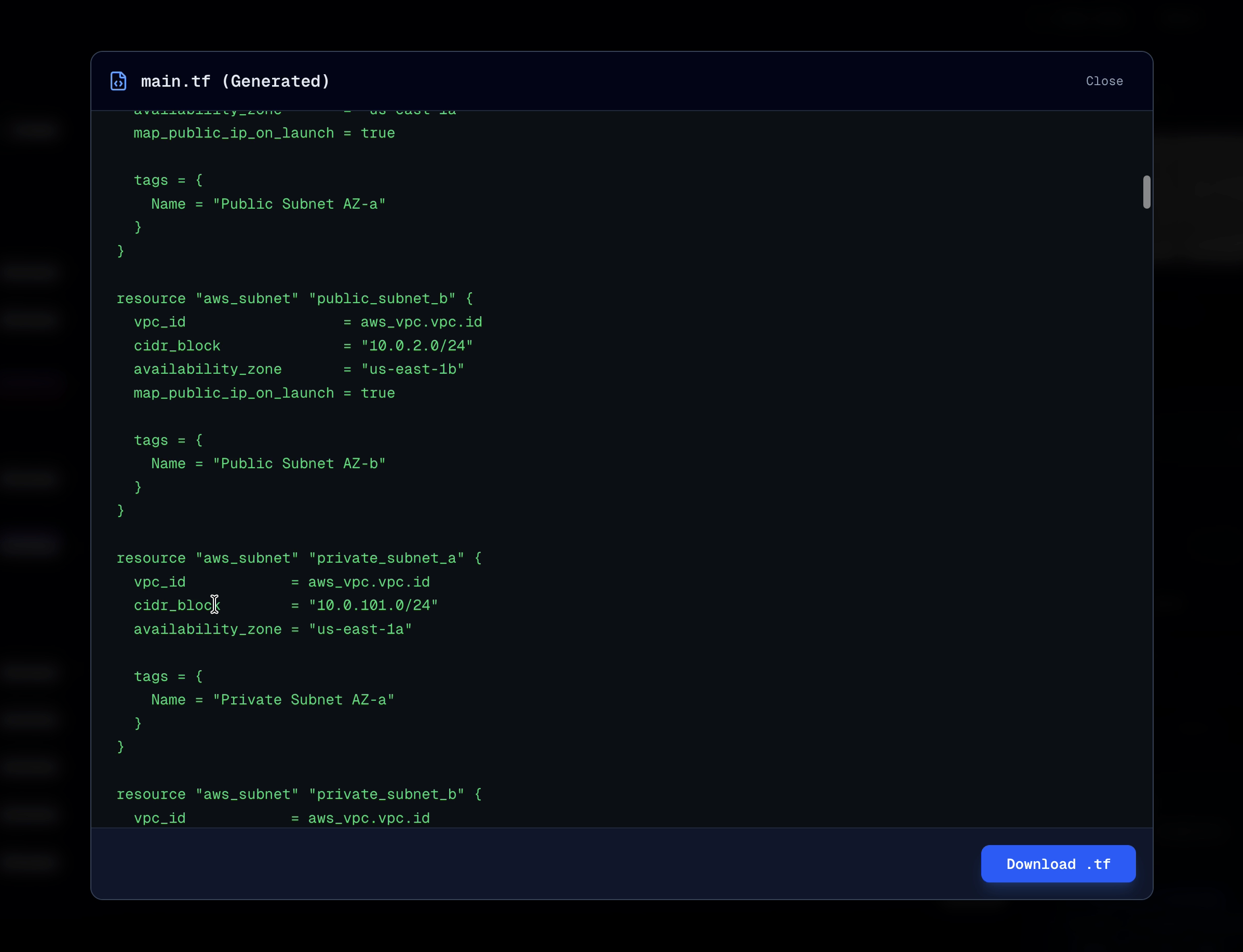
Compiled Terraform artifact produced from a validated infrastructure state.
-
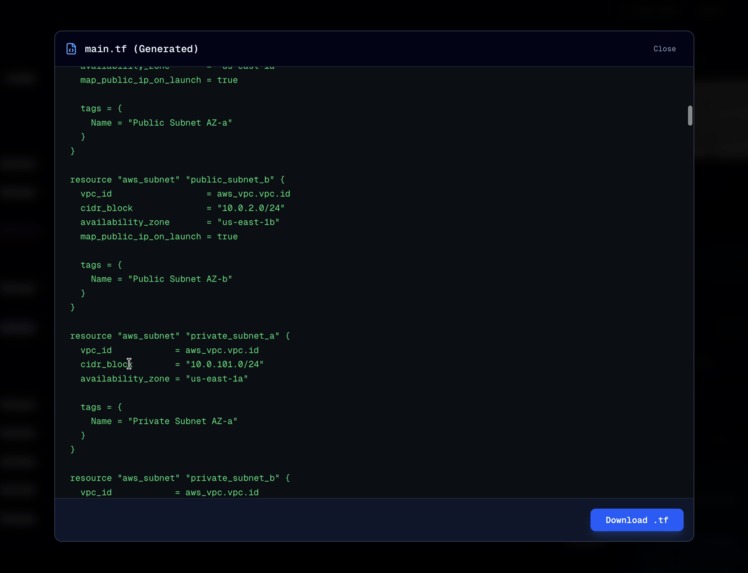
Compiled Terraform artifact produced from a validated infrastructure state.
-
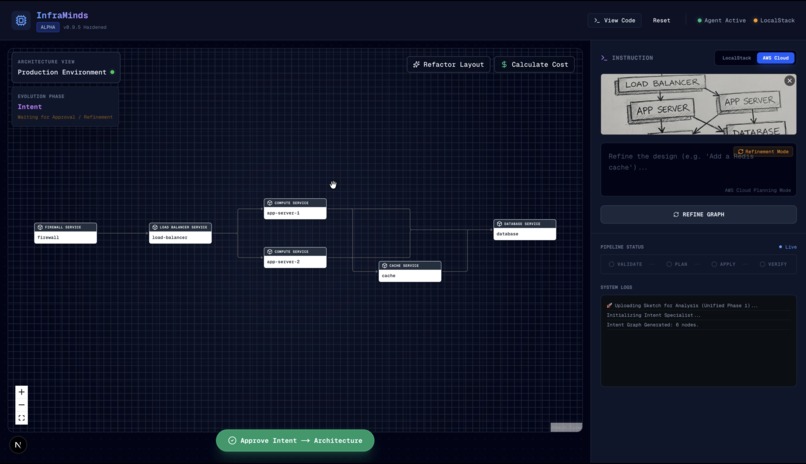
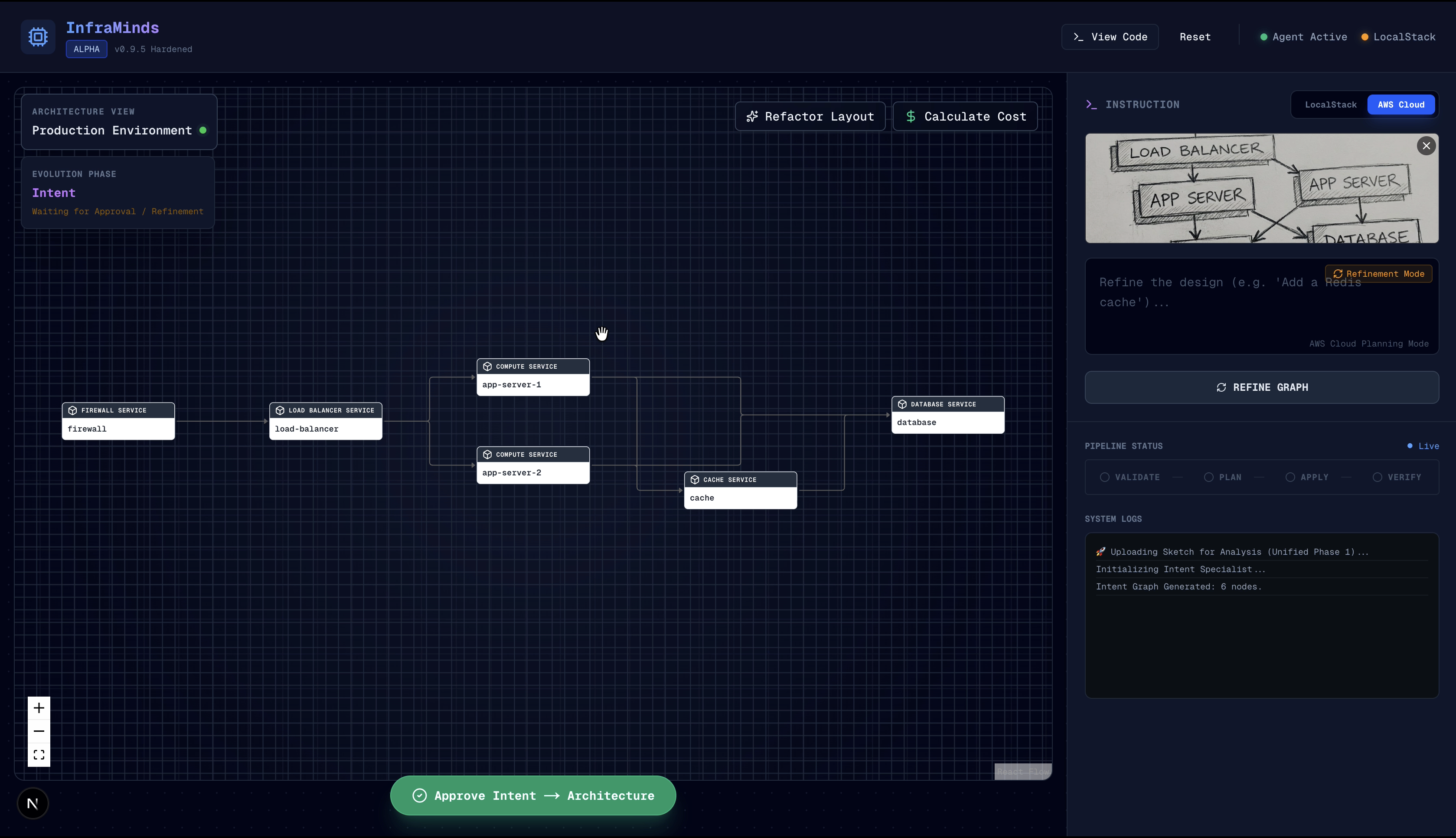
From sketch to structured infrastructure — multimodal intent transformed into a living graph.
-
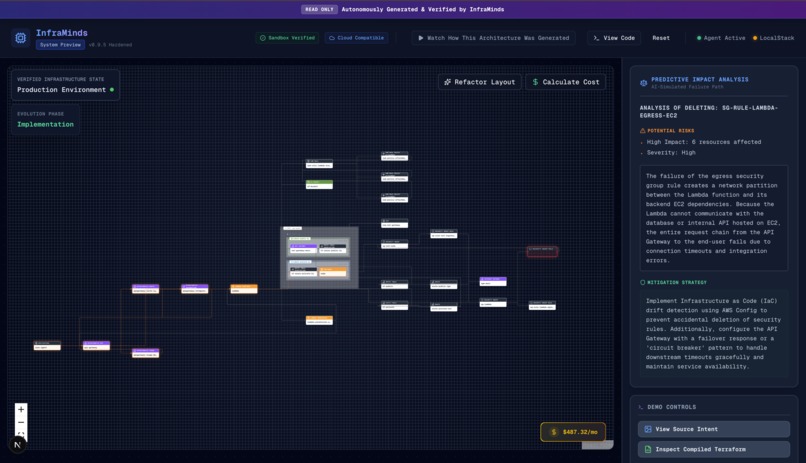
AI simulates cascading failures to reveal infrastructure risk before deployment.
🧠 InfraMinds — The Autonomous Cloud Architect
Inspiration
Modern AI has made software creation dramatically easier — we can now generate applications from prompts in minutes. Yet infrastructure remains one of the last unsolved frontiers.
Designing production-grade cloud systems still demands expert intuition:
- A single misconfigured subnet can expose sensitive databases
- A missing dependency can cascade into system-wide failures
- Architectural changes often produce invisible downstream risk
Infrastructure is not just configuration — it is a dynamic system of interdependent components.
We asked a fundamental question:
What if infrastructure could be reasoned about before it was ever deployed?
InfraMinds was born from the vision of transforming cloud architecture from a reactive debugging process into a predictive, intelligence-driven discipline.
Instead of generating Terraform blindly, we set out to build a system that understands infrastructure as a living graph — capable of simulation, validation, and autonomous correction.
What it does
InfraMinds is an autonomous AI architect that converts human intent into a verified infrastructure blueprint.
Users can describe a system in natural language or upload a rough architecture sketch. Gemini interprets this intent and constructs a persistent world model we call the Living Infrastructure Graph.
Formally, the architecture is represented as:
$$ G = (V, E) $$
Where:
- $V$ represents infrastructure resources
- $E$ represents dependency, trust, and network relationships
This graph becomes the system’s reasoning substrate.
Before any infrastructure is compiled:
✅ Policies are validated
✅ Dependencies are analyzed
✅ Failure paths are simulated
✅ Costs are estimated
One of InfraMinds’ most powerful capabilities is the Blast Radius Simulator, which traverses the graph to predict cascading failures:
$$ Impact(v) = { u \in V \mid \exists \text{ path } v \rightarrow u } $$
Instead of discovering breakage after deployment, users see consequences instantly.
Once the architecture converges, InfraMinds compiles the verified graph into Terraform and validates it inside a sandbox environment — ensuring the system is proven before production.
InfraMinds shifts infrastructure from:
generate → deploy → debug
to
reason → verify → compile
How we built it
We architected InfraMinds around a strict separation between reasoning and execution.
Core Design Principle:
Terraform is not the intelligence — the graph is.
🔹 Multimodal Intent Layer
Gemini processes both natural language and visual diagrams, extracting spatial topology and architectural constraints.
🔹 Living Infrastructure Graph
Using NetworkX, we built a persistent dependency graph that acts as the system’s memory and reasoning engine.
Every architectural decision references this state.
🔹 Autonomous Validation Loop
Policies continuously evaluate the graph:
- No public databases
- Enforced trust boundaries
- High availability checks
- Dependency integrity
When violations occur, the system refactors the topology automatically.
This creates a closed reasoning loop rather than a one-shot generation pipeline.
🔹 Infrastructure Compiler
After convergence, the verified graph is compiled into deterministic Terraform artifacts.
🔹 Dual Execution Strategy
InfraMinds validates infrastructure safely before production:
Sandbox Mode
- Terraform Apply inside LocalStack
- Resource verification
- Failure capture
- Autonomous patching
Cloud-Compatible Mode
- Terraform validation
- Provider compatibility checks
- Deployment-ready output
This separation allows infrastructure to be proven before it is provisioned.
🔹 Cognitive Interface
We designed the UI to expose system intelligence rather than hide it — transforming the traditional AI “black box” into a transparent glass box.
Users can:
- Explore dependencies
- Simulate failures
- Inspect compiled Terraform
- Observe architectural mitigation strategies
Challenges we ran into
1. Preventing Hallucinated Infrastructure
LLMs are excellent generators but unreliable architects.
We solved this by enforcing the graph as the single source of truth — Terraform can only be compiled from validated state.
2. Maintaining Long-Horizon Consistency
Infrastructure decisions must remain coherent across many reasoning steps.
We designed feedback loops where execution errors inform architectural refactoring.
3. Simulating Real Failures Safely
Testing infrastructure directly in the cloud is expensive and risky.
LocalStack allowed us to create a deterministic sandbox for validation.
4. Balancing Autonomy with Transparency
Fully autonomous systems can feel opaque.
We intentionally exposed reasoning artifacts to build user trust.
Accomplishments that we're proud of
- Built a true reasoning-first infrastructure system — not a text-to-code wrapper
- Created a persistent world model for architecture
- Enabled predictive failure simulation
- Implemented autonomous self-healing loops
- Compiled validated infrastructure artifacts
- Designed a cognitive interface that makes AI decisions visible
Most importantly, we demonstrated that infrastructure can be understood before it exists.
What we learned
Building InfraMinds reshaped how we think about AI systems.
We learned that intelligence emerges not from generation — but from stateful reasoning over structured representations.
The future of developer tools is not autocomplete.
It is cognition.
We also discovered that trust is the defining challenge of autonomous systems.
Users must see why decisions are made — not just the output.
What's next for InfraMinds
InfraMinds is an early step toward autonomous infrastructure engineering.
Next, we plan to explore:
- Multi-cloud reasoning
- Real-time drift detection
- Cost-performance optimization agents
- Policy learning from organizational patterns
- Collaborative architecture environments
Long term, we believe infrastructure will transition from manually designed systems to continuously reasoned environments.
Before code is written.
Before resources are provisioned.
The system already understands what will break — and fixes it.
InfraMinds is building toward that future.

Log in or sign up for Devpost to join the conversation.