
Inspiration
InfraGuard was inspired by the increasing number of real-world tragedies caused by delayed emergency response—collapsed buildings, fires, and structural failure that weren’t detected until it was too late. We asked a simple question:
What if critical infrastructure could speak before it failed?
That idea became our mission: build an intelligent monitoring system that detects risks early, sends alerts instantly, and prevents loss of life.
What it does
InfraGuard is an IoT+AI solution that continuously monitors vital infrastructure—bridges, tunnels, industrial plants, and metro stations—using real-time sensor data. It:
- Tracks stress, vibration, temperature, humidity, and gas levels.
- Uses on-device anomaly detection to assess risk.
- Pushes alerts to operators, maintenance teams, and emergency services.
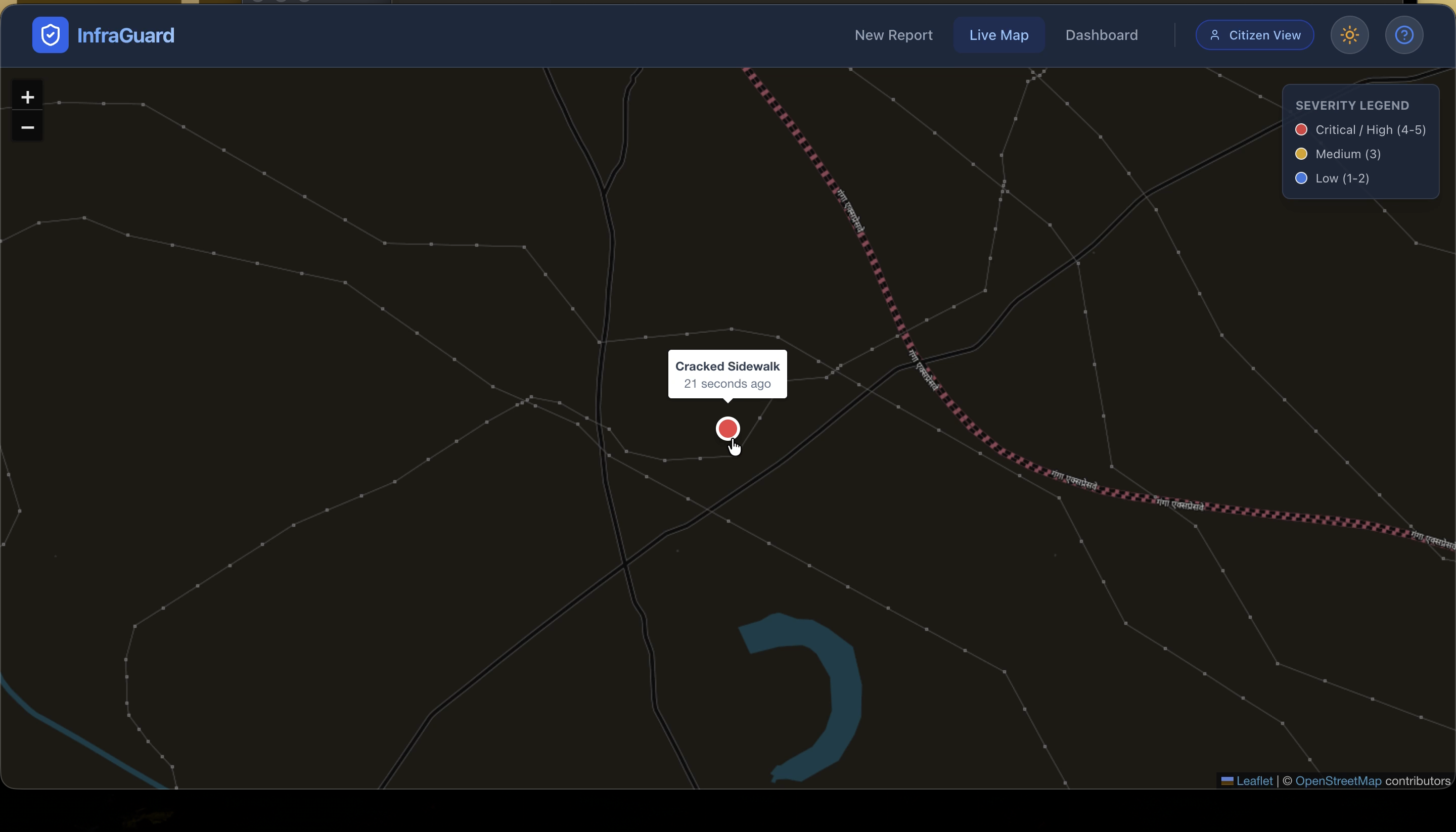
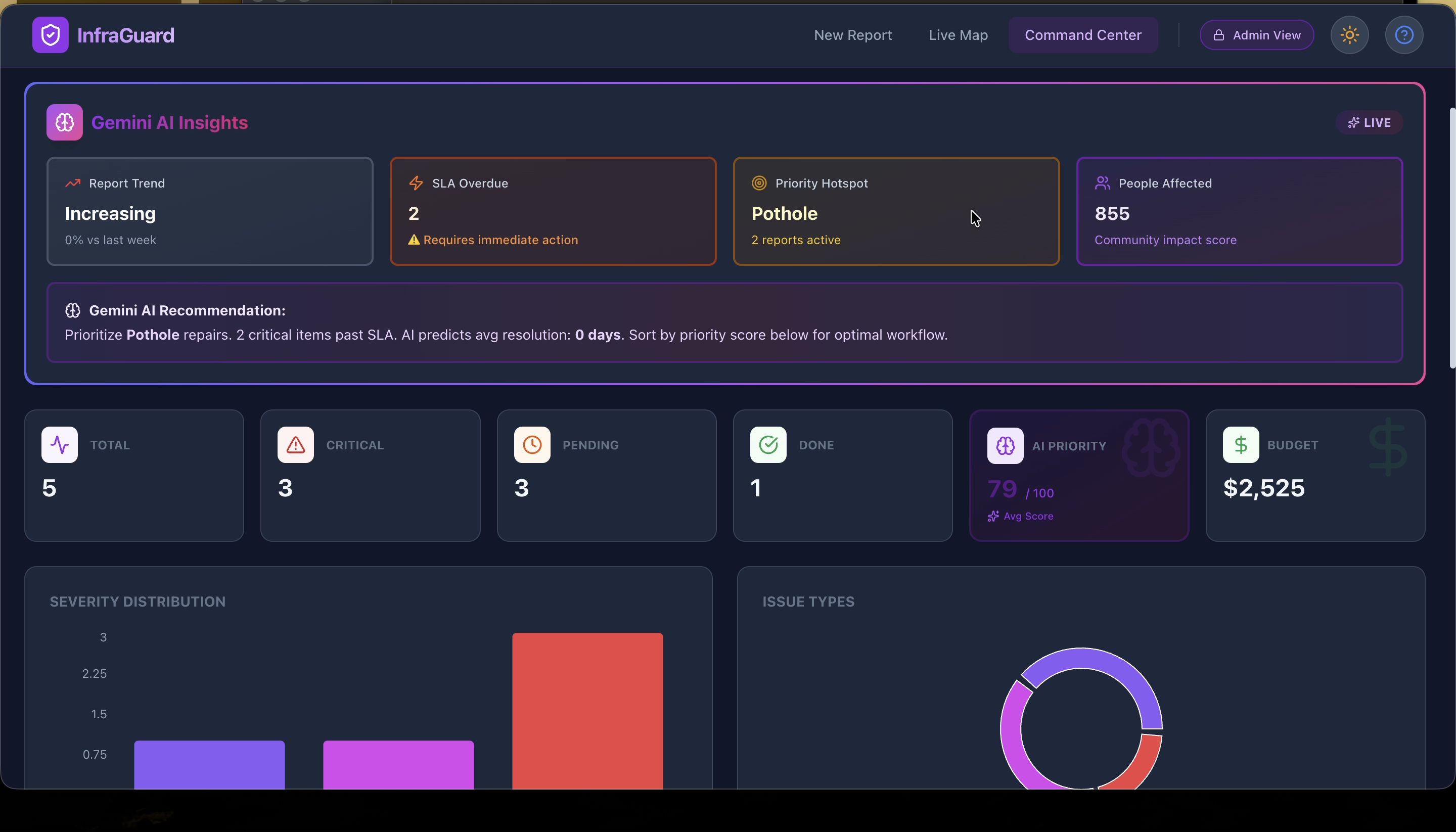
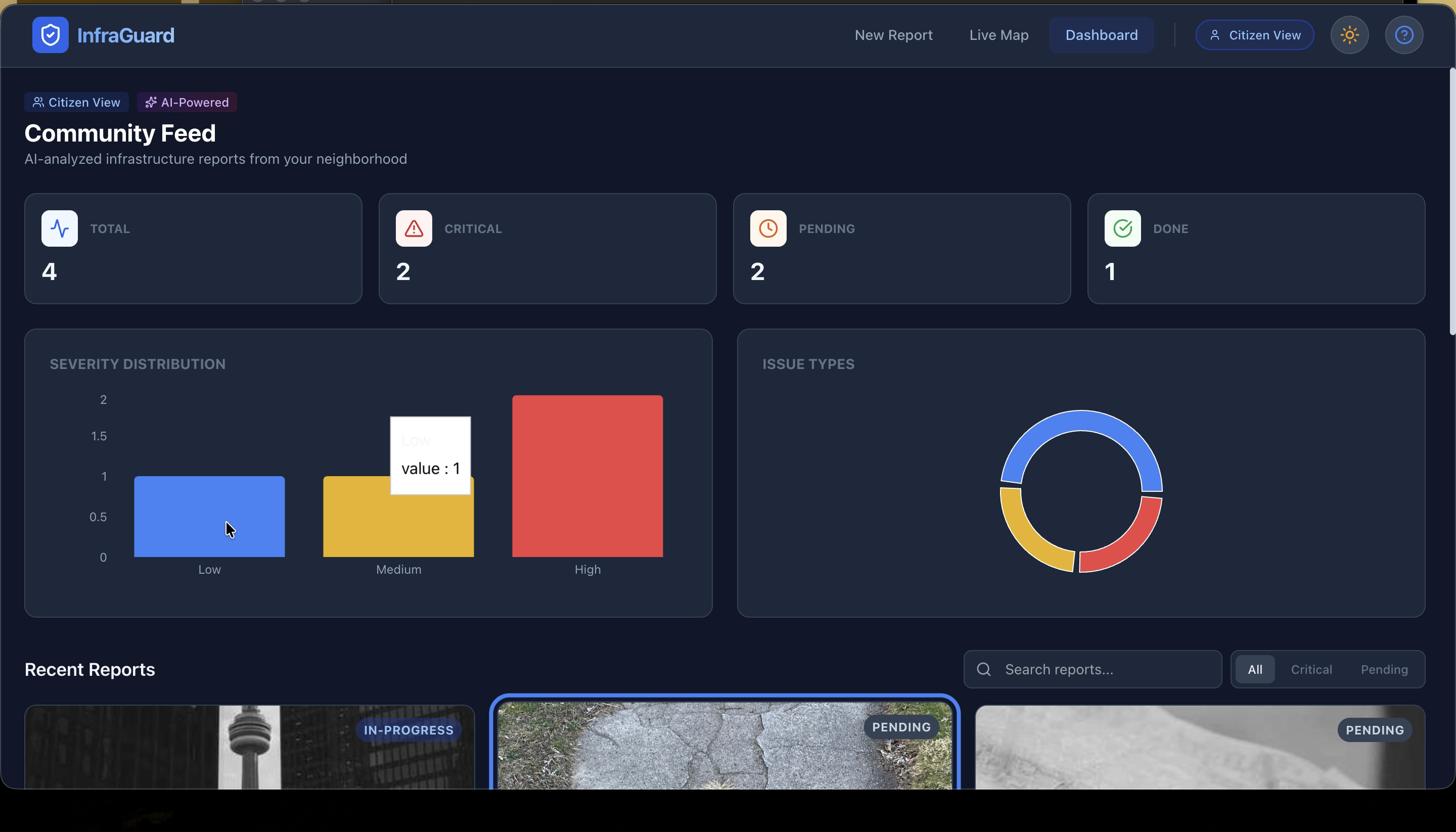
- Generates visual dashboards and prediction analytics. Ultimately, InfraGuard turns raw sensor signals into actionable safety insights.
How we built it
We built the system in three layers:
1. Sensing & Hardware
We deployed low-power IoT modules using:
- MEMS accelerometers for vibration
- Temperature & humidity sensors
- Gas/air-quality modules (CO₂, methane, smoke)
- Edge microcontroller (ESP32) for local processing
The design allows modular plug-and-play with existing infrastructure.
2. Connectivity
Data is transmitted via MQTT/REST to a secure broker using:
- Wi-Fi / LoRaWAN depending on distance
- Adaptive duty cycles to preserve battery life
3. Intelligence & Software
- Python backend for ingestion + validation
- Machine-learning model for anomaly scoring
Sensor patterns are treated as multidimensional time series.
We approximate stress deviation using: [ R = \sqrt{(x - \mu_x)^2 + (y - \mu_y)^2 + (z - \mu_z)^2} ] If (R > \tau), the system flags potential danger. - Frontend dashboard in React/Next.js
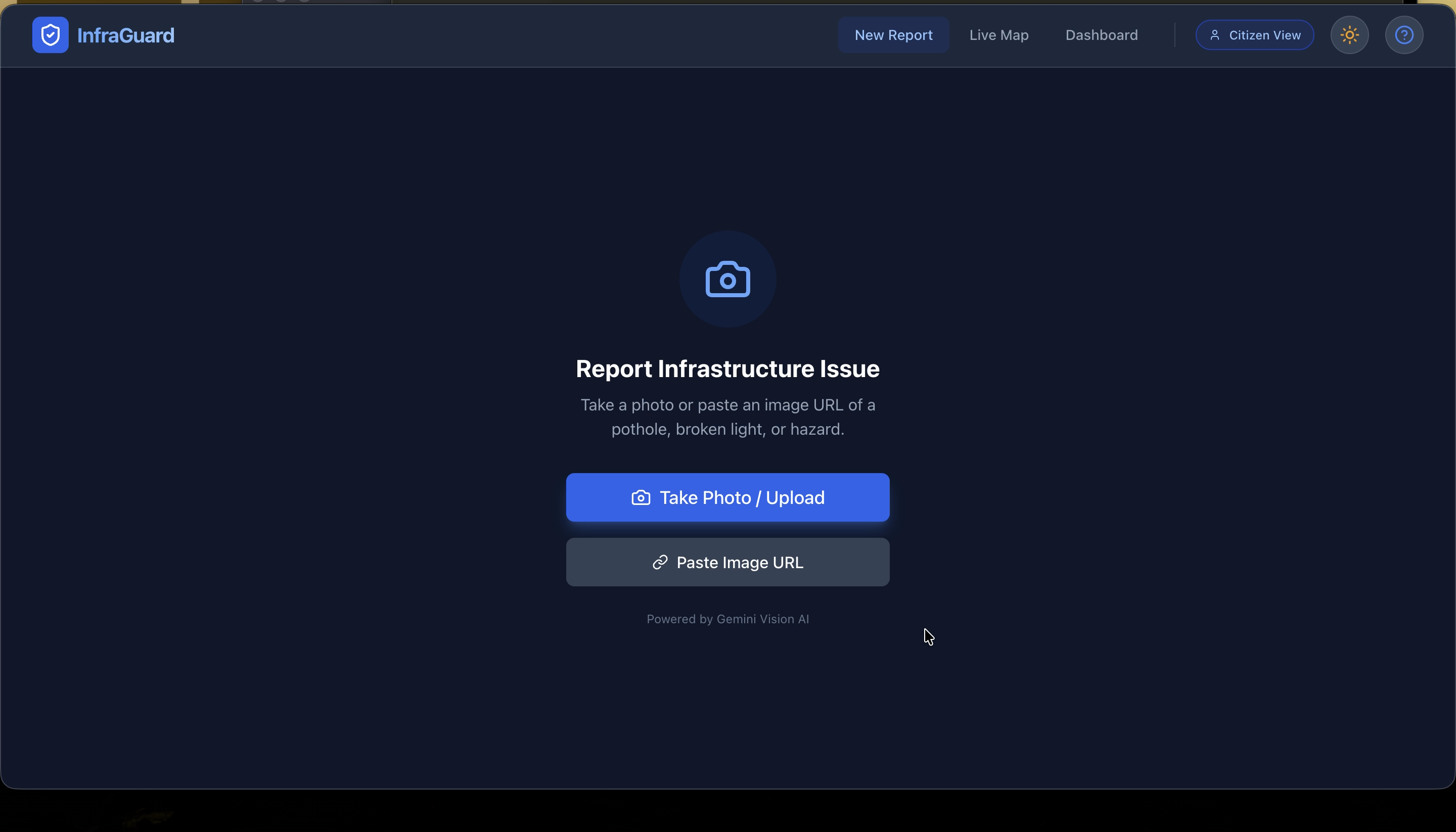
Displays health state, trends, alerts, and device status.
We iterated rapidly, testing sensors in simulated load environments and tuning thresholds to reduce false alarms.
Challenges we ran into
- Sensor noise and false positives: Raw signals fluctuate heavily due to traffic, weather, and environmental changes. We had to introduce smoothing, moving averages, and normalization.
- Latency vs. battery life: Live streaming every second drains power fast. We implemented adaptive sampling and edge inference to send data only when necessary.
- Data reliability: Field deployment conditions are harsh—dust, humidity, and temperature spikes. Calibrating sensors in real environments required experimentation.
Accomplishments that we're proud of
- Building a fully working prototype from hardware to cloud.
- Deploying an on-device ML pipeline that works offline.
- Creating a real-time dashboard with meaningful alerts.
- Designing something that could genuinely protect lives—not just a demo.
What we learned
- IoT complexity is not just wiring; it’s field conditions, calibration, and maintenance.
- Anomaly detection for infrastructure requires domain-specific logic, not generic models.
- Real-time systems must balance data granularity, bandwidth, and energy.
- Collaboration between hardware, software, and UX matters as much as the tech itself.
What's next for InfraGuard
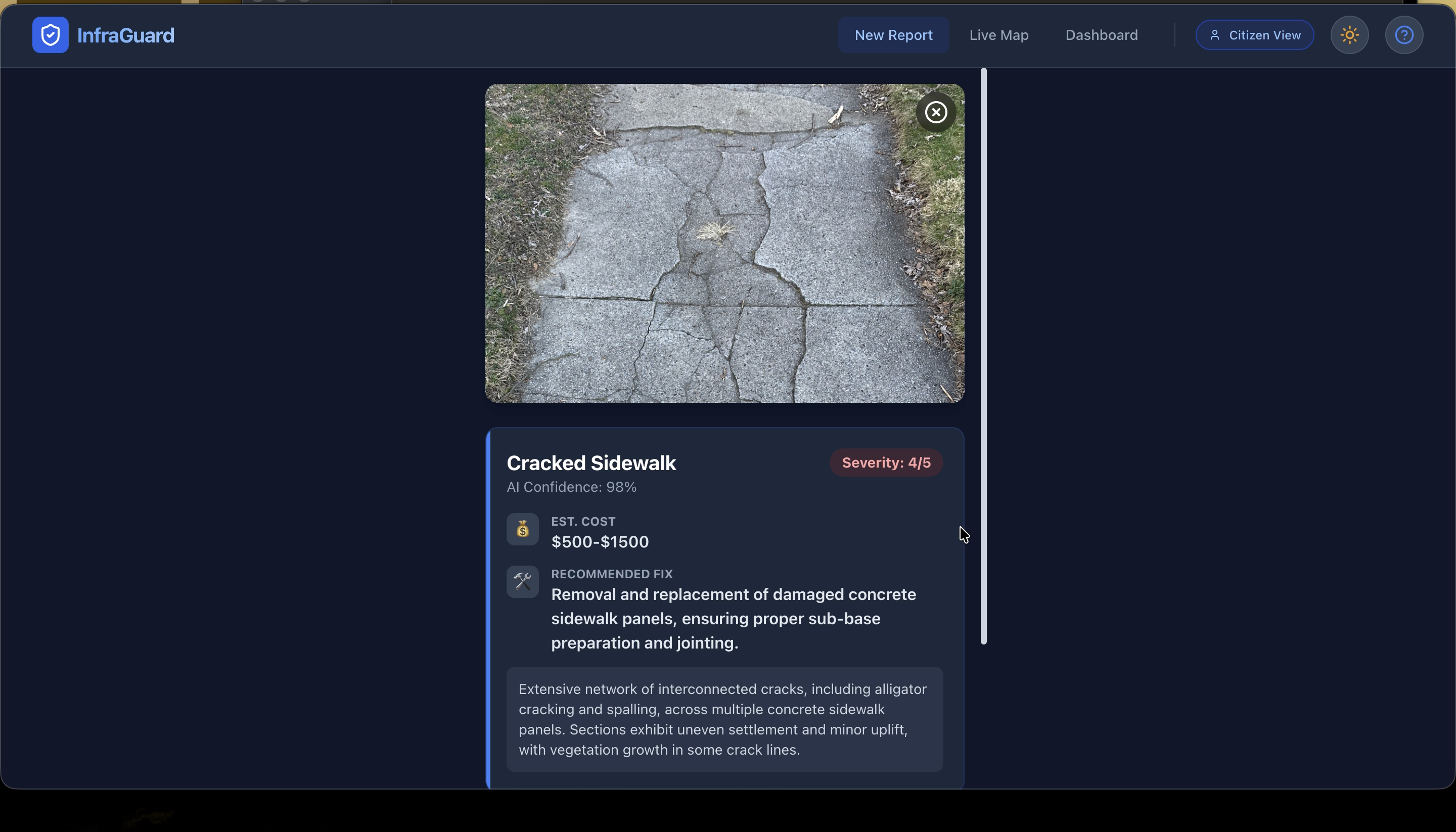
- Integrating computer vision for crack/heat mapping.
- Deploying more durable industrial-grade sensors.
- Training models with historical stress data for predictive maintenance.
- Partnering with municipalities and smart-city vendors.
- Scaling from single-node prototypes to full nationwide monitoring networks.
InfraGuard is more than a project—it’s a step toward safer cities.
Built With
- anomaly-detection-models
- aws-iot-core
- aws-lambda
- docker
- dynamodb
- esp32-microcontroller
- firebase-authentication
- flask-backend
- for
- gas-detection-modules
- github-version-control
- grafana-dashboards
- lorawan-connectivity
- mems-accelerometer-sensors
- mqtt-protocol
- next.js
- node.js
- python
- react
- rest-api
- temperature-and-humidity-sensors
- tensorflow-lite
- websockets

Log in or sign up for Devpost to join the conversation.