-
-
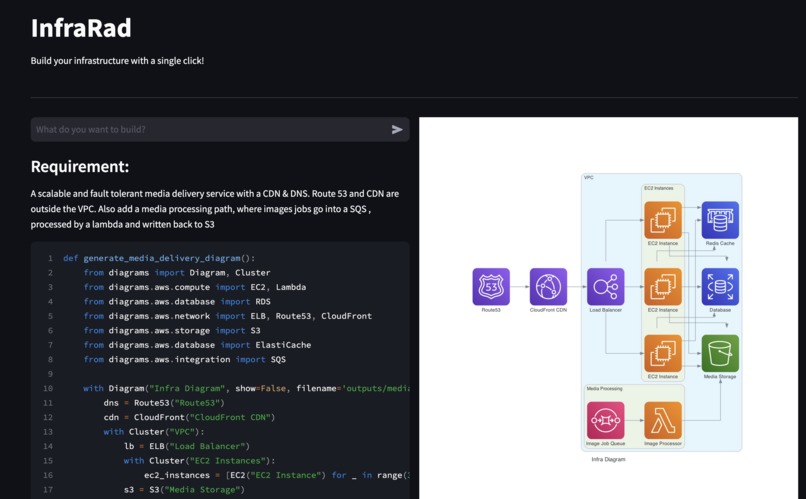
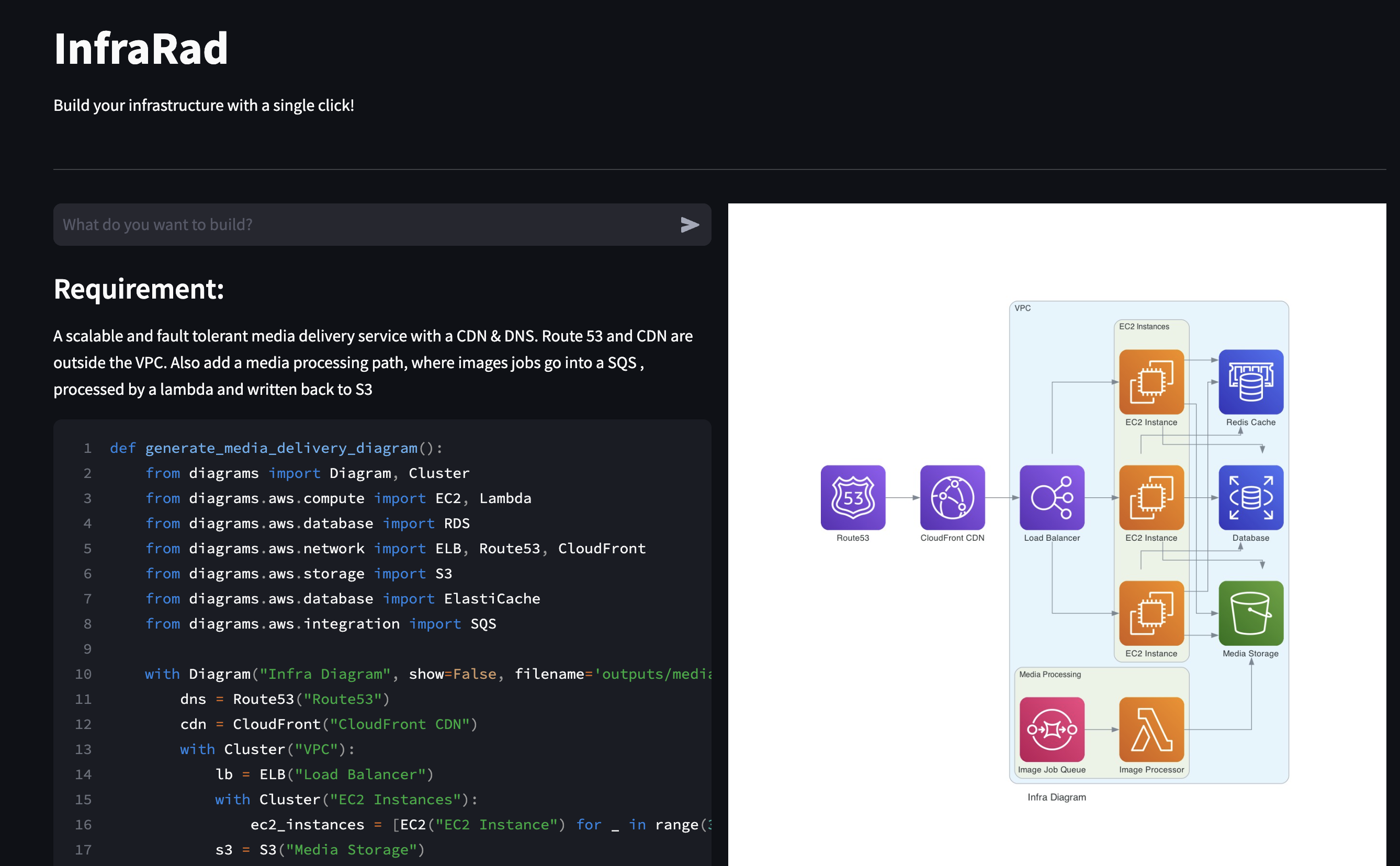
The UI: Left section allows you to prompt & view code. Right side is the diagram which is generated.
-
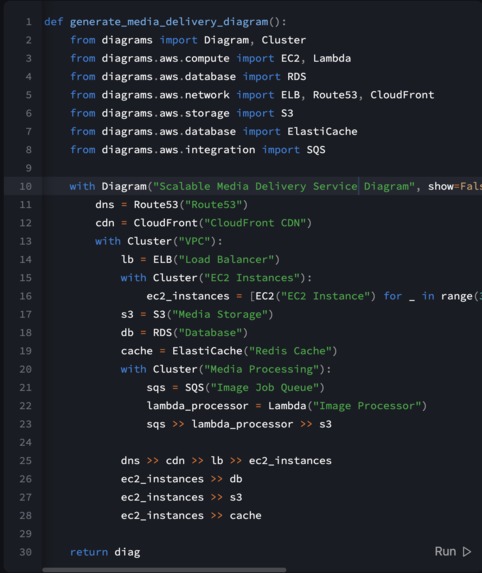
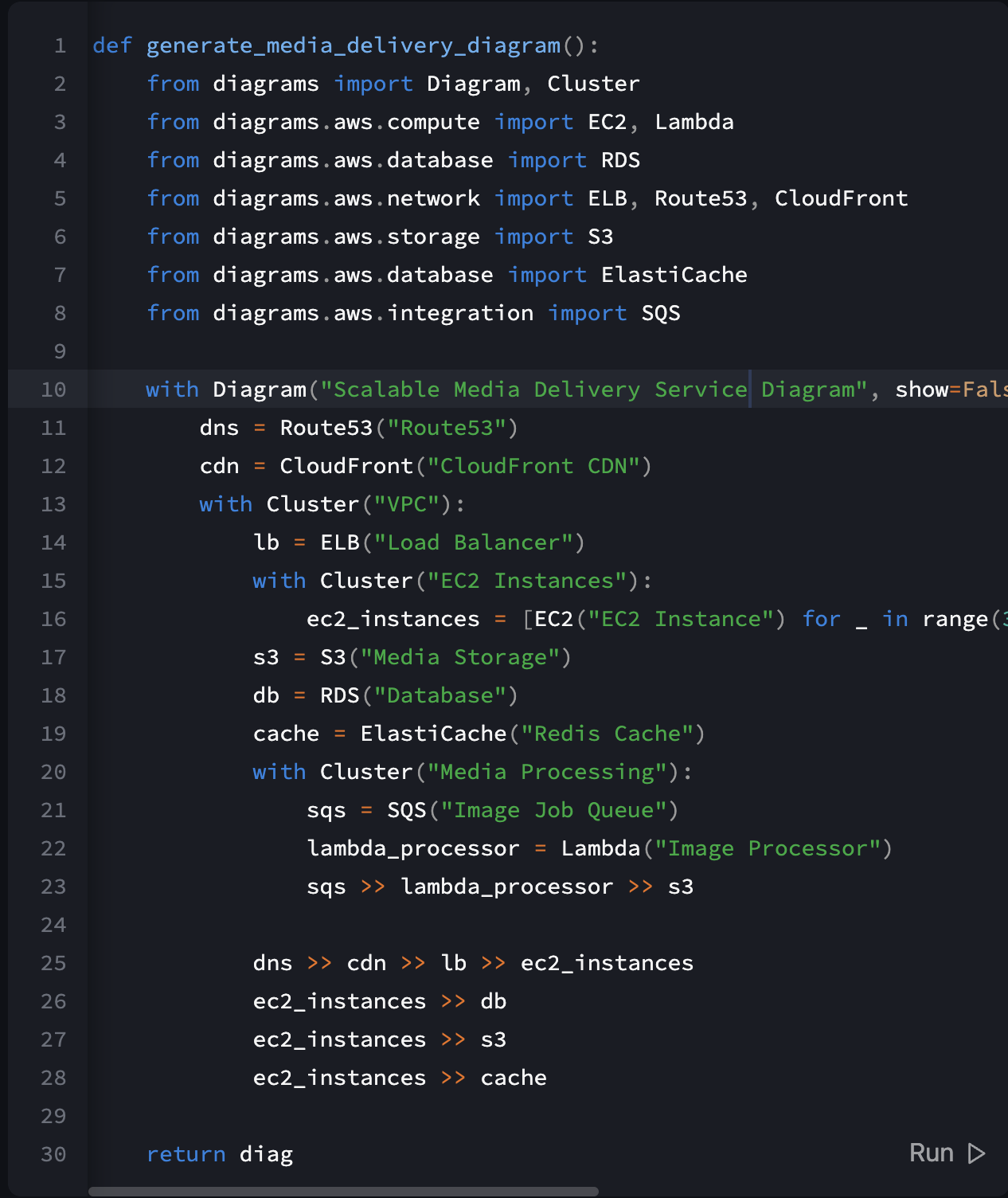
The generated code in the code editor. User can even edit this & re-run to update the diagram
-
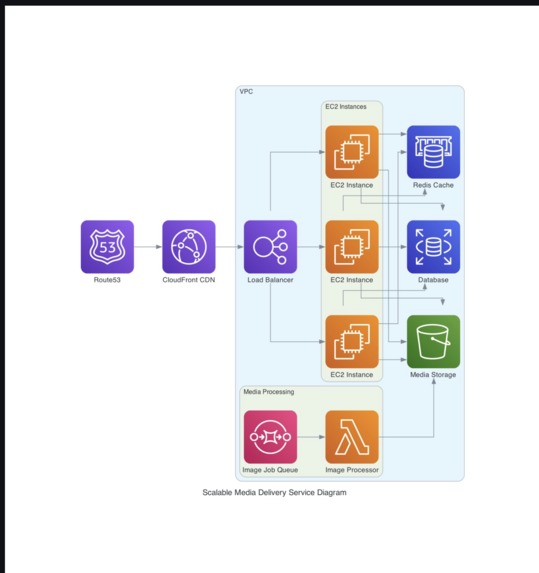
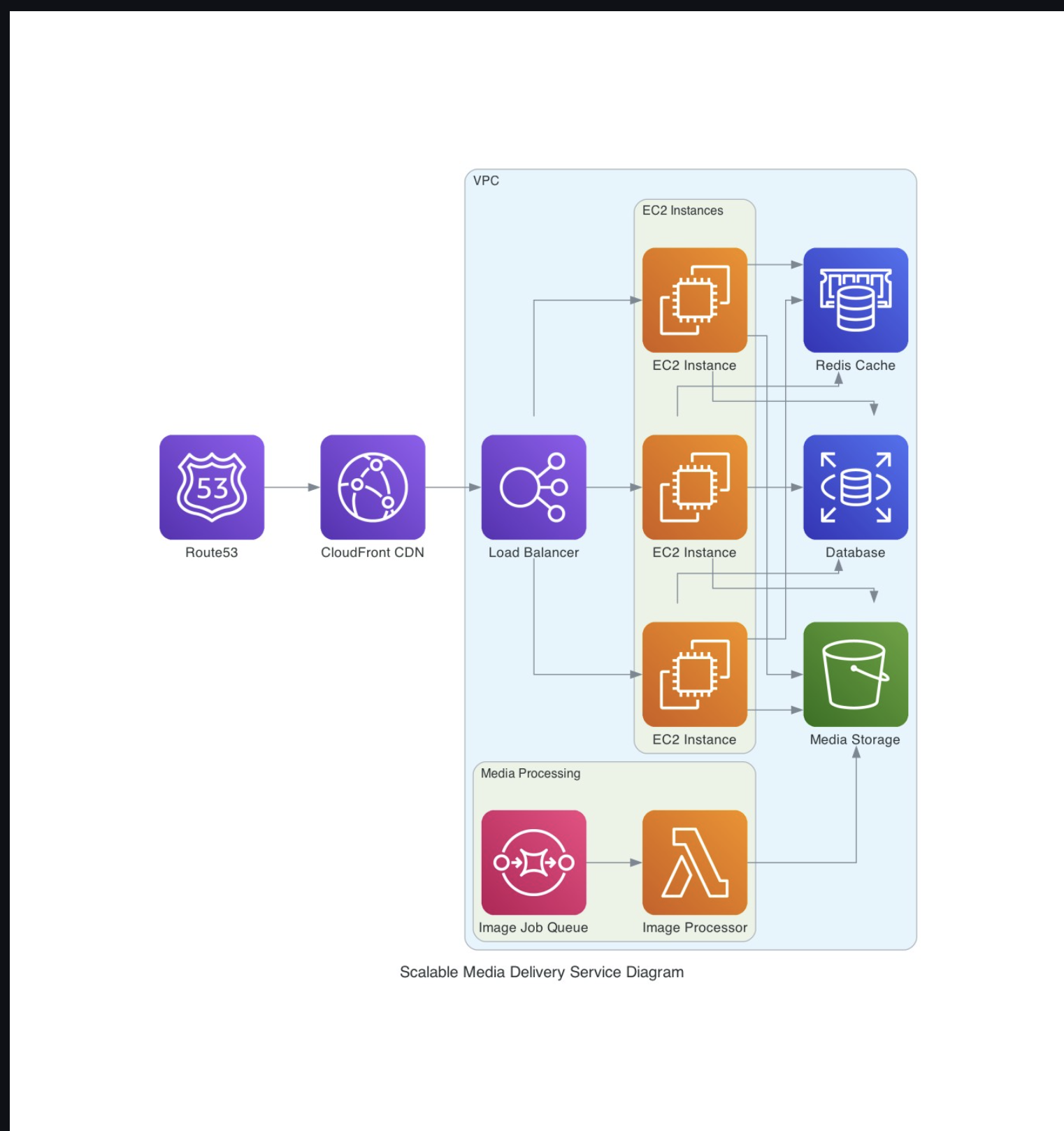
The visually stunning infrastructure diagram, which shows all the elements of the system.
-
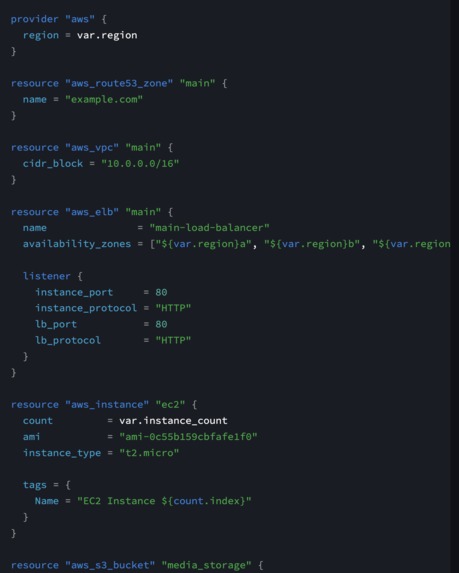
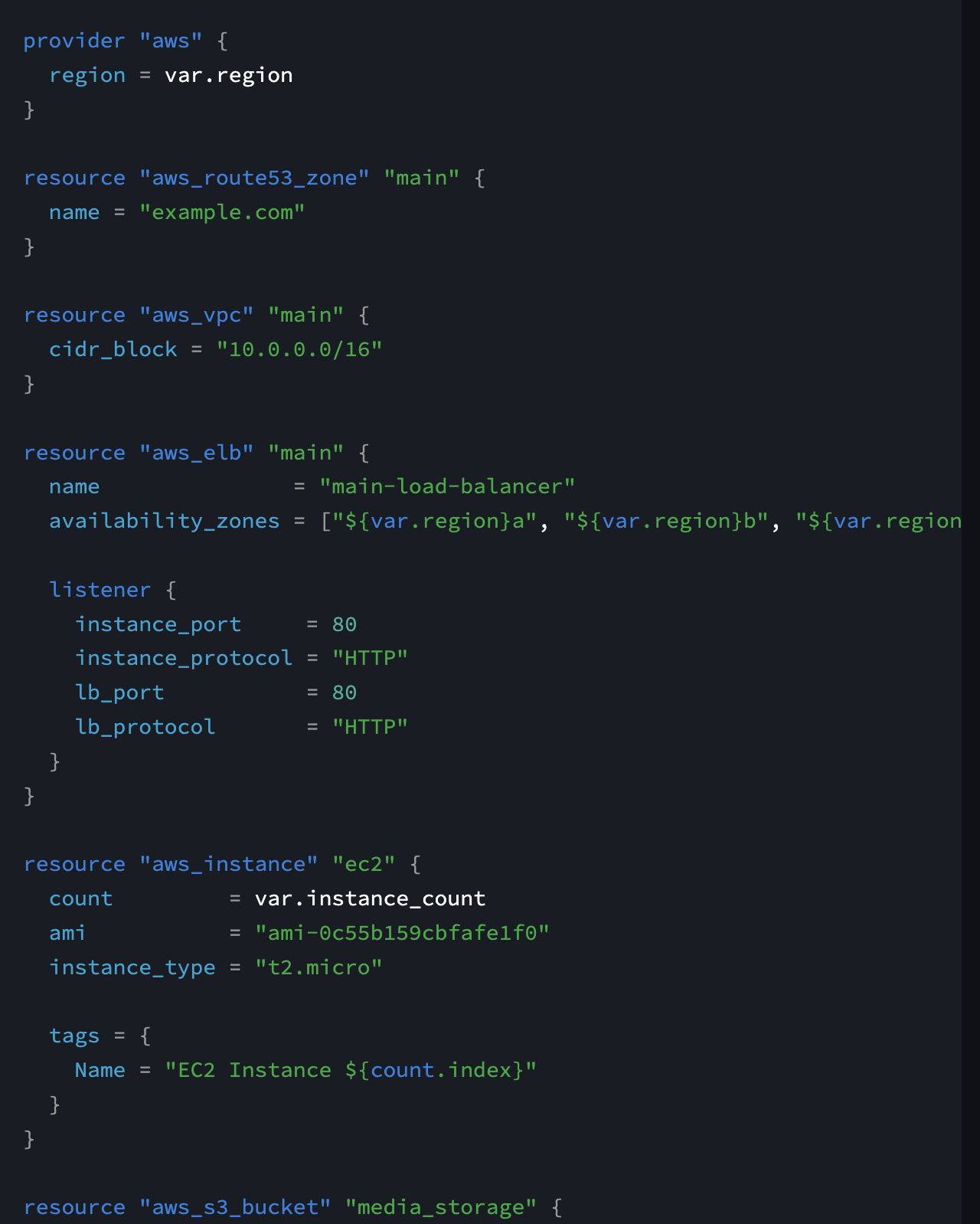
Generated terraform code for the infrastructure planned above.
Inspiration
InfraRad sprang from a clear need we saw in small startup teams: simplifying the cumbersome process of infrastructure planning. These teams often spend too much time manually sketching out infrastructure designs, time that could be better spent on development and innovation. With InfraRad, we aim to empower these startups by making advanced system design intuitive and accessible, enabling them to operate more efficiently and at scale.
What it does
InfraRad turns straightforward text prompts into comprehensive infrastructure diagrams within a user-friendly Streamlit application. It's designed to be interactive, allowing users to refine their infrastructure by adding or adjusting components like caches to improve efficiency. Beyond just visualization, InfraRad also auto-generates Terraform code for deploying the designs, simplifying the transition from idea to implementation.
How we built it
We built InfraRad using Streamlit for its user interface, which supports easy input and immediate diagram visualization. For the backend, we incorporated Snowflake's Arctic model and database to handle data like user accounts and diagram histories effectively. This setup makes InfraRad both accessible for beginners and robust enough for more demanding needs.
Challenges we ran into
Developing a tool that could understand natural language inputs and translate them into accurate infrastructure diagrams was a major challenge. It required continuous refinement of our models and user inputs. Moreover, melding Streamlit with Snowflake's database solutions required us to overcome several technical hurdles to ensure a seamless user experience.
Accomplishments that we're proud of
We're particularly proud of how InfraRad allows for the incremental improvement of diagrams based on user feedback, making it adaptable to changing project needs. The integration of real-time, interactive diagramming capabilities with Streamlit and the automation of Terraform code generation are key accomplishments that highlight our dedication to creating a user-focused tool.
What we learned
The journey of developing InfraRad taught us the value of putting users at the center of our design process and the benefits of iterative development. By constantly evolving the tool based on user feedback, we have crafted a solution that is not only powerful but also simple to use. We've deepened our understanding of natural language processing and learned how to integrate various technologies to enhance user experience.
What's next for InfraRad
The future of InfraRad is full of exciting possibilities. We plan to enhance the accuracy of our diagrams with more advanced algorithms and introduce real-time collaboration features that let users apply their configurations directly to cloud environments. Moreover, we're looking to support additional infrastructure as code (IaC) tools beyond Terraform, expanding our tool's versatility and appeal.
InfraRad is poised to transform how startups approach infrastructure planning and deployment, making these essential processes more efficient and collaborative. We're excited about the path ahead and the innovations that will continue to emerge from our work.
Built With
- openai-vision
- snowflake-cortex
- streamlit


Log in or sign up for Devpost to join the conversation.