-
-
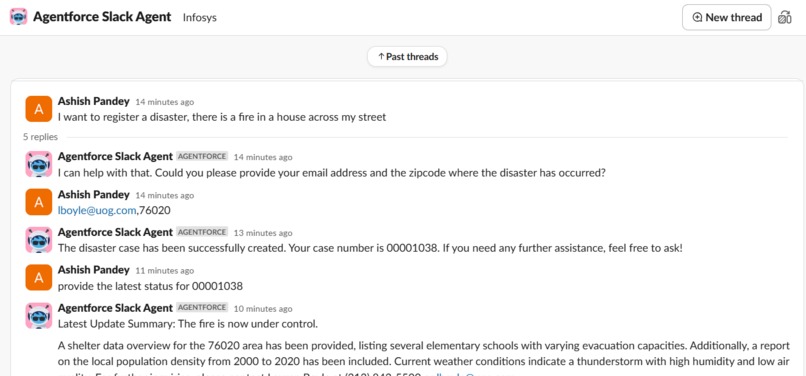
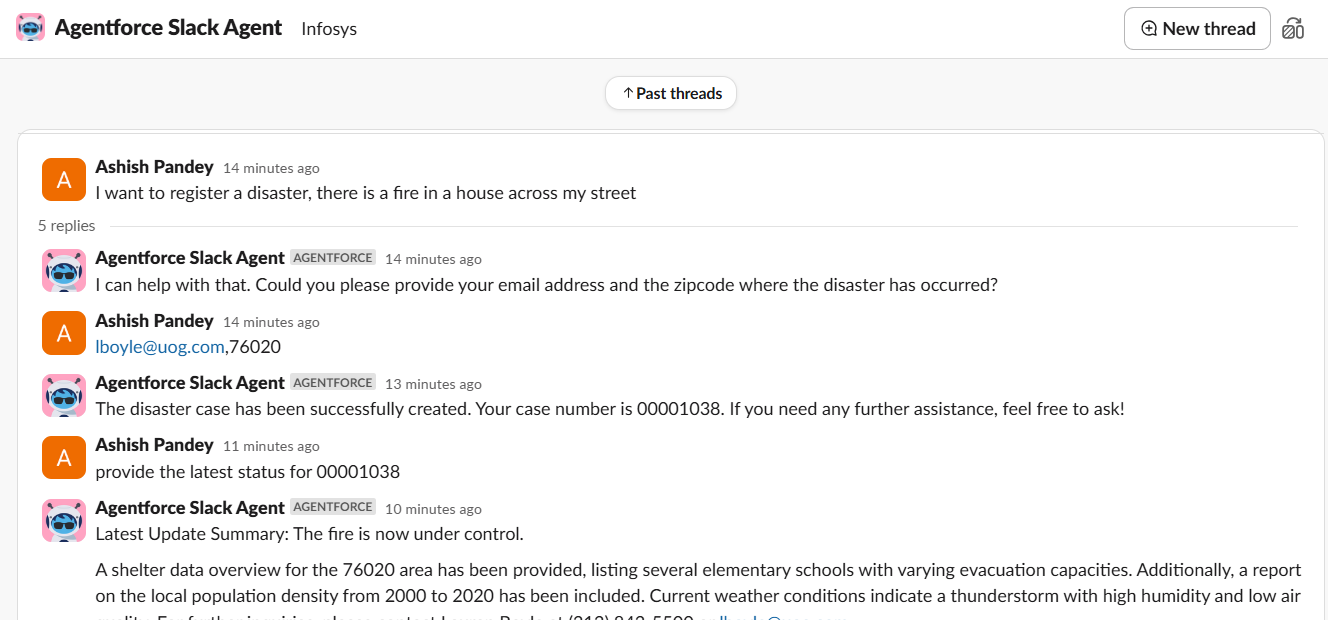
Agentforce Slack response on Individual
-
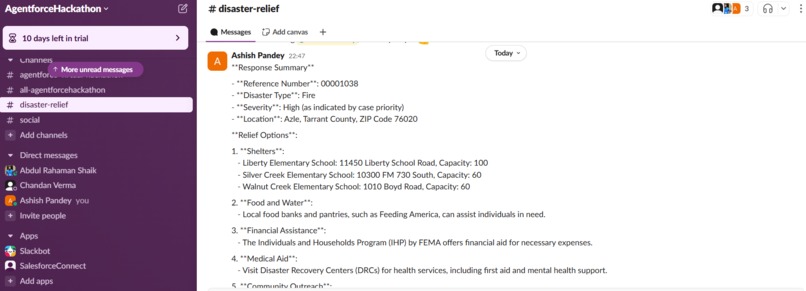
Agentforce Slack response on Group
-
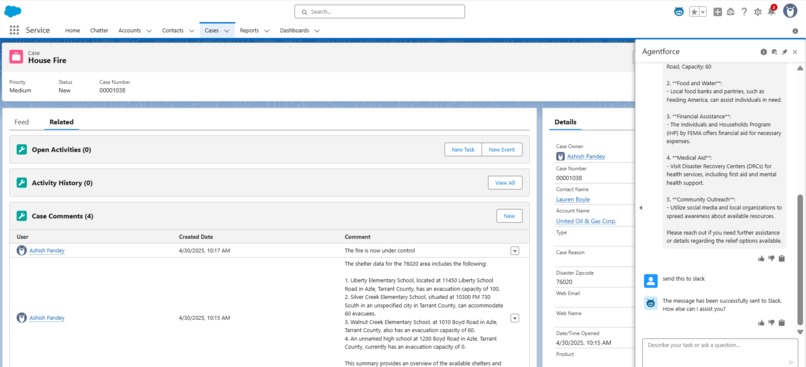
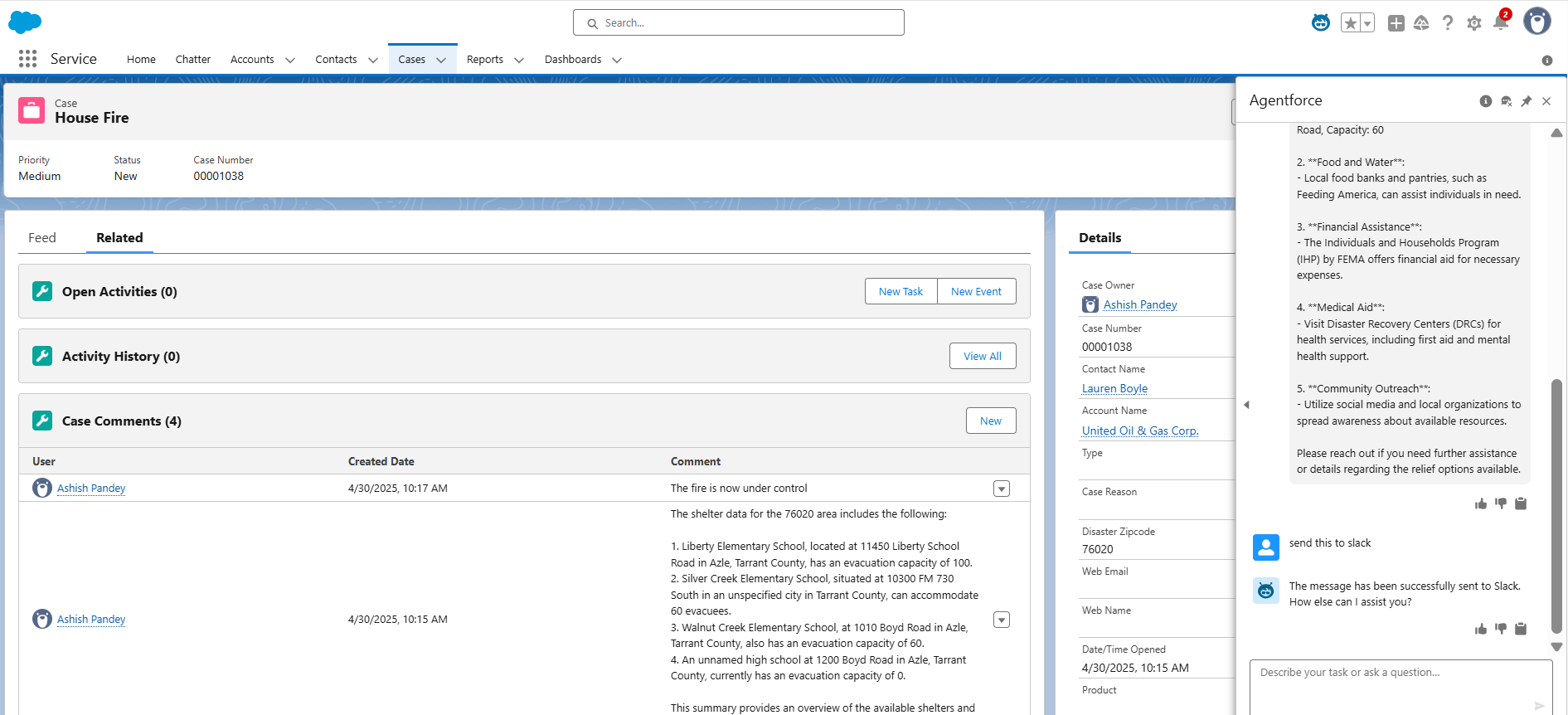
Agentforce response on Salesforce

Inspiration
Improving disaster response and aid distribution in affected communities.
What it does
"Disaster Relief Hub" streamlines disaster response by integrating data from disaster management agencies, social media feeds (for real-time updates), aid distribution databases, and weather data. It generates real-time situation reports and damage assessments, prioritizes aid distribution based on needs and available resources, and generates messages in local languages. It also creates communication channels for disaster relief teams, volunteers, and affected communities using Slack workflows to automate alerts and coordinate tasks. AI agents deployed via Agentforce answer questions about disaster relief resources and provide support to affected individuals, proactively sending messages based on location and need. The system uses Service Cloud for case management, Experience Cloud for a community portal, and Maps for location-based services, ultimately saving lives, reducing suffering, and improving disaster resilience.
How we built it
Data Cloud: Integrated data from disaster management agencies (NDMA for India, FEMA for the US, GDACS for global alerts), social media (Twitter API for real-time updates and sentiment analysis), aid distribution databases (partnered with NGOs like the Red Cross), and weather data (IMD for India, OpenWeatherMap for global forecasts). GenAI: Generated real-time situation reports, damage assessments, and action plans in local languages. Slack: Established communication channels and workflows for relief teams and volunteers. Agentforce: Deployed AI agents to assist with disaster relief queries and support. OOB (Out-of-the-Box Features): Utilized Service Cloud for case management
Challenges we ran into
Disaster relief efforts are often hampered by a lack of coordination, data silos, and inefficient communication, making it difficult to prioritize aid and respond effectively in real time.
Accomplishments that we're proud of
Successfully integrated diverse data sources to create a unified disaster response platform. Enabled real-time communication and coordination through Slack and AI-driven insights. Improved accessibility with local language support, ensuring broader reach and impact. Achieved measurable social impact by saving lives, reducing suffering, and enhancing disaster resilience.
What we learned
The importance of seamless data integration for effective disaster response. The value of real-time communication and AI-driven prioritization in high-stakes scenarios. The need for localization to ensure inclusivity and accessibility in disaster-affected regions.
What's next for Infosys Salesforce COE
Expand partnerships with more NGOs and disaster management agencies globally. Enhance AI capabilities for predictive analytics to anticipate disaster impacts. Further develop the community portal to empower affected communities with more resources and self-help tools.



Log in or sign up for Devpost to join the conversation.