AI Finance Assistant - Project Story The Inspiration When our team received the hackathon problem statement challenging us to build an AI-powered financial assistant, we immediately recognized the opportunity to solve a critical problem many people face. The problem statement highlighted the need for tools that not only track financial data but actually provide personalized insights and recommendations. The challenge resonated with our team because we've all experienced the gap between having access to our financial data and actually understanding what to do with it. Traditional banking apps show transactions but rarely offer actionable guidance. The problem statement pushed us to think about how AI could bridge this gap. What We Learned During our intense 24-hour development sprint, we gained valuable insights and skills:
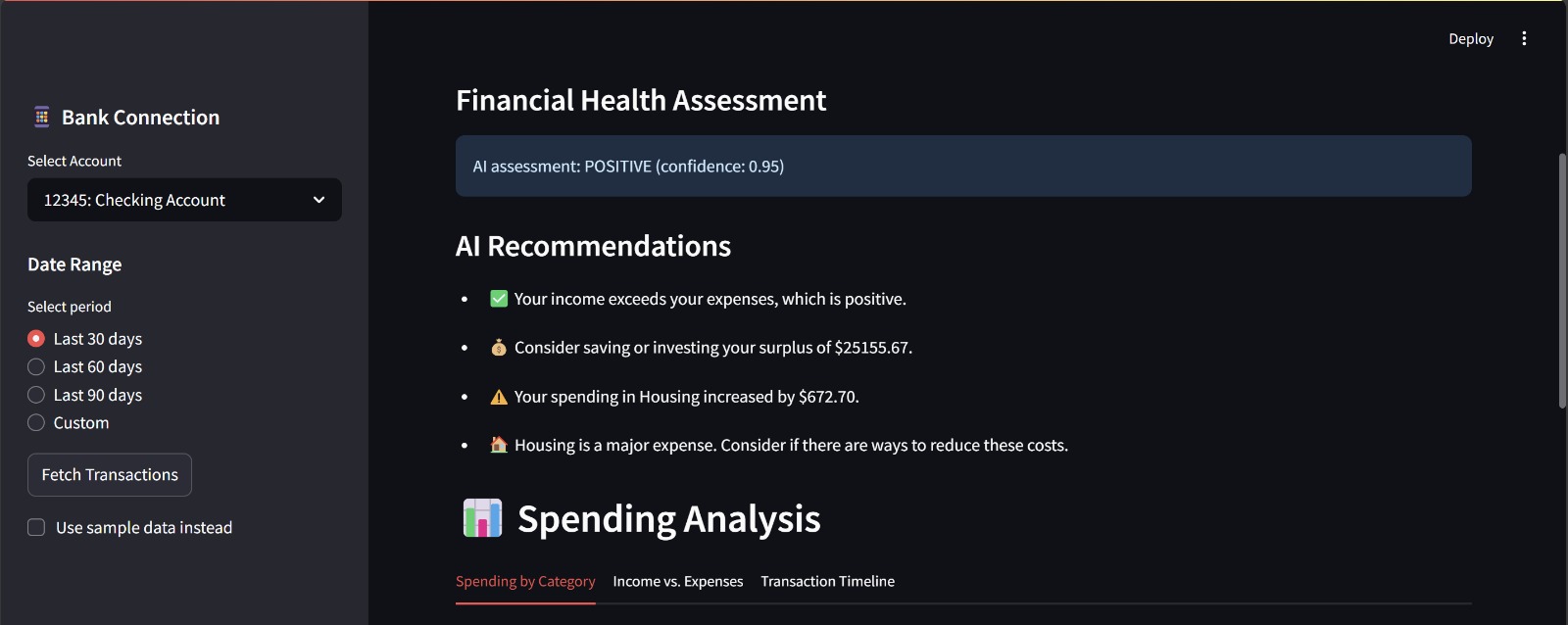
AI Integration: We learned to effectively implement sentiment analysis models to evaluate financial health and generate contextual advice Financial Data Analysis: We developed techniques for categorizing transactions and identifying spending patterns Security in Finance Applications: We gained practical experience implementing encryption for sensitive financial data Data Visualization: We discovered how to present complex financial information in accessible, intuitive formats
The problem statement's emphasis on both functionality and privacy forced us to balance competing priorities, teaching us valuable lessons about creating fintech products that users can trust. How We Built It With only 24 hours to address the problem statement, we strategically approached development:
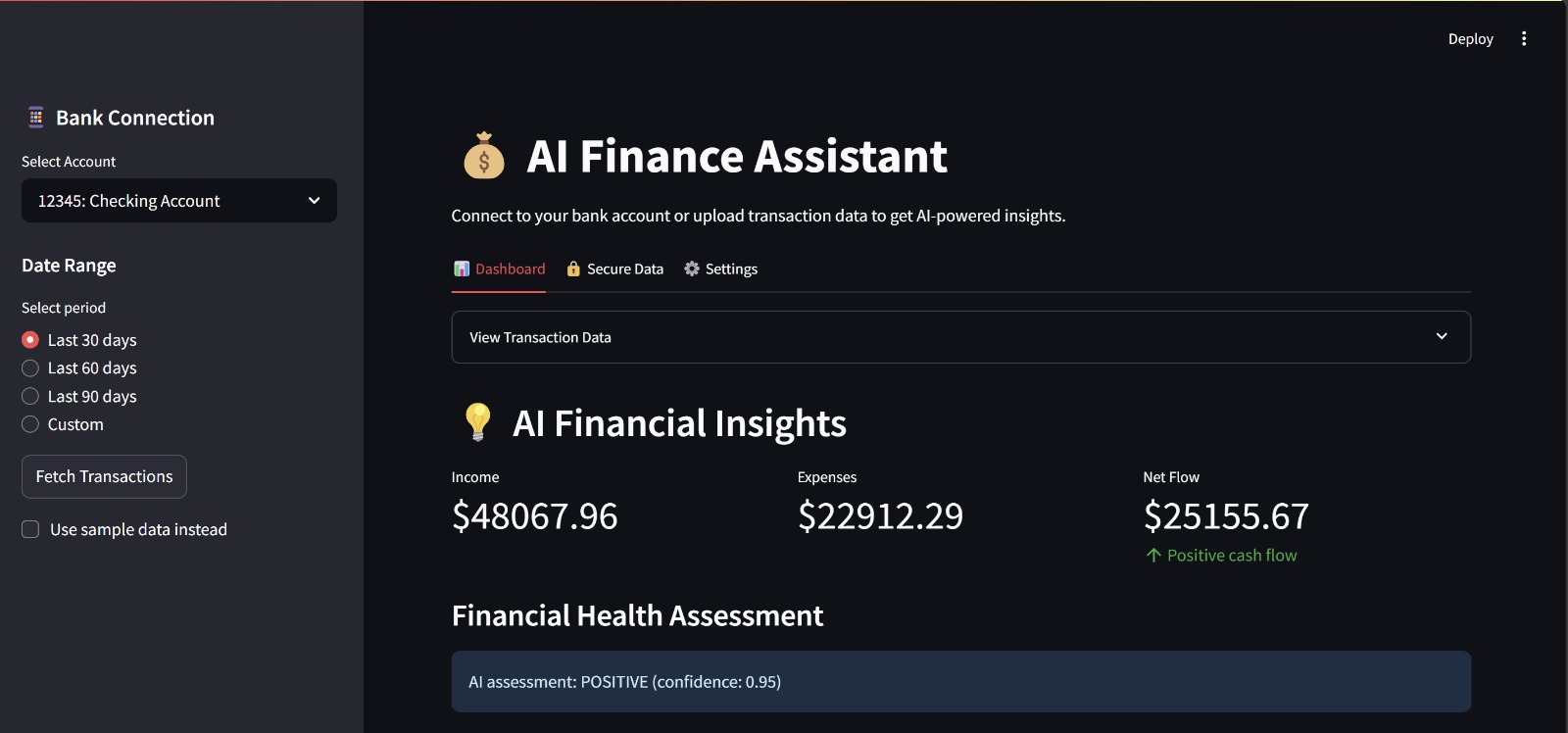
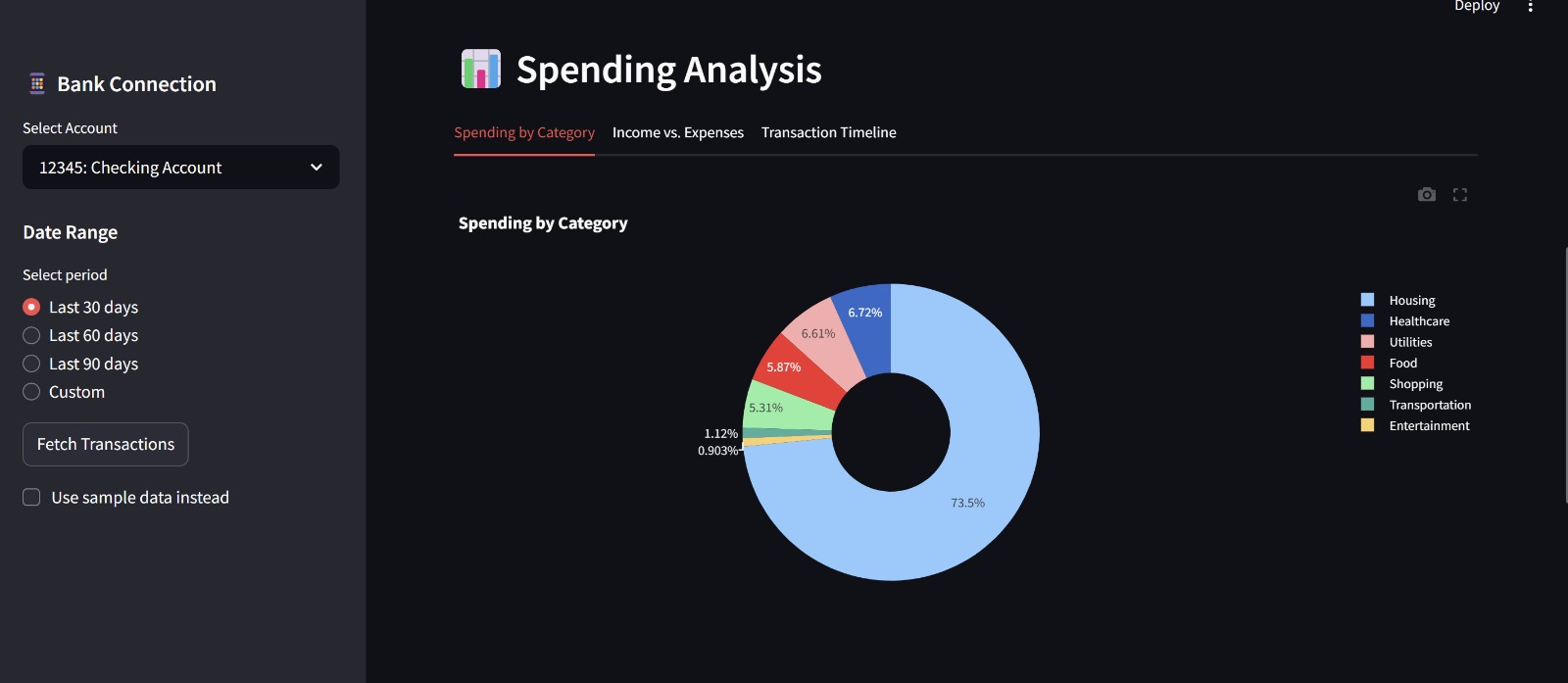
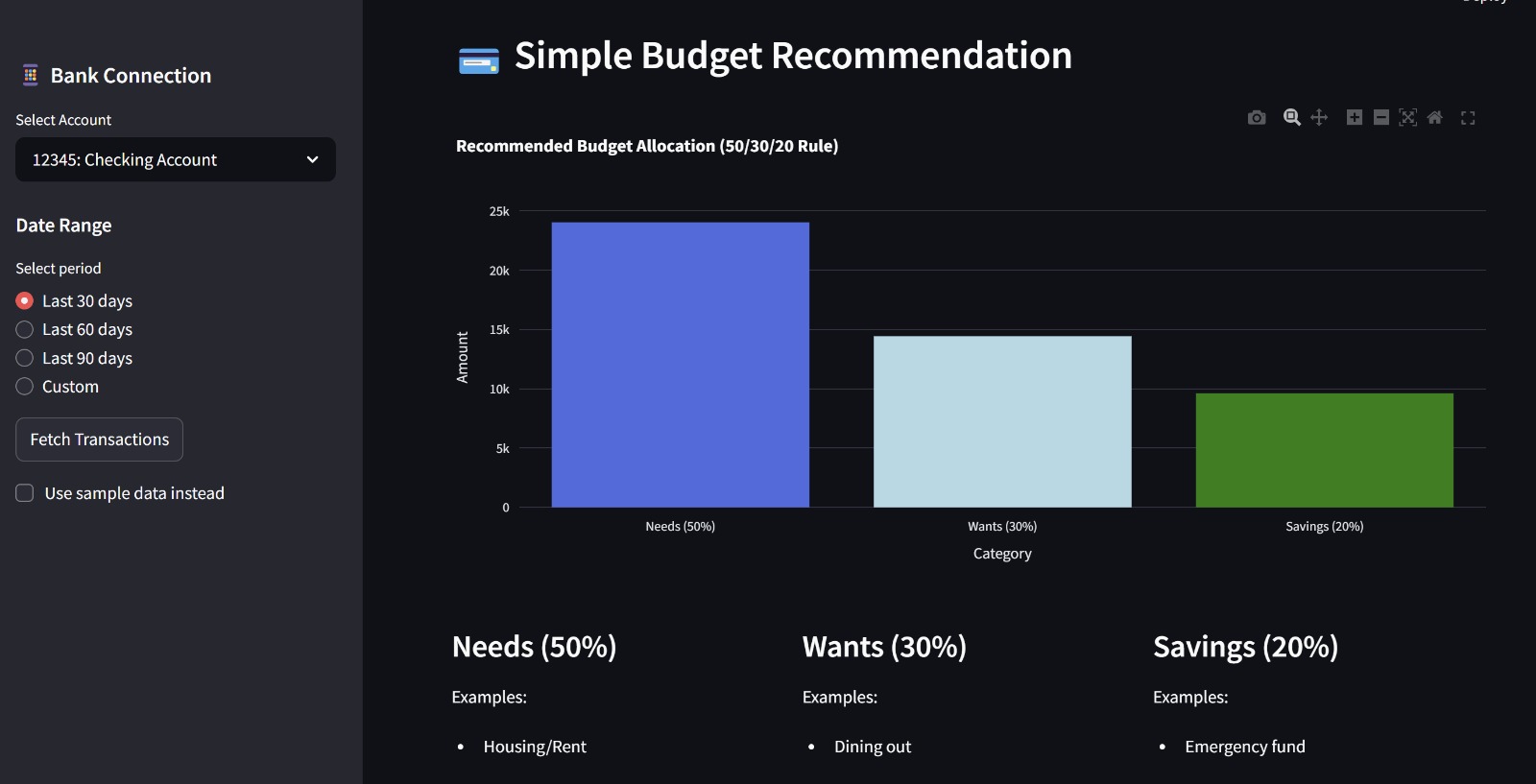
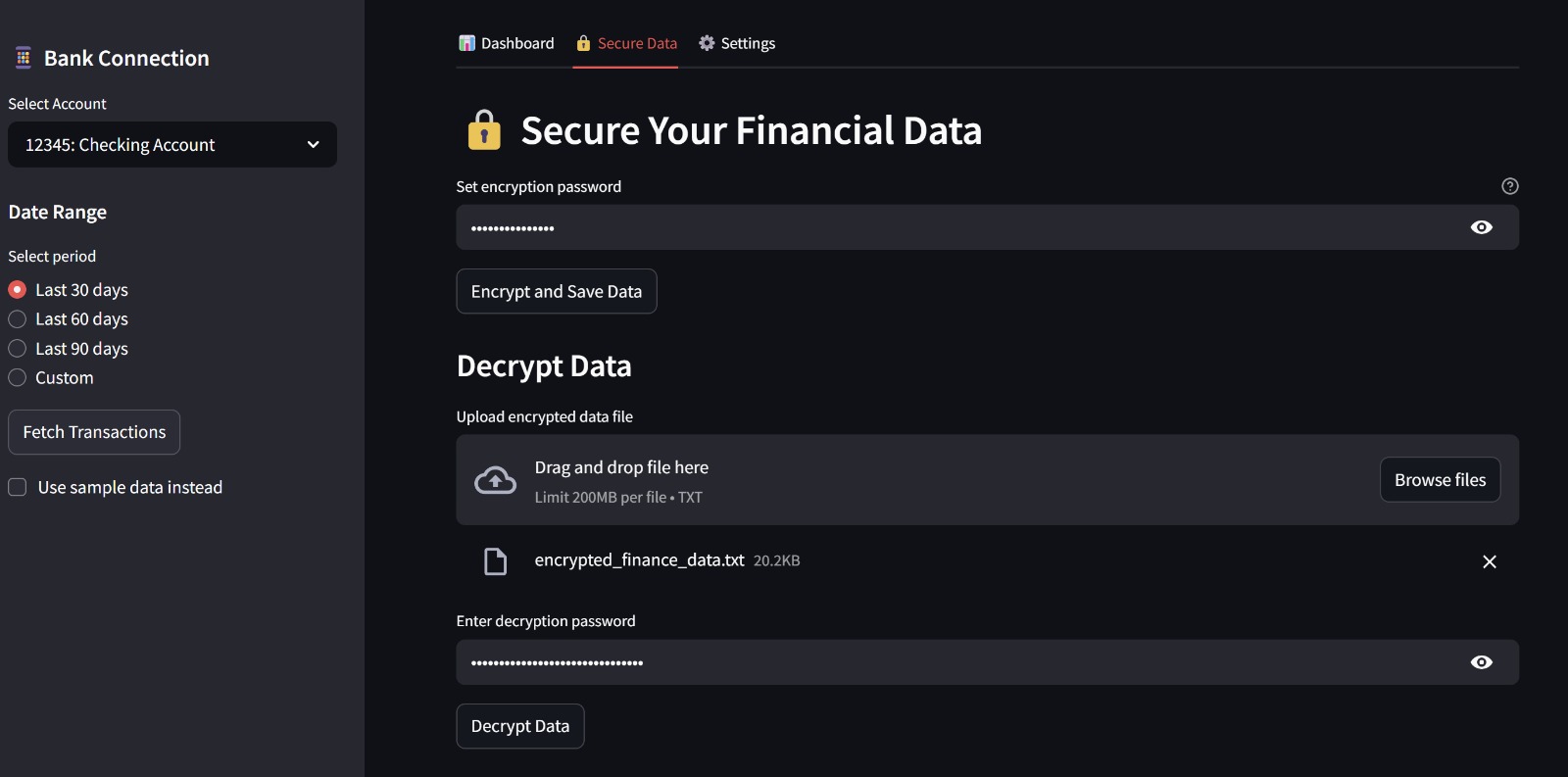
Core Architecture: We built a Streamlit application for rapid development and interactive features Data Layer: We implemented a mock bank API to simulate financial data interactions AI Analysis: We integrated a pre-trained sentiment analysis model to evaluate financial health Security Features: We developed encryption/decryption functions to protect sensitive financial data Visualization Components: We created dynamic charts using Plotly to help users understand their spending User Experience: We designed a clean, multi-tab interface focused on delivering insights at a glance
Each team member focused on specific components based on the problem statement requirements, allowing us to maximize productivity during the limited time frame. Challenges We Faced Addressing all aspects of the problem statement in 24 hours presented several challenges: Implementation Challenges
Categorization Accuracy: Creating a robust transaction categorization system required careful keyword mapping Meaningful AI Insights: Moving beyond generic advice to truly personalized recommendations Security Implementation: Designing encryption that was both secure and user-friendly Data Consistency: Handling various date formats and transaction structures
Hackathon Constraints
Time Management: Balancing feature development with polishing the user experience Scope Control: Staying focused on the core requirements without feature creep Technical Limitations: Working within the constraints of pre-trained models without custom training
What's Next for AI Finance Assistant While we're proud of what we accomplished during the hackathon, we see many opportunities to expand on our solution to the original problem statement:
Implementing predictive analytics to forecast future spending patterns Creating more sophisticated categorization using machine learning Developing more detailed budget recommendations based on personal financial goals Adding support for investment accounts and long-term financial planning Building a mobile application for on-the-go financial insights
The hackathon problem statement gave us a strong foundation, but we envision evolving this prototype into a comprehensive financial wellness platform that helps users not just understand their current financial situation, but actively improve it.


Log in or sign up for Devpost to join the conversation.