
Inspiration
Space is one of those subjects that is difficult to fully understand through static images and numbers. We wanted to create an experience that makes exploring space feel more like actually travelling through it.
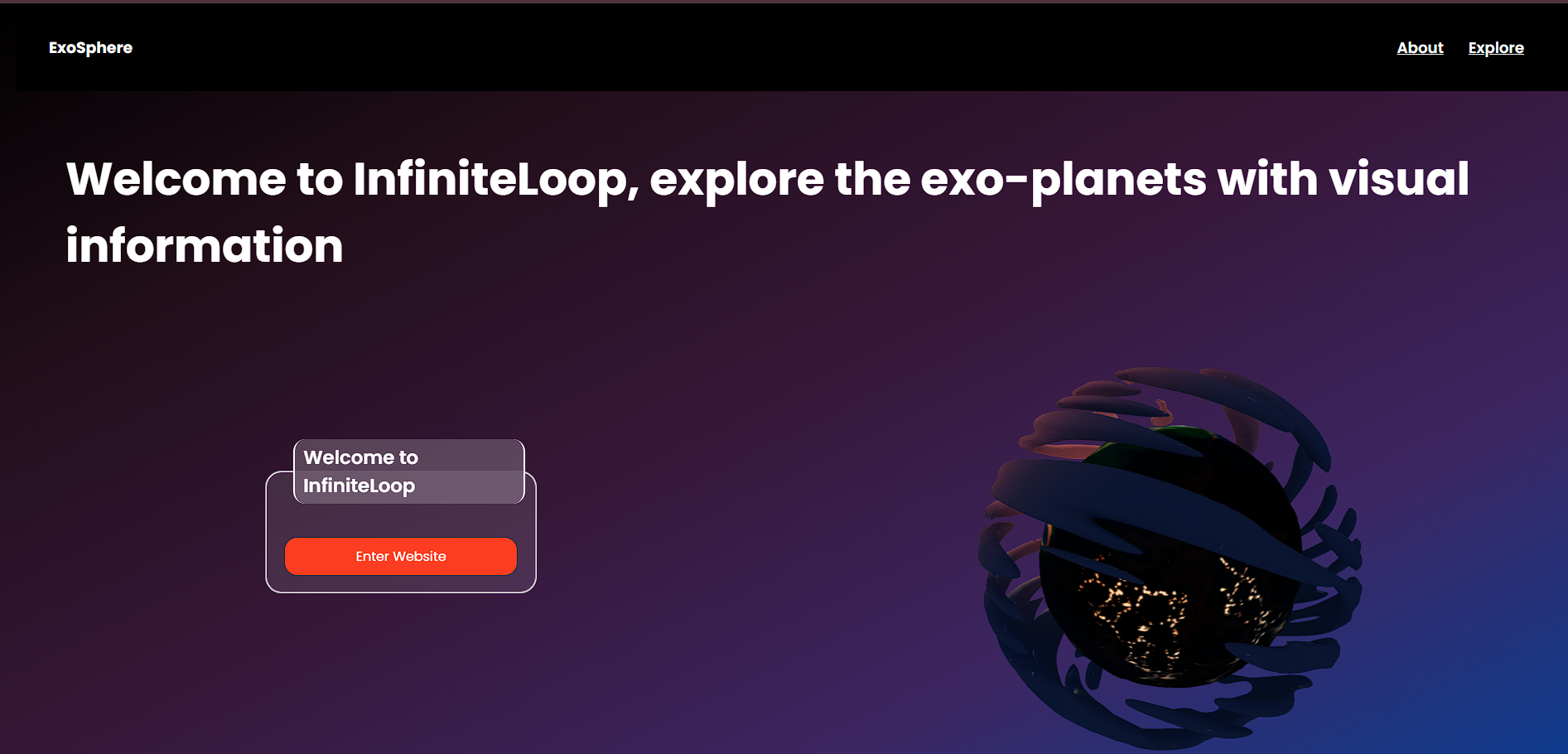
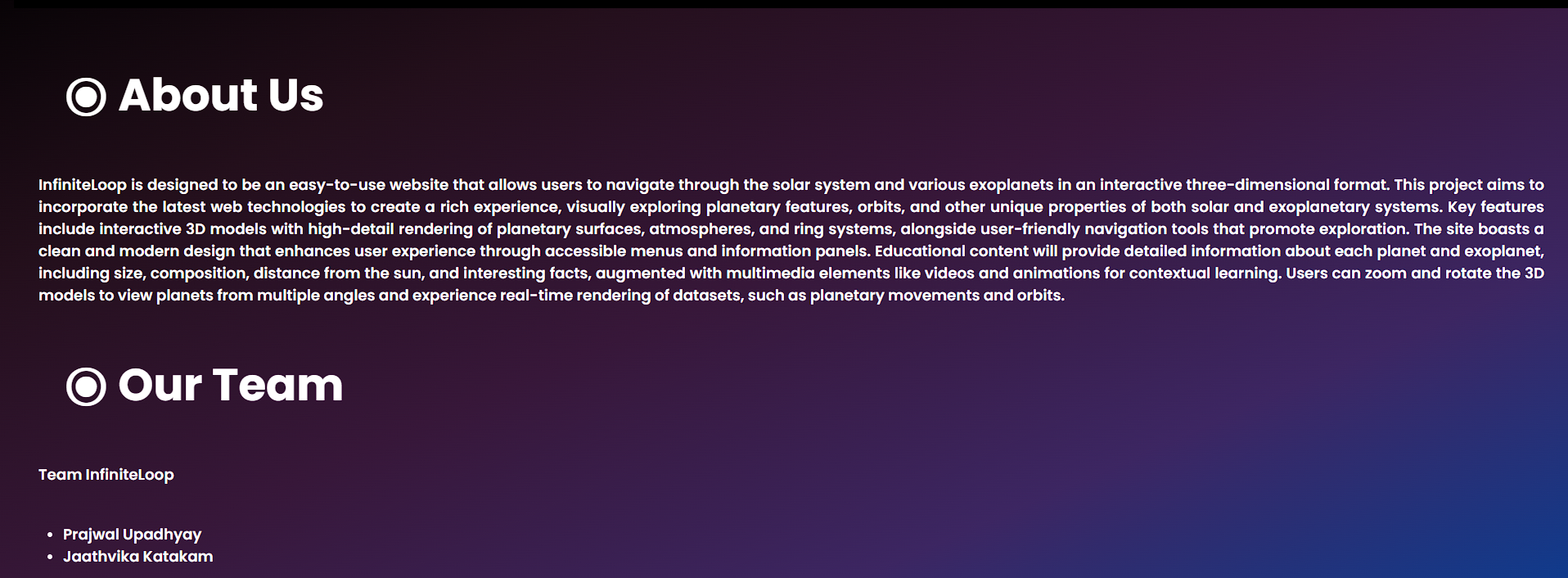
That idea led to InfiniteLoop, an immersive 3D web experience where users can explore the Solar System, investigate confirmed exoplanets, view planetary characteristics, and interact with celestial objects in three dimensions.
Our goal was to make space exploration visual, interactive, and accessible directly from a web browser, without requiring users to install specialized software.
What We Built
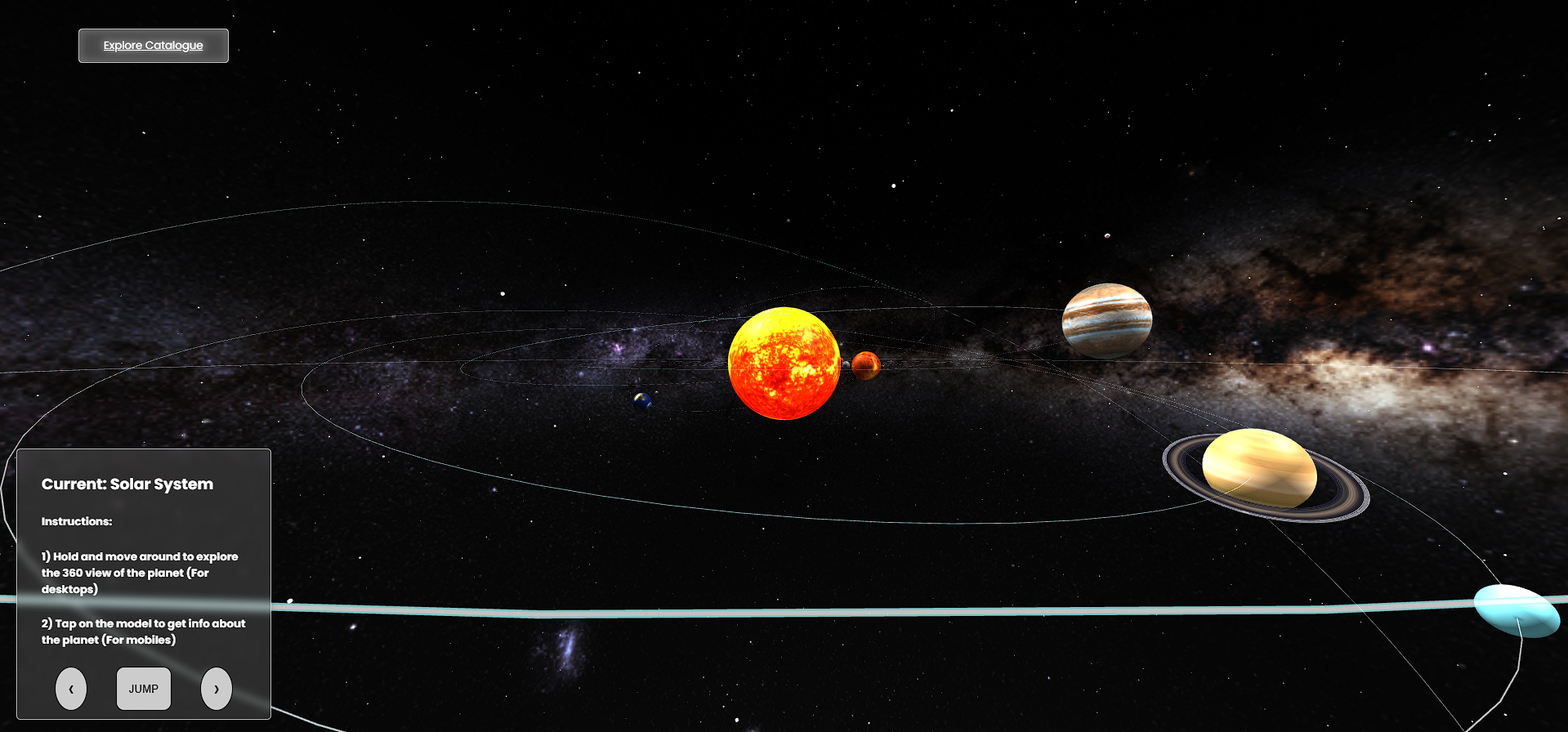
InfiniteLoop combines an interactive 3D Solar System with an exoplanet exploration platform.
Users can:
- 🌌 Explore a real-time 3D environment using Three.js
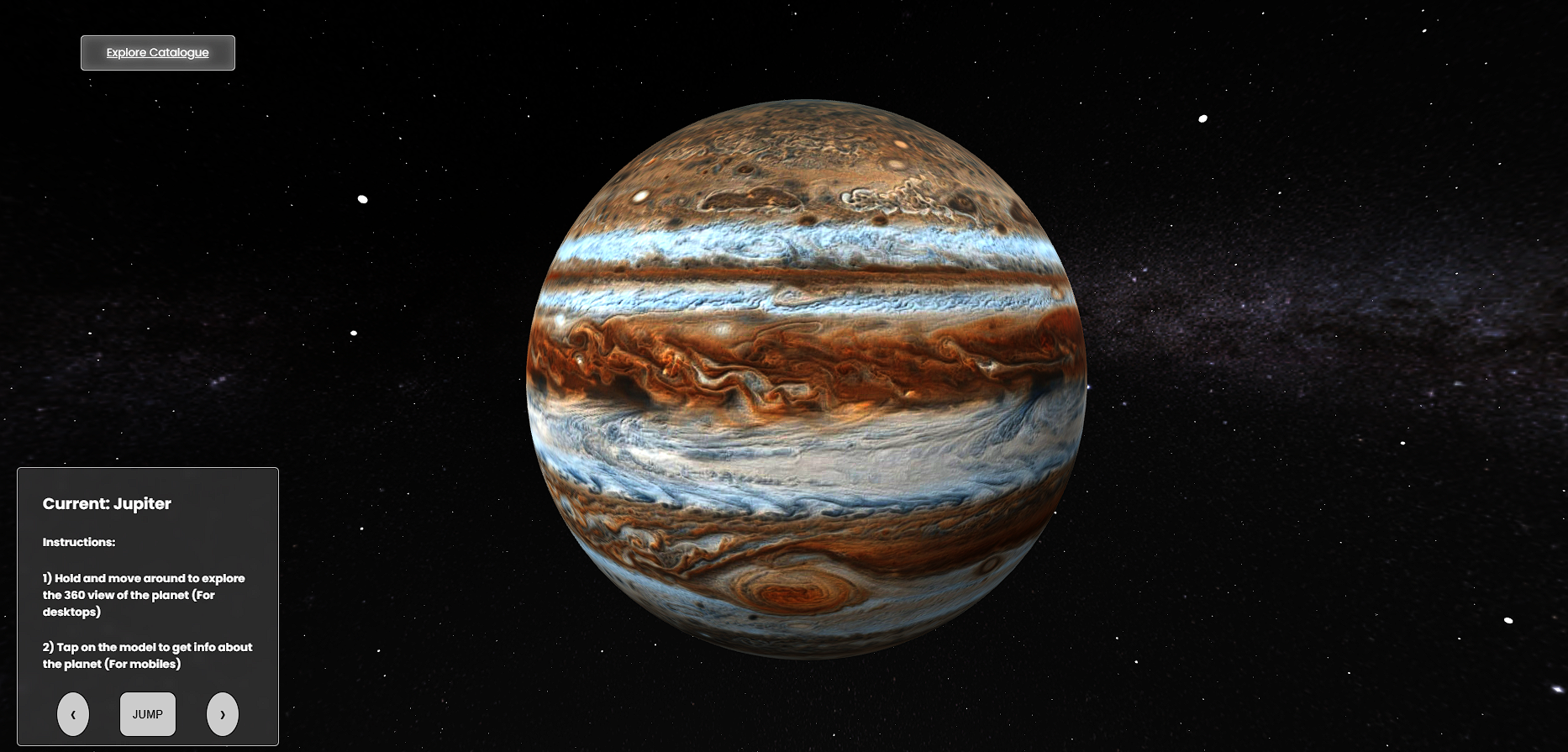
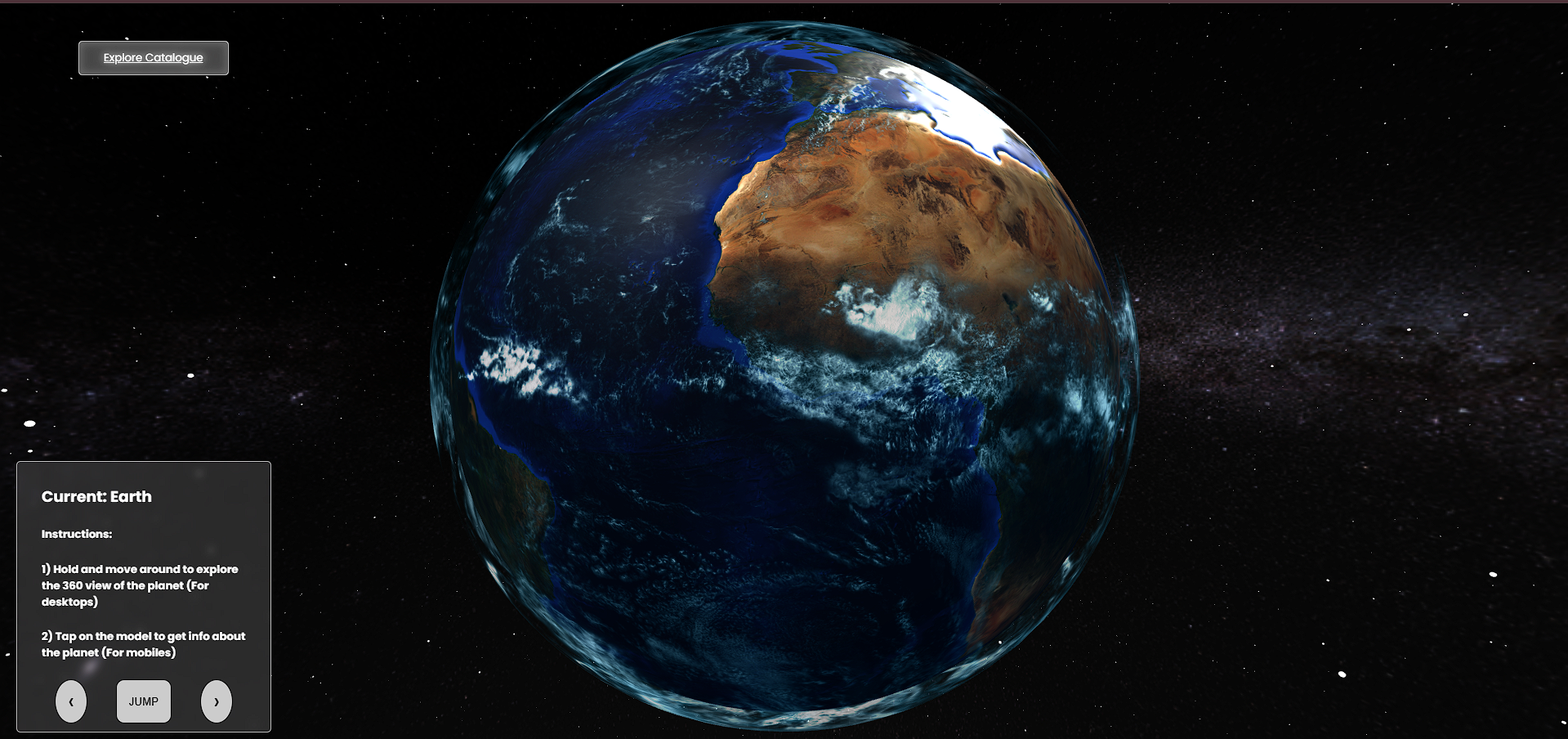
- 🪐 Navigate through the Solar System and inspect individual planets
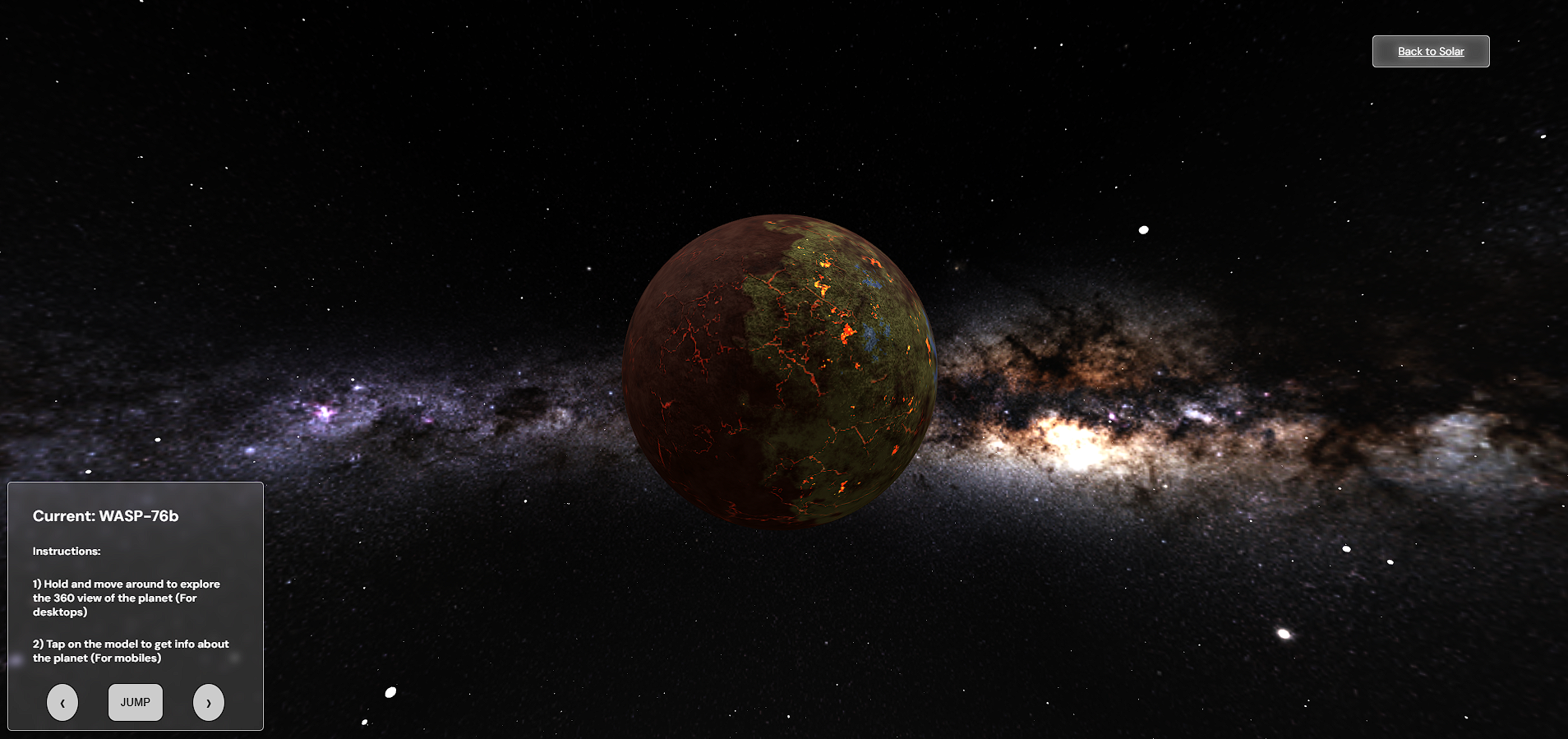
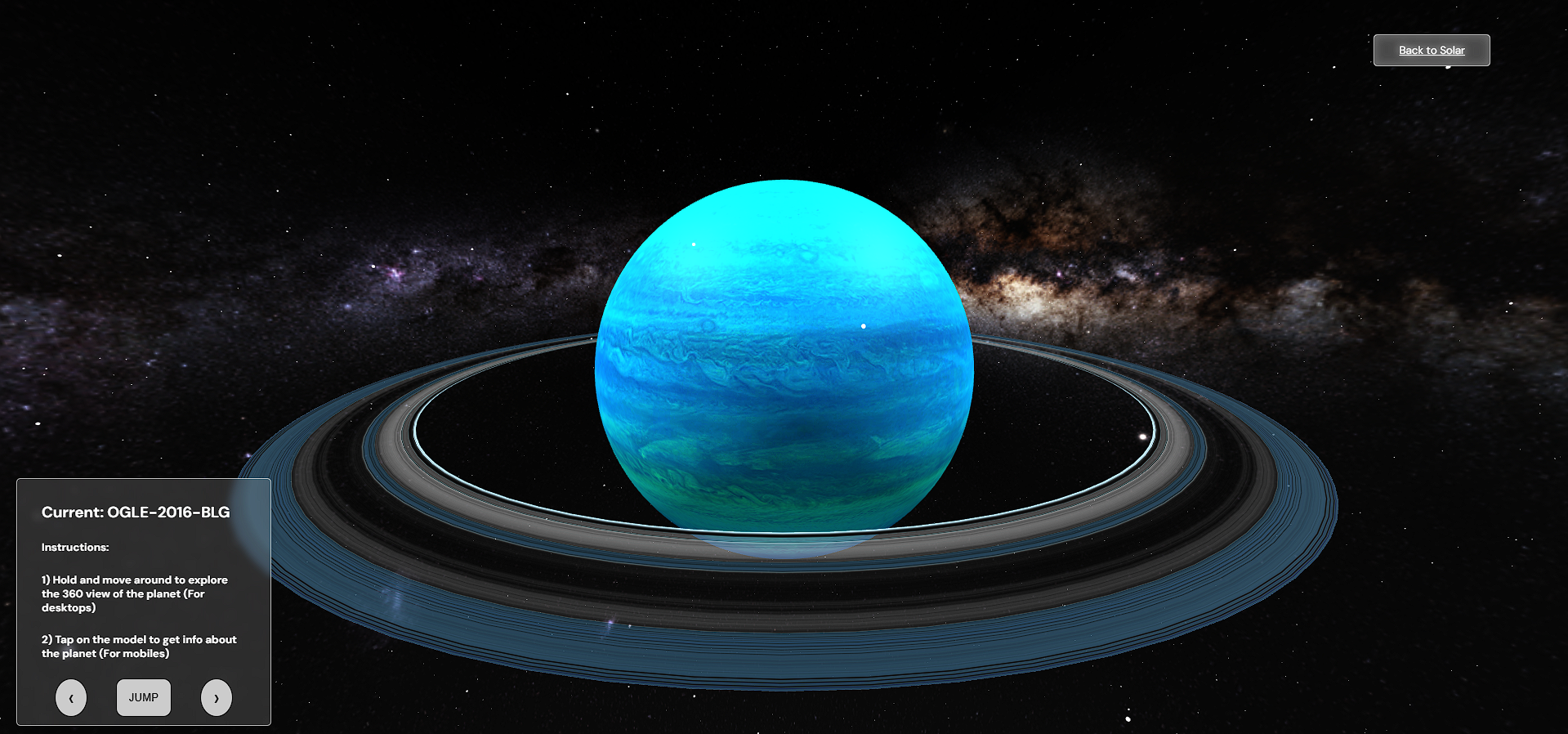
- 🔭 Explore a catalogue of confirmed exoplanets
- 🌍 Interact with detailed 3D planetary models
- ☄️ Visualize orbital paths and planetary motion
- 🎮 Rotate, zoom, and navigate through 3D scenes
- 🛰️ Access an embedded NASA Eyes on Exoplanets experience
- 📱 Explore the application through responsive layouts
We created individual experiences for the Sun, all major Solar System planets, Pluto, and multiple notable exoplanets including 51 Pegasi b, 55 Cancri e, GJ 1214 b, Kepler-10 b, TOI-1452 b, and WASP-76 b.
How We Built It
The project was built as a browser-based application using HTML, CSS, and JavaScript, with Three.js powering the interactive 3D experiences.
We used GLTF/GLB 3D models for planets, exoplanets, stars, and environments, while Three.js OrbitControls provides interactive camera movement. Custom JavaScript handles scene initialization, animations, navigation, planetary interactions, and dynamic content.
The application is organized into separate experiences for the Solar System, individual planets, exoplanets, the catalogue, NASA exploration, and supporting pages.
Challenges
One of our biggest challenges was making complex 3D content run smoothly inside a web browser while keeping the experience intuitive for users.
Working with multiple 3D models also required careful handling of model loading, assets, textures, camera positioning, lighting, animations, and file paths. Another challenge was designing navigation that allowed users to move between many different celestial objects without making the experience confusing.
We also had to make the application responsive so that the experience remained usable across different screen sizes.
What We Learned
Building InfiniteLoop taught us how to combine 3D graphics, web development, interactive UI design, and scientific content into a single experience.
We gained practical experience with Three.js, GLTF/GLB assets, 3D scene composition, camera controls, animation, responsive design, and deploying a static 3D web application.
Most importantly, we learned that an effective 3D experience is not only about creating impressive visuals — it is about making those visuals interactive, understandable, and meaningful to the user.
InfiniteLoop is our attempt to turn a web browser into a small window into the universe.
Built With
- css3
- font-awesome
- glb
- gltf
- html5
- javascript
- three.js
- vercel
- webgl

Log in or sign up for Devpost to join the conversation.