-
-
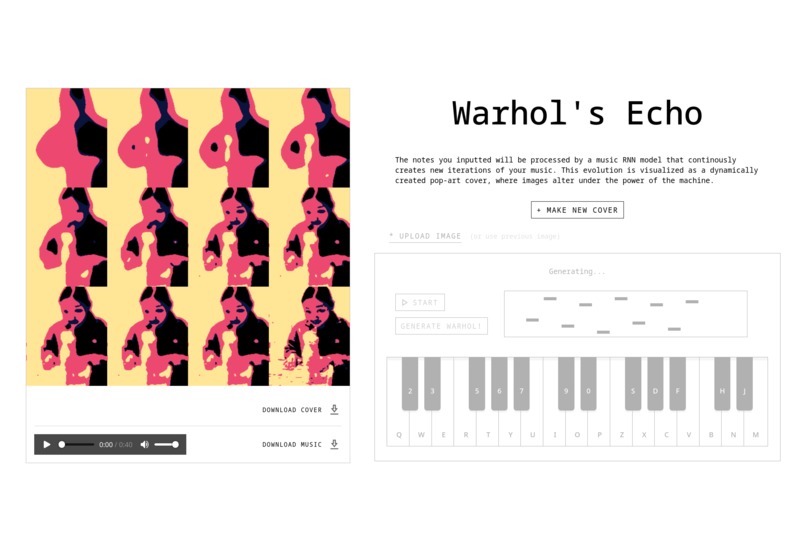
interface after generation
-
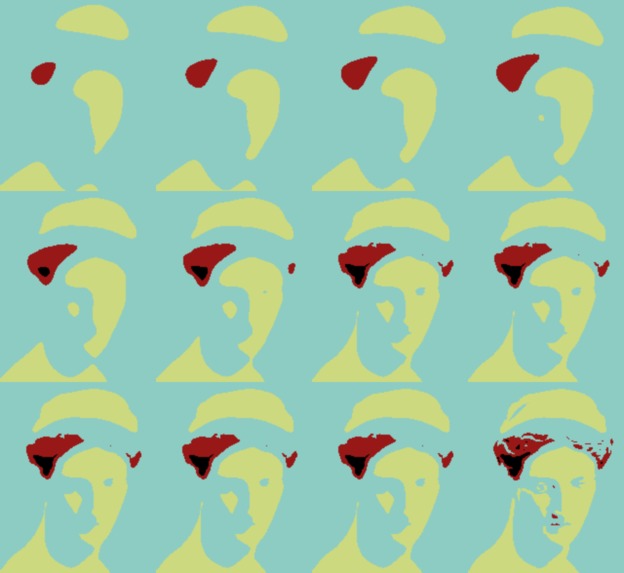
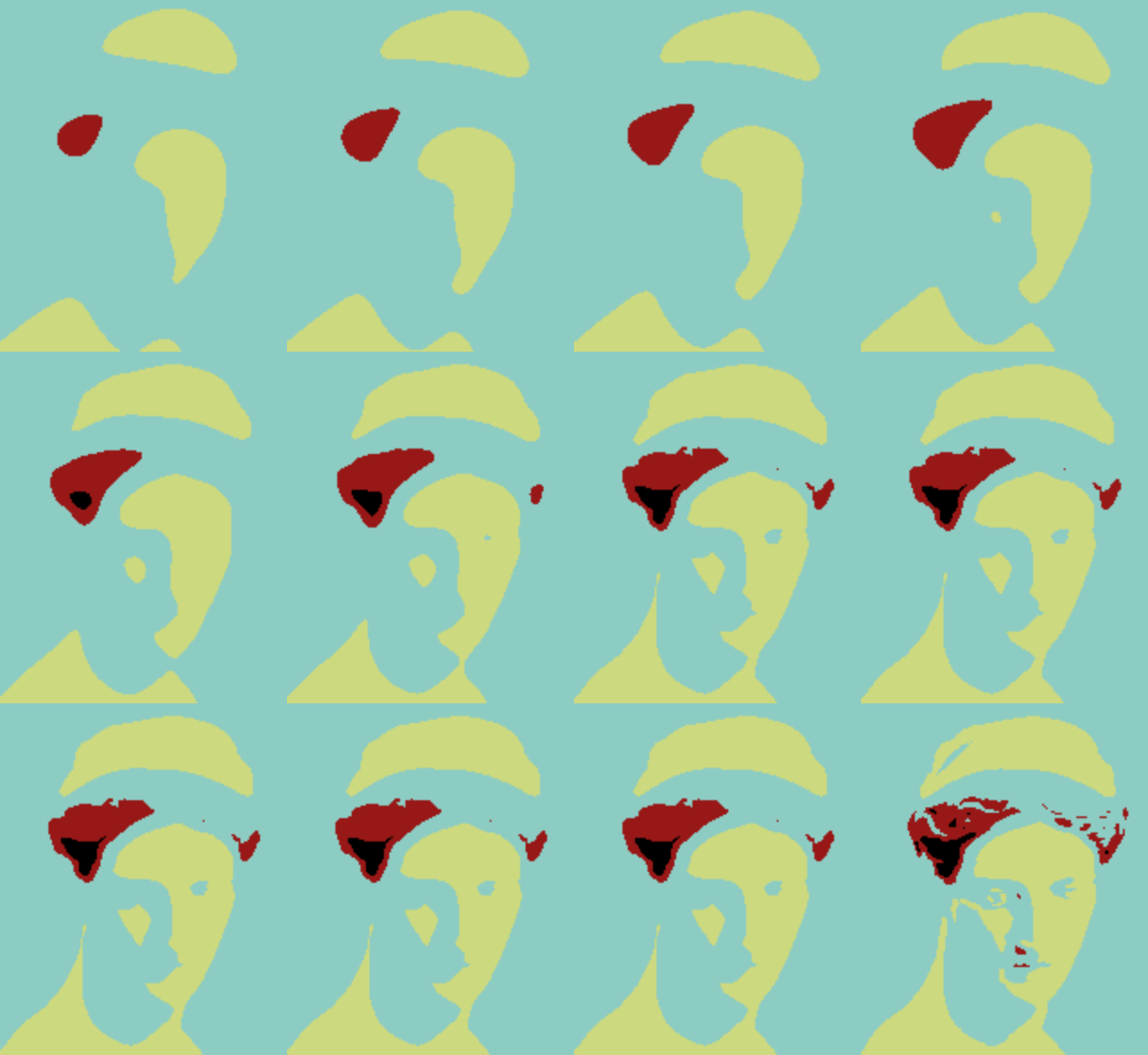
generated cover
-
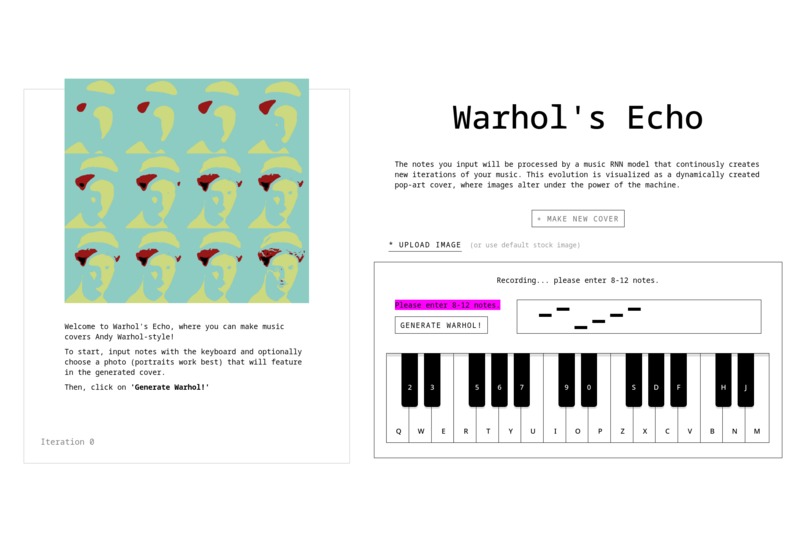
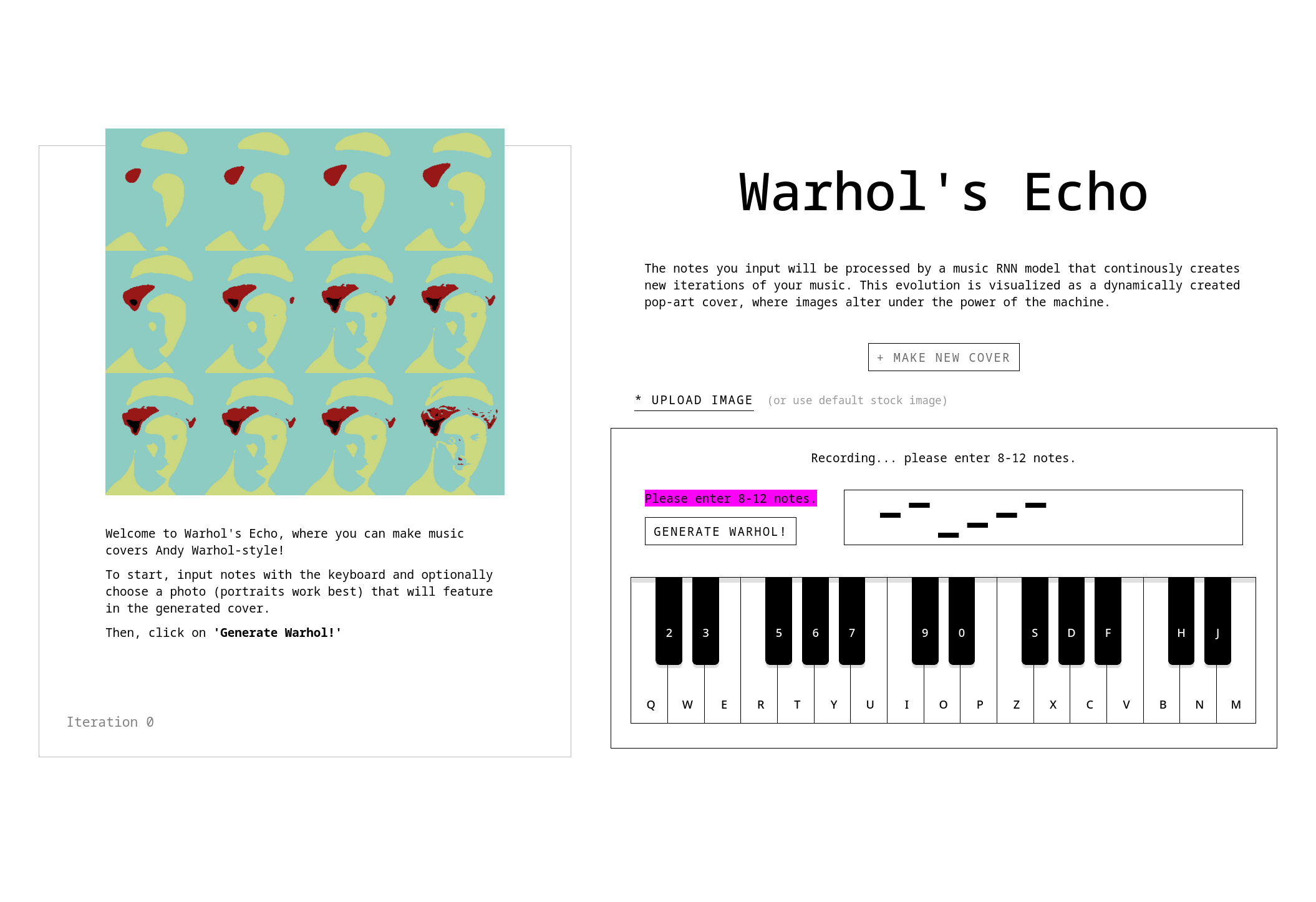
interface for note input
Inspiration
This project was inspired by Andy Warhol's artworks that play on the concepts of celebrity exposure and mass reproduction, especially his "Marilyn Diptych", which shows the face of the famous movie star in various states of development - or as this project terms it - "iterations". This prompted me to ask the question: does machine learning do essentially the same as Warhol's capricious silkscreen prints, by taking source material, learning from it, and then altering it? How does this influence the way we create art?
What it does
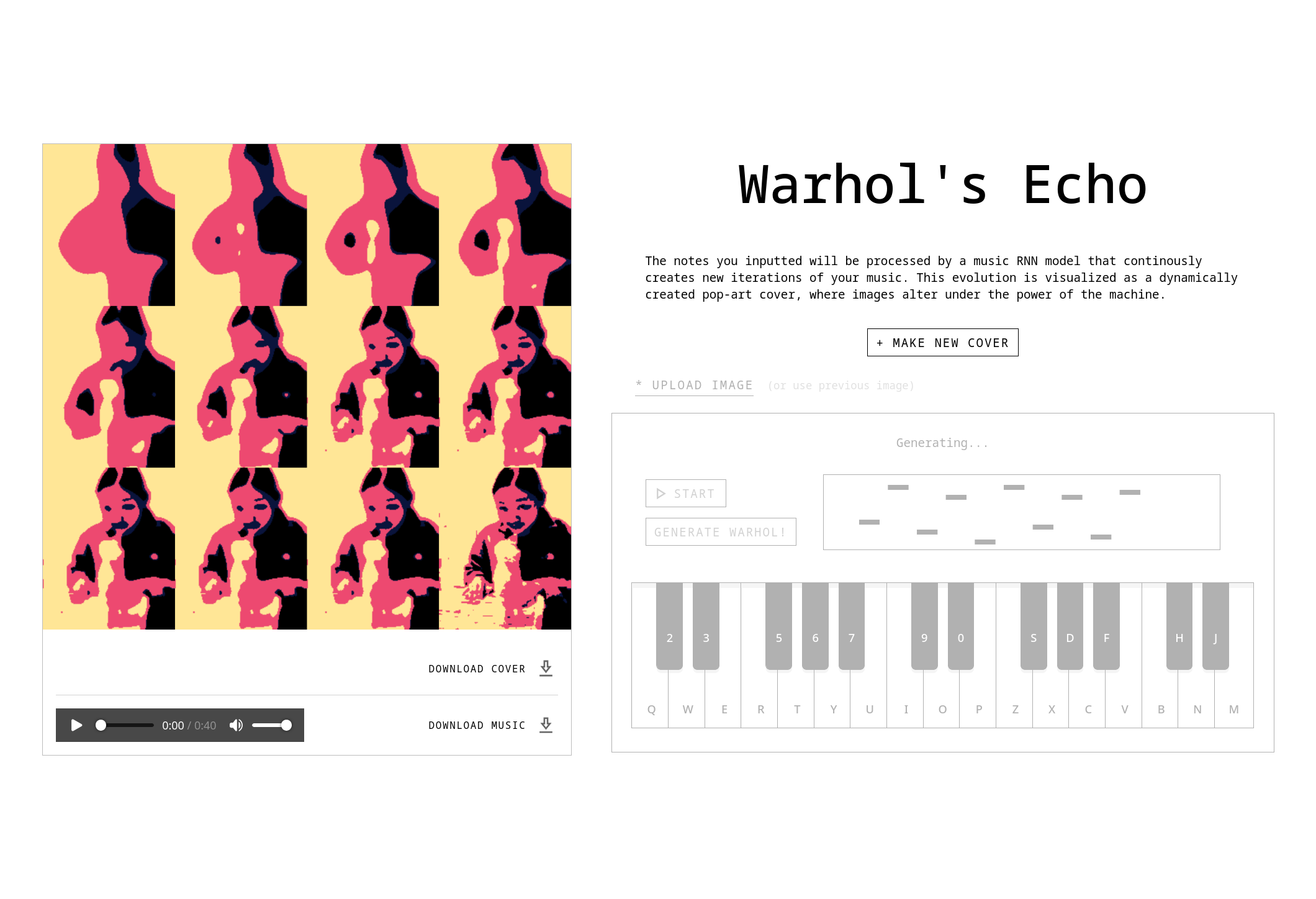
Warhol's Echo allows users to input a few notes (your favorite tune!) in a virtual piano, then uses the Magenta.js library to create improvisations of the original tune that are increasingly machine-flavored. This development is visualized through pop-art style faces in various states of "decay", creating a diptych between evolving music and evolving art.
How we built it
Warhol's Echo was built in two parts - the first part based on music production, the second on art production. Music production involved creating a virtual piano as a user interface (with key/audio mappings taken from a previous project), and creating an infinite loop in which the MusicRNN from Magenta.js can improvise new iterations based on user-inputted notes. Art production used p5.js to generate pop-art style portraits based on photographs, combine pictures into murals, and animate features through fluid states of change.
Challenges we ran into
To adapt Magenta.js's music model to the exact purposes of this project, I experimented with different parameters and methods before settling on a recursive loop. It took a similar amount of time to create methods that converted photographs into the pop-art style Warhol was famous for. Finally, the progressive decay and change of the images required fine-tuning animation and integrating with other components. A little work also went into the overall design, seeking to create a geometric, modern style that meshes well with the bright, abstract artworks.
Accomplishments that we're proud of
I'm proud of how the project allows the user to combine music and art in a way that illustrates the mechanizing influence of the machine. The final products are also (I believe personally) aesthetically pleasing, and can be made into collectable digital items.
What we learned
Through this project, I had the opportunity for the first time to integrate machine learning libraries with the web interface, and to experiment with different mediums with the simple (but always pleasant) goal of making art. This experience helped me with my coding skills as well as synthesizing different ideas under a common theme. Considering the user experience was another rewarding experience, and when an application deals with art, the aesthetic response is incredibly human.
What's next for Warhol's Echo
Next, I hope to expand Warhol's Echo's purposes to new and more interactive mediums. The format encourages the creation of music covers, so the ultimate goal is to generate easily usable music covers that can actually aid in the creation and dissemination of pop-art-style music. On the technical side, time constraints have meant some code was not entirely optimized, and a short-term goal would be to make the animations more efficient and less cost-intensive.
Built With
- css3
- html5
- javascript
- magenta.js
- p5.js
- react
- smplr

Log in or sign up for Devpost to join the conversation.