Team: NeuralNinjas
InfernoScan Technical Documentation
Overview
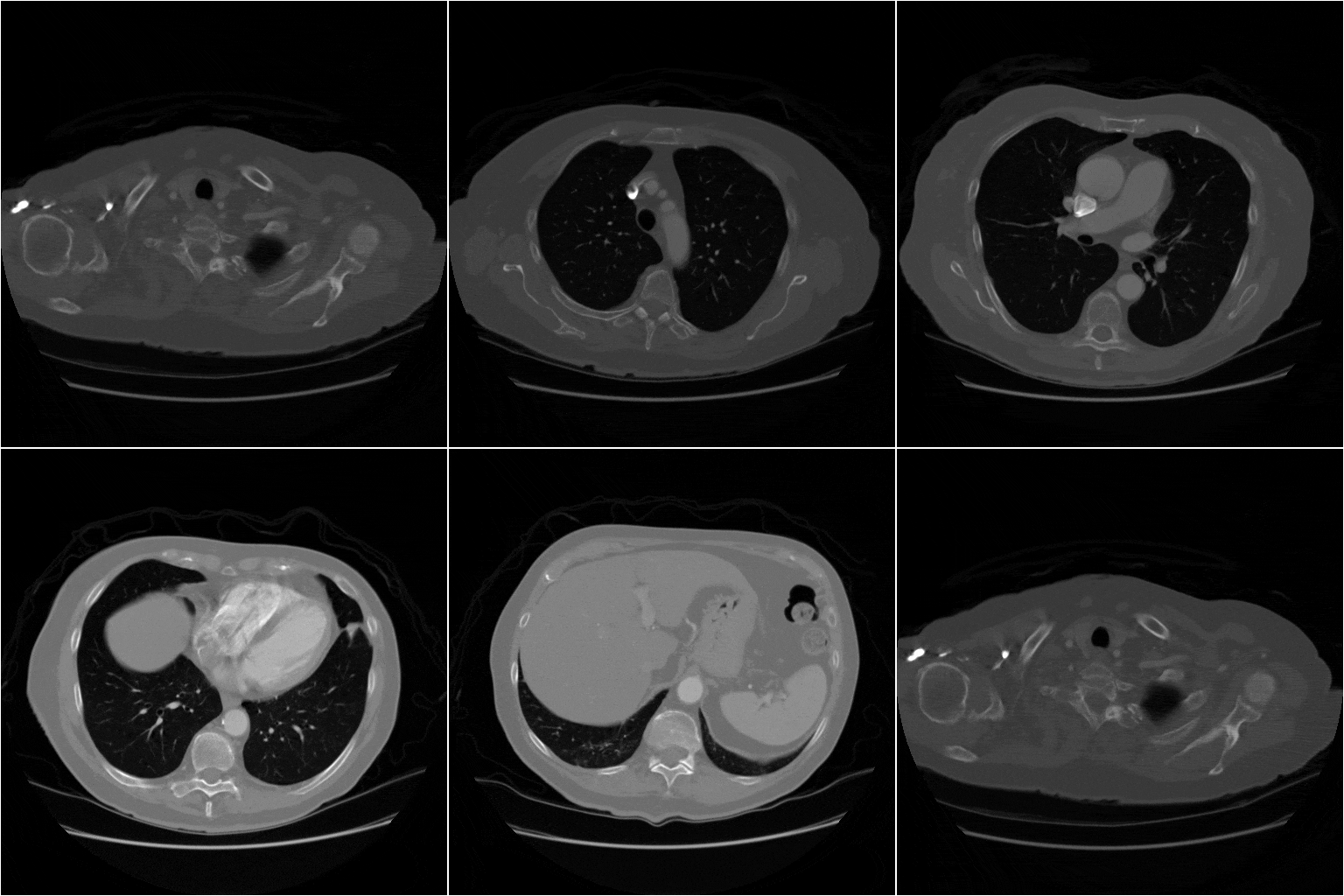
InfernoScan is an innovative medical imaging solution designed to streamline the analysis of 3D medical scans, specifically in the DCM format. Leveraging state-of-the-art machine learning frameworks such as Keras, OpenCV, TensorFlow (tf), and PyTorch, InfernoScan provides accurate insights into anomalies, including malignancy risk, texture details, and precise nodule measurements.
The system employs a Django backend to manage data processing, storage, and API interactions, while the frontend is built using React, offering a user-friendly interface for seamless interaction with the InfernoScan platform.
Technologies Used
Machine Learning Frameworks:
- Keras: Used for building and training neural networks for anomaly detection in medical scans.
- OpenCV: Applied for image processing tasks, including preprocessing and feature extraction.
- TensorFlow (tf): Utilized for its comprehensive machine learning and deep learning capabilities.
- PyTorch: Employed for building and training deep learning models, especially for super-resolution tasks in medical imaging.
Backend Framework:
- Django: Serves as the backend framework to manage data processing, API endpoints, and communication with the machine learning models.
Frontend Framework:
- React: Employs a React-based frontend for a responsive and intuitive user interface, enabling users to interact seamlessly with InfernoScan.
Machine Learning Workflow
- Data Preprocessing:
Input 3D medical scans in DCM format undergo preprocessing using OpenCV to enhance quality and prepare them for model input.
- Anomaly Detection Model:
Keras and TensorFlow are employed to build and train a deep learning model for detecting anomalies in medical scans. The model focuses on identifying malignancy risk, texture details, and precise nodule measurements.
- Super-Resolution Model:
PyTorch is utilized for building a super-resolution model that enhances the resolution of medical images, providing more detailed insights.
- Integration and Inference:
The trained models are integrated into the Django backend, creating API endpoints for seamless communication with the React frontend. Inference is performed on uploaded medical scans, and results are sent back to the frontend for display.
Backend Architecture
- Django Models: Define data structures for storing and managing medical scan data.
- Django Views and Controllers: Handle incoming requests, process data, and interact with machine learning models for analysis.
- API Endpoints: Expose endpoints for communication between the frontend and backend.
Frontend Architecture
- React Components: Build modular components for user interface elements, including upload buttons, result displays, and user feedback.
- API Calls: Utilize asynchronous calls to Django API endpoints for seamless communication with the backend.
- User Interface Design: Ensure a responsive and intuitive design for a positive user experience.
- Deployment
- Backend Deployment: Django backend can be deployed on platforms such as Heroku or AWS.
- Frontend Deployment: React frontend can be deployed on platforms like Netlify or Vercel.
- Database: Utilize PostgreSQL for data storage.
Features and Functionality
Features:
- Swift Analysis:
- Provides rapid analysis of 3D medical scans in DCM format, reducing the waiting time for results.
- Malignancy Risk Estimation:
- Estimates the likelihood of abnormalities being cancerous, providing a numerical risk percentage.
- Texture Details:
- Describes the texture of detected anomalies, offering insights into their visual characteristics.
- Precise Nodule Measurements:
- Measures and reports the precise size of nodules or masses detected in medical scans.
- User-Friendly Interface:
- Intuitive design for easy interaction, ensuring a positive user experience.
- Second Opinion Feature:
- Allows users to obtain a reliable second opinion on diagnosed results, enhancing confidence.
- Integration Capability:
- Seamlessly integrates with existing healthcare systems for a more streamlined diagnostic process.
- Super-Resolution Enhancement:
- Utilizes a PyTorch-based super-resolution model to enhance the resolution of medical images for more detailed analysis.
Functionality:
- Data Preprocessing:
- Utilizes OpenCV for preprocessing 3D medical scans, enhancing their quality before analysis.
- Machine Learning Models:
- Utilizes Keras, TensorFlow, and PyTorch for building and training deep learning models for anomaly detection and super-resolution tasks.
- Django Backend:
- Manages data processing, storage, and API interactions, handling requests from the frontend.
- React Frontend:
- Provides a responsive and intuitive user interface, enabling users to interact seamlessly with InfernoScan.
- API Endpoints:
- Exposes API endpoints for communication between the frontend and backend, facilitating data flow.
- User Authentication:
- Implements user authentication mechanisms to ensure data security and privacy.
- Database Integration:
- Utilizes PostgreSQL for data storage and retrieval, ensuring efficient management of medical scan data.
- Deployment:
- Supports deployment on platforms such as Heroku or AWS for the backend and Netlify or Vercel for the frontend.
- Visual Representation:
- Incorporates visual representations of results for better interpretation and understanding by users.
- Cost-Efficient Healthcare:
- Contributes to cost efficiency by reducing the risk of manual analysis errors and improving the accuracy of diagnoses.
This list outlines the key features and functionality that make InfernoScan a comprehensive and impactful medical imaging solution.
Inspiration
The inspiration for InfernoScan stemmed from the need to revolutionize medical diagnostics, making it faster, more accurate, and accessible. The goal was to develop a cutting-edge solution that could significantly impact healthcare outcomes and improve the overall patient experience.
What it does
InfernoScan is a state-of-the-art medical imaging solution designed for the rapid and precise analysis of 3D medical scans. It utilizes advanced machine learning models to estimate malignancy risk, provide detailed insights into anomaly textures, and offer accurate measurements of nodules. The platform aims to streamline the diagnostic process, reduce waiting times, and empower healthcare professionals with reliable insights.
How we built it
InfernoScan was built through a collaborative effort, leveraging a combination of powerful technologies. The backend, powered by Django, efficiently manages data processing and interacts with machine learning models built using Keras, TensorFlow, and PyTorch. The frontend, developed with React, ensures a user-friendly interface for seamless interaction. The integration of these technologies allowed us to create a robust and efficient medical imaging solution.
Challenges we ran into
Building InfernoScan presented various challenges, from optimizing machine learning models for real-time analysis to ensuring secure and seamless integration between the frontend and backend components. Additionally, addressing the complexities of medical imaging and maintaining a balance between speed and accuracy posed noteworthy challenges. Overcoming these hurdles required close collaboration, continuous iteration, and a commitment to delivering a high-quality solution.
Accomplishments that we're proud of
We take pride in achieving a swift and accurate medical imaging solution that can have a tangible impact on healthcare. The successful integration of machine learning models, the creation of an intuitive user interface, and the ability to provide detailed insights are accomplishments that reflect our commitment to excellence in healthcare technology.
What we learned
The development of InfernoScan provided valuable insights into the intricacies of medical imaging, machine learning integration, and the importance of user-centric design in healthcare solutions. Collaborating on this project allowed us to expand our knowledge and refine our skills in these critical domains.
What's next for InfernoScan
The journey for InfernoScan doesn't end here. In the future, we envision further enhancements to the platform, including the integration of more advanced machine learning algorithms, expansion of supported medical imaging formats, and collaboration with healthcare institutions to ensure the widespread adoption of this innovative solution. Our commitment to advancing healthcare technology remains steadfast, and we look forward to the continued evolution of InfernoScan.


Log in or sign up for Devpost to join the conversation.