-
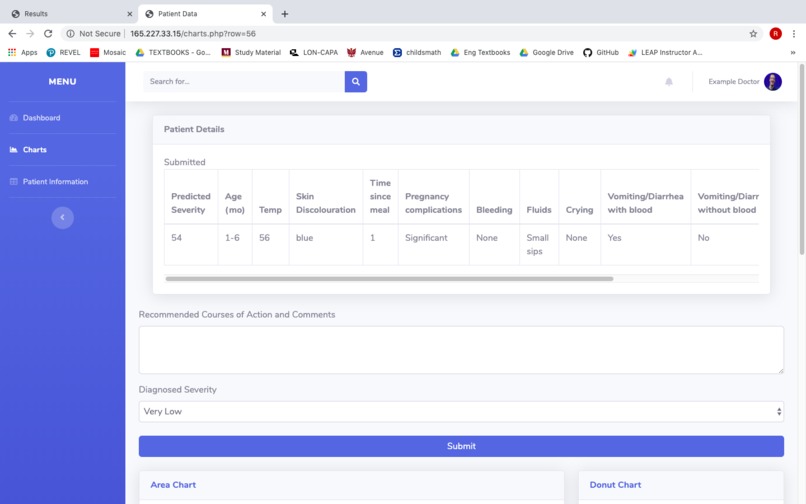
Doctor Verification Screen
-
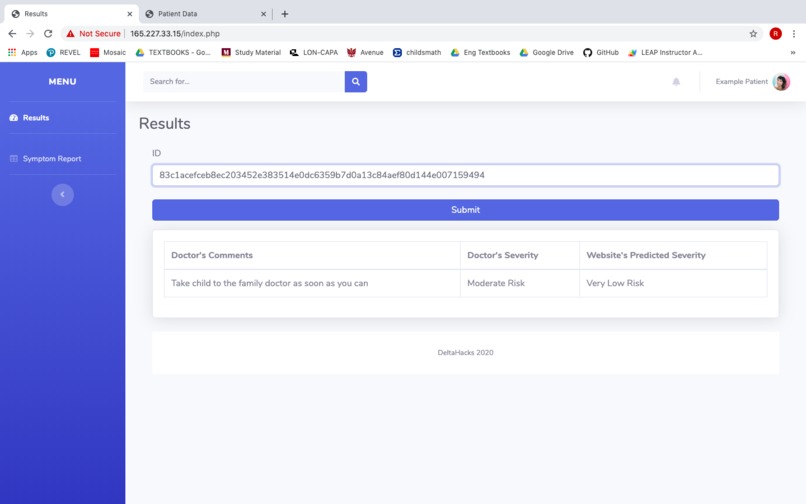
Results of Symptom Form Accessed via Hash Encryption
-
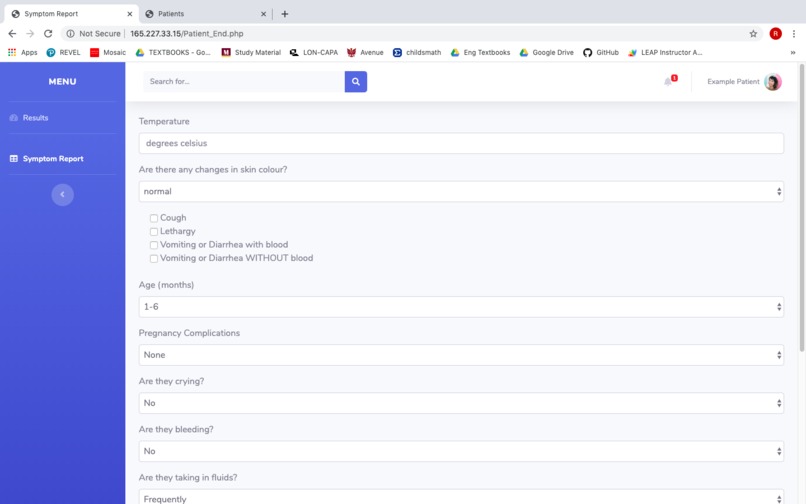
Top Portion of the Blank Symptom Report Form
-
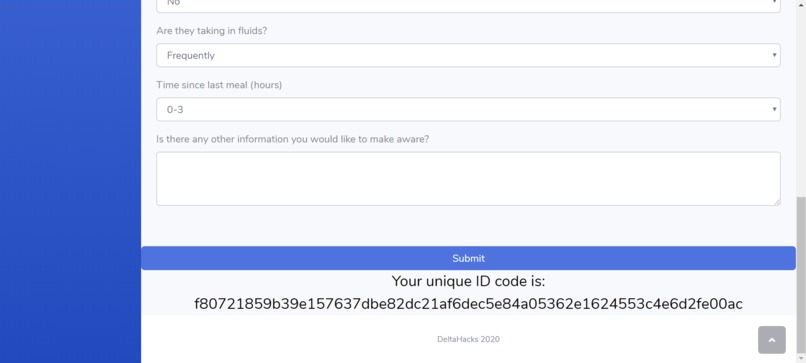
Successful Symptom Report User Submission


Inspiration
In 2012 in the U.S infants and newborns made up 73% of hospitals stays and 57.9% of hospital costs. This adds up to $21,654.6 million dollars. As a group of students eager to make a change in the healthcare industry utilizing machine learning software, we thought this was the perfect project for us. Statistical data showed an increase in infant hospital visits in recent years which further solidified our mission to tackle this problem at its core.
What it does
Our software uses a website with user authentication to collect data about an infant. This data considers factors such as temperature, time of last meal, fluid intake, etc. This data is then pushed onto a MySQL server and is fetched by a remote device using a python script. After loading the data onto a local machine, it is passed into a linear regression machine learning model which outputs the probability of the infant requiring medical attention. Analysis results from the ML model is passed back into the website where it is displayed through graphs and other means of data visualization. This created dashboard is visible to users through their accounts and to their family doctors. Family doctors can analyze the data for themselves and agree or disagree with the model result. This iterative process trains the model over time. This process looks to ease the stress on parents and insure those who seriously need medical attention are the ones receiving it. Alongside optimizing the procedure, the product also decreases hospital costs thereby lowering taxes. We also implemented a secure hash to uniquely and securely identify each user. Using a hyper-secure combination of the user's data, we gave each patient a way to receive the status of their infant's evaluation from our AI and doctor verification.
Challenges we ran into
At first, we challenged ourselves to create an ethical hacking platform. After discussing and developing the idea, we realized it was already done. We were challenged to think of something new with the same amount of complexity. As first year students with little to no experience, we wanted to tinker with AI and push the bounds of healthcare efficiency. The algorithms didn't work, the server wouldn't connect, and the website wouldn't deploy. We persevered and through the help of mentors and peers we were able to make a fully functional product. As a team, we were able to pick up on ML concepts and data-basing at an accelerated pace. We were challenged as students, upcoming engineers, and as people. Our ability to push through and deliver results were shown over the course of this hackathon.
Accomplishments that we're proud of
We're proud of our functional database that can be accessed from a remote device. The ML algorithm, python script, and website were all commendable achievements for us. These components on their own are fairly useless, our biggest accomplishment was interfacing all of these with one another and creating an overall user experience that delivers in performance and results. Using sha256 we securely passed each user a unique and near impossible to reverse hash to allow them to check the status of their evaluation.
What we learned
We learnt about important concepts in neural networks using TensorFlow and the inner workings of the HTML code in a website. We also learnt how to set-up a server and configure it for remote access. We learned a lot about how cyber-security plays a crucial role in the information technology industry. This opportunity allowed us to connect on a more personal level with the users around us, being able to create a more reliable and user friendly interface.
What's next for InfantXpert
We're looking to develop a mobile application in IOS and Android for this app. We'd like to provide this as a free service so everyone can access the application regardless of their financial status.


Log in or sign up for Devpost to join the conversation.