Inspiration
We’ve all sent a text we immediately regretted.
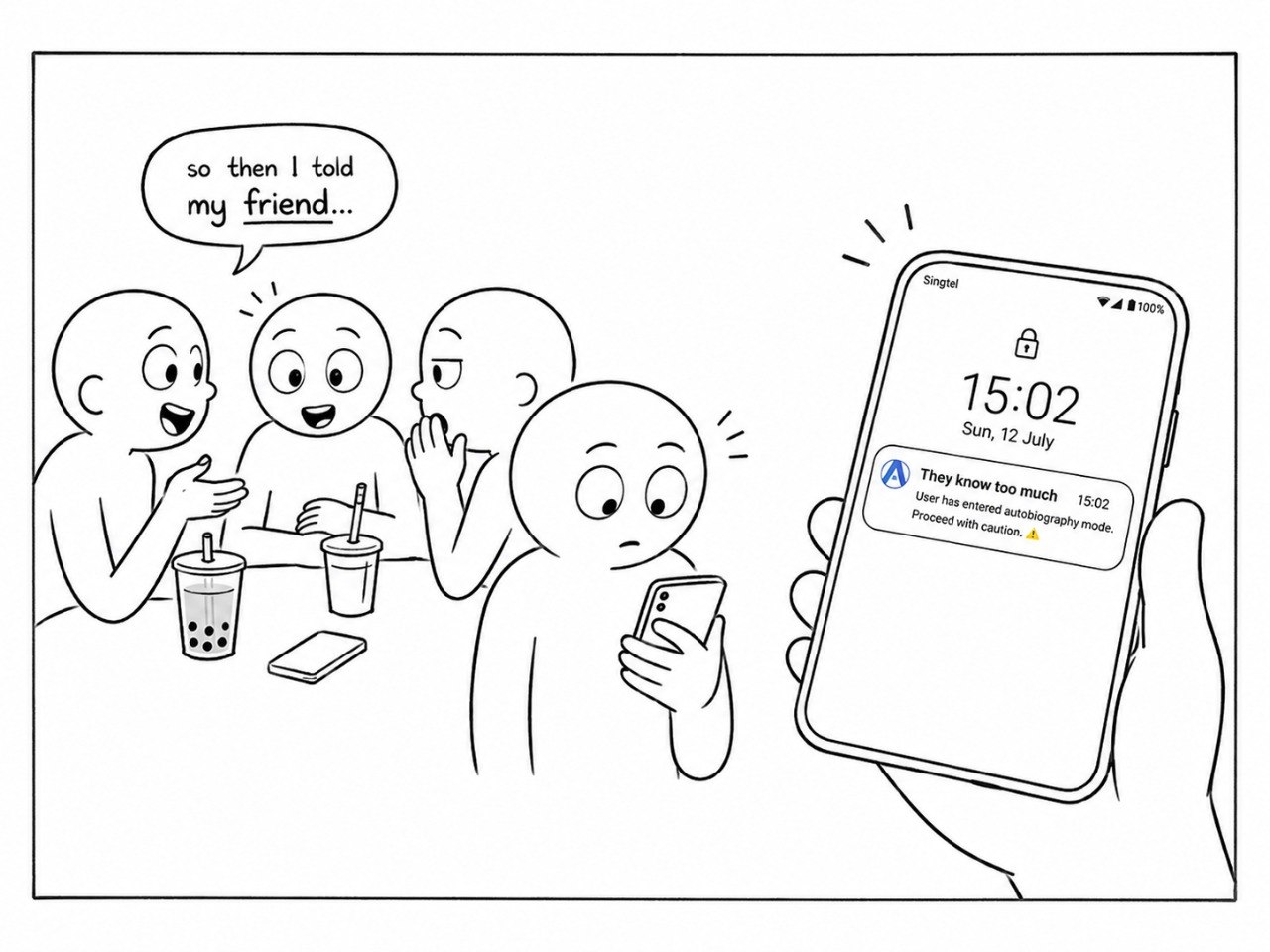
Yapocalypse started as a way to catch that moment before it happens: a brutally honest friend in your pocket that sounds the alarm the second you start oversharing.
What it does
Yapocalypse helps users stop themselves before they reveal too much.
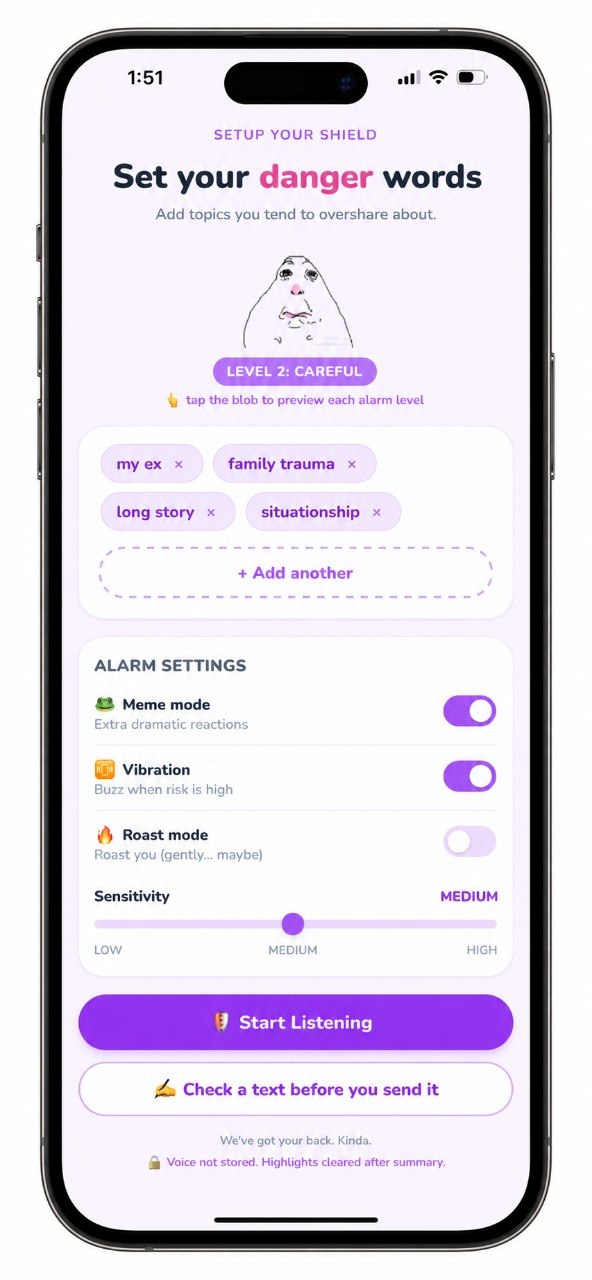
The app monitors speech in real time and triggers increasingly dramatic alarms as the user’s overshare risk rises, from a polite warning at Level 3 to a full desperation siren at Level 5.
The Text Check feature allows users to paste in a draft message before sending it. Agnes AI judges the message, explains what may be risky about it, and rewrites it into a less unhinged version.
At the end of each session, Overshare Wrapped summarises the user’s behaviour, shows their oversharing statistics, and gives them one final roast.
How we built it
We built the mobile app using React Native and Expo.
On-device speech recognition is used for real-time monitoring, helping the app remain private and usable without constantly sending voice data to a server.
We used Next.js and Vercel for the backend, with Agnes AI handling message analysis, verdicts, and rewrites. The Agnes AI key remains server-side so it is not exposed in the application binary.
Challenges we ran into
Building real-time voice monitoring on mobile came with several technical challenges.
AbortSignal.timeout() failed silently on Hermes, which disrupted Agnes AI requests. Vercel’s default 10-second function limit was also shorter than Agnes AI’s response time, causing silent fallbacks.
We also had to make sure the alarm system could respond quickly, work reliably under Android’s mobile-service restrictions, and still prioritise user privacy.
Accomplishments that we’re proud of
We built a fully private, offline-capable overshare alarm with escalating sounds that can work even when the phone is in silent mode.
We are also proud that the app combines something genuinely useful with humour. Agnes AI’s verdicts do not just warn users, but roast them in a way that makes the experience more memorable and fun.
What we learned
We learned that serverless platforms are not always designed for longer LLM inference times.
We also learned that native mobile development introduces challenges that web applications rarely face, including different JavaScript engines, background modes, operating-system restrictions, and mobile service behaviour.
Most importantly, we learned that even a ridiculous idea can solve a real problem when the user experience is taken seriously.
What’s next for Yapocalypse
Yapocalypse currently works on Android.
Next, we want to bring the full experience to iPhone by adapting the real-time voice monitoring, background processing, and alarm system for iOS.
We also hope to improve the overshare-detection system, add more personalised warning settings, and make Overshare Wrapped even more chaotic.


Log in or sign up for Devpost to join the conversation.