-
-
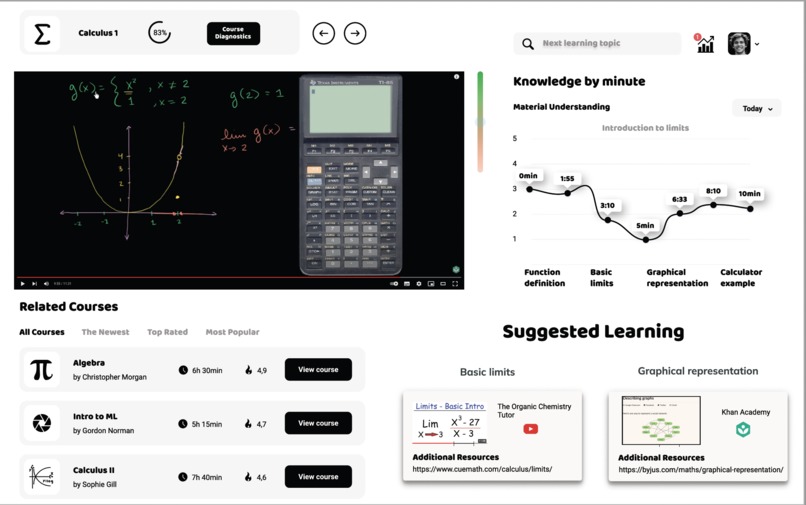
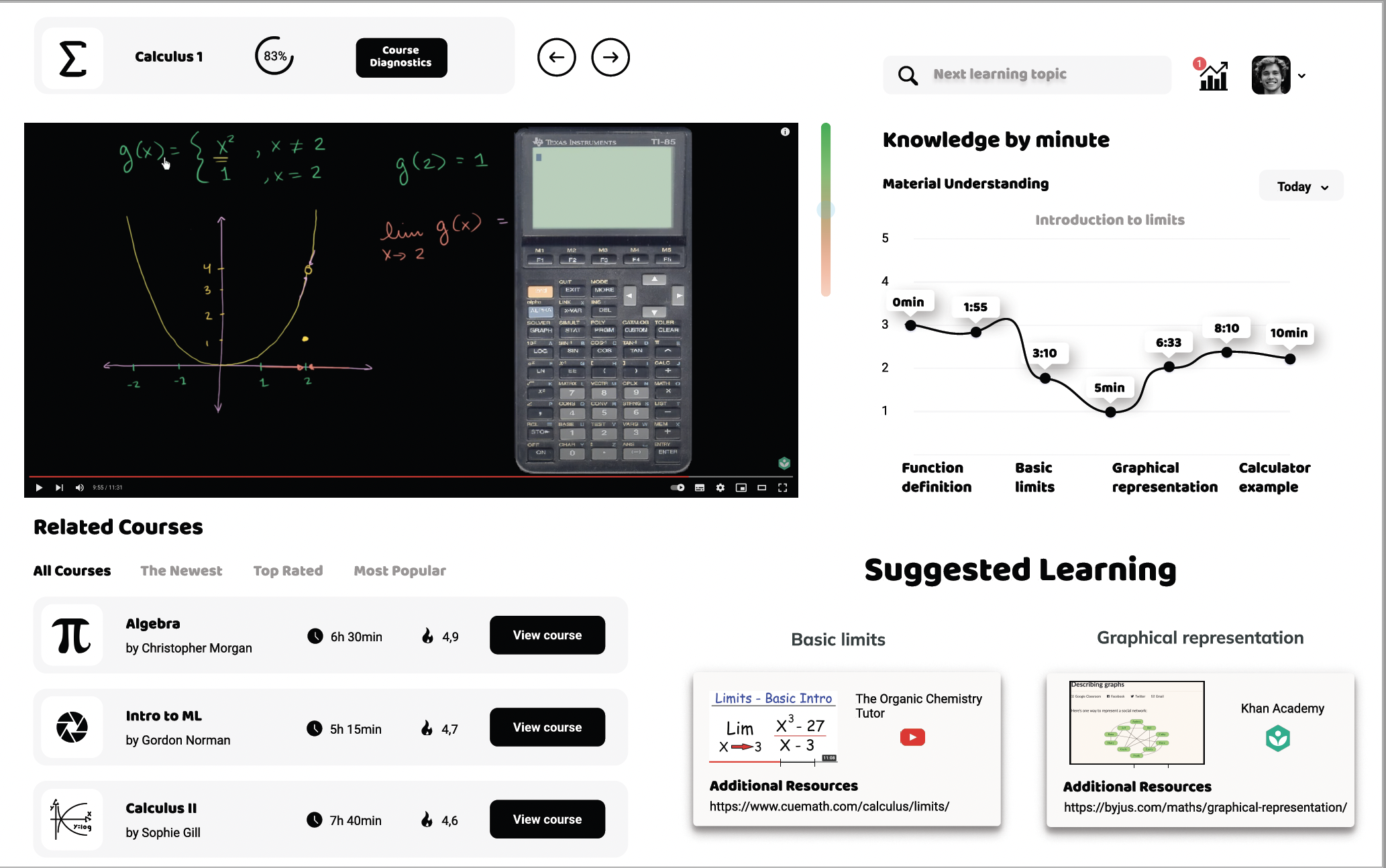
This is a mock up of the design of our vision for the product
Inspiration
The inspiration for this project comes from the simple fact that the current educational system is in urgent need of innovation at all levels. Our team comes from very a wide variety of backgrounds that has allowed us to gather insights and envision a tool that could be useful to improve students' learning experience. We thought about the amazing reservoir of online learning content and lectures that are waiting to be consumed, but that are locked behind a language barrier and therefore difficult to access. We seek to utilize AI in order to make it easier for students to learn a new and difficult concept, even in a language unfamiliar to them.
This project was inspired by and based on earlier code created by our teammate Ricardo for an earlier project. We expanded on and refactored the code, implementing a new frontend and working to tie a new web interface with the Chrome extension in order to allow students to access a wider array of related resources and better manage their learning of the new material.
What it does
Currently, our application functions as a Chrome extension that activates whenever you watch a YouTube video. At any time, you can rate your current understanding or grasp of the focus topic, which will guide our application's recommendations on what videos and material to study next. We additionally have a website that functions as a main hub for the extension, tracking your progress of learning any given subject and suggesting how to continue learning.
How we built it
Our Chrome extension runs on a Flask application server, utilizing both YouTube's and OpenAI's APIs to guide our recommendations. Our web application utilizes a Flask backend with a React frontend. The learning model we chose to implement is GPT-3 due to its efficiency in using deep learning to produce human-like text.
Challenges we ran into
Our application involves multiple moving parts, including a Flask backend server, a React frontend website, and a Chrome extension script. Our biggest challenge was working out how those components could all work together in harmony, setting up the integration between GPT-3 and Youtube in order to make the best possible content recommendation was one that really stood out. We had to be careful with the way in which we were passing in parameters used by the ML models to process the data and make an accurate suggestion.
Accomplishments that we're proud of
We are proud of both sides of our application that we have created: the Flask + React web server that hosts the main web hub for the application, and the Chrome extension that utilizes AI to offer a functional product on its own. These components have huge potential even independently, so we can't wait to see the possibilities of combining their capabilities.
What we learned
As a team of relative beginners, we learned a great deal from working on this project, including general design and coding principles, as well as wider perspective concerns such as scalability, partnerships, and business models. We learned about different ML models and the effect that they each have on the prediction of what the best fit (in our case best educational video) is.
What's next for Indigena
The first thing to do would be to configure the Chrome extension and React web application to be able to apply changes across the different levels more efficiently. We then want to utilize our backend capabilities for translating text, images, and documents in order to facilitate learning in other languages.

Log in or sign up for Devpost to join the conversation.