📖 Project Story: IndicSign
🧠 Inspiration
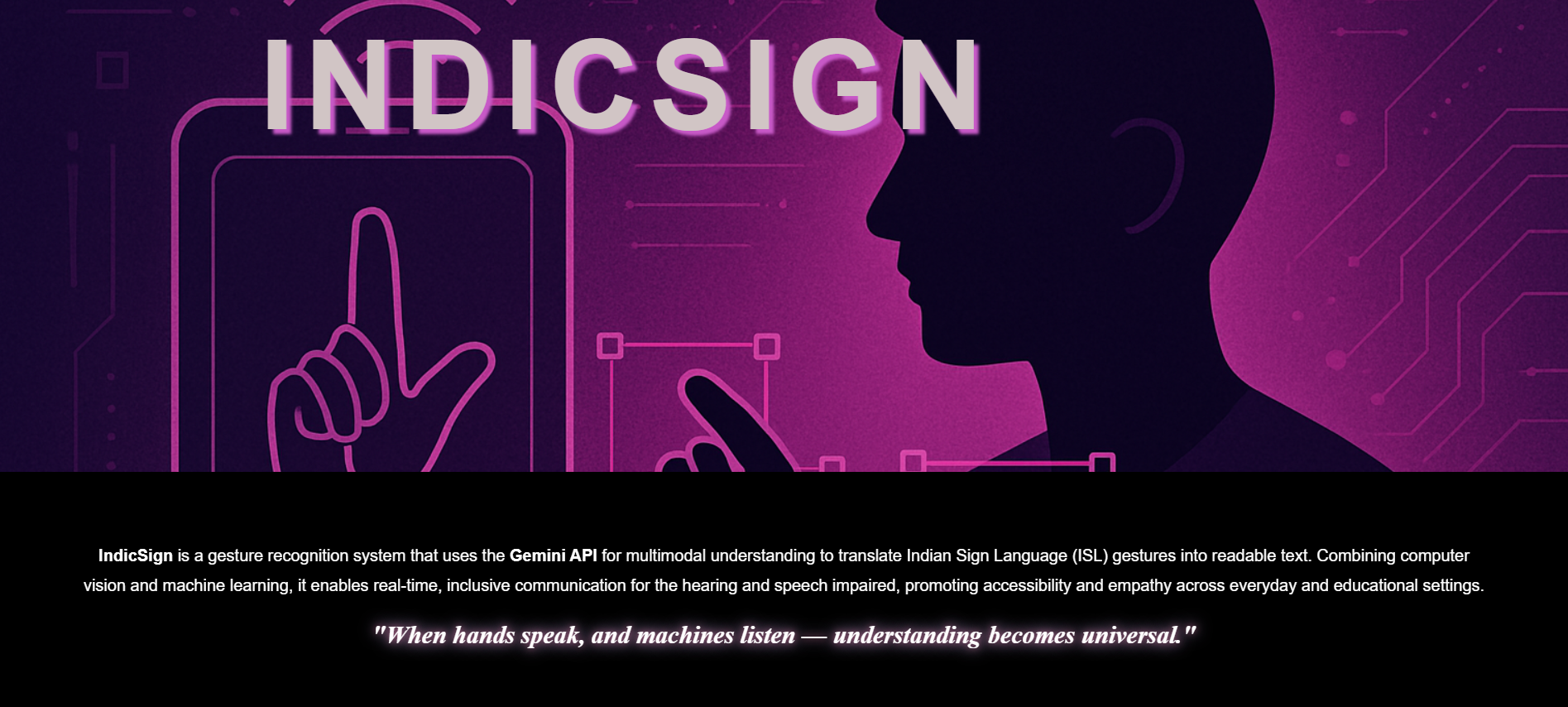
The idea for IndicSign was inspired by a visit to a school for mute and hearing-impaired individuals in Delhi. Meeting these differently-abled heroes and witnessing their resilience and brilliance was both humbling and eye-opening. It highlighted how communication remains a significant barrier, and how technology could be a powerful enabler to bridge that gap. This experience motivated me to work on a college project that could genuinely make a difference.
🔧 How I Built It
IndicSign was developed as a college project using:
- Flask for the backend framework
- HTML/CSS for the front-end interface
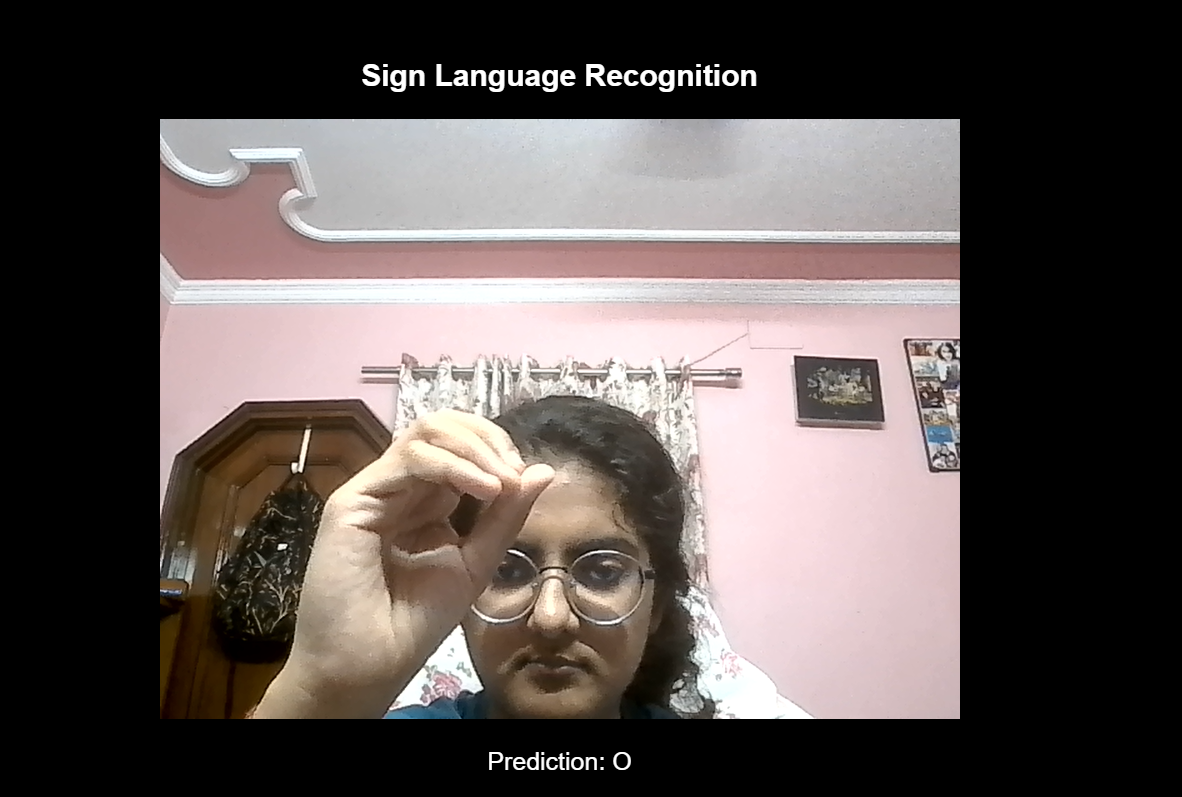
- Google’s Gemini API for multimodal gesture recognition
- Computer vision to process hand gesture inputs
Originally, I aimed to train and host a large ML model locally. However, due to hardware limitations and deployment challenges, I opted to integrate the Gemini API, which offered a scalable and intelligent solution without the need for local model hosting.
🚧 Challenges Faced
- Hosting Constraints: Deploying a heavy model on limited infrastructure was not feasible, leading to the switch to a cloud-based API.
- Real-time Processing: Maintaining responsiveness and low latency for gesture recognition was essential for usability.
- Inclusive Design: Ensuring the interface was clean, accessible, and intuitive for all users was a key focus.
💡 What I Learned
- Seamless integration of AI APIs (like Gemini) into web applications
- Building inclusive tech solutions with empathy and user needs in mind
- Managing backend/frontend development in sync using Flask and HTML/CSS
- The importance of designing for real-world impact, especially for underserved communities
🌈 Final Thoughts
IndicSign is more than just a tech solution—it's a tribute to the strength and spirit of the differently-abled community. Through this project, I’ve learned that even small innovations can open big doors when built with purpose and compassion.

Log in or sign up for Devpost to join the conversation.