-
-
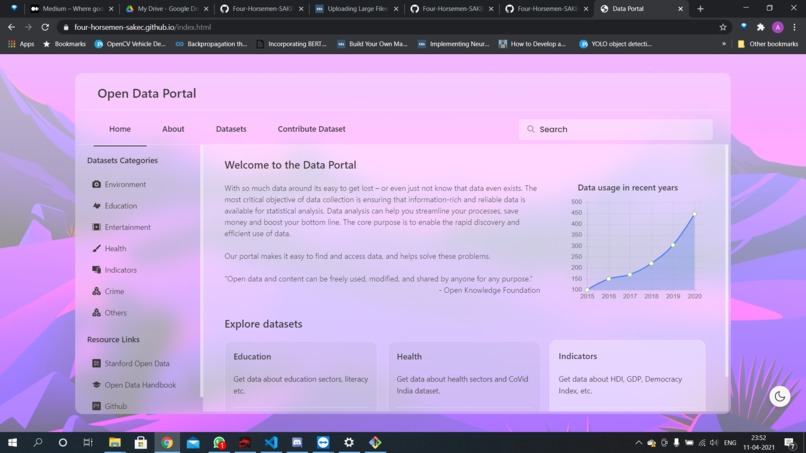
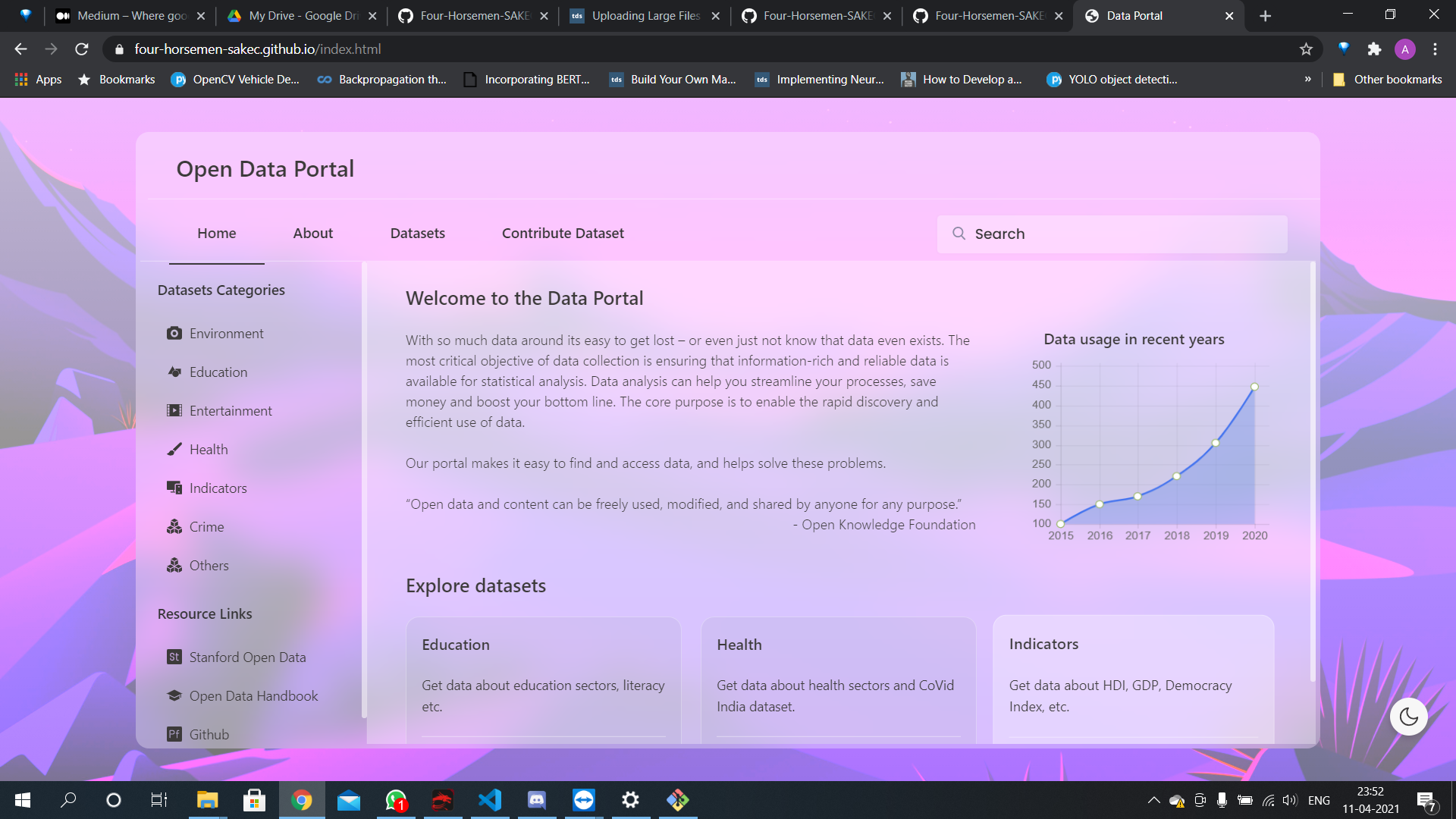
Light mode
-
-
-
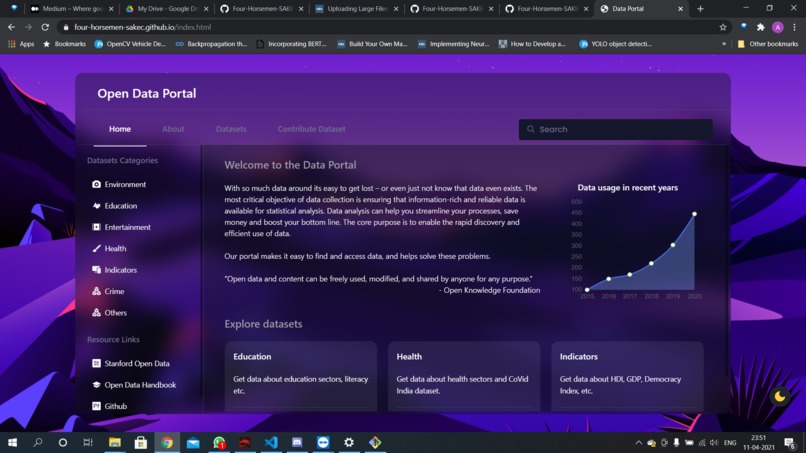
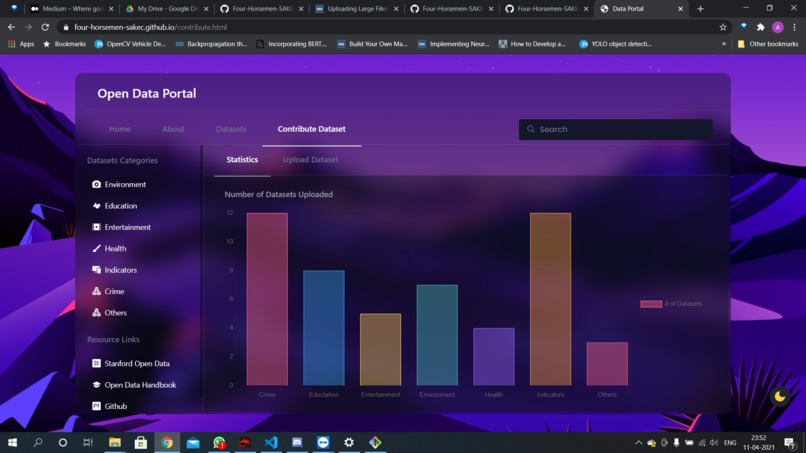
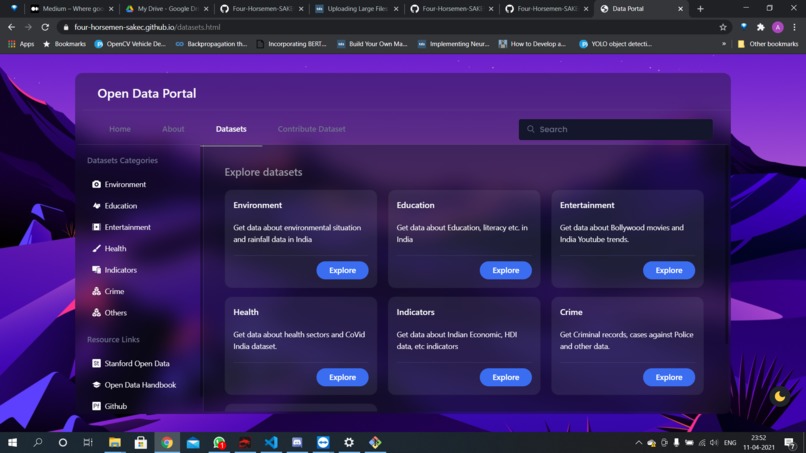
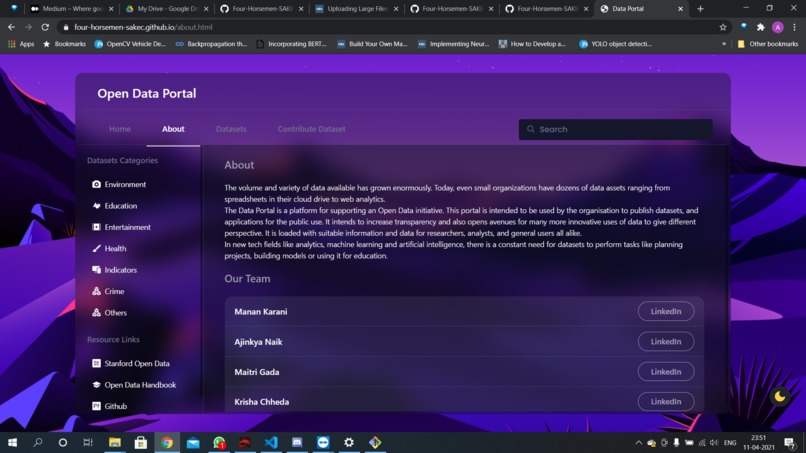
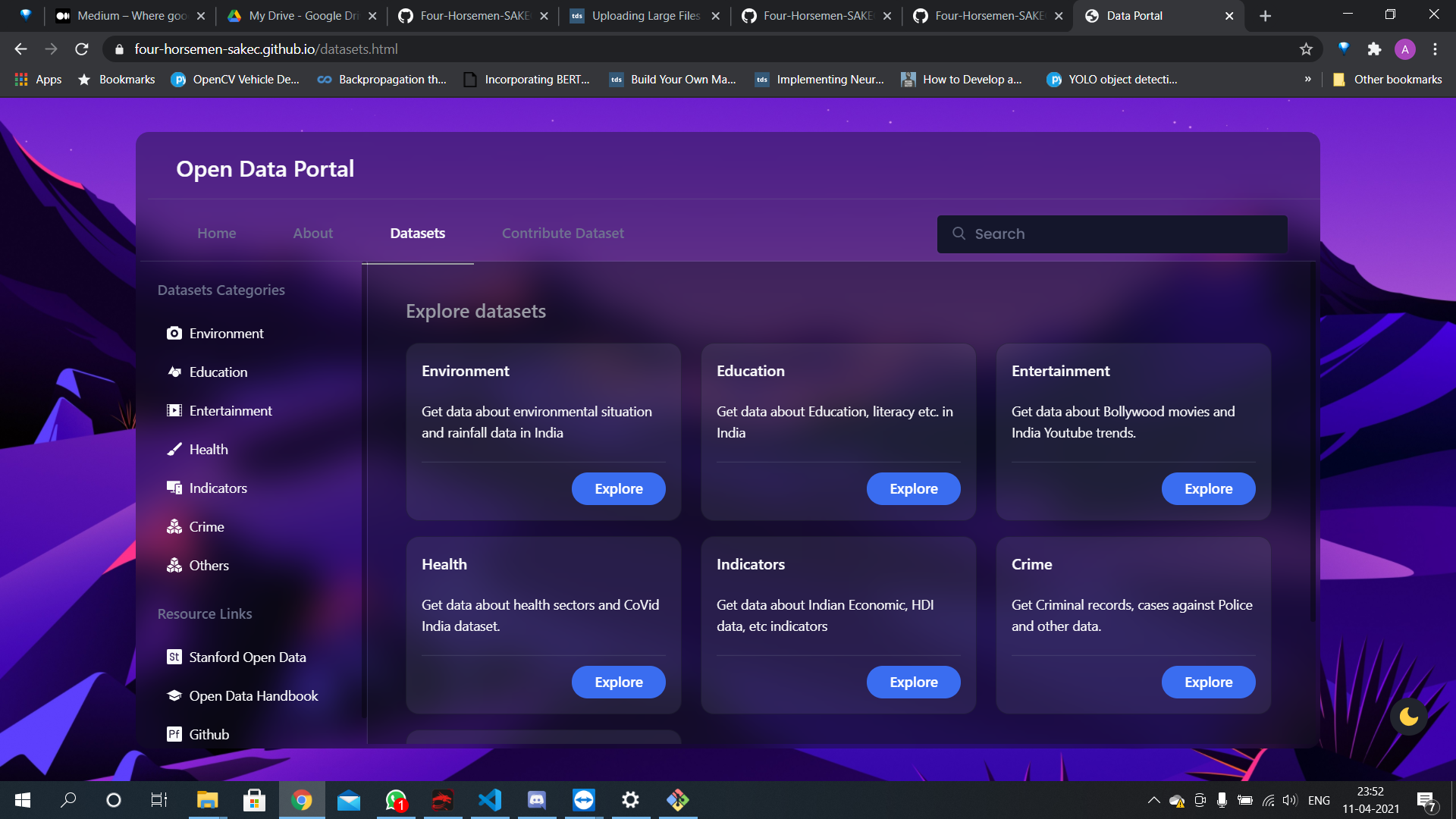
Dark mode
Inspiration
We were inspired by Stanford Open Data Portal. As active data practitioners, we understand the need to have access to free, open data. With so much data around it's easy to get lost – or even just not know that data even exists. The most critical objective of data collection is ensuring that information-rich and reliable data is available for statistical analysis.
What it does
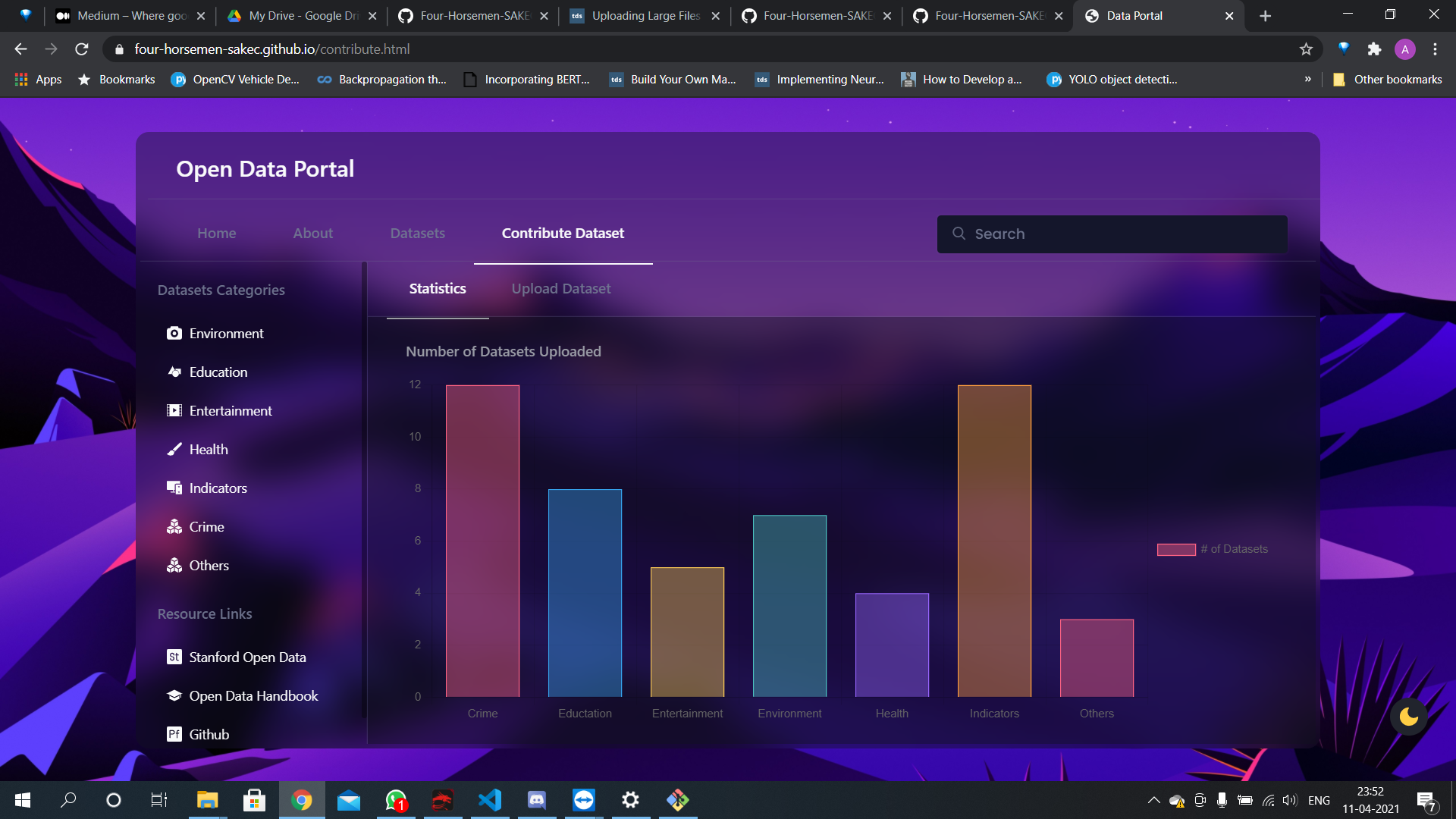
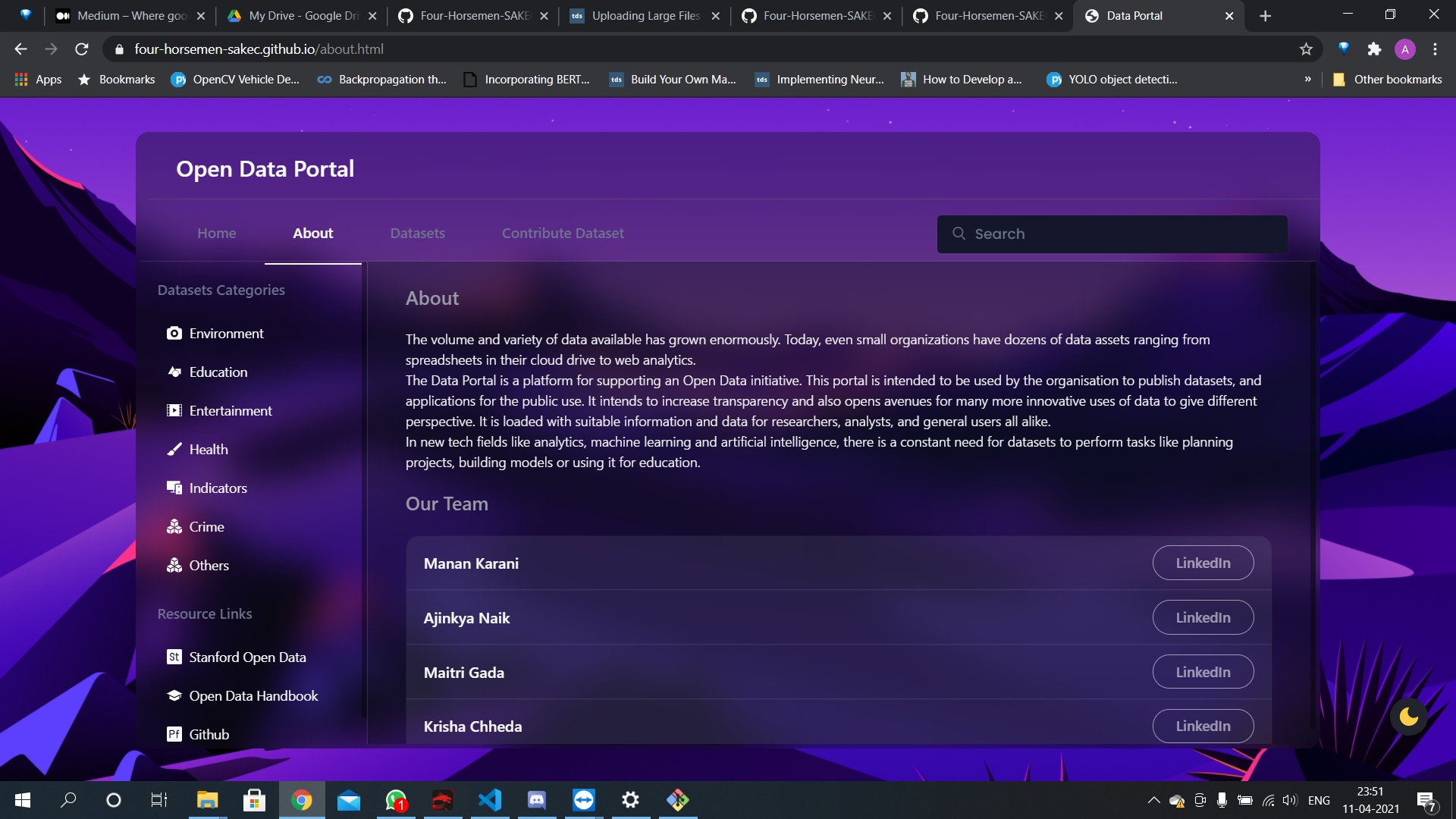
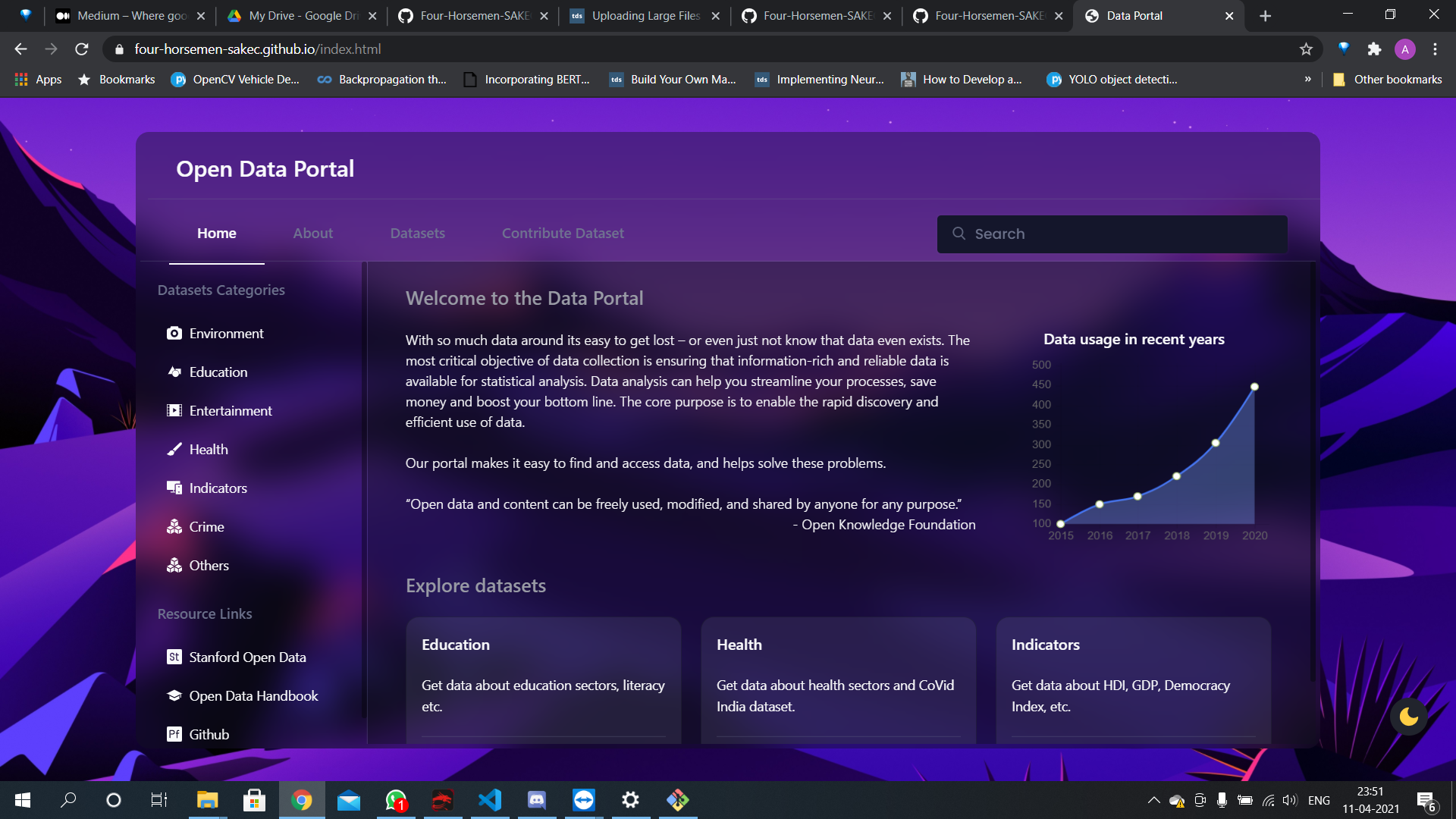
It is a simple elegant data portal that currently has datasets with various categories covering many aspects of day to day life of an average Indian citizen. All the data compiled from different government websites is presented in a clear manner with easy access.
How we built it
We used HTML, CSS, JS to create the complete data portal. We used glass morphism design for the UI which we created with plain HTML and CSS. Javascript was mainly used for front end development and search bar
Challenges we ran into
Tried to use node.js (as can be seen in previous commits) as a server for datasets. Deployed it on Heroku but ran into an error while downloading some files. So reverted back to the vanilla JS version and deployed it on Github.
Accomplishments that we're proud of
We are immensely proud of the final version of the data portal as we fulfilled all the goals which we set out to achieve like clean, attractive design and easy efficient UX.
What we learned
We learned what exactly is a data portal, its uses, and its necessity. We tried our hand at backend technologies like node.js for the first time. We gained insights about working together as a team and effectively managing time to realize our vision of a data portal
What's next for Data Portal
- Use JQuery and Ajax to update contents on the page instead of using separate HTML files for each.
- Make the Search bar functional.
- Add a preview dataset function where a user can check the attributes and features of the dataset before downloading.
- Try React
- Continuously add more datasets


Log in or sign up for Devpost to join the conversation.