-
Header
-
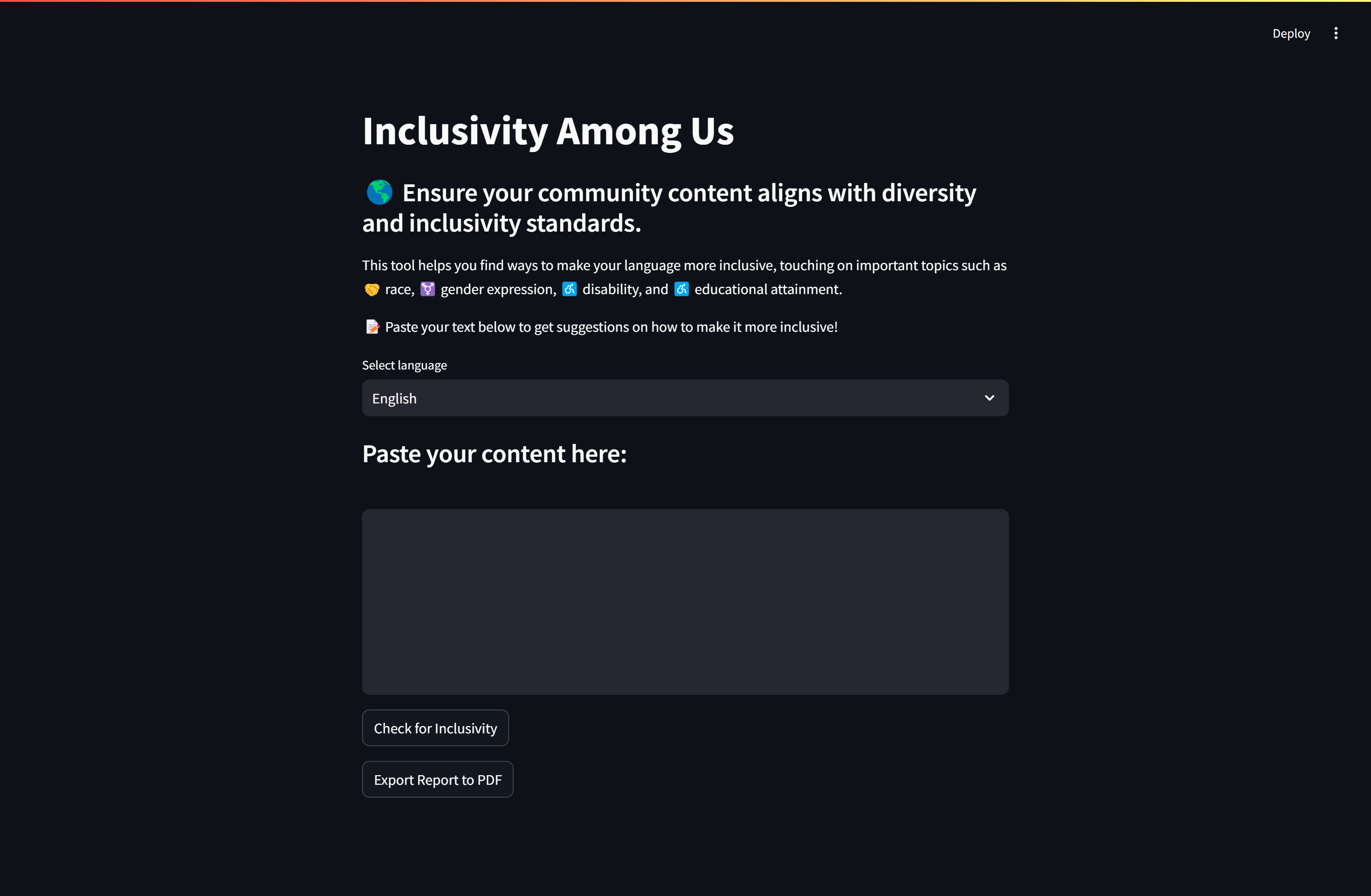
Landing Page
-
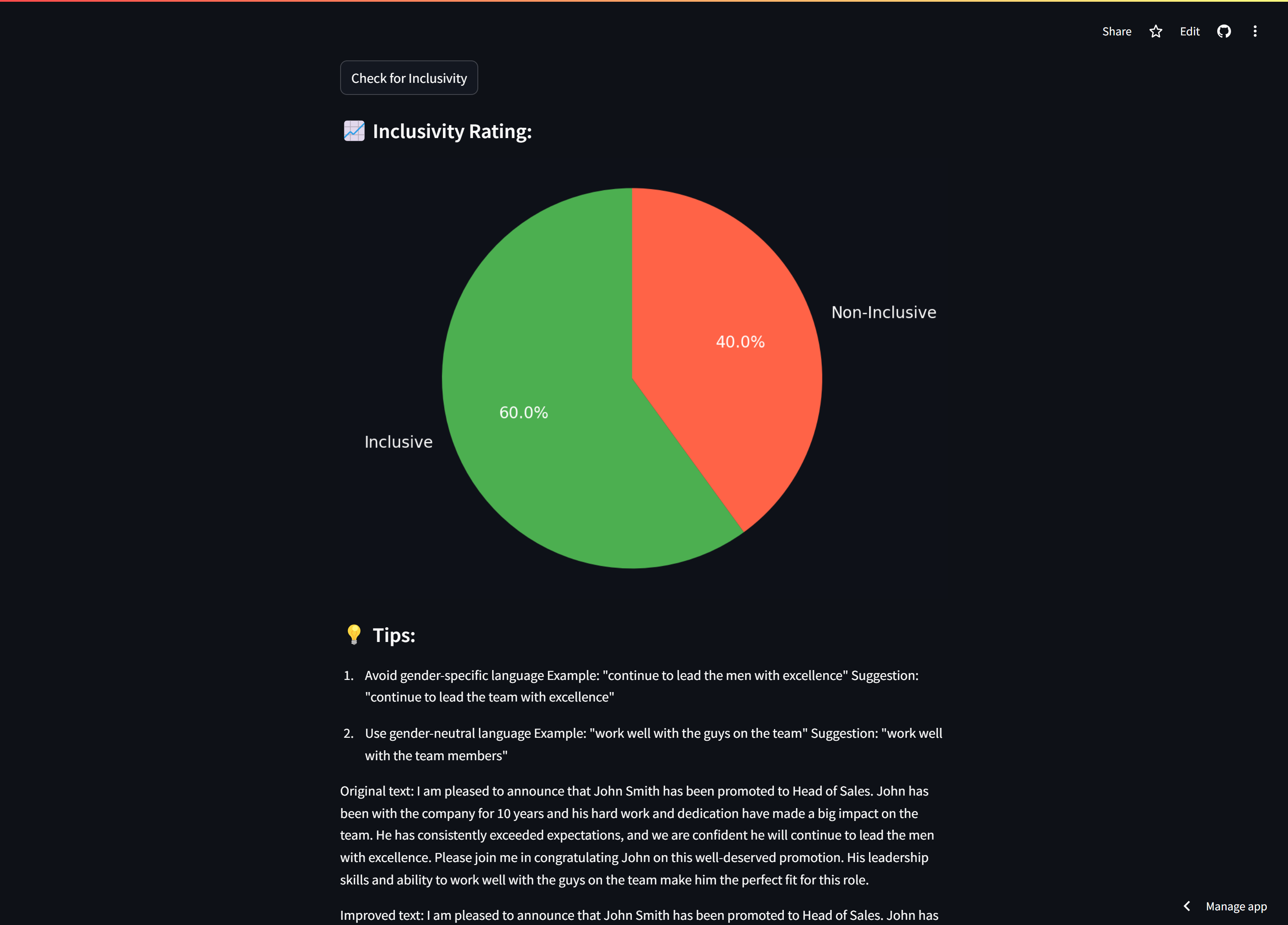
Rating + Tips
-
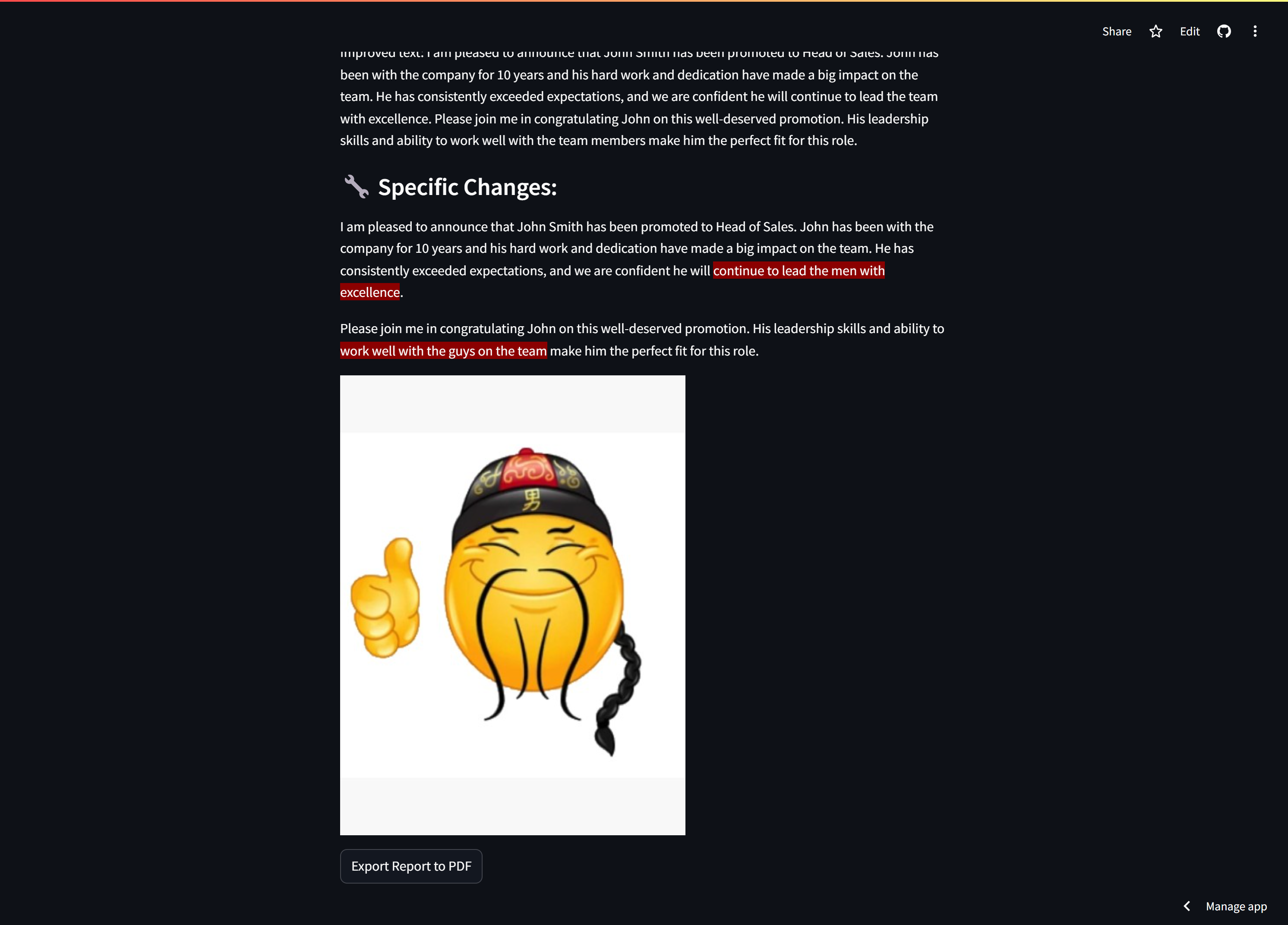
Changes + Export as PDF
Inspiration
Inclusivity is the cornerstone of thriving communities. As we continue to grow and interact across various cultures, races, and genders, the need to foster diverse and welcoming environments becomes more crucial than ever. Our inspiration for Inclusivity Among Us stemmed from the desire to help individuals and organizations ensure their communication aligns with the values of diversity that are commonly overlooked. We wanted to create a tool that helps people make meaningful changes in how they speak and write, driving positive social impact in communities of all kinds.
What it does
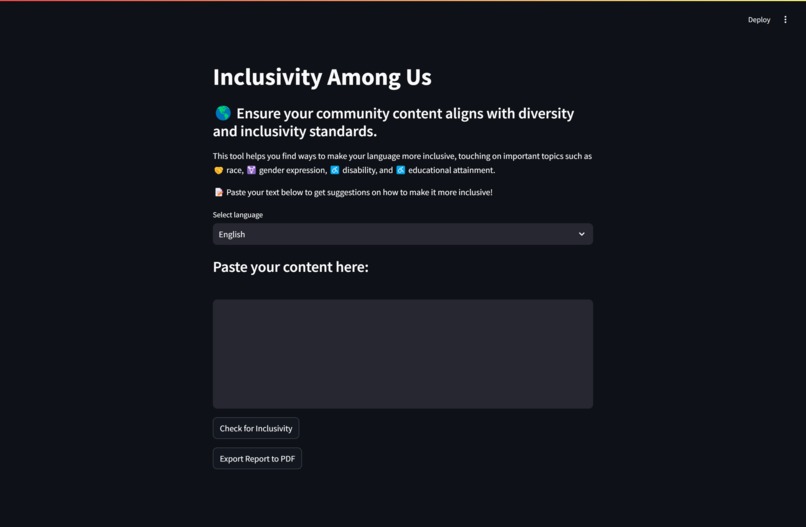
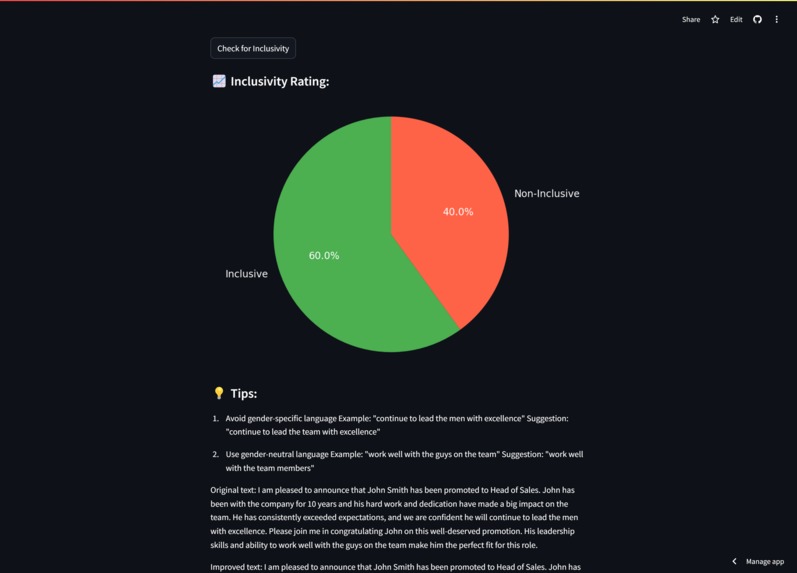
Inclusivity Among Us is a tool designed to help users analyze their communication for inclusivity. It highlights non-inclusive language and provides specific tips for improvement, focusing on topics such as race, gender expression, disability, and educational attainment. The app provides:
- An inclusivity rating (out of 100) to measure how inclusive the content is.
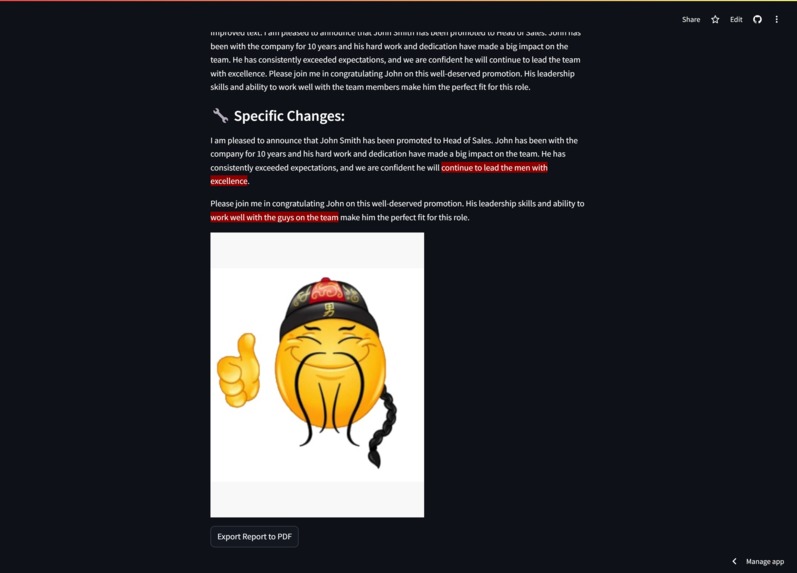
- Specific changes to improve the inclusivity of the text, using color-coded highlights for non-inclusive phrases.
- Multilingual support, allowing users to check content in various languages like English, Spanish, French, and more.
- A downloadable report in PDF format, which summarizes the inclusivity rating, flagged text, and suggestions for improvement.
How we built it
We built the Python app using Streamlit for the user interface and integration with OpenAI’s GPT-3.5 to perform the inclusivity analysis.
Challenges we ran into
One of the primary challenges was ensuring that the feedback generated by the AI was both accurate and meaningful. Our prompt engineering skills had to be used to prevent the model from nitpicking trivial language choices and focus only on significant inclusivity issues. Another challenge was ensuring the app could handle text in multiple languages and still provide relevant suggestions, which required fine-tuning how the model interprets cultural nuances in language.
Accomplishments that we're proud of
We are proud of creating a usable tool that helps users improve their language in a meaningful way. The ability to dynamically highlight non-inclusive language, provide concise suggestions, and offer multilingual support are features that make the app impactful across various contexts. We are also proud of the seamless user experience, where anyone can simply paste content, check for inclusivity, and download a report within seconds.
What we learned
This was our first time using Streamlit and it surprised us with how seamless we were able to integrate other features into our app. The time saved from styling and implementing basic features allowed us to focus on refining the actual product. We also learned more about prompt engineering through a lot of trial and error, figuring out how to create the most effective instructions for the model.
What's next for Inclusivity Among Us
- Refine the AI suggestions further, ensuring the advice given is always contextually relevant and culturally sensitive.
- Broaden the scope by including more categories of inclusivity, such as socio-economic status, mental health considerations, and age diversity.
- Allow users to flag suggestions they find particularly helpful, building a feedback loop that continuously improves the tool.
- Custom reports for organizations, offering deeper insights and strategies for making their communication more inclusive.
- Explore the possibility of integrating with corporate communication tools like Slack or Gmail, allowing users to check inclusivity in real-time while drafting messages.
Built With
- openai
- python
- streamlit

Log in or sign up for Devpost to join the conversation.