-
-
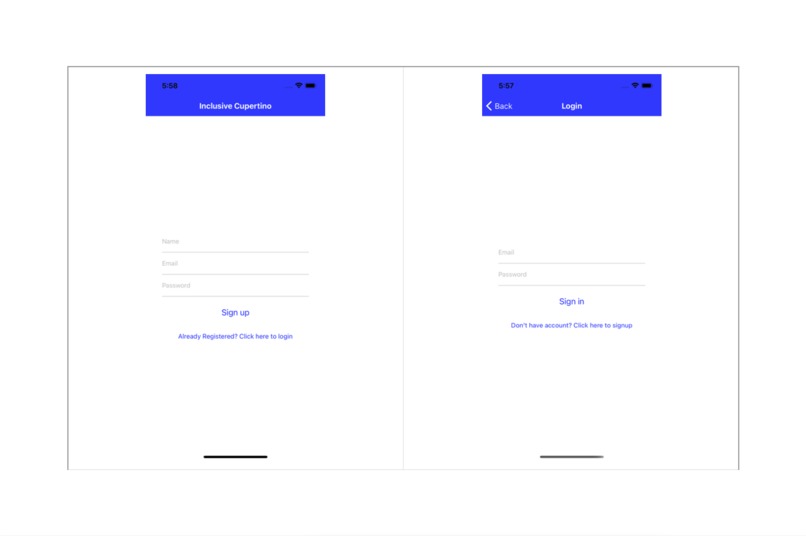
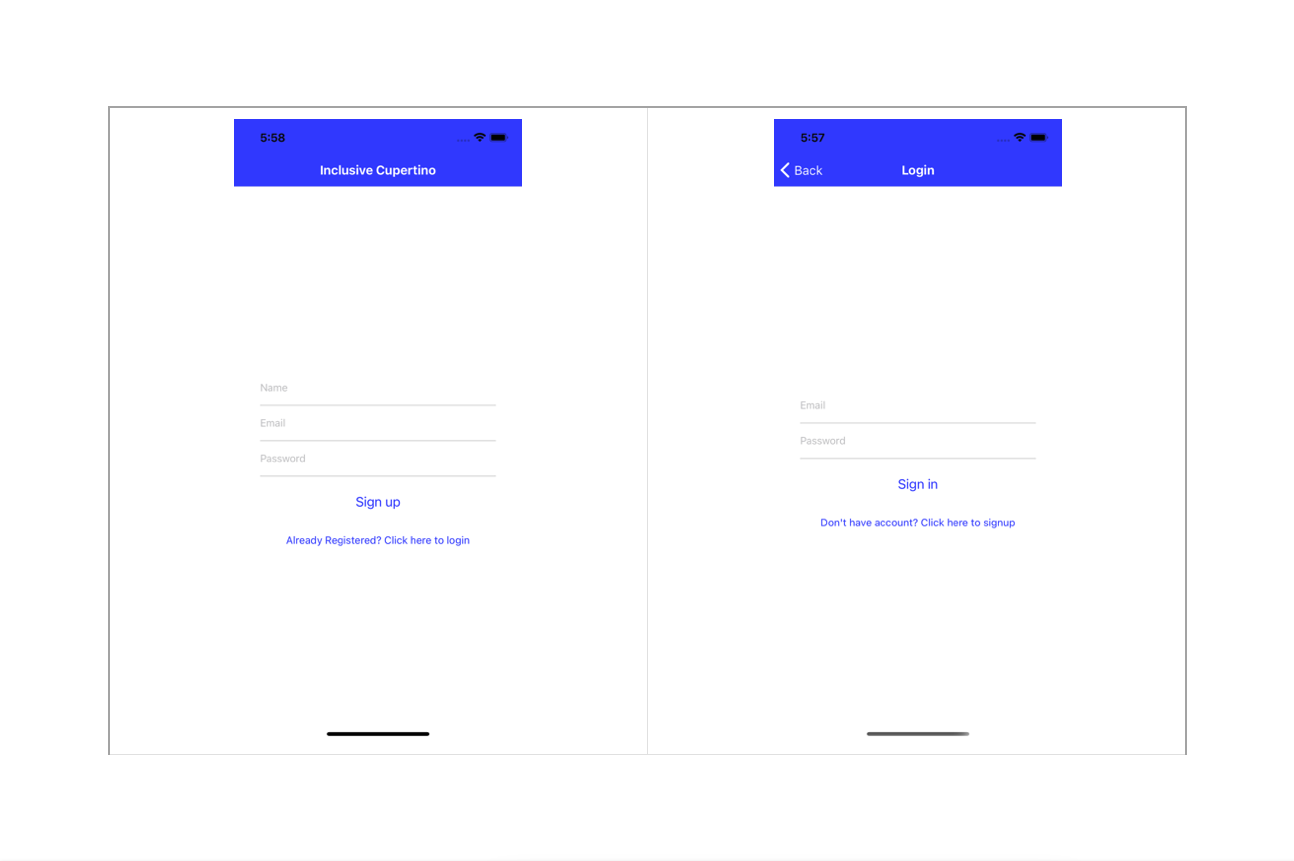
Sign Up and Login Screens
-
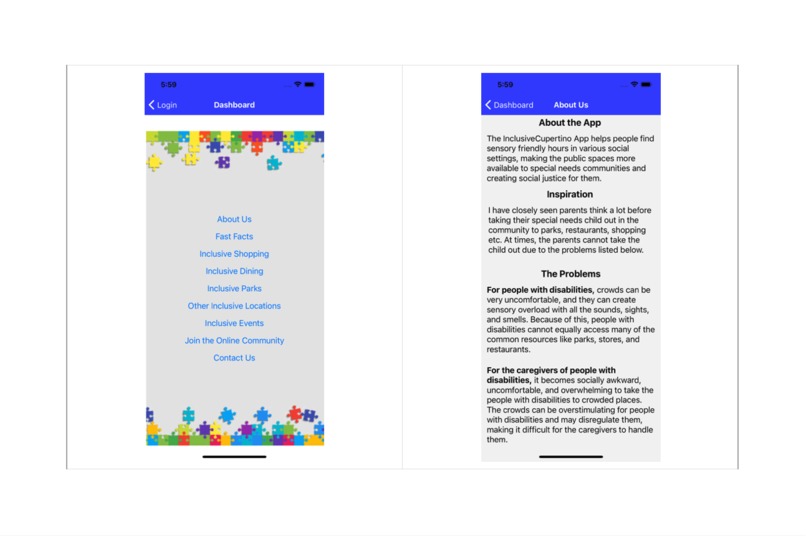
Dashboard and About Us Screens
-
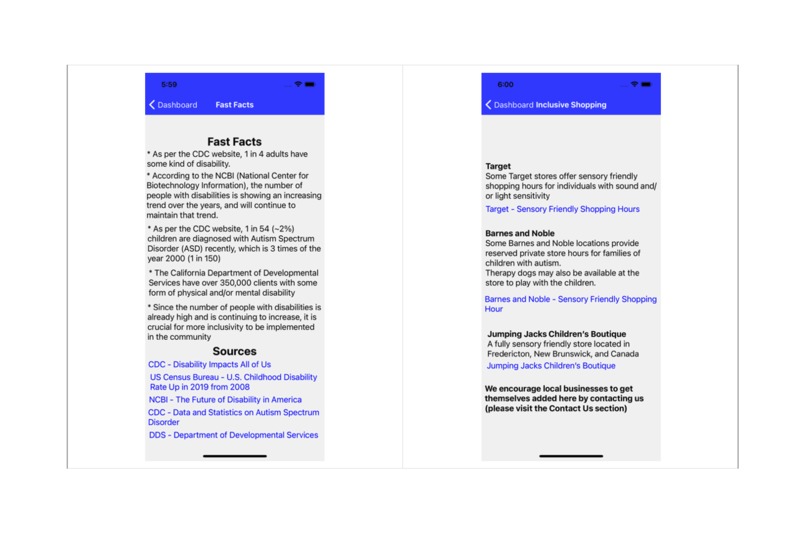
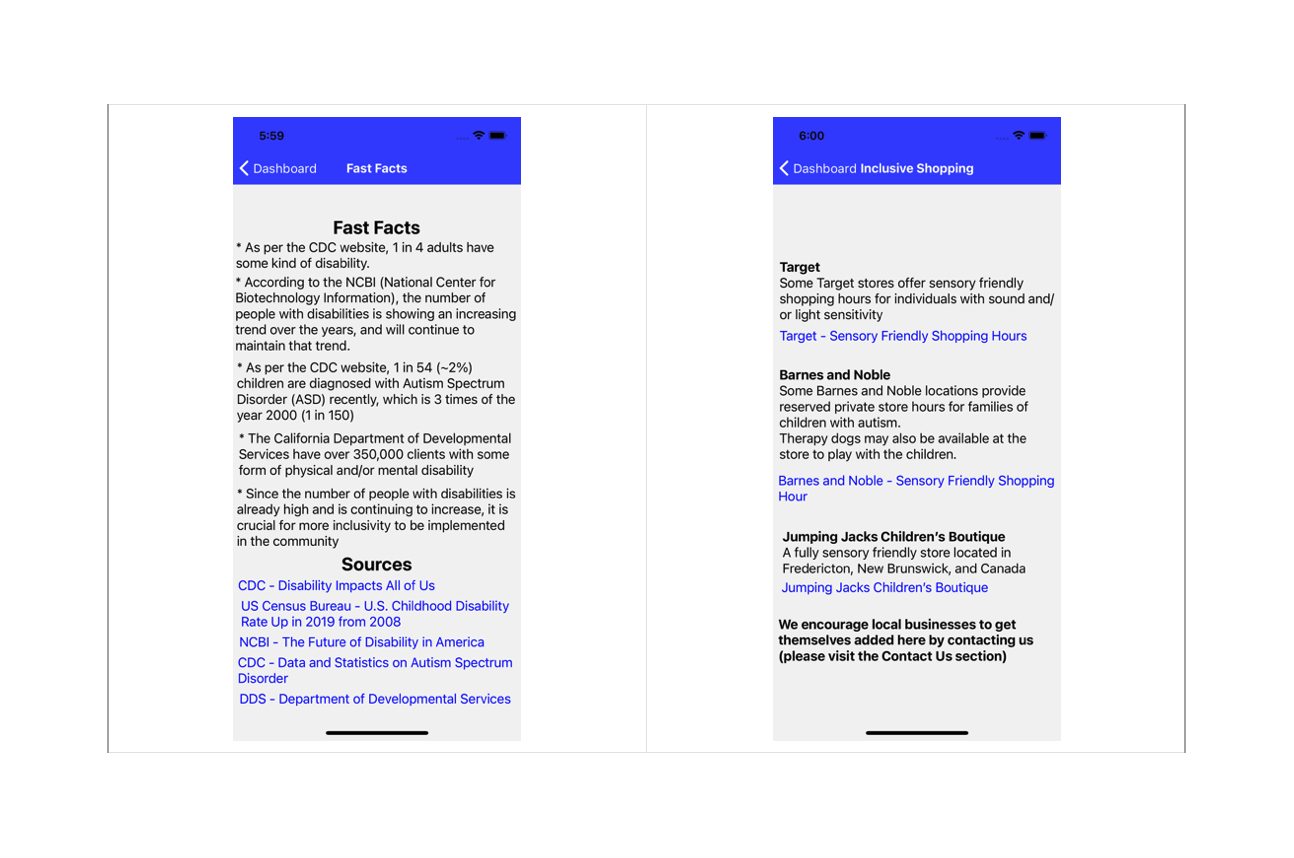
Fast Facts and Inclusive Shopping Screens
-
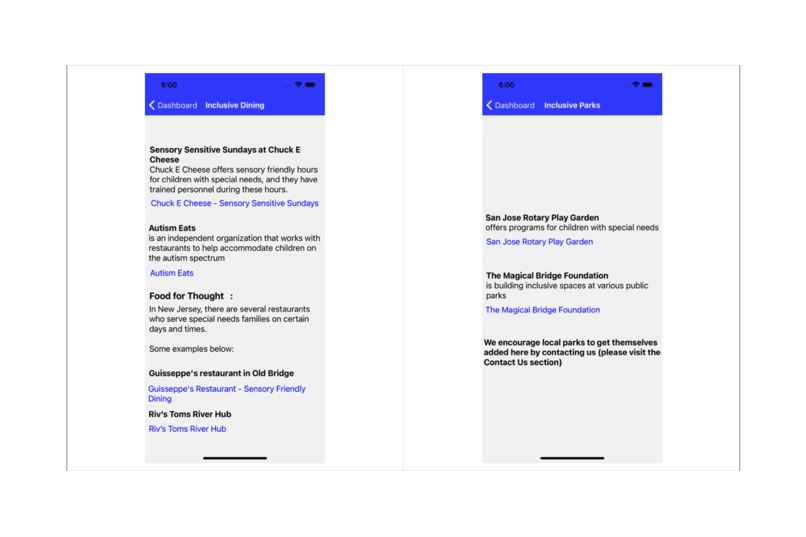
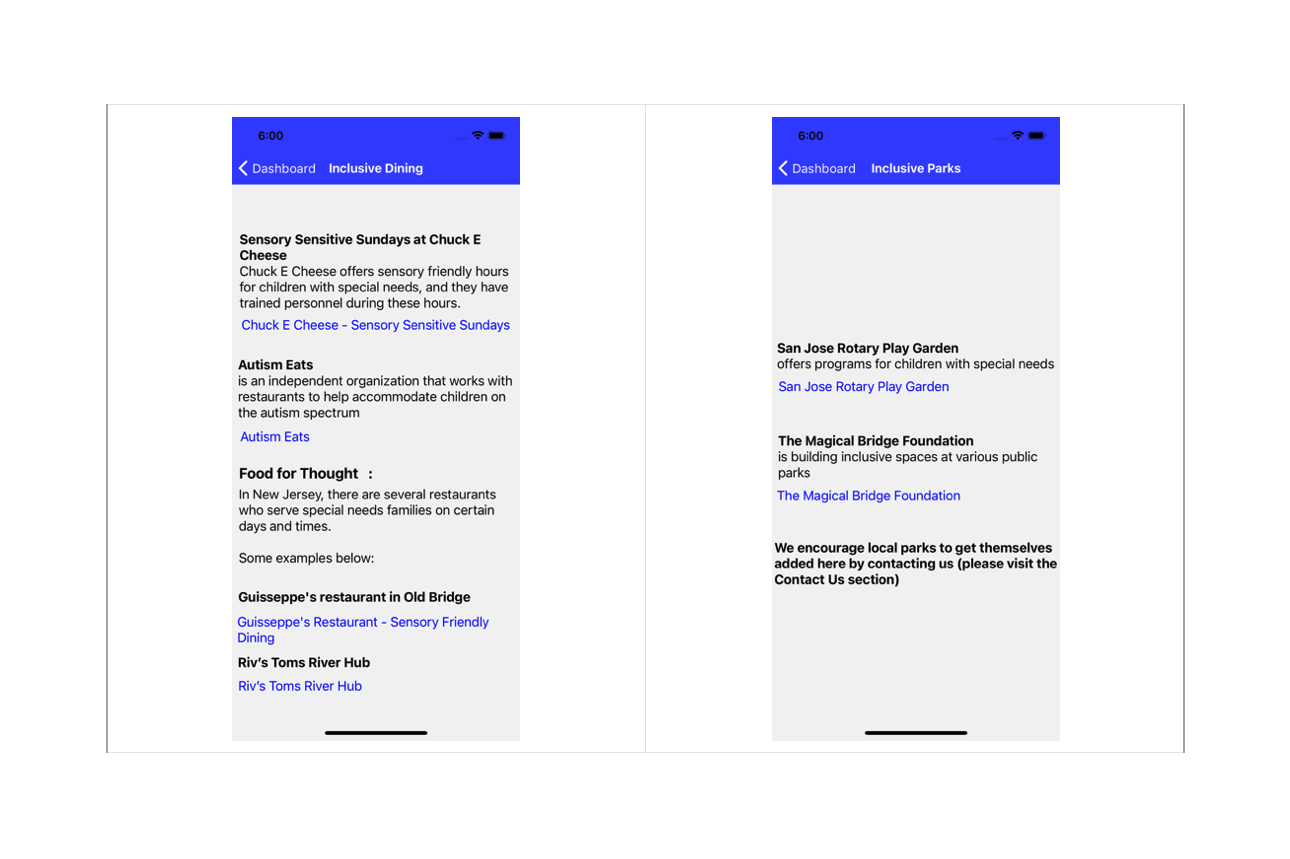
Inclusive Dining and Inclusive Parks Screens
-
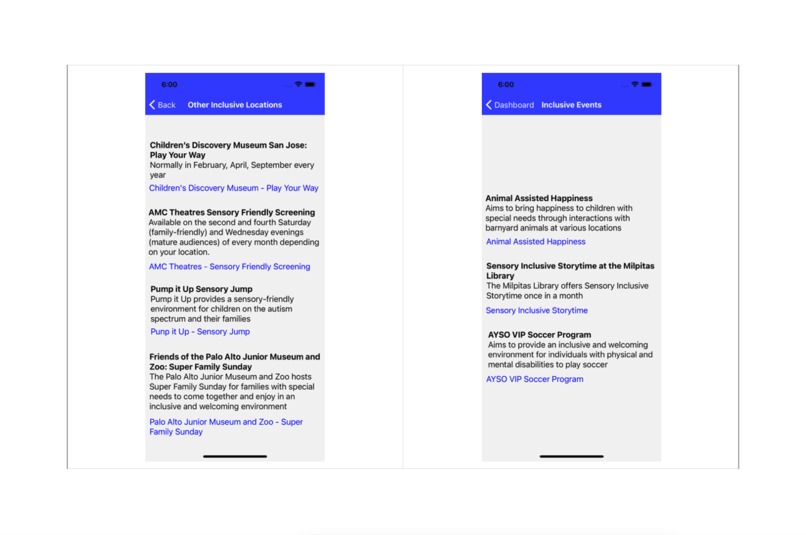
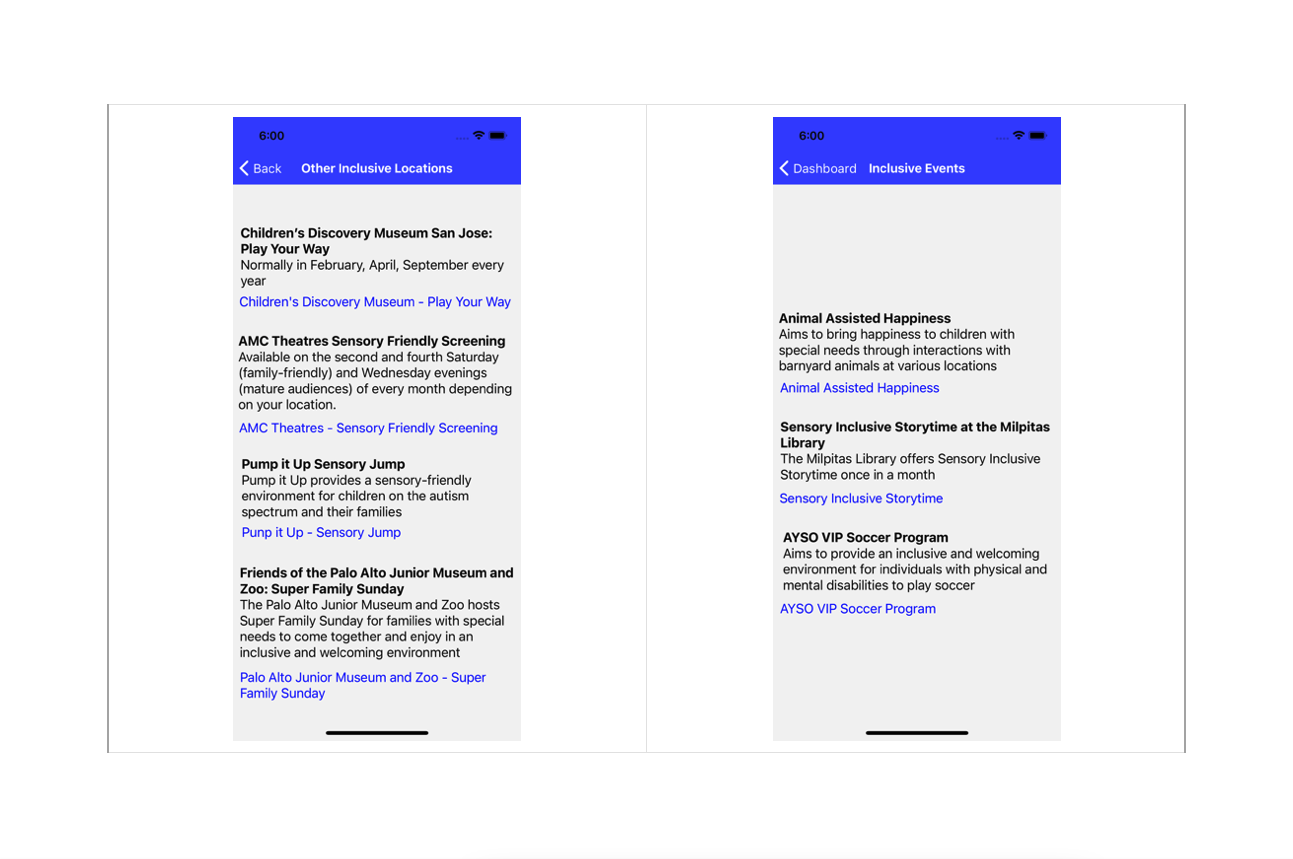
Other Inclusive Locations and Inclusive Events Screens
-
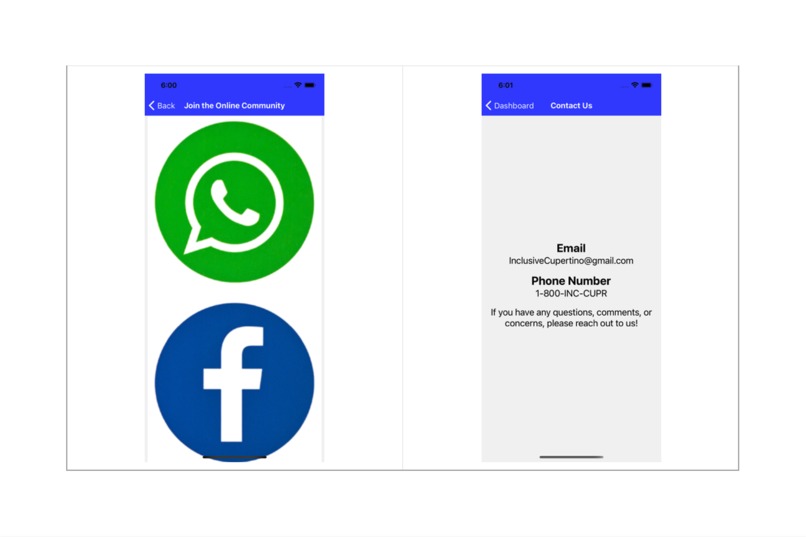
Join the Online Community and Contact Us Screens
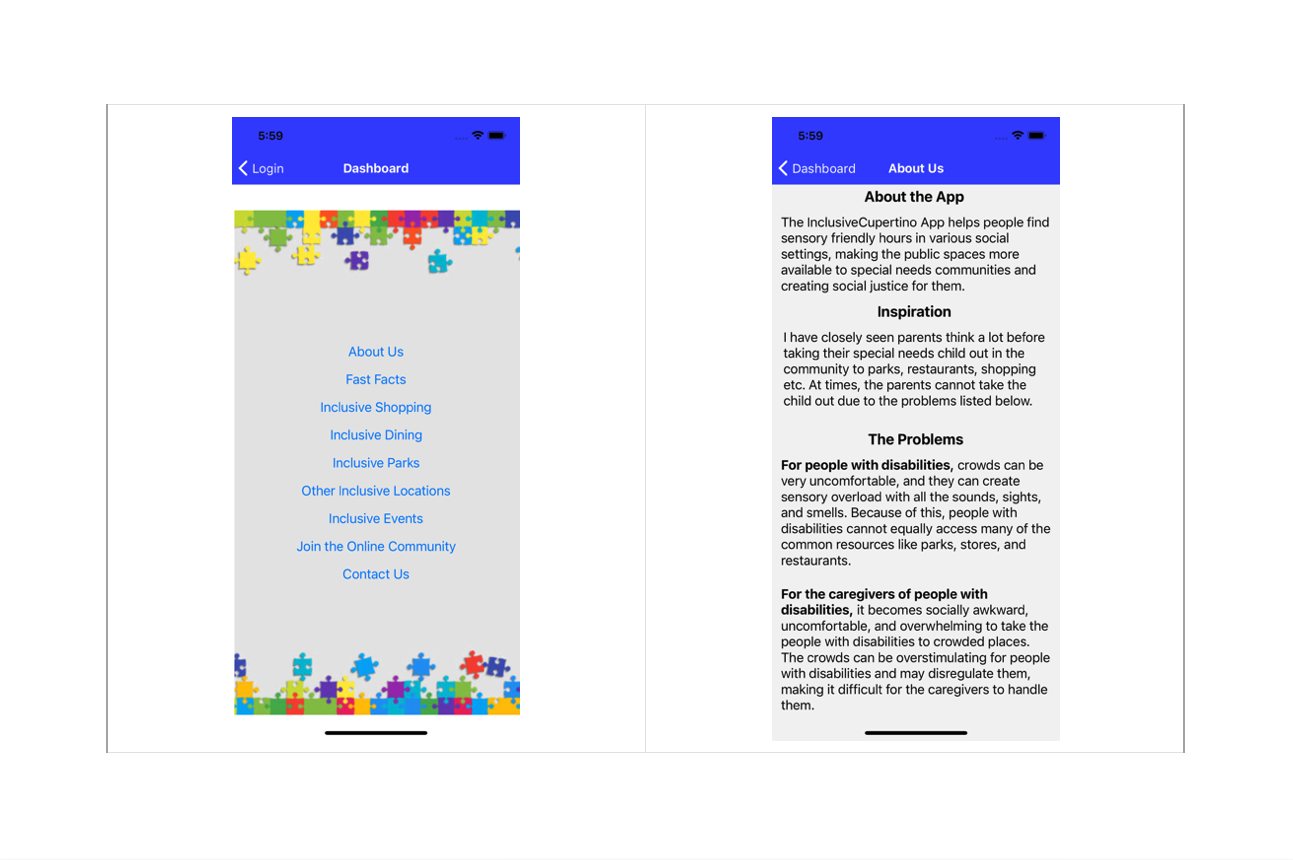
The Problems
I have closely seen many parents think a lot before taking their special needs child out in the community to parks, restaurants, shopping etc. At times, the parents cannot take the child out due to the problems listed below:
- For people with disabilities, the crowds, lighting, and sounds in public places can create sensory overload, leading to disregulation and behaviors.
- For the caregivers of people with disabilities, it becomes uncomfortable and overwhelming to take them to public places, and hard to handle them during disregulation. It will be easier for the caregivers to have less crowds around, and to have people around them who are in a similar situation and can empathize with them.
Due to these problems, people with disabilities have unequal opportunities to access public spaces.
The Inspiration
During the COVID-19 pandemic, businesses started to have separate business hours for senior citizens to protect them from crowds, and thereby from COVID-19. The same idea can be extended to people with disabilities and special needs, by having timings dedicated to them in the community settings throughout the year. The InclusiveCupertino app solves the above problems by helping people with disabilities find public spaces catered to their needs, and thereby creating social justice for them.
What it does
The InclusiveCupertino app helps people find sensory friendly hours in various social settings in and around Cupertino.
How I built it
I have a good experience building software using Java and Web technologies like HTML, CSS, JS. For this hackathon, I chose web development frameworks like React Native and Cloud offerings like Firebase to build further on my software development experience.
The motivation behind choosing Firebase was to use a Cloud based solution as part of the application and it helped simplify functionality around enabling login for the app and persisting data related to the app. Firebase comes with custom email and password auth as well as OAuth2 integrations for Facebook, Google, Twitter, GitHub and many more.
I was keen to learn a web development framework like Angular or React as a step forward in my software development experience on web technologies like HTML, CSS and JS. I finally picked React Native as it provided me the ability to build a cross-platform app.
I used the following tools and softwares for building the app -
- Microsoft Visual Studio Code
- React Native from Facebook
- Firebase from Google
- Apple XCode
- Various CLI tools - npx, CocoaPods (pod), npm
Challenges I ran into
I was building an application using the primary technology stack of Firebase and React Native for the first time. There was a learning curve associated with this, but I could manage it well as it was a step forward on the strong foundation I have on building software with Java and web technologies like HTML, CSS and JS.
Firebase configuration was a bit challenging and I had to refer different articles to get the integration up and running. One of the challenges I encountered was that some of the articles written in 2020 and prior had become a bit outdated as things had changed in the Firebase offering. The references below were the most useful while building the app -
React Native development - I had to refer to different articles while building the code. I was using the latest version of the framework, and ran into a few articles that had instructions that were outdated or deprecated. The references below were the most useful while building the app -
Accomplishments that I am proud of
- As part of this project, I learned new and contemporary software development technologies in the form of Firebase and React Native.
- I also discovered new places that provide inclusive hours for people with special needs - while conducting internet-based research related to inclusive places
- I also developed more empathy for people with special needs, while reading through stories of some of the challenges that these people face.
What I learned
- Contemporary software development practices while building the app using Google Firebase and React Native from Facebook.
- Stacking and Routing were interesting concepts in React Native application development which helped build a modern, cross-platform app.
- Discovered the power of Cloud offerings like Firebase which greatly simplify the implementation of common functionality required for an application like user login and persistence of application data.
- Improved my understanding of Markdown while writing out this Project Story
What's next for the Inclusive Cupertino App
- Create a volunteer section in the app for people to register to help special needs families with various things like
- Grocery shopping and loading
- Accompanying to restaurants
- Conducting various activities in parks and libraries such as painting, storytelling, book reading, playing games, and playing on play structures
- Add a sibling resources section to network with other special needs siblings
- Add a section for job opportunities for people with special needs
- Add a feature that allows businesses and public spaces to add themselves to the app in a secure manner


Log in or sign up for Devpost to join the conversation.