Inspiration
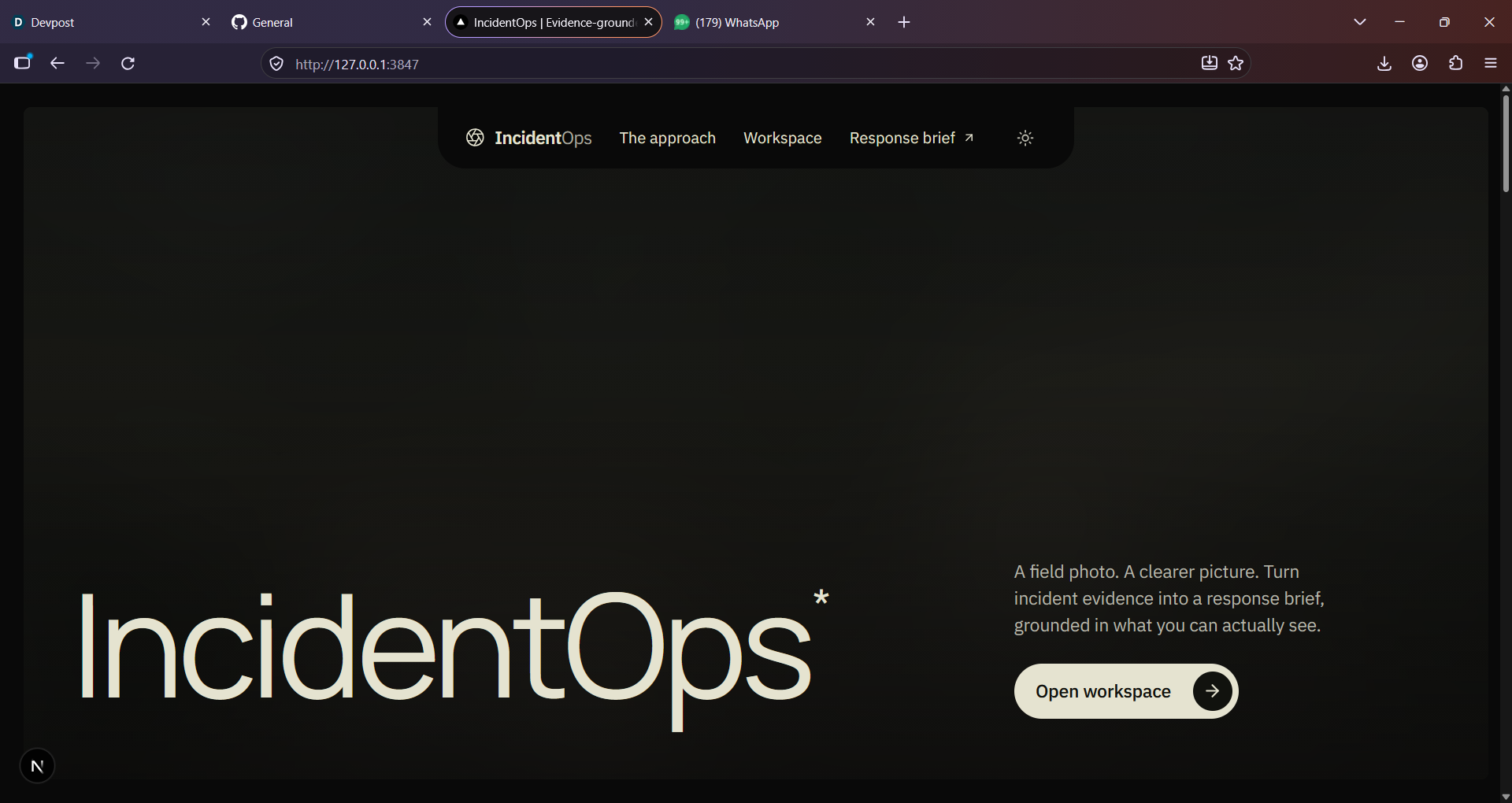
Campus and infrastructure responders, facilities teams, and people who spot a hazard often have only a photo and a rushed note. Turning that into something someone can act on takes time, and a confident but ungrounded answer can do harm. IncidentOps keeps a line between what is visible, what is inferred, and what is unknown, pulls in current public information, and leaves the decision to a person.
What it does
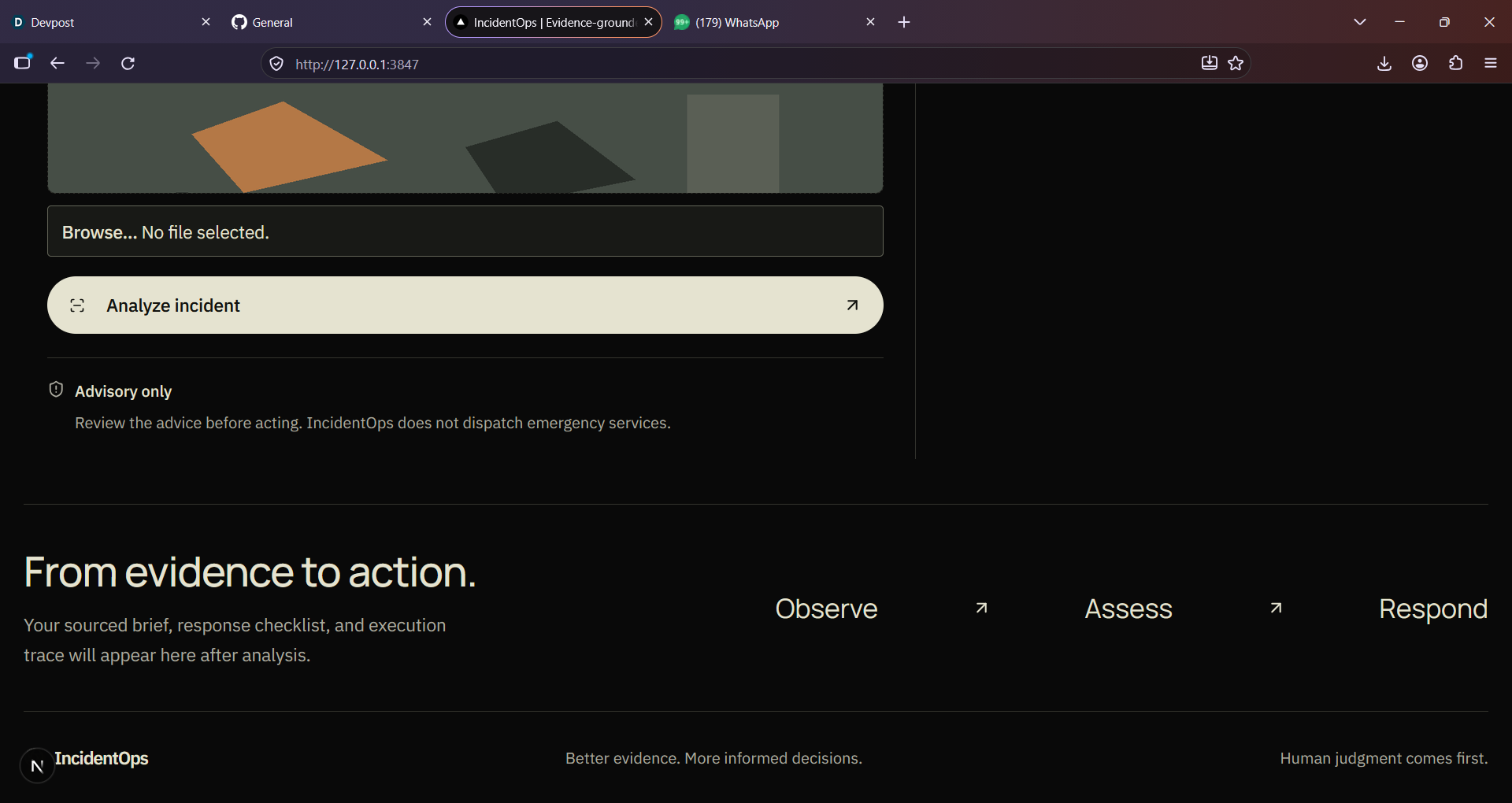
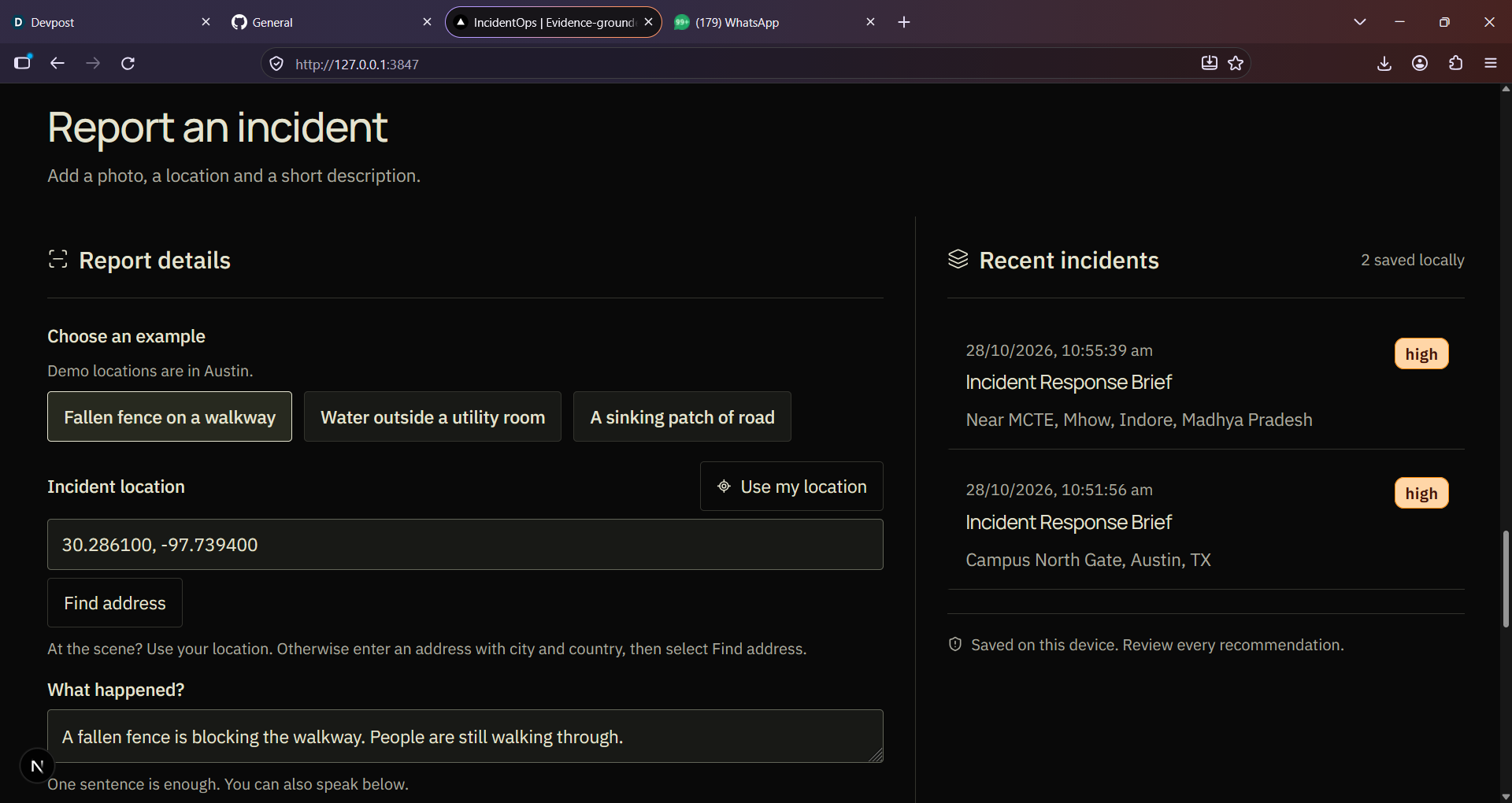
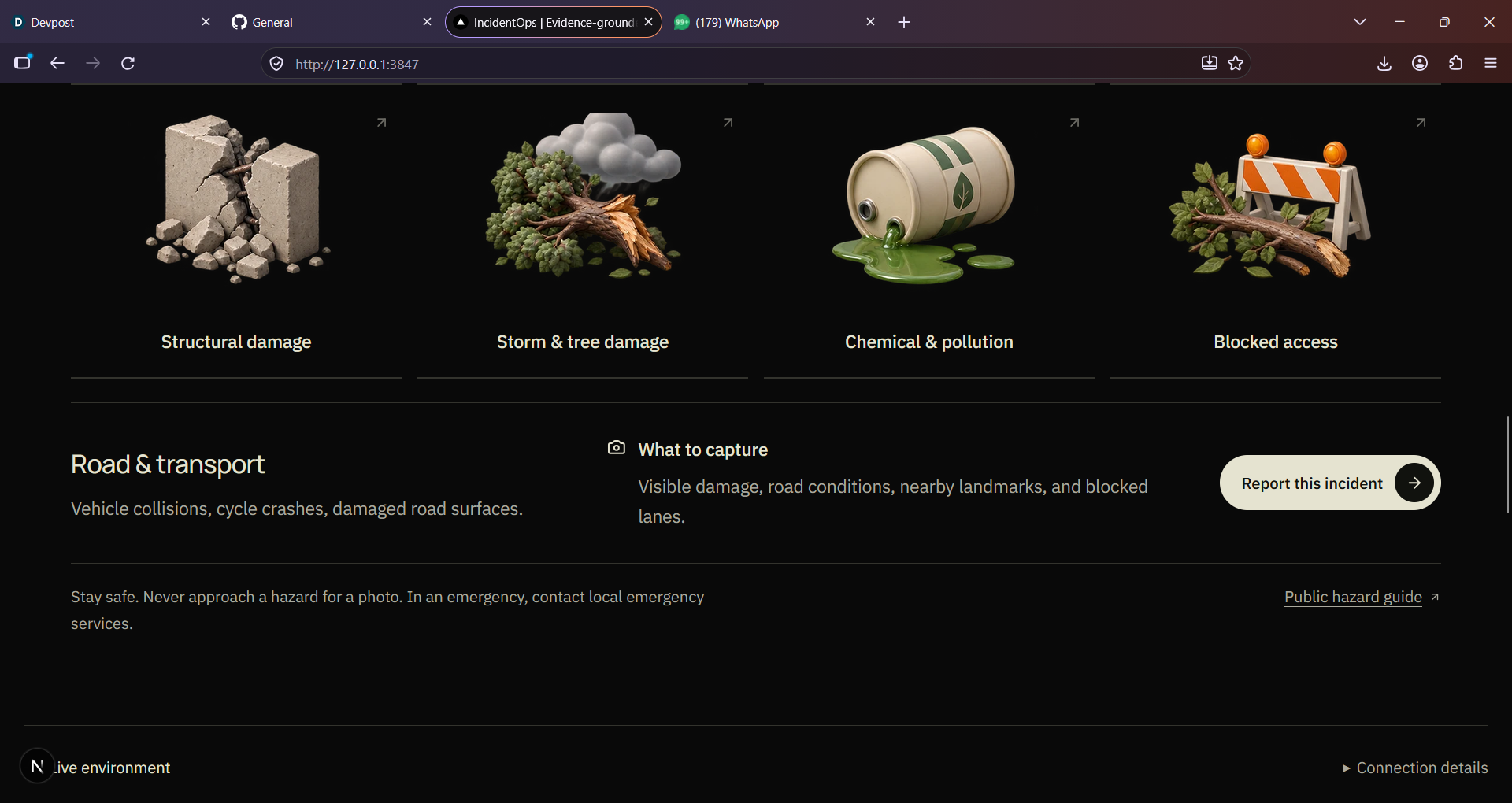
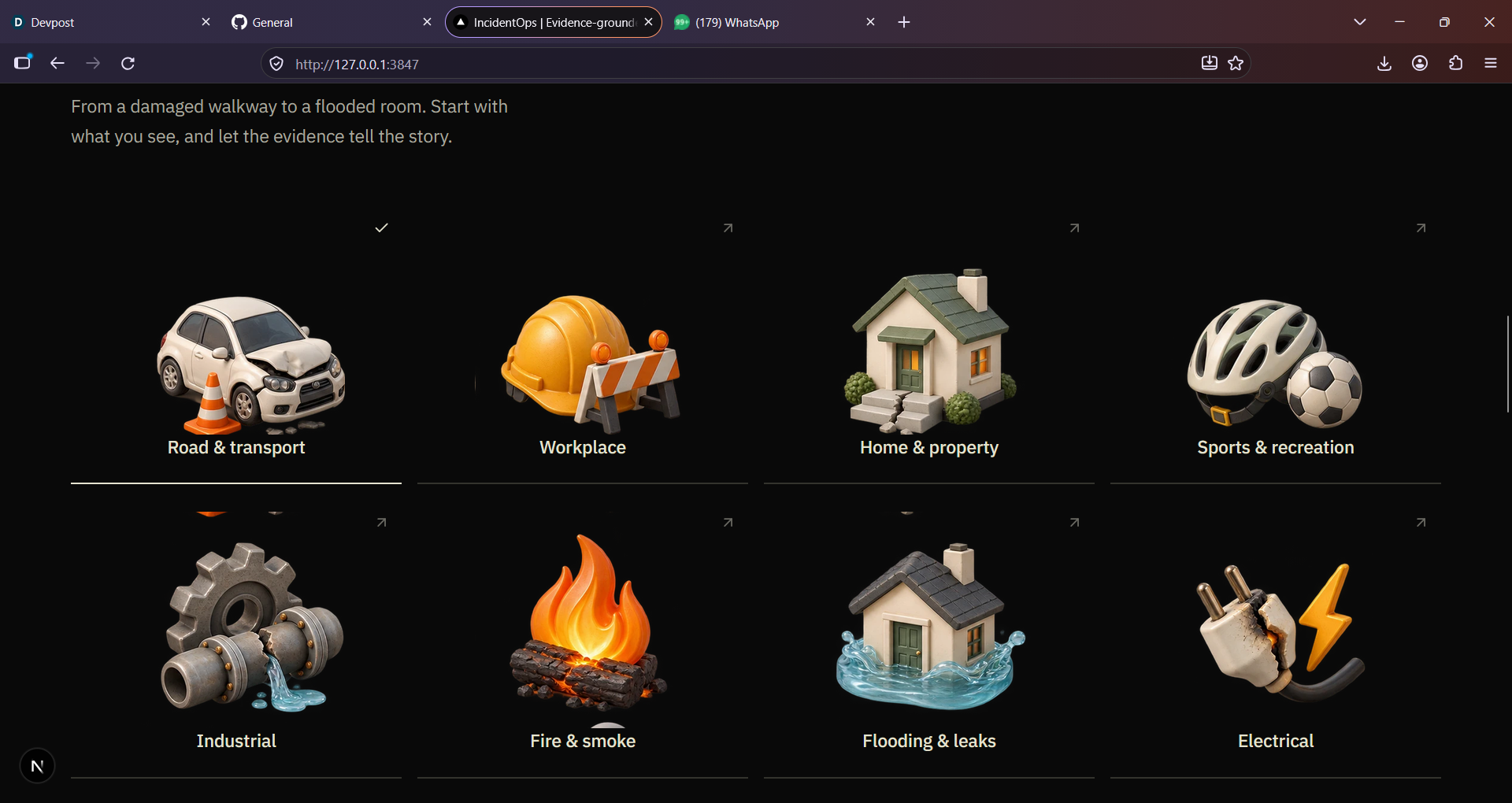
IncidentOps takes a photo, a location (typed address, coordinates, a geocoder-confirmed address, or device location), and a short description, optionally dictated by voice. It then:
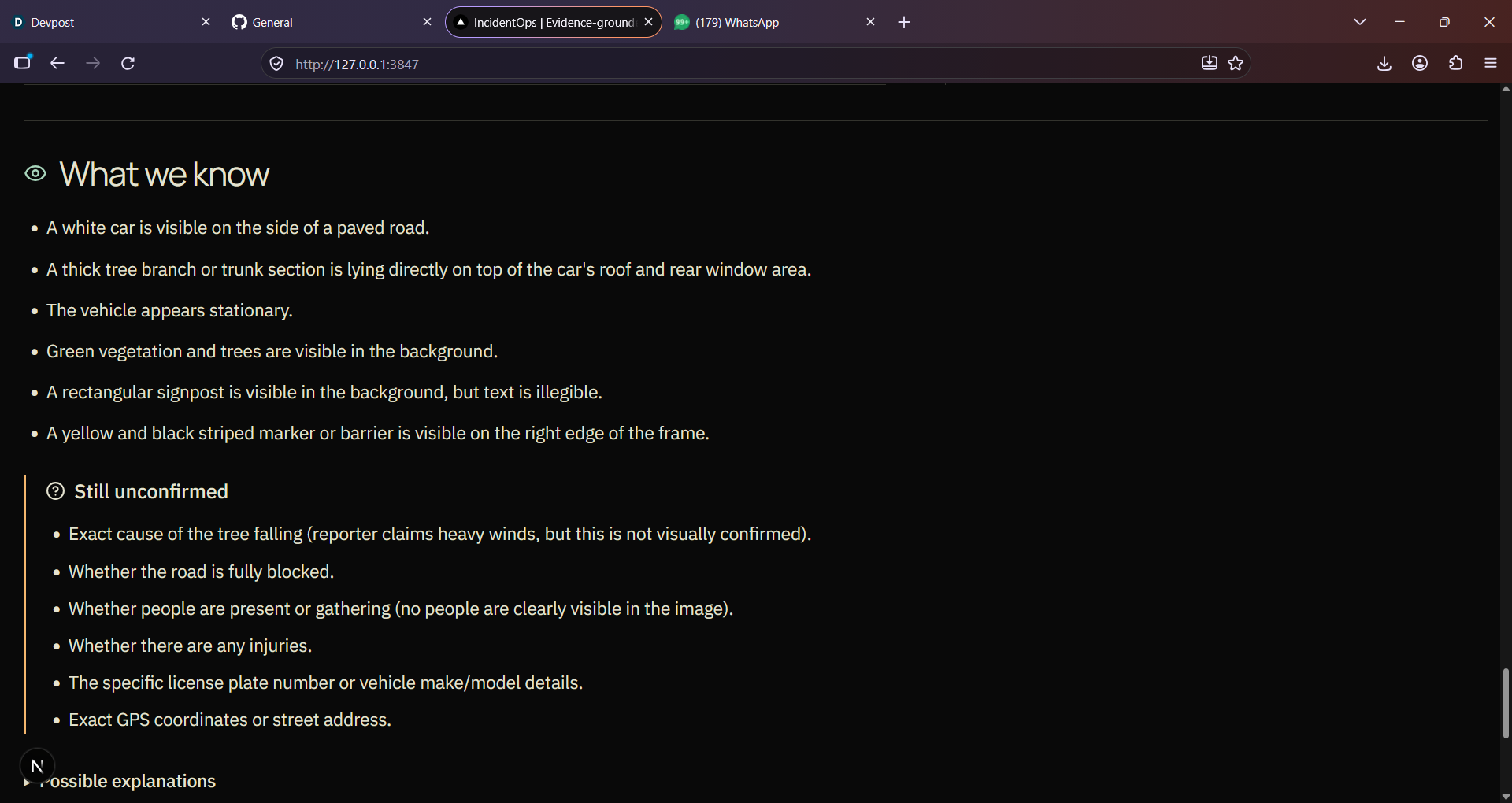
- Extracts visual evidence from the photo (scene summary, hazards, damaged objects, people or vehicles only if clearly present, conditions, observed facts, unknowns, and a confidence score) with
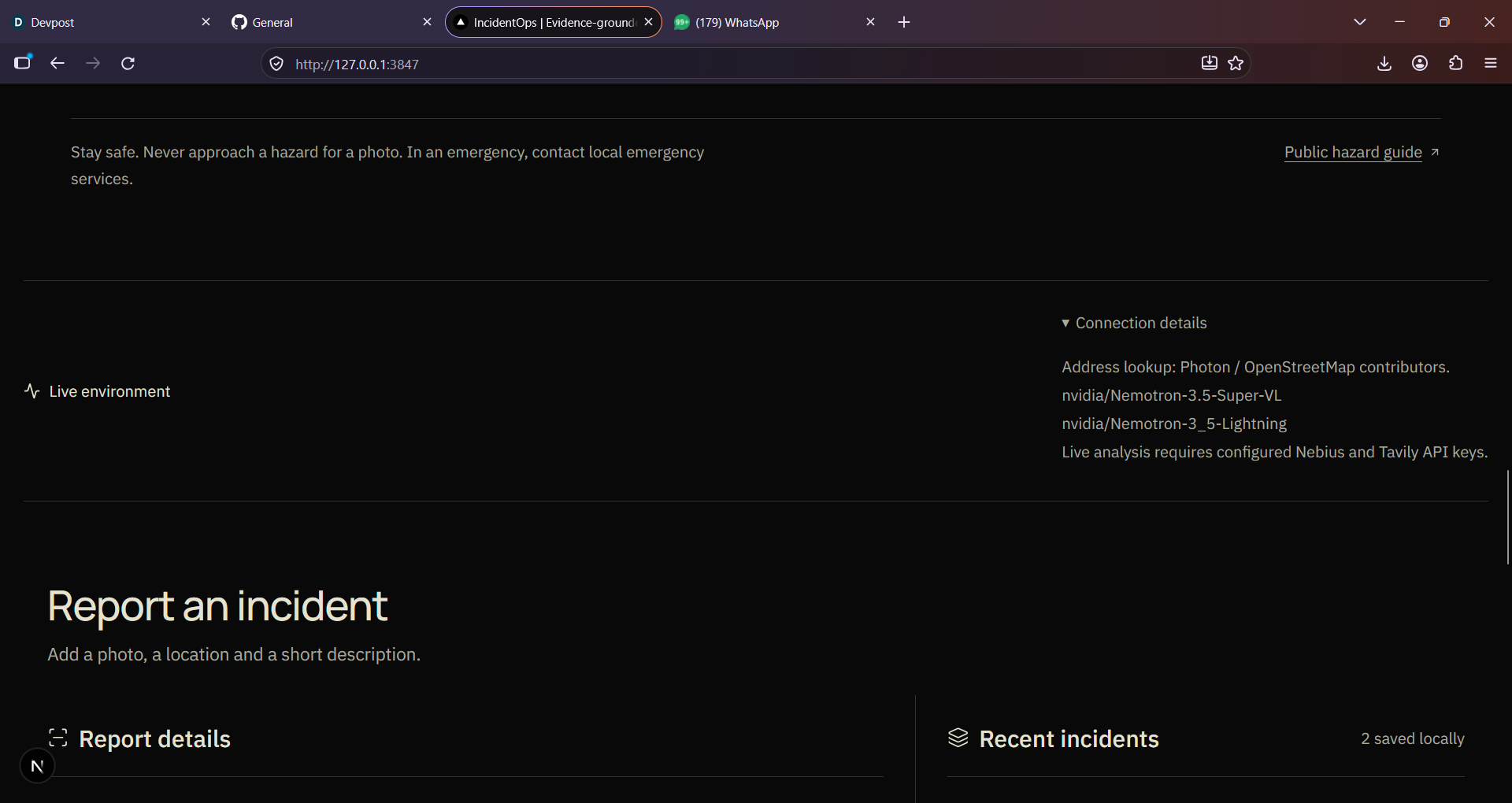
nvidia/Nemotron-3.5-Super-VL. - Classifies an advisory severity (low, medium, high, or critical) and plans one or two focused web searches with
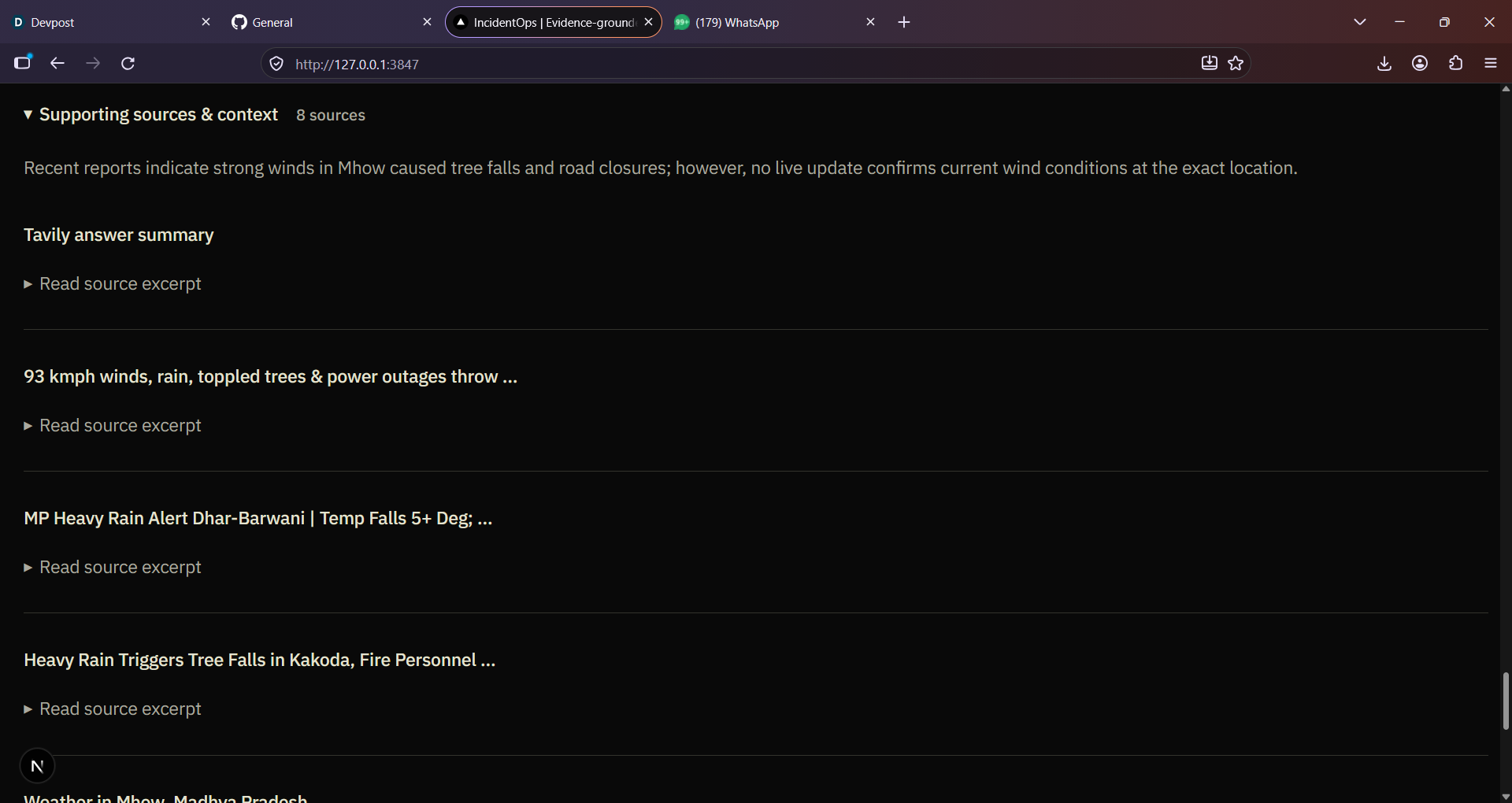
nvidia/Nemotron-3_5-Lightning. - Calls Tavily at runtime for live public context (weather, closures, advisories, nearby facilities), plus dedicated searches for official emergency contacts when the incident area can be resolved.
- Extracts helplines only when the number and a verbatim quote appear in retrieved evidence from supported government or public-authority hosts. For India, a reviewed official-directory fallback supplies 112, and 101 for fire or smoke incidents. Nothing is inferred from IP, locale, or model memory. Unknown countries get no default numbers.
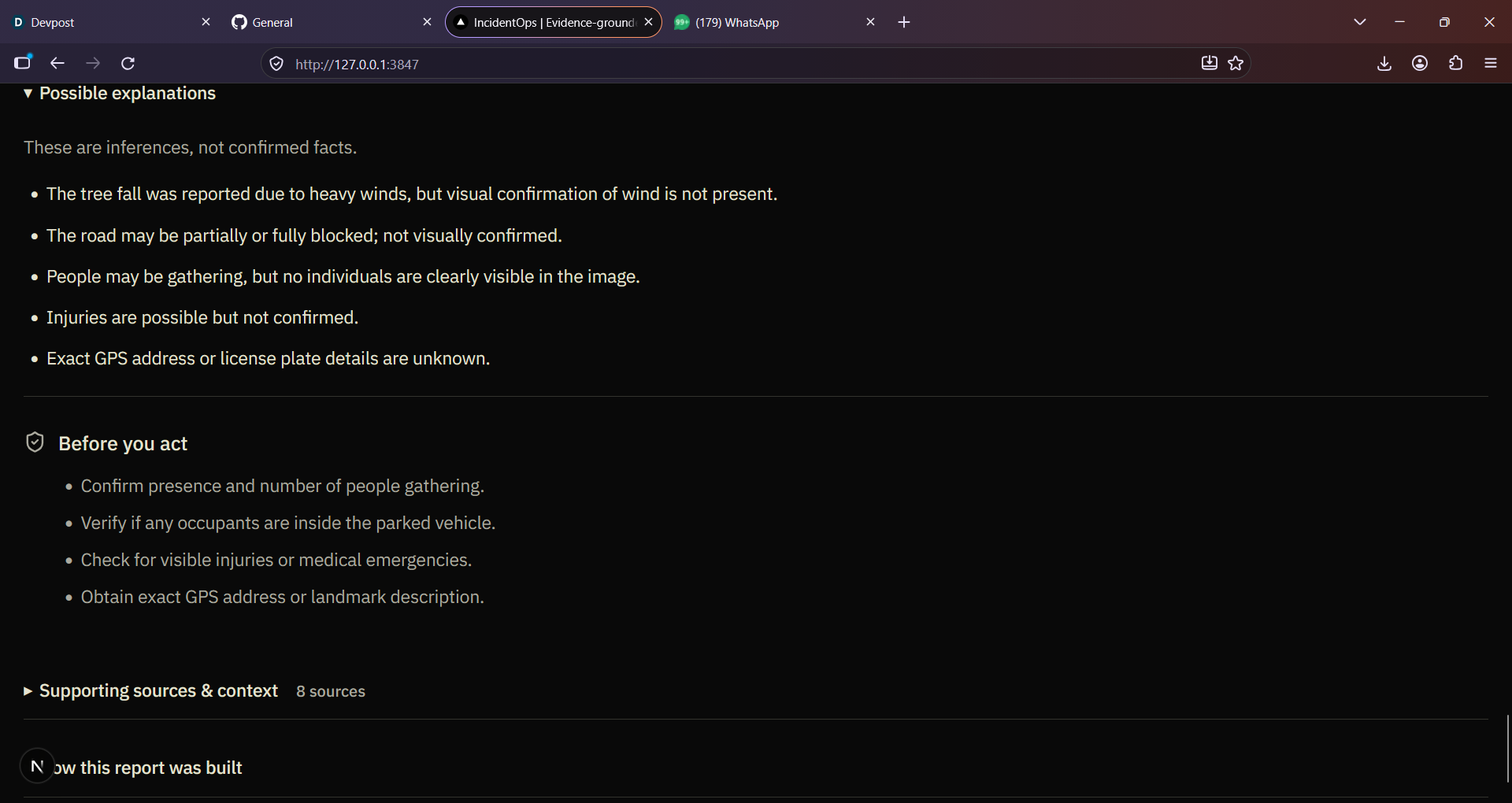
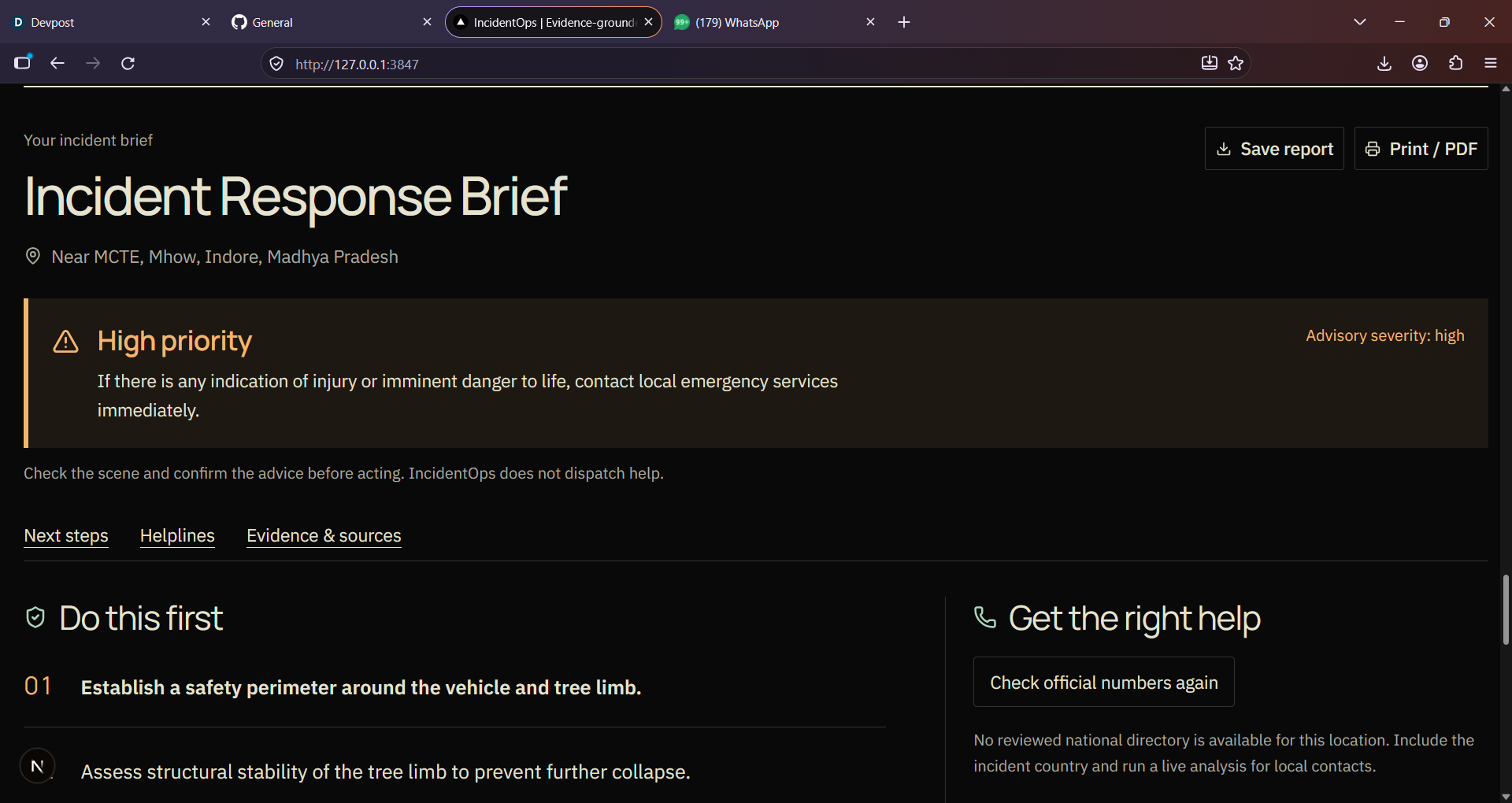
- Drafts a plain-English response brief with Lightning: title, observed facts versus inferences versus unknowns, immediate actions, a P1/P2/P3 checklist, a short live-context summary, human-verification items, and source links. High and critical severities always carry an emergency notice.
- Shows an execution trace (step, provider, model ID, latency, and the Nebius base URL), saves incident cards in the browser, and exports Markdown or a print layout.
It is advisory only. It never dispatches emergency services and never claims anyone has been alerted. Three built-in sample incidents let anyone try it without a photo. Without API keys the app runs in a labelled demo mode with stub data.
How we built it
- Models, all via Nebius Token Factory (OpenAI Python SDK,
base_url=https://api.tokenfactory.nebius.com/v1/, JSON-schema responses):nvidia/Nemotron-3.5-Super-VLfor visual evidence.nvidia/Nemotron-3_5-Lightningfor severity and search planning, helpline extraction, the response brief, JSON repair, and optional location-query normalisation. Nebius retiresnvidia/NVIDIA-Nemotron-3-Nano-30B-A3Bfrom Serverless on 9 Nov 2026, before judging, so Lightning is the text model.
- Pipeline (FastAPI, async): vision, then severity and search plan, then a deterministic Tavily search, then helpline extraction and validation, then the brief. Pydantic validates
VisualObservation,SeverityAssessment,HelplineDirectory, andIncidentReport. Invalid JSON gets one repair call through Nebius. - Guardrails: prompts separate evidence from inference. Sources are untrusted. Phone numbers are stripped from model prose and contacts render only from the checked directory. Contact hosts are allow-listed and the number must appear in the retrieved snippet. Demo mode is labelled.
- Frontend: Next.js 16, React 19, TypeScript, Tailwind CSS 4, shadcn/ui. Microphone recording, Photon/OpenStreetMap address search,
localStoragecards, Markdown download, print layout. - Voice:
faster-whisper(Whisper base) runs on the API server. No speech API key. 60-second / 5 MB limit. Audio stays in memory. - Tests: 22 pytest tests and 31 Node tests (categories, location, helplines, voice, scroll reveal).
- Built with Cursor and edited by ASTRAX.
Challenges
- Reliable structured JSON from the models, handled with schema prompts, Pydantic, and a repair pass.
- Keeping observations, inferences, and unknowns separate so the brief does not exaggerate urgency.
- Making Tavily change the brief instead of sitting beside it.
- Emergency contacts: a wrong number is worse than none. The app shows that no suitable number was confirmed rather than guessing.
- Location entry when device geolocation fails, with approximate-location labelling and an address confirmation step.
Accomplishments
- A full product flow (intake, analysis, brief, cards, export, empty, loading, and error states) on two NVIDIA Nemotron models through Token Factory, with a visible runtime trace.
- Helpline handling that does not fabricate contacts.
- Local voice transcription with no extra API key.
- A labelled demo mode for machines without keys.
A live local run on 29 Oct 2026 (keys set, demo mode off) analysed the walkway sample. The trace recorded nvidia/Nemotron-3.5-Super-VL for the photo, nvidia/Nemotron-3_5-Lightning for the severity plan, contact lookup, and brief, and an ok Tavily step.
What we learned
- Token Factory's OpenAI-compatible API made the integration a base-URL change. A vision Nemotron and a fast text Nemotron on one platform were enough for a multi-step agent.
- Structured-output quality varies by model, so validation and repair matter more than prompt polish.
- For safety-adjacent tools, restraint is a feature: advisory only, citations, and "unknown" as a valid answer.
What's next
- A hosted demo judges can open, with the same keys set on the server.
- Authenticated team workspaces and shared incident boards.
- Official-directory coverage beyond India. Other countries already rely on sourced live lookup.
- Offline capture with later sync for field devices.
Built With
- fastapi
- faster-whisper
- nebius-token-factory
- nemotron-3.5-lightning
- nemotron-3.5-super-vl
- next.js
- nvidia-nemotron
- openai-python-sdk
- openstreetmap-photon
- pydantic
- python
- react
- shadcn-ui
- tailwindcss
- tavily
- typescript


Log in or sign up for Devpost to join the conversation.