IncidentLens AI 🔎
Investigate incidents. Understand root causes. Remediate with confidence.
💡 Inspiration
When a production system fails, engineers often have to investigate logs, metrics, deployment history, and service health across multiple sources to understand what went wrong. Finding the actual root cause can be time-consuming, especially when several services and events are involved.
We wanted to explore how AI agents could make this process faster and more transparent—not simply by generating explanations, but by investigating evidence, connecting related events, and helping engineers make informed decisions.
That idea led to IncidentLens AI, an AI-powered incident investigation assistant designed to turn fragmented operational signals into actionable insights.
🚀 What it does
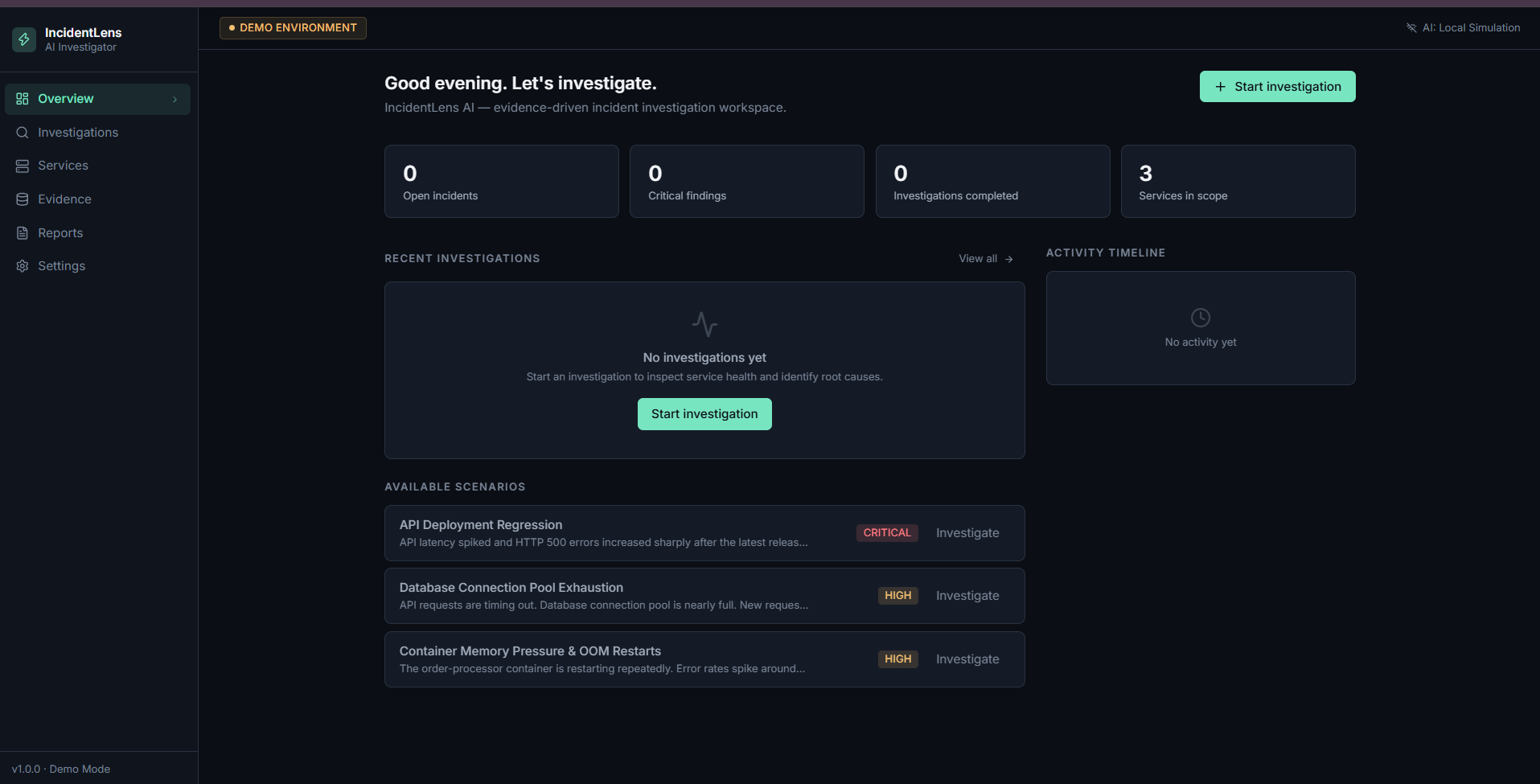
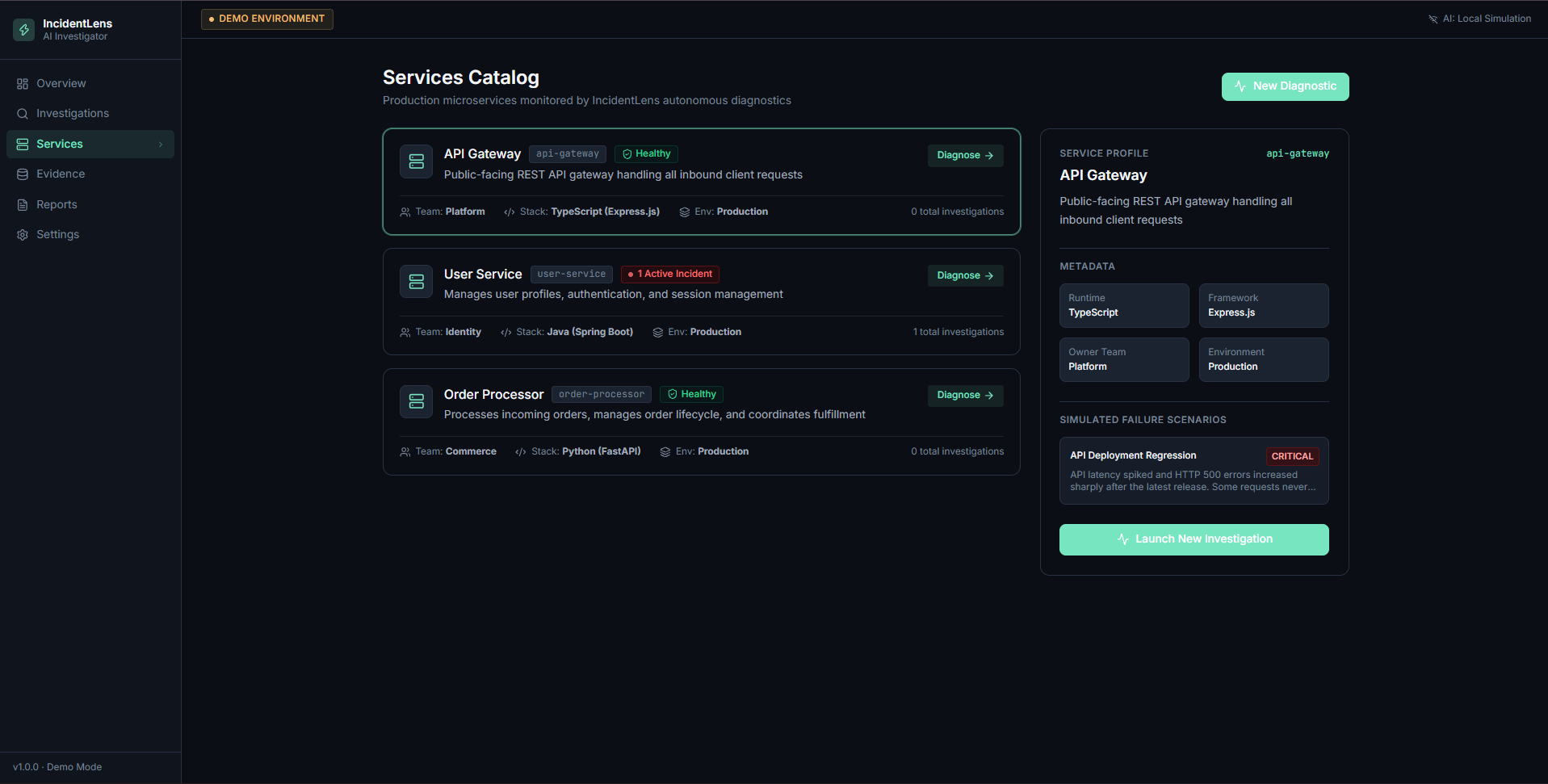
IncidentLens AI helps engineers investigate simulated production incidents through a unified interface.
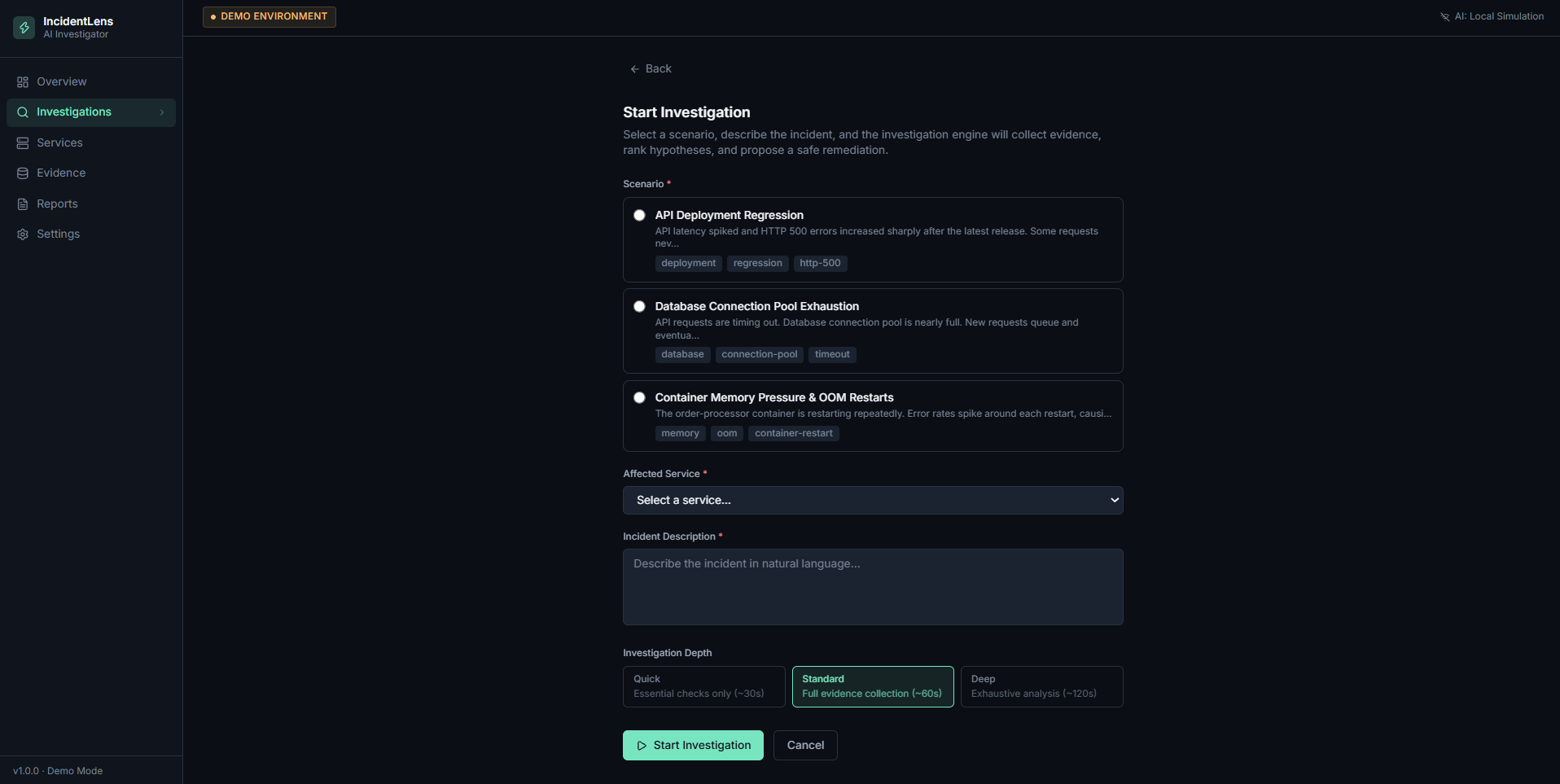
- Incident investigation: Analyze incident scenarios and investigate potential causes.
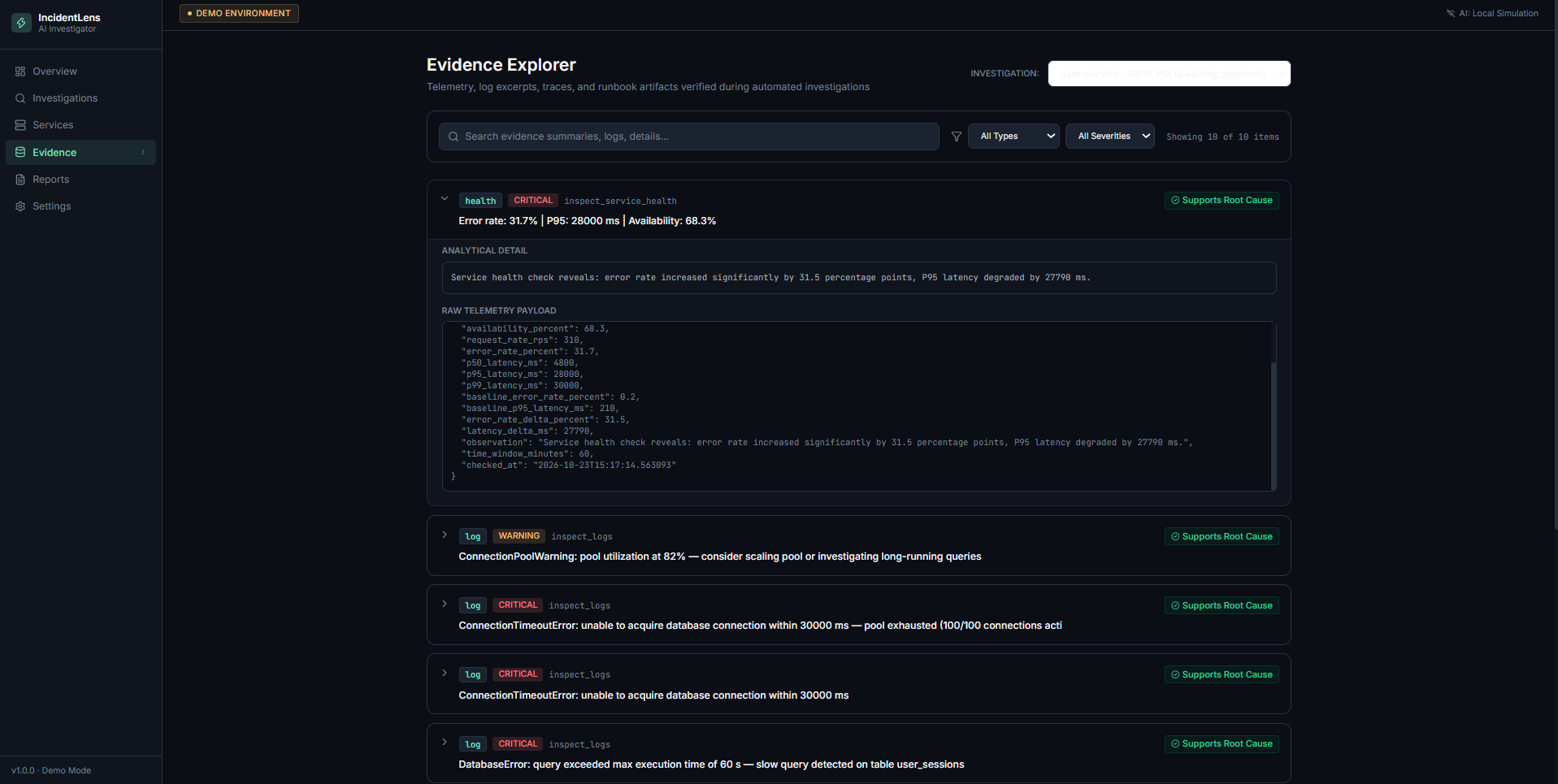
- Evidence correlation: Connect logs, metrics, deployment events, and service health information.
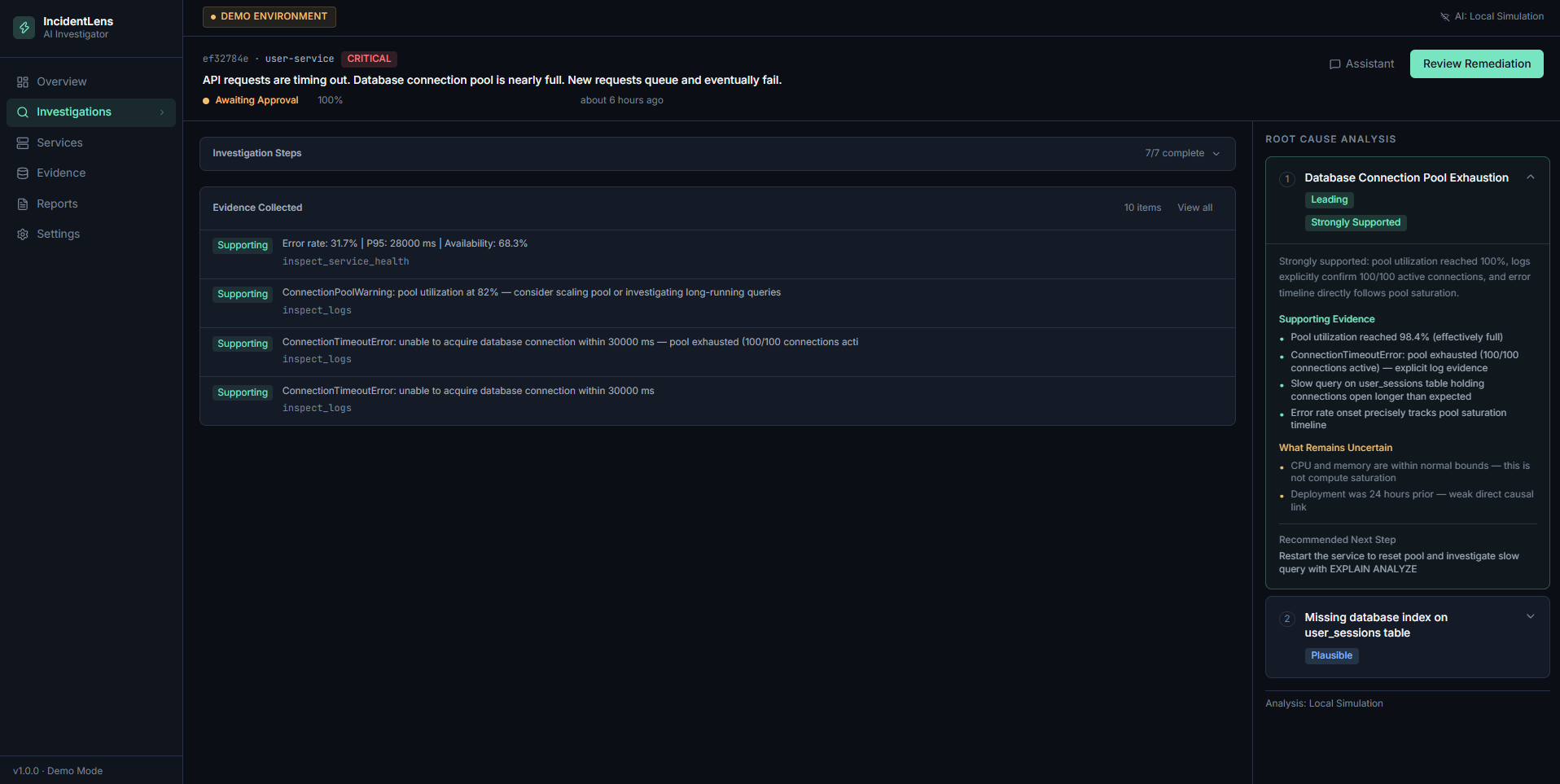
- Root-cause analysis: Generate ranked hypotheses explaining what may have caused an incident.
- Evidence-backed findings: Present supporting evidence so engineers can understand why a hypothesis makes sense.
- Investigation timeline: Organize relevant events chronologically to make incident sequences easier to understand.
- Guided remediation: Suggest possible corrective actions while keeping consequential actions under human control.
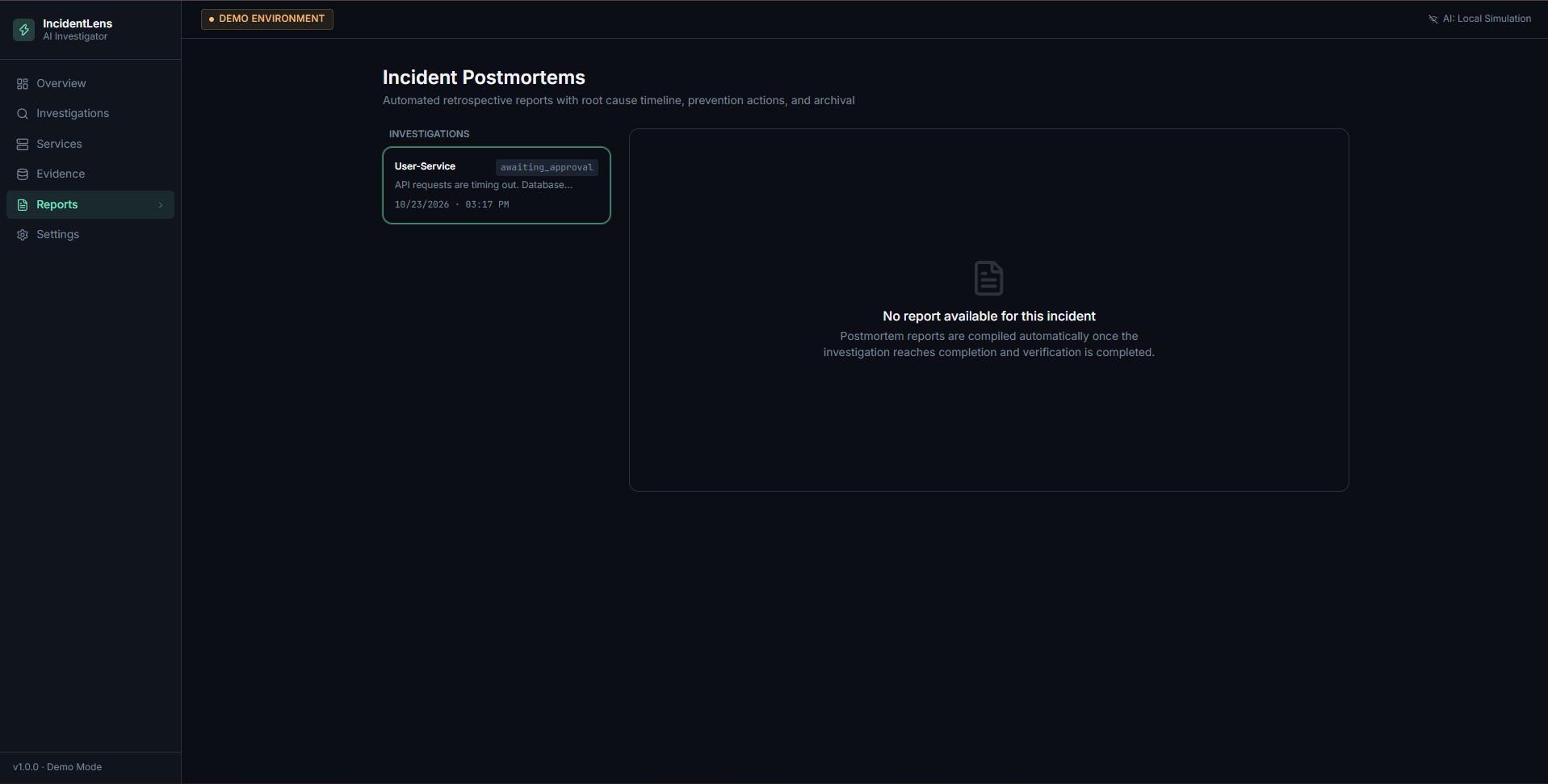
- Investigation reports: Summarize findings to support debugging, documentation, and post-incident reviews.
The goal is to make incident investigation more structured, explainable, and accessible.
⚙️ How we built it
We designed IncidentLens AI around an investigation workflow that brings operational evidence together and uses it to reason about possible failure causes.
The application combines a web interface with a backend responsible for investigation logic, data processing, and tool interactions. The workflow is designed to move from incident detection to evidence collection, hypothesis generation, and guided remediation.
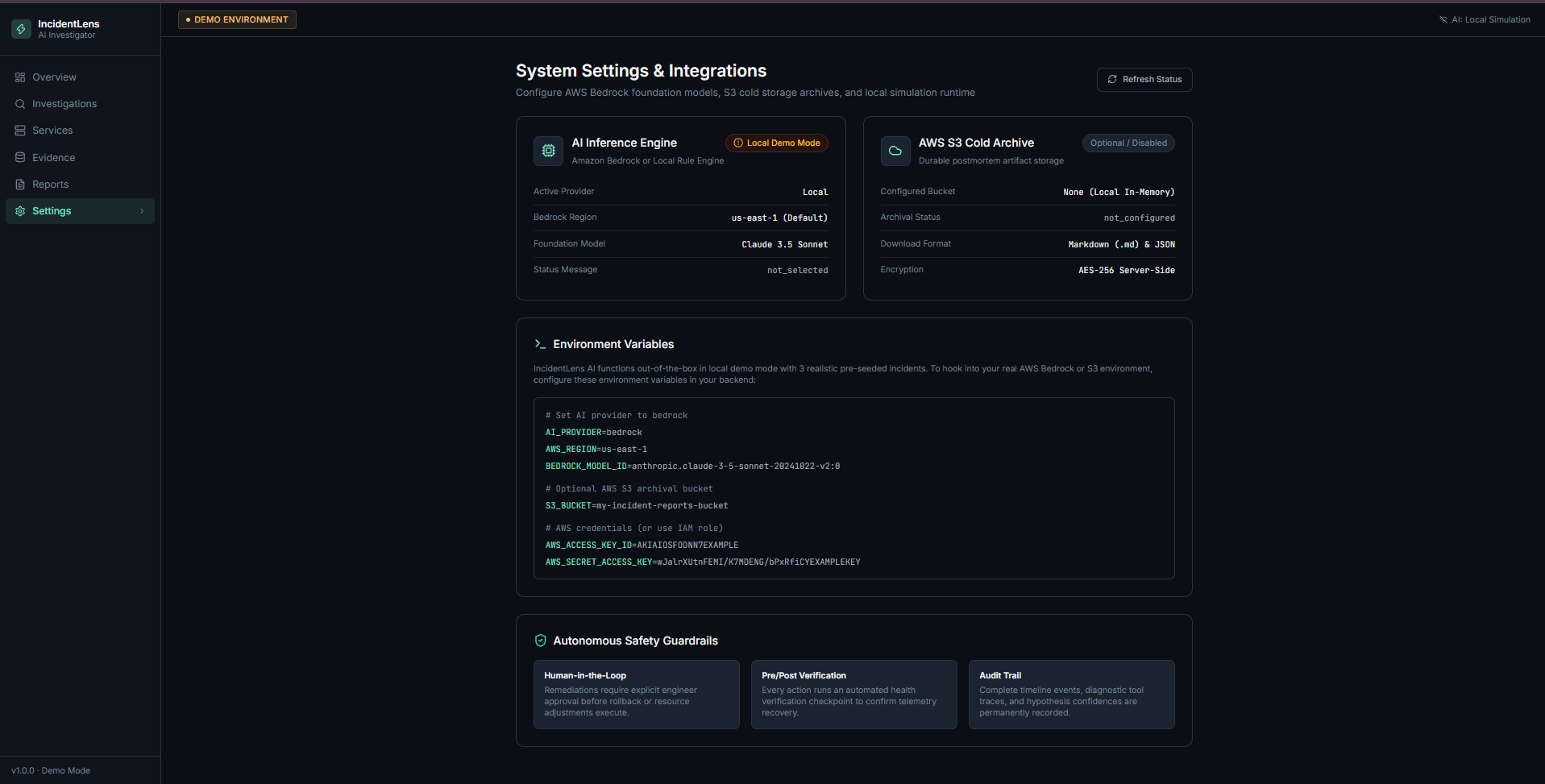
The project also supports a deterministic demonstration mode, allowing the investigation workflow to be explored without depending entirely on external API credentials.
Our focus was to build an experience that demonstrates how agentic AI can assist with a real engineering problem while keeping the investigation process understandable to the user.
Technology stack: Add the technologies actually used in your implementation, such as React, TypeScript, FastAPI, Python, Amazon Bedrock, and AWS services where applicable.
🧠 Challenges we faced
One of the key challenges was designing an investigation experience that communicates useful technical information without overwhelming the user.
Incident investigation involves more than identifying an error. A useful system must connect events, distinguish evidence from assumptions, explain its conclusions, and avoid presenting uncertain hypotheses as established facts.
We also had to consider the boundary between recommending a remediation and executing one. Keeping consequential actions under human control was an important design consideration.
Balancing a clear interface, a coherent investigation workflow, and a practical demonstration within a hackathon timeline was another challenge.
📚 What we learned
Building IncidentLens AI helped us explore the practical application of agentic AI to cloud operations and incident response.
We learned how important tool-driven workflows, evidence-based reasoning, transparent findings, and human oversight are when applying AI to engineering tasks.
The project also reinforced an important principle: an AI assistant is more useful when it helps users understand why something happened, not just what it predicts happened.
🔮 What's next
Future improvements could include integrations with real observability platforms, richer incident correlation across distributed services, persistent investigation history, and more comprehensive verification of proposed remediation actions.
Our long-term vision is to make IncidentLens AI a practical assistant for engineers who need to investigate production incidents faster without sacrificing transparency or control.
Built With
- agentic
- ai
- amazon
- amazon-web-services
- automation
- bedrock
- cloud
- computing
- devops
- fastapi
- generative
- incident
- observability
- python
- react
- response
- typescript


Log in or sign up for Devpost to join the conversation.