-
-
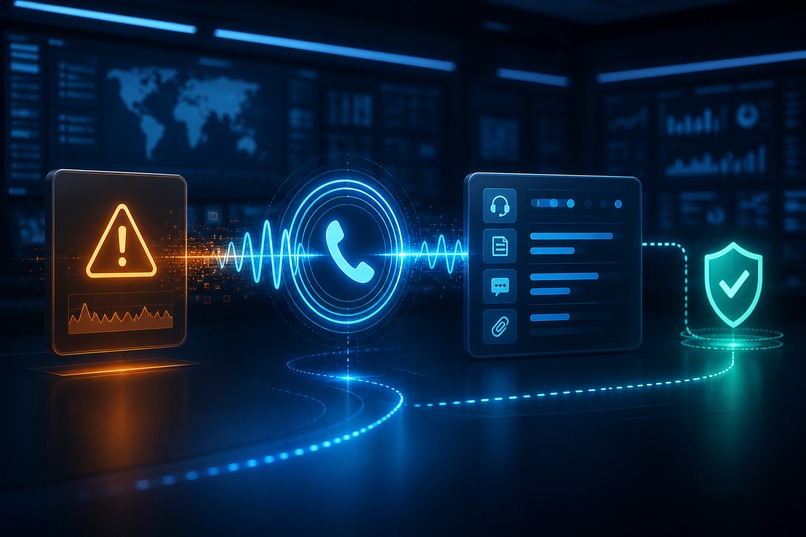
Consent-first CALL-E incident evidence console: live provider evidence, safe preview, and acknowledged simulation.
The problem
During an outage, the same operator diagnosing the failure often has to stop, wait on a vendor-support line, repeat known incident context, collect a ticket/ETA/workaround, then carry those facts back into the incident workflow.
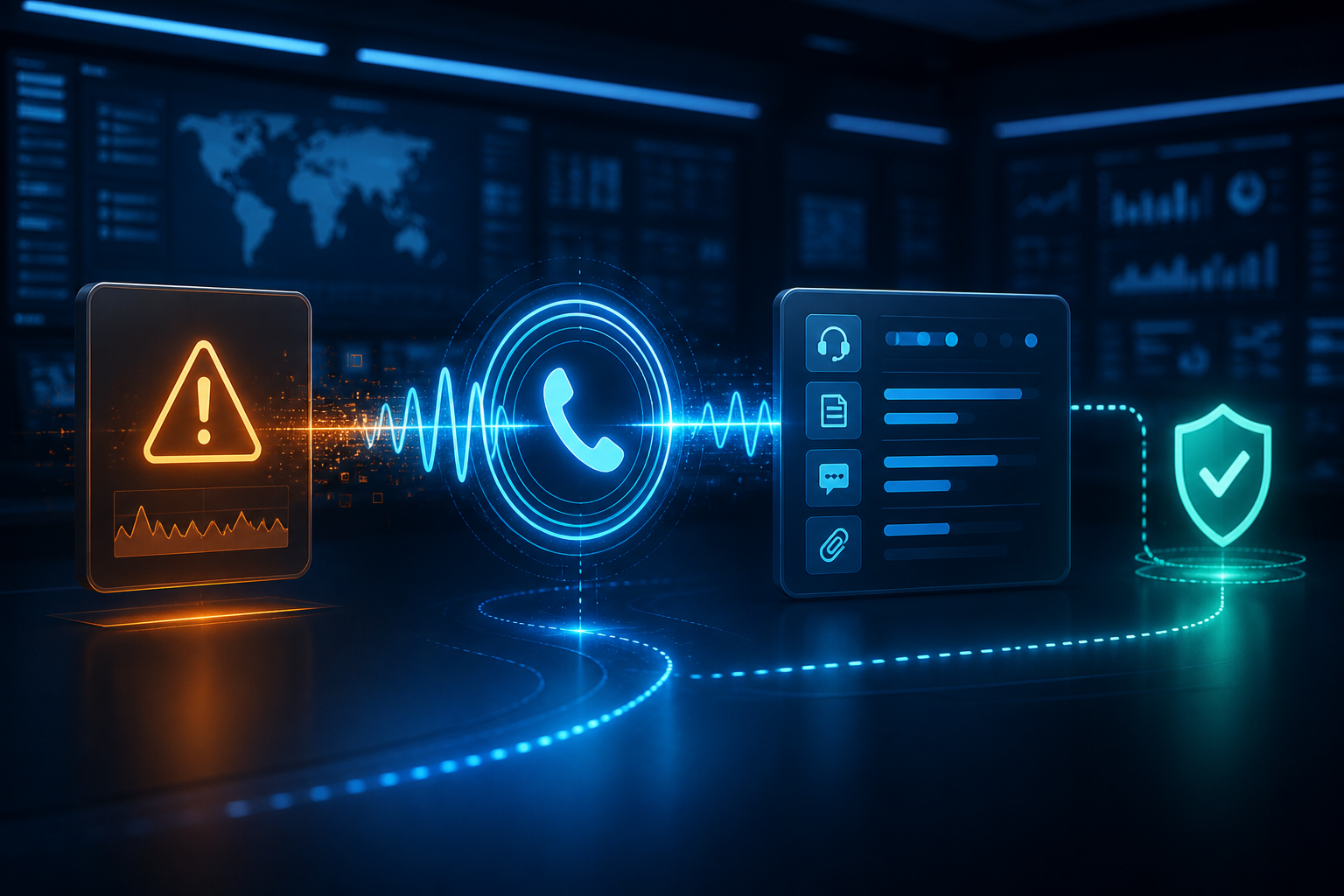
IncidentBridge delegates exactly that bounded interruption to CALL-E.
The business outcome is simple: reclaim operator attention while preserving incident authority.
The judge-visible outcome
IncidentBridge takes an approved incident brief and delegates one authorized vendor-support conversation. CALL-E returns structured evidence such as:
- vendor acknowledgment
- ticket ID
- status
- ETA
- workaround
- callback window
- escalation state
That evidence is bound to the exact workflow, incident, call ID, and destination and corroborated against recipient-side transcript text.
Then the safety boundary matters:
the phone call can create evidence, but it can never declare recovery. incident_closed remains false until local health checks and a human incident commander verify the service.
Demo: https://youtu.be/x5YNuT4gNgA
Evidence console: https://yangyangnovelist-hub.github.io/incidentbridge-calle/
Impact calculator: https://yangyangnovelist-hub.github.io/incidentbridge-calle/impact-calculator.html
Why it matters
The first KPI is not a fabricated MTTR claim. It is directly measurable:
operator_minutes_reclaimed = manual_operator_minutes - approval_and_review_minutes
A real deployment can then calculate annual hours reclaimed from vendor-call frequency and delegation share.
The first safety KPIs are equally explicit:
- unauthorized-call rate = 0 target
- false-success rate = 0 target
Product experience
The operator console defaults to preview. A live call requires independent server-side and operator gates, including explicit authorization, an exact E.164 allowlist, live-call enablement, and typed confirmation.
The ideal workflow is:
incident starts → operator approves bounded vendor call → CALL-E calls → ticket/ETA evidence returns → incident timeline updates → operator keeps debugging
The next public proof target is one fully consented synthetic success call that produces a privacy-safe consented-live-success.json artifact.
Technical implementation
IncidentBridge uses the published calle-ai==0.2.0 Python SDK on the real execution path.
Key production-oriented controls include:
- durable SQLite reservation before dispatch
- stable idempotency identity
- strict CALL-E result schema
- call/workflow/incident/destination binding
- recipient-side ticket corroboration
- privacy screening and recursive redaction
- fail-closed routing on low confidence, wrong desk, incomplete or mismatched evidence
- ambiguous provider outcome → no blind automatic retry
- loopback-only browser live mode with server-side credential isolation
The implementation has 33 passing tests, 93.80% total coverage, a 90% enforced coverage gate, Ruff-clean CI, and integration tests that exercise the published CALL-E SDK through loopback HTTP.
Independent upstream validation
CALL-E maintainers reviewed the contribution in PR #132 and identified two substantive security blockers: incomplete privacy validation and insufficient binding/corroboration of returned evidence. Both were fixed and converted into regression tests before the PR was merged into the official CALL-E community repository on August 17, 2026.
Source: https://github.com/yangyangnovelist-hub/incidentbridge-calle
What makes it different
IncidentBridge is not an internal on-call escalation bot and not a synthetic phone monitor. It targets the external dependency step during an incident: contact the vendor, bring back evidence, and keep recovery authority local.
Real-world validation boundary
IncidentBridge has already exercised the real CALL-E provider boundary. A real run reached voicemail and correctly failed closed without blind redial. The complete success route is inspectable deterministically, and the project includes a one-shot consented live runner for a privacy-safe public success artifact.
The next upgrade is not more feature surface. It is stronger real-world proof: one authorized success run and measured operator time reclaimed.
Why it is worth building
Incident response is already cognitively expensive. IncidentBridge removes one repetitive interruption without pretending a phone conversation is operational truth.

Log in or sign up for Devpost to join the conversation.