-
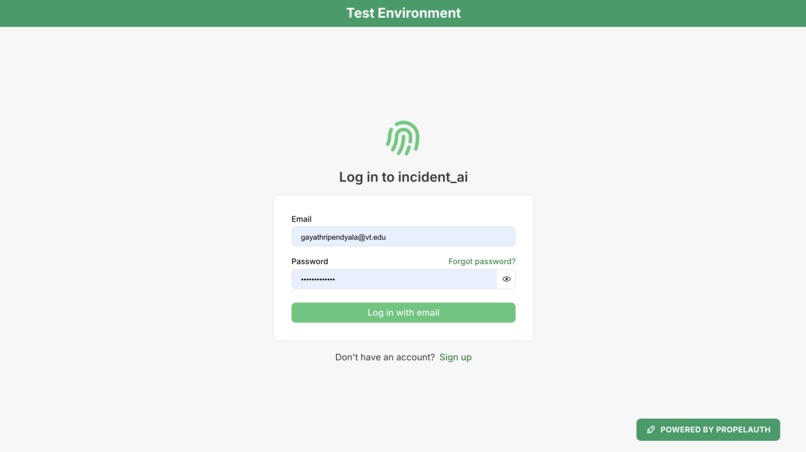
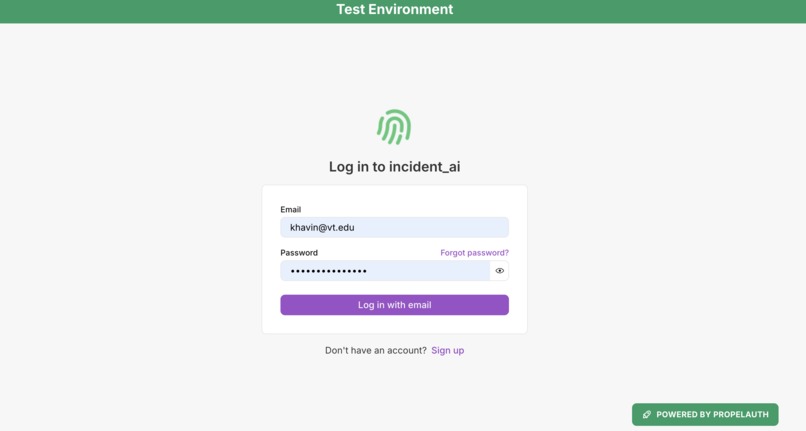
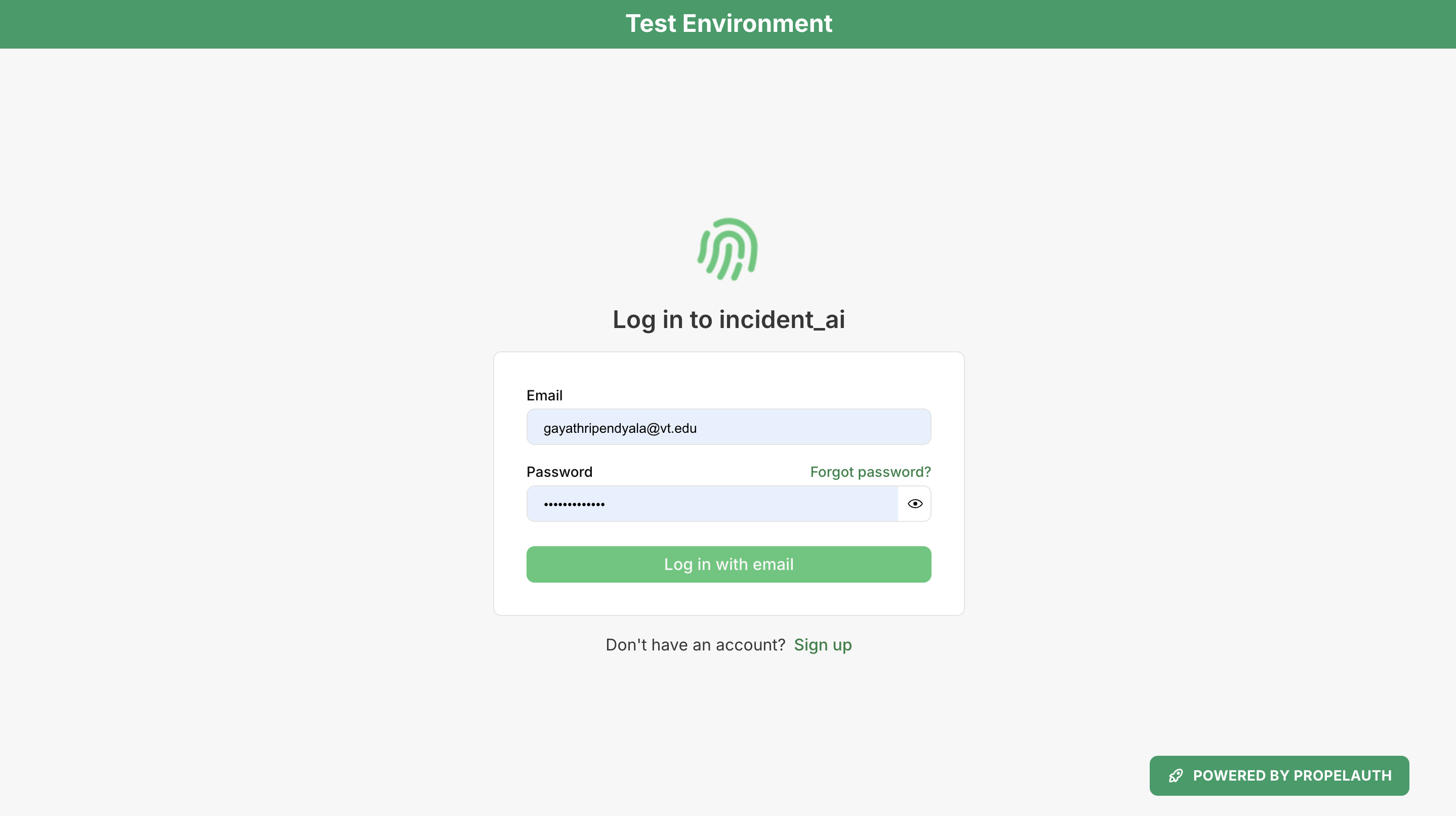
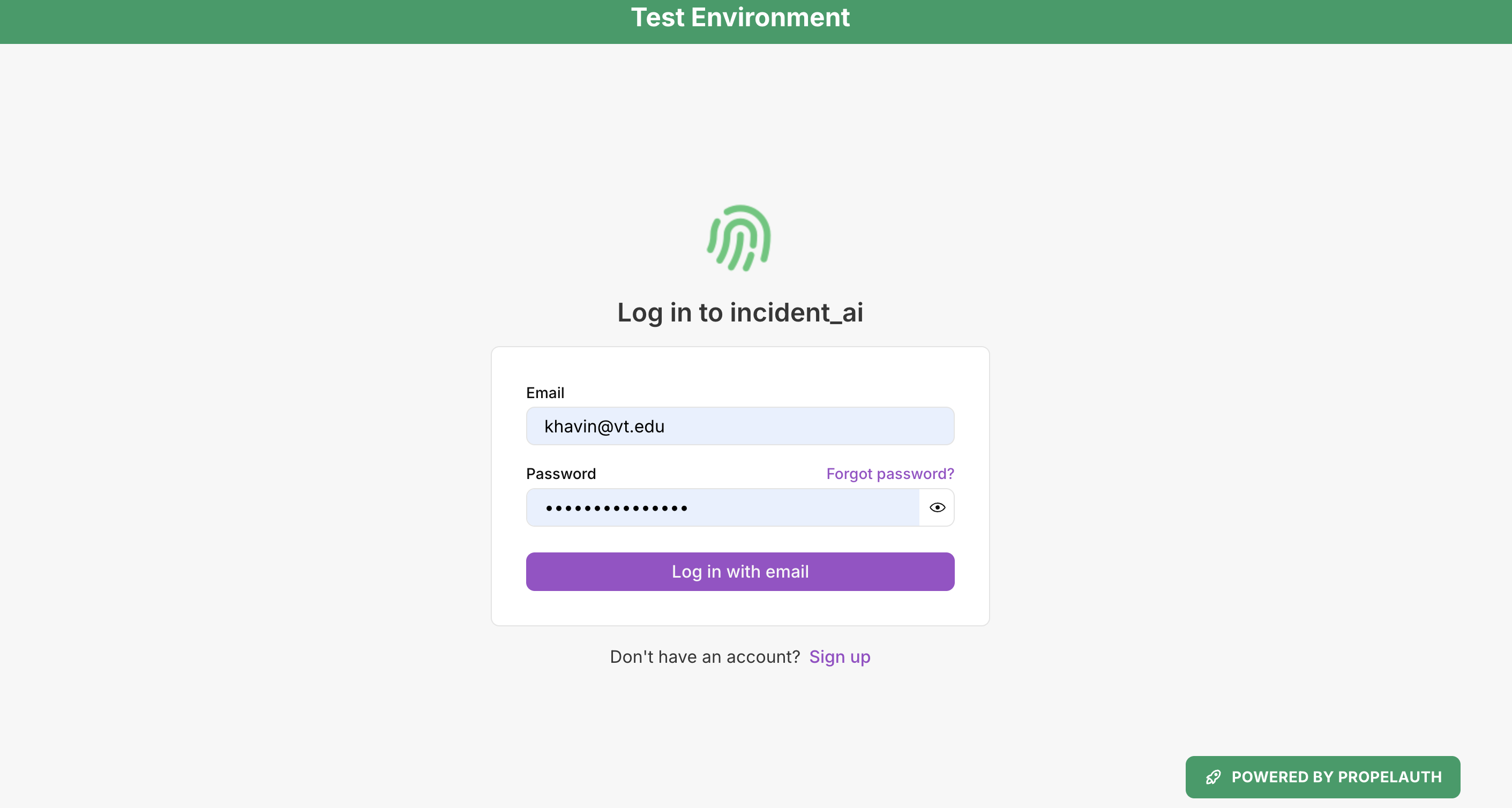
Propelauth login for admins
-
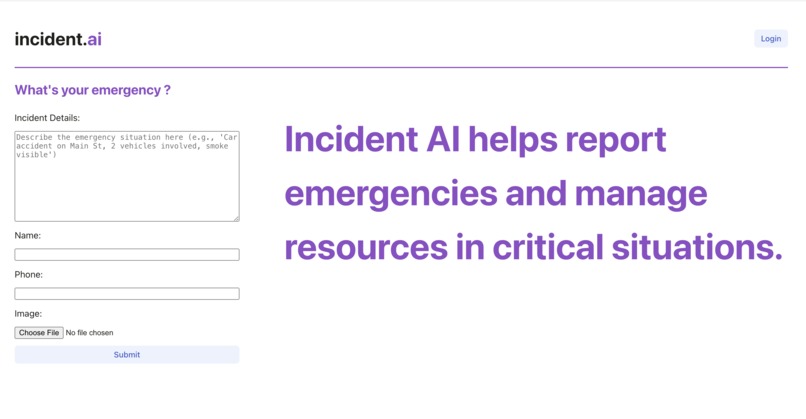
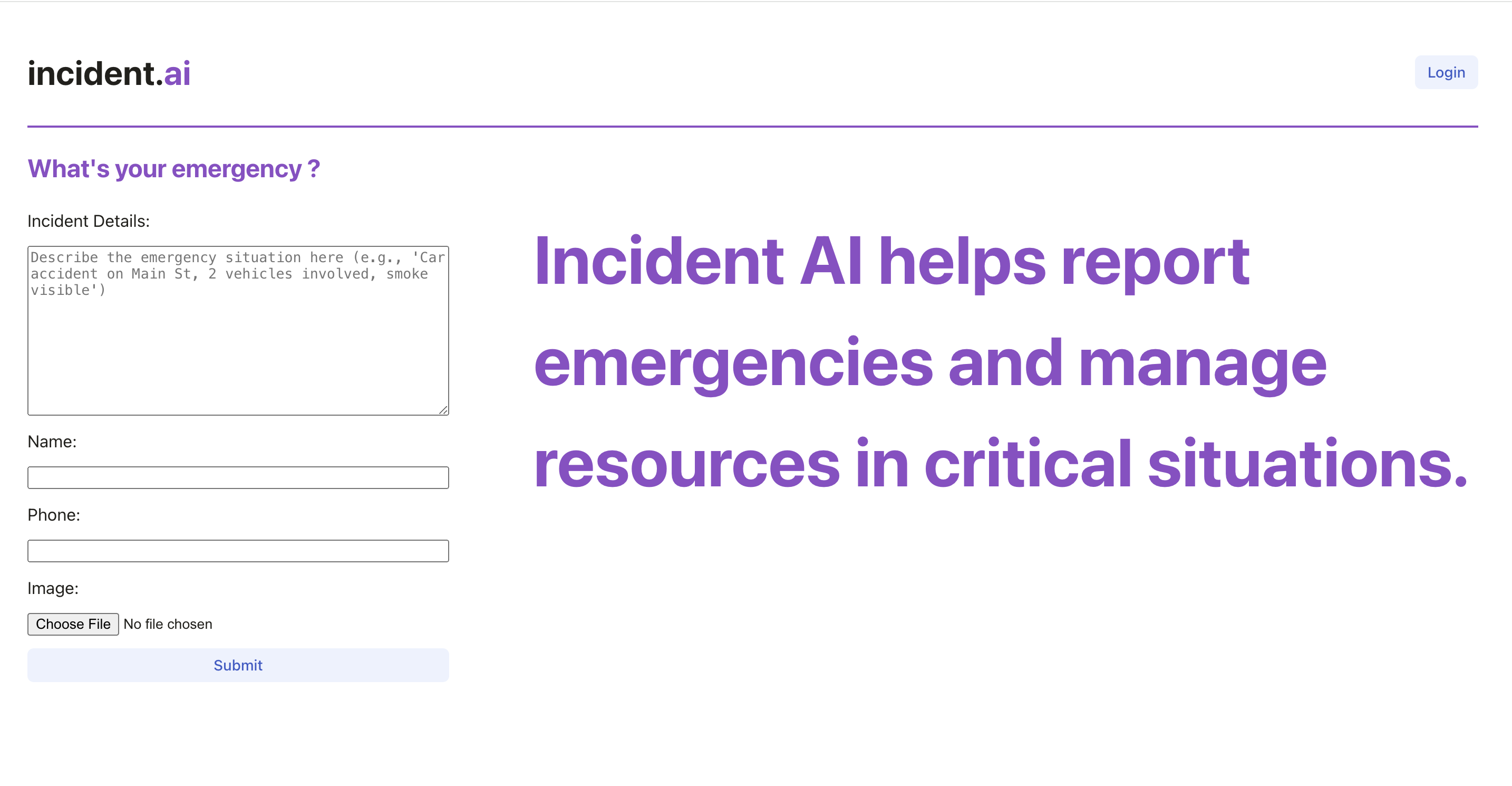
Home Screen where users can report incidents
-
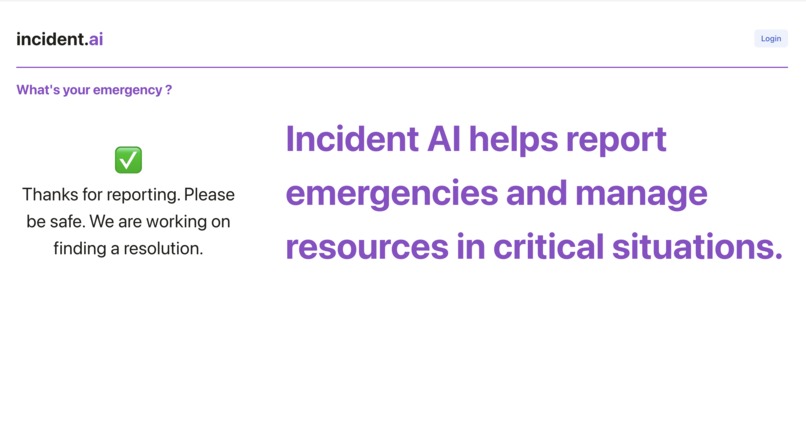
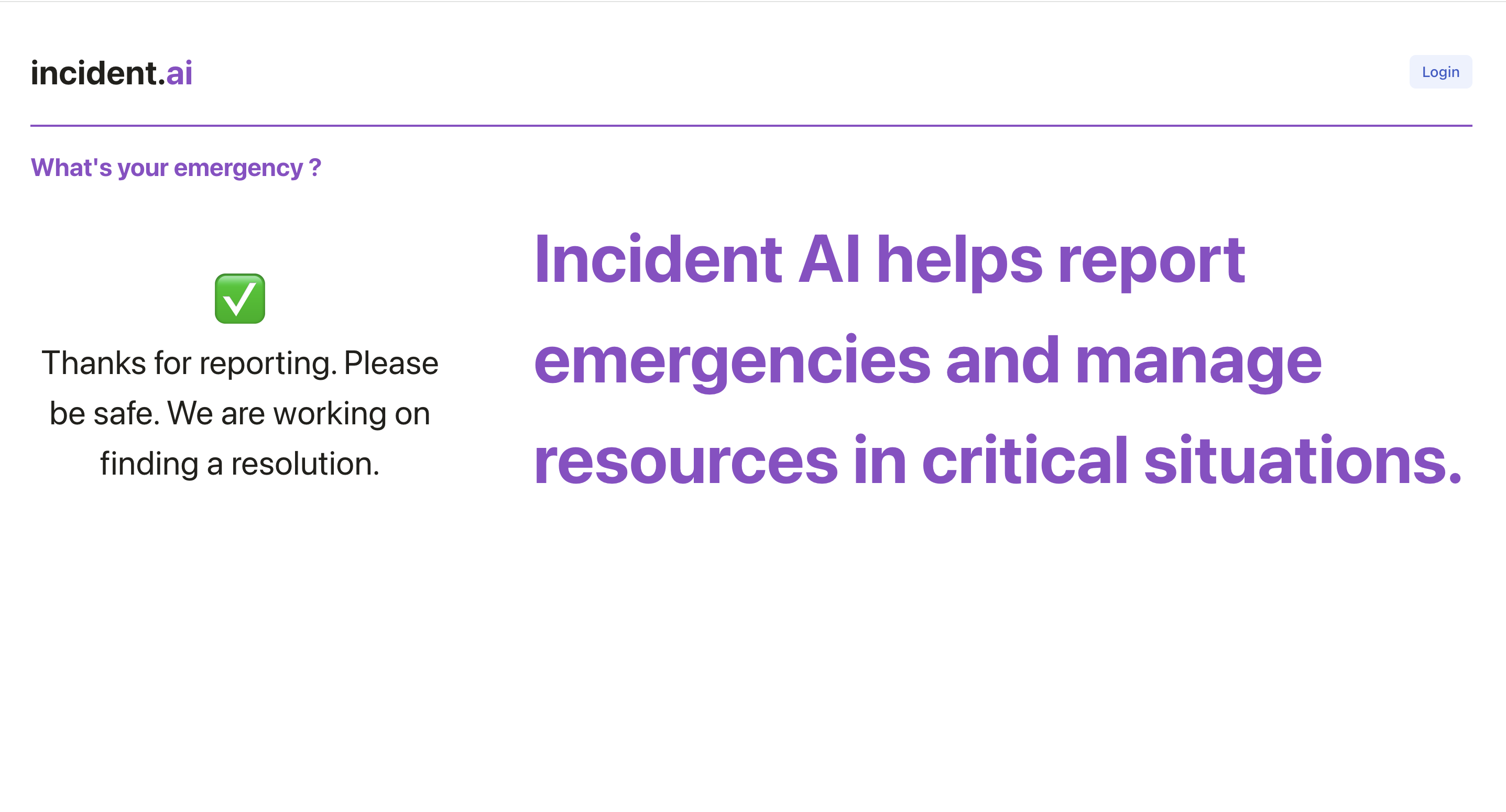
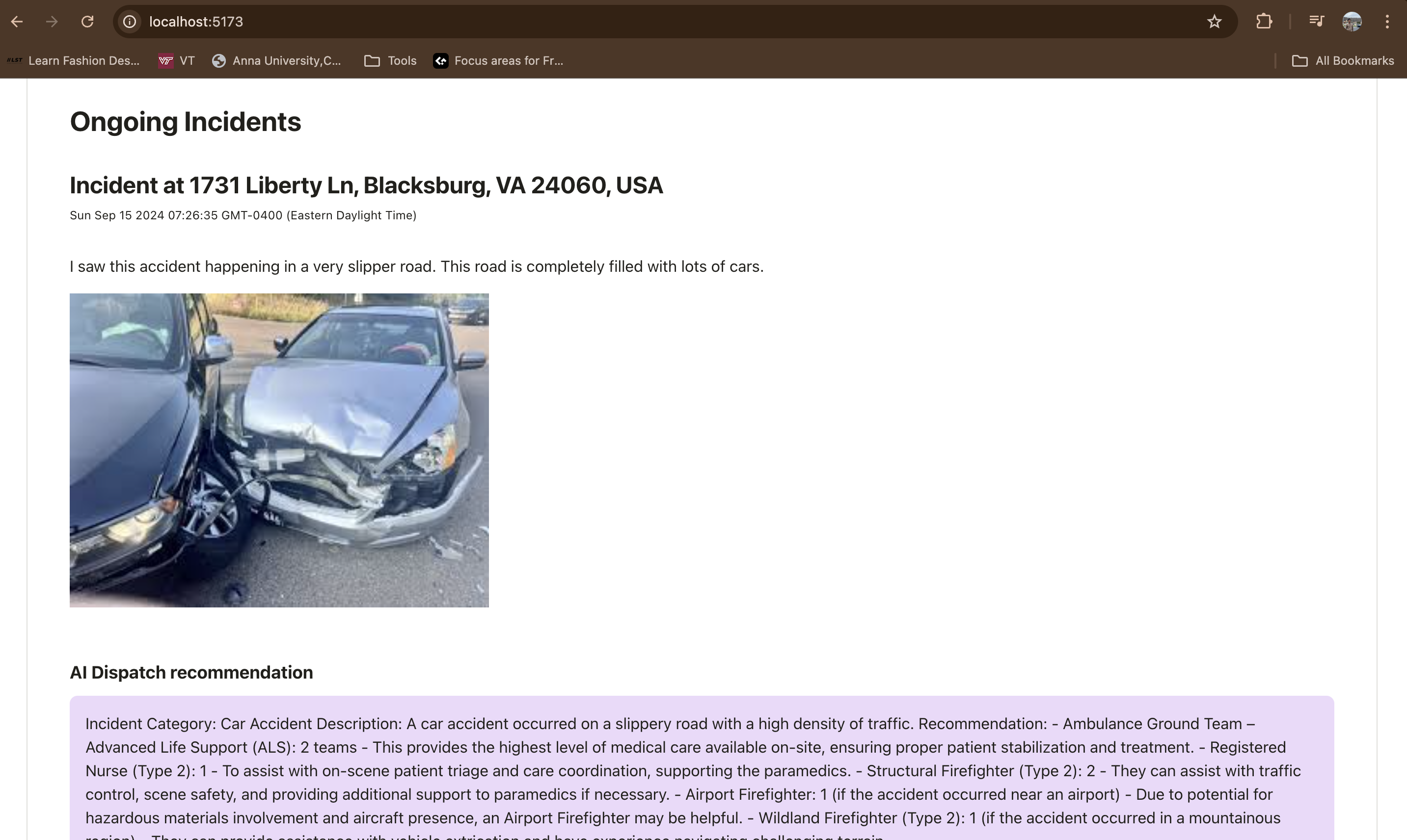
Once the user reports an incident then this screen is populated
-
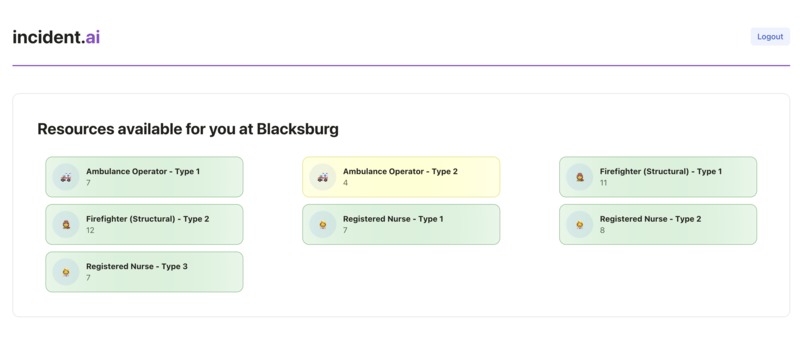
Incident dashboard for admins
-
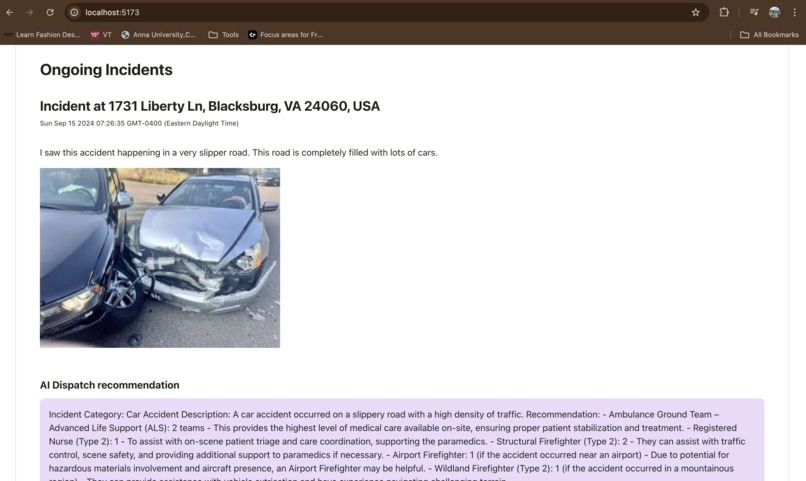
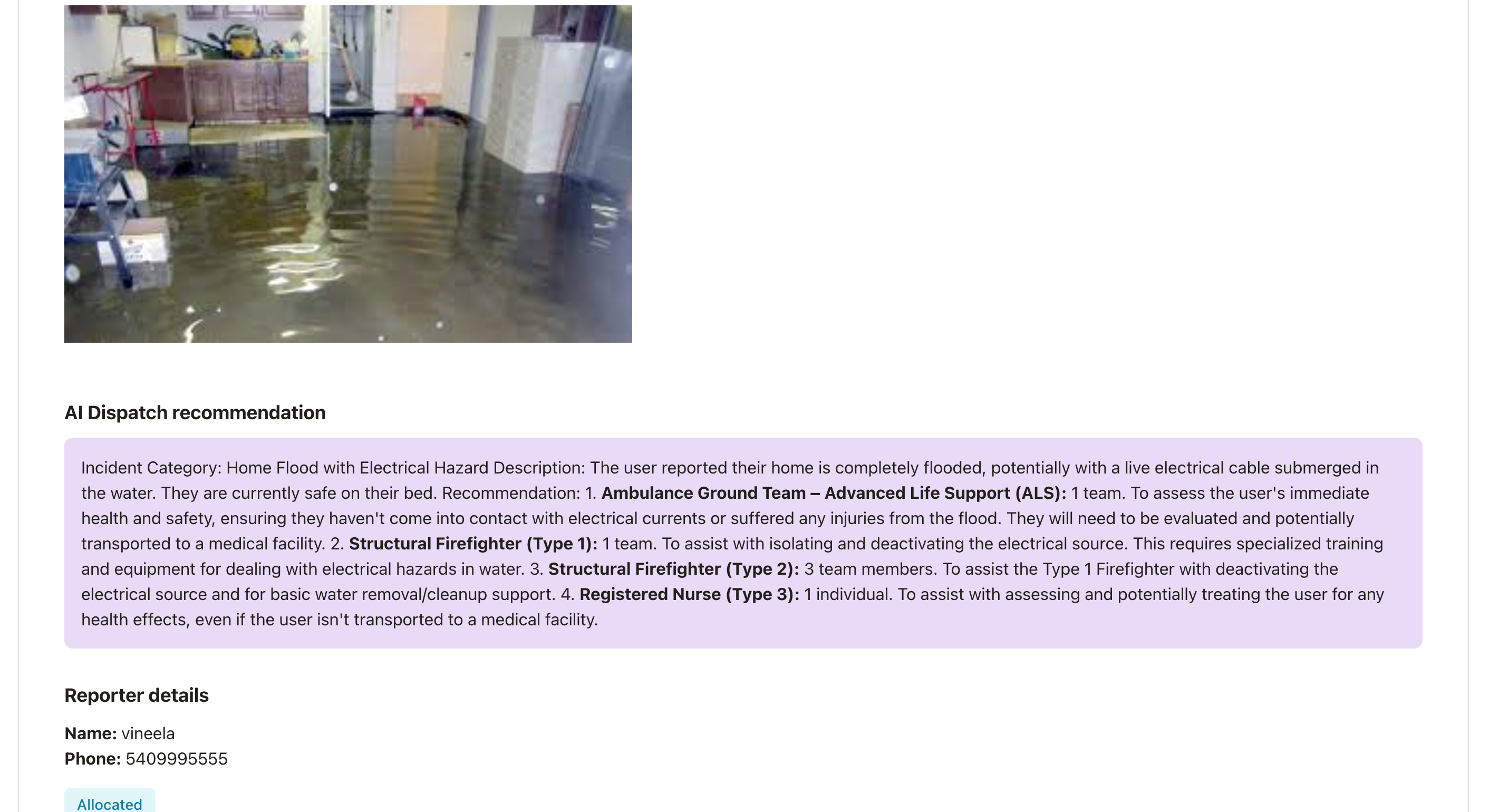
Incident info along with recommendation from AI
-
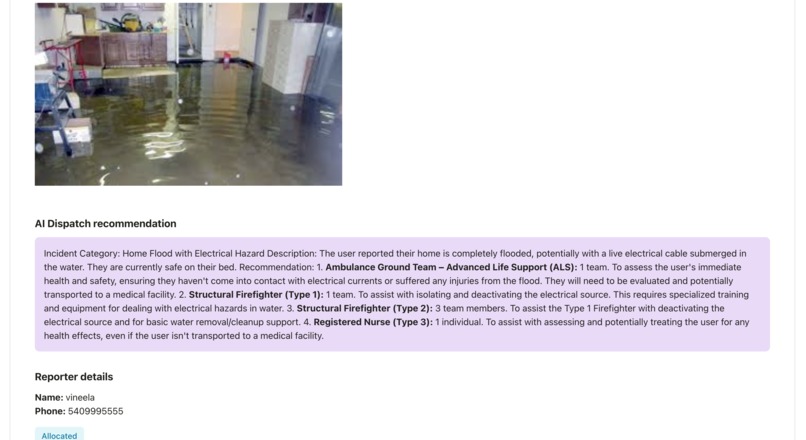
Incident text response from AI
-
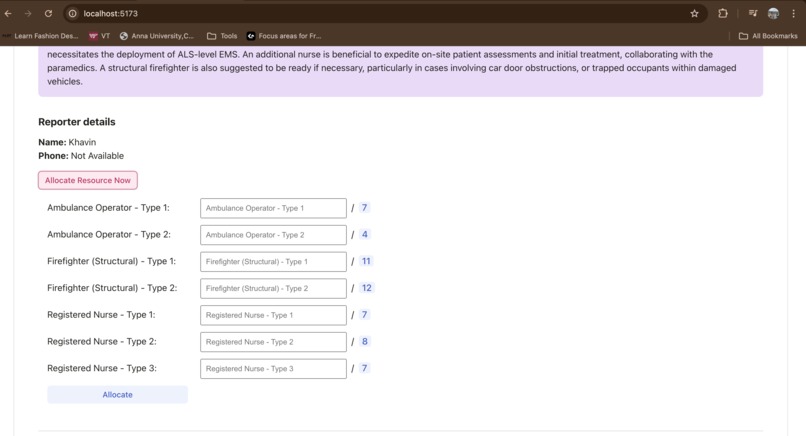
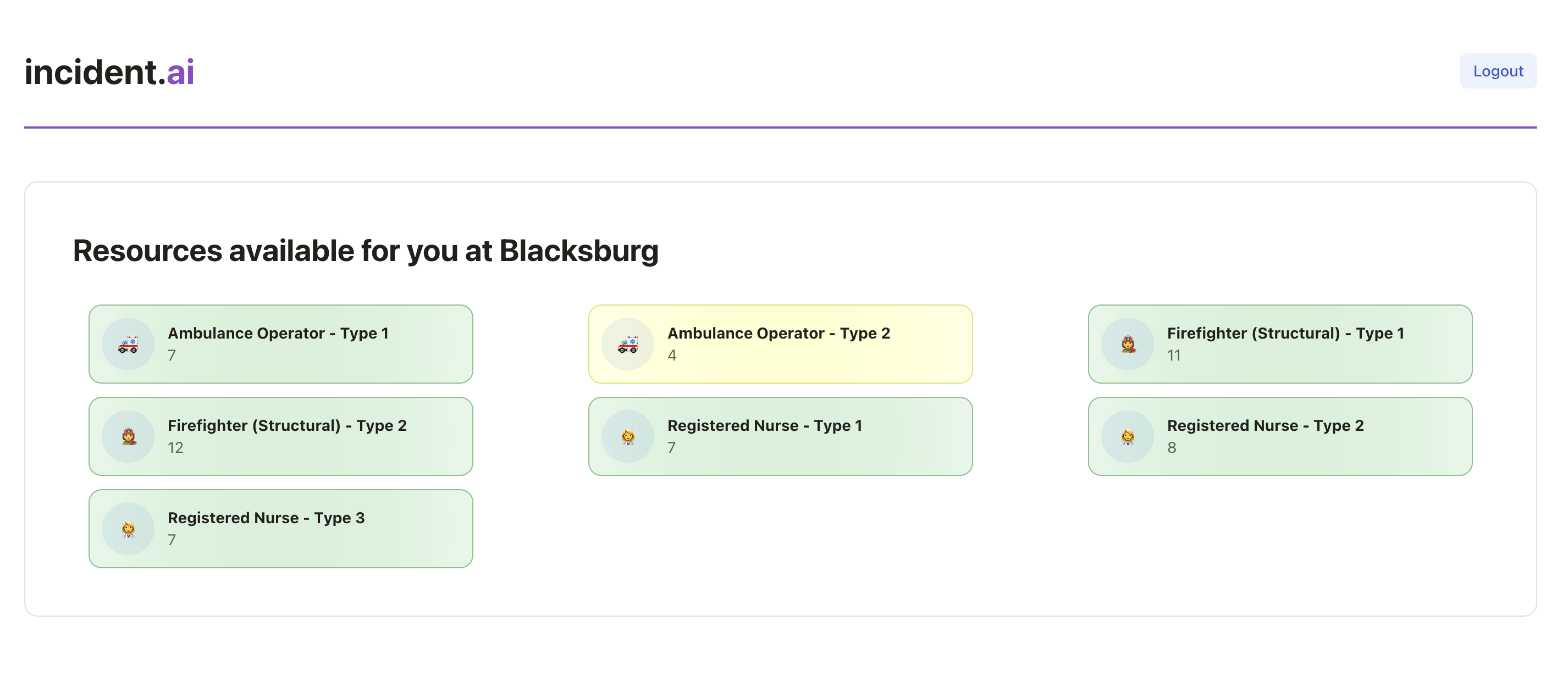
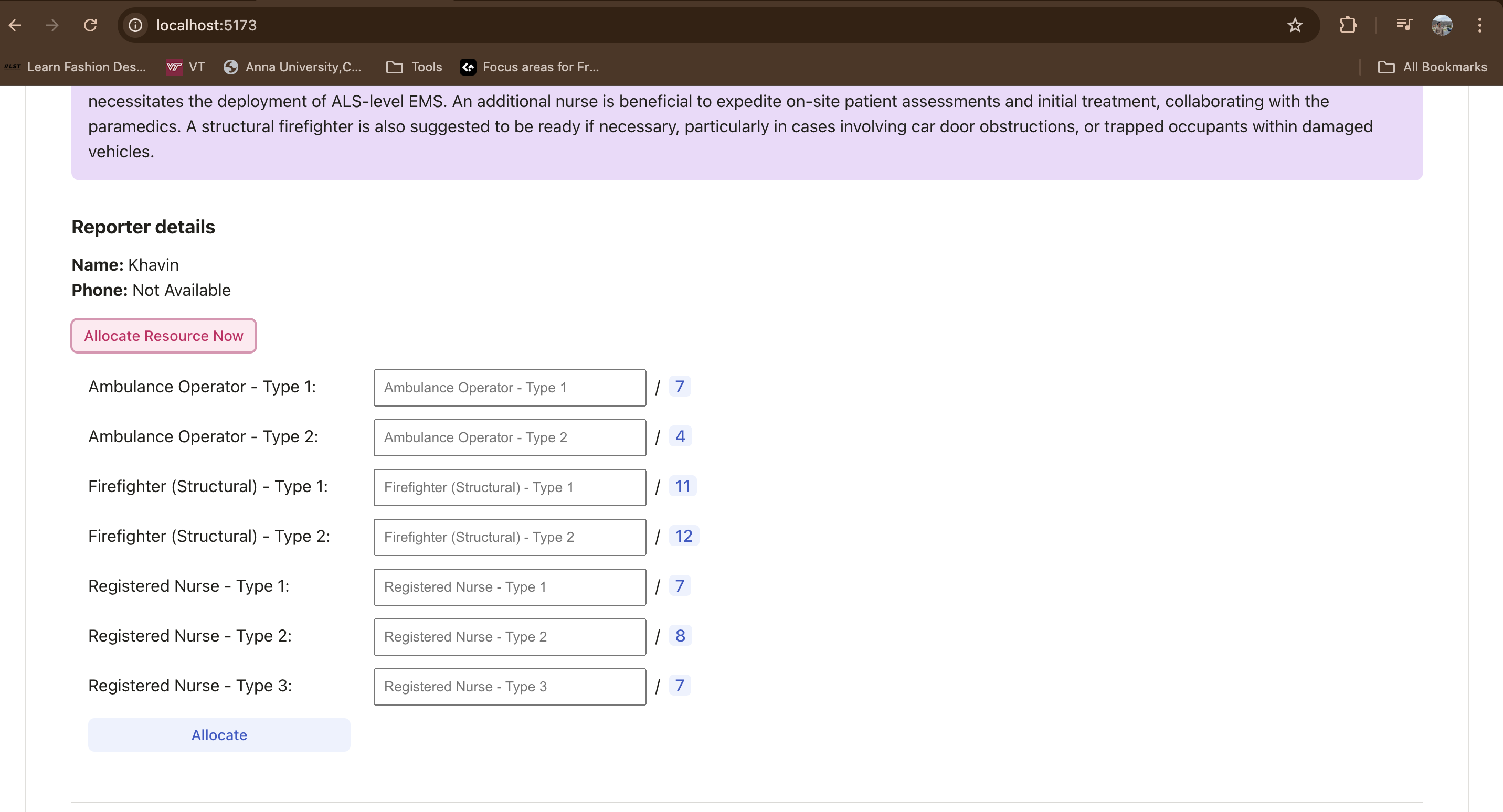
Resource allocation and availability
-
Inspiration
Our journey began with a simple question: How are emergency situations handled on our campus? We regularly receive VT alerts during emergencies, but we wondered about the processes behind these notifications. What if we could enhance reporting with images? How are different departments assigned tasks? How do they determine if they have sufficient resources within the county, and how are these resources allocated? These questions led us to look deeper. We explored the world of emergency management, learning about multiple levels of response and even studying FEMA protocols. Through this research, we identified gaps in current systems and saw an opportunity to make a difference. This led us to create IncidentAI. It's an app that helps report emergencies and manage resources. We wanted to build a system that could:
- Understand emergencies from text or pictures
- Know where the emergency is happening
- Use Google Generative AI to suggest which departments should help
- Recommend what resources are needed
- Usage of resource typing provided by NIMS (National Incident Management System)
What it does
IncidentAI is an innovative application that revolutionizes emergency response management:
- Incident Reporting: Users can report emergencies through text descriptions or by uploading images.
- Location Tracking: The app captures the user's location for precise incident mapping.
- Situation Analysis: Utilizing Google Generative AI, IncidentAI analyzes the reported information to assess the severity and type of the incident.
- Resource Recommendation: Based on the analysis, the system suggests the number and types of first responders that should respond. The first responders will be categorised based on NIMS resource typing standards. Usage of NIMS resource typing standards removes ambiguity out of the picture.
- Resource Allocation: IncidentAI recommends the specific resources required for the situation, ensuring efficient allocation.
- Real-time Updates: The system provides ongoing updates to all relevant parties, improving coordination and response times.
How we built it
We developed IncidentAI using a robust tech stack:
- Google Generative AI: For intelligent analysis of incident reports and resource allocation recommendations.
- MongoDB Atlas: As our scalable database solution for storing incident data and resource information.
- PropelAuth: To handle secure admin authentication in both frontend and backend.
- RESTful APIs: To ensure smooth communication between different components of our system.
- React.js: For building a responsive and user-friendly front-end interface.
- Node.js and Express.js : To create a powerful and efficient back-end.
- Geolocation API: To accurately capture and track incident locations.
Challenges we ran into
- Integrating Google Generative AI to accurately interpret diverse incident reports and images.
- Developing a reliable algorithm for resource allocation across different types of incidents.
- Balancing the need for quick responses with the accuracy of AI-generated recommendations.
- Creating a user interface that remains intuitive and easy to use in high-stress situations.
Accomplishments that we're proud of
- Successfully integrated Google Generative AI to provide intelligent incident analysis and resource recommendations.
- Developed a user-friendly interface that simplifies complex emergency reporting processes.
- Created a scalable system capable of handling multiple concurrent incidents across various locations.
- Designed an adaptive resource allocation system that considers real-time availability and incident severity.
What we learned
- The complexities of emergency response systems and the importance of efficient resource management.
- How to apply cutting-edge AI technologies to real-world emergency scenarios.
- The critical balance between automated systems and human oversight in emergency management.
- The importance of user-centric design in high-stress applications.
- The potential of AI to enhance decision-making in time-sensitive situations.
What's next for IncidentAI
- Collaborating with local authorities and FEMA to refine our resource allocation recommendations and ensure alignment with established protocols.
- Expanding our platform to integrate with existing emergency management systems and VT alert mechanisms.
Built With
- express.js
- googlegenerativeai
- javascript
- mongodbatlas
- node.js
- react
- restfulapi

Log in or sign up for Devpost to join the conversation.