-
-
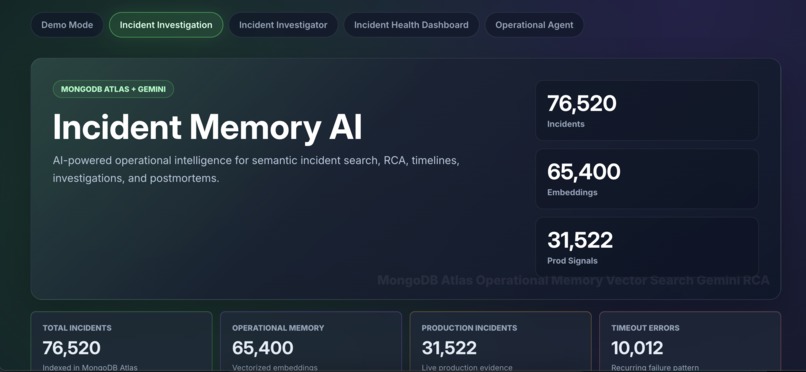
Incident Investigation Agent
-
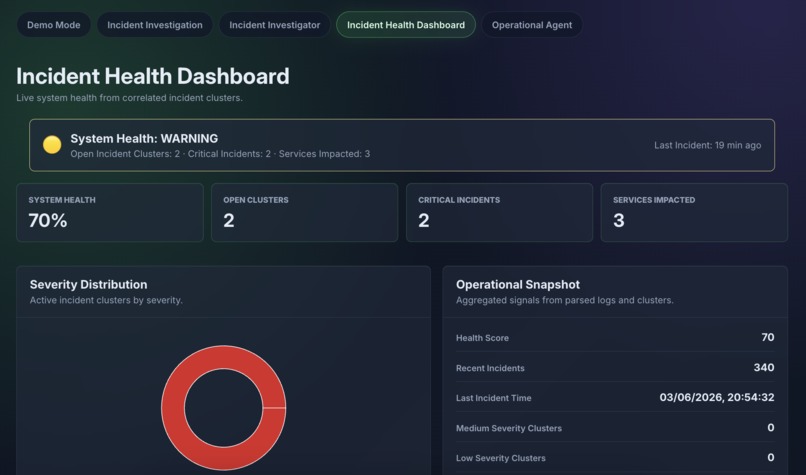
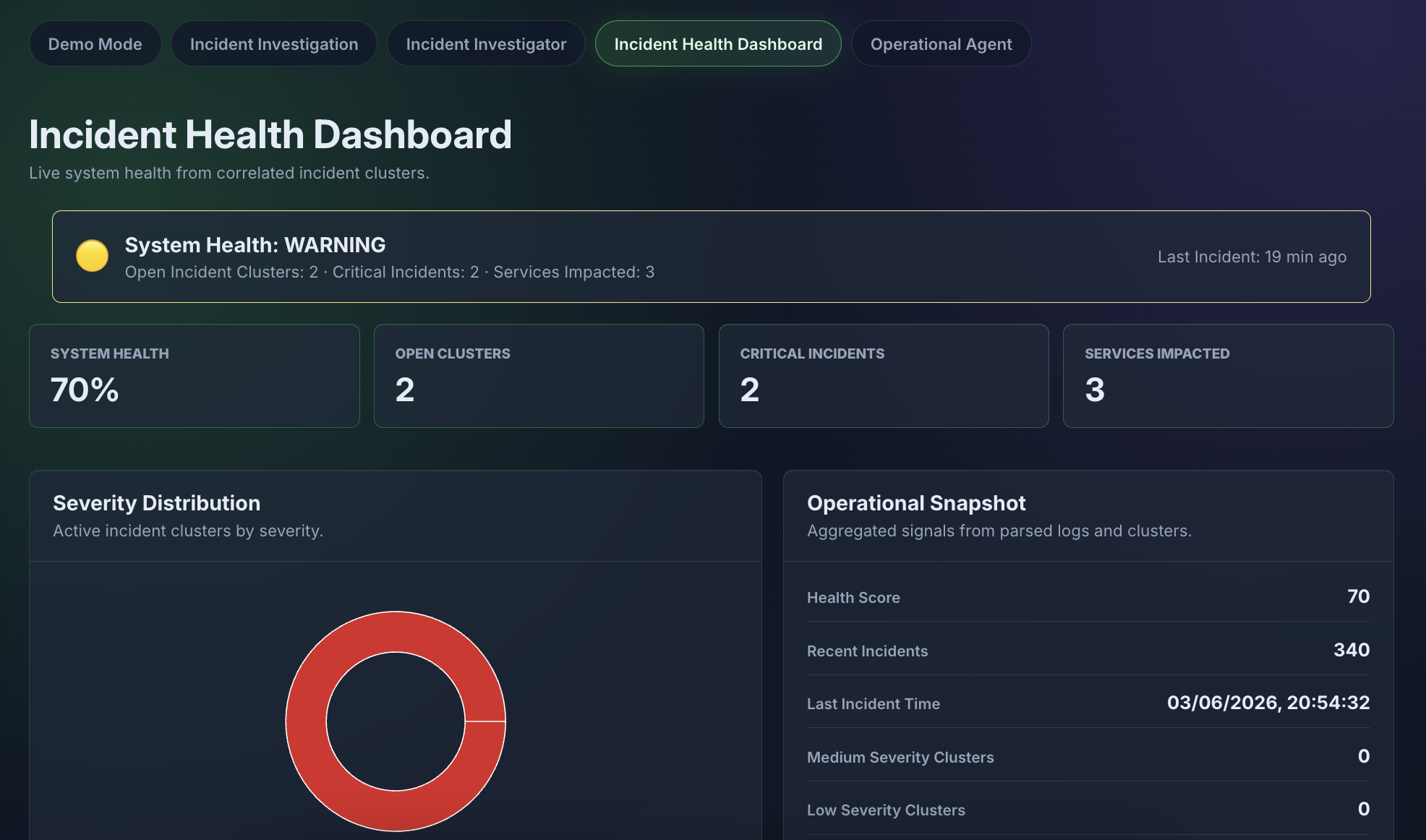
Incident Health Dashboard
-
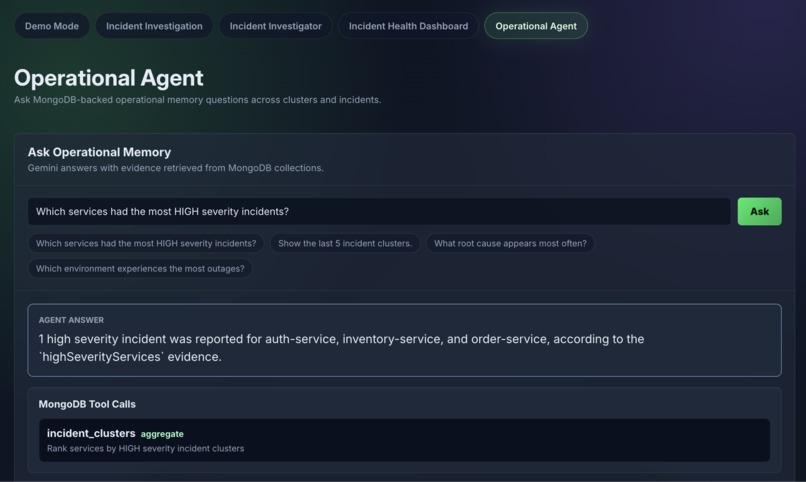
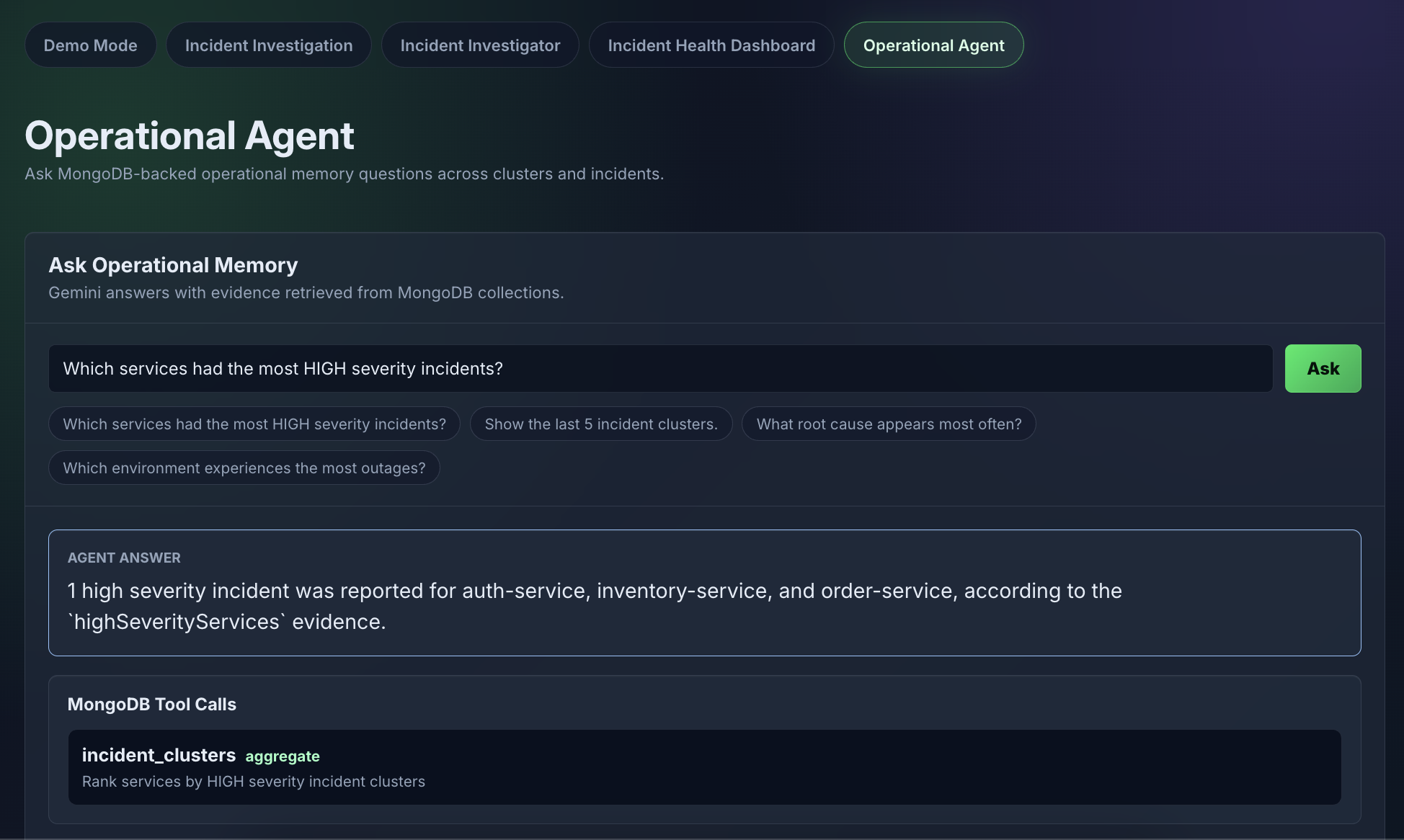
Ask Operational Agent
-
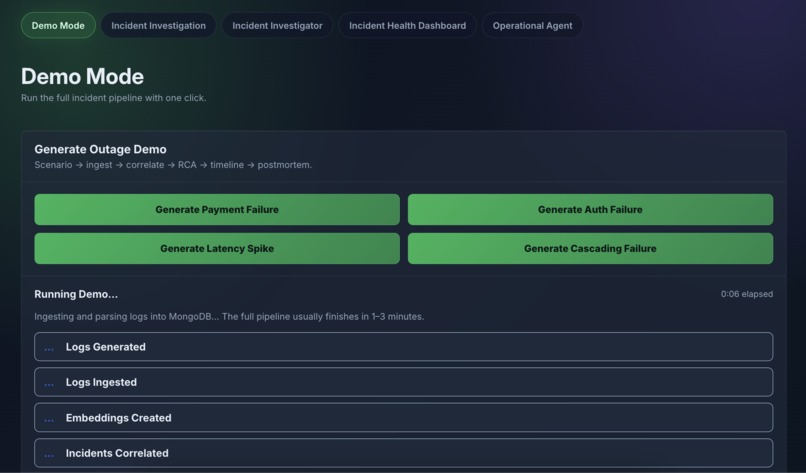
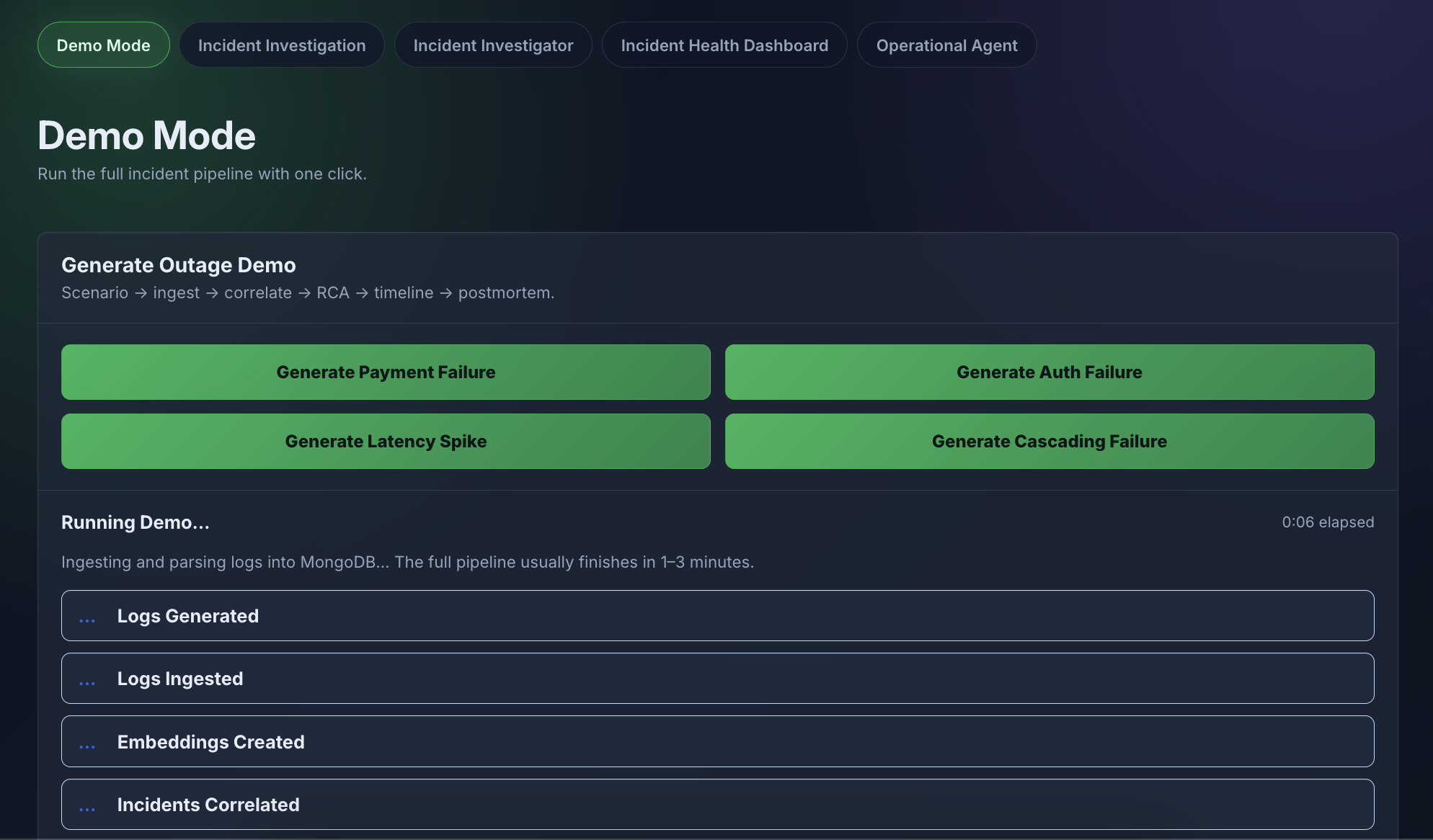
One-Click Outage Generation for demo
-
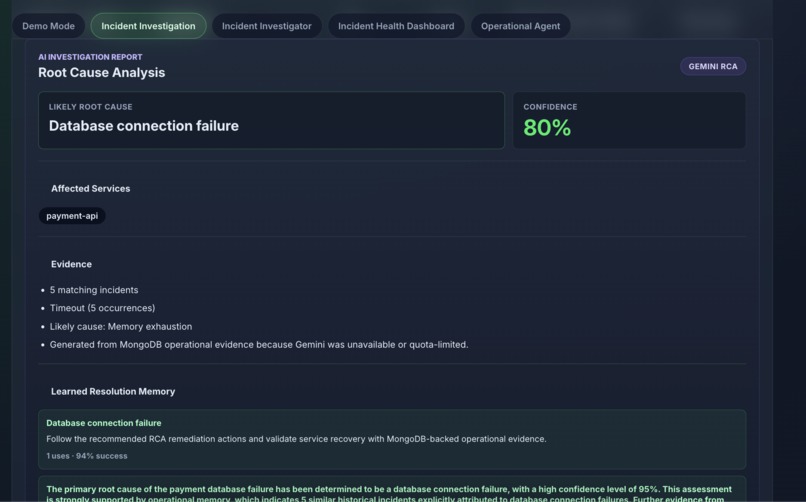
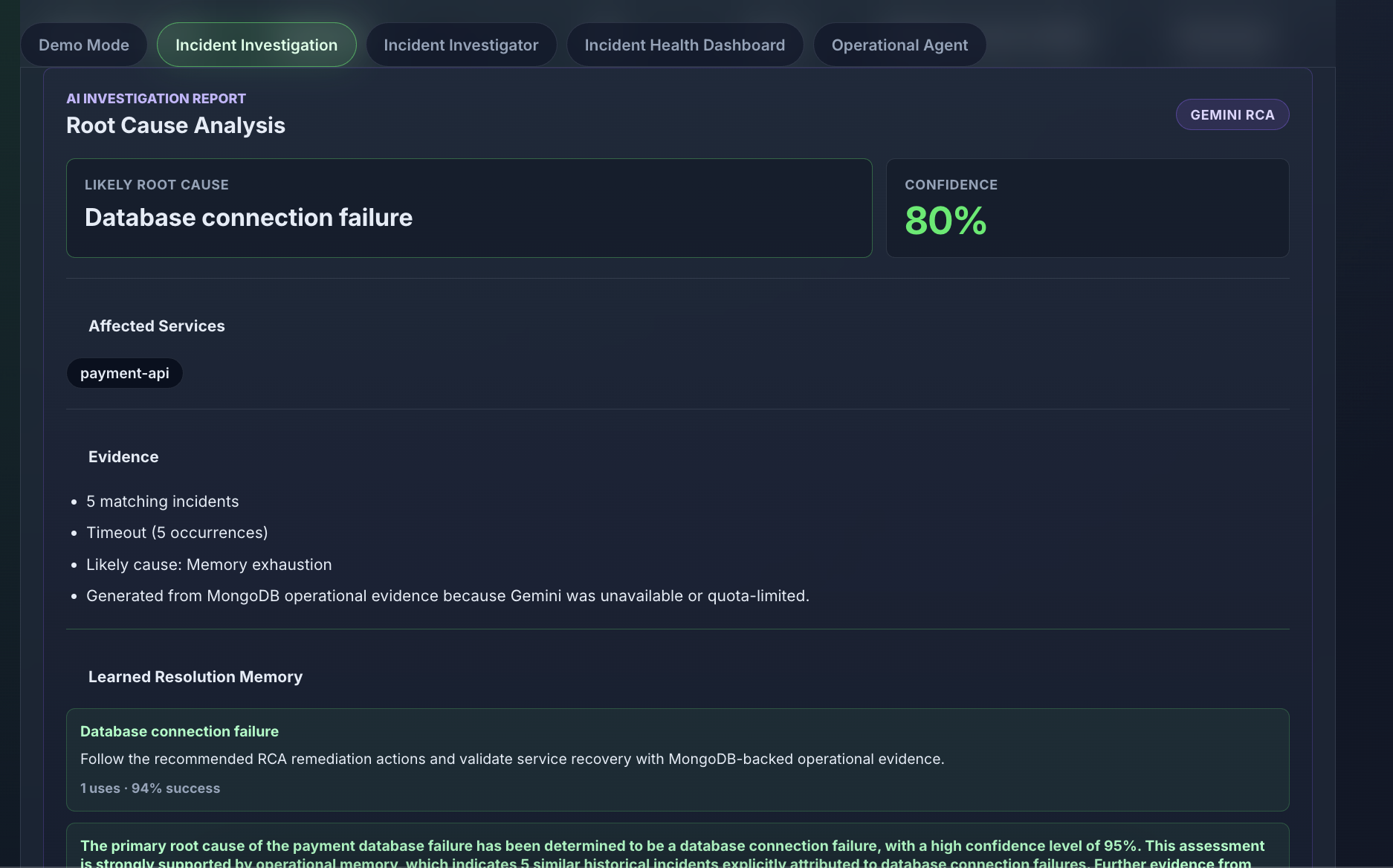
RCA and postmortem report generated by Agent
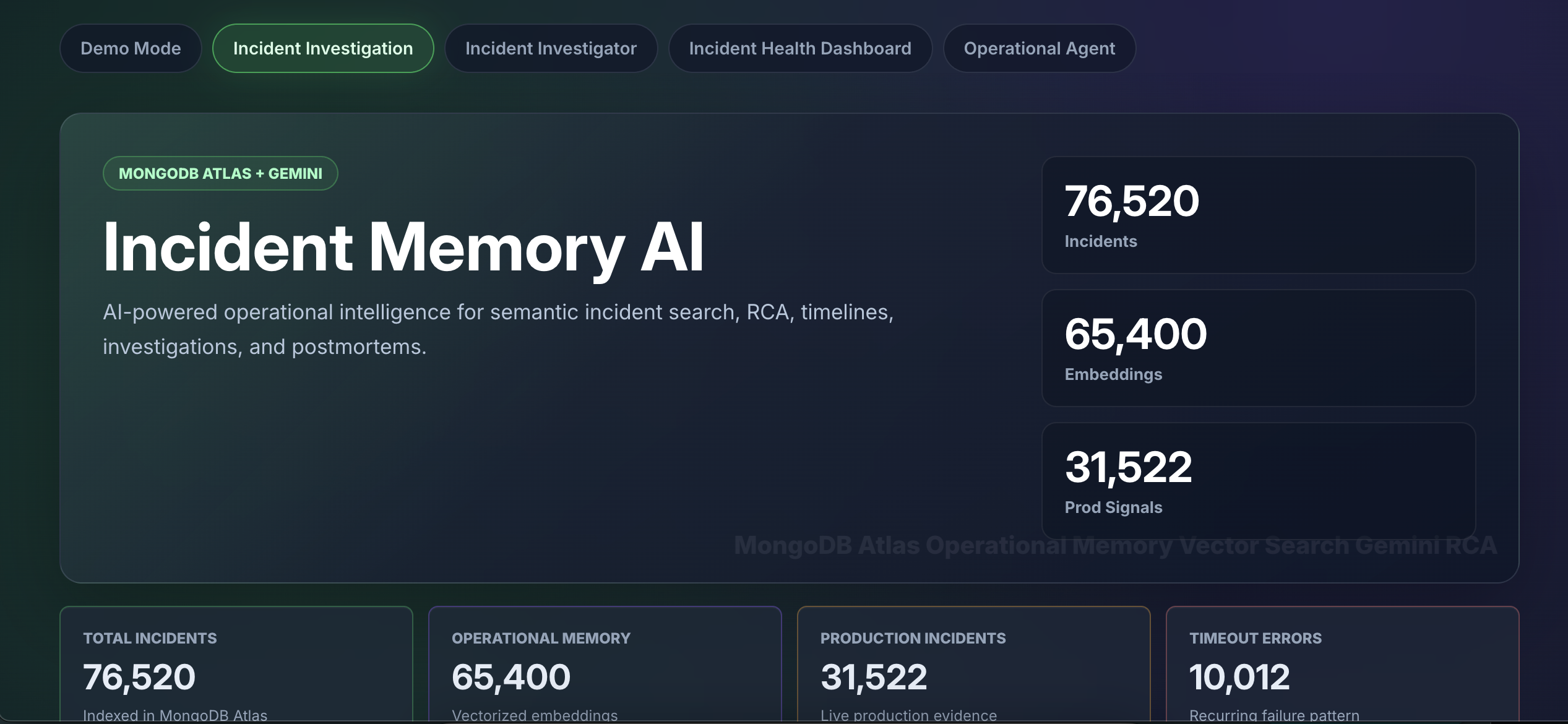
Incident Memory AI
Inspiration
Every engineering team has experienced the same frustrating scenario:
A production outage occurs.
Alerts start firing.
Engineers jump between dashboards, logs, tickets, Slack threads, and monitoring tools trying to answer a simple question:
"Have we seen this before?"
Ironically, the organization may have already solved the exact same problem weeks or months earlier, but that knowledge is buried inside logs, tickets, postmortems, and tribal memory.
We wanted to build a system that transforms incidents into organizational knowledge.
Instead of treating outages as isolated events, we asked:
What if every incident became searchable operational memory that could help solve future incidents automatically?
That idea became Incident Memory AI.
What It Does
Incident Memory AI is an AI-powered operational intelligence platform that helps engineering teams investigate production incidents using:
- MongoDB Atlas as an Operational Memory Platform
- MongoDB Atlas Vector Search
- MongoDB MCP (Model Context Protocol)
- Google Gemini
- Agentic Investigation Workflows
The platform automatically:
- Generates realistic outage scenarios
- Ingests and enriches incident logs
- Correlates related failures into incident clusters
- Retrieves similar historical incidents using semantic search
- Performs AI-powered Root Cause Analysis (RCA)
- Builds incident timelines
- Generates postmortems
- Answers operational questions through a MongoDB-powered agent
How We Built It
Synthetic Traffic Service
We created a FastAPI-based synthetic traffic generator capable of producing realistic outage scenarios including:
- Payment Database Failures
- Authentication Failures
- Latency Spikes
- Cascading Service Failures
This allows us to simulate production incidents and create realistic operational datasets.
Ingestion & Enrichment Pipeline
Generated logs are ingested into MongoDB Atlas and enriched with:
- Error types
- Root causes
- Resolution actions
- Environment metadata
- Service ownership
The platform converts raw telemetry into structured operational knowledge.
Operational Memory Layer
MongoDB Atlas serves as the central operational memory platform.
Collections include:
- raw_logs
- parsed_logs
- synthetic_incidents
- incident_clusters
- postmortems
Rather than storing incidents as isolated records, we build a continuously growing knowledge base of operational history.
Semantic Incident Retrieval
Using sentence embeddings and MongoDB Atlas Vector Search, the platform can retrieve similar historical incidents from tens of thousands of incident records.
Engineers can search using natural language queries such as:
- "payment database failure"
- "checkout timeout"
- "authentication token issue"
and immediately retrieve relevant historical incidents.
Incident Correlation Engine
Individual failures rarely occur in isolation.
We built an incident correlation engine that groups related failures based on:
- Time windows
- Root causes
- Services
- Environments
This produces outage-level incident clusters that provide a much more realistic view of system failures.
MongoDB MCP Integration
One of the most exciting parts of the project is our MongoDB MCP integration.
We built an Operational Agent that allows Gemini to reason over operational memory stored in MongoDB Atlas.
The agent can answer questions such as:
- Which services experience the most HIGH severity incidents?
- What root cause appears most frequently?
- Which environments are most unstable?
- Show the latest incident clusters.
Instead of manually writing queries, engineers can interact with operational data using natural language.
AI-Powered Investigation Agent
We also built an Investigation Agent that performs multi-step incident analysis.
The workflow combines:
- Vector Search
- Operational Memory Retrieval
- Incident Cluster Analysis
- Timeline Reconstruction
- MongoDB Evidence Extraction
- Gemini Reasoning
The result is a grounded investigation report that includes:
- Root Cause
- Confidence Score
- Evidence
- Recommended Actions
AI RCA & Postmortems
Incident Memory AI automatically generates:
Root Cause Analysis
Including:
- Root cause identification
- Confidence scoring
- Supporting evidence
- Remediation recommendations
Postmortems
Including:
- Executive Summary
- Timeline
- Root Cause
- Impact Assessment
- Resolution Details
- Action Items
Challenges We Faced
One of the biggest challenges was moving beyond simple semantic search.
We wanted the platform to reason over incidents, not just retrieve them.
This required:
- Building operational memory structures
- Correlating failures into clusters
- Grounding AI responses using MongoDB evidence
- Designing investigation workflows that combine retrieval, aggregation, and reasoning
Another challenge was creating realistic incident scenarios and ensuring that generated incidents behaved like real production outages.
What We Learned
During development we learned:
- How to use MongoDB Atlas as an operational memory platform
- How Vector Search can dramatically improve incident retrieval
- How MCP enables natural-language interaction with operational data
- How agentic workflows can improve incident investigation
- How grounding AI systems with operational evidence increases trust and accuracy
Impact
Incident Memory AI transforms incident response from:
Searching Logs → Searching Knowledge
By combining MongoDB Atlas, Vector Search, MCP, and Gemini, we created a platform where every incident makes the system smarter.
The result is faster investigations, lower Mean Time To Resolution (MTTR), and a continuously growing operational memory that helps engineering teams solve incidents more efficiently.


Log in or sign up for Devpost to join the conversation.