-
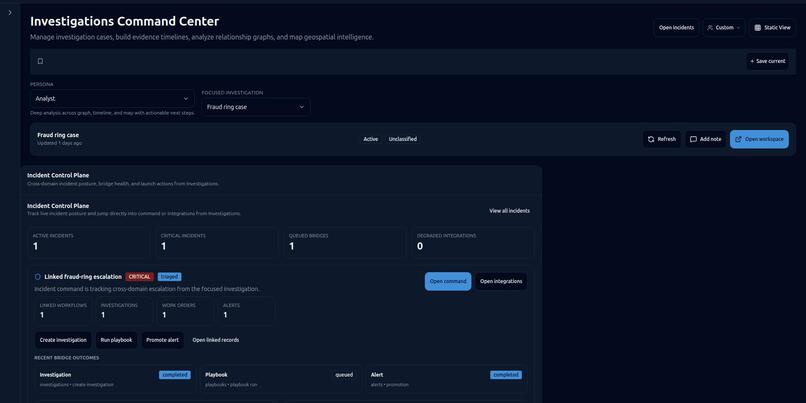
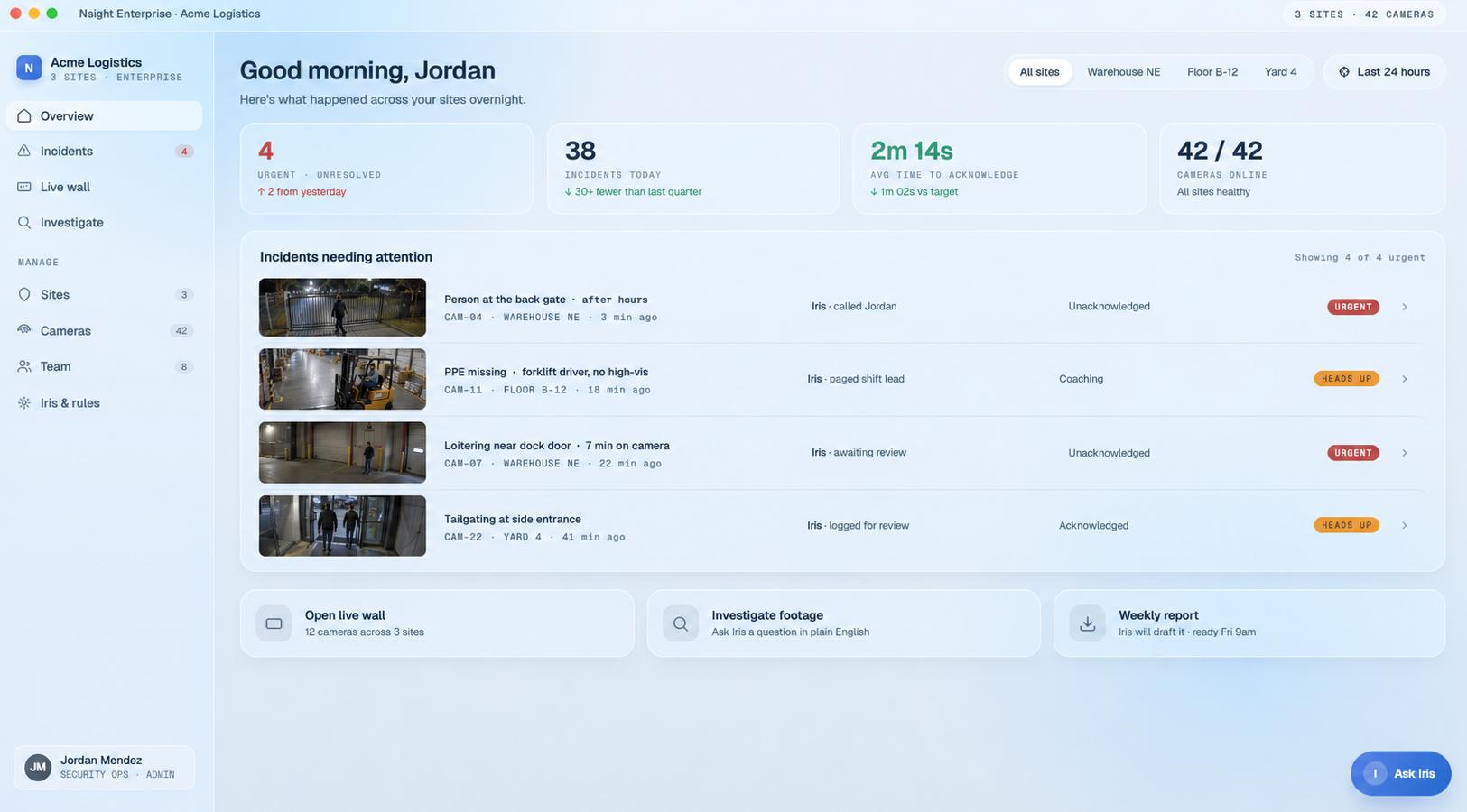
Incident Atlas brings surveillance events, photos, files and documents into one workspace for structured incident reconstruction.
-
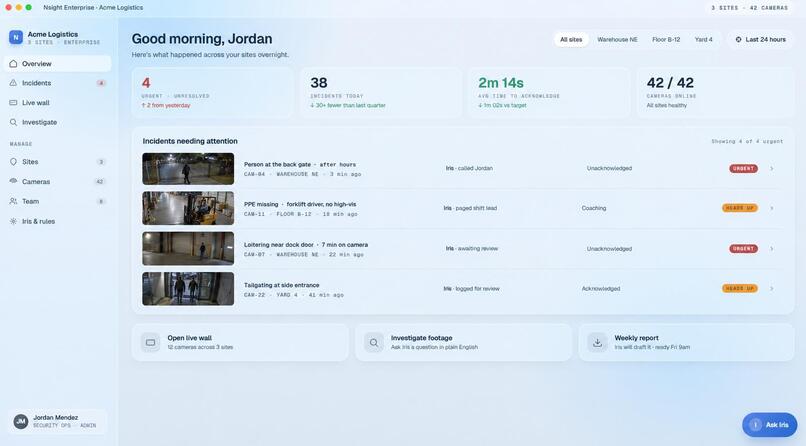
Designed around the UGREEN NAS environment, connecting stored files and incident records to a focused investigation workflow.
-
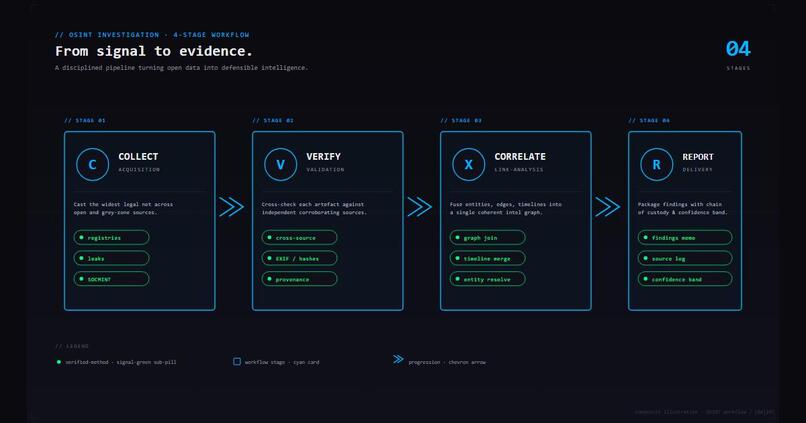
The evidence model links each claim to supporting, contradicting, corroborating, related or unknown sources.
Incident Atlas
Every incident has a story. Every claim needs evidence.
The problem
When an incident occurs, the evidence rarely lives in one place.
A camera may capture an event. A photograph may show the aftermath. A maintenance record may describe an earlier fault. An incident report may contain a conflicting account.
On a NAS, these records can exist across surveillance, photos, files and documents. Finding each item is one challenge. Understanding how they relate—and what they actually establish—is another.
We built Incident Atlas to address that gap.
What it does
Incident Atlas is an AI NAS Skill for evidence-backed incident reconstruction.
A user describes an incident, specifies a location and time range, and Incident Atlas coordinates UGREEN's registered expert agents to retrieve relevant surveillance events, camera evidence, photos, files and documents.
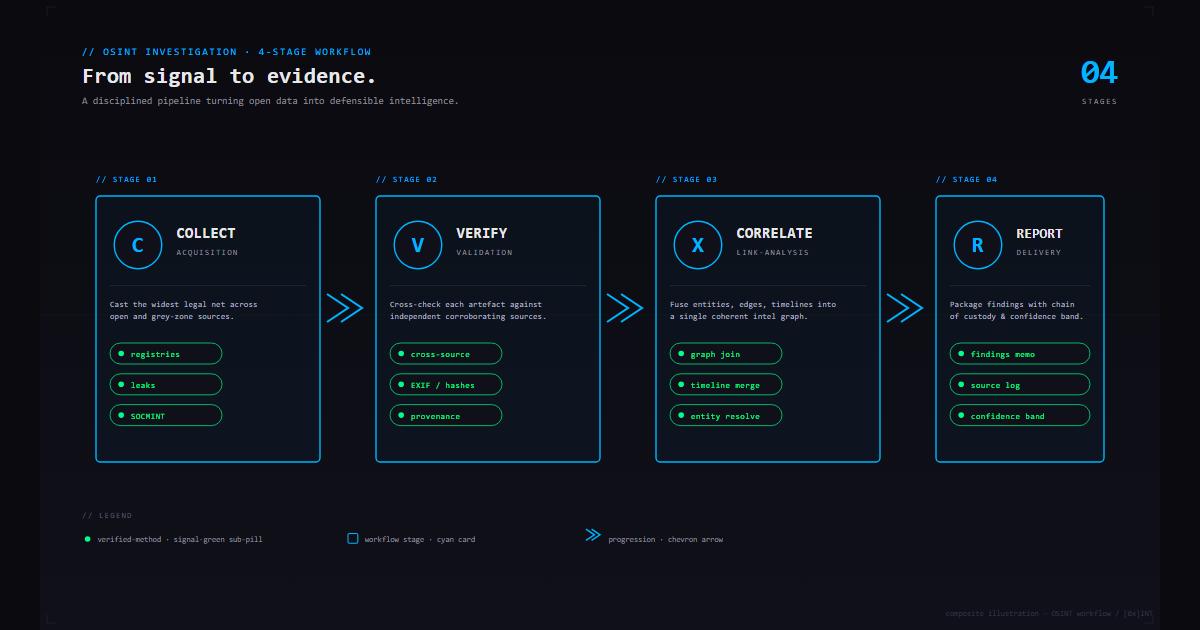
It then organizes the findings into a chronological reconstruction and a structured claim-to-evidence model.
Each claim is associated with one or more evidence relationships:
- Supports: A source provides evidence for the claim.
- Contradicts: A source conflicts with the claim.
- Corroborates: An independent source supports the same observation.
- Related: A source is relevant but does not establish the claim.
- Unknown: The available evidence cannot establish the claim.
The resulting report distinguishes documented observations from interpretations, highlights conflicting records and identifies missing evidence.
Most importantly, Incident Atlas does not treat a plausible connection as proof. Two events occurring close together in time do not automatically establish causation.
What makes it different
Incident Atlas is designed around evidence reconstruction rather than information retrieval.
Instead of generating an unconstrained narrative directly from search results, it organizes claims and their relationships to original sources before producing the report.
The claim-to-evidence model is the central innovation: it makes the reasoning behind a reconstruction inspectable and gives uncertainty an explicit place in the result.
How we built it
We developed Incident Atlas using UGREEN's Uliya Skill Development Kit.
The Skill uses registered UGOS expert agents for surveillance, photos, filesystem operations, document analysis and report saving. A parent Skill coordinates the investigation and defines how retrieved information should be organized.
We designed a structured evidence model containing claims, source references, timestamps, relationships, conflicts and unresolved questions. The workflow is designed to preserve original evidence and use approval-controlled report saving.
The initial Skill package was checked with UGREEN's bundled static checker. It passed static validation. Real-device execution and cross-expert source-reference preservation remain to be tested during finalist NAS access.
What we learned and what remains challenging
The most important lesson was that retrieving information is not the same as verifying a conclusion.
A camera event, a maintenance note and a delivery record may be related without proving who caused an incident. Designing Incident Atlas required us to distinguish direct evidence, independent corroboration, contextual relationships and unsupported conclusions.
Another challenge is preserving source identity across specialist-agent handoffs. The Starter Kit documents the necessary capabilities, but actual runtime behavior and returned evidence schemas must be validated on a UGREEN AI NAS.
We are approaching that challenge deliberately: build from supported capabilities, preserve uncertainty, and never claim more than the available evidence establishes.
What's next
Our next milestone is real-device validation: testing cross-expert orchestration, source-reference preservation, contradiction detection and report generation against controlled incident scenarios.
Incident Atlas aims to make incident reconstruction not just faster, but more traceable, transparent and evidence-grounded.
Built With
- ai-nas
- artificial-intelligence
- document-analysis
- evidence-analysis
- information-retrieval
- multi-agent-systems
- python
- surveillance
- ugreen-ugos
- uliya-skill-development-kit
