-
-
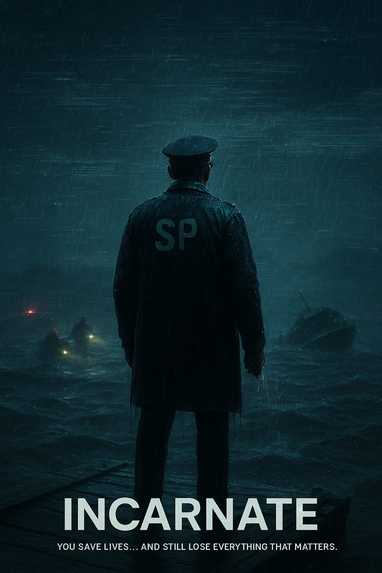
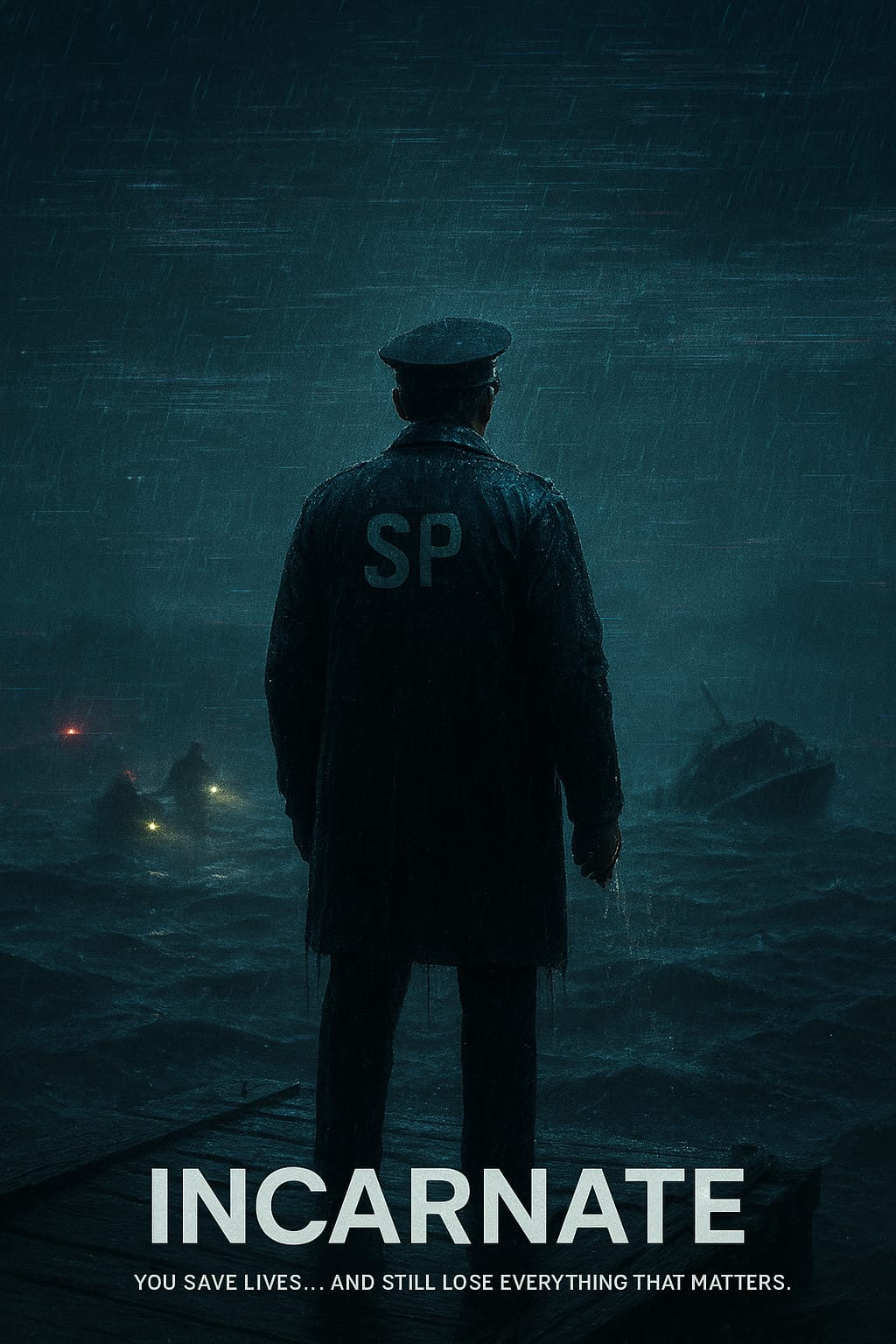
#poster
Inspiration
We were inspired by the "gloomy and disastrous" mood of classic sci-fi noir and the "dramatic and chaotic" energy of a "disaster" film. Our goal was to push generative AI beyond creating simple, "organized" shots and see if it could handle a complex, "emotional" narrative with a "relentless" pace.
We wanted to know: Can an AI truly follow a "Consistency Anchor"? Can it understand "dramatic camera movements"? Can it create "pressure" and "chaos" on command? This project was an attempt to find out.
What it does
How we built it
INCARNATE is not just a film; it's a "hybrid" workflow. The "build" was a collaboration between the INCARNATE SCRIPT.pdf and a "Director" (the human user) guiding a suite of AI tools.
AI Co-Writer (LLM): We used an LLM to act as a "Director of Photography." We fed it the script and then iteratively built a shot-list of 8-second "prompt blocks."
The Prompting Process: We didn't just ask for "a police officer." We directed the AI, specifying:
Camera: "dramatic and chaotic cam movements", "shaky follow cam", "thriller push-in".
Lighting: "chaotic lighting", "strobing flashbulbs", "face hidden in relentless shadow".
Mood: "dramatic", "pressured", "venomous", "emotional".
AI Video (The "Camera"): These prompts were designed for AI video generators (like Veo or Runway) to create the raw footage.
AI Audio (The "Foley/Casting"): We designed prompts for AI audio tools (like ElevenLabs and Suno) to generate the "quiet, venomous" dialogue, the "relentless rain", and the "dark, tense, orchestral violins".
Human Editor (The "Director"): The "chaotic" AI clips are exported to a "Mac" for final assembly in an NLE (like Final Cut Pro). This is where the human hand adds the final pacing, sound design, and "emotional" timing.
Challenges we ran into
Character Consistency: Our biggest challenge. The AI repeatedly changed the race of our protagonist until we implemented the strict "Consistency Anchor".
Bypassing Policy Filters: How do you film a "disaster" when the AI is afraid of "dramatic" situations? We had to constantly "redo" prompts to find language that was "safe" but still "chaotic".
Controlling "Chaos": The AI hates "camera shaking". It loves stable, "organized" shots. Forcing it to be a "shaky" handheld "follow cam" took repeated, "dramatic" instructions.
No "Memory": The AI cannot see its last shot. We had to re-anchor the entire visual style, the "NIGHT" setting, and the "minimal sci-fi" theme in every single block.
Accomplishments that we're proud of
Solving Character Consistency with the "Consistency Anchor": This was our biggest breakthrough. The AI repeatedly changed the protagonist's race. We solved this by developing the "Consistency Anchor"—a strict, repeatable description ("the same 'young, commanding' Black man... 'in his uniform'... 'no showing off his body'") that we "anchored" to every prompt to force the AI to maintain continuity.
Engineering "True Chaos" (and Bypassing "Organized" AI): The user "dislike[d]" the AI's default "organized" shots. We are proud of forcing the AI to create a truly "dramatic and chaotic" "disaster" scene by engineering prompts with specific, professional filmmaking language:
"dramatic and thriller camera movements"
"strict follow cam"
"camera shaking"
"chaotic lighting"
"sudden, high-pressure" zooms
Successfully Navigating AI Safety Filters: This was a major "challenge". Our "disaster" scene was blocked for using words like "infant" and "panicked". We are proud of developing "clean" prompts that successfully implied the "dramatic" danger (e.g., "Pull them up!" instead of "Pull the girl up!") to get the shot approved without losing its "emotional" weight.
Establishing a Professional "Hybrid" Workflow: We didn't just use AI; we defined a clear, repeatable workflow. We accomplished this by separating the "AI Generation" (for clips and audio layers) from the "Human Director" role (editing, sound mixing, and pacing on a "Mac").
Translating "Emotion" into Code: We successfully translated the script's abstract "emotions" into actionable prompts. We found ways to show "pressure" (with "shaky" cameras), "venomous" (with a "quiet" voice and "dissonant violins"), and "gloomy and disastrous" (with "relentless rain" and "oppressive" shadows).
What we learned
Prompting is Directing: You cannot be a passive observer. The AI will always default to a "clean" and "organized" shot. To create "chaos", you must force it with commands like "shaky", "disorienting," and "handheld".
The "Consistency Anchor" is Everything: The AI has no object permanence. It will change your actor in every shot. Our biggest breakthrough was the "Consistency Anchor"—a rule we added to every single prompt to remind the AI: "the "main protagonist" (the SP) must be the same "young, commanding" Black man... "in his uniform"... "no showing off his body".
The "Safe" Prompt: AI safety policies are a major creative hurdle. The AI would block prompts for our "disaster" scene because they included words like "panicked", "infant" , or "girl". We learned to write "clean" prompts (e.g., "Pull them up!" instead of "Pull the girl up!") to imply the danger without triggering the filter.
What's next for INCARNATE
We are now moving from the Hackathon phase to a full "AI and VFX Movie Production" pipeline.
Lock the Digital Cast & Crew: We will create "Digital Character Sheets" for our "SP" (the "Black man" "in his uniform") and our "Villain" (the "dark shade" "just standing") to streamline the "Consistency Anchor" process.
Build the "VCX" (VFX) Pipeline: We will use the "CHASE SEQUENCE" from Chapter 5 as our "VFX" testbed. This will allow us to master "dramatic and chaotic" physics and "disaster" elements, including:
"boots splashing through puddles" (Water/Physics).
"Lightning flashes through a shattered window" (Chaotic Lighting).
"He throws a metal drum behind him—it crashes, spilling sparks" (Physics/Explosion/Smoke).
Finalize the Audio Bible: We will generate the full "quiet, venomous" villain dialogue from Chapter 5 and the full "dark, tense, orchestral violins" theme.
Future Slate: Project 2 (Indian Mythology): As requested, our "next project will be based on Indian mythology". This will be an R&D project to test the AI's ability to generate "epic" and "dramatic" visuals beyond the "noir" aesthetic.
Built With
- chatgpt
- davinciresolve
- gemini
- imovie
- perplexity
- sora
- suno
- veo

