iNaturalist GO — Turning Citizen Science into an Adventure
Inspiration
Nature is everywhere, but how often do we actually stop to observe it?
As someone passionate about environmental education, biodiversity, technology, and citizen science, I've always been interested in how digital experiences can bring people closer to the natural world.
Platforms like iNaturalist already allow anyone to contribute valuable biodiversity observations. But I wanted to explore a different question:
What if discovering a new species felt as rewarding as unlocking an achievement in a game?
Inspired by the biodiversity of the Brazilian Cerrado, particularly around Goiânia, I created iNaturalist GO, an unofficial gamified redesign concept that transforms everyday wildlife observations into opportunities for exploration, learning, and scientific contribution.
What I Built
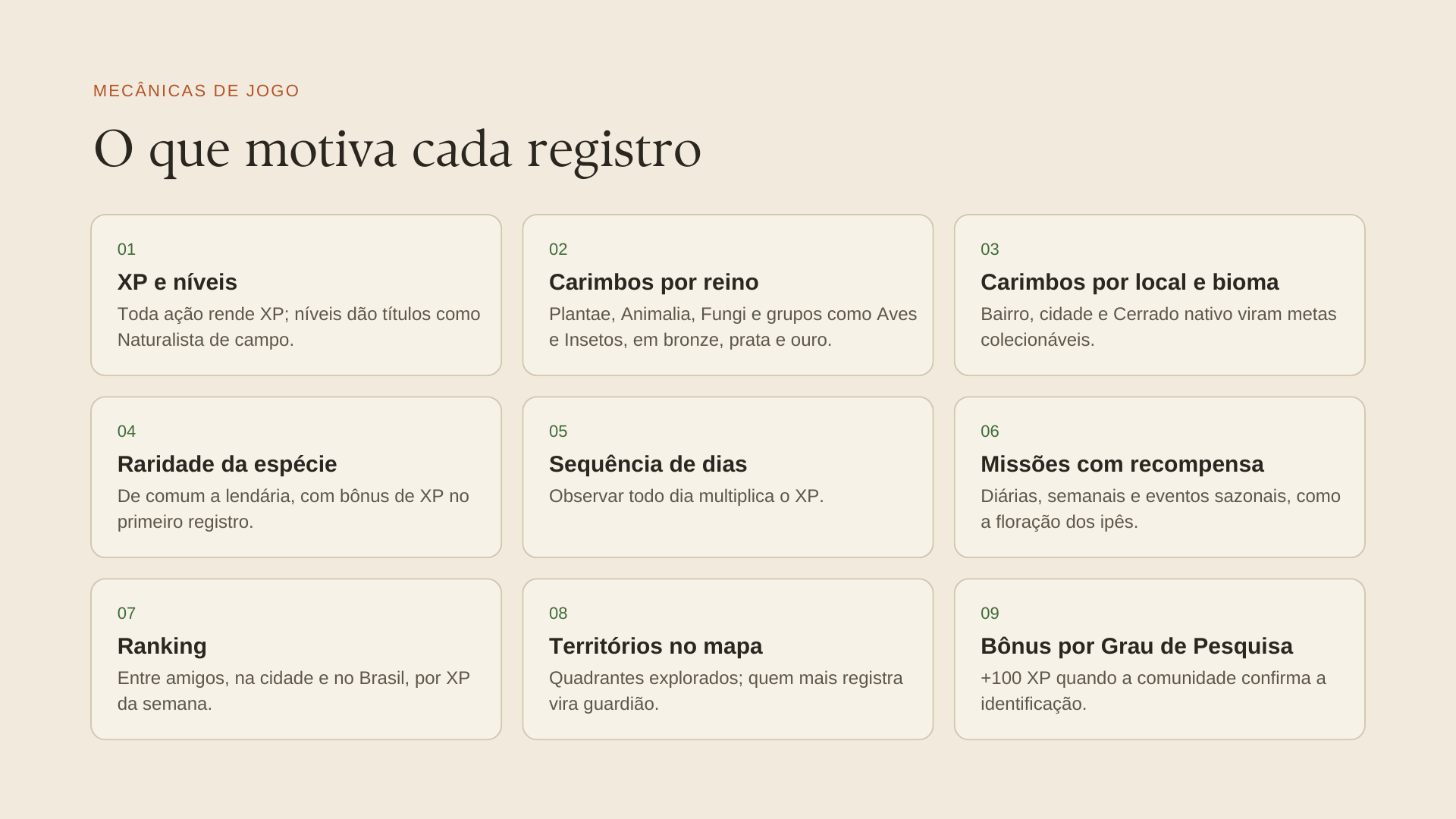
iNaturalist GO reimagines the citizen-science experience through a collection of interconnected game mechanics:
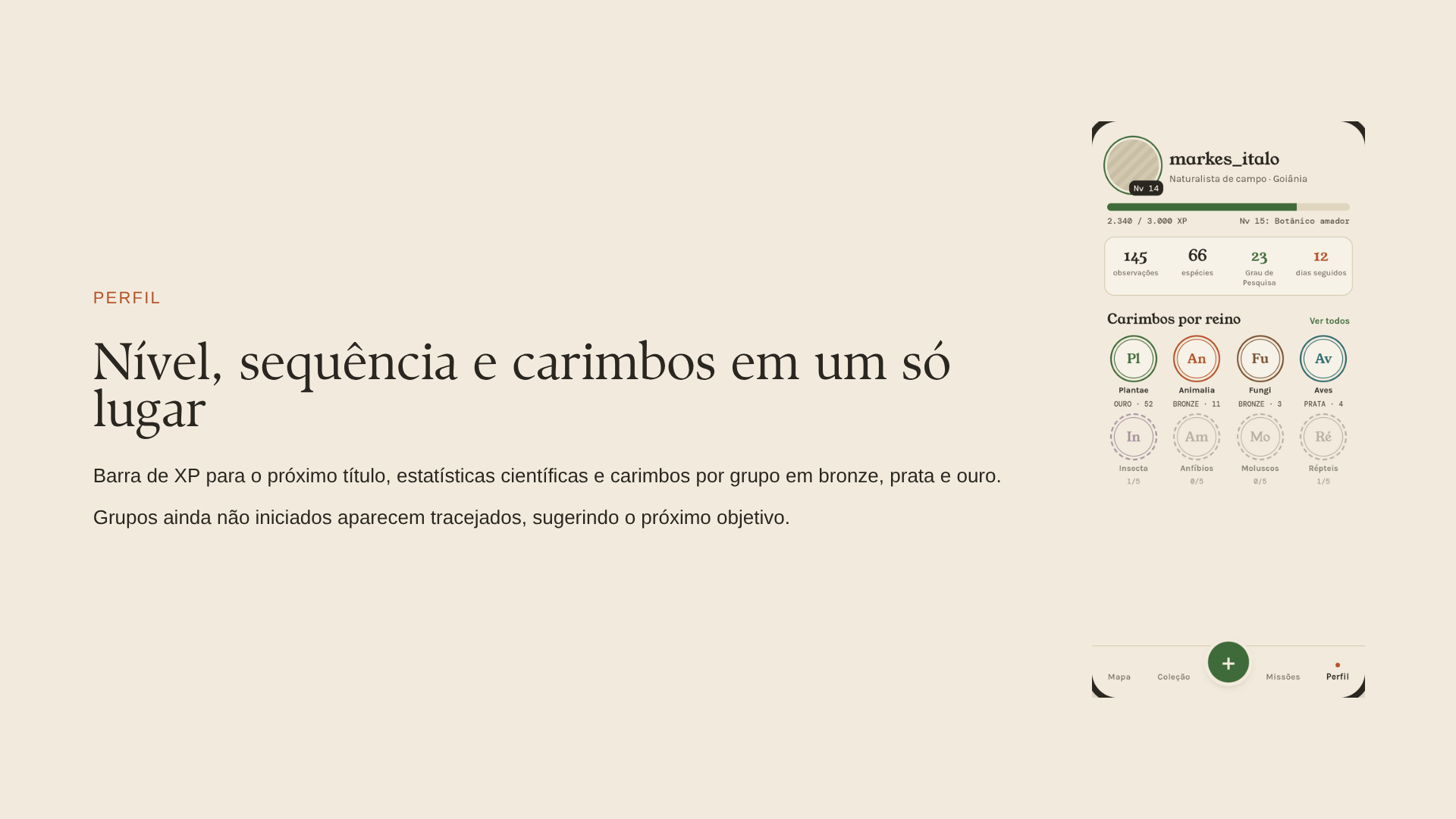
- XP and Levels: Earn experience points for observations, discoveries, and identification milestones.
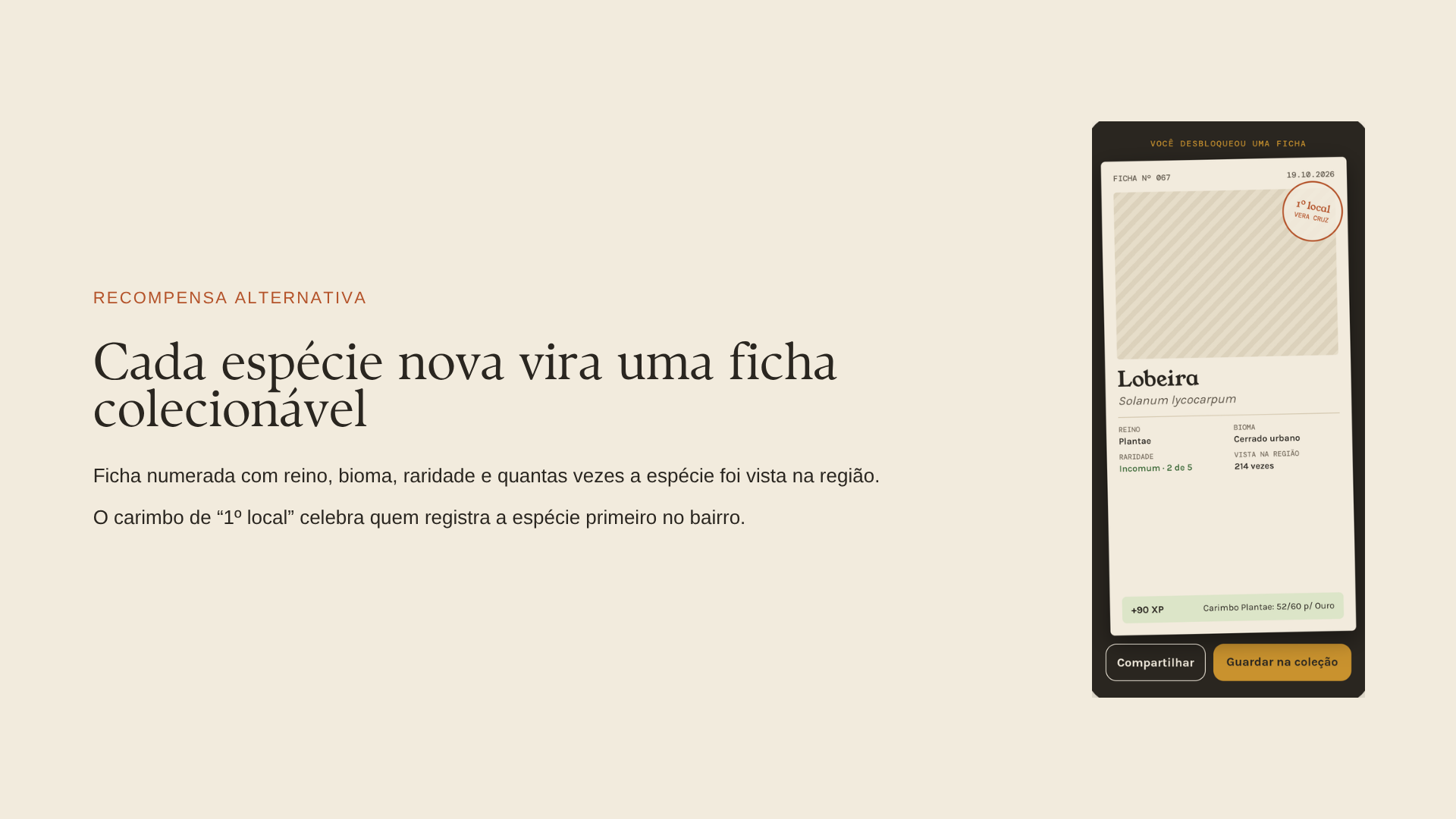
- Collectible Species Cards: Build a personal biodiversity collection inspired by botanical field notebooks and herbarium specimens.
- Achievements and Stamps: Unlock rewards based on taxonomic groups, neighborhoods, cities, and biomes.
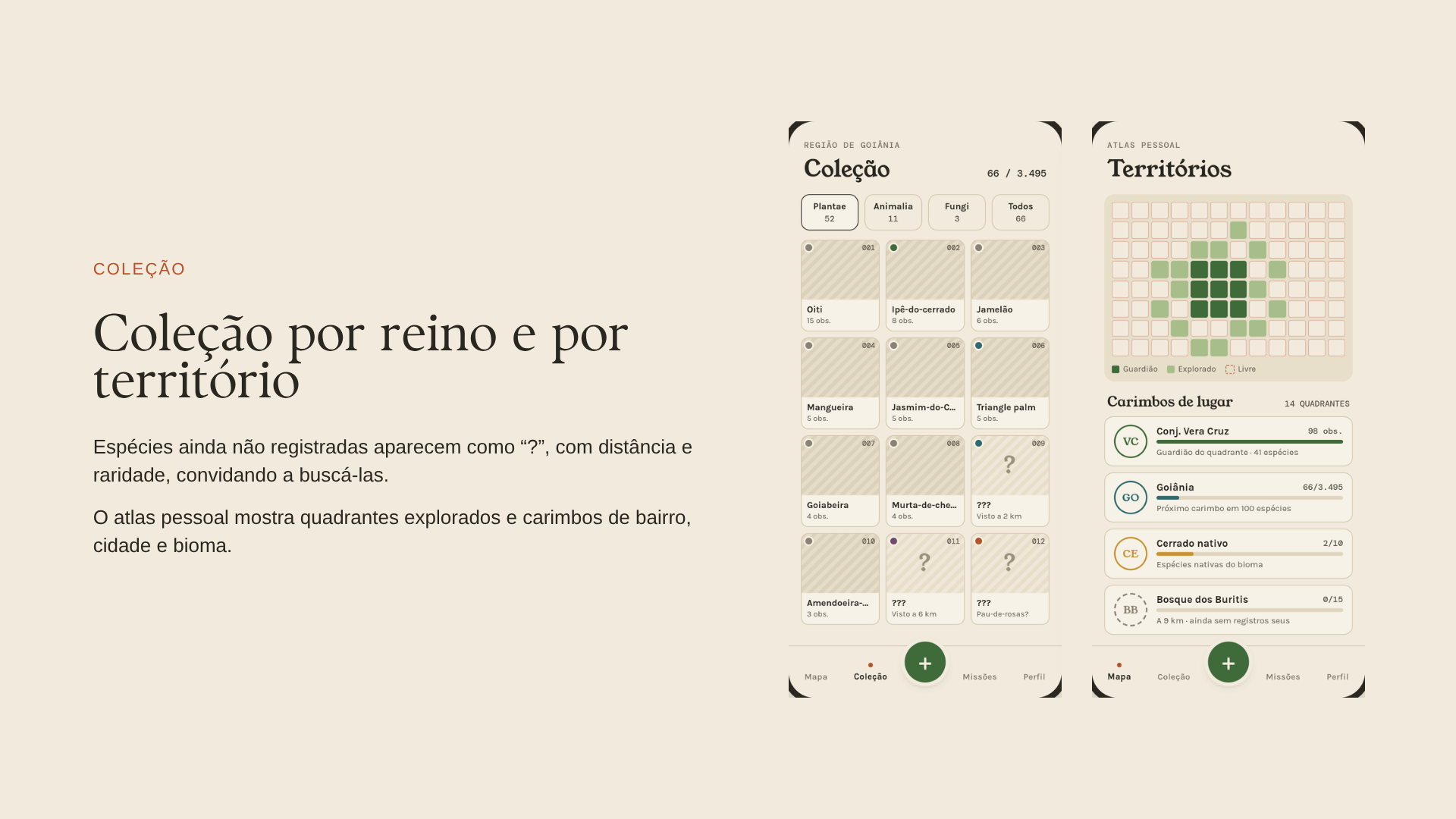
- Territorial Exploration: Discover new map areas and track exploration progress.
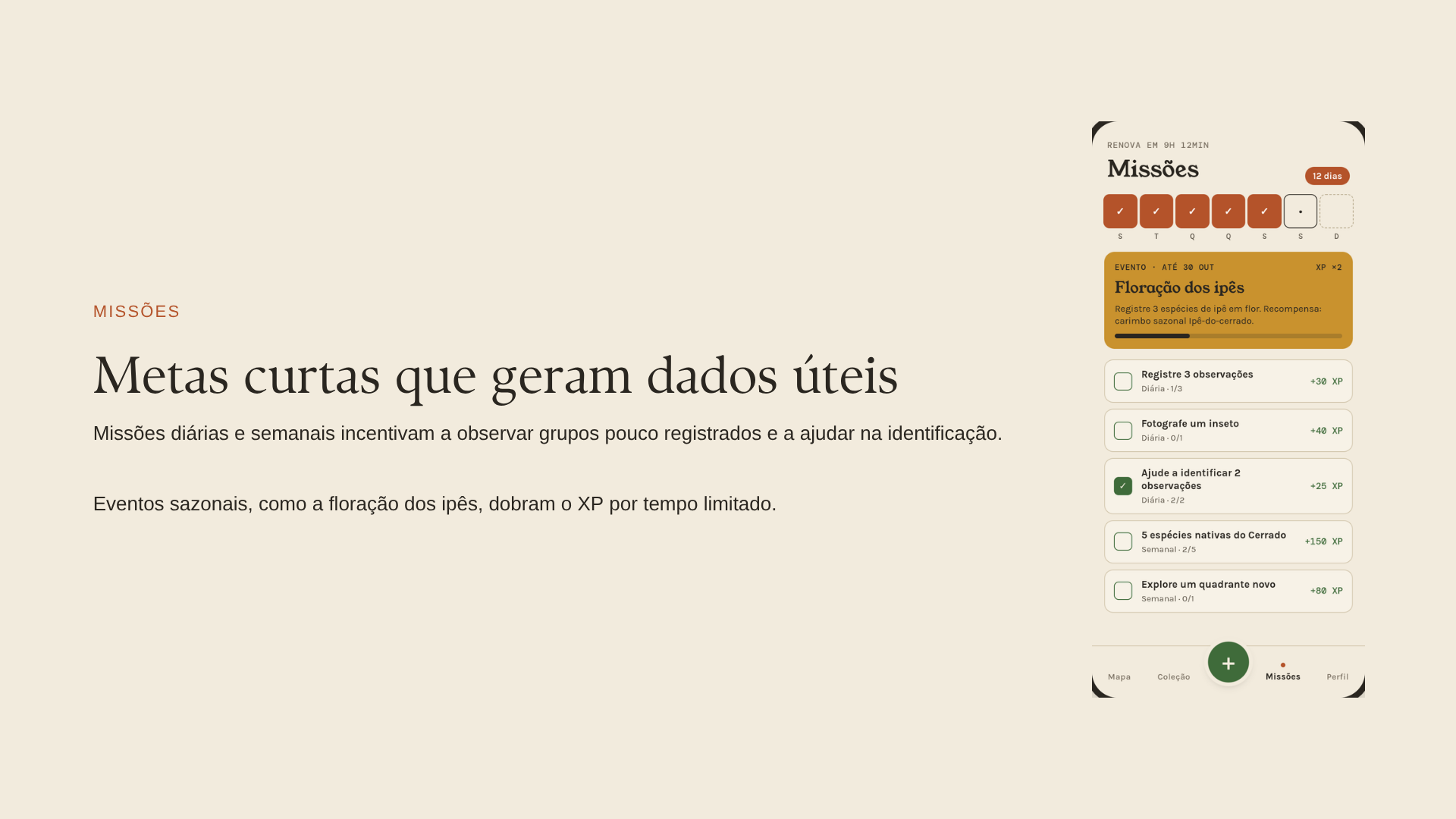
- Missions and Seasonal Events: Participate in activities inspired by natural phenomena, such as the flowering of ipê trees.
- Daily Streaks: Encourage consistent interaction with nature.
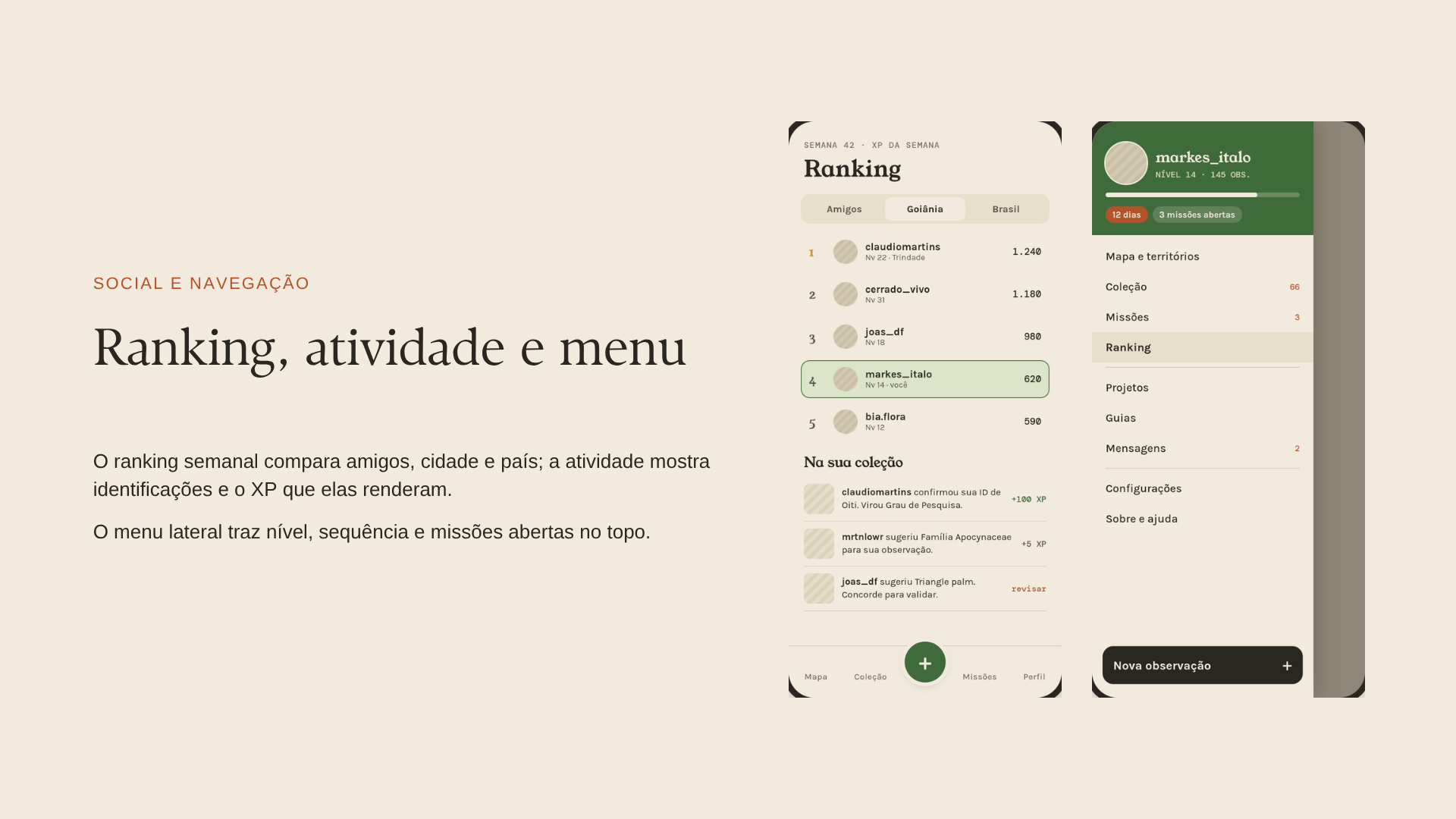
- Leaderboards: Introduce friendly competition between friends and geographic communities.
- Research-Grade Rewards: Recognize observations that reach scientific-quality identification milestones through community verification.
The central idea is simple: every observation should feel meaningful, both for the person making it and for the scientific community.
How I Built It
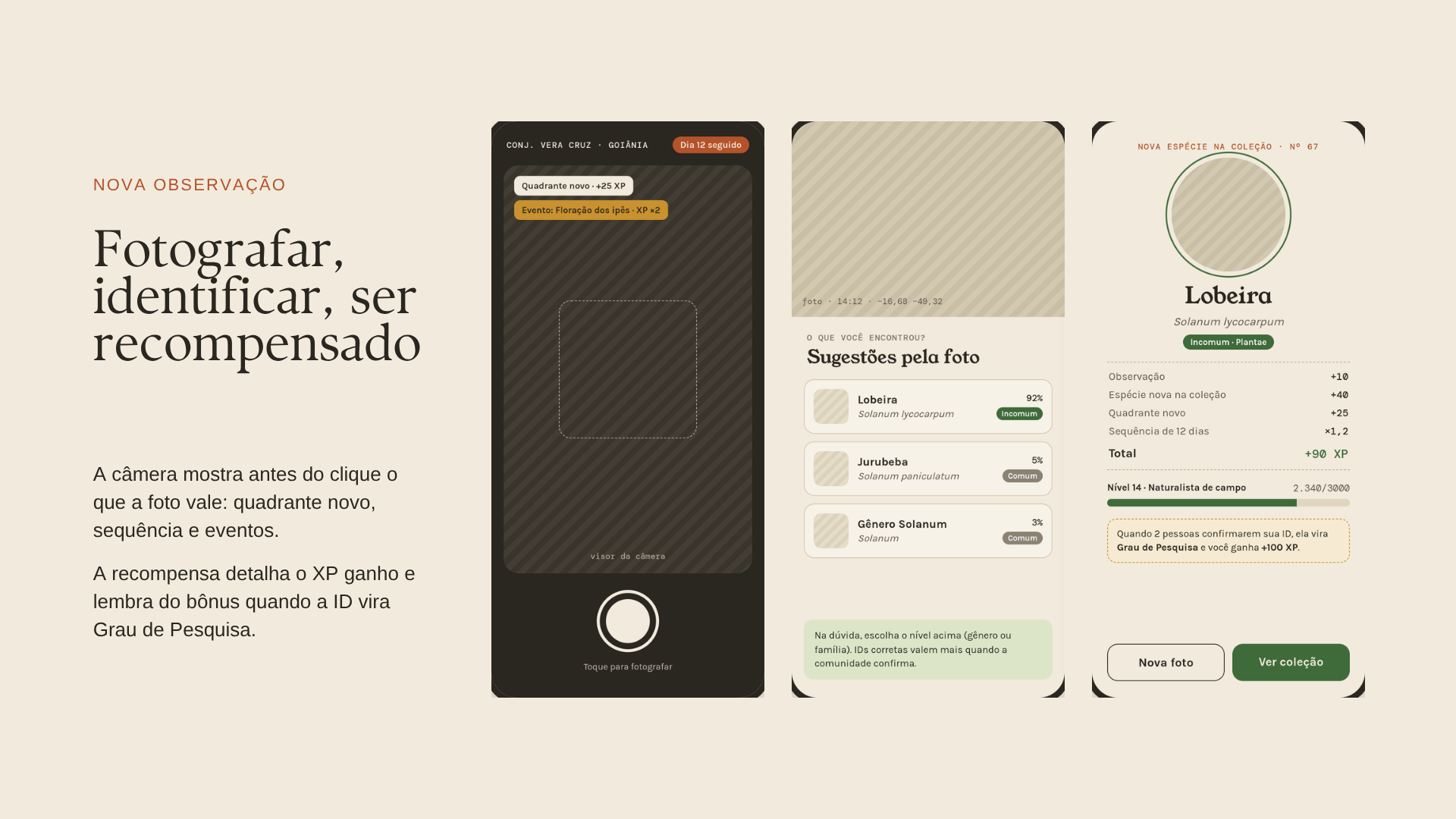
I started by mapping the observation journey, from photographing an organism and identifying it to receiving feedback and exploring previous discoveries.
The redesign was organized around several mobile interface flows, including observation, species identification, rewards, collections, territory exploration, profiles, missions, and rankings.
For the visual language, I moved away from conventional gaming aesthetics. Instead, I drew inspiration from field journals, vintage botanical illustrations, herbarium labels, paper textures, and scientific stamps.
The result combines natural colors, editorial typography, collectible cards, and game-like feedback while preserving key scientific information such as scientific names, taxonomic classifications, locations, and observation status.
I developed the interface as an interactive web-based prototype, supported by a visual presentation documenting the proposed mechanics and screens.
Challenges
The biggest challenge was balancing gamification and scientific integrity.
A biodiversity platform should not reward users simply for uploading as many photographs as possible. Excessive competition could encourage duplicate observations, inaccurate identifications, or behavior that prioritizes points over scientific value.
To address this in the design, I explored rewards for discovering different species, exploring new geographic areas, and reaching Research Grade through community-supported identification.
Another challenge was transforming complex biodiversity information into an experience that feels approachable to beginners without oversimplifying the underlying science.
The collectible-card metaphor became particularly useful: each species can feel like an exciting discovery while still retaining its scientific identity.
What I Learned
This project reinforced an important UX principle: gamification is not just about adding points, badges, and leaderboards. It is about designing meaningful motivation.
I also explored how visual storytelling, geographic context, and collection mechanics can make scientific information more accessible and emotionally engaging.
Most importantly, I learned that a playful interface does not need to sacrifice educational or scientific depth.
What's Next
The current project is a UI/UX redesign concept rather than an official iNaturalist application.
Future work could include usability testing, accessibility improvements, real biodiversity data integration, more robust anti-abuse mechanisms, and a validated reward system that prioritizes observation quality and responsible wildlife interaction.
I would also like to explore how local missions could support environmental education and biodiversity awareness in urban communities.
Explore nature. Collect discoveries. Level up citizen science.
This is an independent, unofficial redesign concept inspired by iNaturalist. It is not affiliated with or endorsed by iNaturalist.
Built With
- biodiversity
- citizen-science
- claude-ai
- css
- environmental-education
- gamification
- html
- javascript
- prototyping
- react
- responsive-design
- ui-ux
- web-design


Log in or sign up for Devpost to join the conversation.