Inspiration
Burnout doesn't feel like sadness. It feels like nothing: "nothing brings joy anymore, life lost its taste." We have been there, and the usual answers didn't reach us. Meditation apps ask you to sit still with your eyes closed, and a burned-out mind won't sit still.
We wanted the opposite: a short story you live with your hands instead of listening to. We built it on an old Buddhist image, the bhavachakra (the wheel of life), and one idea from it. Dukkha is not exactly suffering. It is the endless feeling of not enough. The journey shows you that wheel, lets you stop it with your own hand, and brings you back to the light that was "never destroyed, only buried under the mud."
What it does
In & Out is a seated, 10-minute VR journey through burnout and back, in five scenes. You take part with your bare hands, and no controller is needed.
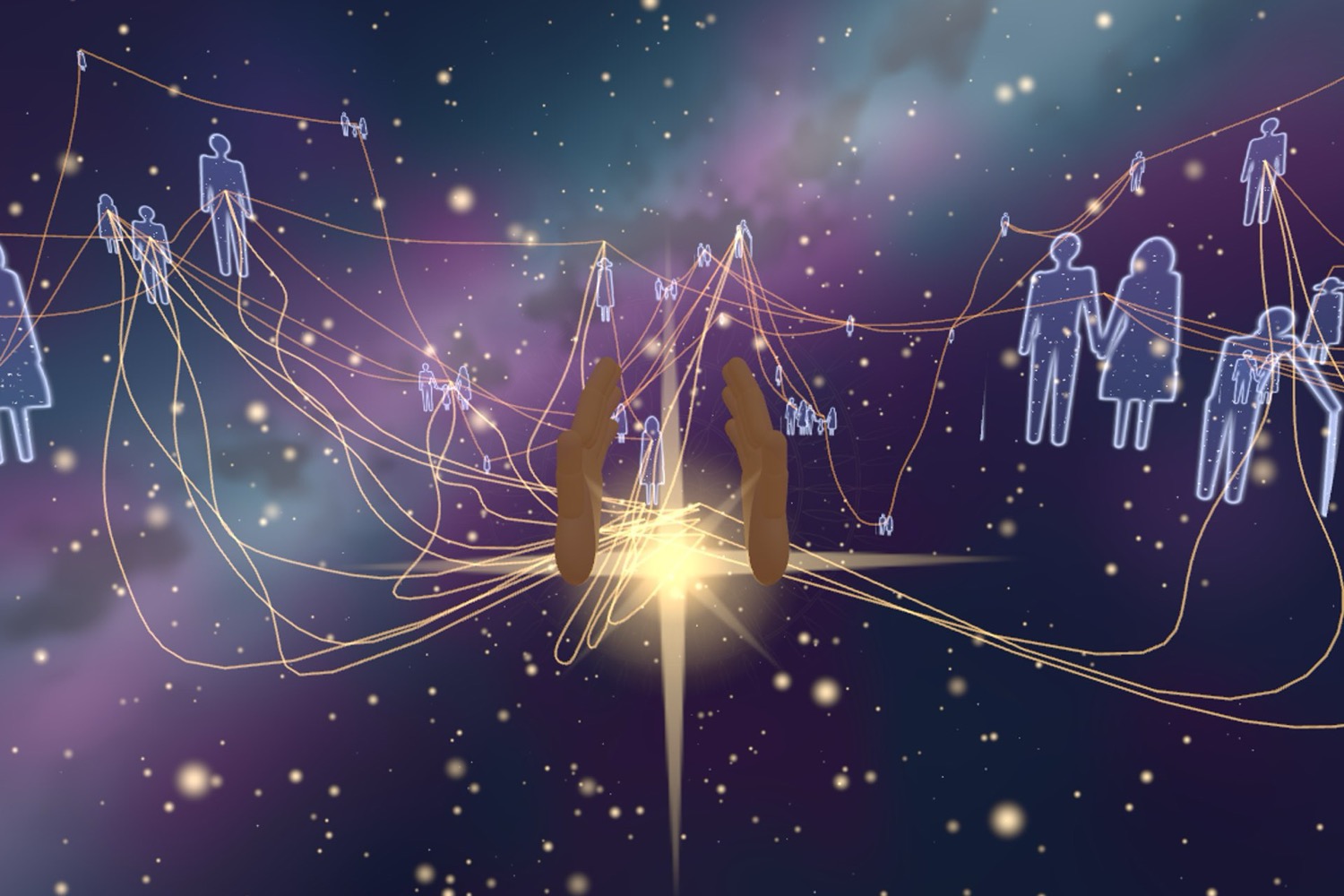
- Before you were born. You float in the cosmos among star-filled ancestors. Gold threads tie themselves to your fingers and meet as a star between your palms: "thousands of lives were needed. You came here as a star."
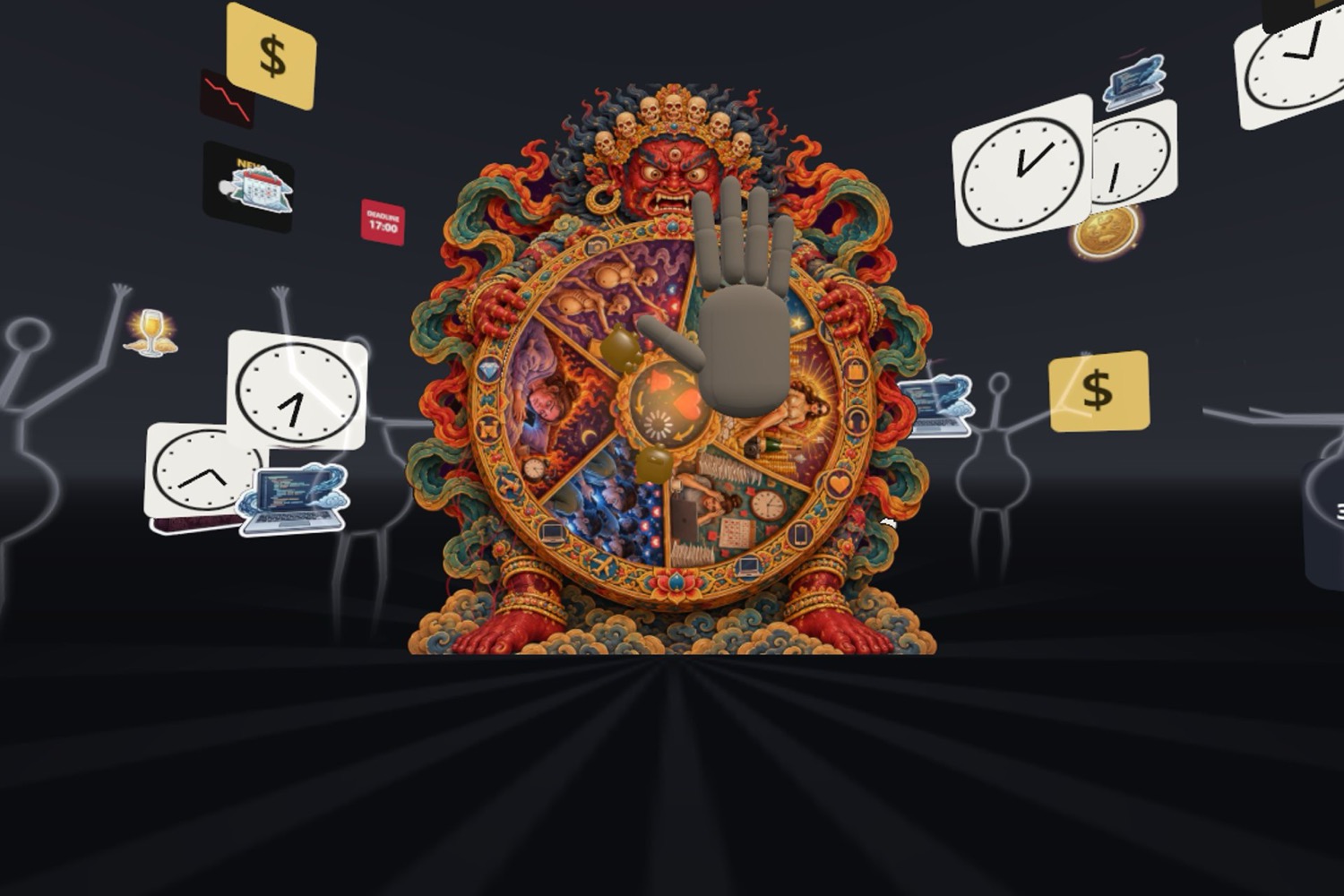
- The Wheel. A Tibetan wheel of life turns in front of you. Its six realms open into modern life: clocks, money, notifications, deadlines. Red threads run from the wheel to your fingers.
- Stop. Raise your palm. The threads snap, the noise stops, and the wheel blows away like a sand mandala.
- Bardo: the seed in the dark. Under dark water, you hold a lotus seed and breathe with it (in 4 s, out 6 s). The seed glows brighter in your hands.
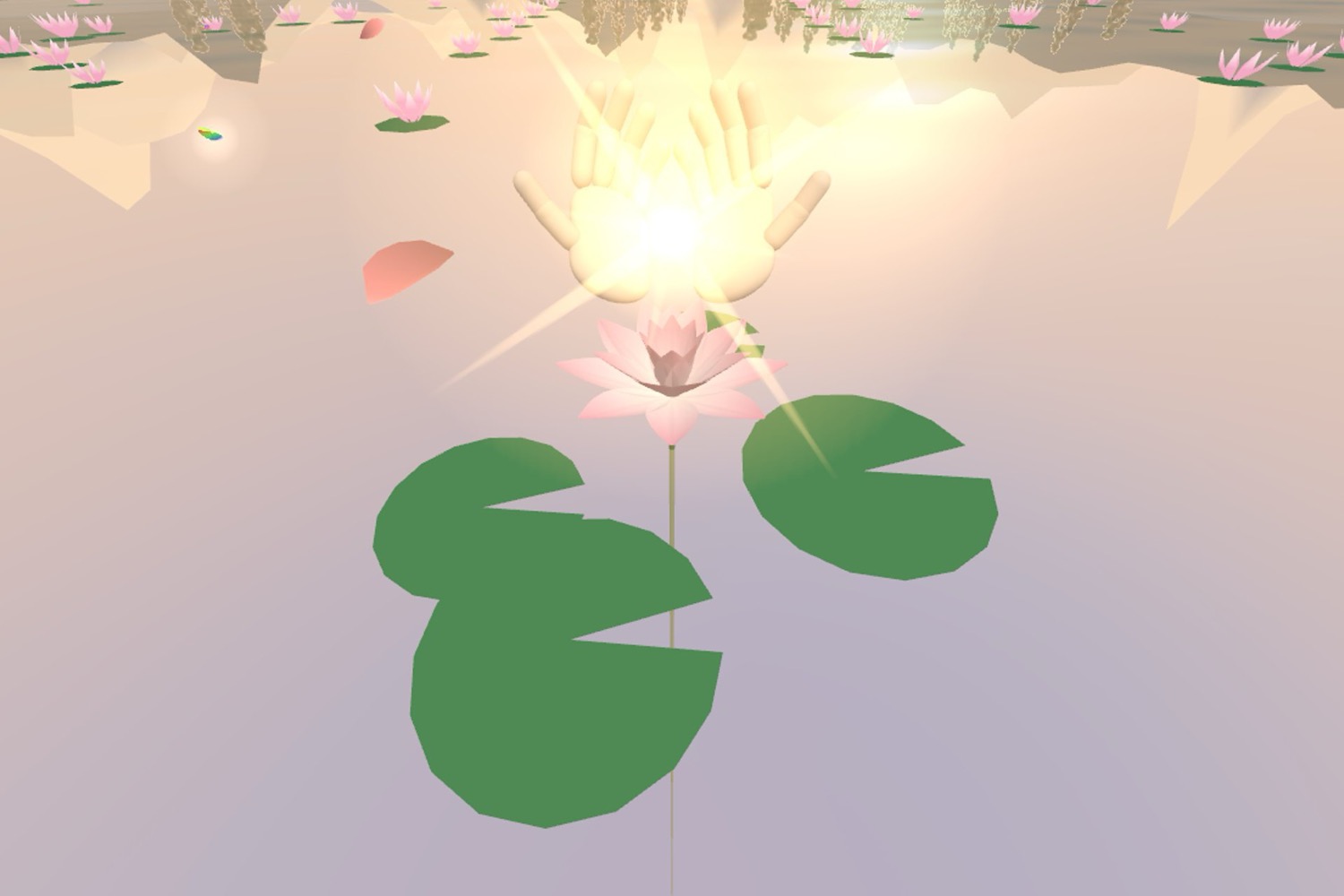
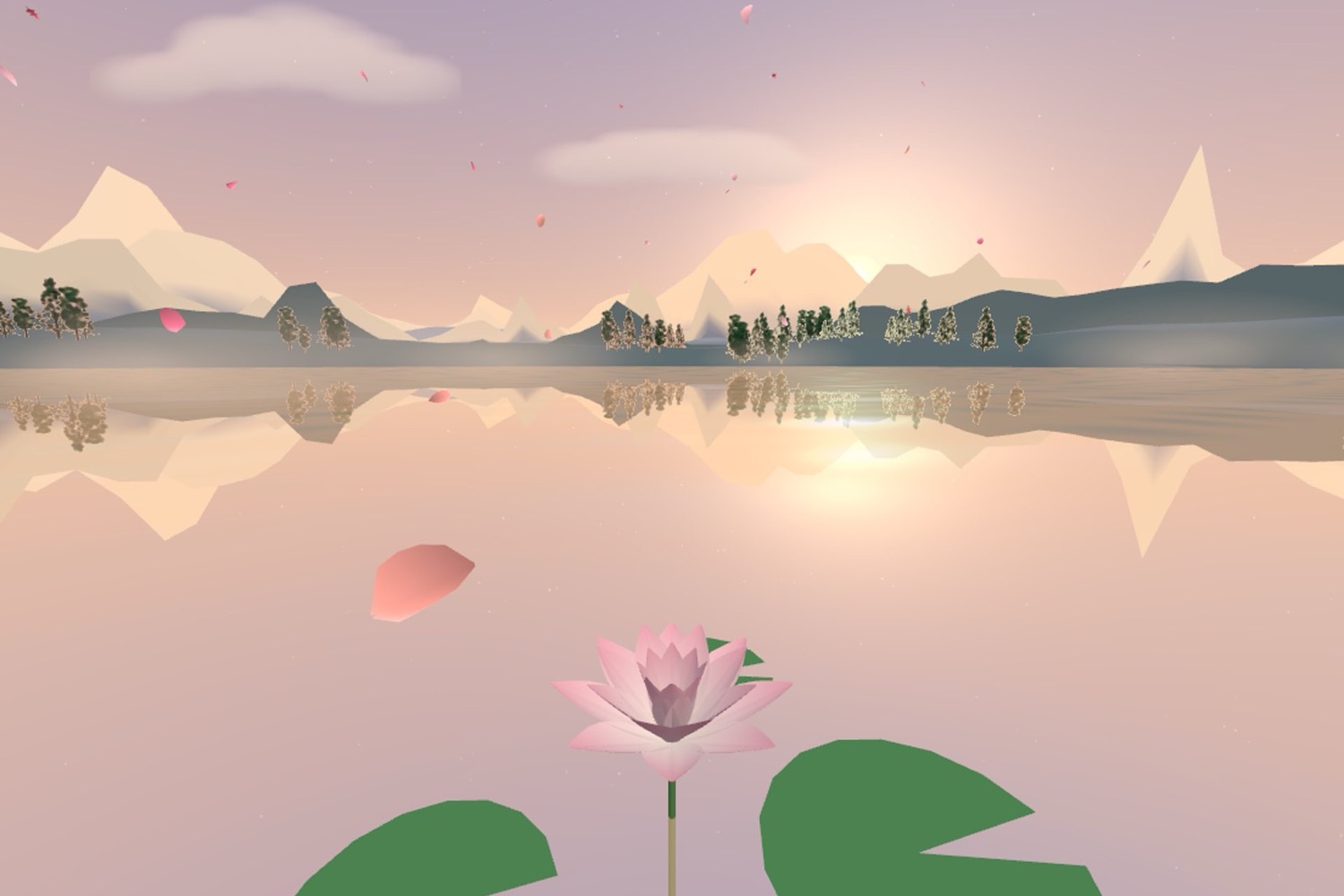
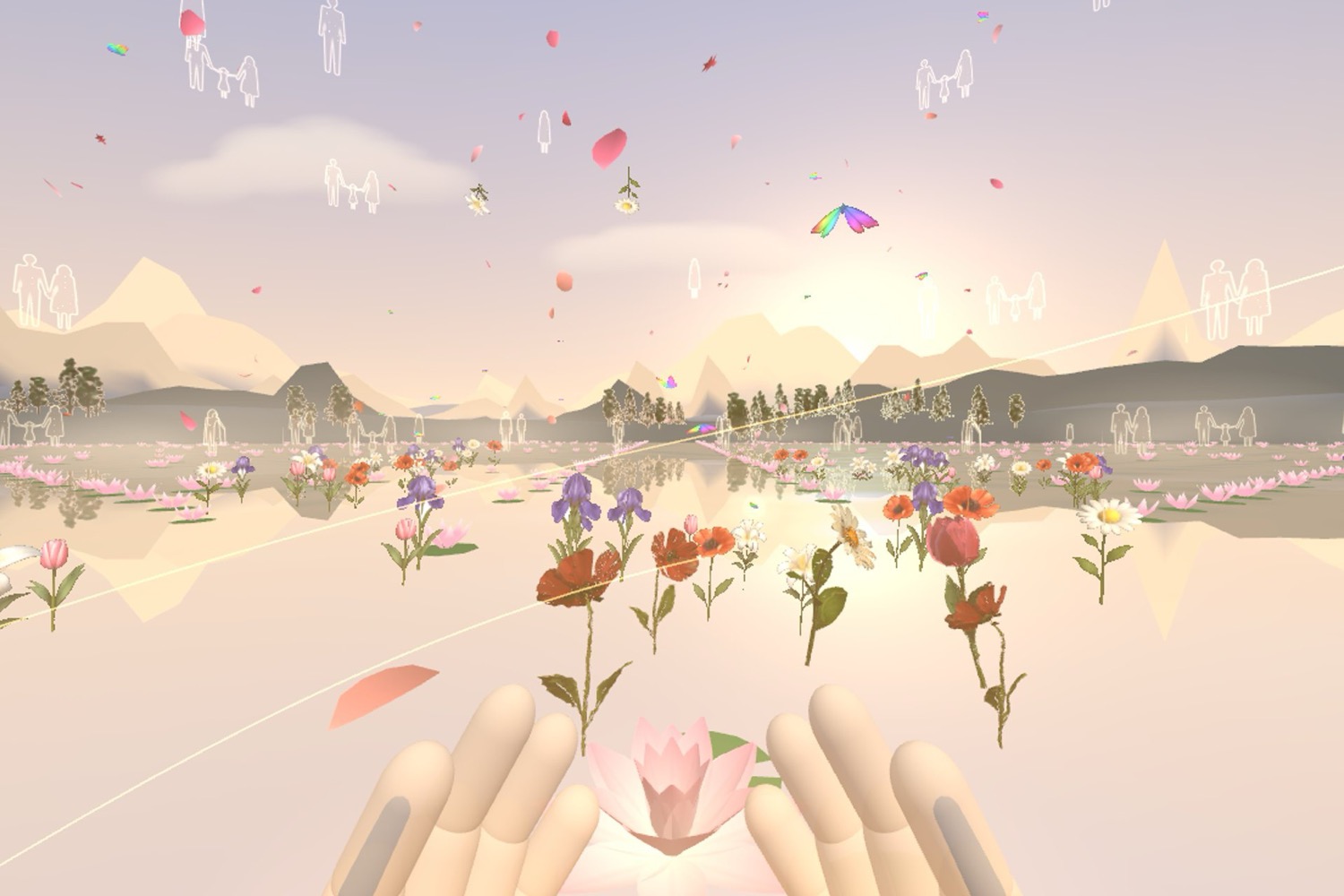
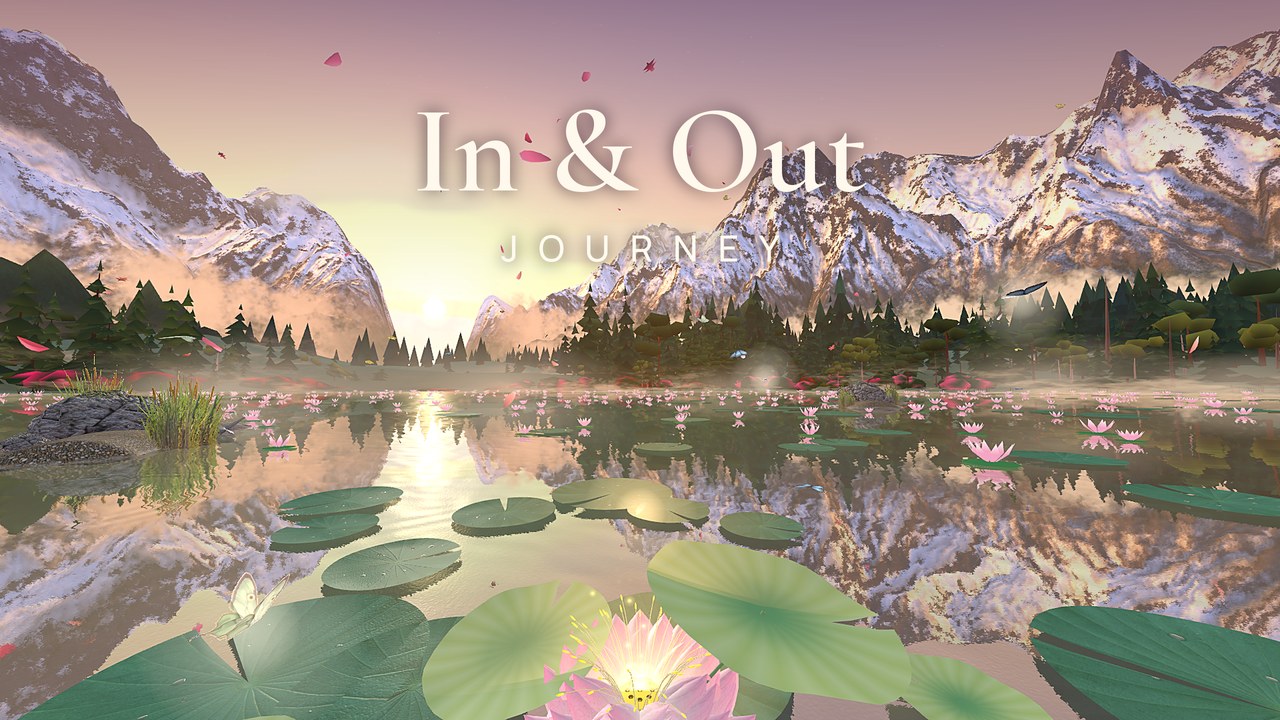
- The lotus and the spark. At a lake at dawn, you raise your hands and the lotus grows with them. Then you cup the spark and bring it to your chest.
Every hand moment has a gentle fallback, so the story never stops and waits. If the headset loses your hands, the moment completes by itself. The lobby works with look-and-pinch or with gaze alone (look for 2 s), and you can jump straight to the last 4 minutes for a short session.
How we built it
- An HTML5 stage first. We prototyped the whole journey as a WebGL page with a timeline. Every moment has a link so we could review any second of the story from three cameras without a headset. Headless screenshots checked each beat on every change.
- One layout file for both builds.
layout.jsonholds the scenes, the hand moments, the gaze targets, the zones and the timing. The web stage and Unity read the same data. - Unity 6 port. The meshes, textures and timing are exported from the stage, and the shaders are rewritten for Unity. It uses OpenXR and XR Hands with single-pass instanced stereo. One APK runs on Quest 3 and Quest 3S.
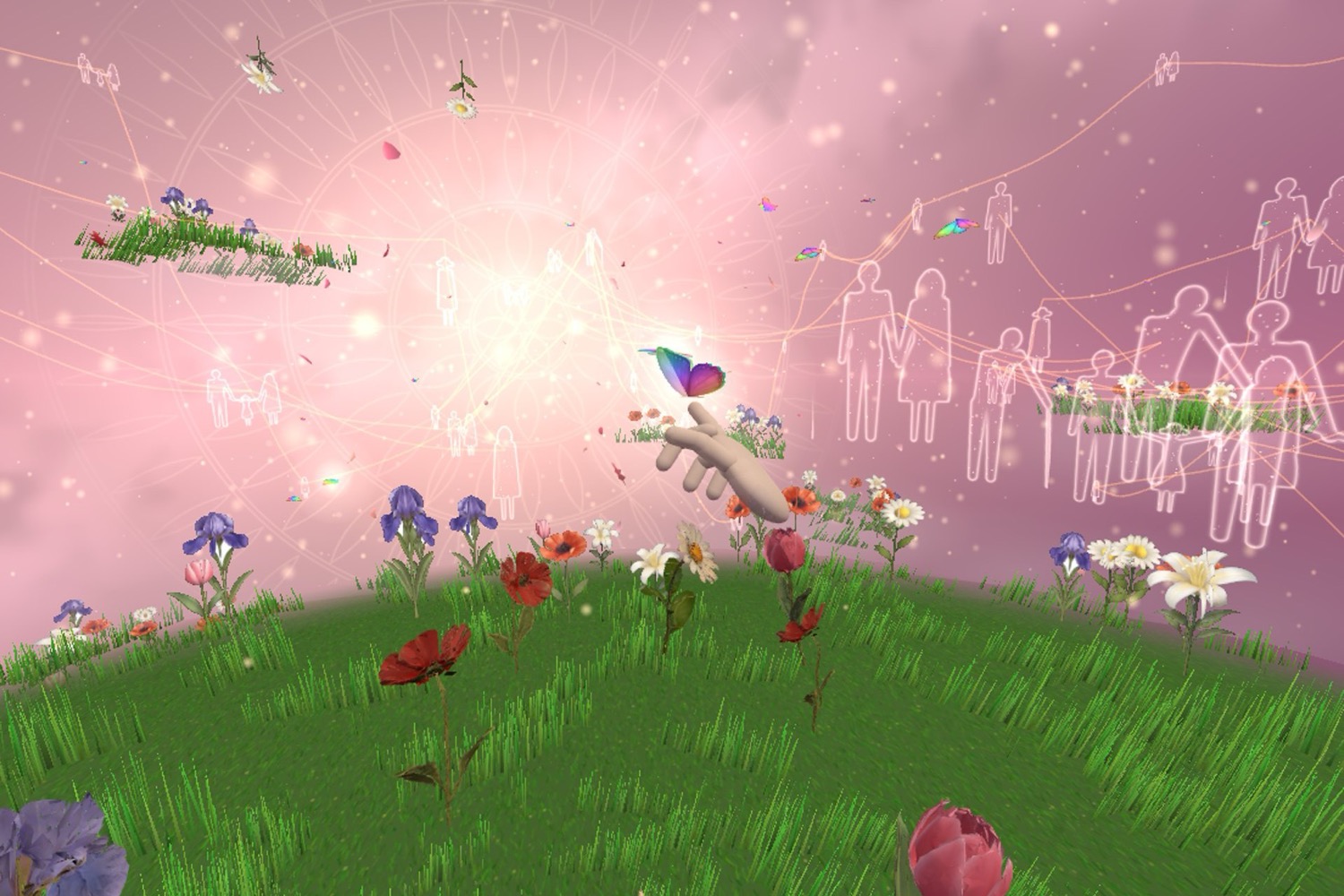
- Art. We painted concept art for each scene and cut it into layers. The wheel became a thangka in shallow relief: the holder and rim stand still while the realms turn behind it. Flowers and butterflies are LOD meshes and impostor cards, so a meadow of hundreds of them stays inside the Quest budget.
- A per-device execution layer. It detects the headset and picks a profile (refresh rate, MSAA, picture format, menu size). It also seats the player at the authored eye height, and a watchdog drops 90 Hz to 72 Hz if the GPU stays over budget.
Challenges we ran into
- Looking at your hands broke the world. In this journey you look straight down at your hands and turn quickly. The usual "recentre on a head jump" logic read that motion as tracking loss and moved the whole world. We turned it off and now recentre only on the runtime's event, the menu, or a deliberate start.
- Seating a headset that isn't on a head. A headset on a desk can report "mounted" with a frozen, upside-down pose. Seating that pose put the world on its side. Now we seat the player only when the headset is upright, steady and worn, and seat again when it is put back on.
- Dark scenes and colour banding. The cosmos and the underwater bardo are mostly near-black gradients. They needed careful picture formats per device to avoid visible rings.
- Pacing a 15-minute story into 10 minutes. The story is authored over 15:00 and plays 1.65x faster. The breathing guide is the exception: it keeps real time, because you can't speed up a breath.
Accomplishments that we're proud of
- A complete five-scene arc, from the cosmos to the lake, that you finish in one sitting of about 10 minutes.
- Hand interactions that mean something in the story: tying threads, stopping the wheel, holding the seed, growing the lotus, taking the spark home.
- A wheel of life that turns, opens into scenes from modern life, and dissolves into sand when you say stop.
- One shared layout file that let us iterate in a browser in seconds and still ship a native Quest build.
What we learned
- Seated, hands-first design is its own discipline. Everything has to work within arm's reach and inside a comfortable field of view, because people look down at their hands far more than in a standing game.
- Never block the story on a gesture. A fallback for every hand moment made the journey calmer, not weaker. People relax when they can't fail.
- Prototype the timeline, not the engine. A browser stage with links to every second was our fastest tool for working on a story.
What's next for In & Out: Immersive Journey
- Voice and sound. A recorded narration and a full soundscape: the far drum, the first cry, the notification pings that turn into a heartbeat, and the singing bowls at the lake.
- Final painted art to replace the stand-ins: the ancestors, the hungry ghosts and the wheel stickers.
- Short daily sessions. "Wind-down" chapters of 3 to 5 minutes, built around the breathing and lotus moments, with a lotus field that grows a little each time you come back.
- More hand moments driven by tracked fingers, with a "hands rest in your lap" mode for people who can't hold their arms up.
- Target launch: the Meta Horizon Store in 1 month.

