Inspiration
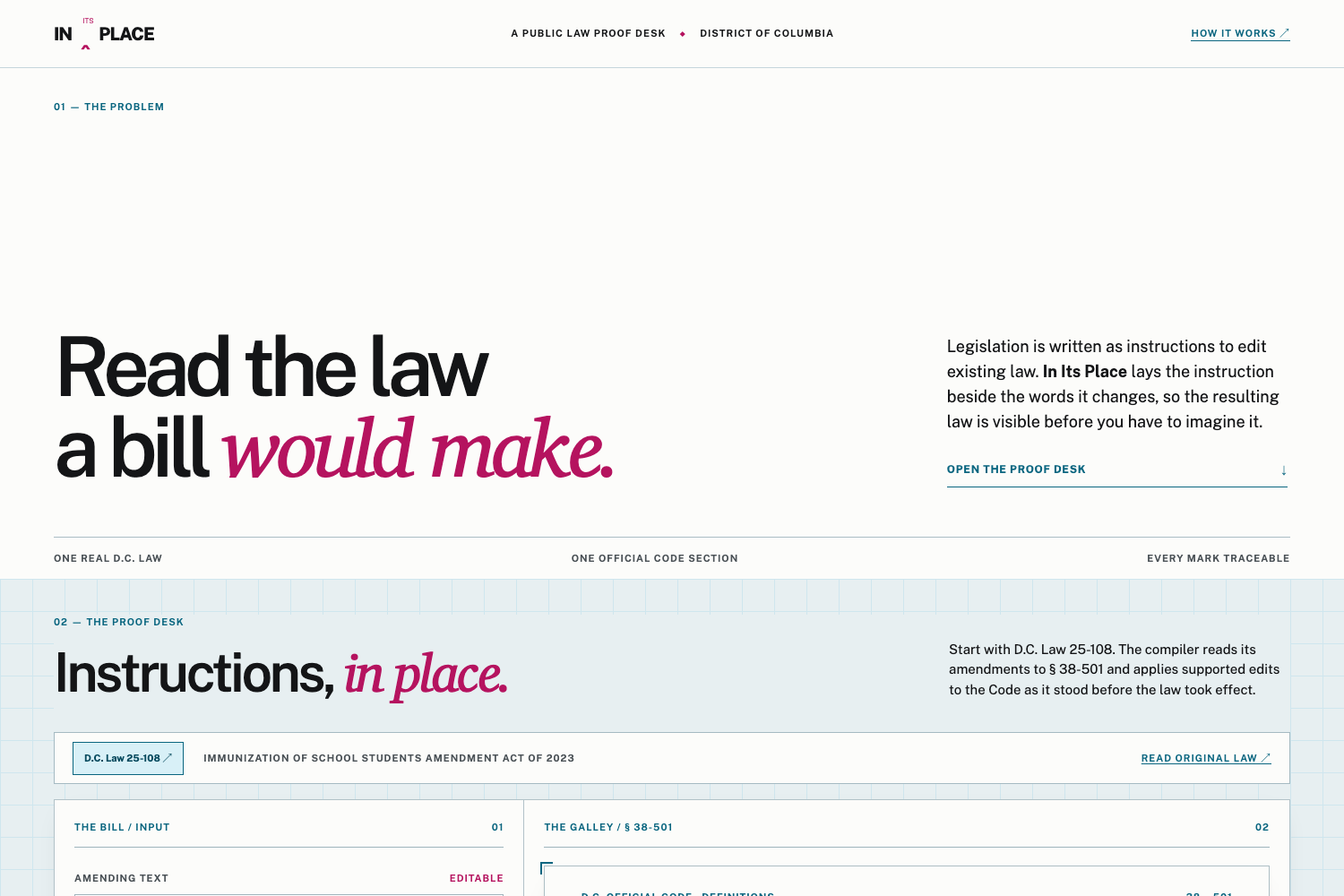
A bill often describes changes to existing law without printing the result. A reader must perform each edit by hand, and a single missed paragraph can change the meaning.
What it does
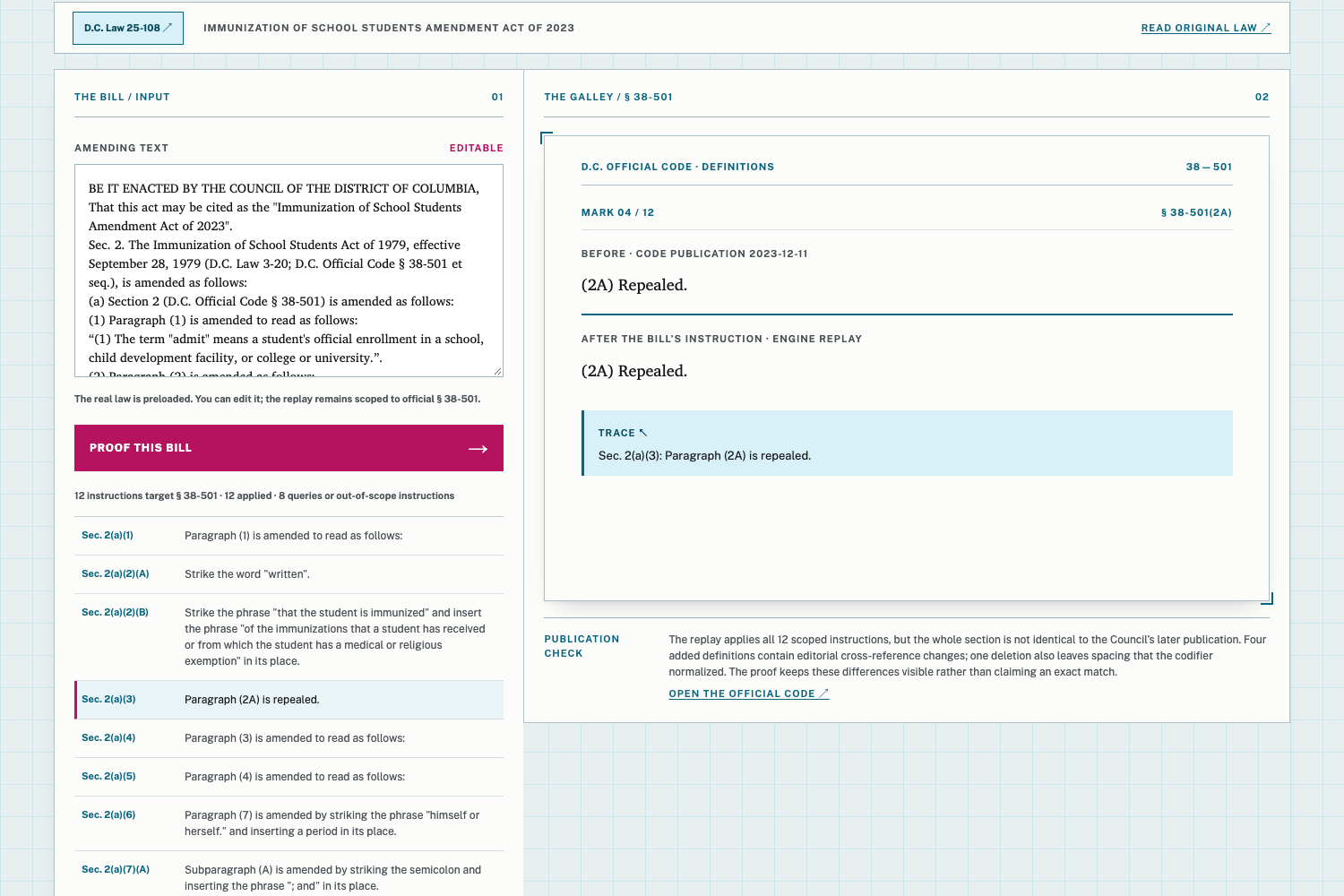
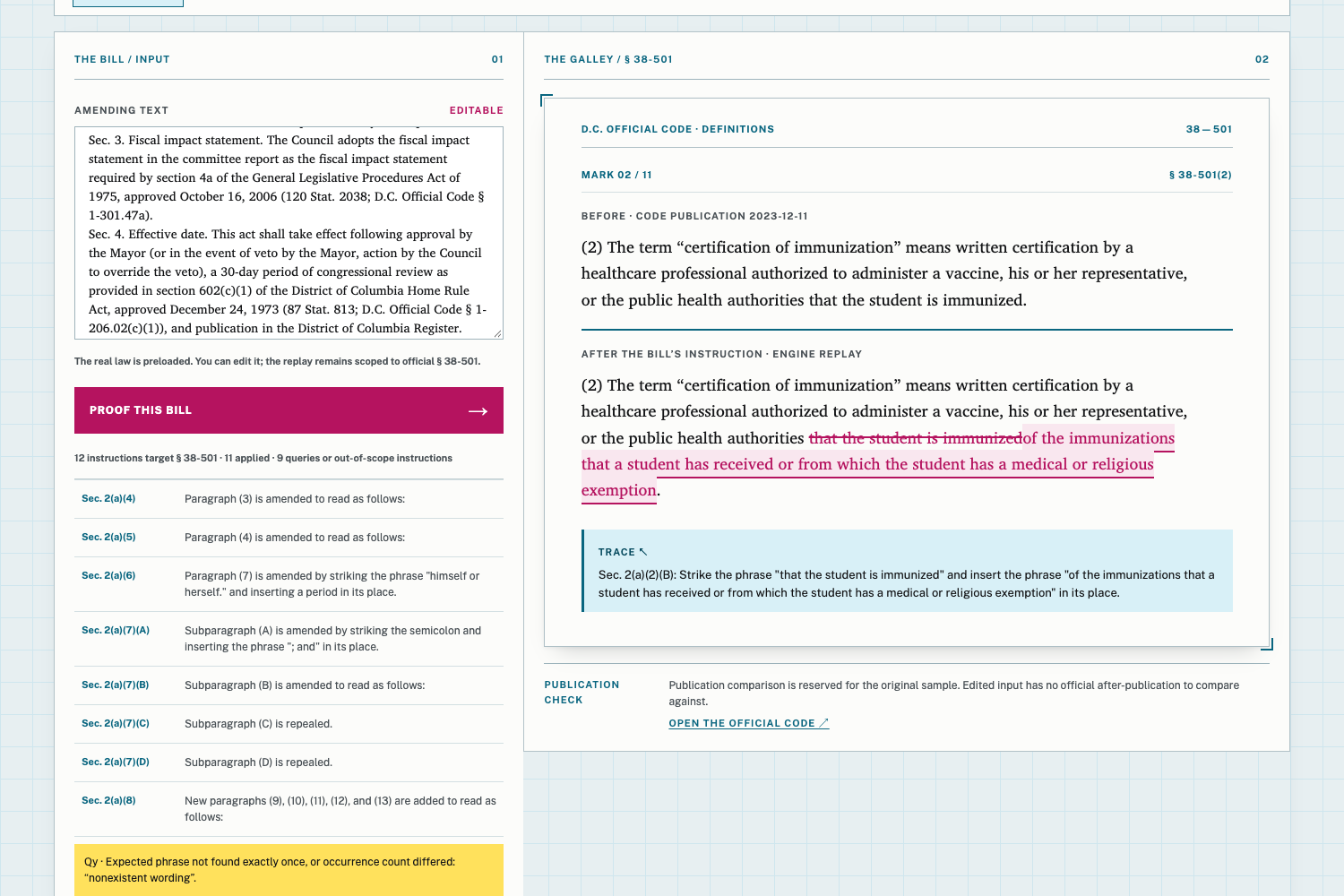
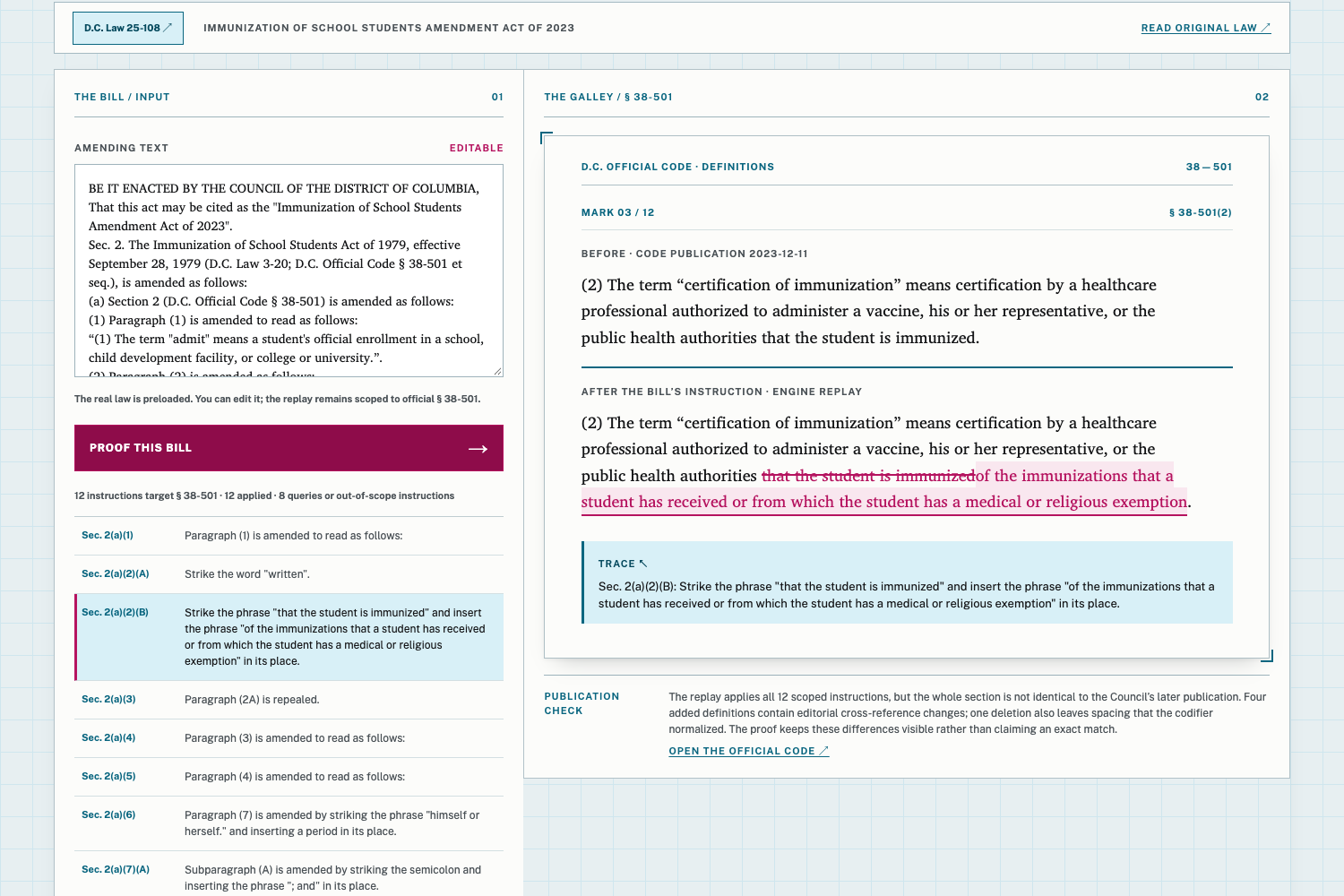
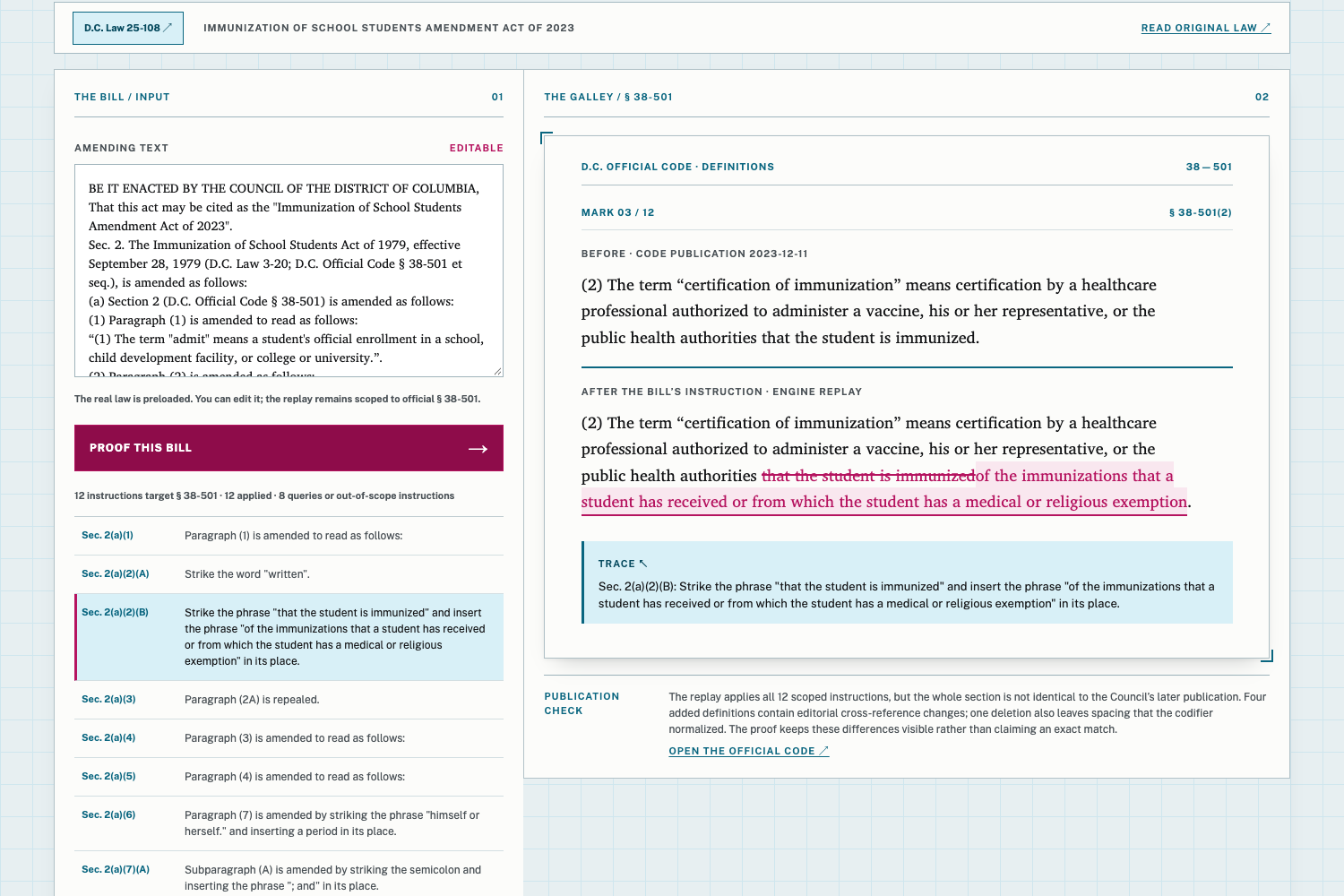
In Its Place puts a bill beside the D.C. Code section it amends. It compiles editing instructions into traceable operations, applies them to a historical Code snapshot, and shows before and after wording. The live demo uses D.C. Law 25-108 and § 38-501. It identifies twelve scoped instructions. If a phrase cannot be found, the proof raises a query instead of making up a change.
How we built it
The parser segments the Council's public law XML into provisions, resolves nested section and paragraph references, and turns drafting verbs into edit operations. A pure TypeScript applier edits a tree built from the Council's historical Code XML. Vite builds a static site; no API key or backend is needed. The original XML snapshots and data generation script are in the public repo.
Challenges we ran into
Bill text is nested, but its targets are often implied by earlier clauses. Quotation marks, punctuation and whitespace matter when a phrase must be struck exactly. The Council's later codification includes editorial changes, so we show the gap rather than label the replay a perfect match.
Accomplishments that we're proud of
The prototype turns twelve instructions in a real law into a clickable proof of one Code section. Every displayed mark links back to its bill sentence. A real-law integration test covers the amended paragraph and refusal for an absent phrase.
What we learned
Legal automation needs inspectable provenance and a visible refusal path. The hardest part is deciding exactly which historical text an instruction is allowed to change.
What's next
Expand section coverage and drafting grammar, add measured replay benchmarks across Council publication history, and distinguish legislative text changes from codifier editorial updates.
Sources: D.C. Law 25-108 and D.C. Code § 38-501.
AI-use disclosure: Rishik Rontala directed development with Claude Code (Anthropic) as an AI coding agent. The running product uses a deterministic parser and does not call an AI model.
Boundary: This is a one-section prototype for civic understanding, not legal advice or an official publication. The site names the publication differences.
Watch the captioned 2½-minute demo: In Its Place — video. Screenshots.
Built With
- typescript
- vite


Log in or sign up for Devpost to join the conversation.