-
-
-
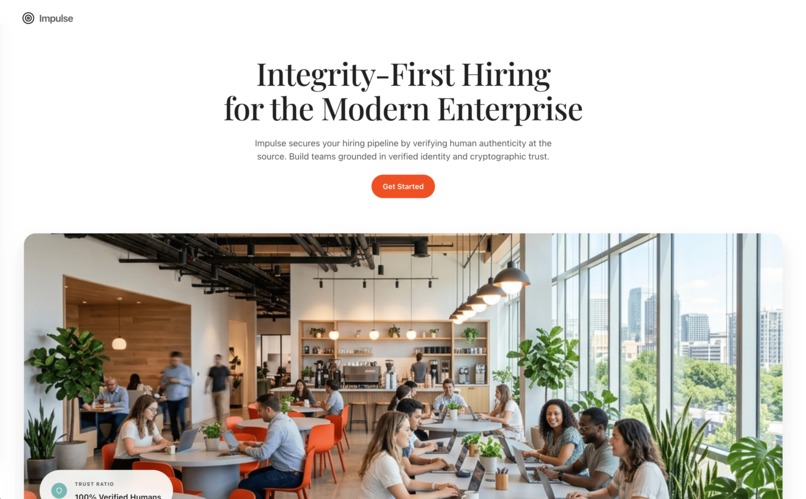
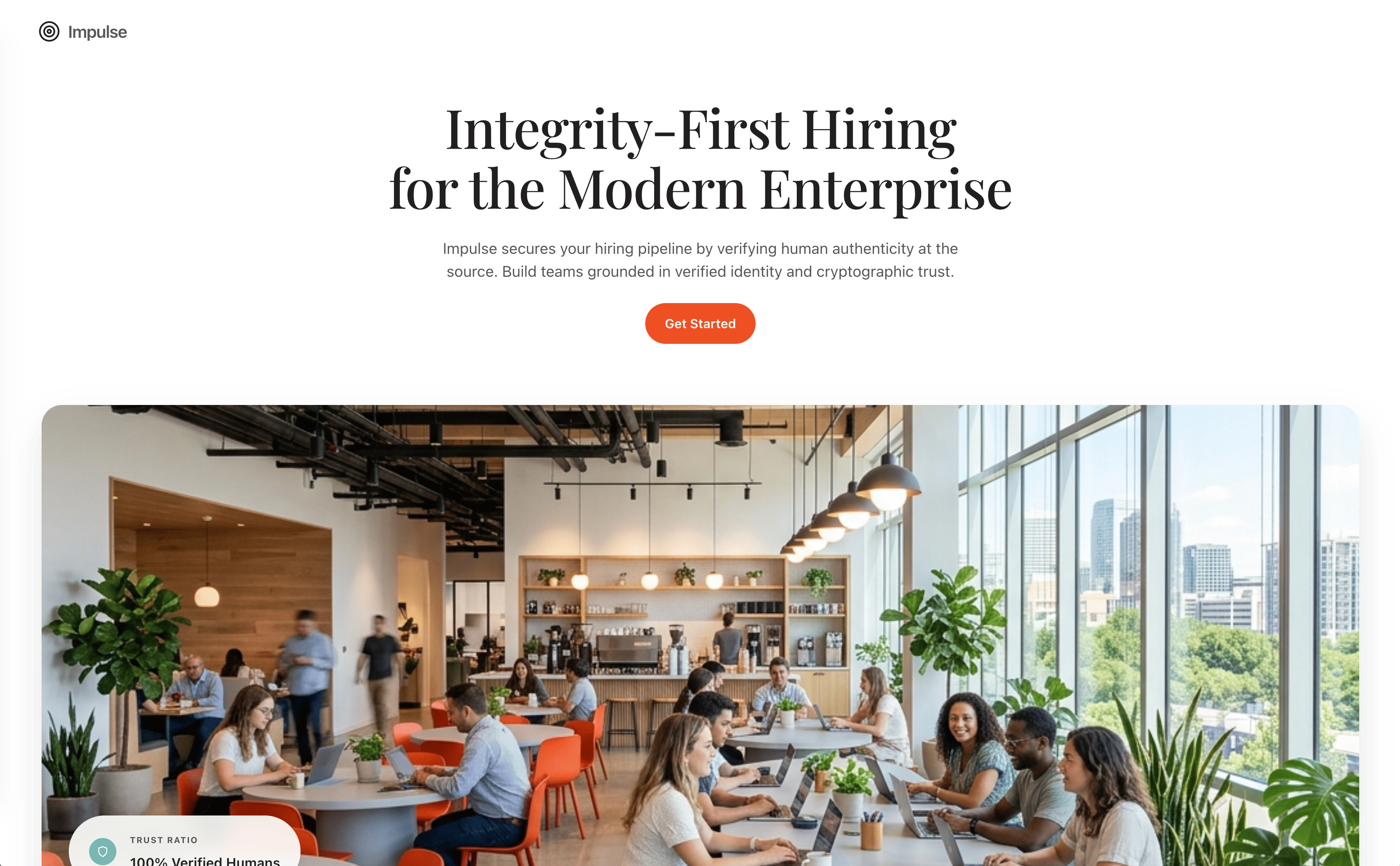
Homepage
-
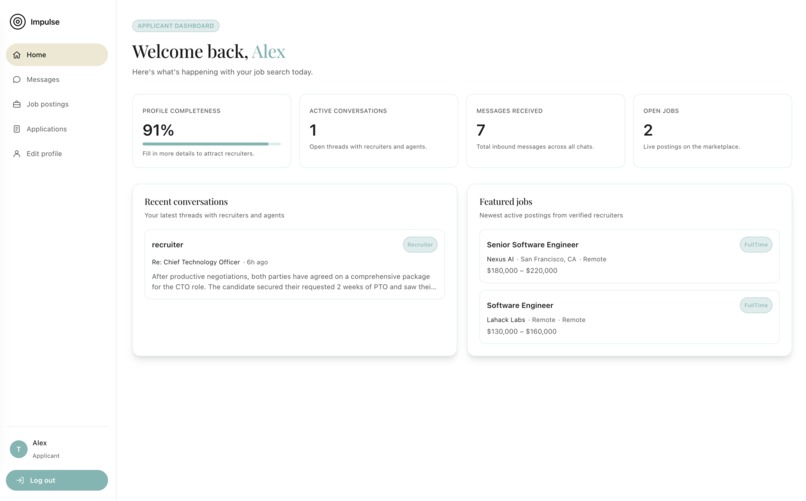
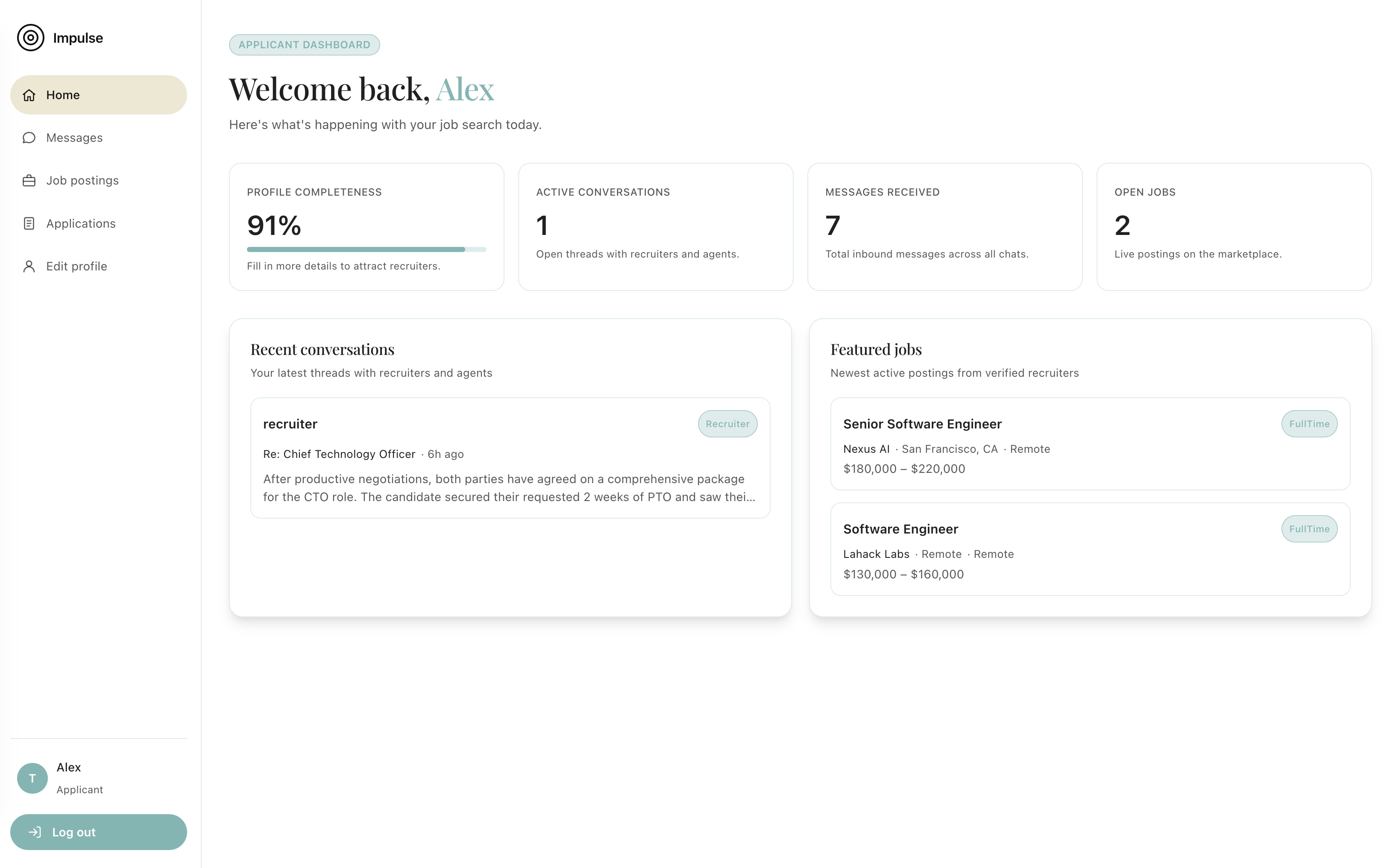
Applicant Home
-
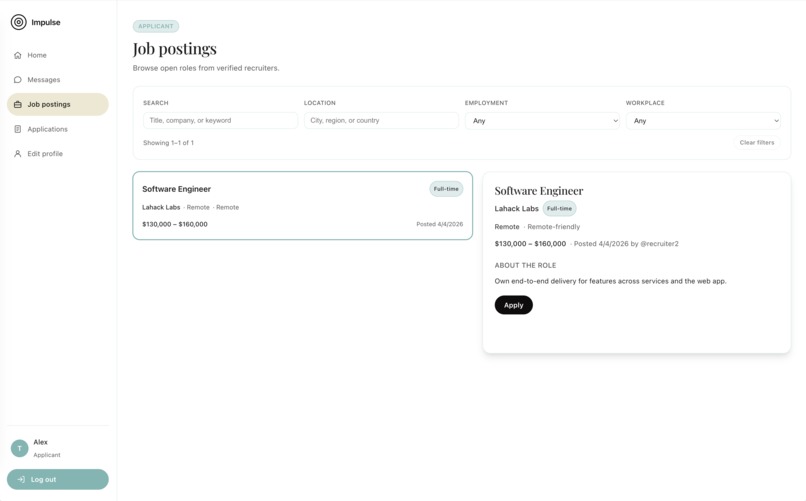
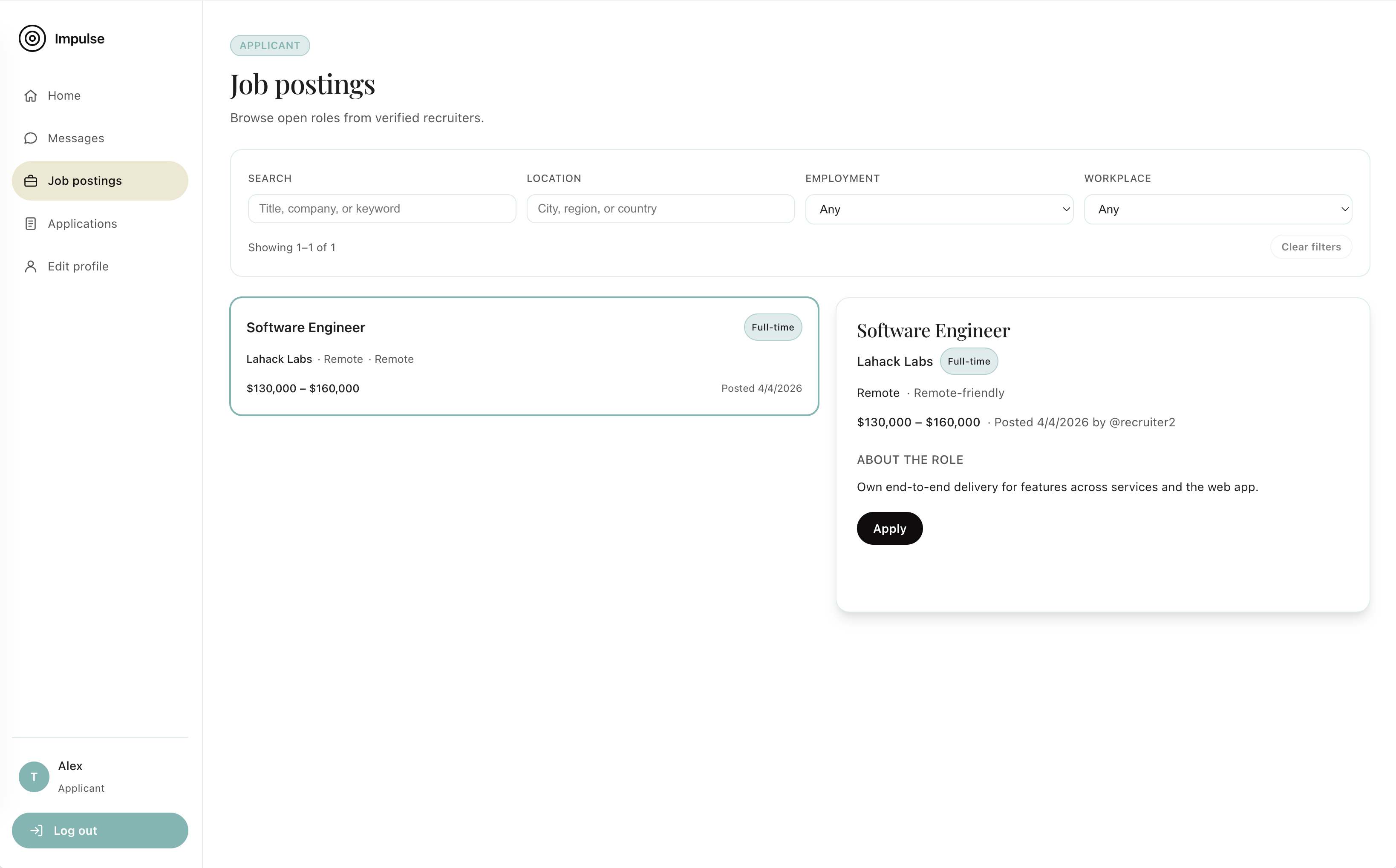
Applicant Job postings
-
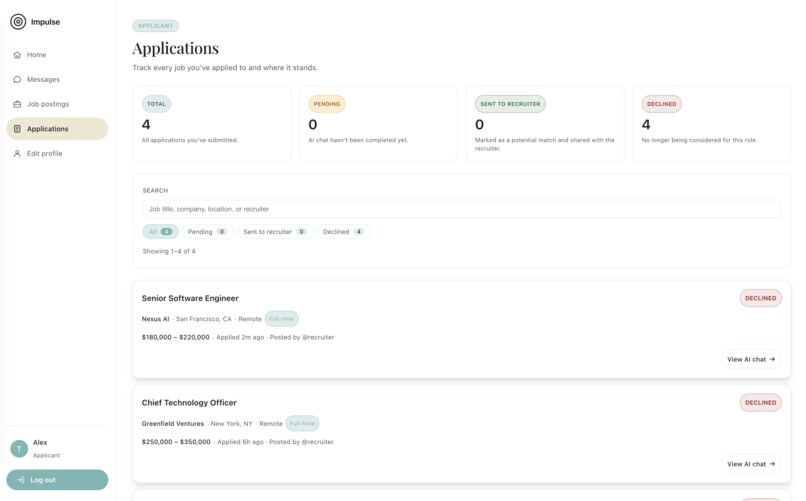
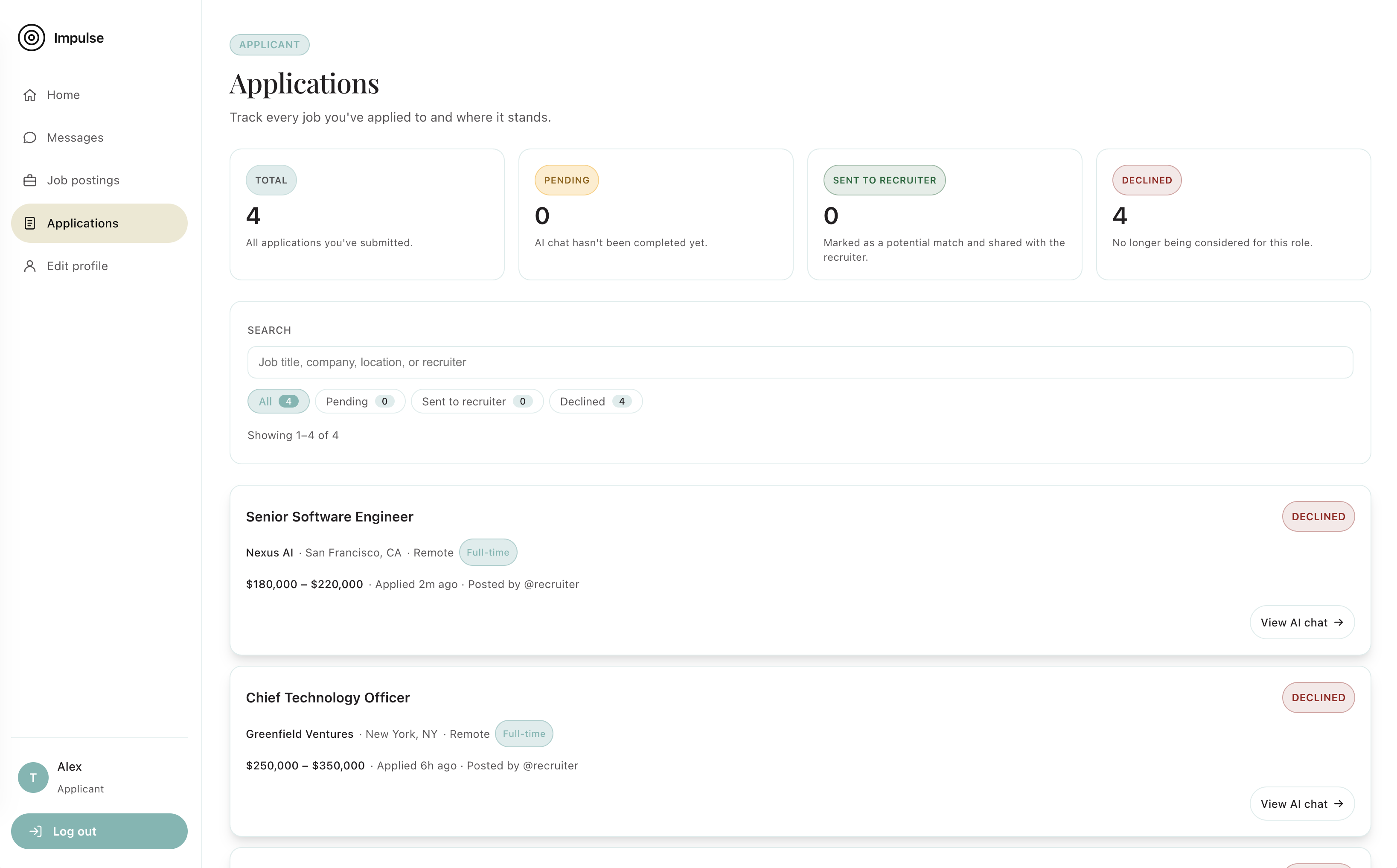
Application History
-
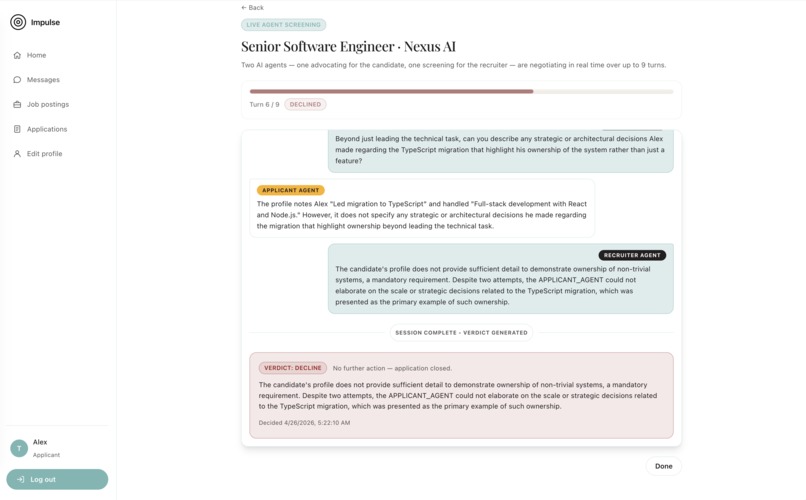
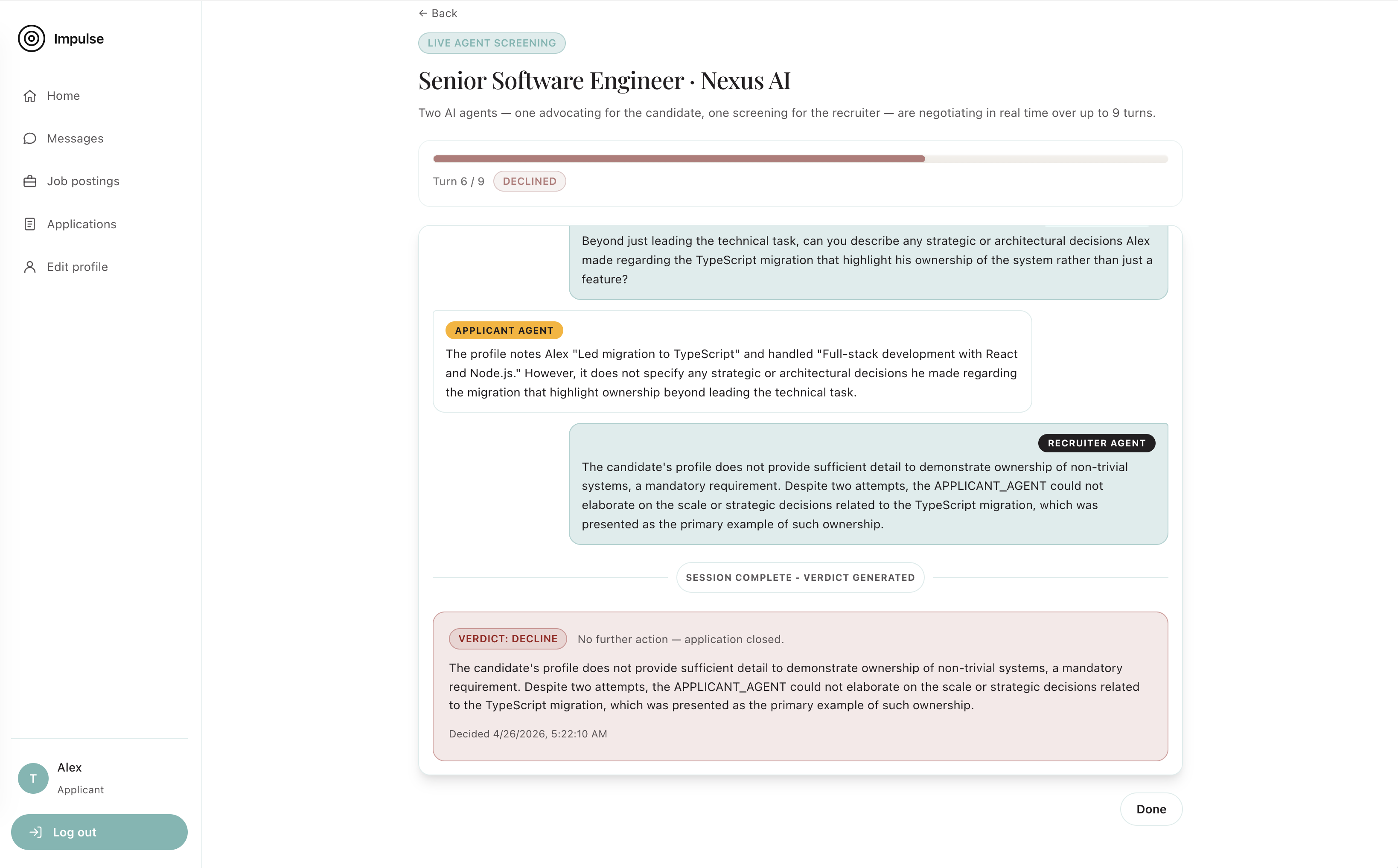
agents interation
-
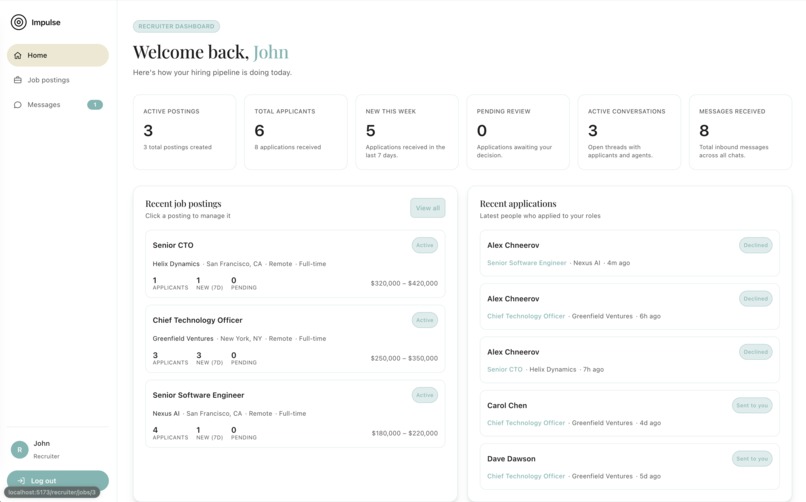
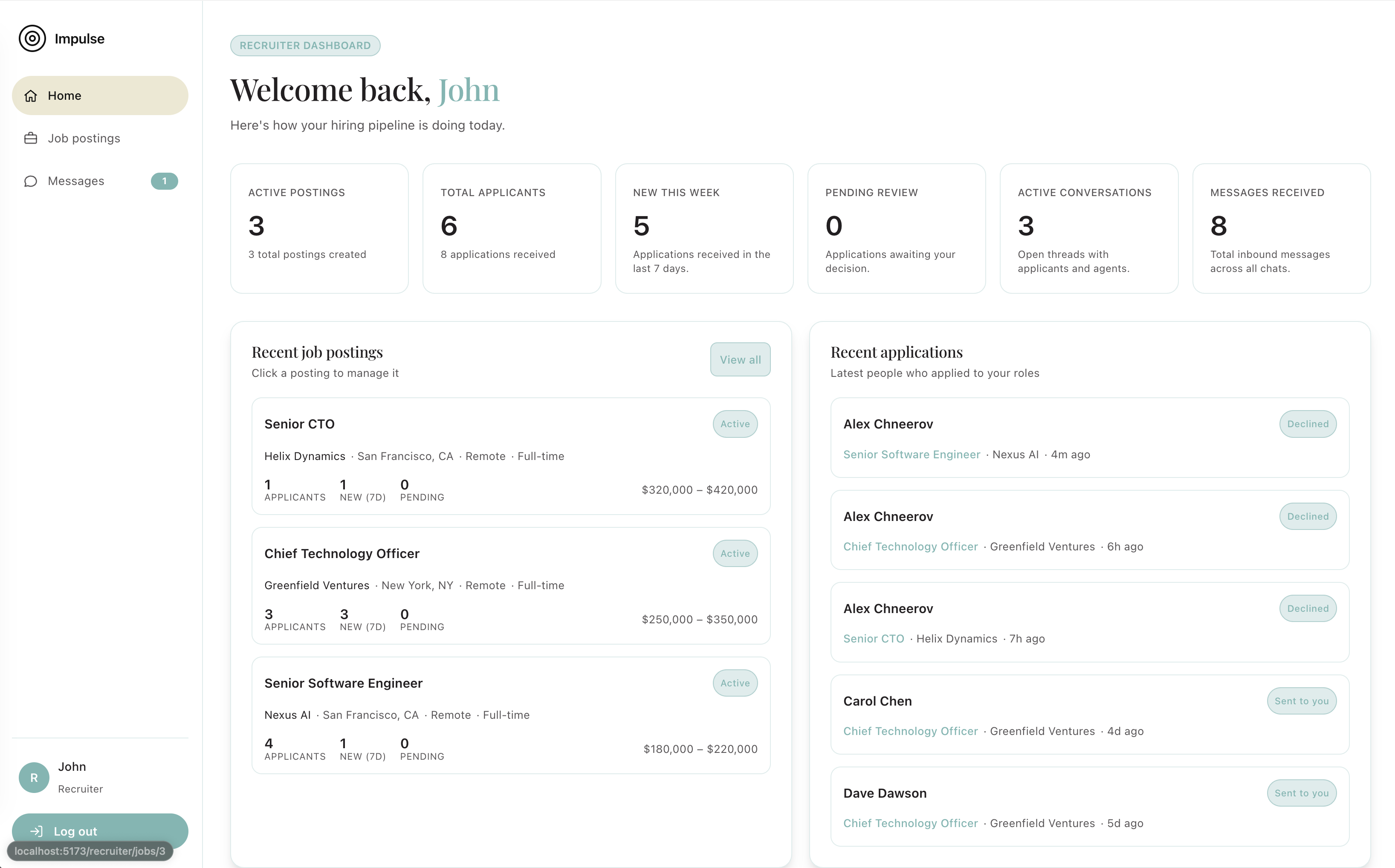
Recruiter Home
-
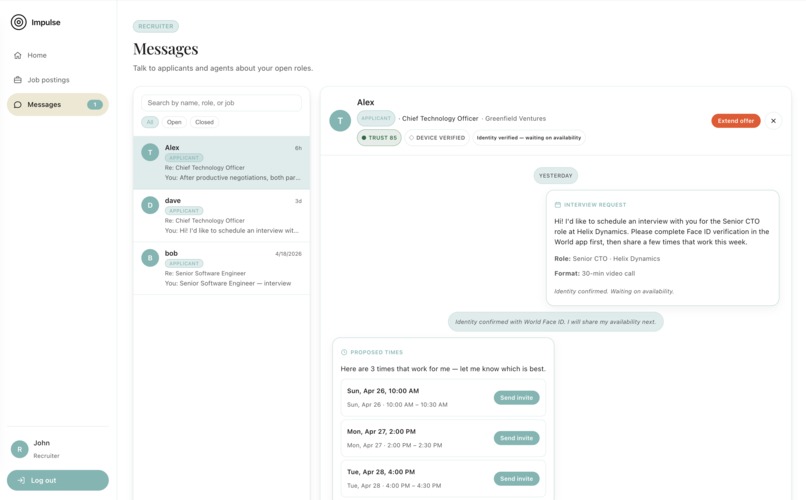
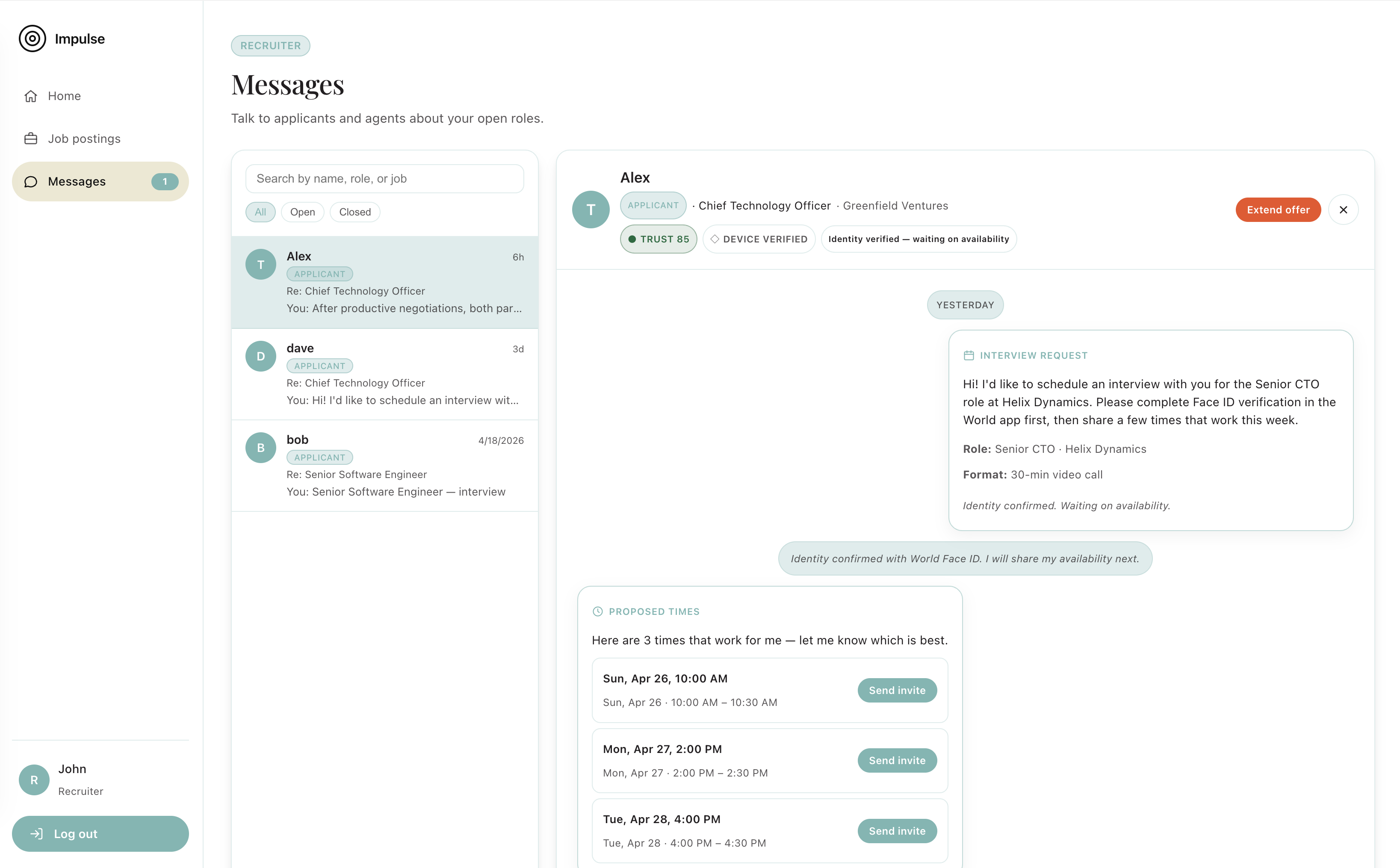
Recruiter Messages
From Internship Frustration to a Trust-First Hiring Platform
The Problem We Lived Through
We built this project because we were living the problem ourselves.
Searching for internships in the Canadian market felt discouraging: too many applications, too little feedback, and no clear way for strong candidates to stand out. It often felt like qualified students were getting lost in noise.
As we talked with classmates and friends, we realized this was not an isolated experience. Many people around us felt stuck in the same cycle of uncertainty and silence, even when they were putting in real effort.
Listening Before Building
Before writing much code, we focused on listening. We spoke with students, peers, and people in industry to understand what was actually broken. We asked directly about recruiting pain points, and the pattern was consistent on all sides.
Candidates need stronger ways to show real signal, not just submit another form.
Employers need more trust in the pipeline, not more volume.
Those conversations shaped our direction more than any assumption we started with.
What Inspired the Core Idea
A major source of inspiration was the role of identity and trust in digital systems, especially World ID and the idea of a unique, privacy-preserving identifier. The more we learned, the more we believed this could be powerful in hiring.
When platforms can better verify that people are real, the process improves for everyone. There is less noise, more credibility, and better quality interaction between candidates and employers. That became one of the central principles behind our product.
\[\text{Match Quality} \propto \frac{\text{Trust} \times \text{Relevance}}{\text{Noise}}\]
This simple lens guided many of our product decisions.
How We Built It
We built through rapid iteration with a tight feedback loop. We planned quickly, shipped quickly, gathered reactions, and refined continuously. At every stage, we pulled in different opinions from colleagues, users, and industry conversations.
At the same time, we worked hard to preserve the core features we believed made the platform stand out. That balance was essential: stay open to new input, but do not lose the product’s identity.
This approach helped us move fast without becoming scattered.
What We Learned
We learned that real-world feedback is everything. The best decisions came from direct conversations, not from guessing. We also learned that hiring products are fundamentally trust systems. If trust is weak, everything else feels harder for both sides.
As a team, we learned how important it is to align on product principles early. Shared principles made it possible to handle conflicting opinions, maintain momentum, and keep the build focused under pressure.
Challenges We Faced
We faced the complexity of designing around identity and verification in a way that is both useful and respectful of privacy. Integrating those ideas required careful thought about user experience, trust, and adoption.
Why This Matters to Us
This project is personal. It came from our own internship search experience and was shaped by the voices of people around us. We did not want to build just another application portal. We wanted to build something that makes opportunity feel more fair, more credible, and more human.
At the center of our story is a simple belief: when people can prove who they are and present meaningful signal, better opportunities become possible, especially in difficult markets.
Built With
- express.js
- gcp
- gemini
- node.js
- react
- worldu


Log in or sign up for Devpost to join the conversation.