-
-
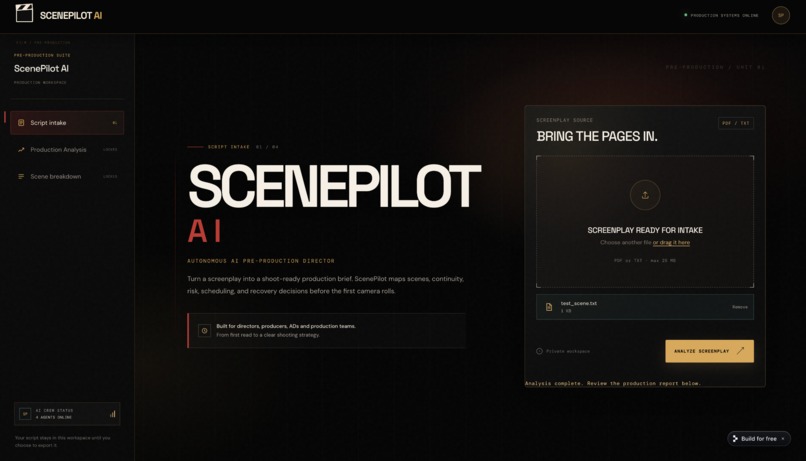
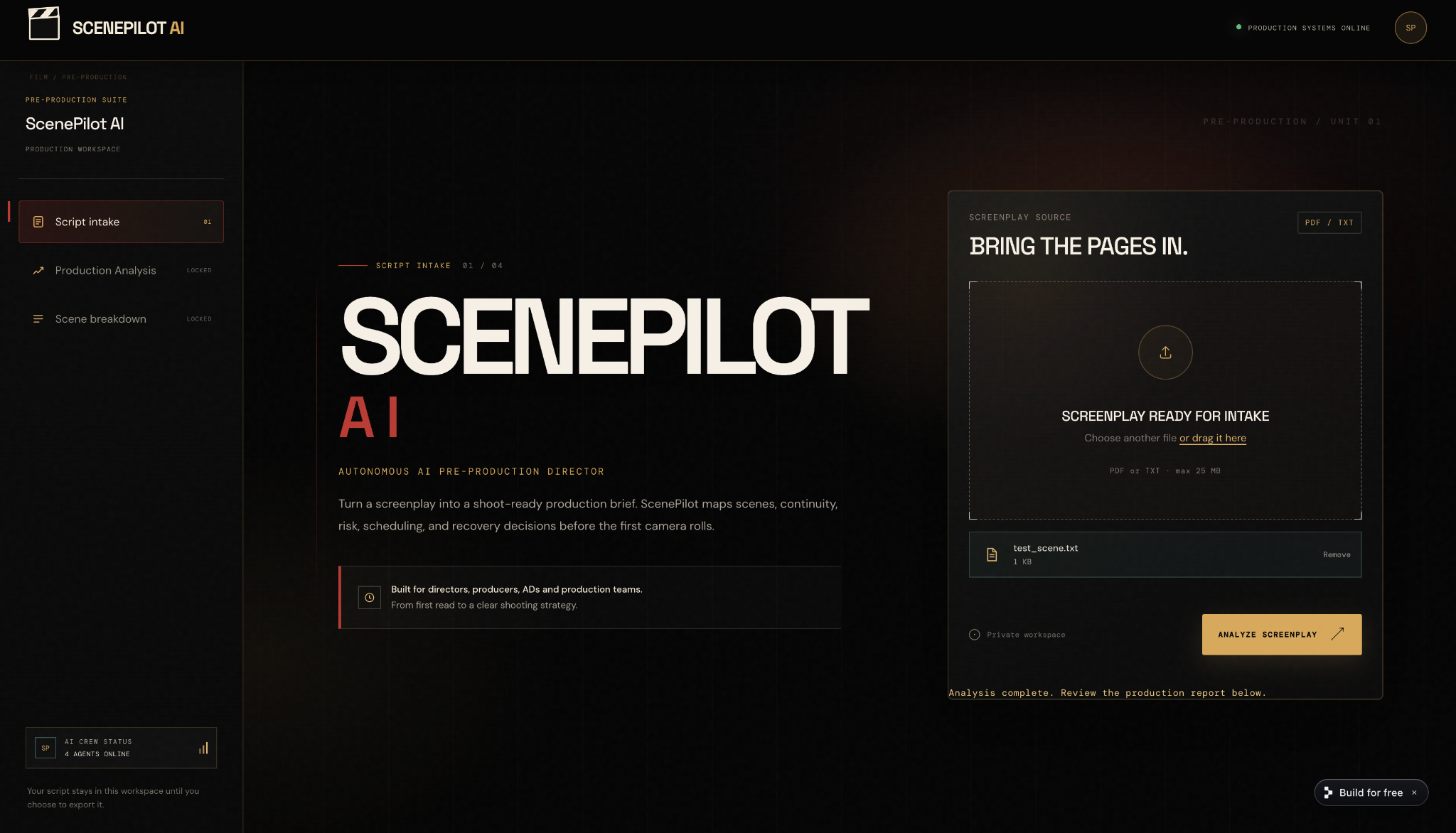
ScenePilot AI — Upload a screenplay to begin AI-powered pre-production analysis.
-
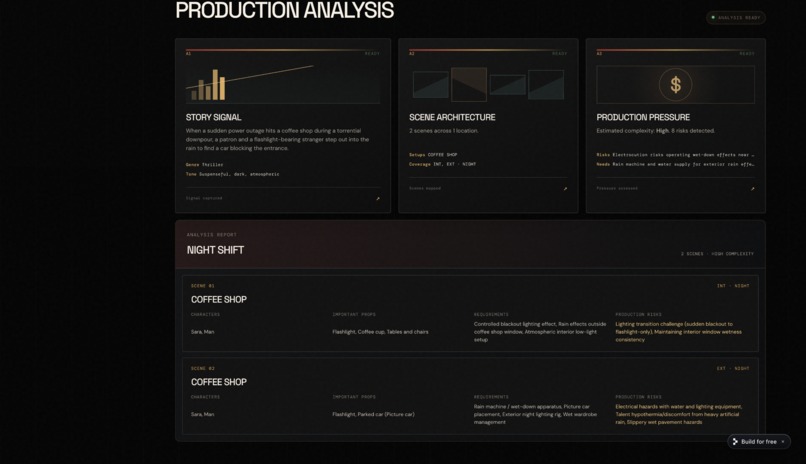
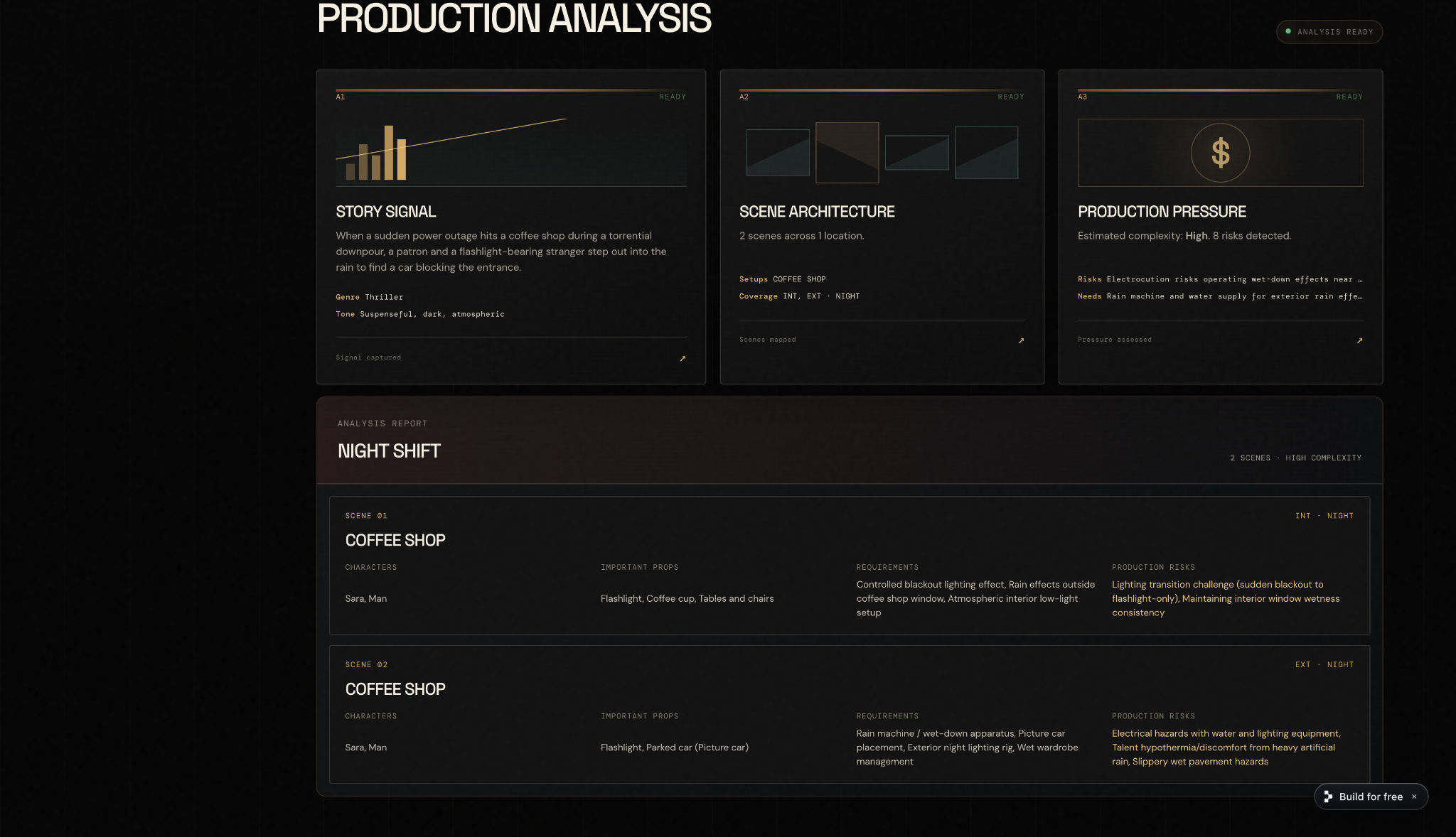
Production Analysis — ScenePilot transforms the screenplay into structured scenes, requirements, risks, and production insights.
-
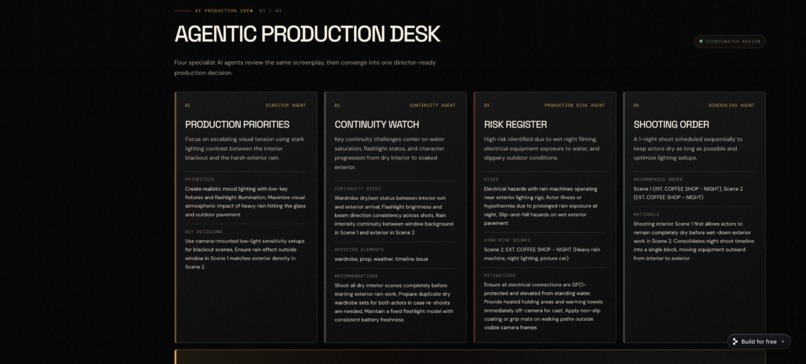
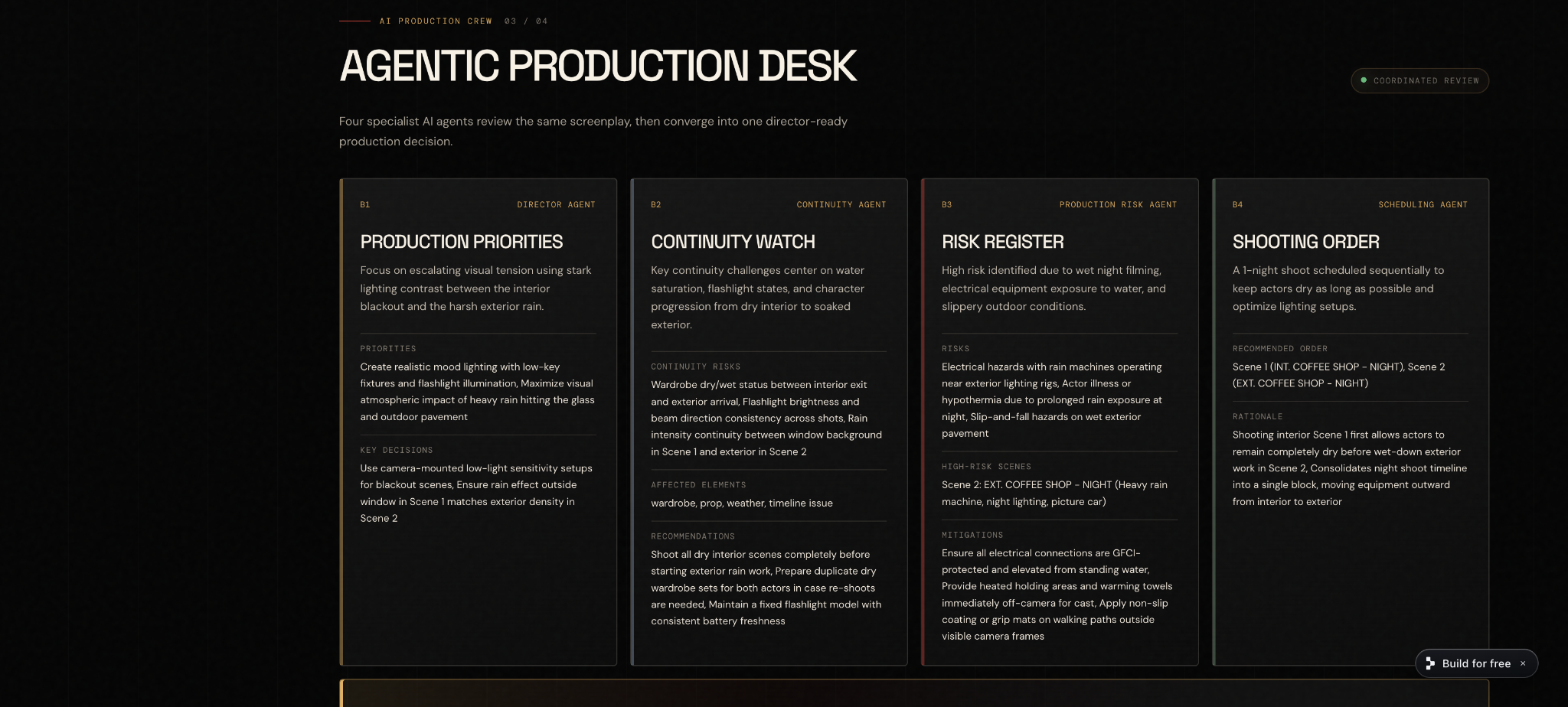
Agentic Production Desk — Director, Continuity, Production Risk, and Scheduling agents analyze the production from specialized perspectives.
-
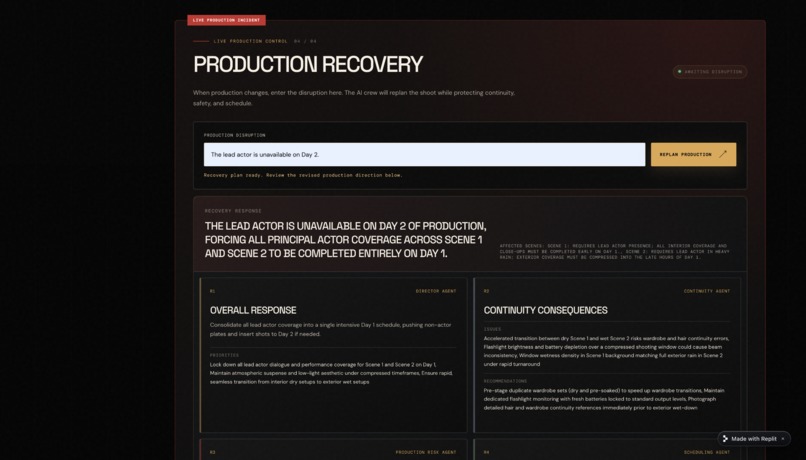
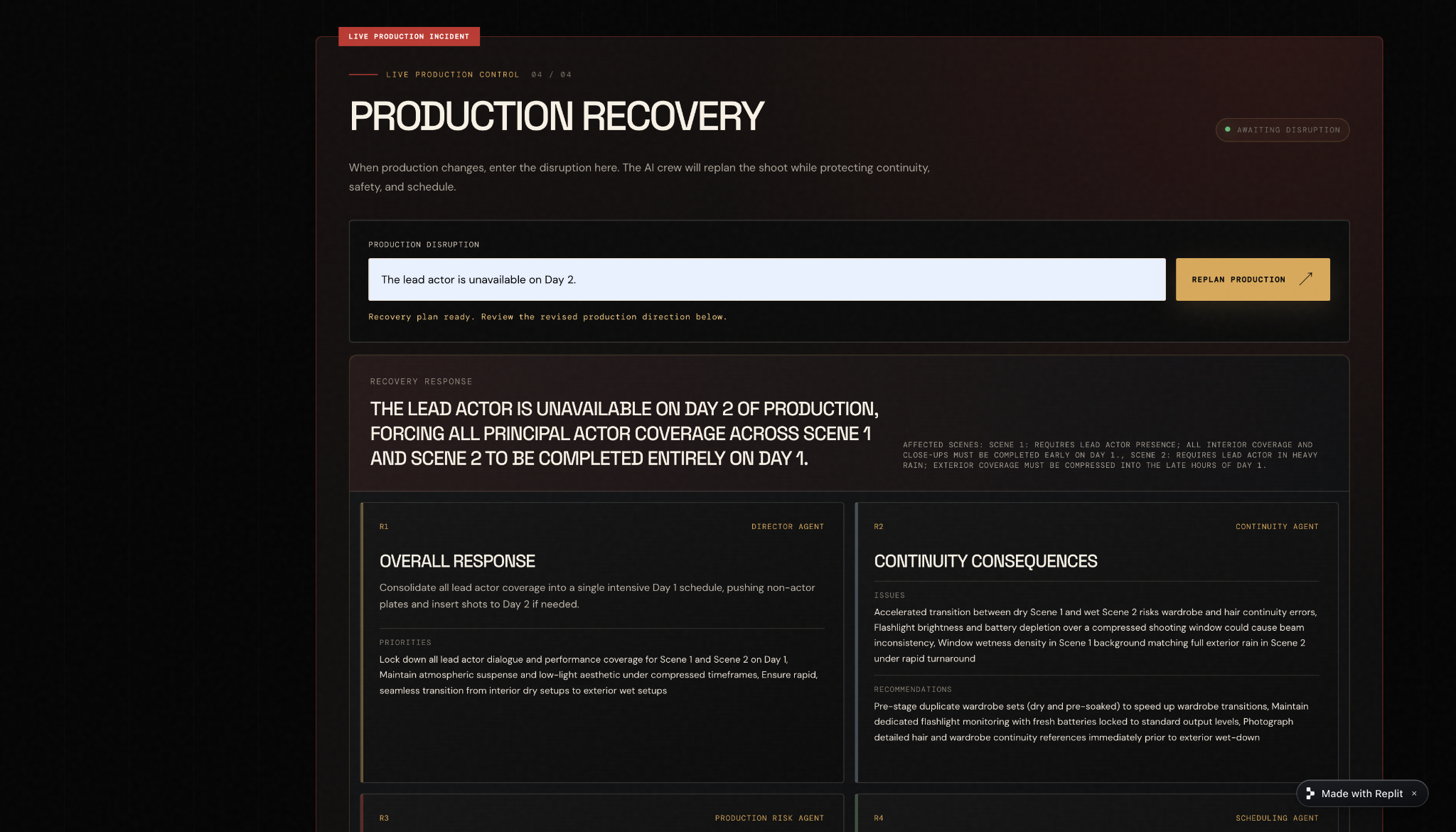
Production Recovery — ScenePilot responds to unexpected disruptions and generates a revised production strategy.
Inspiration
I have always enjoyed watching movies, and it made me curious about what actually happens behind the scenes to produce them. I started thinking about how difficult it must be for production teams to manage so many things at the same time. Film productions can face unexpected delays because of rain, actor availability, location problems, scheduling conflicts, or other last-minute changes. A single disruption can affect the entire shooting plan and create more work for different members of the production team. That made me think: what if AI could help a production team not only plan a screenplay, but also react when something suddenly goes wrong?
That idea became ScenePilot AI — an AI-powered pre-production director designed to analyze a screenplay, coordinate different production perspectives, and help the team create a new plan when unexpected disruptions happen.
What it does
ScenePilot AI is an autonomous AI pre-production director that turns a screenplay into a structured, production-ready plan.
A user can upload a screenplay, and ScenePilot analyzes its scenes, characters, locations, props, production requirements, complexity, and possible risks.
The screenplay is then examined from four different production perspectives:
- Director Agent — focuses on creative and production priorities.
- Continuity Agent — tracks characters, props, wardrobe, locations, and timeline consistency.
- Production Risk Agent — identifies difficult or logistically complex production elements.
- Scheduling Agent — recommends an efficient shooting strategy.
These perspectives are combined into a final Director Decision so that the production team receives one clear and actionable strategy.
ScenePilot also includes Production Recovery. If something unexpected happens during filming, such as an actor becoming unavailable, the user can enter the disruption and ScenePilot generates a revised production strategy.
How we built it
ScenePilot AI was built as a web application with a Python and Flask backend and a cinematic HTML, CSS, and JavaScript interface.
Gemini powers the screenplay analysis, production reasoning, specialist agent perspectives, Director Decision, and disruption recovery workflow.
For the Replit partner track, Replit Agent was used during the development process, and the finished application is deployed on Replit.
The workflow is:
Screenplay Upload → Gemini Analysis → Production Breakdown → Specialist Agent Perspectives → Director Decision → Production Plan → Production Recovery
Challenges we ran into
One of the biggest challenges was turning the idea into a working end-to-end application instead of only creating a concept or interface.
We also had to make the AI output structured enough for different production responsibilities while keeping the results useful and understandable. Another challenge was implementing Production Recovery so that an unexpected disruption would result in a meaningful revised strategy rather than simply repeating the original screenplay analysis.
Deployment and integration also required debugging, especially while connecting the frontend, Flask backend, Gemini requests, environment variables, and Replit deployment.
Accomplishments that we're proud of
We are proud that ScenePilot AI became a functioning application where a user can upload a real screenplay and receive a complete production analysis.
We are especially proud of the multi-perspective production workflow and Production Recovery. Instead of stopping at screenplay summarization, ScenePilot uses AI to support production decisions and respond to changing circumstances.
We also successfully deployed the application so that the complete workflow can be demonstrated through a public web application.
What we learned
Building ScenePilot AI taught us that creating an AI application is not only about sending a prompt to a model. The AI output has to become part of a useful workflow where each step has a clear purpose.
We learned more about working with Gemini, structuring AI responses, building Flask endpoints, connecting a frontend to an AI backend, handling API errors, protecting API credentials with environment variables, and deploying a working application with Replit.
Most importantly, we learned how an initial idea can be developed into an end-to-end prototype by continuously testing, debugging, and improving it.
What's next for ScenePilot AI
The next step would be expanding ScenePilot into a more complete filmmaking production platform.
Future versions could support larger screenplay formats, deeper scene and character continuity tracking, collaborative production teams, production budgets, location management, call sheets, and more advanced scheduling.
We would also like Production Recovery to handle multiple simultaneous disruptions and continuously update the production plan as conditions change.
Our long-term goal is for ScenePilot AI to become an intelligent coordination layer that helps filmmakers move from screenplay to production while adapting to the unpredictable nature of filmmaking.

Log in or sign up for Devpost to join the conversation.