-
-
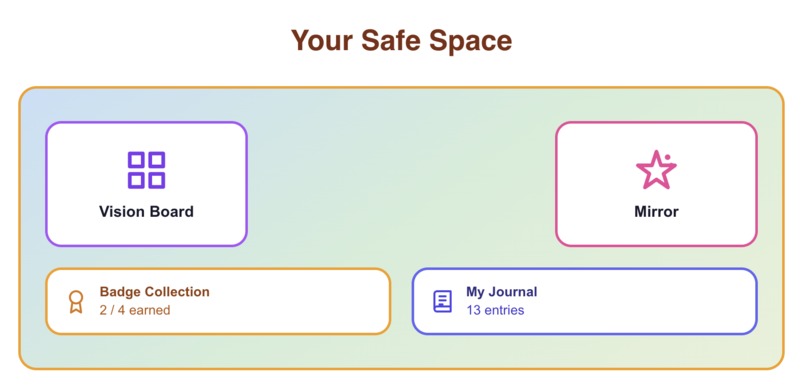
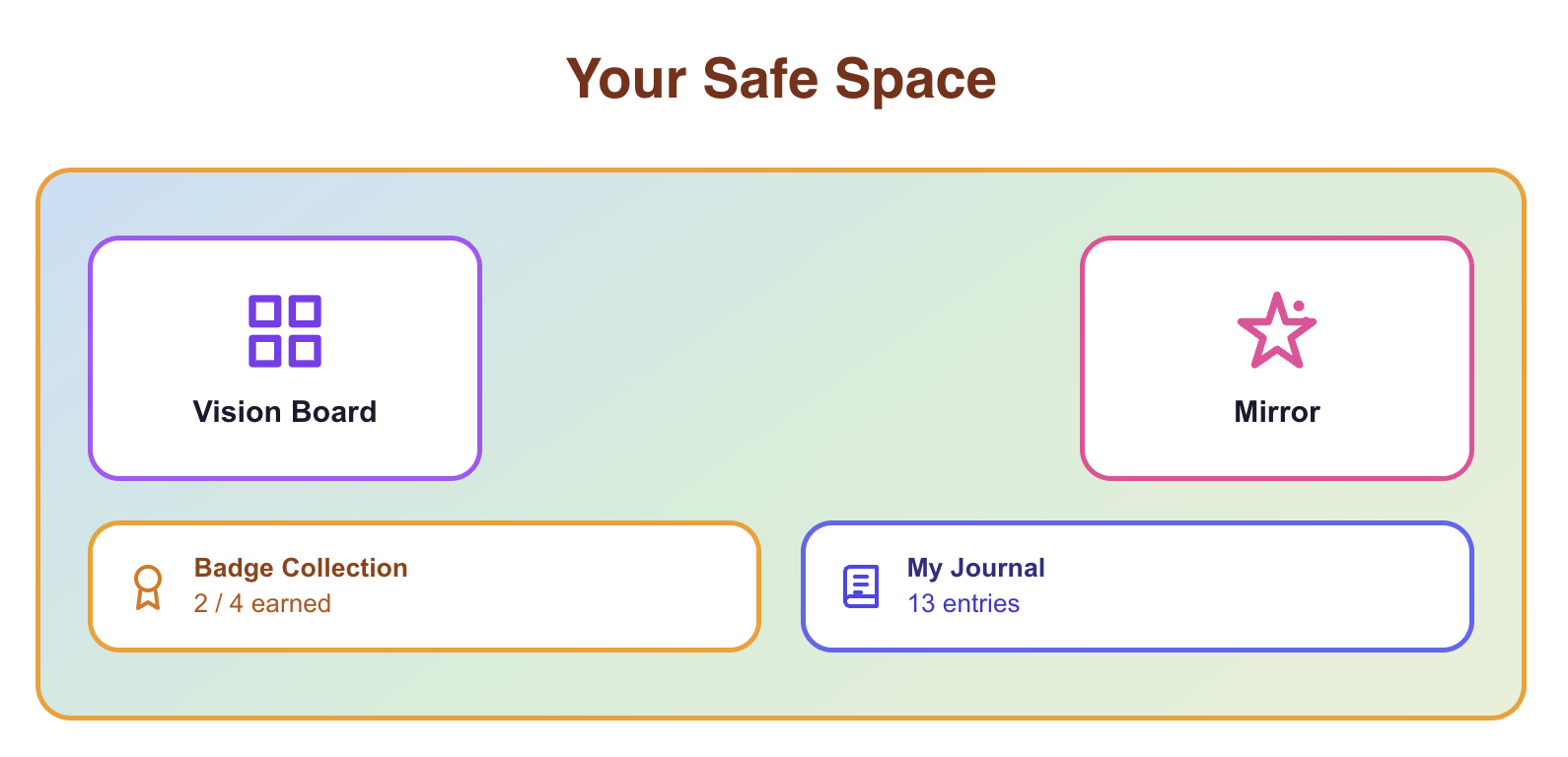
Home: A safe space to reflect.
-
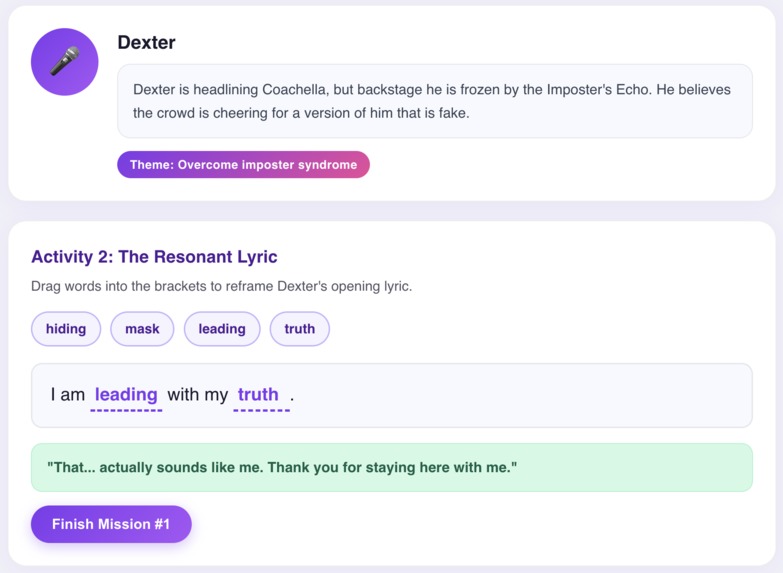
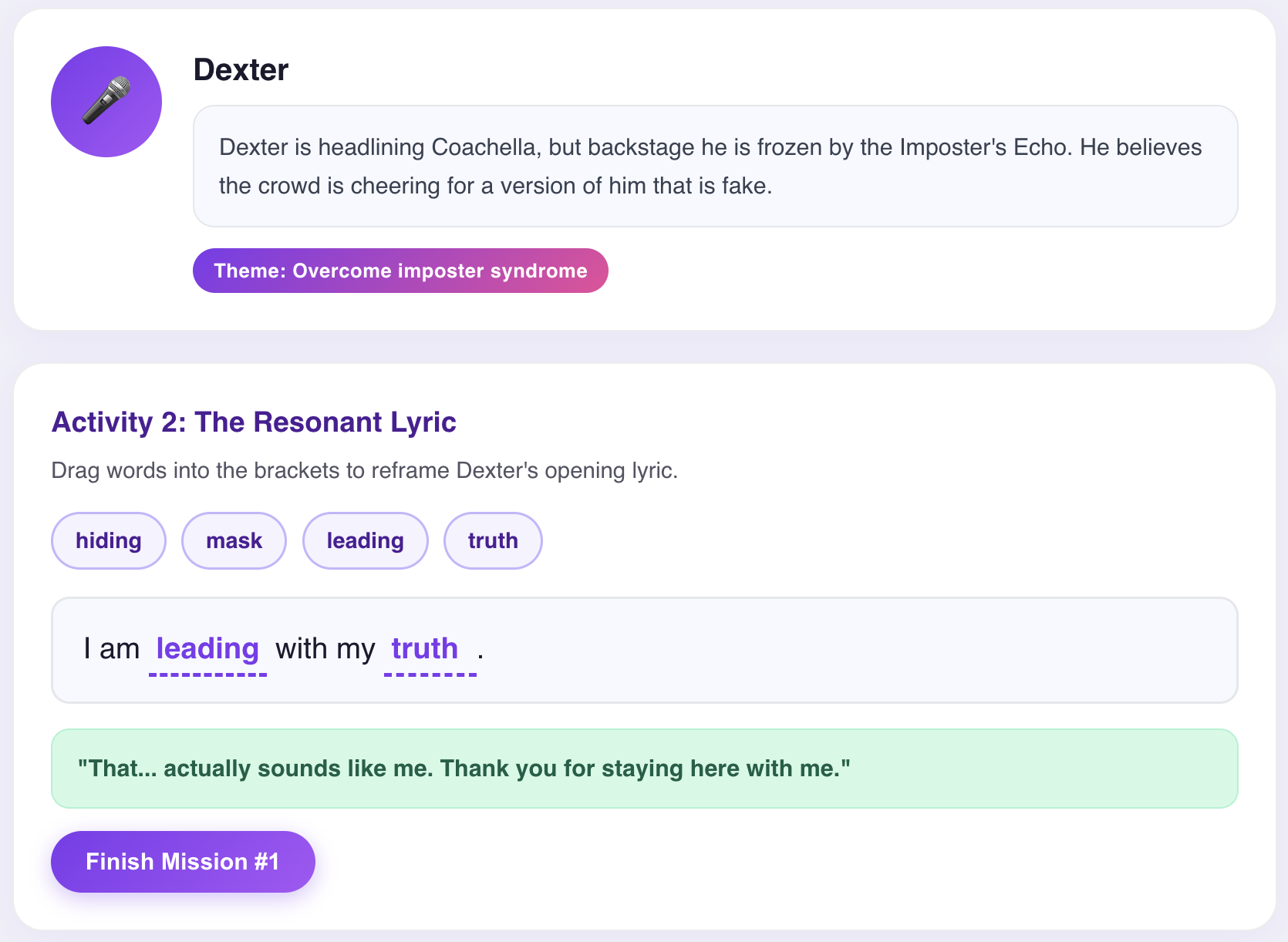
Lyrical Reframing Game: Rephrase the negative thoughts.
-
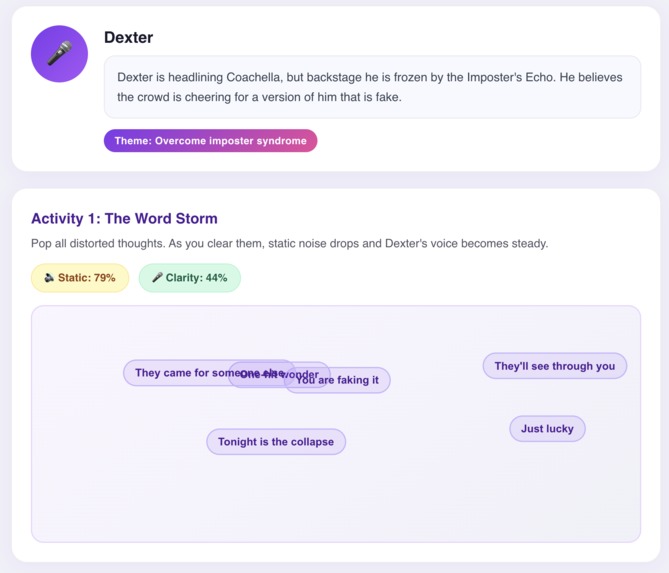
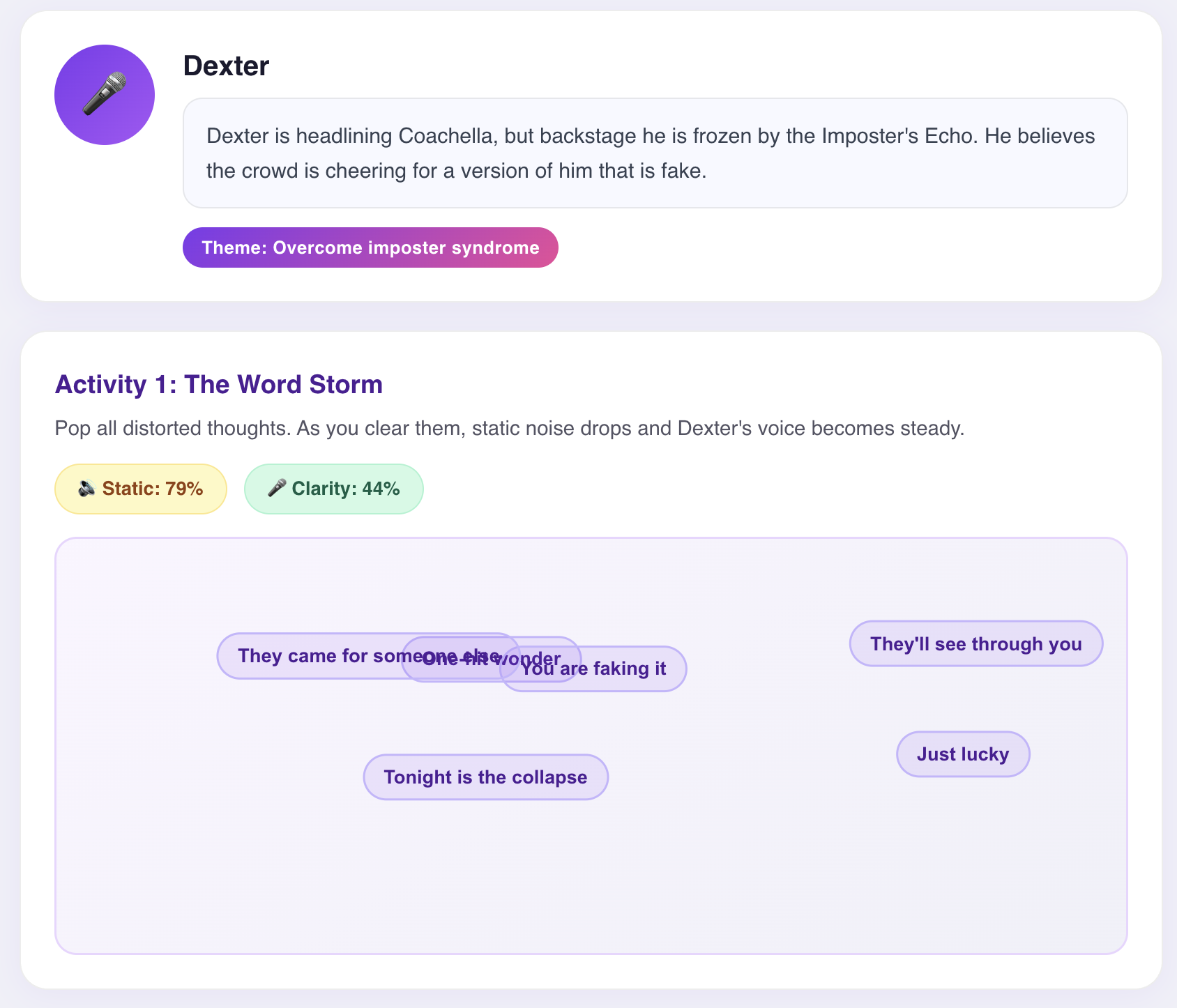
Word Storms Game: Pop the negative thoughts.
-
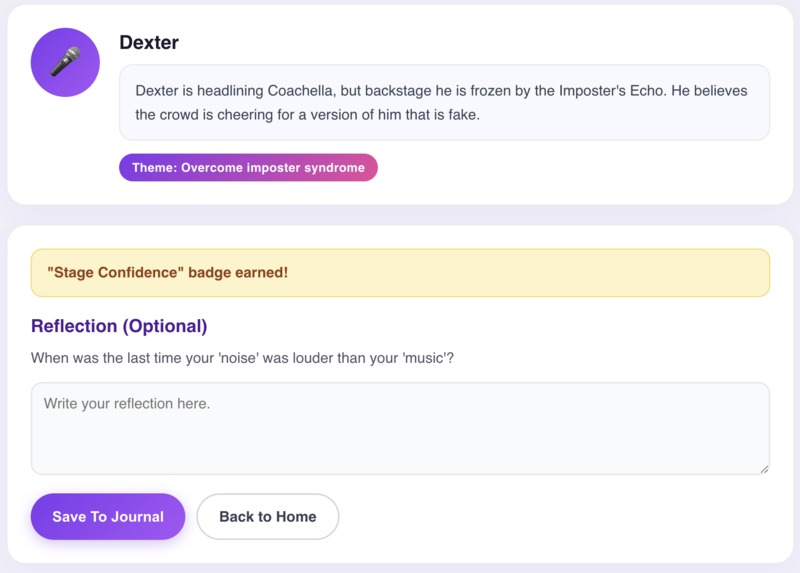
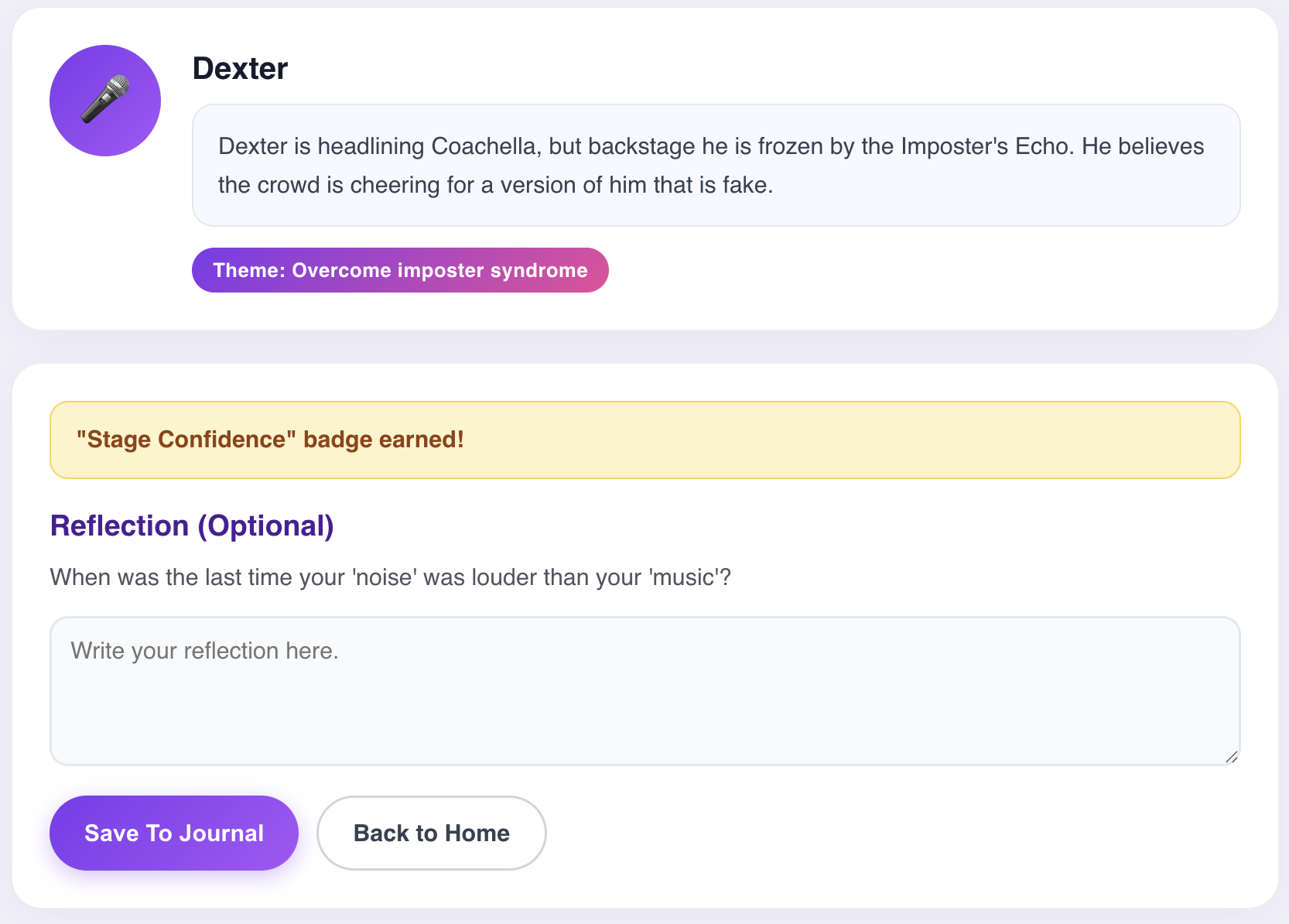
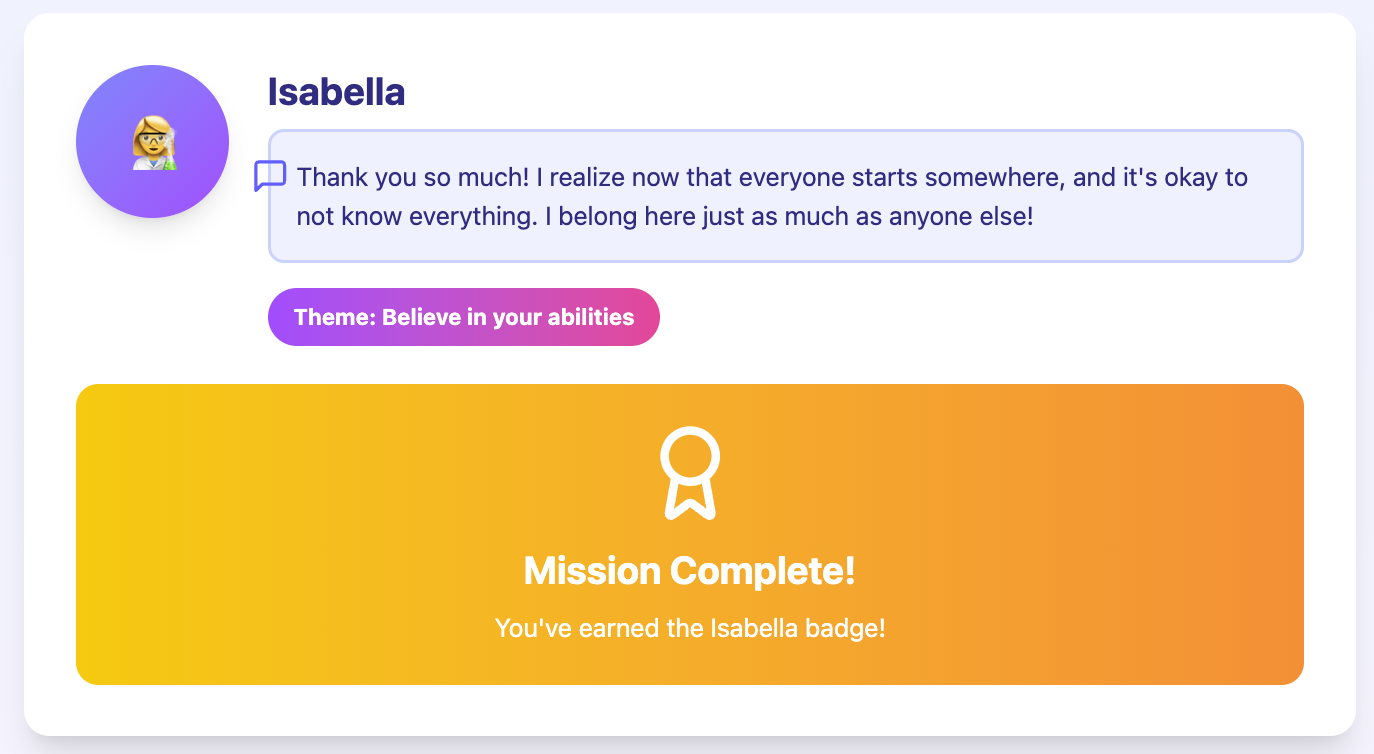
Reflection: Connect with the character.
-
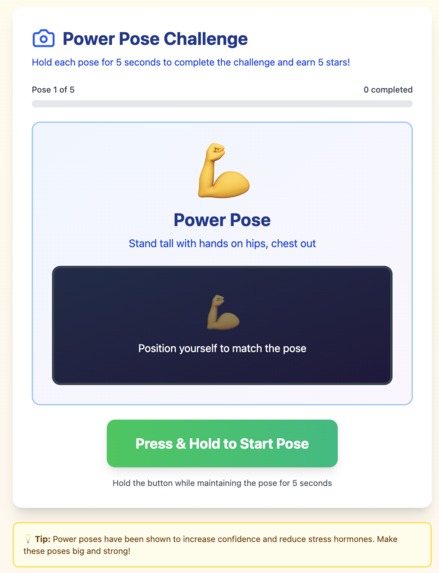
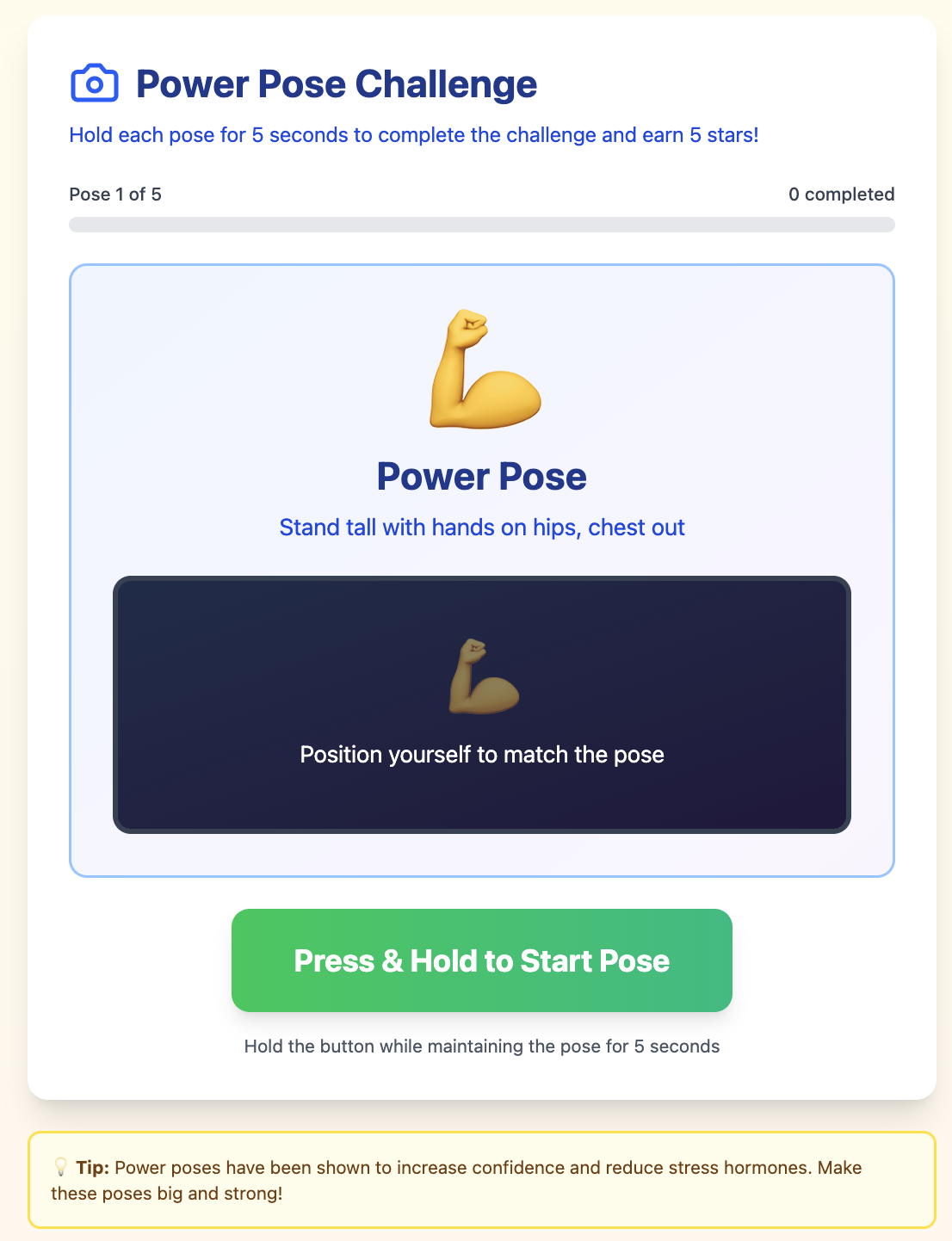
Stretch goal: Power Pose
-
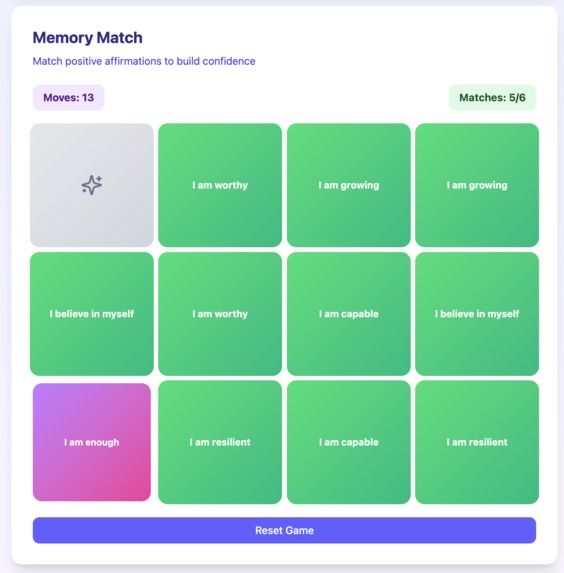
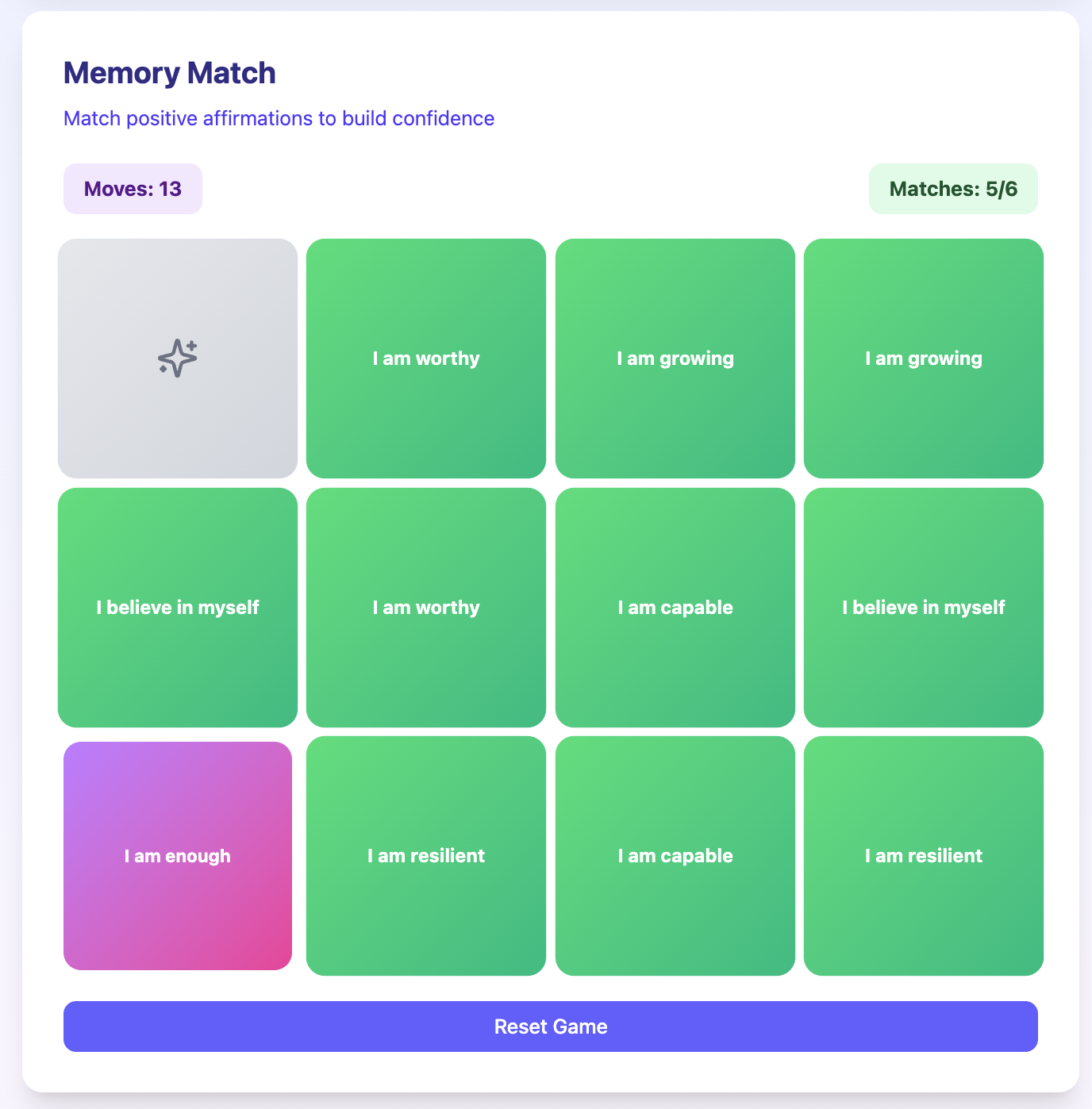
Memory Match: Match the affirmations.
-
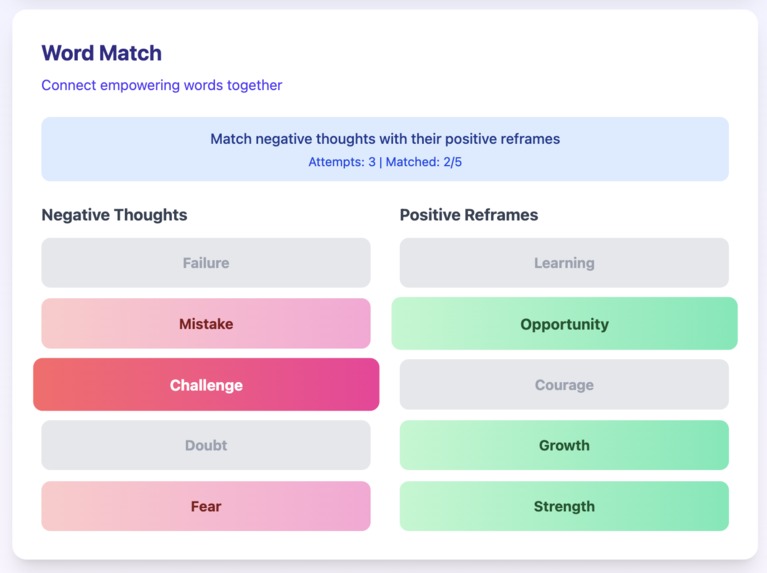
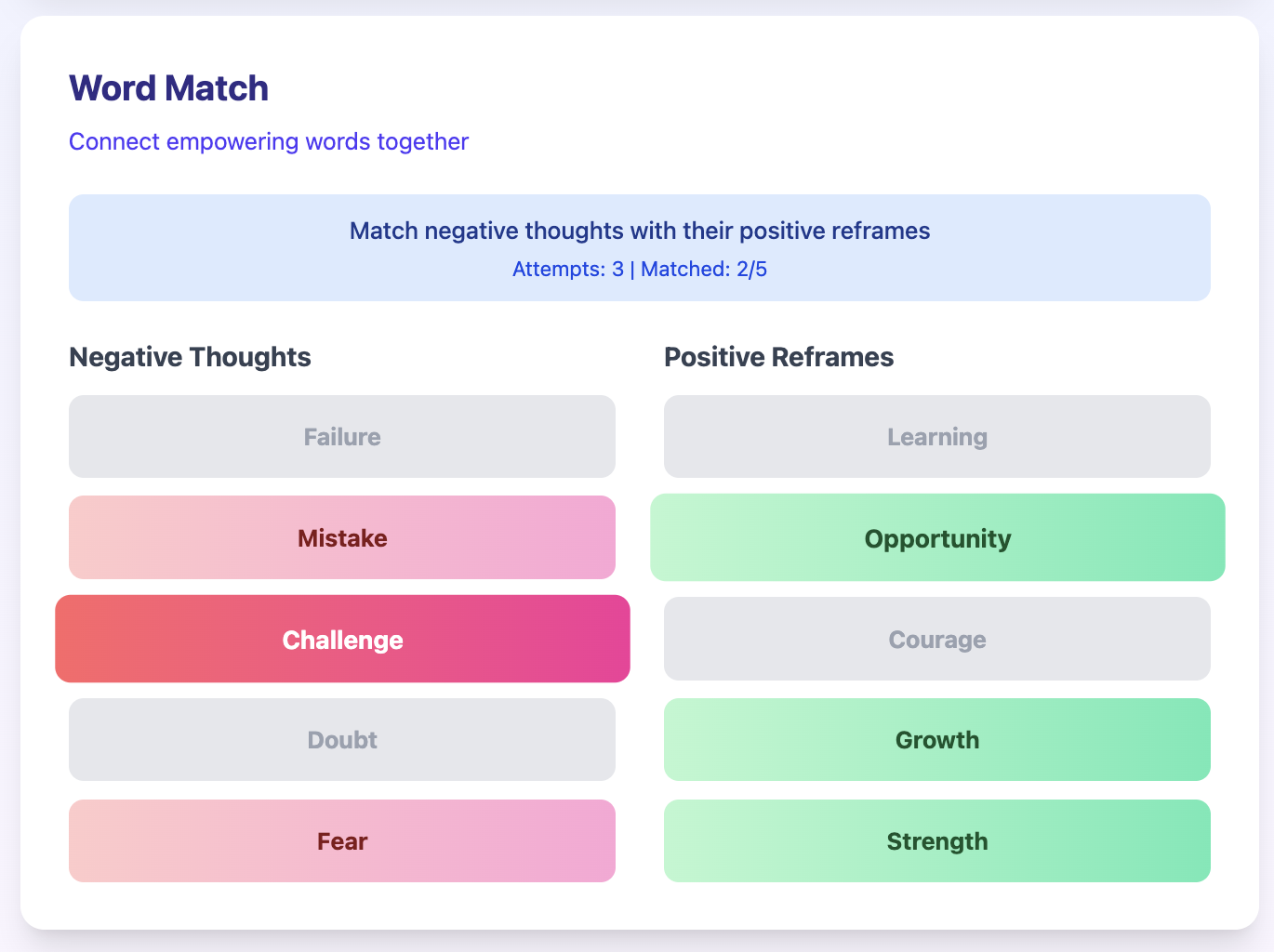
Word Match: Reframe the terms.
-
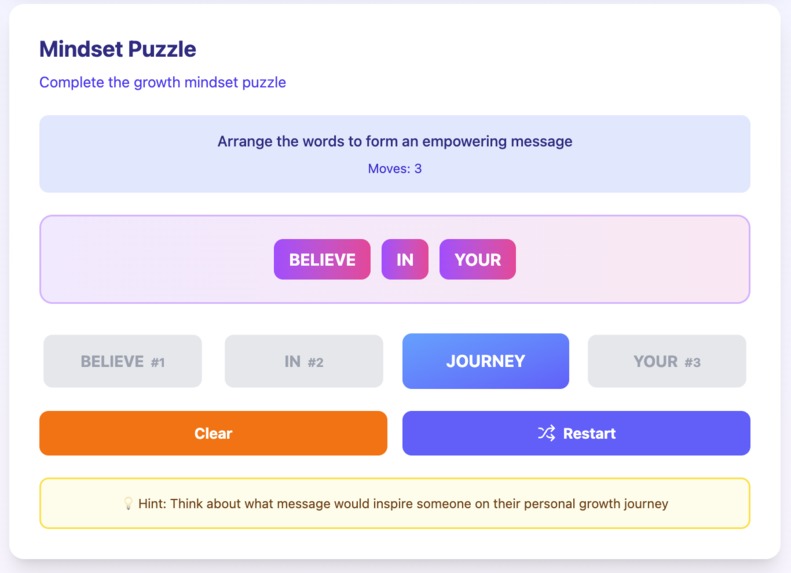
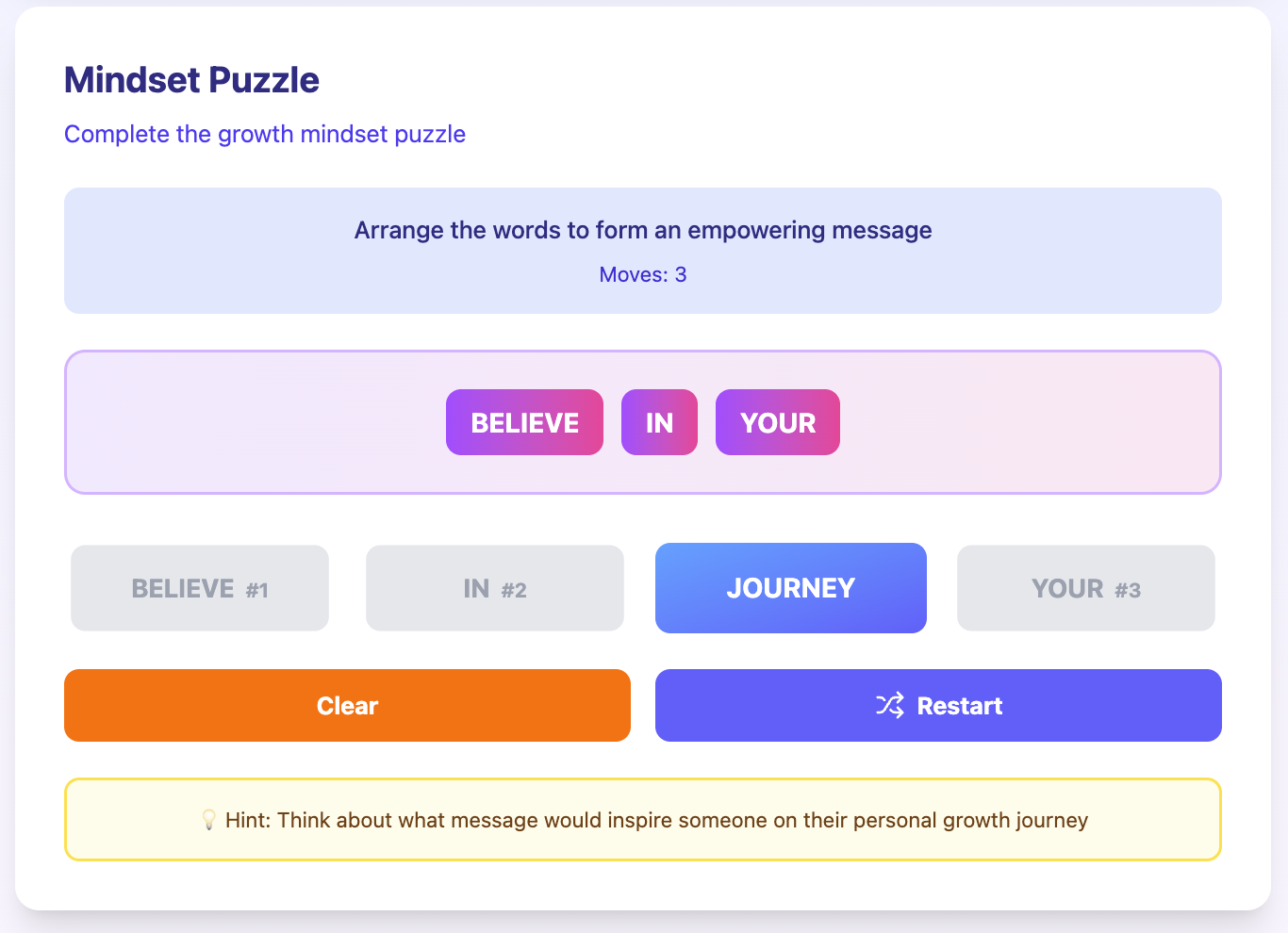
Mindset Puzzle: Build affirmations.
-
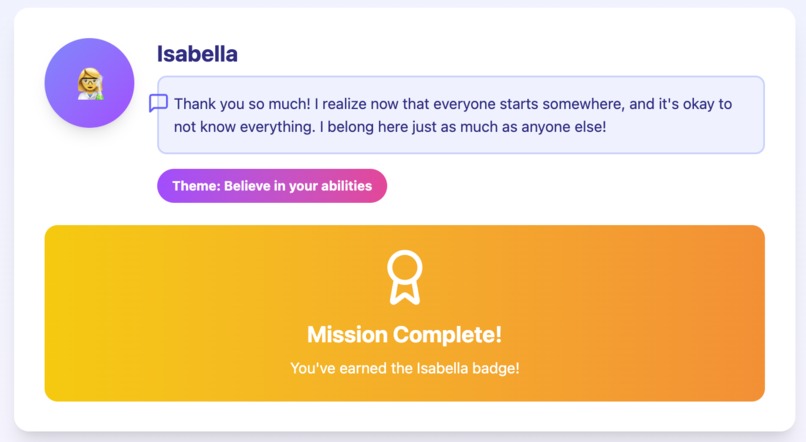
Earn badges for completed missions!
-
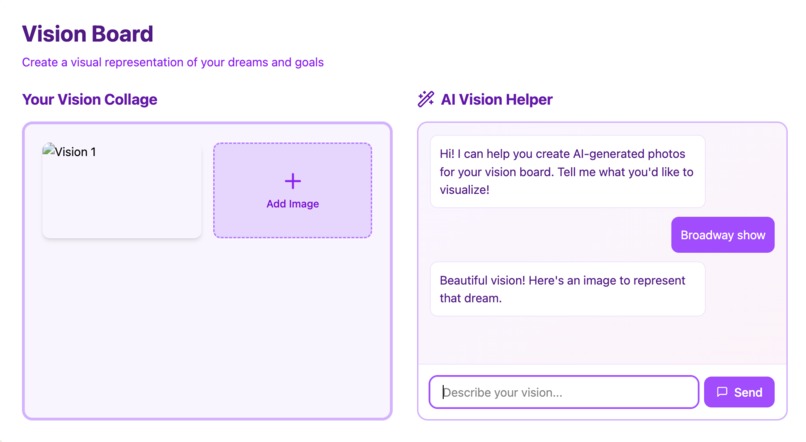
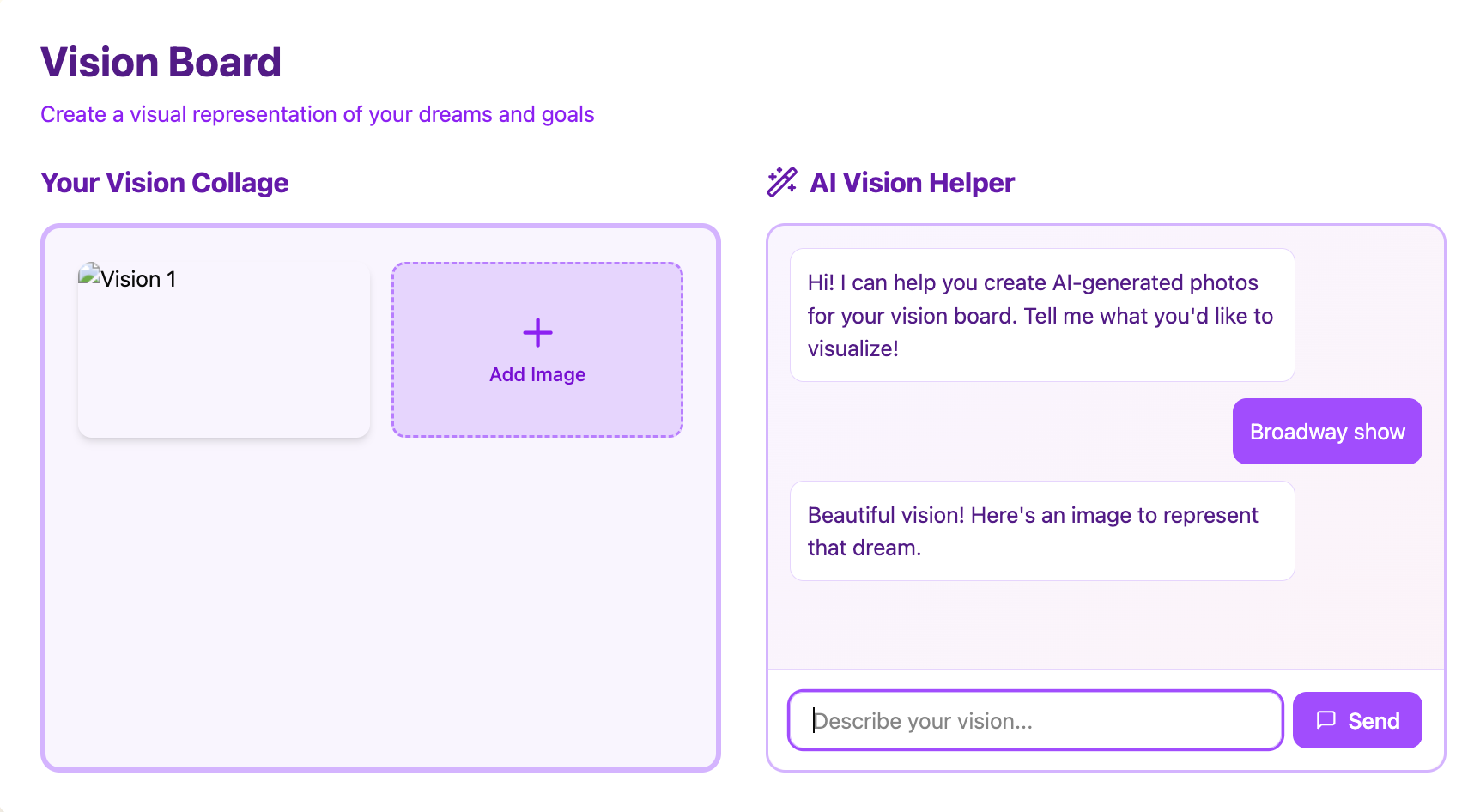
Stretch goal: DIY Vision Board
-
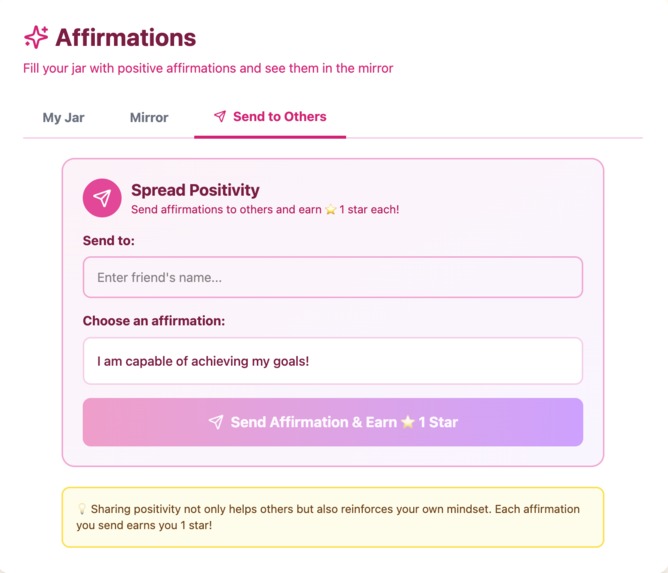
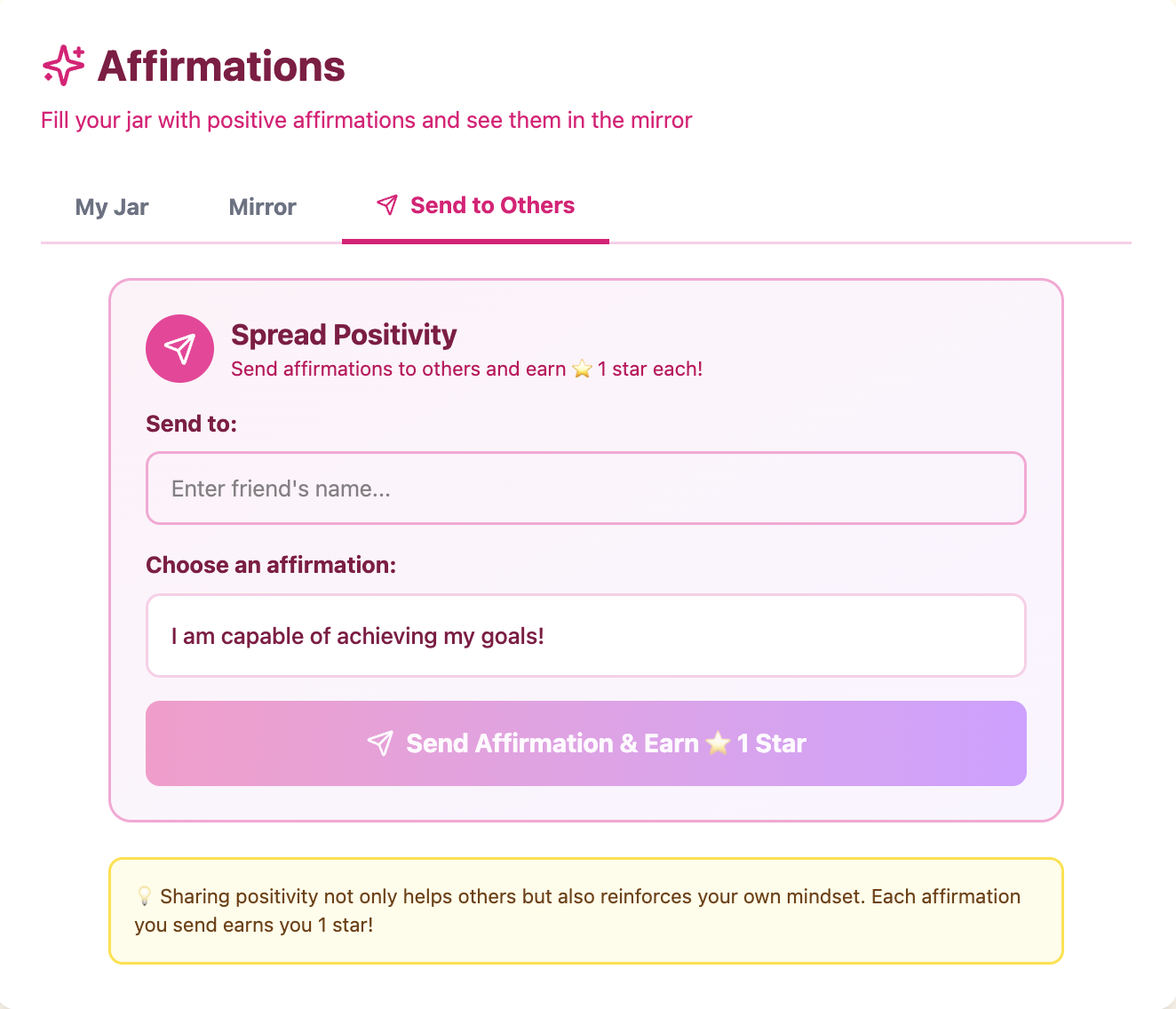
Stretch goal: Exchange Affirmations
Inspiration
Imposter syndrome often creates a cognitive dissonance where we fail to extend the same grace and encouragement to ourselves that we naturally offer to our friends. While we would never tell a struggling peer they are a fraud, the "Imposter’s Echo" convinces us that our own skills are nonexistent. So, I crafted a mental wellness application that specifically targets this phenomenon, creating an immersive world where players develop transferable, daily-life skills to reinforce their belief in their own abilities.
What it does
Imposter-rescue is an immersive, interactive journey designed to bridge the gap between external success and internal self-doubt. Set in a vibrant world of music festivals, science labs, and dance studios, the experience transforms the abstract struggle of imposter syndrome into a series of tangible, gamified missions. Players step into the role of a mentor for characters like Dexter, a Coachella headliner psyched out by the "Imposter’s Echo," helping them navigate their deepest anxieties through games that resonate with the players.
The world is built on the philosophy of "Intrinsic Momentum". Through activities like Word Storms, where players physically clear away distorted, intrusive thoughts, and Lyrical Reframing, where they help characters rewrite their internal narratives, the experience provides a practical toolkit for dismantling self-doubt. Imposter Rescue is more than a game; it’s a space to silence the noise of perfectionism and amplify the truth of one's own abilities.
How I built it
The building process began with deep research into imposter syndrome games and therapeutic activities, which I then coupled with reflections on my own personal experiences and mindfulness practices to create authentic storytelling. After ideating the games, I brought the virtual world to life using Figma Make to design the visual assets. I developed the final web application using React and TypeScript, integrating the Web Speech API to create a multi-sensory experience that combines visual gameplay with dynamic auditory feedback.
Challenges I ran into
The primary challenge during development was managing an abundance of ideas and learning how to scale down to a feasible MVP. I found myself constantly balancing breadth with depth, debating whether to include many different missions and games or focus on perfecting one high-impact mission to start with. Navigating these design trade-offs required strict prioritization to ensure a proof of concept that highlights the core emotional mechanics of the game.
Accomplishments that I'm proud of
I am incredibly proud of the technical and creative growth achieved during this project, particularly in learning how to design high-fidelity interfaces with Figma Make. Beyond the code, I am proud of exploring diverse mediums for teaching—such as audio, storytelling, and interactive play—to create a cohesive mental health tool. Seeing these disparate elements come together to create a resonant character arc was a significant milestone for the project.
What I learned
This project taught me the power of teaching through activity rather than traditional lectures. Instead of a monotonous training module where the answers to every scenario are so obvious, I focused on immersive gameplay and storytelling that resonates with users. I learned that by leading players through a character's journey, I could facilitate "Aha!" moments where the user discovers truths about themselves naturally, making the emotional lessons far more impactful than a standard educational module where the lessons are thrust upon you to memorize rather than internalize.
What's next for Imposter Rescue
The future of Imposter-Rescue involves bridging the gap between the virtual and physical worlds through augmented reality. I plan to create an AR posing game, utilizing "power poses" that are proven to boost confidence. I also hope to build a "Museum of Stories," a community space where users can exchange accounts of their personal journeys and realize they aren't alone in their unspoken struggles. Additionally, I want to implement an Affirmation Exchange and Mirror feature, where users can send affirmations to others and take mirror selfies with those supportive words overlaid on the glass.
Figma Make
Version 2: MVP Prototype – Narrow down the virtual world and activities. Visualize user flow of missions and games.
Version 1: Ideation – Visualize the virtual world in a web application platform and how the missions and games were discoverable.
Built With
- figmamake
- react
- typescript
- webspeechapi

Log in or sign up for Devpost to join the conversation.