-
-
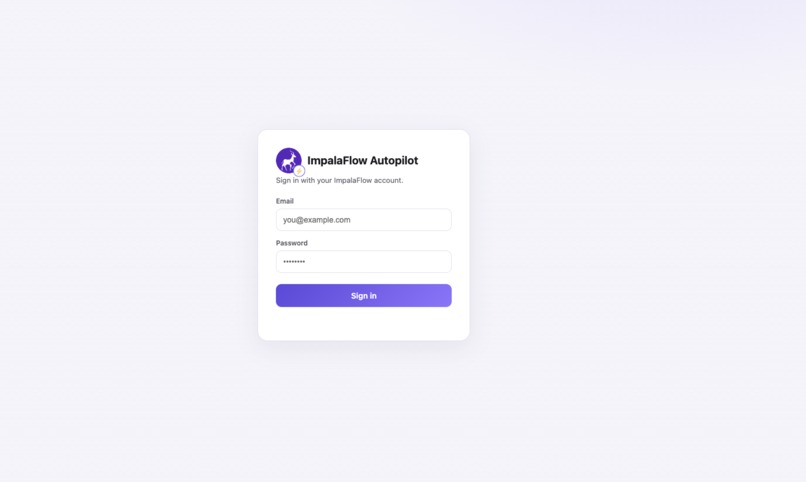
Login screen
-
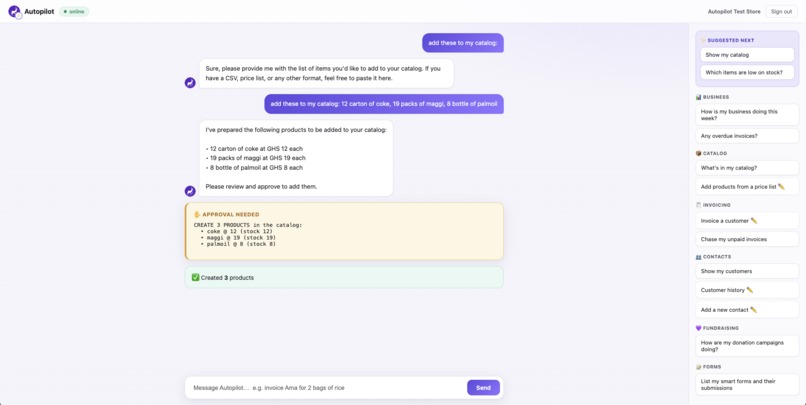
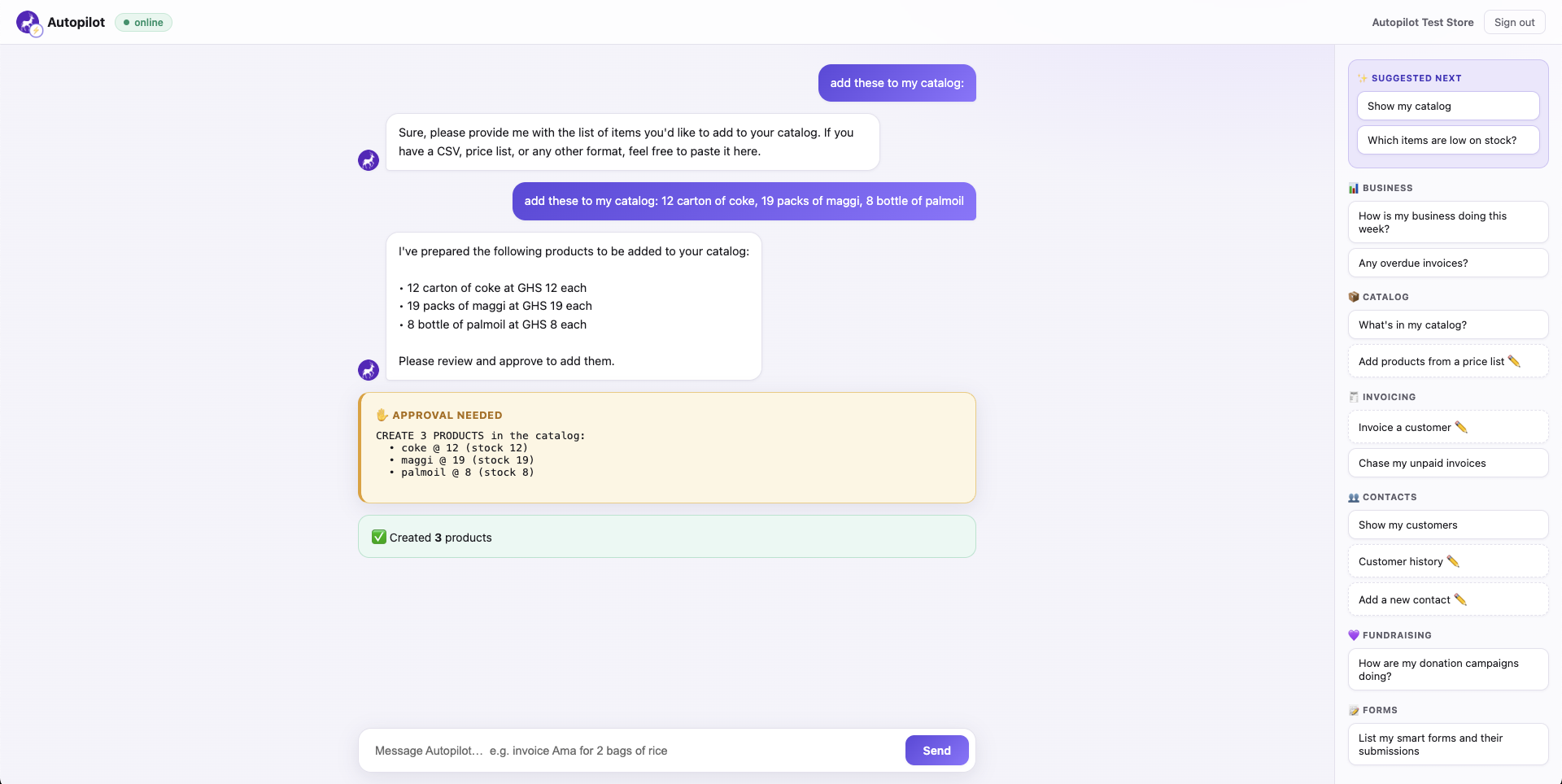
impalaflow autopilot working
-
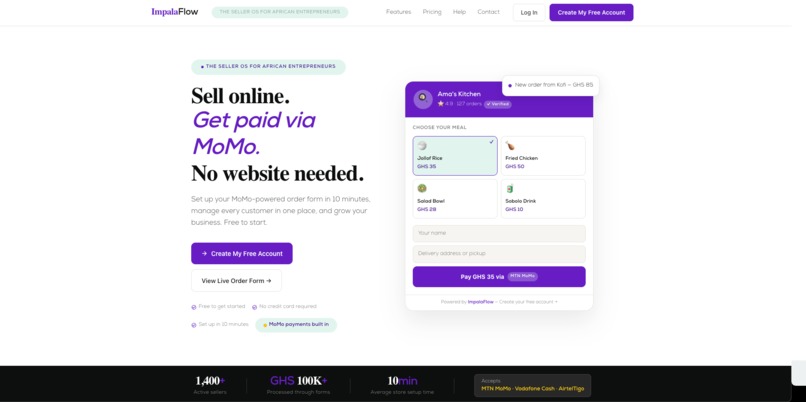
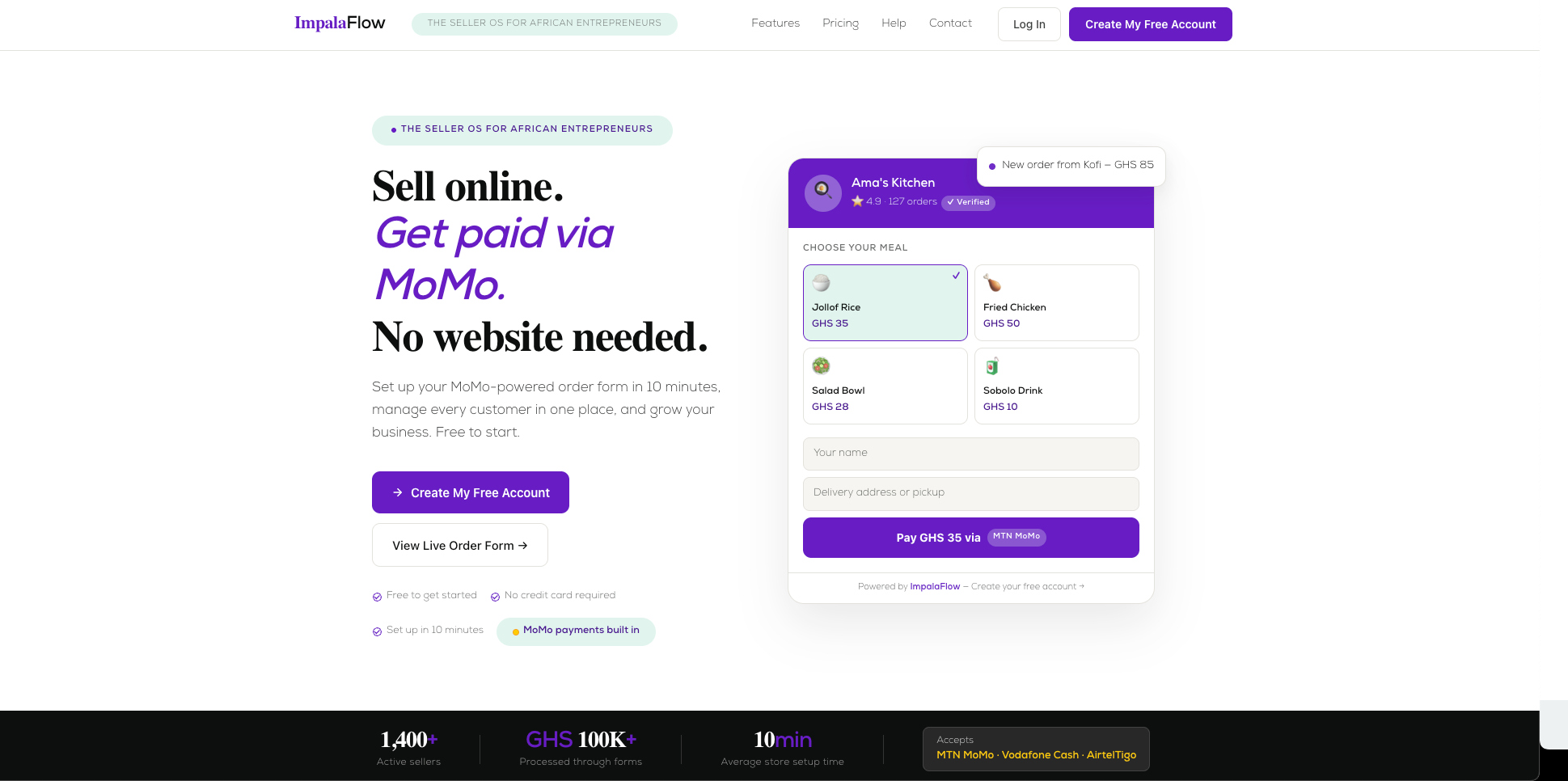
impalaflow landing page
Inspiration
ImpalaFlow is a live commerce platform for entrepreneurs across Africa. Our merchants run entire businesses from chat threads: orders arrive as "abeg how much for 2 bags of rice?", Pidgin, Swahili, French, code-switched, unstructured. Every sale means manually checking stock, typing an invoice, chasing the payment, and remembering the customer. We built the employee who does all of that and asks permission before anything leaves the building.
What it does
- Understands messy, multilingual customer messages and turns them into business actions.
- Issues real invoices: looks up the merchant's live catalogue and stock, drafts at real prices, and after a one-tap merchant approval, creates, emails, and makes the invoice payable via Paystack.
- Chases money: finds unpaid/overdue invoices and sends approval-gated payment reminders with pay links.
- Remembers every customer: past invoices, orders, total paid, balance owed, memory grounded in live business data.
- Onboards a catalogue from one paste: any messy price list or CSV becomes structured products behind a single approval card.
- Answers "how is my business doing?" across sales, invoicing, and donations with rich dashboard cards.
- Works from any MCP client: all 15 tools are exposed over the Model Context Protocol.
How we built it
A Node + TypeScript service wraps a qwen-max function-calling loop (via Alibaba Cloud Model Studio / DashScope, OpenAI-compatible) over 12 tools that drive ImpalaFlow's existing REST API, the same API our production dashboard uses, with zero backend changes. It runs on Alibaba Cloud Function Compute (Singapore) as a custom container, serving both the JSON agent API and a self-contained web dashboard. Multi-tenant by construction: the service stores no credentials; each request carries the merchant's own token. Model routing is configurable (qwen-max for orchestration, qwen-plus for dev, qwen-turbo for high-volume classification).
Challenges we ran into
- Hallucinated prices. In a live test, the model invoiced invented products at invented prices. We solved it architecturally, not with prompts: a deterministic grounding layer validates every invoice line against the live catalogue before the approval preview, and again at execution, catalogue prices always win, unknown items bounce back to the model. Invented invoices are now impossible.
- Human-in-the-loop over HTTP. A terminal can block on y/N; a web service can't. We built a propose -> approve protocol: gated actions return a preview proposal, a separate authenticated call executes it, and no approver means default-deny.
- Registry roulette. ACR Economy Edition was rejected by Function Compute, Personal Edition couldn't be created on our account, Docker Hub + FC's custom-repository image option unblocked the deploy.
Accomplishments we're proud of
Real production-readiness: a judge can open the hosted URL, sign into a demo store, and make the agent issue a real invoice with a working payment link in under a minute. It plugs into a live SaaS with real merchants and ships to them after the hackathon.
What we learned
For business agents, correctness beats eloquence: ground every number the model touches, put approval in the tool layer where the model can't route around it, and let the platform be the memory.
What's next
WhatsApp as the customer channel, qwen-vl-max photo -> product quoting, scheduled payment-recovery sweeps, and campaign drafting rolling out to ImpalaFlow's merchant base.
Built With
- alibaba-cloud
- dashscope
- docker
- fastify
- function-compute
- github
- mcp
- node.js
- paystack
- qwen
- rest-api
- typescript


Log in or sign up for Devpost to join the conversation.