-
-
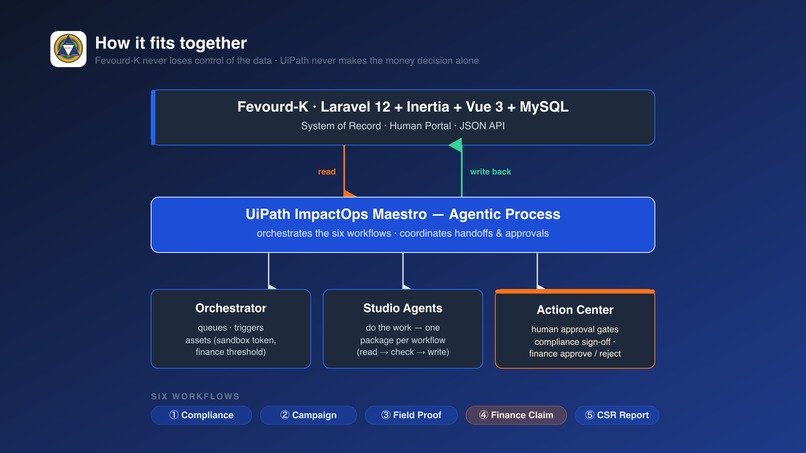
How we harness UiPath — Fevourd-K = system of record, UiPath = agentic layer
-
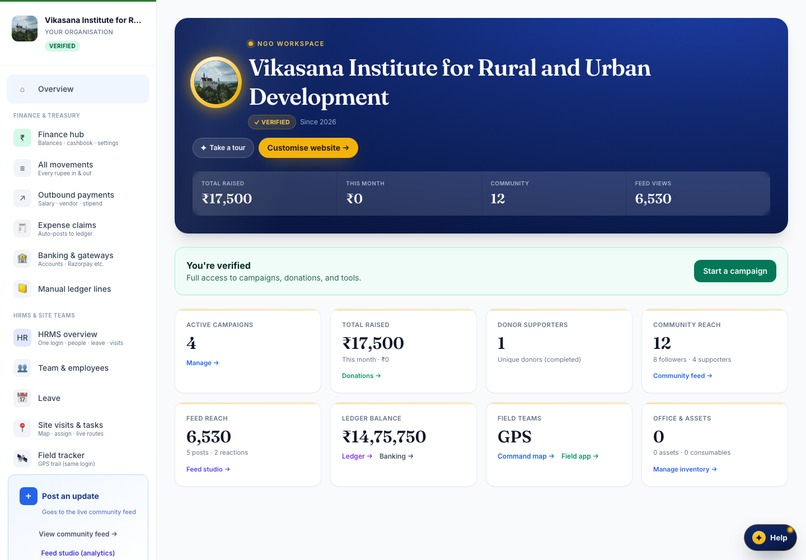
Fevourd-K — the NGO system of record
-
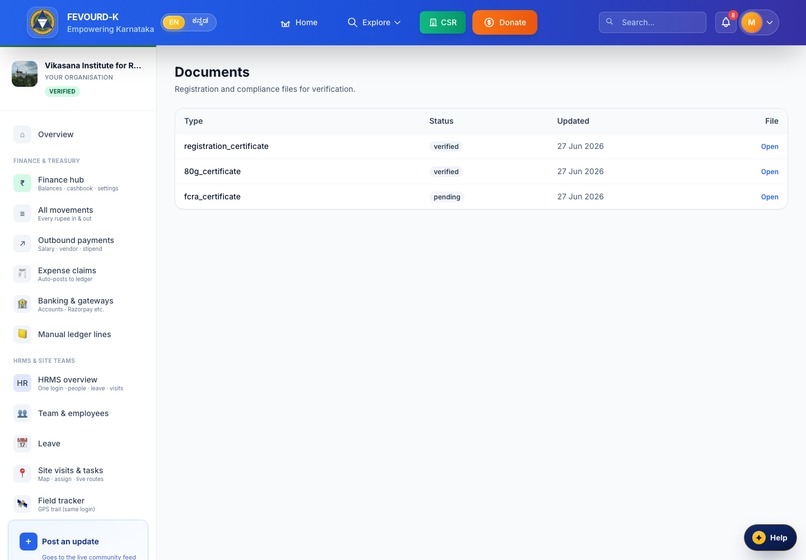
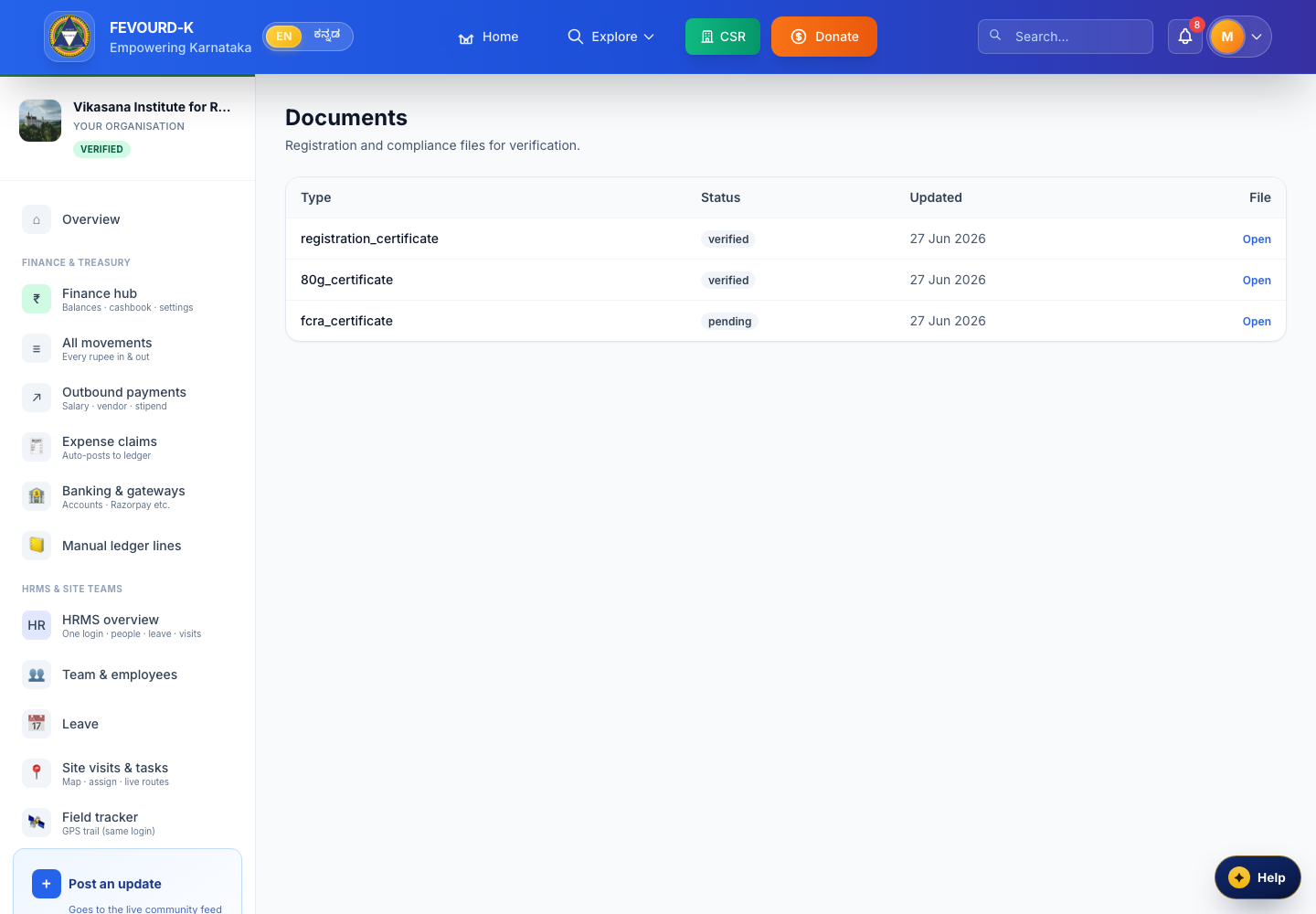
① Compliance Review — 12A/80G renewal checks
-
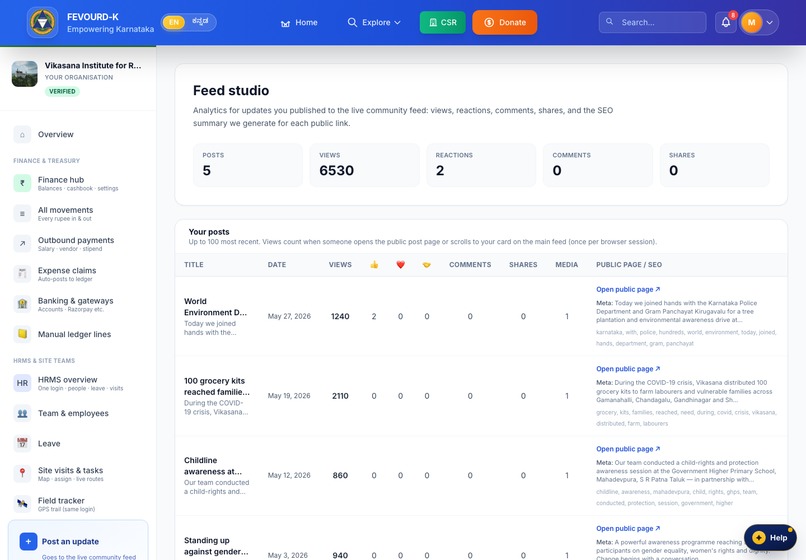
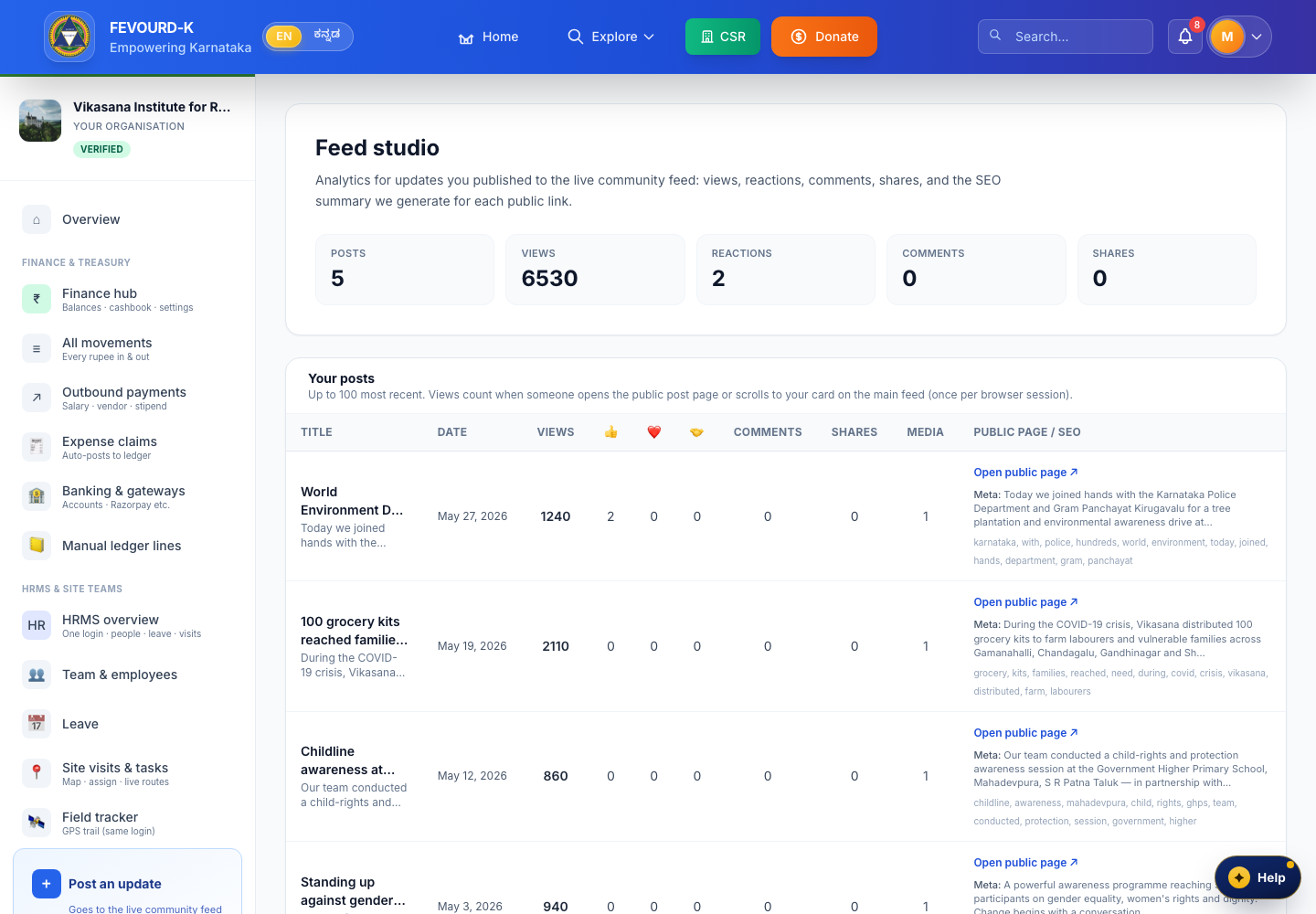
② Campaign Draft — donor update, never auto-posted
-
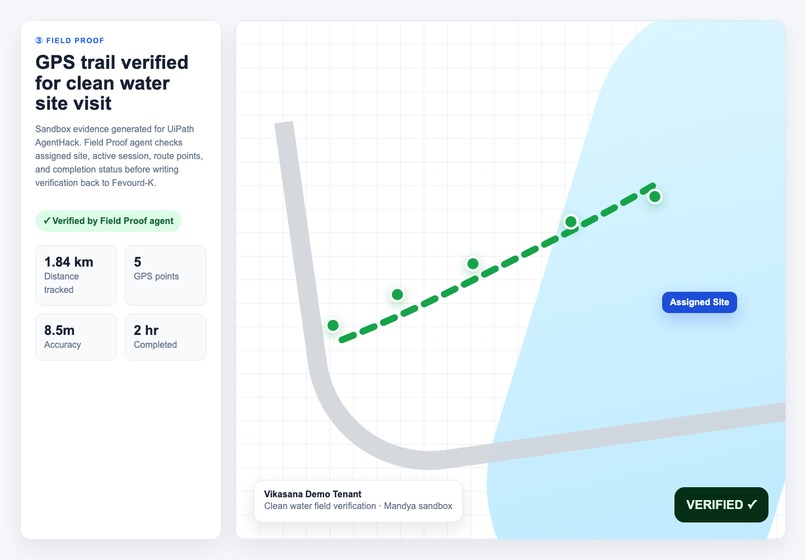
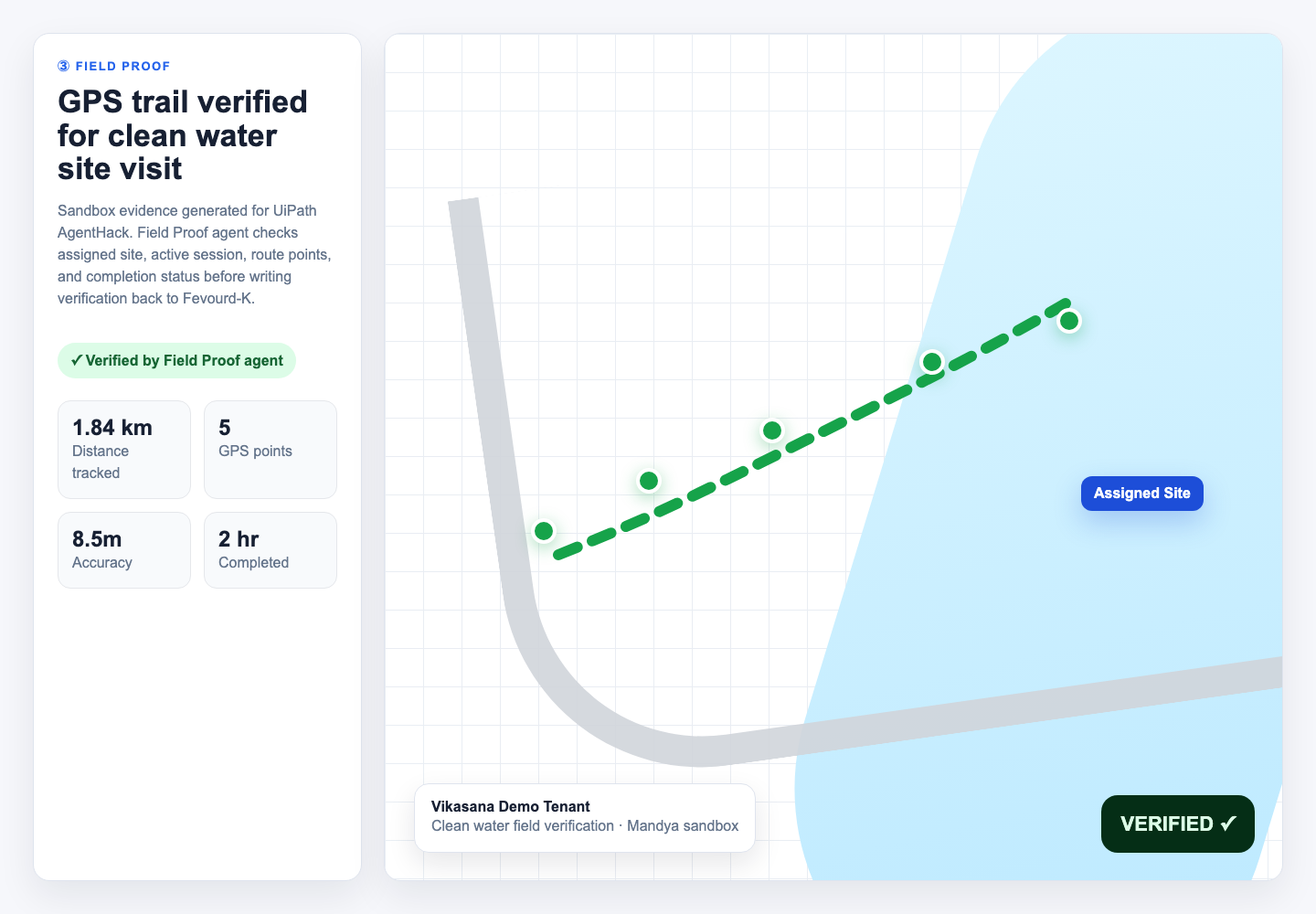
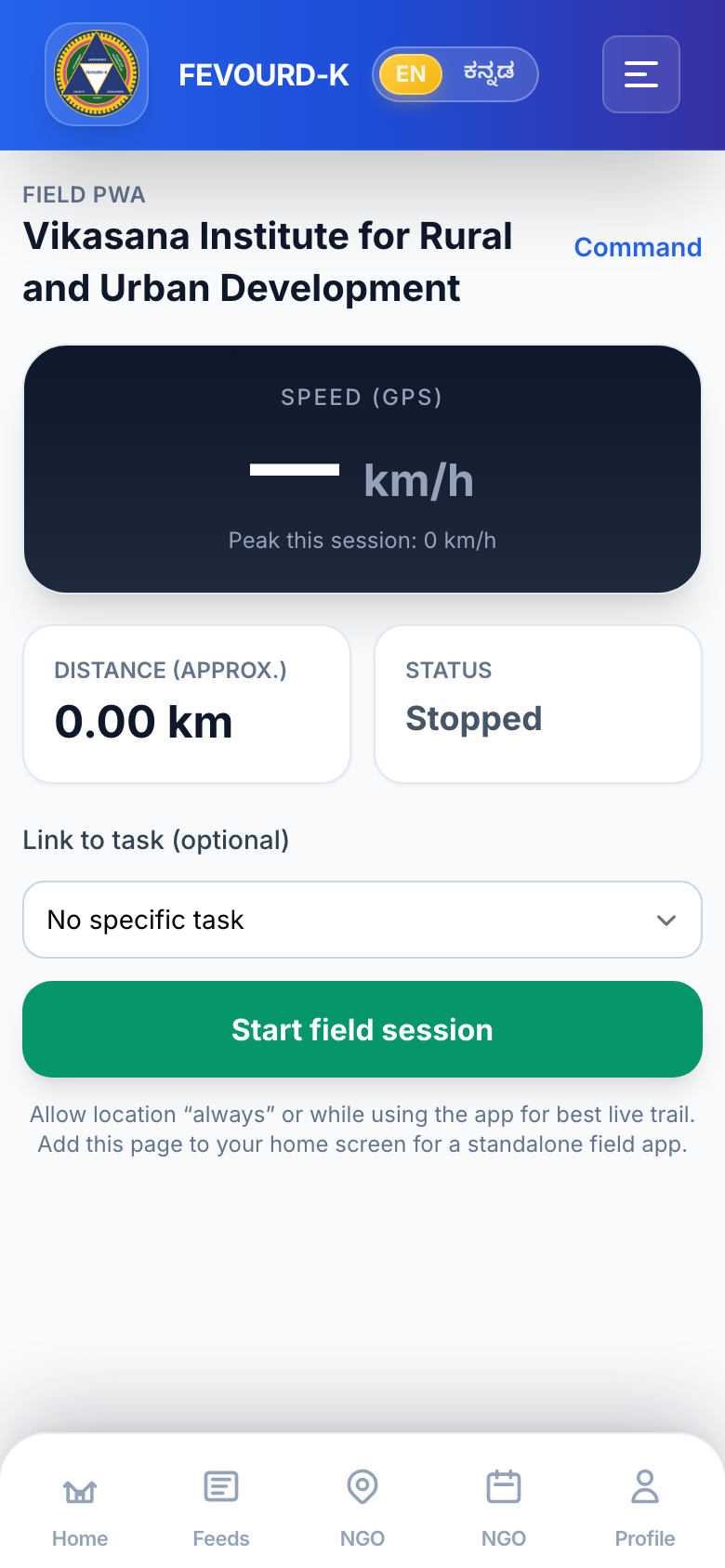
③ Field Proof — live GPS trail verification
-
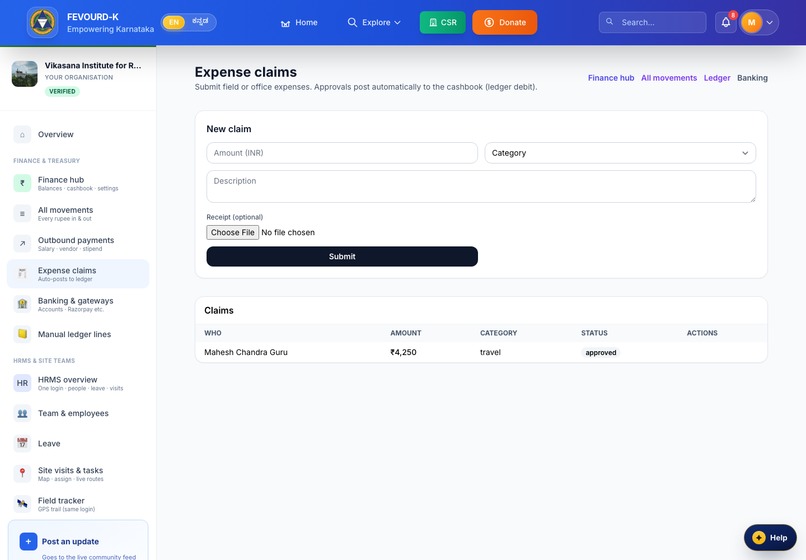
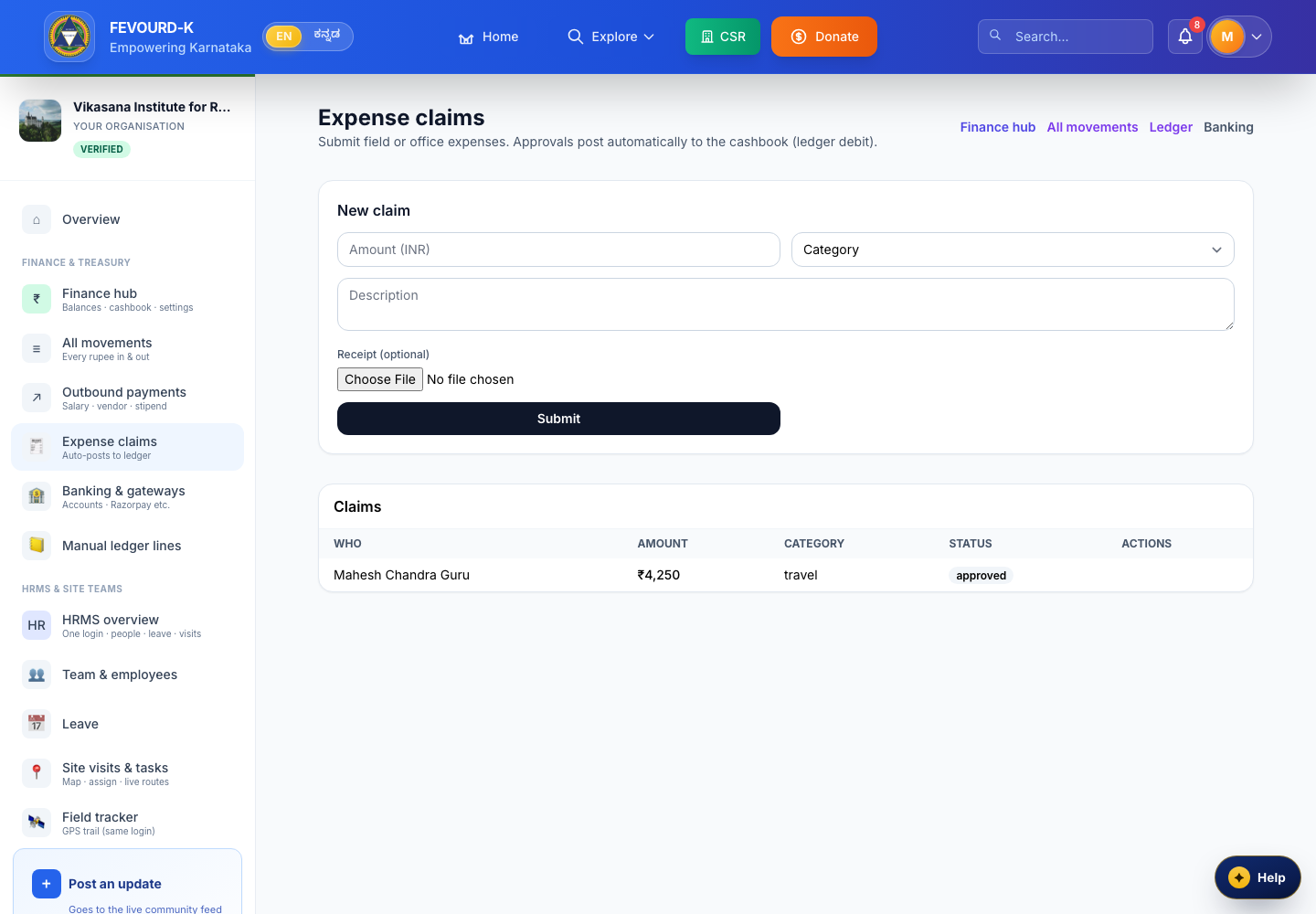
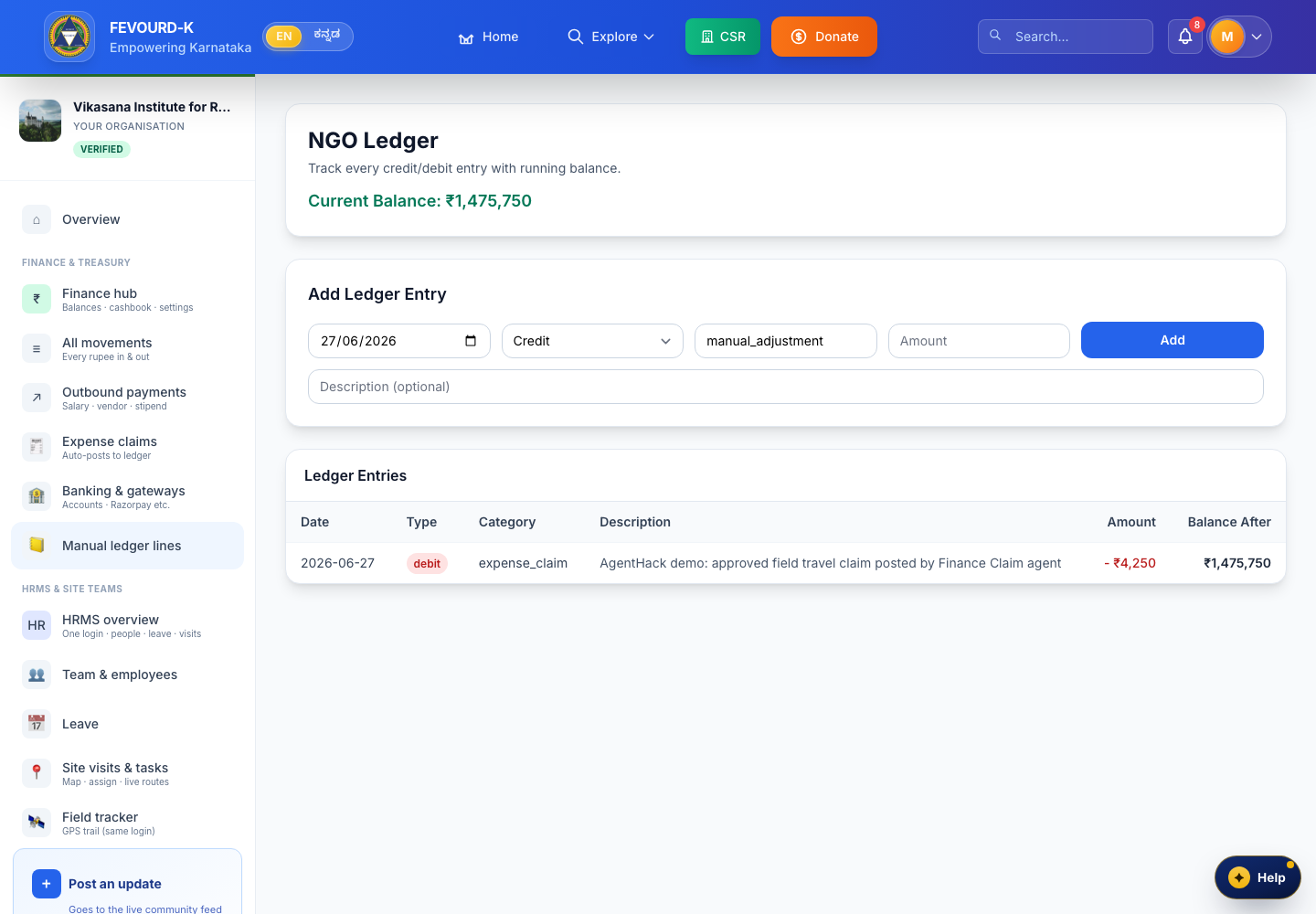
④ Finance Claim — checked against budget + policy
-
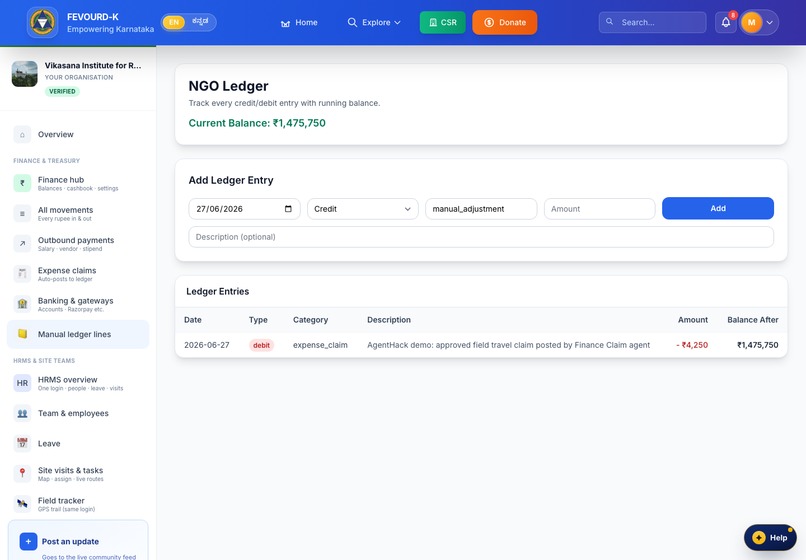
④ Approved claim → posted to the NGO ledger
-
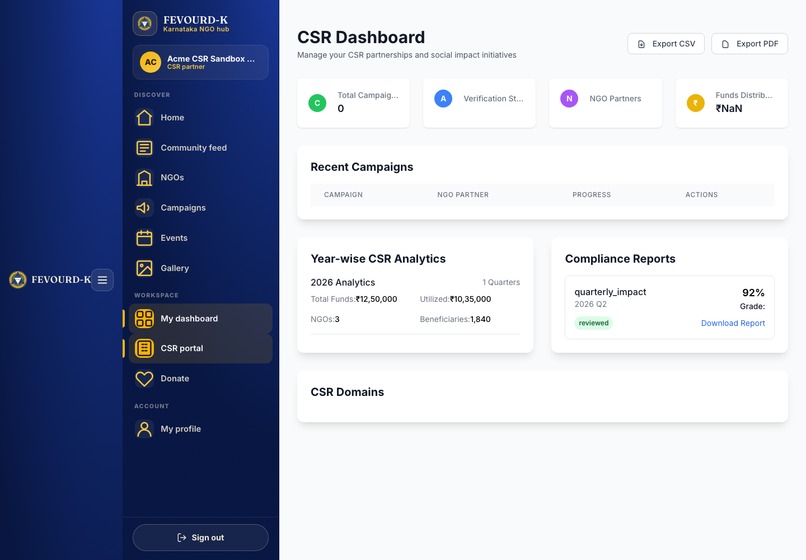
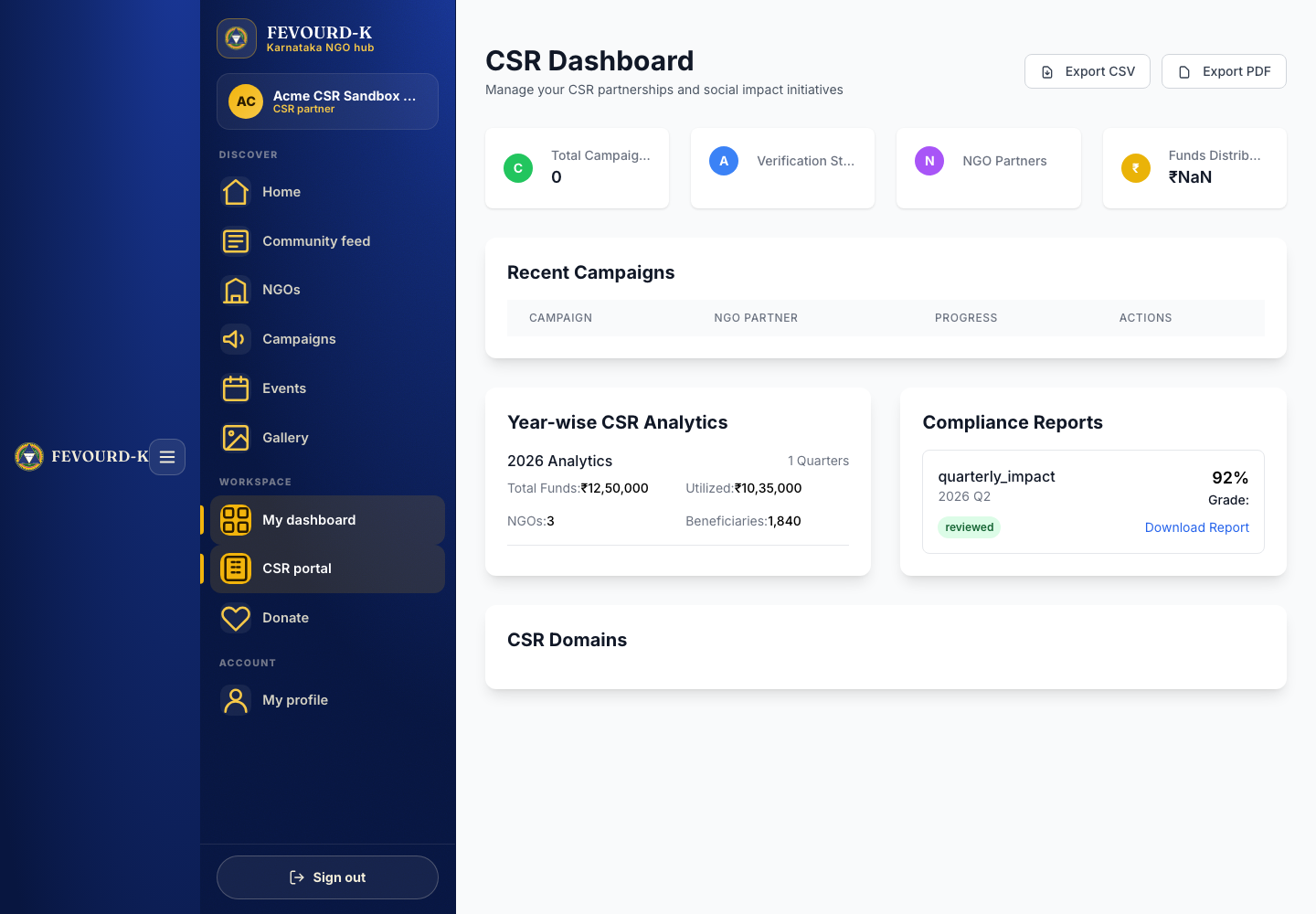
⑤ CSR Report — verified impact + compliance
-
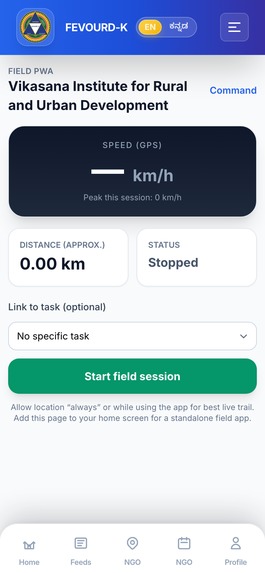
Field app — staff log visits on mobile
-
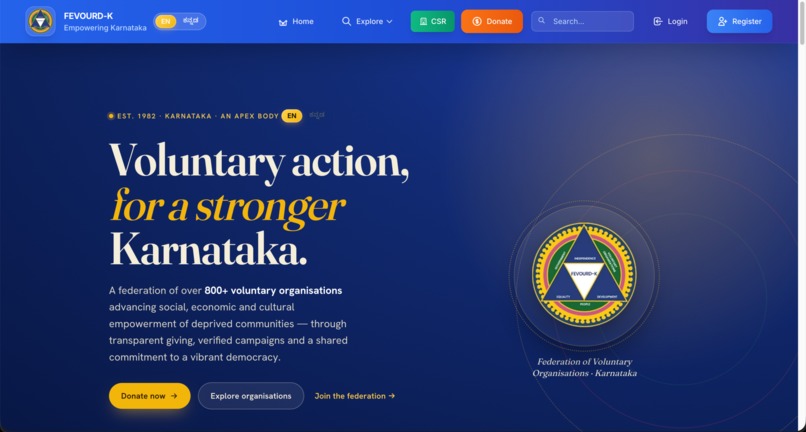
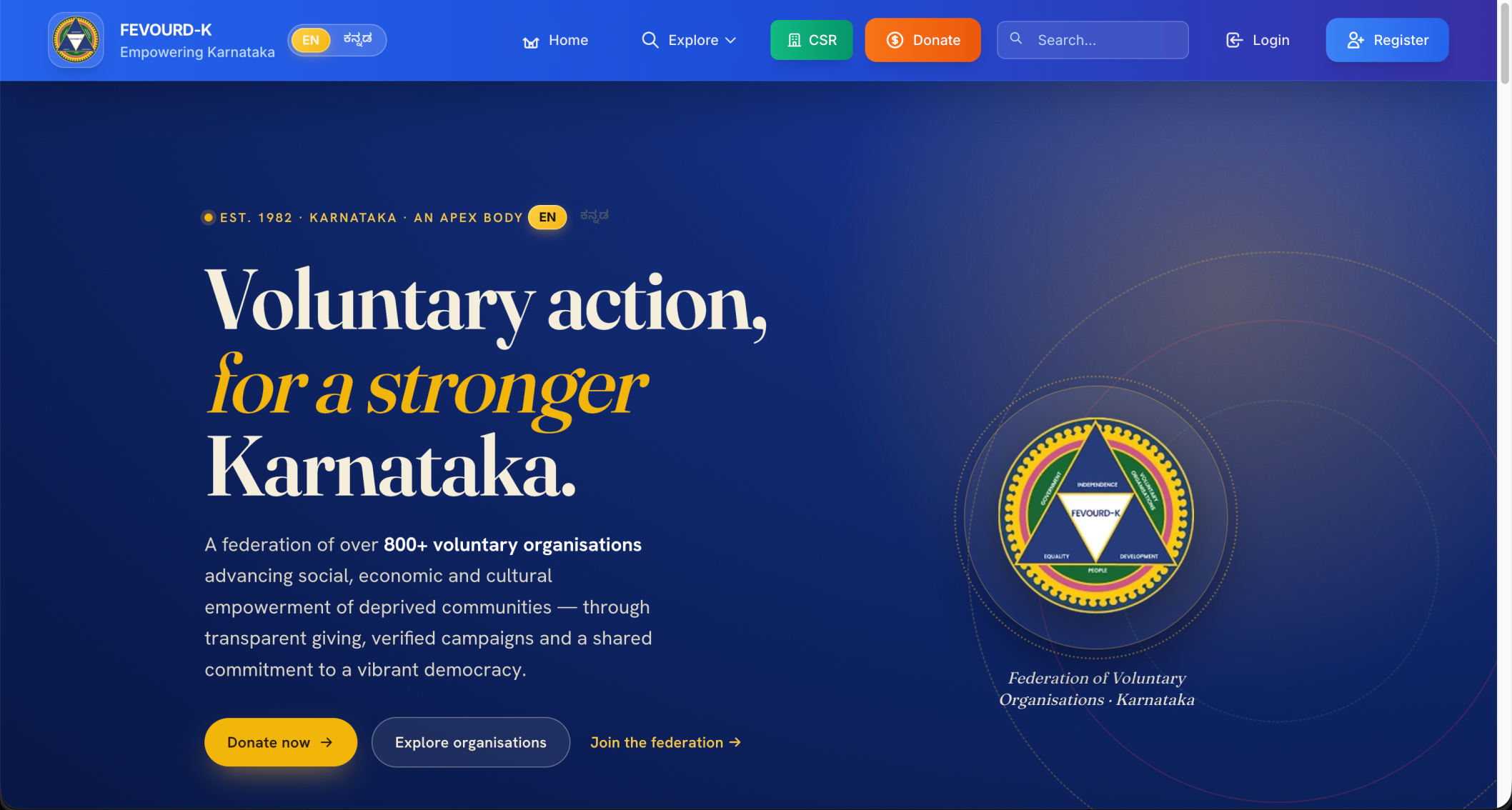
Public platform — NGOs, donors, CSR
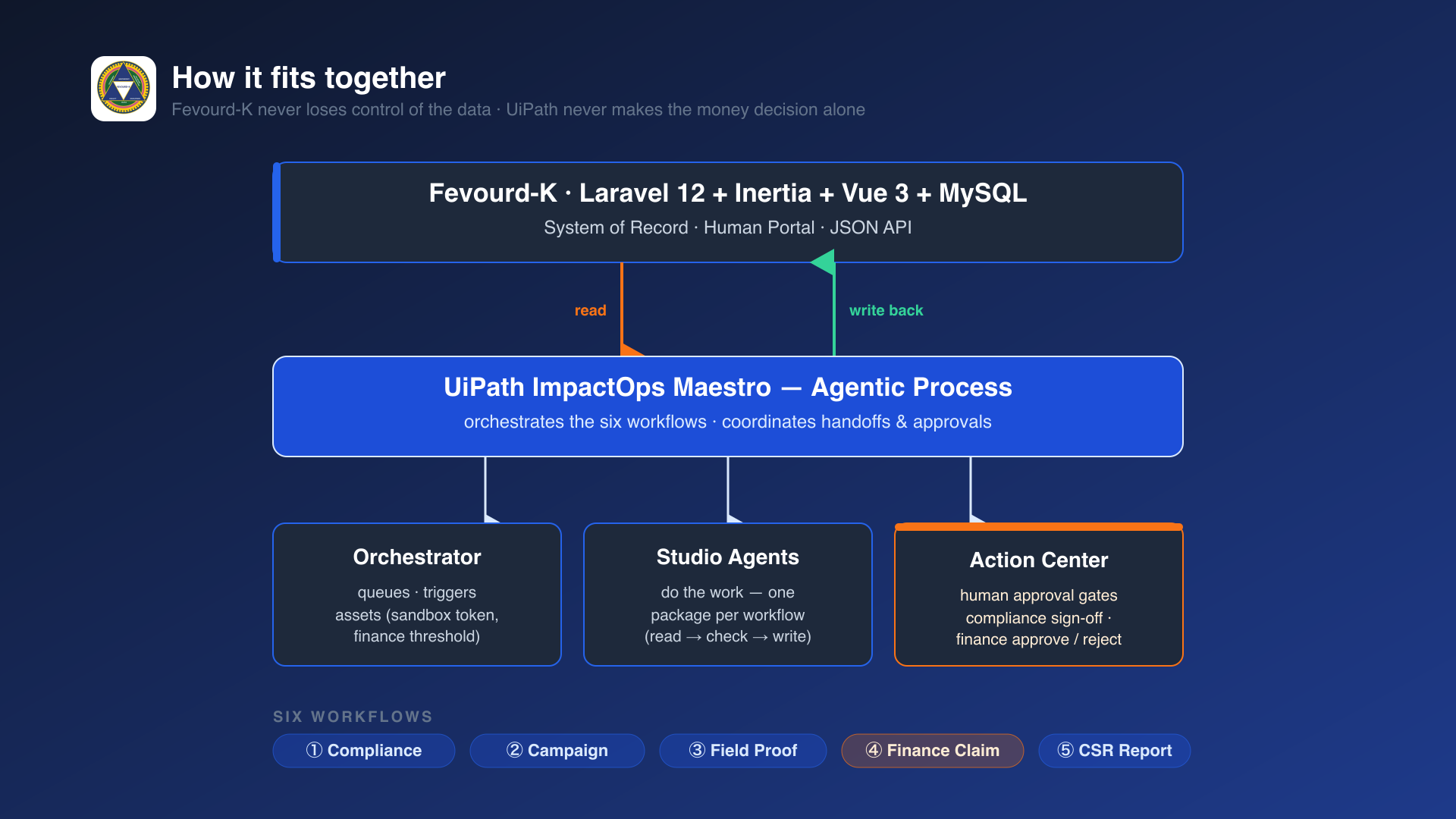
NGOs lose days to manual compliance checks, campaign drafting, field verification, expense claims, and CSR reporting. ImpactOps Maestro is a UiPath agentic process that reads live data from the Fevourd-K platform, runs all six workflows, routes money and compliance calls to a human in Action Center, and writes results back — with a full audit trail.
Inspiration
We build Fevourd-K, a Laravel/Vue platform that connects NGOs, corporate CSR teams, donors, and field volunteers. Talking to NGOs, the pattern was always the same: the system was modern, but the operations between screens were still manual — chasing renewal documents, hand-writing donor updates, eyeballing field photos, re-keying expense receipts into ledgers, and assembling CSR reports through week-long email threads. These are repeatable, rules-based chores with occasional judgment calls — the perfect shape for agentic automation. AgentHack was the push to build the layer that does this work without ever taking control of the data away from the NGO.
What it does
ImpactOps Maestro is a UiPath Maestro agentic process that coordinates six workflows on top of Fevourd-K:
- Compliance Review — pulls NGO registration/renewal documents, checks expiry, mandatory fields, and status; routes findings to a compliance officer for sign-off.
- Campaign Draft — reads the latest campaign + field progress and assembles a donor/CSR-ready update as a draft (never auto-posted) in Fevourd-K's Feed Studio.
- Field Proof — verifies field-task evidence: active session, GPS trail vs. assigned site, completion status; marks tasks Verified.
- Finance Claim — checks expense claims against budget line and policy limits, escalates anything over threshold to Action Center, and posts approved claims to the NGO ledger.
- CSR Report — on a schedule, gathers verified field proof, approved spend, and compliance status into one CSR impact + compliance summary.
- ImpactOps Maestro Agentic Process — orchestrates the end-to-end handoffs and human approvals across the five workflows.
Throughout, Fevourd-K stays the system of record and the human portal, and UiPath is the agentic operations layer — read, act, escalate, write back.
How we built it
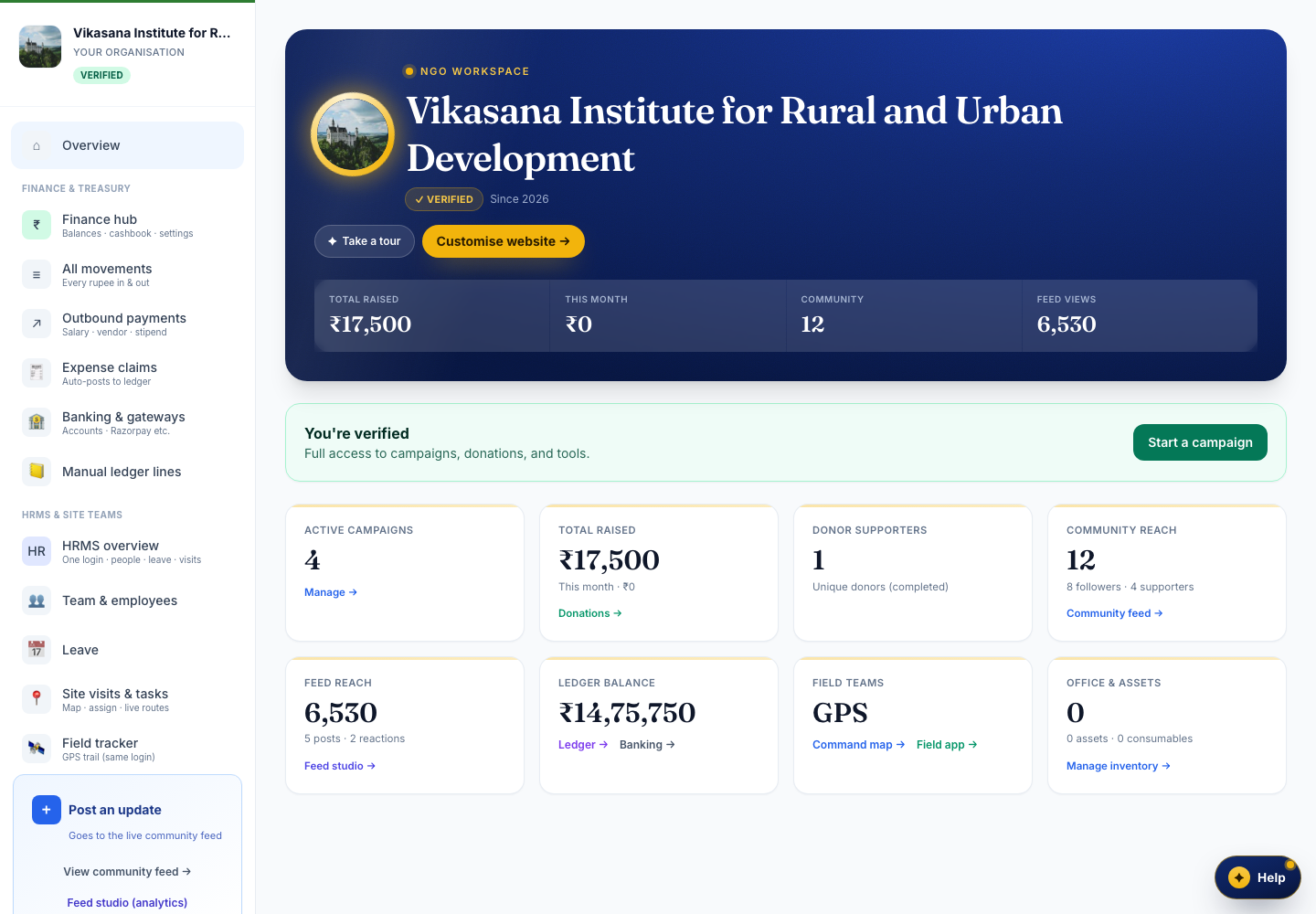
- Product / system of record: Fevourd-K — Laravel 12 + Inertia + Vue 3, MySQL — exposes the campaigns, field sessions/GPS trails, finance claims, ledger, compliance documents, and CSR dashboard that the agents read from and write back to.
- Orchestration: UiPath Maestro runs the "ImpactOps Maestro" agentic process (the six-node flow with human-approval nodes).
- Automations: UiPath Studio packages — one per workflow (Compliance Review, Campaign Draft, Field Proof, Finance Claim, CSR Report).
- Runtime: UiPath Orchestrator (folder
Fevourd-K-Demo) with per-workflow queues, a credential asset for the sandbox Fevourd-K API token, a config asset for the finance approval threshold, and event + time (cron) triggers. - Human-in-the-loop: UiPath Action Center holds the compliance sign-off and the finance Approve/Reject decisions.
- Integration: Studio agents call Fevourd-K's JSON APIs to read state and write results back (status flips, scheduled drafts, verified badges, ledger entries, assembled reports).
Challenges we ran into
- Drawing the human/agent line. We deliberately kept money (Finance Claim) and compliance sign-off as mandatory human approvals via Action Center, and let lower-risk steps run unattended — so "agentic" never means "unsupervised where it matters."
- Keeping Fevourd-K as the single source of truth. The agents had to coordinate work without owning data; every write goes back into Fevourd-K so the audit trail stays intact.
- Making evidence verifiable, not narrated. For Field Proof we leaned on real GPS-trail data so verification is checkable, not a vibe.
- Public-safety for a public demo. We rebuilt the entire flow on a sandbox tenant with fake NGOs/amounts, masked tokens, and redacted PII so nothing sensitive ships in the submission.
Accomplishments we're proud of
- A genuine closed perceive → act → escalate → write-back loop across six real workflows, not a scripted happy-path.
- Real bidirectional integration on the finance flow: claim → human decision → posted ledger entry, end to end.
- A clean architecture story judges can trust: Fevourd-K never loses control of the data; UiPath never makes the money decision alone.
What we learned
Agentic value in the social sector isn't a flashy chatbot — it's reliably removing recurring operational drudgery while strengthening the audit trail. The orchestration + human-approval pattern (Maestro + Action Center) maps almost perfectly onto NGO/CSR governance needs.
What's next
- Expand to more workflows (donor reconciliation, grant milestone tracking, vendor verification).
- Multi-NGO tenancy with per-NGO Orchestrator folders and approval routing.
- Confidence scoring so agents auto-approve only the clearest cases and escalate the rest.
- A "trust dashboard" in Fevourd-K showing every agent action and who approved it.
Built with coding agents. We built this entire solution using coding agents — Codex CLI and Claude Code — to develop the Fevourd-K system of record, the read-only agent API that UiPath Maestro orchestrates, the UiPath agent system-prompts, and every integration and submission artifact. At runtime the UiPath agents are low-code (Studio + API Workflows + Action Center), so this is a combination: low-code agents operated by coding-agent-built infrastructure.


Log in or sign up for Devpost to join the conversation.