-
-
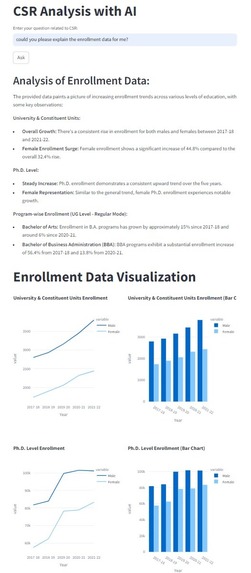
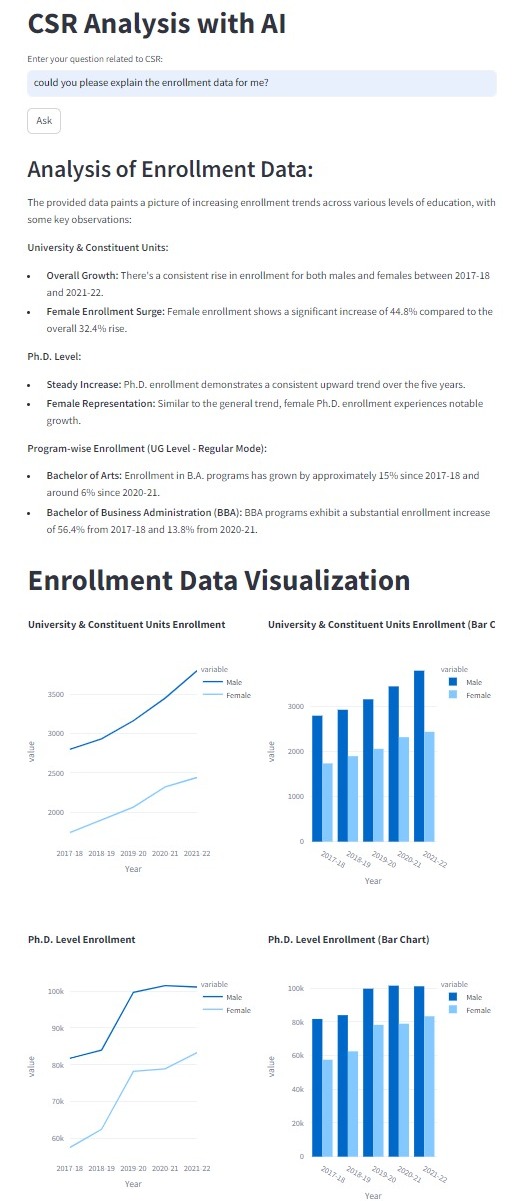
Interactive Chatbot solution that present answers with text explanations complemented by graphs for easier digestion of insights.
-
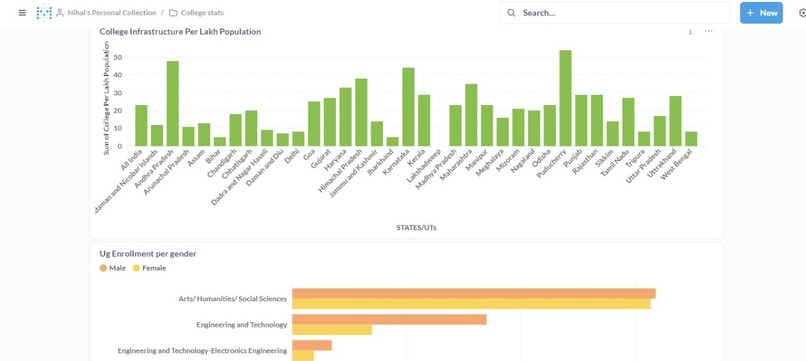
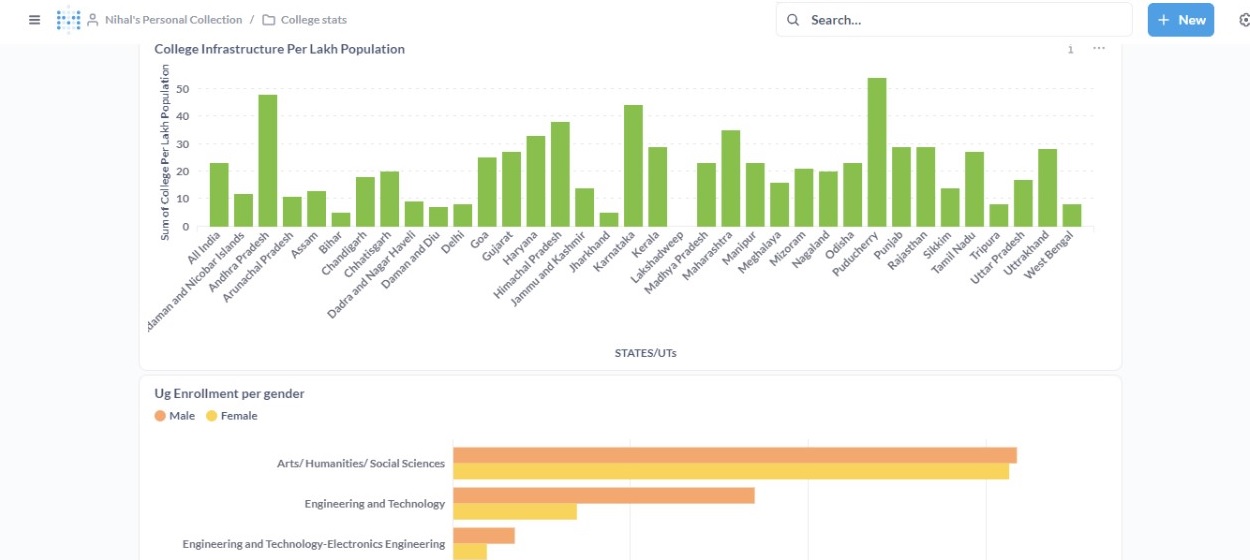
Deep-dive into data by utilizing Metabase UI for data savvy users.
Inspiration
The genesis of ImpactNet came from a simple yet profound realization: despite the vast amounts of data released by the Indian government, the tools for harnessing this data for Corporate Social Responsibility (CSR) were rudimentary and fragmented. We were inspired by the potential to make a tangible difference in how non-profits and corporations could leverage data to drive their CSR initiatives, focusing initially on the sector of Higher Education in India, with aspirations to expand further.
What it does
ImpactNet simplifies the transformation of complex governmental data into actionable insights. It automates the collection and organization of data from various sources, such as PDF reports and government APIs. ImpactNet enhances this data processing with Metabase, a tool that provides advanced data visualization capabilities. Users can easily create interactive dashboards and visual reports, making data analysis accessible and insightful. Additionally, the system includes a user-friendly chatbot powered by Gemini 1.5 Pro, which supports dynamic interactions, allowing users to ask questions and receive informed responses. Together, these features make ImpactNet an all-encompassing platform for making informed CSR decisions.
How we built it
We constructed ImpactNet using a stack of modern technologies. Data ingestion is managed through automated scripts that fetch and parse data from government APIs and PDFs. We utilized Google Cloud SQL for robust, scalable database solutions, and incorporated Metabase for intuitive data visualization. The intelligent AI chatbot interface is built on a custom Retrieval Augmented Generation (RAG) system, integrated with the Gemini 1.5 Pro API to process natural language queries effectively.
Challenges we ran into
Developing ImpactNet presented notable challenges:
- Cost Management: Initially, we used Vertex AI's Vector Search, but due to high costs, we shifted to the more affordable Firestore vector search for our proof of concept, balancing functionality with budget constraints.
- Technology Strategy Shift: We pivoted from fine-tuning expensive large language models to adopting a Retrieval Augmented Generation (RAG) system, streamlining development and reducing costs without sacrificing performance.
- Team Dynamics: Rapid decision-making was crucial in our fast-paced environment. We developed a decision-making framework that accommodated quick, inclusive discussions and effective conflict resolution, ensuring team alignment and project progress.
Accomplishments that we're proud of
We are particularly proud of ImpactNet's ability to simplify data analysis for CSR decision-making for maximum community impact. Our system not only simplifies complex data interactions but also makes them accessible to non-technical users through our intuitive chatbot interface. The seamless integration of advanced data processing and visualization tools that we achieved marks a significant milestone in our development journey.
What we learned
Throughout the development of ImpactNet, we deepened our understanding of data processing, user interface design, and the specific needs of CSR in India. We learned that the value of a tool like ImpactNet lies not just in its technical capabilities, but in its accessibility and relevance to its users.
What's next for ImpactNet
Looking forward, we plan to expand the scope of ImpactNet from including only the education sector to include more CSR-related sectors such as healthcare, poverty alleviation, and environmental sustainability. Implementing stream content generation APIs and user authentication are on our roadmap to enhance user experience and ensure robust system integrity.
Built With
- firestore
- gemini
- postgresql
- python

Log in or sign up for Devpost to join the conversation.