-
-
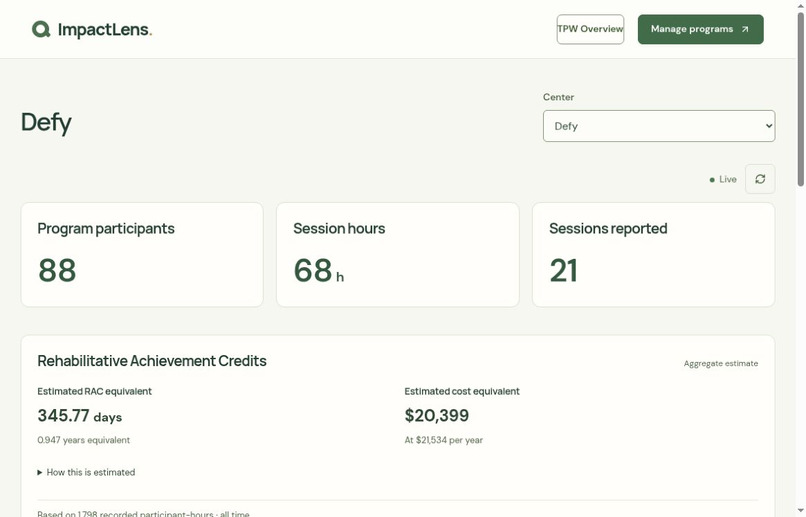
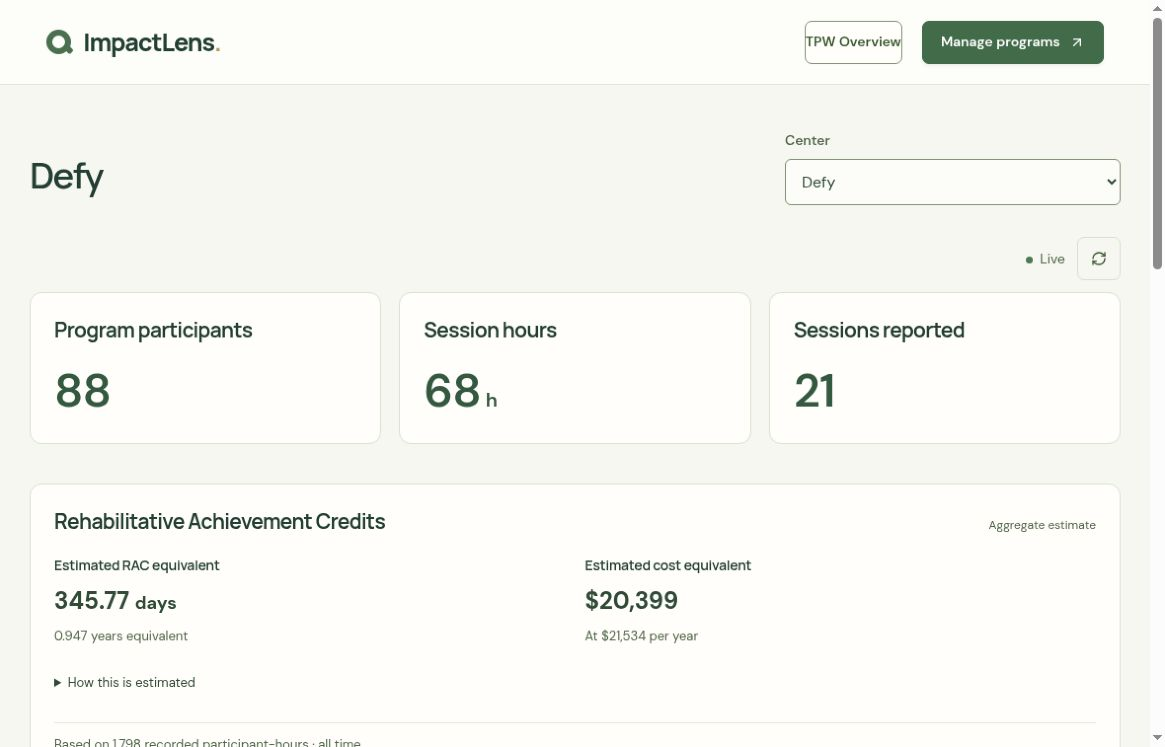
Organization dashboard — session activity and illustrative credit/cost estimates from demo records.
-
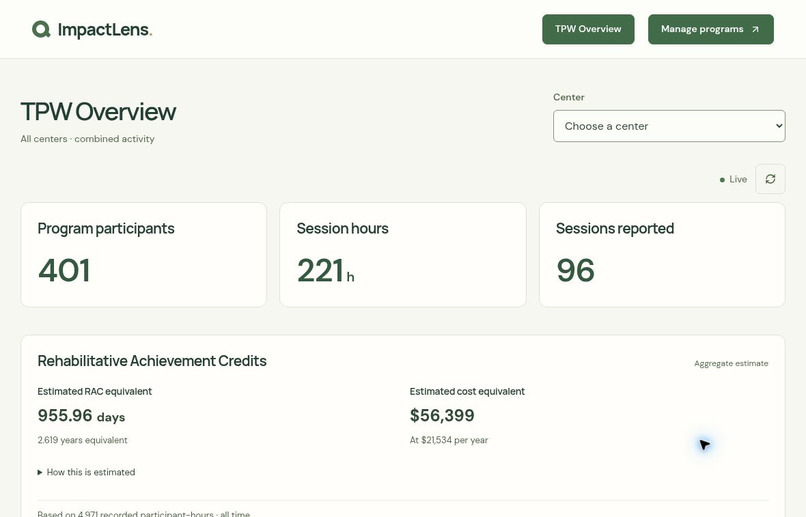
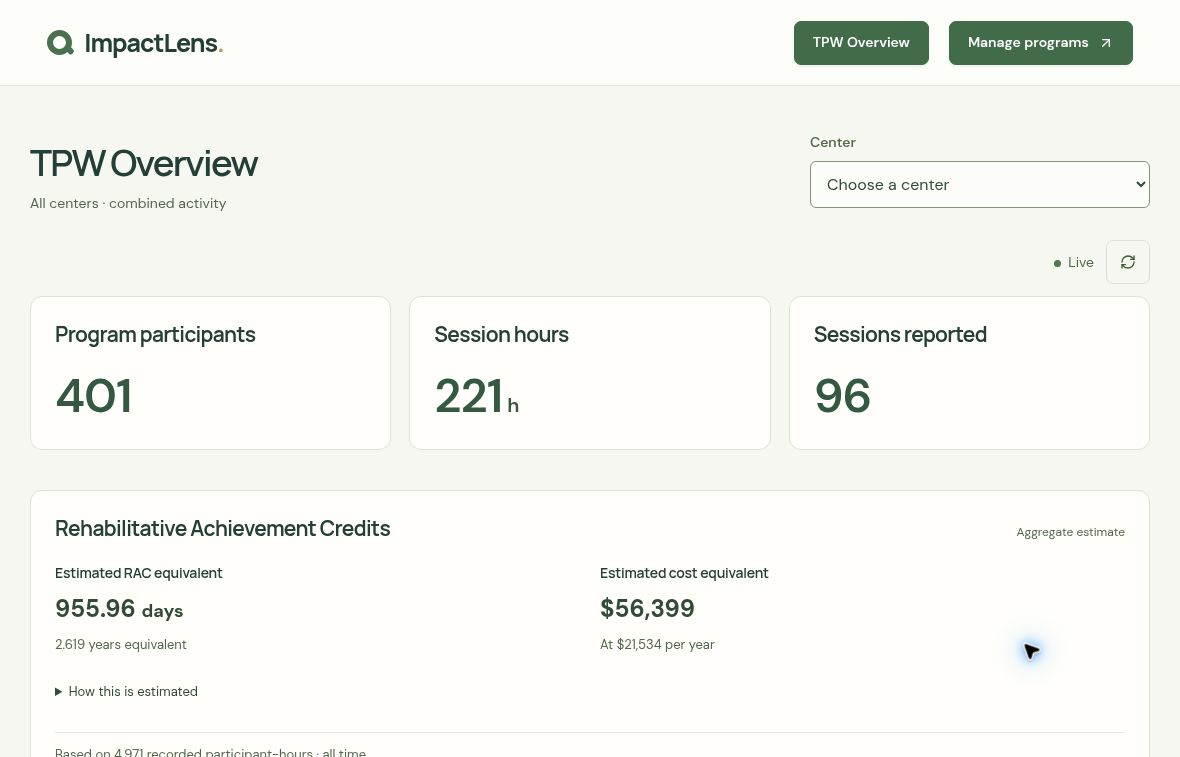
TPW coalition overview — combined program activity across organizations using demo records.
-
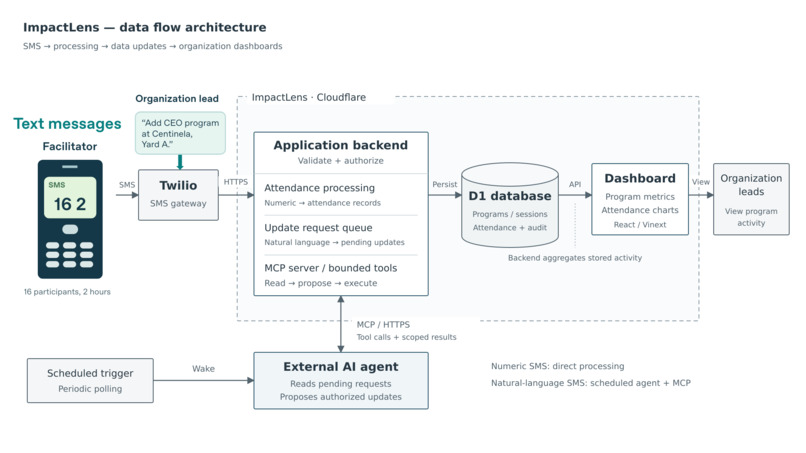
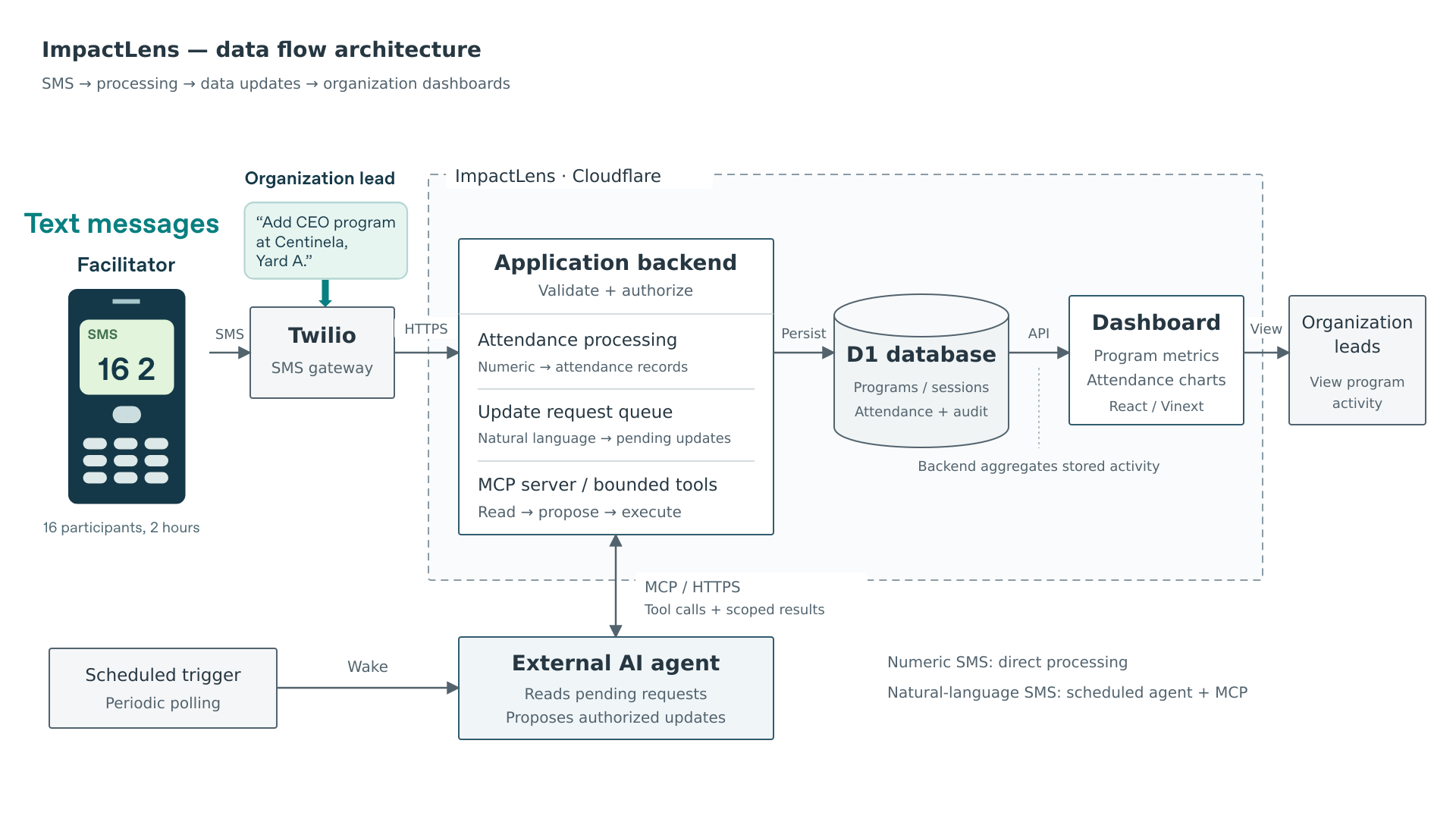
SMS-to-dashboard architecture: Twilio, Cloudflare Workers, D1, and an external agent using scoped MCP tools.
Inspiration
Conversations with Ken from TPW and Quan from Defy revealed an immediate barrier to demonstrating rehabilitation impact: reliable data collection. Facilitators cannot bring phones into prisons; after sessions, details remain on paper or in memory, while leads chase updates. Repeating program setup across facilities and yards adds work.
What it does
ImpactLens makes reporting easier today and builds a foundation for stronger evidence tomorrow. A facilitator linked to a program can text 16 2 after leaving a facility to log 16 participants and two hours, or 1 to repeat the previous entry. Existing program details can be reused when adding a new location. Organization dashboards show their activity; TPW gets a coalition-wide view of sessions, attendance and participant-hours.
Challenges and what we learned
Our biggest challenge was making reporting fit the way these organizations actually work. Conversations with Ken and Quan shifted our focus toward collecting data with less effort. We built around familiar text messages and reused existing program details so facilitators could report a session quickly and organization leads could spend less time chasing updates.
Accomplishments
We built a working path from a simple text message to a shared picture of program activity. Facilitators can report from a basic phone, organization leads can manage programs through natural-language messages, and TPW can see activity across its network in one dashboard. We tested the flow with real SMS, turning our partner conversations into a functioning tool within the weekend.
Accessibility
We made reporting accessible through ordinary text messages: no smartphone, app download, or internet connection required. Facilitators can use a basic phone to report a session, while organization leads and TPW view the results on the web. We also tested the interface for keyboard navigation, color contrast, zoom and mobile layouts, supported by 11 automated accessibility checks.
How we built it
The app uses React/Vinext, Cloudflare Workers and D1, with Twilio for SMS. Facilitator session reporting uses a deterministic numeric parser. A separate agent workflow reads pending organization-lead natural-language requests through scheduled polling and uses scoped MCP tools to propose and execute authorized updates with an audit trail.
What's next
Validate the workflow with TPW and member organizations, improve data quality and participant-level verification, and develop consent-based follow-up and carefully governed linkage to longer-term outcomes. This would help organizations evaluate rehabilitation impact beyond attendance while keeping evidence and assumptions transparent.
Team Fluffball: Weiting Liu and Hao Sun

Log in or sign up for Devpost to join the conversation.