Inspiration
Imagine knowing exactly where an issue is. Before going into the pits. Before needing to be inspected, and before the part fails on the track. This is exactly the software we are pursuing to build. An advanced real time analysis tool that saves lives and saves time on the track.
What it does
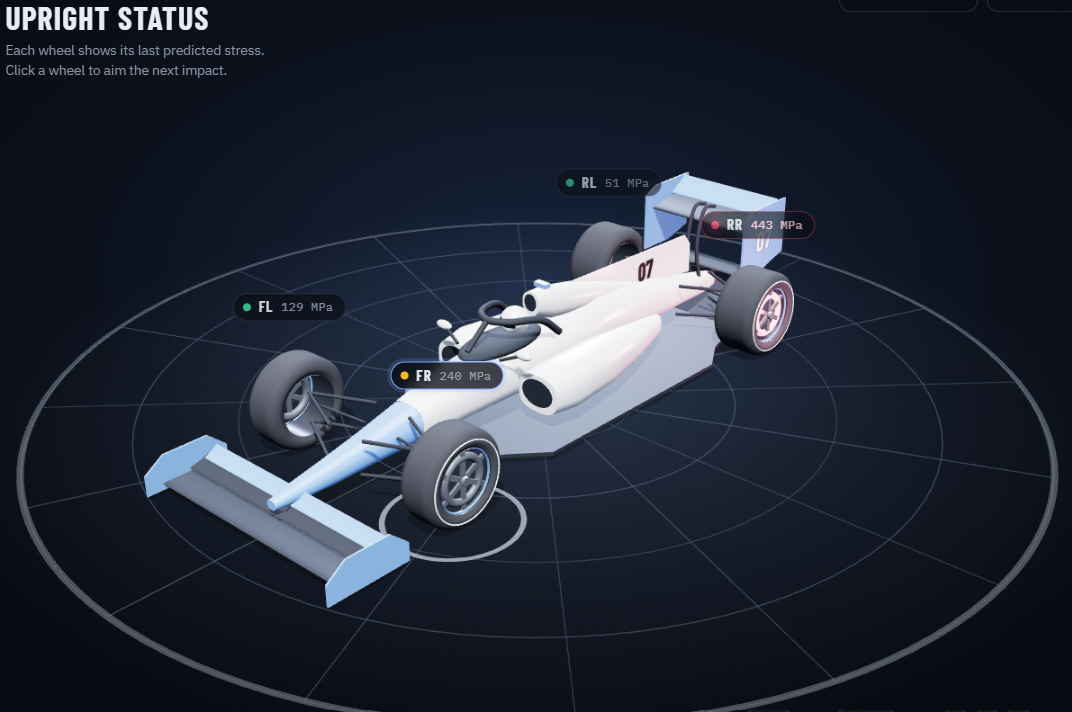
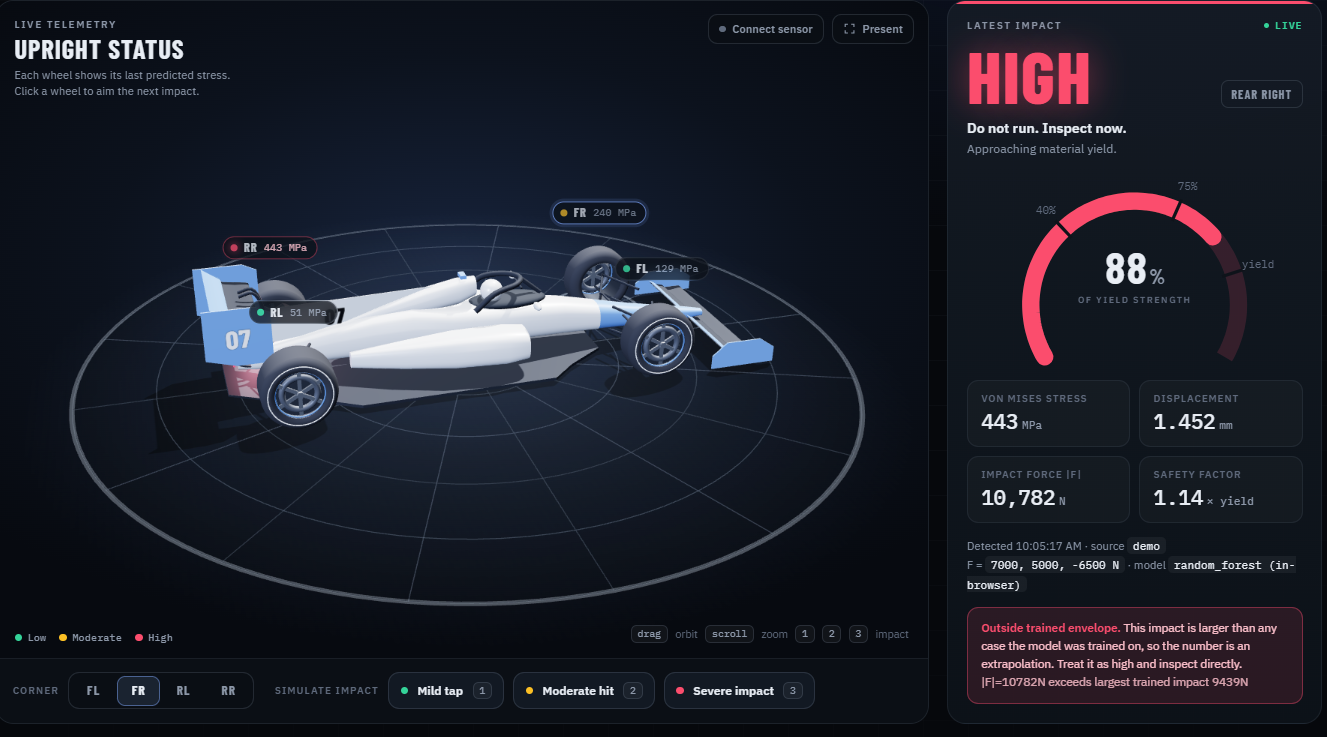
Monitors live vehicle sensor data, and compares it to other conditions. The machine learning model knows the conditions and stresses/forces in every scenario the car encounters, updating the driver on vehicle state and the pit crew on repair details before the car comes pits.
How we built it
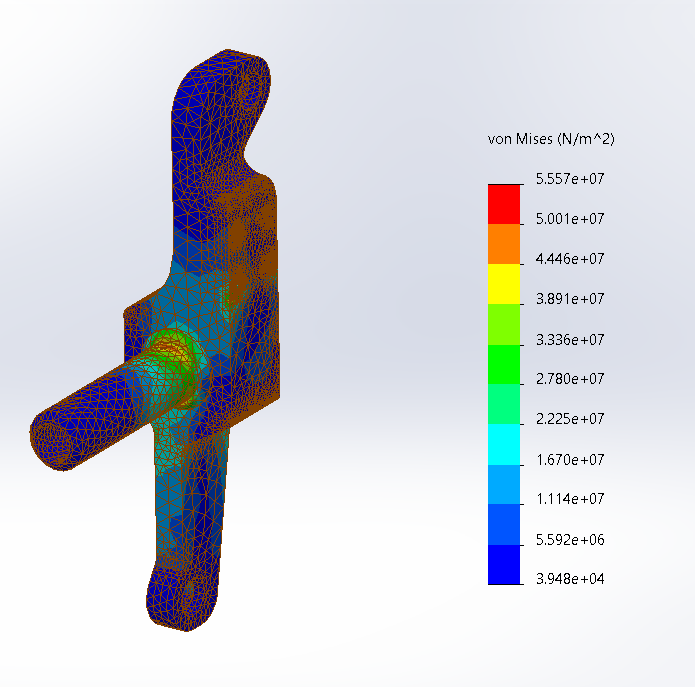
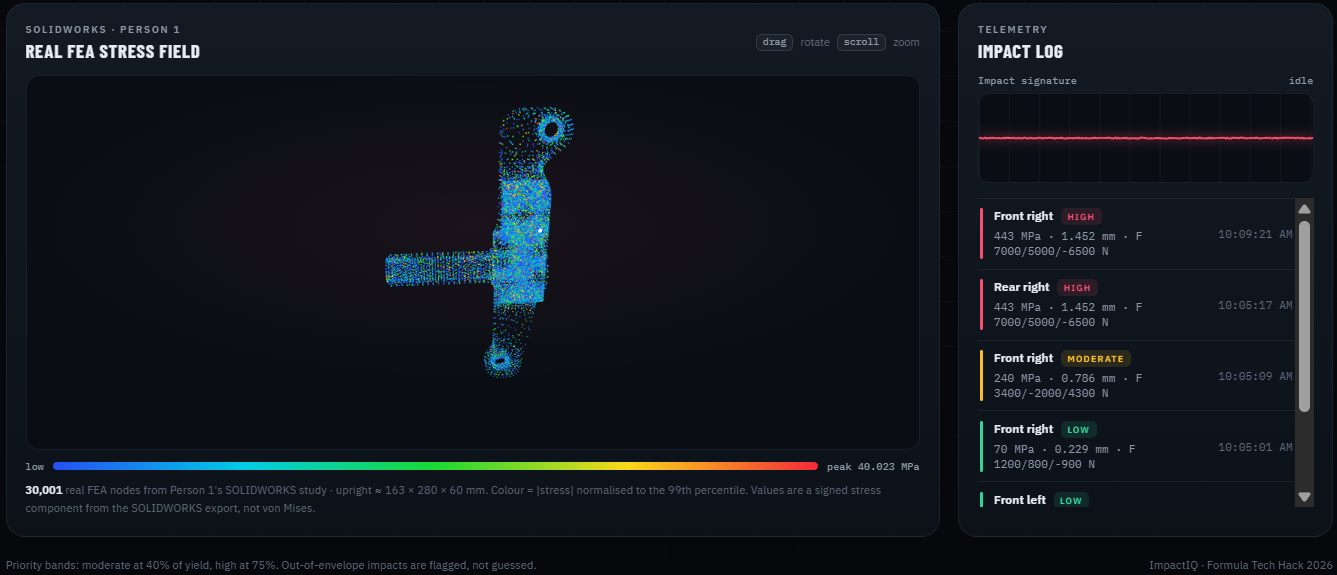
An Arduino with an MPU-6500 detects impacts and streams them over Web Serial to a Three.js dashboard, where a scikit-learn model trained on SolidWorks FEA predicts stress and a FastAPI backend serves the triage verdict.
Challenges we ran into
At first, the sensor was only taking around 100 readings per second. That was not fast enough for quick taps, so we changed the code to collect around 1,000 readings per second. We also had to test the sensor orientation. We needed to make sure that the sensor’s X and Y axes matched the front, back, left, and right sides of the car. The sensor is attached to a small breadboard, which can move or vibrate during testing. This means the reading is a measurement of acceleration at the sensor, rather than an exact measure of force or damage to the car.
Accomplishments that we're proud of
We built a working model-car impact sensor that detects taps and shows the direction they came from. We increased the sampling speed to around 1,000 readings per second, which helped us catch quick impacts more reliably. We also built a live dashboard with recent impact history, peak acceleration readings, and a 3D car model that users can rotate and zoom.
What we learned
How to integrate AI into the analysis of physical objects, sensors, and CAD models.
What's next for ImpactIQ
The current MVP is trained on a small assembly of a suspension system. However real F1 teams will want to scale these simulations to the higher level assembly of the car to know the full effects of damage and wear/tear. They will also need more simulation data to be more accurate. Finally, this could have implications for F1 design engineers who now have real data on how their assemblies fail and where. This leads to a more robust design and improves design for assembly (DFA).
Built With
- arduino
- fastapi
- hardware
- javascript
- python
- solidworks
- three.js


Log in or sign up for Devpost to join the conversation.