-
-
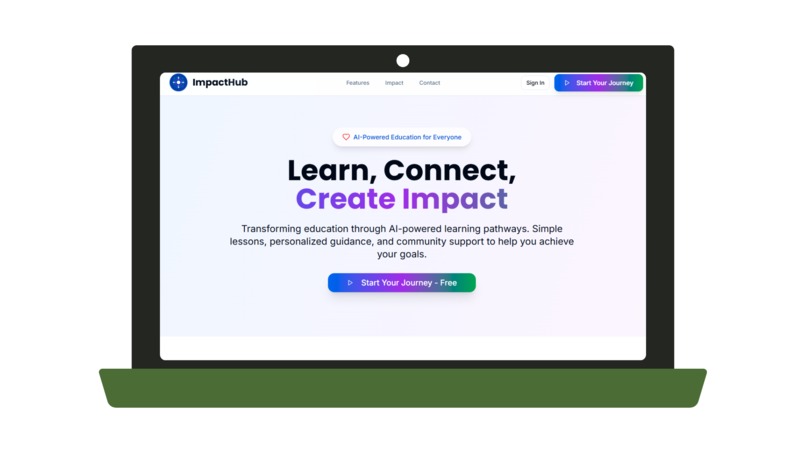
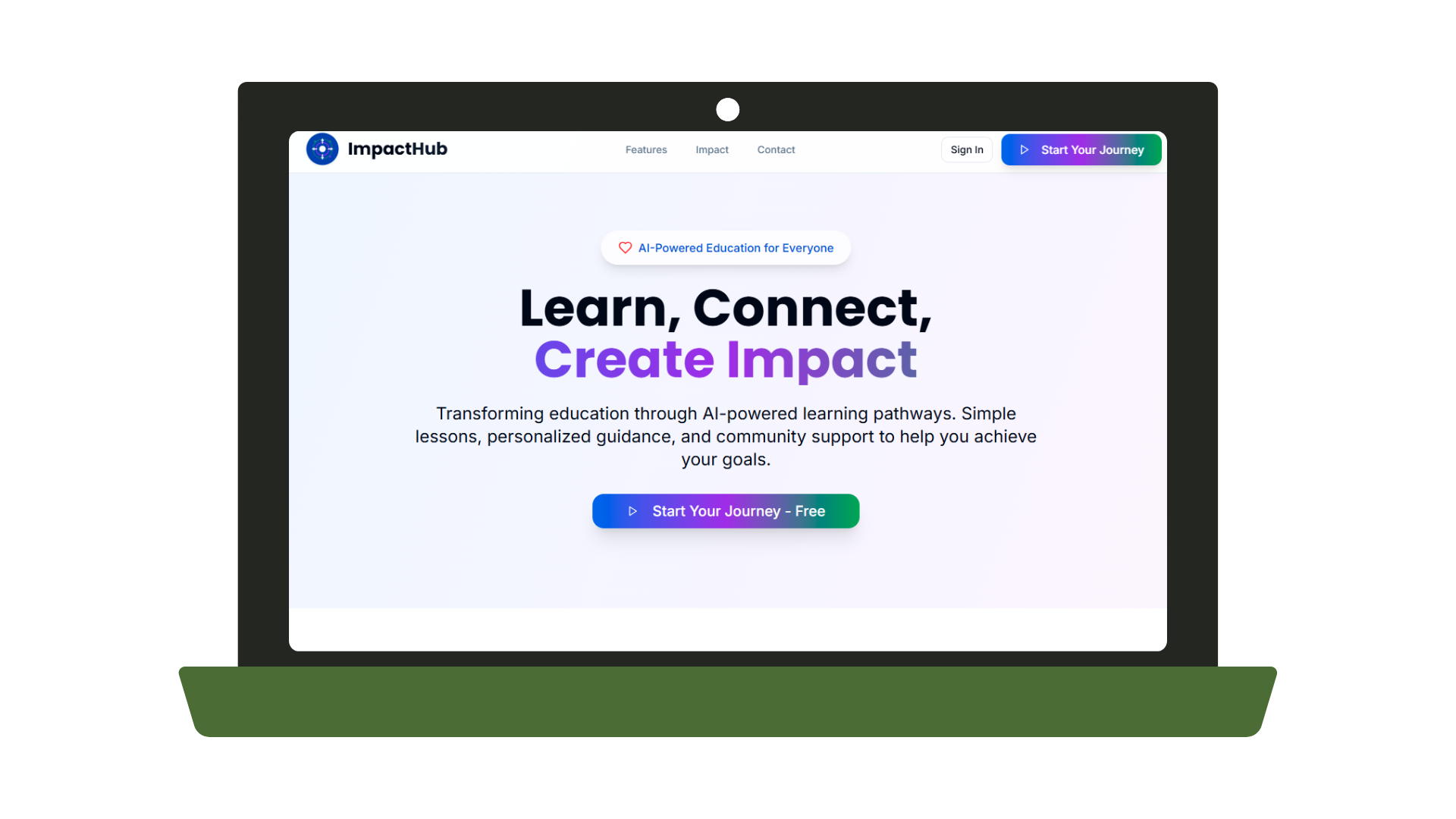
AI-powered education platform where students learn, connect, and create impact through personalized pathways and community support."
-
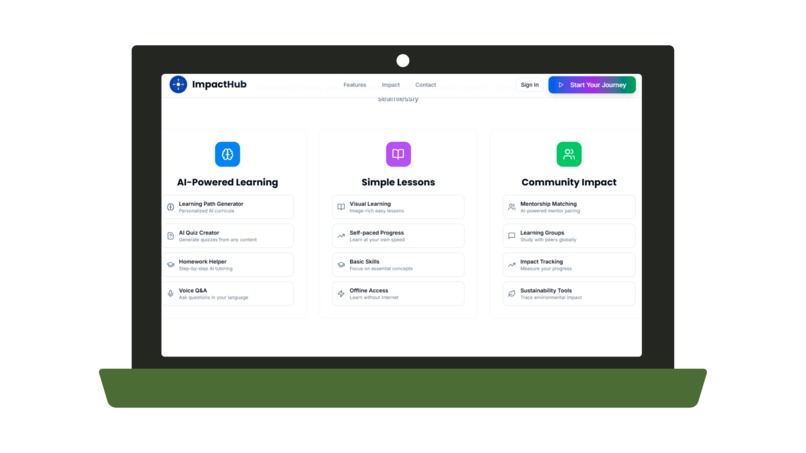
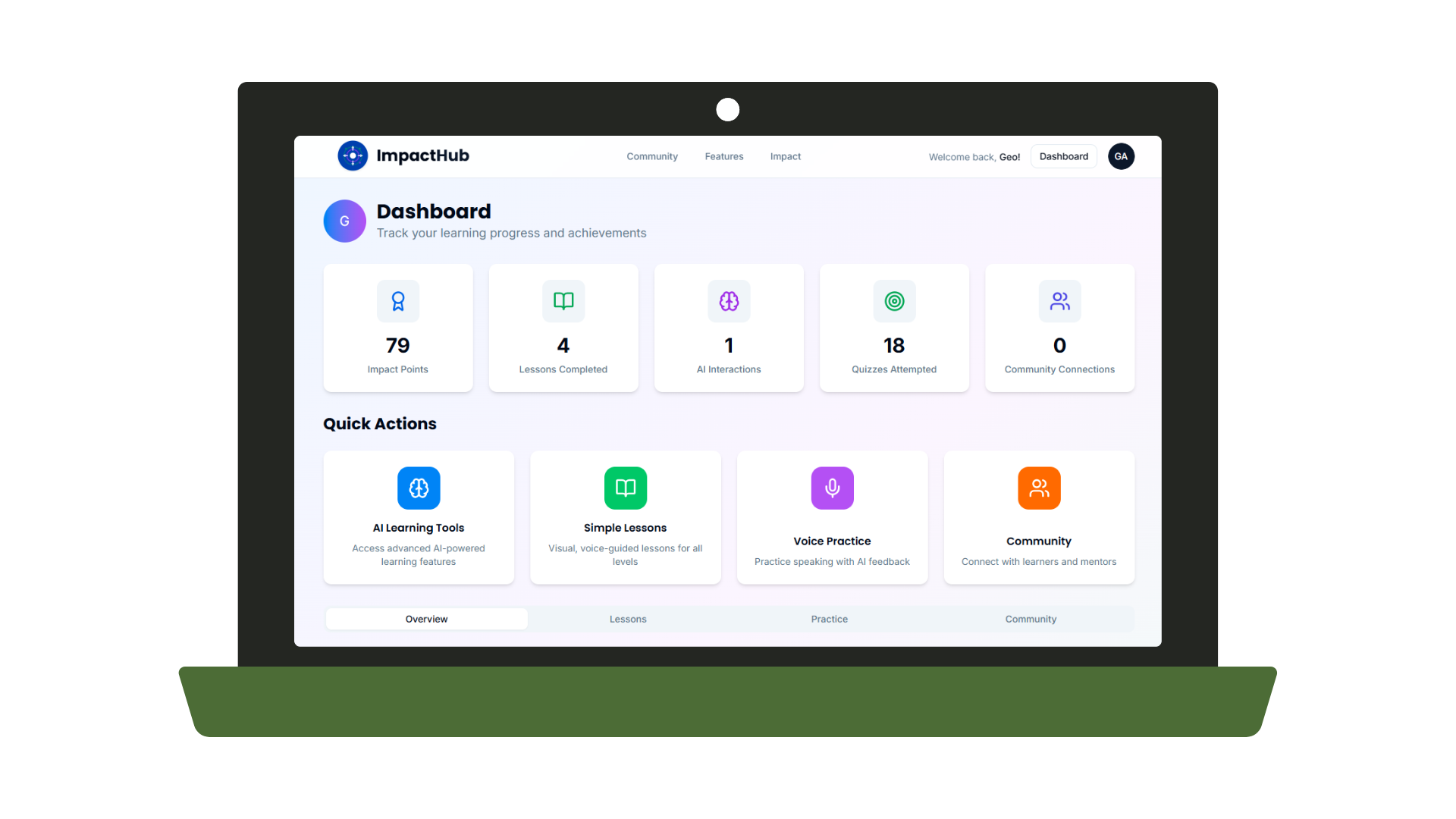
Smarter education starts here — ImpactHub brings AI-guided pathways to every learner.
-
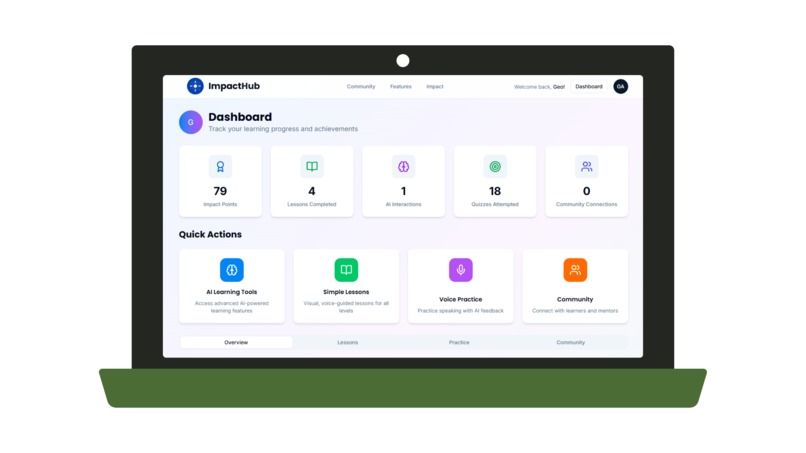
Track progress, explore lessons, and grow with AI insights.
-
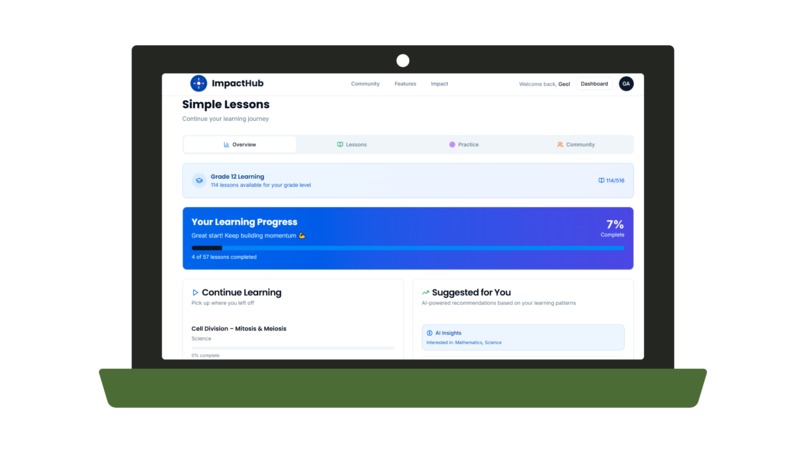
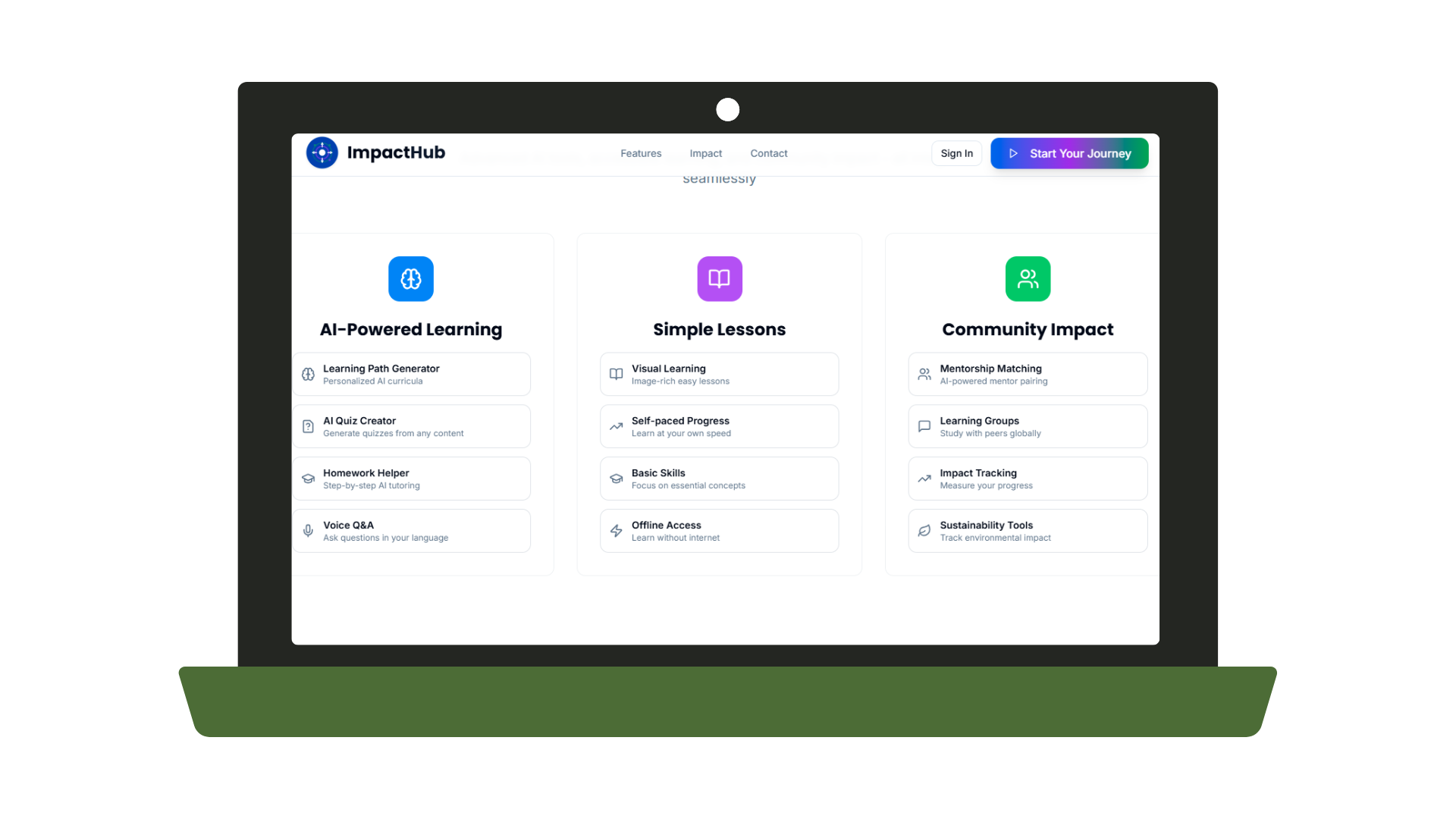
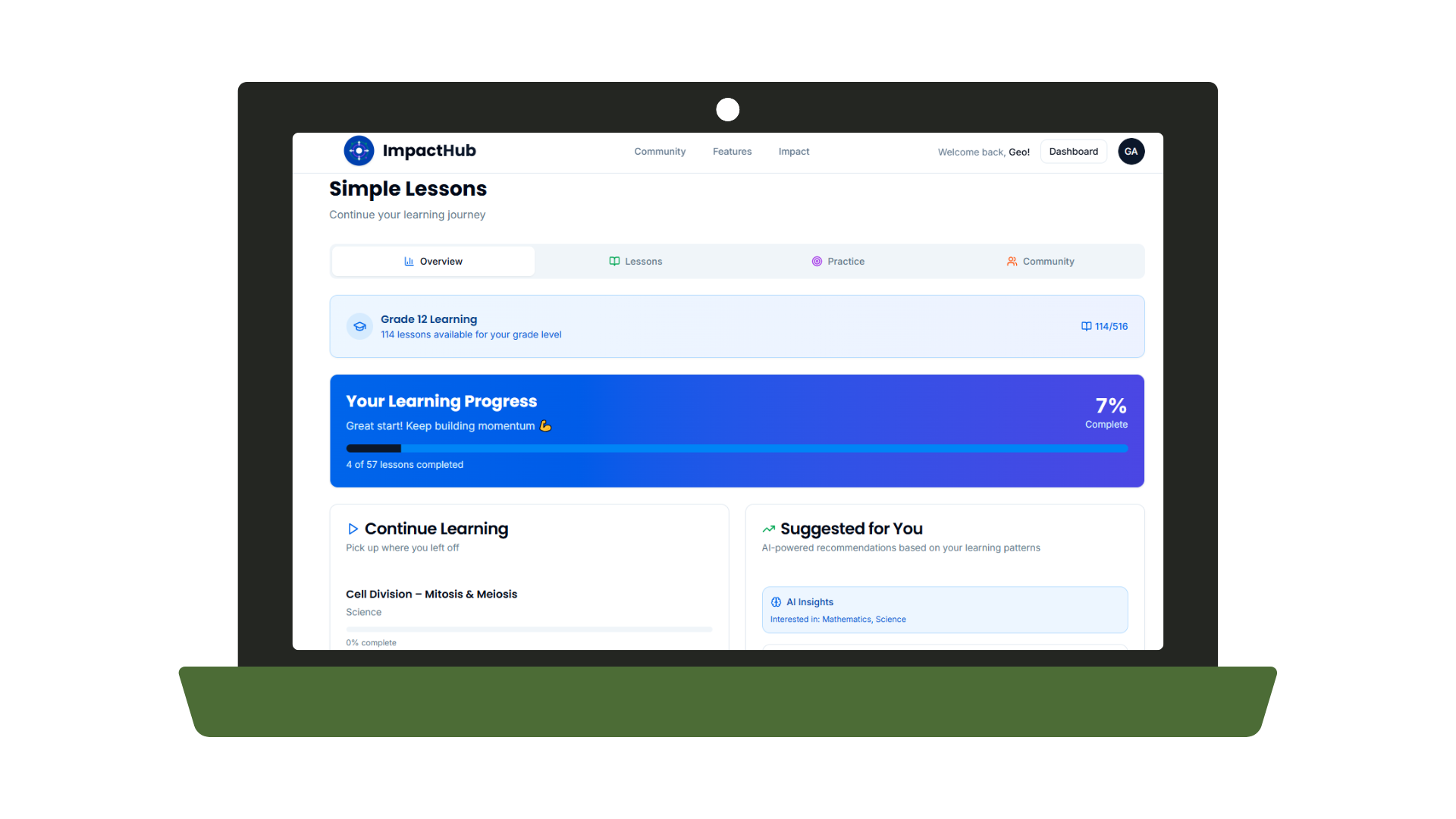
A simple breakdown to guide your learning journey.
-
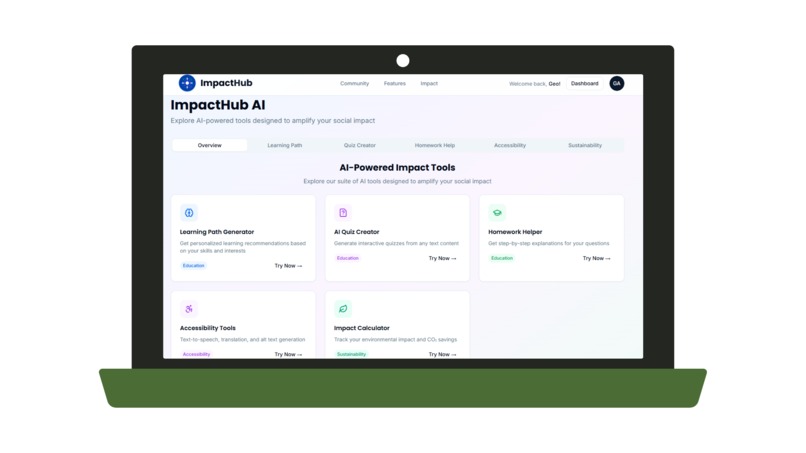
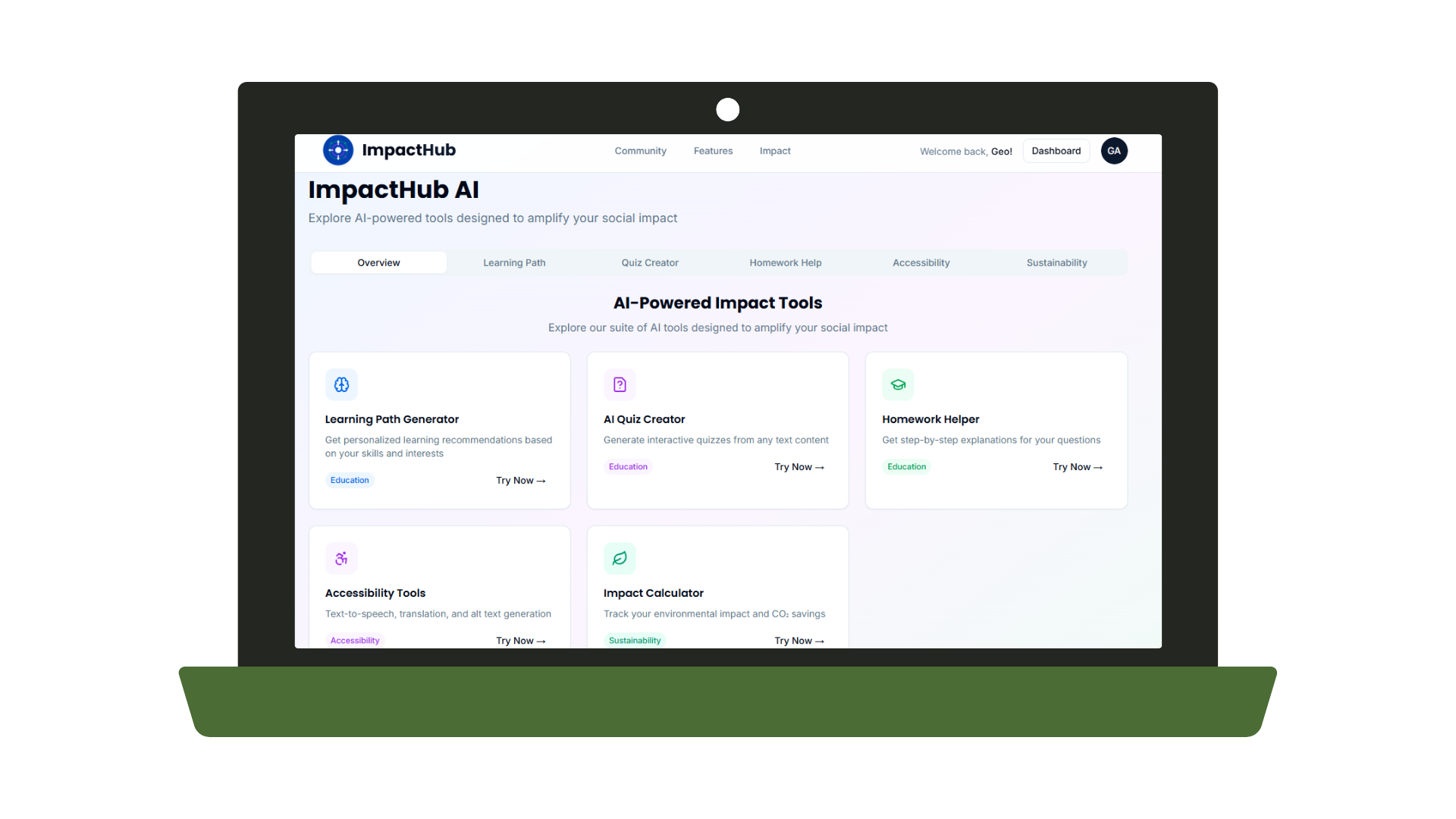
Work faster, learn deeper, achieve more with AI.
-
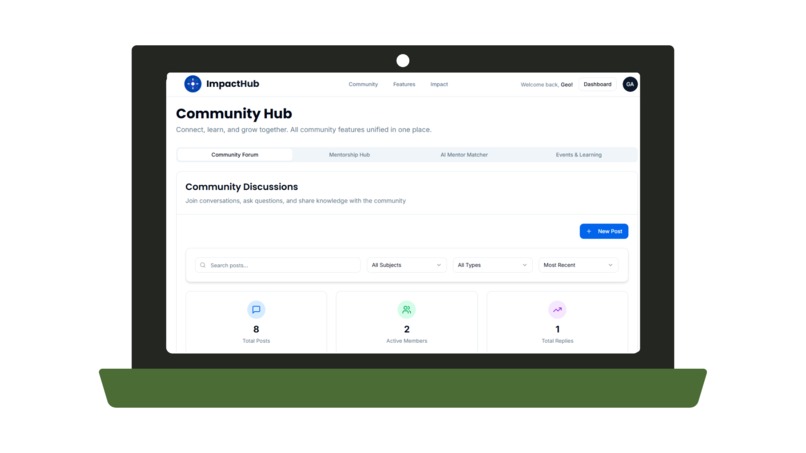
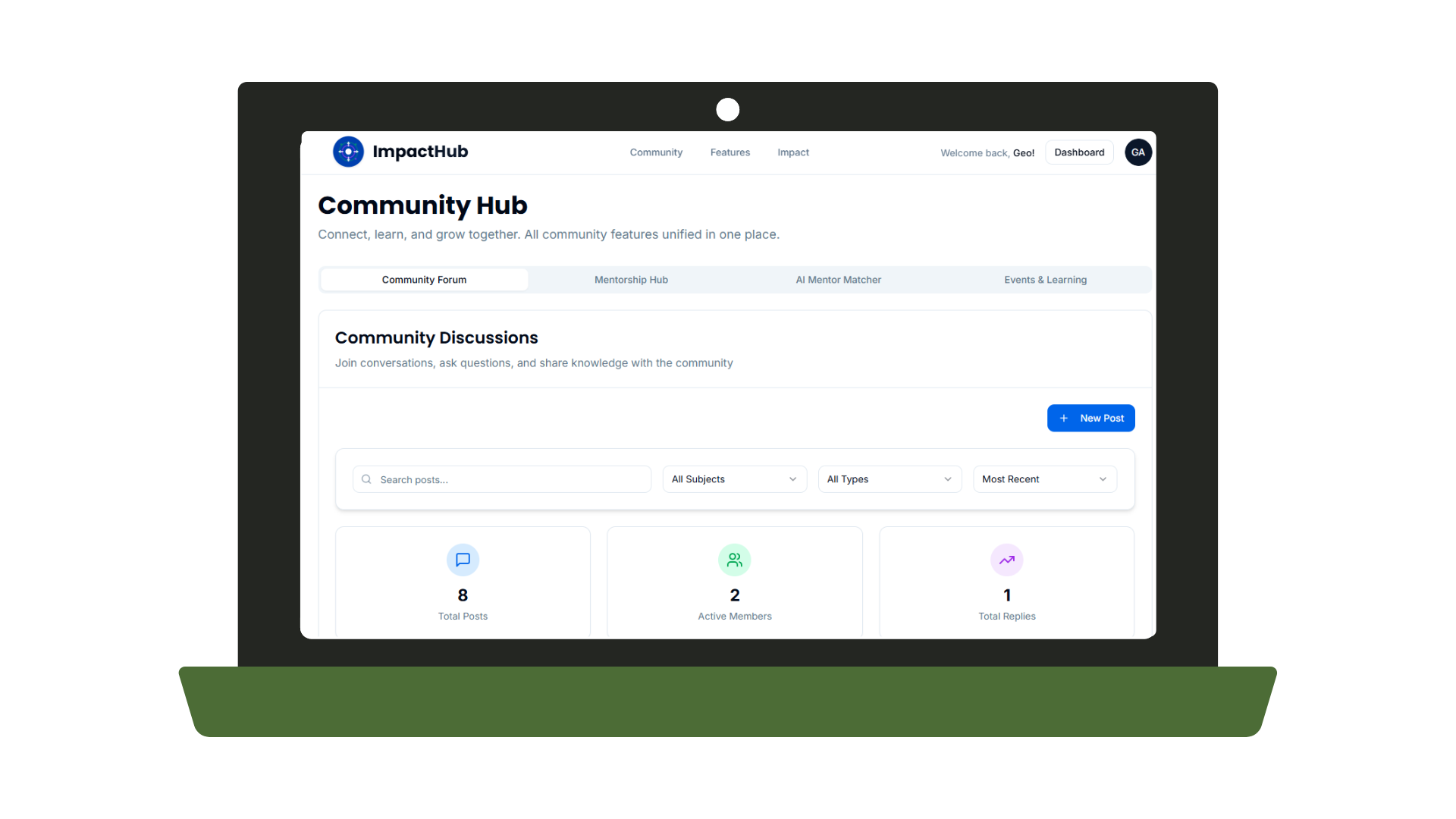
A hub for discussions, knowledge, and growth.
ImpactHub AI Platform - Project Story
Inspiration
The inspiration for ImpactHub AI came from witnessing the digital divide firsthand - seeing how advanced AI tools were becoming increasingly powerful but remained inaccessible to marginalized communities who could benefit most from them. We realized that while tech-savvy users had access to sophisticated AI-powered learning platforms, low-literacy users and underserved communities were left behind. This sparked the vision to create the world's first unified AI platform that serves everyone, from power users to those who need simple, visual, voice-guided experiences.
What it does
ImpactHub AI is a comprehensive social impact platform that combines three distinct experiences in one:
Advanced AI Tools Dashboard - Offers sophisticated features like AI-powered learning path generation, interactive quiz creation, homework assistance, and sustainability tracking for educators and organizations.
Simple Learning Interface - Provides visual, icon-based lessons with voice narration and offline support specifically designed for low-literacy users and marginalized communities.
Unified Community Hub - Connects all users through mentorship matching, community forums with sentiment analysis, and collaborative impact tracking.
The platform democratizes access to AI-powered education, accessibility tools, and community building features while maintaining a single sign-on experience across all interfaces.
How we built it
We built ImpactHub AI using a modern, scalable tech stack:
Frontend: React 18 with TypeScript, Tailwind CSS, and shadcn/ui components for a responsive, accessible interface
Backend: Supabase providing PostgreSQL database, authentication, and real-time features with Row Level Security
AI Integration: DeepSeek AI API for natural language processing, combined with Web Speech API for accessibility
Architecture: Modular component structure with separate dashboards for different user types, unified through shared services and contexts
The development process involved creating distinct user experiences while maintaining code reusability through shared components and services. We implemented progressive web app features for offline functionality and optimized performance through database query optimization and lazy loading.
Challenges we ran into
AI Integration Complexity - Balancing sophisticated AI features with simple interfaces required careful API design and error handling to ensure reliability across different user skill levels.
Accessibility at Scale - Creating truly accessible experiences meant implementing comprehensive text-to-speech, voice recognition, and visual design systems that work across 25+ languages.
Performance Optimization - Serving both data-heavy AI tools and lightweight simple interfaces from the same platform required extensive database optimization and intelligent caching strategies.
User Experience Unification - Designing seamless transitions between simple and advanced modes while maintaining context and progress across different interface types.
Accomplishments that we're proud of
Bridging the Digital Divide - Successfully created a platform that serves both advanced users and marginalized communities without compromising either experience.
Comprehensive AI Integration - Built a robust AI service layer that powers everything from learning path generation to sentiment analysis while maintaining reliability and performance.
Accessibility Leadership - Implemented industry-leading accessibility features including multi-language support, voice interfaces, and visual learning systems.
Technical Excellence - Achieved optimal performance through database optimization, progressive loading, and comprehensive error tracking systems.
What we learned
Inclusive Design Principles - Learned that true accessibility means designing for the most constrained users first, which ultimately benefits everyone.
AI Service Architecture - Discovered the importance of building resilient AI integrations with proper error handling, fallbacks, and usage tracking.
Community-Driven Development - Understood that social impact platforms succeed when they facilitate genuine connections and collaborative learning experiences.
Performance vs. Features Balance - Learned to optimize aggressively while maintaining rich functionality through smart architectural decisions and progressive enhancement.
What's next for ImpactHub Platform
Mobile-First Expansion - Developing native mobile apps to reach users in regions where mobile is the primary internet access method.
AI Model Training - Creating custom AI models trained on educational content specifically for underserved communities and multilingual contexts.
Partnership Integration - Building APIs for NGOs, educational institutions, and government programs to integrate ImpactHub into existing social impact initiatives.
Offline-First Architecture - Expanding PWA capabilities to enable full functionality in low-connectivity environments through advanced caching and synchronization.
Global Localization - Expanding beyond 25 languages to include regional dialects and culturally-specific content adaptation.
Impact Measurement - Developing comprehensive analytics to quantify real-world social impact and learning outcomes across all user types.
Built With
- css
- deepseek
- git
- netlify
- node.js
- postgresql
- react
- rls)
- shadcn/ui
- tailwind
- tanstack
- typescript
- vite


Log in or sign up for Devpost to join the conversation.