Inspiration
Our question of focus is “How might we account for discrepancies presented by genetic ancestry differences to minimize erroneous diagnoses without classifying by race?”. We have chosen to focus on the calculation of reference intervals and the diagnosis of skin conditions as our main examples.
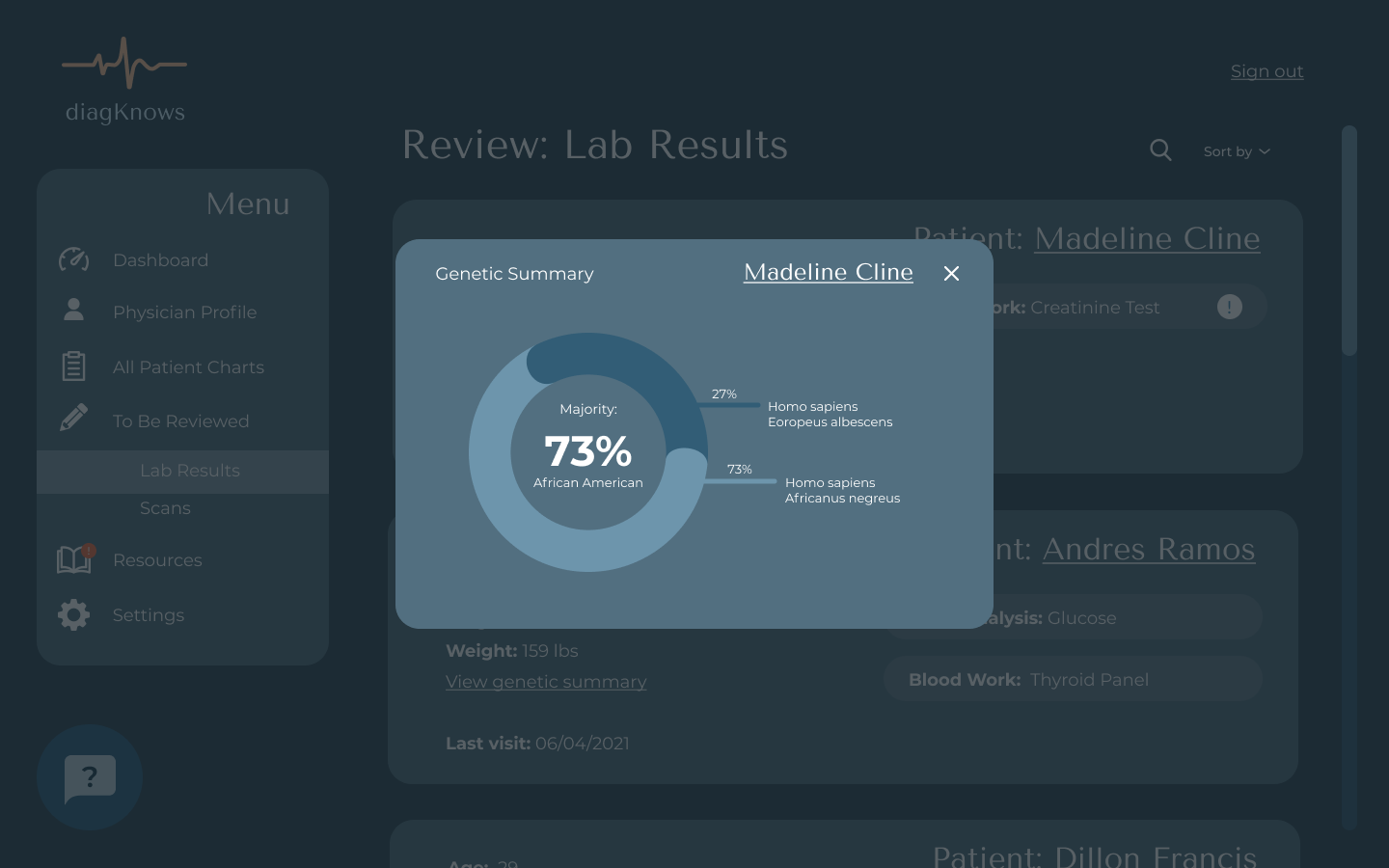
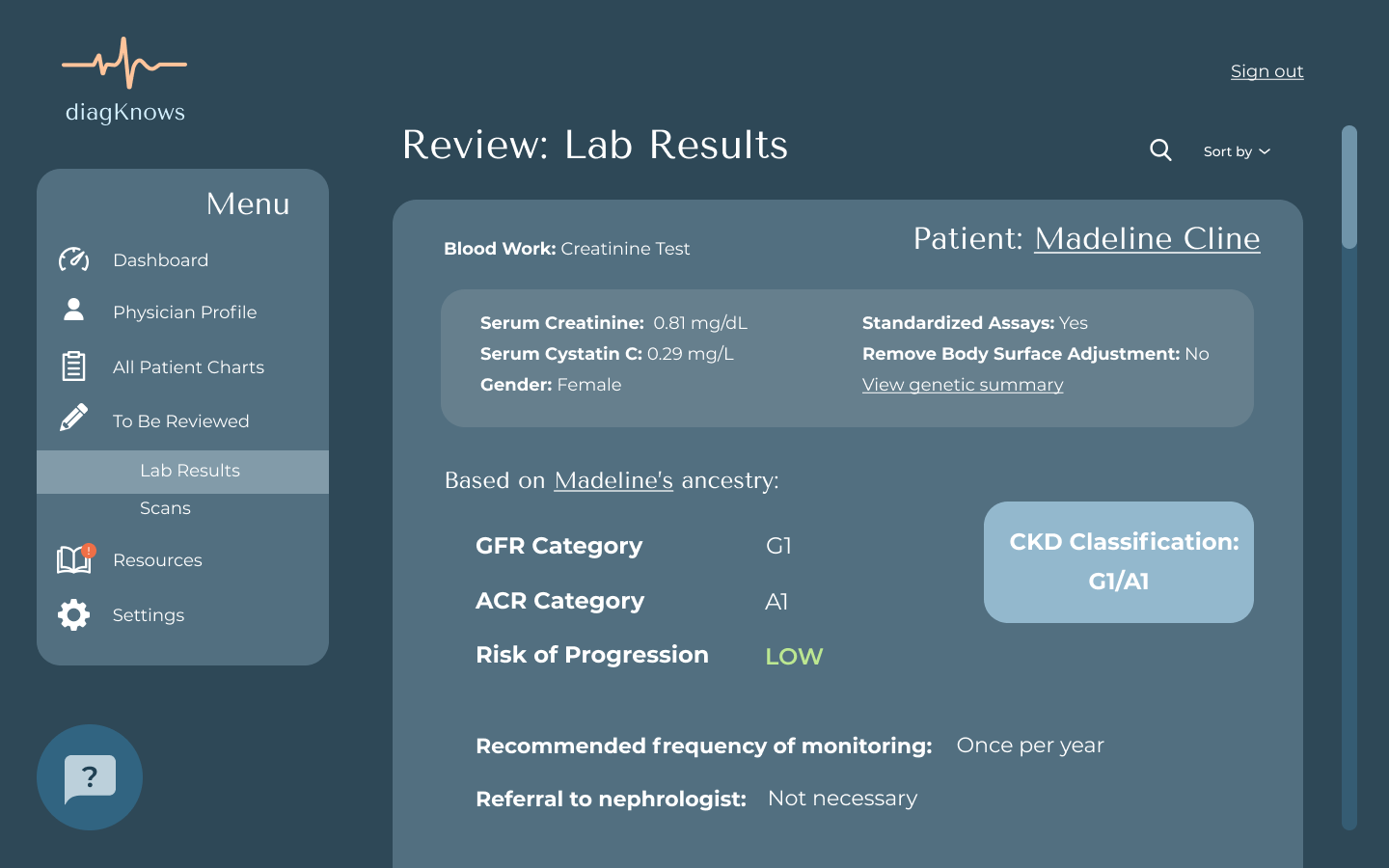
Metabolite reference intervals used to diagnose an individual's health often do not account for genetic ancestry differences. The calculation of Glomerular Filtration Rate is an example of this, since it adjusts for race when such an adjustment may not be accurate. This inaccurate diagnosing can lead to higher drug dosing, and longer delays on transplant wait lists, CKD referrals and before dialysis initiation.
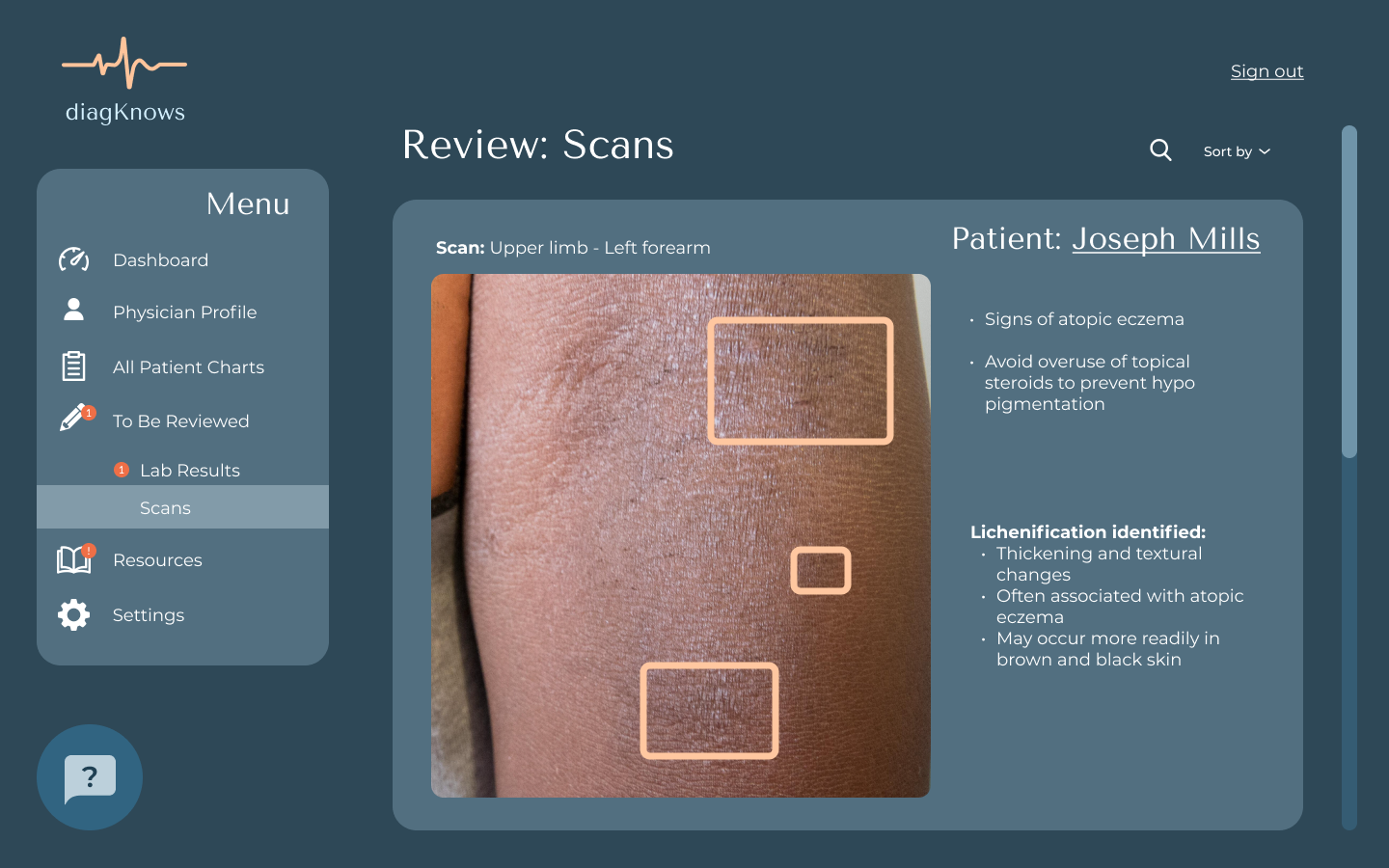
The skin conditions of people of colour is another area of focus as they can vary by appearance with skin compositions. Despite this, patient care is notably geared towards lighter skin complexions. For example, erythema is recognizable by the redness of skin, and this is clearly visible on lighter skin. However, on darker skin it can be more subtle with a red or purplish discolouration. It is important that we tailor healthcare for different darker skins and account for genetic ancestry.
What it does
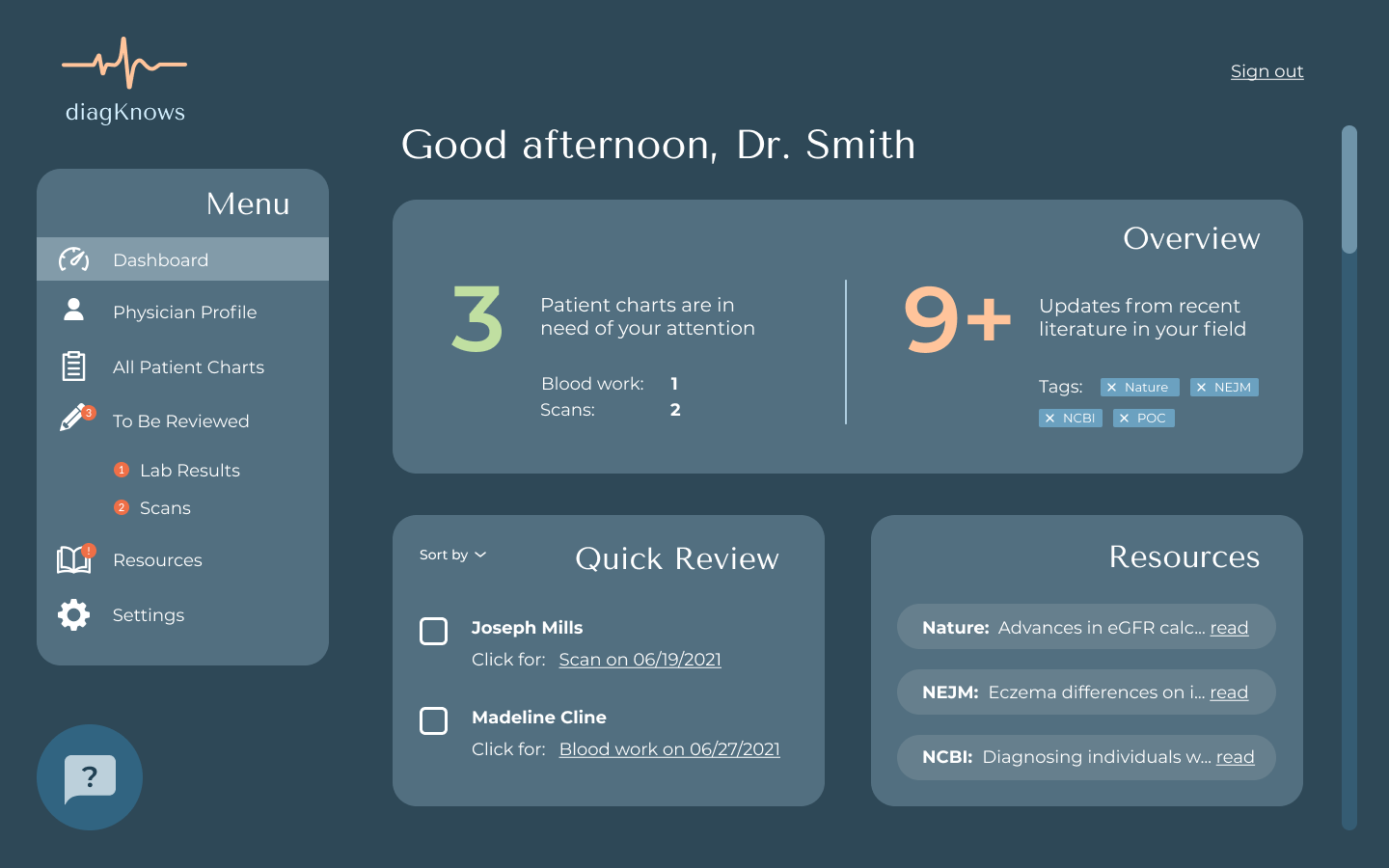
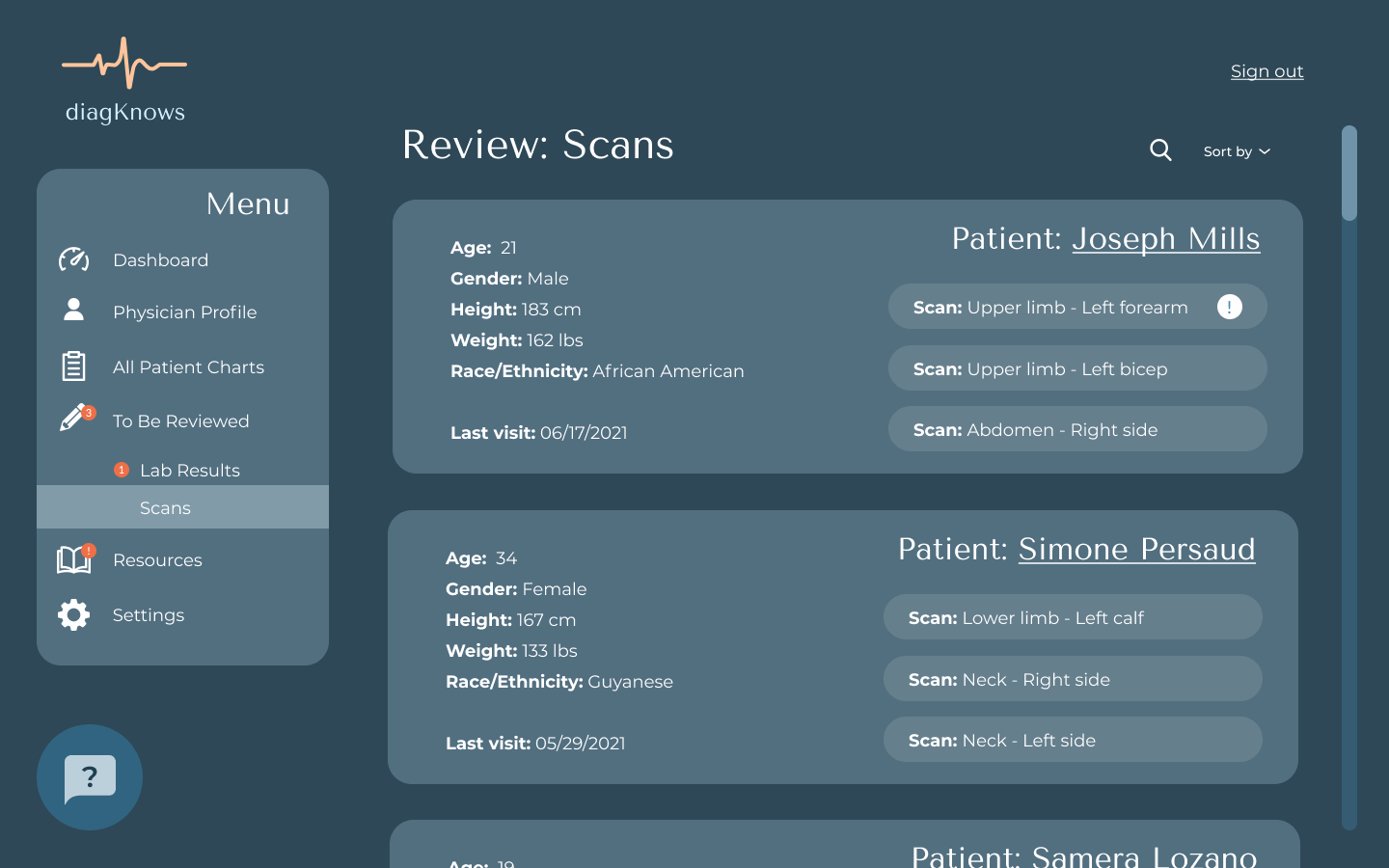
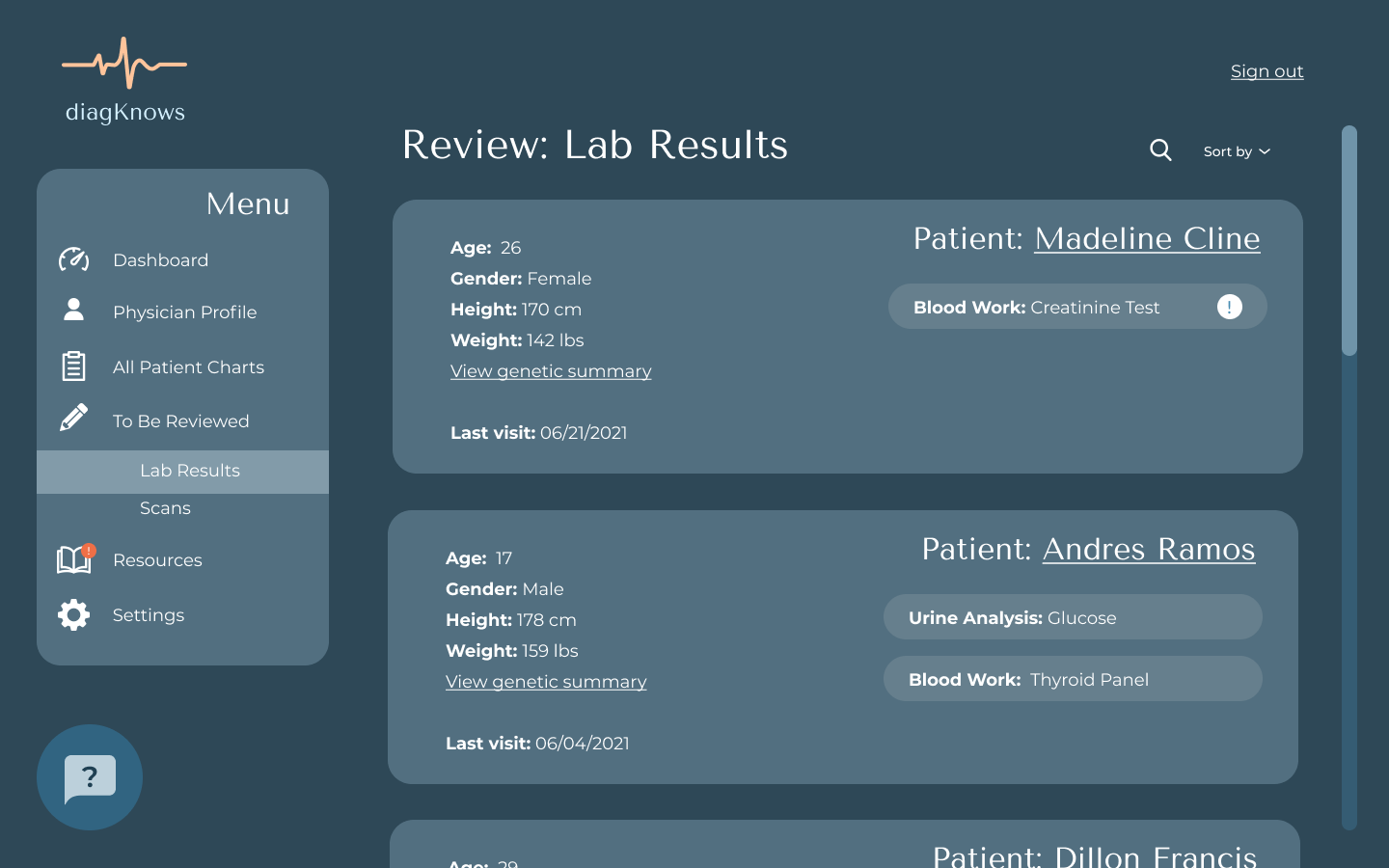
Physicians can sign in using their CPSO number which will take them to a dashboard. Here, they can see an overview of all the charts that need their attention. If we click the “Scans”, the screen now displays the physician’s active patients and their scans sorted by date. We see here a new scan was sent in, and we can click to view it. Using machine learning, diagKnows has identified the image to be atopic eczema and has provided some supplemental information. Lab results can also be processed. Since a patient’s genetic ancestry can influence their reference intervals and affect diagnosis, DiagKnows asks patients to complete a one-time genome sequencing test which it uses to compare with tailored interval values. These interval values are determined by searching through medically-reviewed literature using natural language processing. Upon matching the patient’s ancestry with their respective reference interval, diagKnows is able to generate recommendations and analyses.
Significance
We plan on testing this approach through a rigorous interdisciplinary, phased research framework composed of data quality control, algorithm testing and real-world clinical trials. The value of this product is that it addresses biases in our healthcare system that perpetuate hidden racism in medicine and which can lead to misdiagnosis. Especially in healthcare, where people’s lives are heavily impacted, it is necessary that we overcome these obstacles to build a safer community for all.
Built With
- figma

Log in or sign up for Devpost to join the conversation.