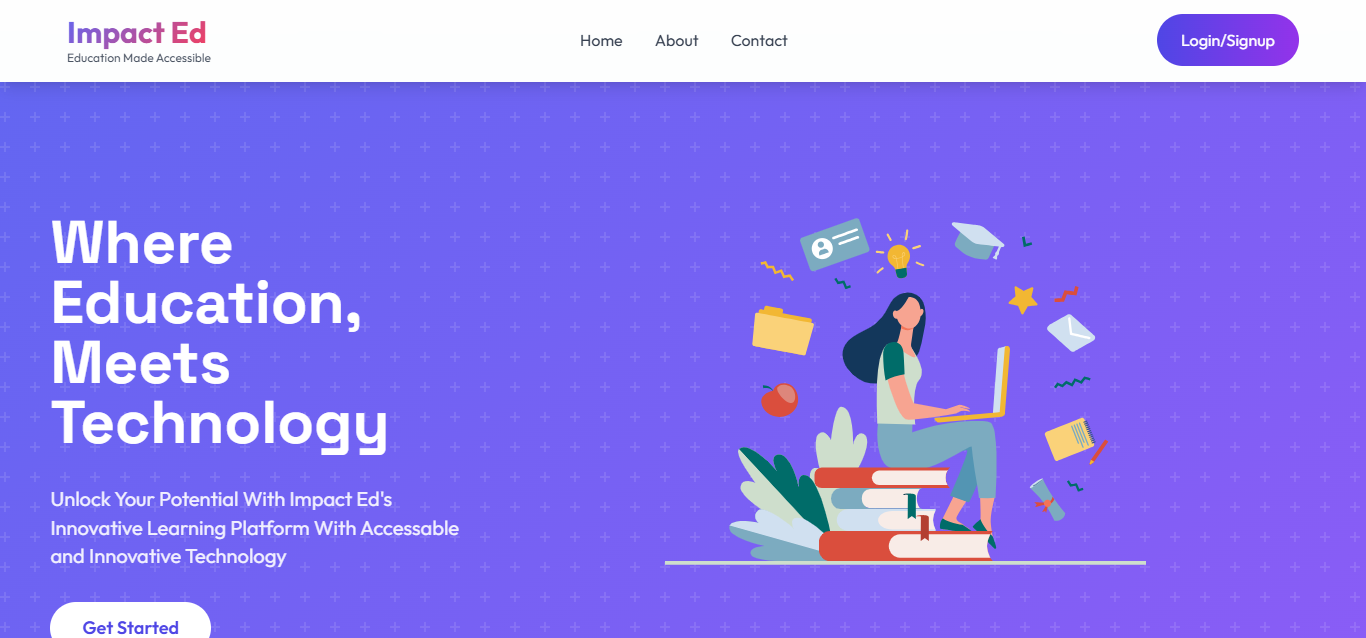
Inspiration:- Every year, more than 250 million children worldwide lack access to quality education, with barriers including physical disabilities, language limitations, and socio-economic challenges. Inspired by the need for inclusivity, Impact Ed aims to break these barriers using advanced AI technologies, providing tailored education to all learners, including those with full-body paralysis and dementia.
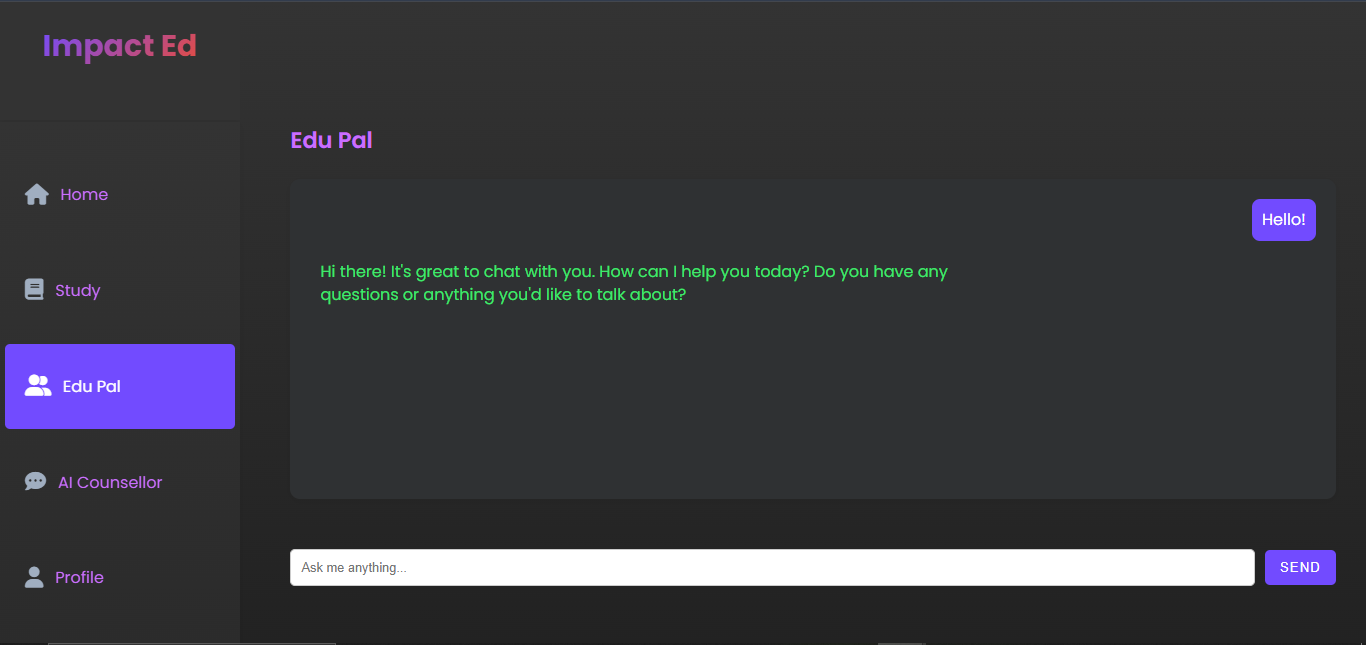
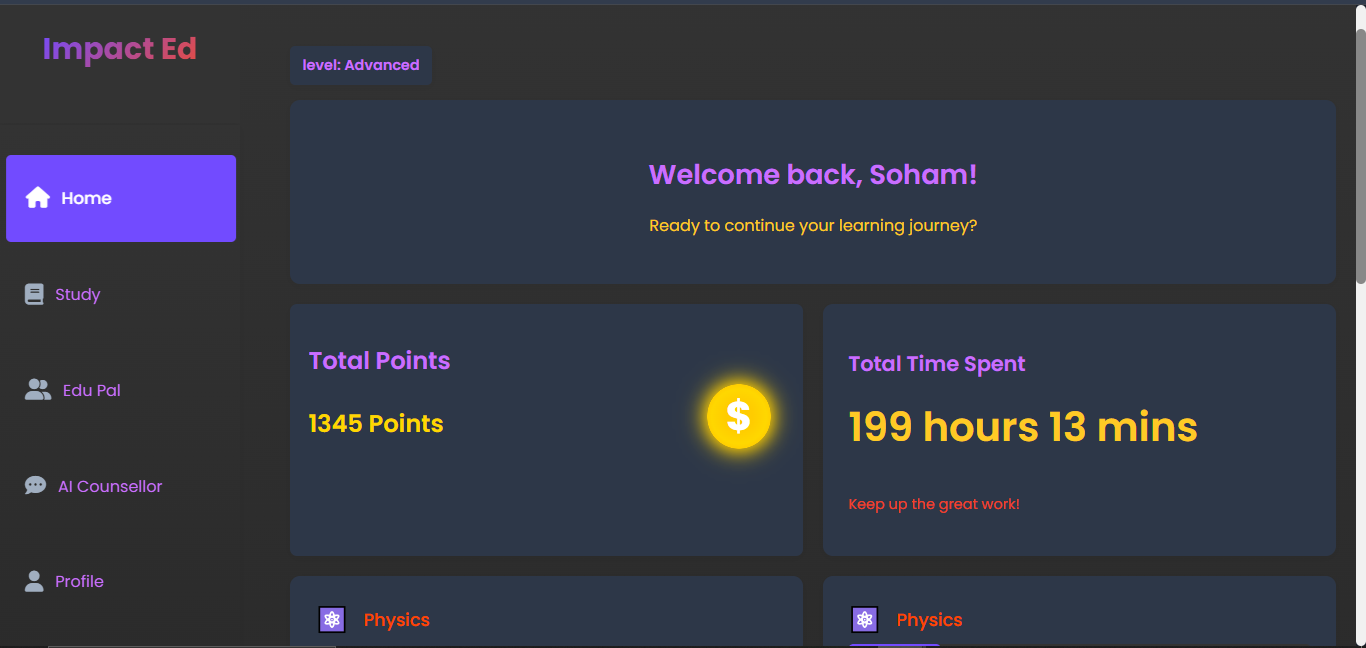
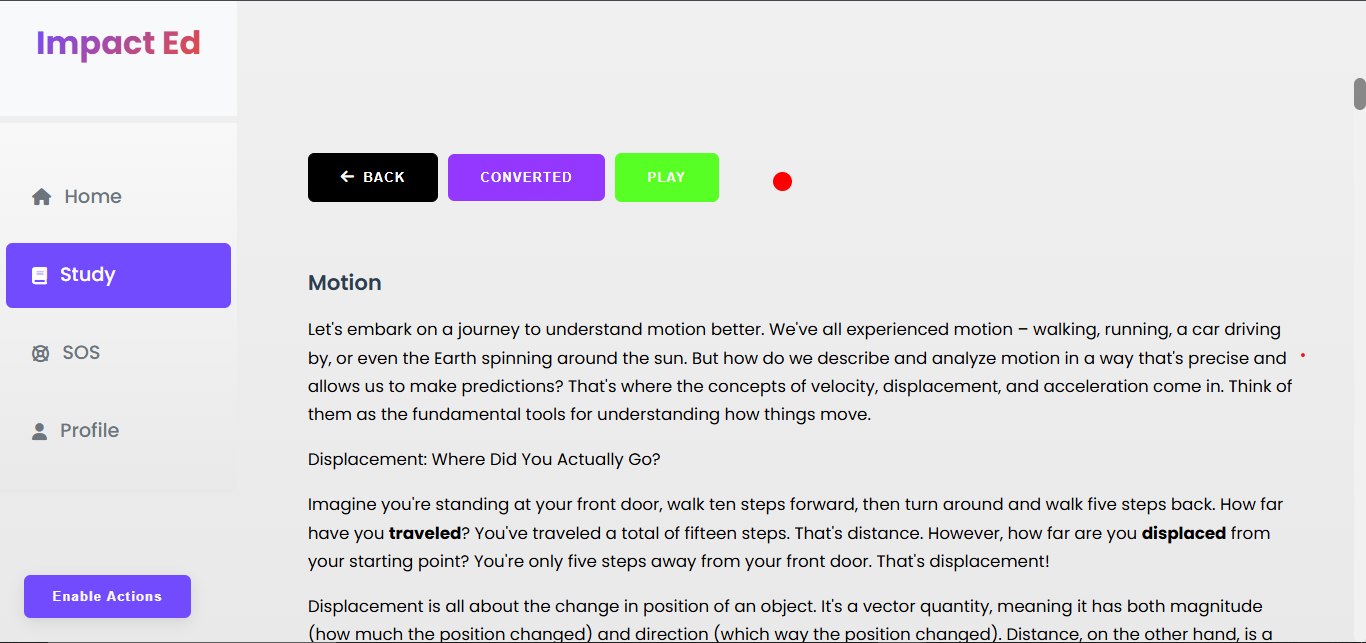
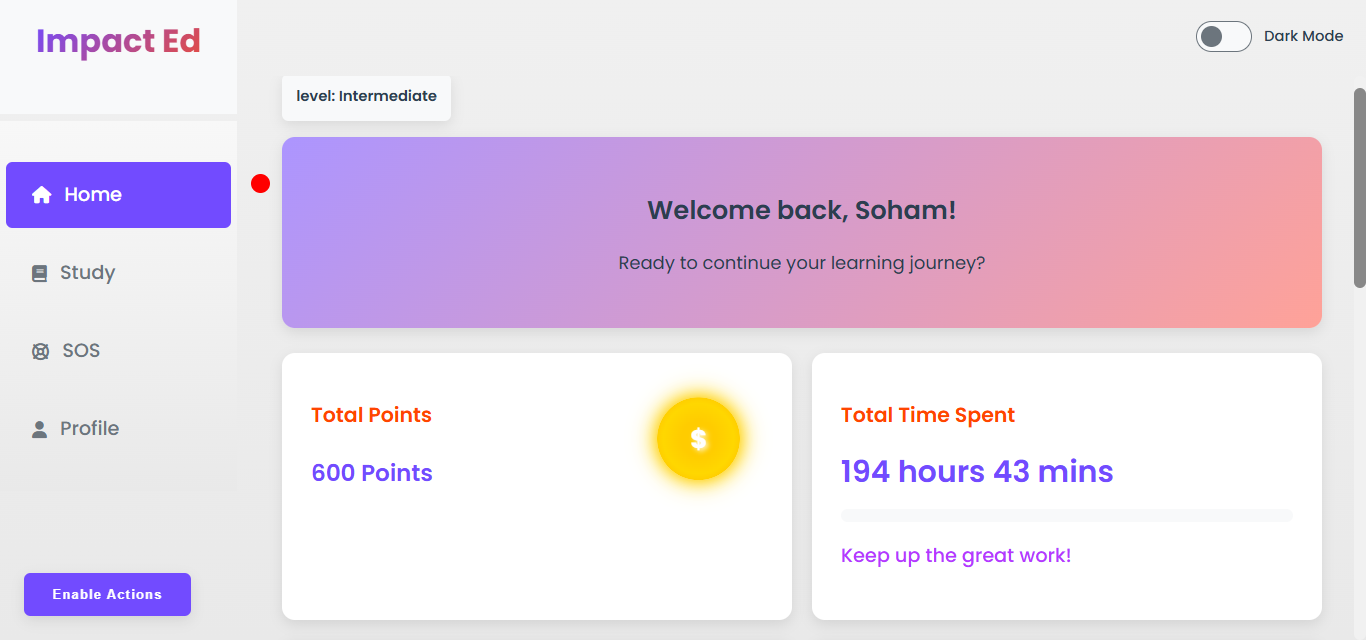
What it does:- With Iris Tracking Technology, Impact Ed is an AI-powered educational platform that provides quality education to Paralyzed people and mentally abled people. It adapts to individual learning levels and generates personalized study modules and audio versions of those modules across various subjects in more than 40 Languages. It empowers paralyzed individuals to learn through eye gestures, and integrates an AI-driven cabinet to assist dementia patients in managing their belongings—reducing stress and enhancing their learning environment. It also provides an AI Friend and AI Counsellor with Conversation memory so that the child has a virtual friend who remembers the user.
How I built it:- I built Impact Ed using:
Gemini along with RAG with a 1.6 million token study module dataset* for generating high quality study modules.
Iris tracking technology to facilitate gesture-based learning.
HTML, JS & CSS for the front-end, ensuring a clean and responsive UI. Google Cloud for hosting the AI model and managing scalable infrastructure. Computer vision & machine learning algorithms for the AI-powered platform.
Challenges I ran into:- Integrating iris tracking technology: Making it responsive and accessible to individuals with full-body paralysis. The main challenge was the integrating the iris tracker with proper calibration for all users was a very long process.
Multilingual support: Providing accurate translations without relying on external APIs like Google Translate. To achieve this, I created a 1.6 million token dataset for sample chapters of each topic and then used RAG to provide the Gemini model a source of info for accurate content generation. This was a major challenge because the dataset preparation was a very long and tedious process.
Ensuring inclusive product design: Designing features that cater to diverse needs, including dementia patients and differently-abled learners was a major barrier because there are not many sites available for reference and as a 16 year old, I had to plan the whole product from scratch.
Accomplishments that I am proud of:- I am the first person to have developed a solution in this field, successfully implementing gesture-based education using iris tracking technology to provide education to the paralyzed. Impact-Ed is the first in the field. Building a scalable, adaptable AI teacher that provides personalized education to all learning levels.
What we learned:- The importance of inclusive design in educational technology. How to optimize AI models for personalized content generation. New techniques in computer vision and machine learning for real-world applications. The impact of adaptive learning technologies on enhancing education accessibility.
What's next for Impact-Ed:- Expanding the library with more open-source educational resources. Expanding the dataset to support more languages and subjects. Collaborating with educational institutions to bring Impact Ed to underserved communities.

Log in or sign up for Devpost to join the conversation.