Inspiration
The inspiration behind ImmunoQuest: Evolution in the Bloodstream stems from our fascination with the human immune system and its remarkable ability to defend the body against invading pathogens like viruses. We were inspired to create an interactive experience that not only educates players about immunology but also engages them in a thrilling adventure where they watch white blood cells combat viral threats.
What it does
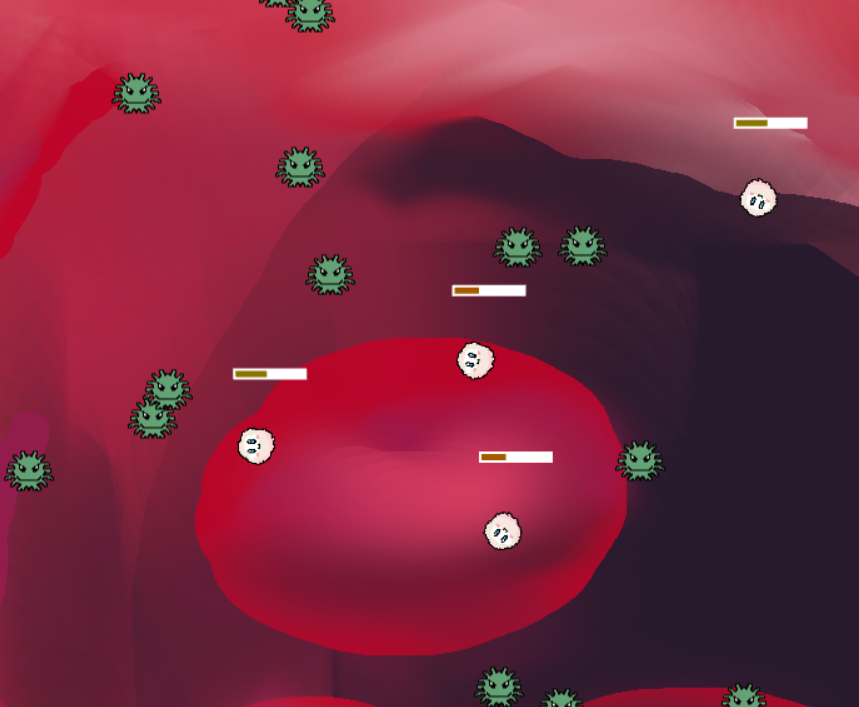
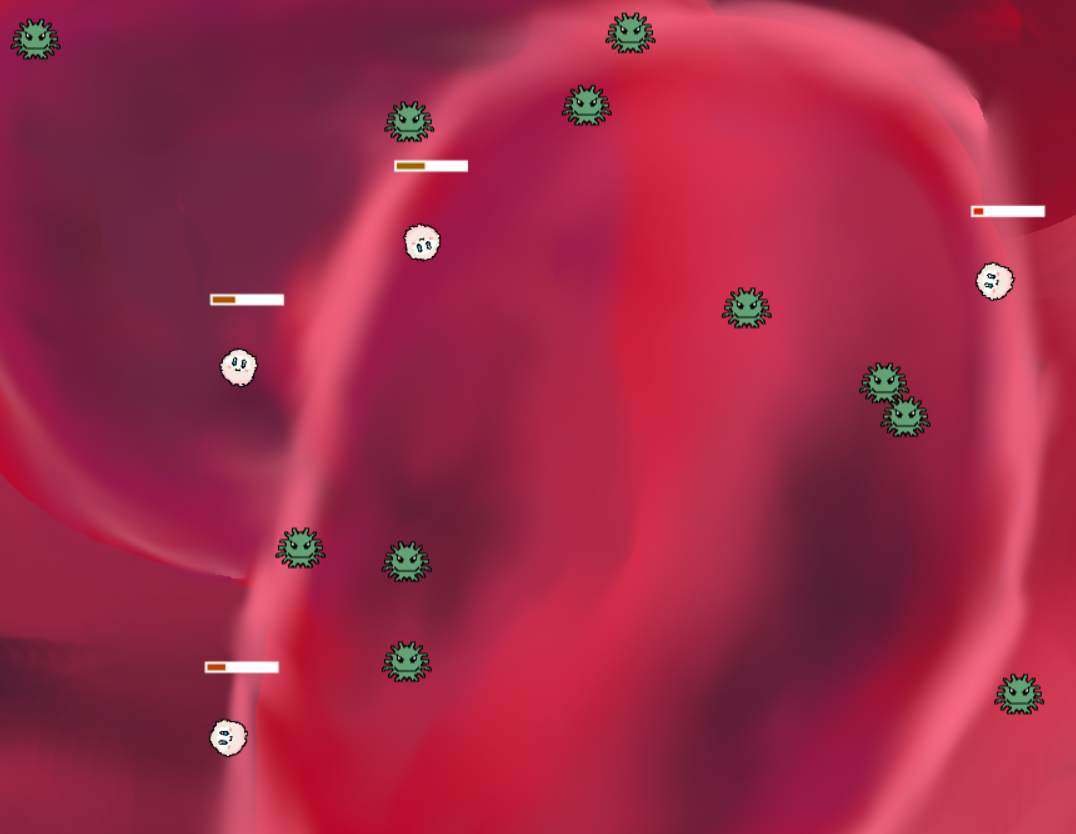
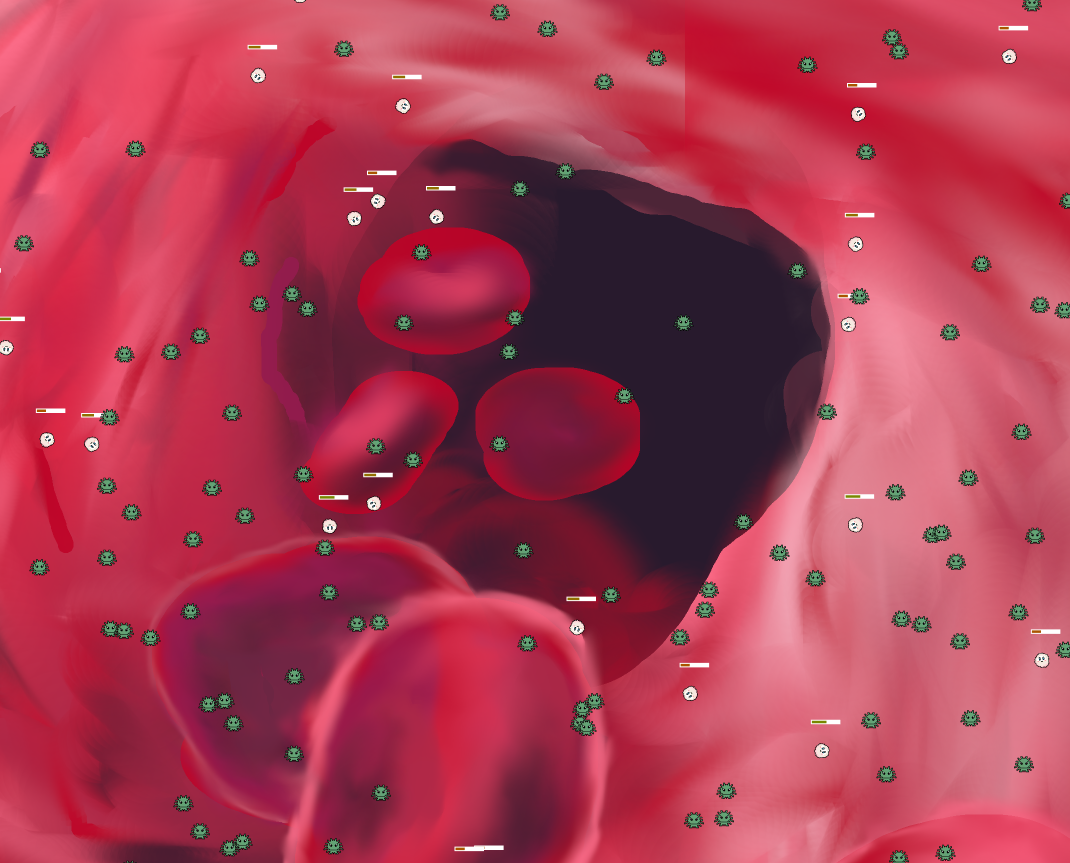
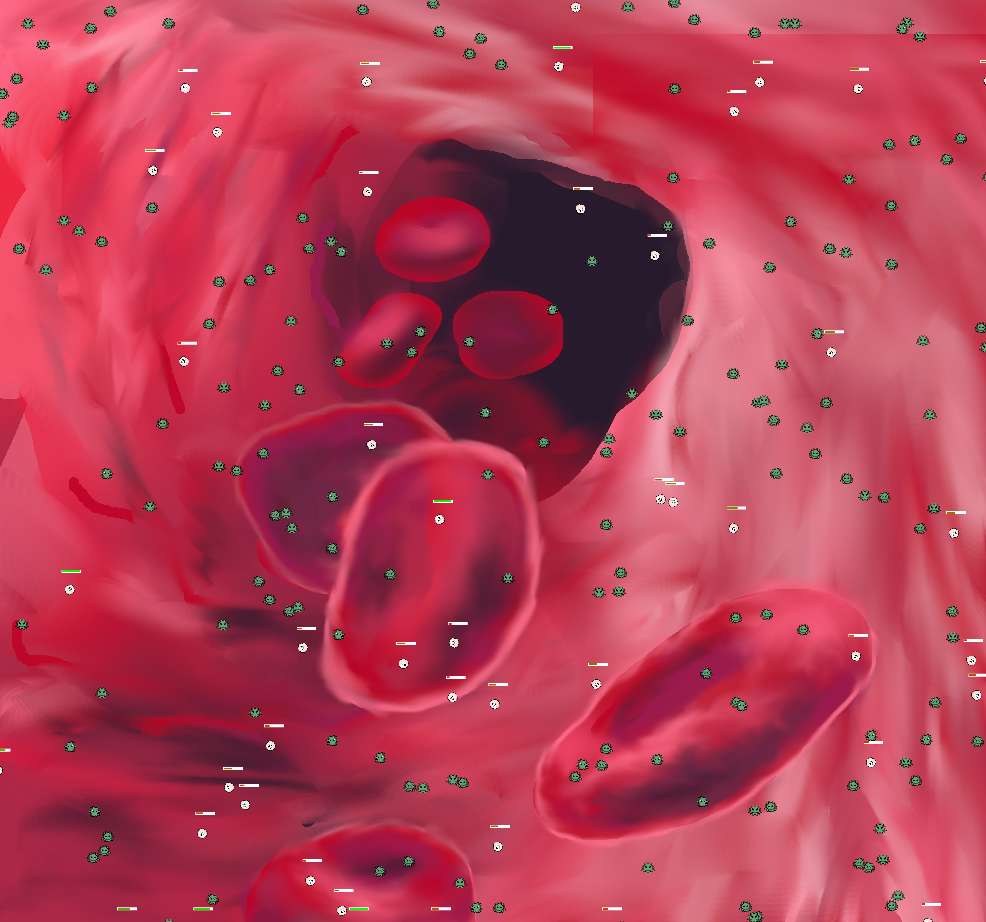
In ImmunoQuest: Evolution in the Bloodstream, players act as spectators, witnessing the evolution and behavior of white blood cells as they navigate a virtual environment in search of viruses to combat. Utilizing the NEAT algorithm, the game simulates the evolution of white blood cells based on their ability to locate and consume viruses. Players observe as successful cells multiply and pass on their traits to successive generations, shaping the ongoing battle against viral invaders.
How we built it
We developed ImmunoQuest: Evolution in the Bloodstream using a combination of JavaScript, CSS, and HTML to create the website interface, while JavaScript was utilized for the game's functionality. Phaser, a game development framework, was integrated as the game engine to facilitate smooth rendering and interactive gameplay experiences.
The NEAT algorithm, also implemented in JavaScript, drove the behavior of the white blood cells, enabling dynamic evolution and adaptation within the game environment. NeuroEvolution of Augmenting Topologies (NEAT) is a genetic algorithm (GA) designed to generate evolving artificial neural networks. Our TypeScript implementation of NEAT seamlessly integrates into JavaScript, allowing for use in both Node.js and browser environments.
The sprites and background were crafted using GIMP. The background comprises 14 layers, each designed with gradual color transitions and blending effects.
Challenges we ran into
We initially attempted to implement our own neural network evolution system but it proved unsuccessful. Additionally, our efforts to develop a custom game engine were halted due to the perceived necessity for more advanced collision detection systems.
Accomplishments that we're proud of
We take pride in successfully implementing the NEAT algorithm in JavaScript to simulate the evolution of white blood cells in real time within a web-based environment. We're proud to have developed a fully functional product with a successful implementation.
What we learned
Through the development of ImmunoQuest, we deepened our understanding of web-based game development and design. We gained insights into the intricacies of artificial intelligence algorithms like NEAT and their application in gaming within a browser environment.
What's next for ImmunoQuest: Virus Invasion
Looking ahead, we plan to enhance ImmunoQuest with additional features and content. This includes expanding the simulation to incorporate more diverse environments and viral strains, providing players with a broader understanding of immune system dynamics. Introducing levels or points to the game will provide players with clear objectives and a sense of progression as they navigate through the simulation. Additionally, we aim to integrate feedback mechanisms to allow players to interact with the simulation, further enhancing their learning experience. Collaborations with educators and researchers will also be explored to ensure the game remains scientifically accurate and informative.

Log in or sign up for Devpost to join the conversation.