-
-
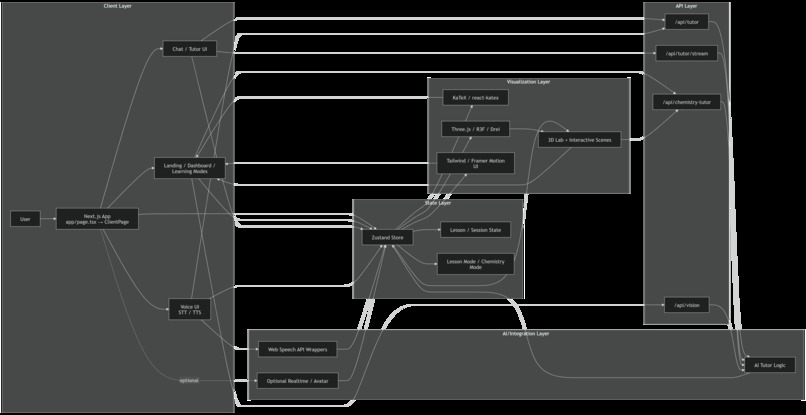
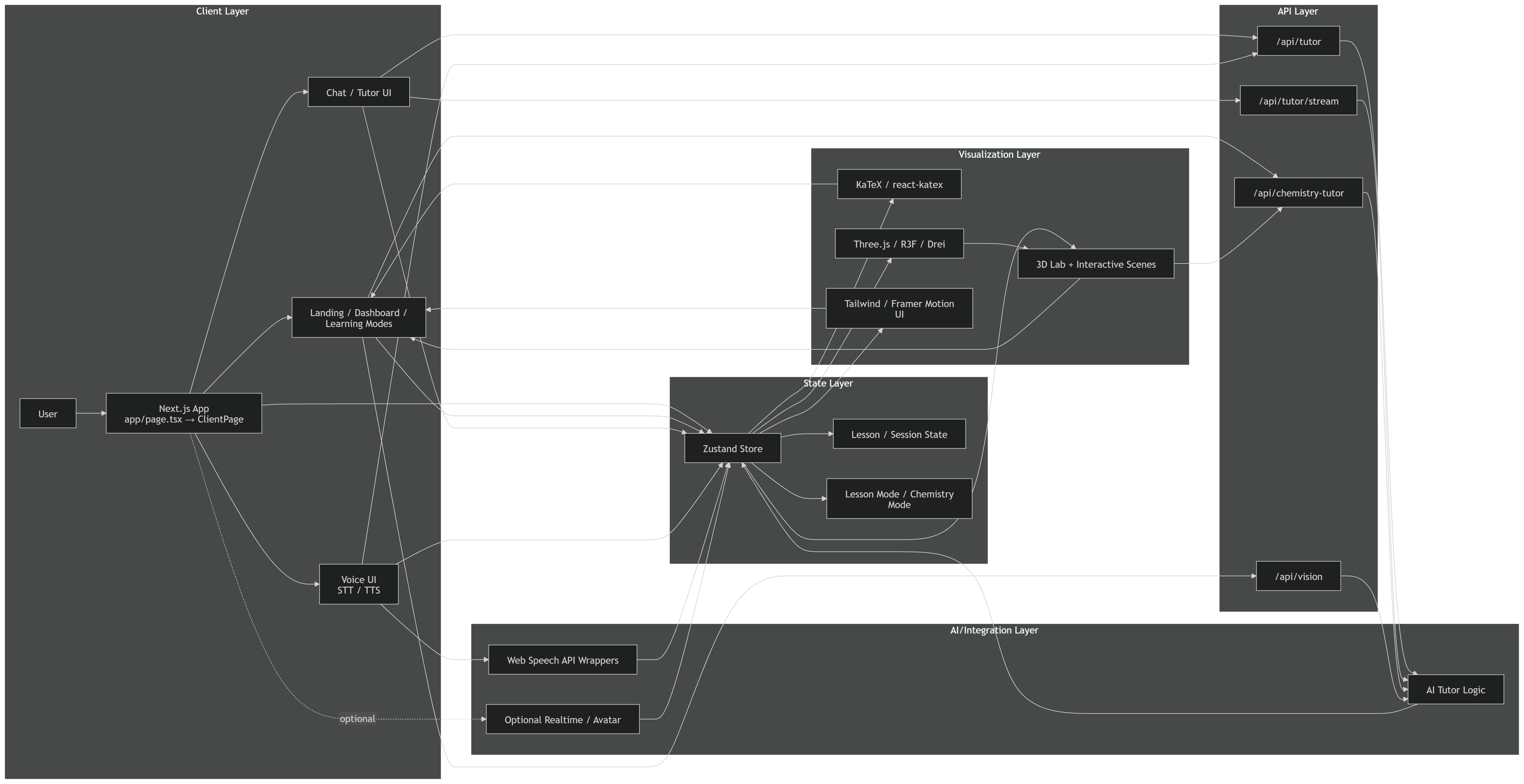
Tech Stack Diagram
-
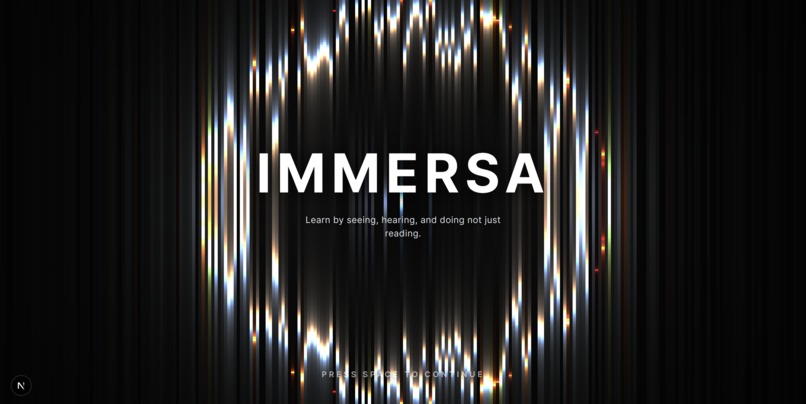
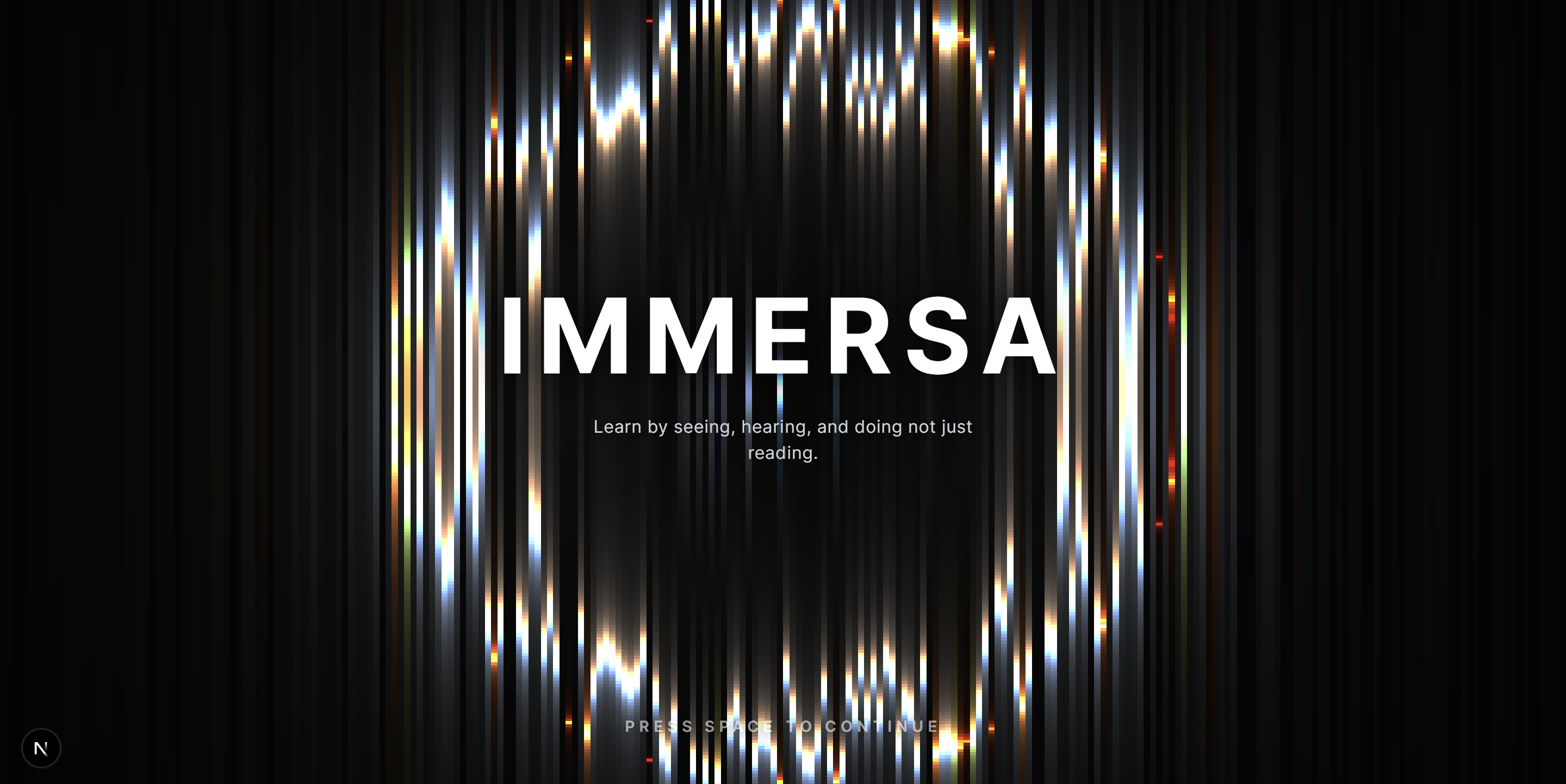
Landing page
-
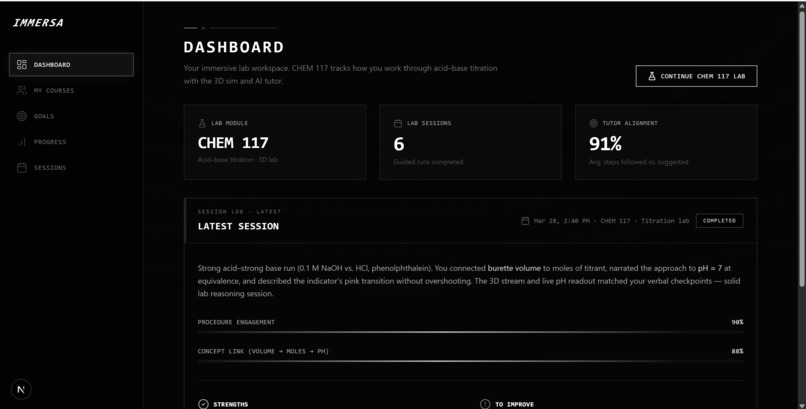
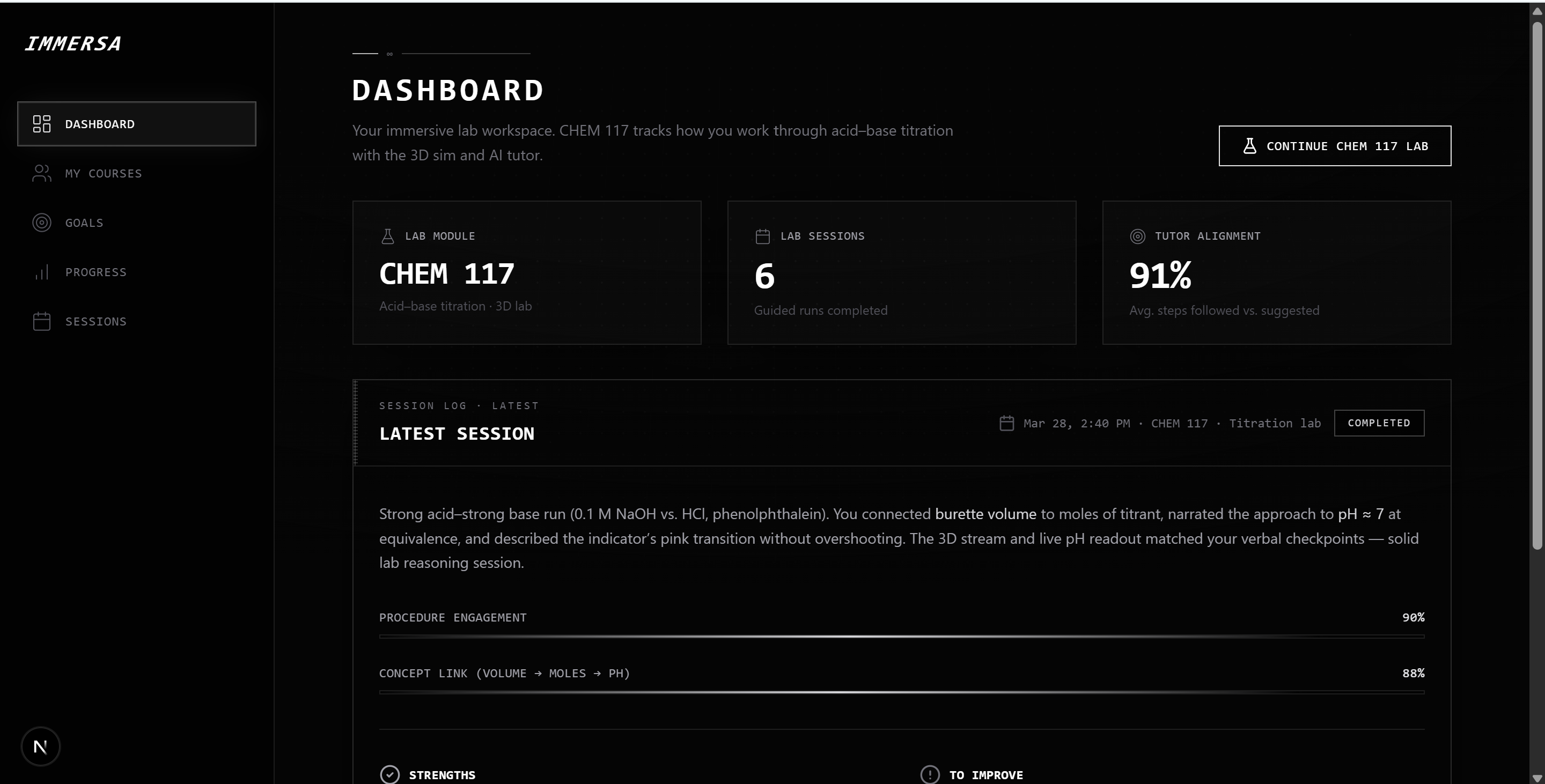
Student dashboard
-
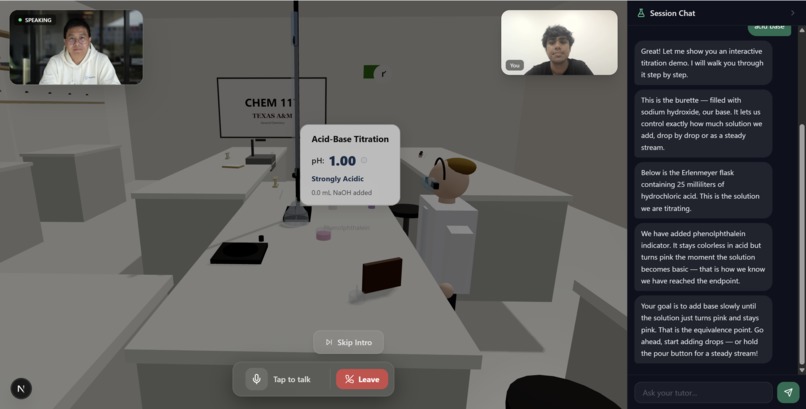
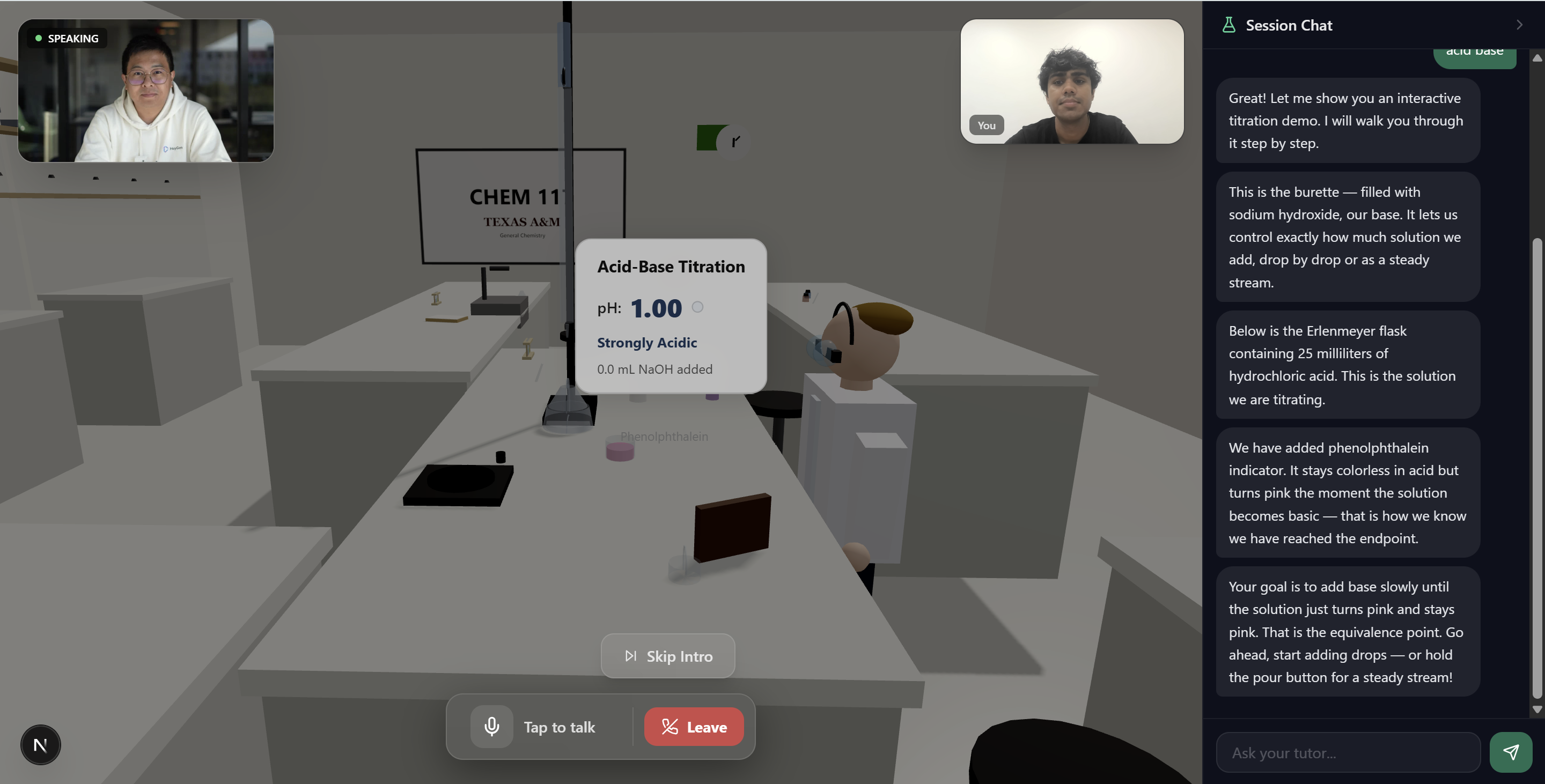
Chem Lab Demo
-
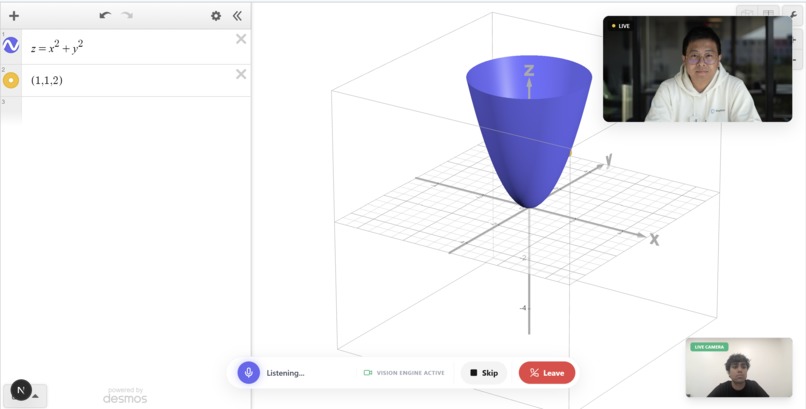
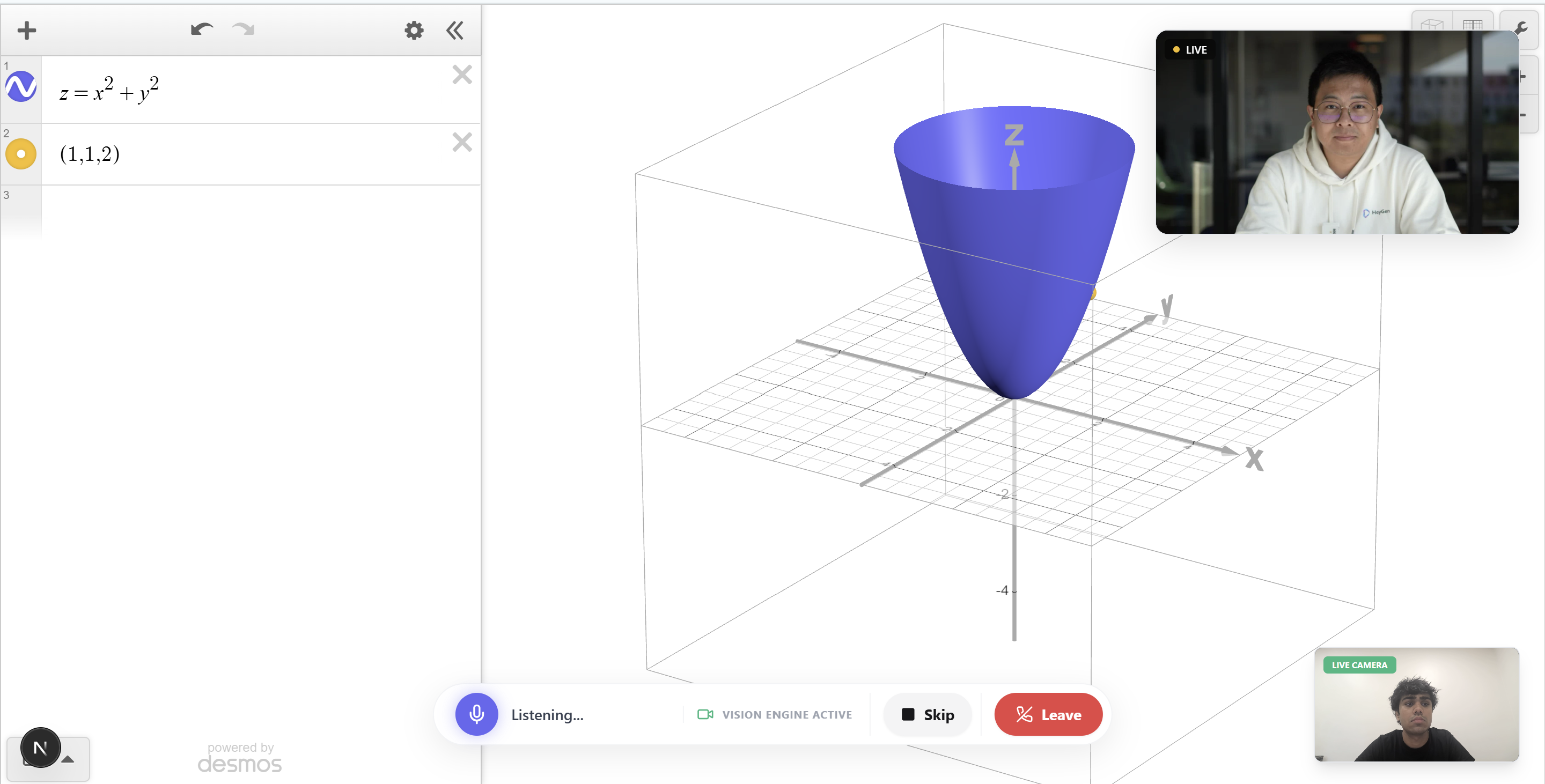
Math Demo
Inspiration
It is late at night, and you have a big test the next day. You are switching between ChatGPT, class notes, and videos, trying to understand a concept that still does not make sense. You replay explanations, reread definitions, and scroll through examples, but nothing fully clicks. Even the best learning platforms are still mostly passive. They explain, but they do not truly respond to what you are confused about in that exact moment. That frustration inspired us to build Immersa. We wanted to create a platform where students do not just watch lessons, but step inside them. We believe learning should feel active, immersive, and guided in real time rather than static and one-directional.
What it does
Immersa is an immersive, AI-guided learning platform that turns studying into a live, interactive session instead of a passive experience. When a student enters a lesson, they are placed in a focused environment with a speaking AI instructor, interactive visuals, and the ability to ask questions in real time. Instead of separating explanation from demonstration, Immersa synchronizes them so students can see, hear, and interact with concepts at the same time. In our current demo, this includes experiences like entering a first-person lab environment and exploring visually dynamic lessons, but the broader idea is much bigger: Immersa can support many kinds of learning experiences across different subjects and styles of teaching.
How we built it
We built Immersa as a multimodal system that combines real-time AI, voice interaction, interactive simulations, and a session-based user experience. The frontend was built with Next.js, React, and TypeScript, with Tailwind CSS and Framer Motion helping us create a polished and responsive interface. For math, we used KaTeX for rendering equations and Desmos-style interactive visuals to make abstract concepts intuitive. For immersive simulations, especially in chemistry, we used Three.js and React Three Fiber to build interactive 3D environments. We used Zustand for state management so visuals, lesson progression, and AI context stayed synchronized. On the backend, we used OpenAI APIs to power the tutor, structuring responses in JSON so they could directly control what appears on screen. We also integrated HeyGen with LiveKit for a live avatar experience, along with browser-based speech recognition and text-to-speech, making the platform feel more like a live tutoring session than a static app.
Challenges we ran into
One of the biggest challenges was making the experience feel truly immersive rather than gimmicky. It is easy to build something that looks visually impressive, but much harder to make it feel intuitive, educational, and natural in real time. Another major challenge was reducing the latency of AI responses while keeping the platform smooth and interactive. Since Immersa is meant to feel like a live session, any delay in explanation or visual updates can break immersion. We also had to balance rendering performance, synchronized state, and responsiveness so the experience remained fluid while still feeling rich and engaging.
Accomplishments that we're proud of
We are proud that Immersa goes beyond being just another study tool. Instead of making learning feel like jumping between disconnected videos, notes, and chat windows, we built an experience where the student can interact with an AI guide inside a more immersive learning environment. We are especially proud that the platform already demonstrates a clear shift in how studying can feel: more intuitive, more engaging, and more responsive to the learner in the moment. Even within the limited time of a hackathon, we were able to turn that vision into something tangible and memorable.
What we learned
We learned that students understand ideas more effectively when they can interact with them rather than passively consume information. We also learned how important context is for AI systems. A tutor that understands what the student is actively seeing can provide much more relevant and useful guidance than one that only responds in isolation. Most of all, we learned that building a strong learning experience is not just about adding AI or visuals separately. The real value comes from synchronizing conversation, interaction, and explanation so everything feels unified and intuitive.
What's next for Immersa
Next, we want to expand Immersa into a broader platform for immersive learning across many subjects and use cases. That means adding more lesson types, making the AI more adaptive to each student’s pace and confusion points, and deepening the interactivity so users can learn by exploring rather than just observing. Long term, we see Immersa becoming a new kind of educational platform where students do not just consume lessons, but actively step into them.
Built With
- 3d
- ai
- cursor
- heygen
- javascript
- next.js
- openai
- react
- typescript


Log in or sign up for Devpost to join the conversation.