-

Mobile logo
-

PWA imgMotion view
-
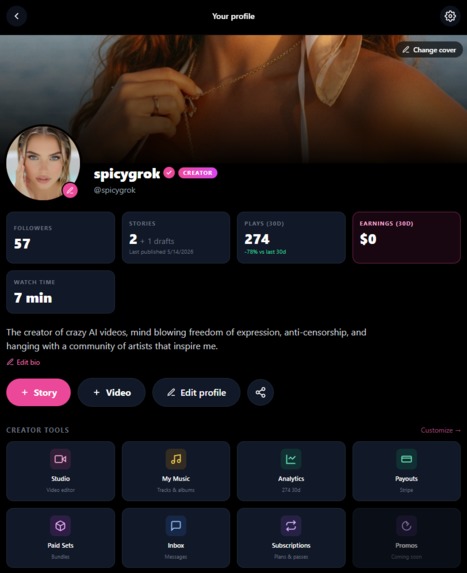
User Settings
-
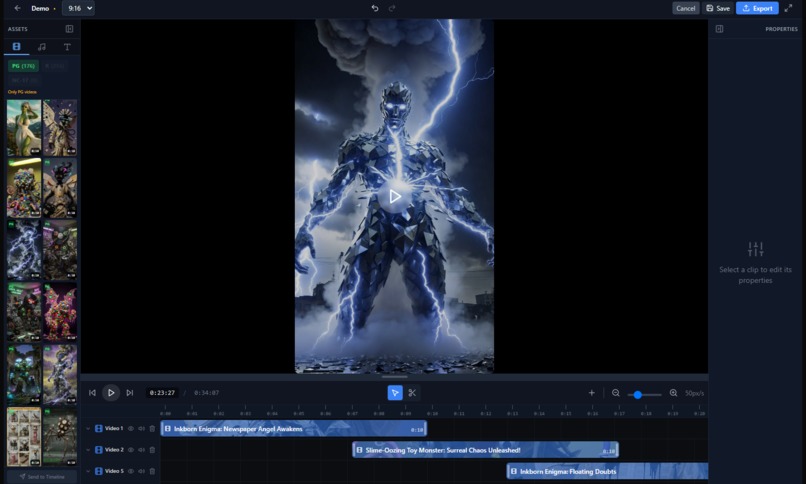
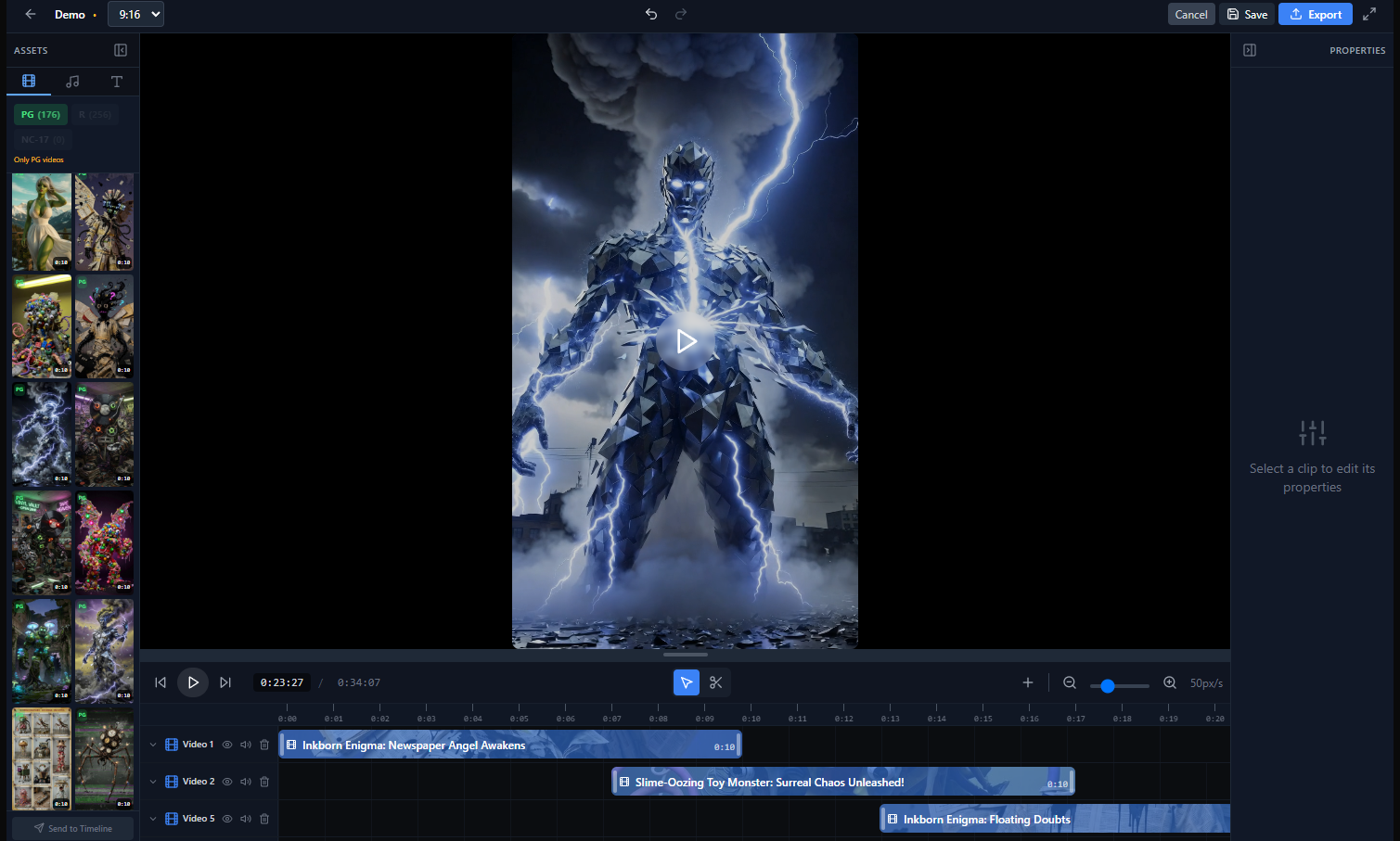
imgMotion Video Editor
-

Micro Drama Creator
-
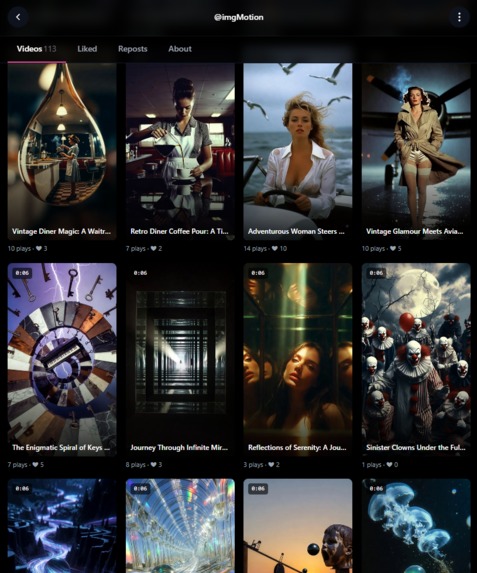
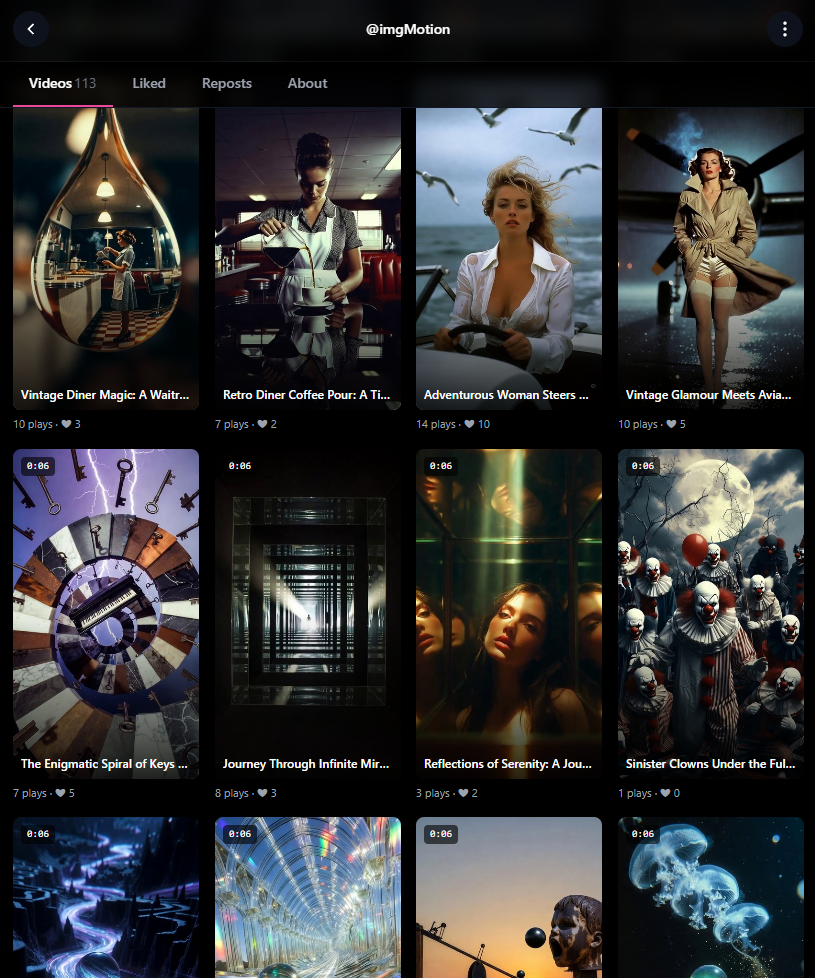
Video Gallery


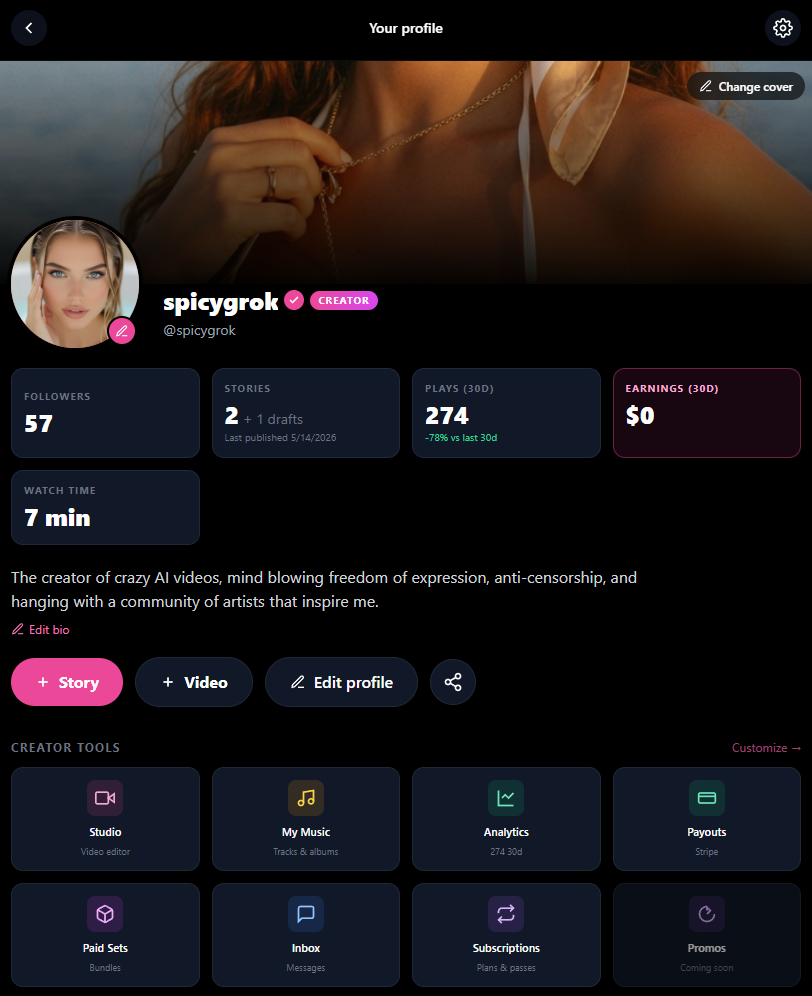

Inspiration
AI video blew up overnight. Type a prompt into something like Grok Imagine, wait a few seconds, and boom — you've got a clip. The only problem? There was no good place to actually post it, binge it, or get paid for it. Regular short-form apps are built for phone-camera footage and basically shrug at moderation. We wanted the flip side: a TikTok-style home built for AI video from the ground up, where the app is smart enough to sort the content itself — and where creators can actually turn "I made a cool clip" into "I got paid for that clip." That idea became imgMotion.
What it does
imgMotion is a swipe-up, can't-stop-scrolling video app with a real creator economy bolted on. Here's the fun stuff:
- The feed — For You, Following, and Trending. Videos autoplay as you swipe, it never runs out, and if you leave and come back it drops you right where you were. No "wait, where was I?"
- AI that does the boring parts — every upload gets scanned by Grok, which writes the title, description, and tags for you and figures out a content rating. So creators skip the busywork and the feed stays clean automatically.
- Stories (a.k.a. microdramas) — full multi-episode series with trailers, drag-and-drop episode ordering, and a lean-back fullscreen player that just keeps rolling to the next episode.
- Three ways for creators to earn — monthly memberships to a favorite creator, pay-per-view unlocks (grab one episode, a whole season, a bundle, or the entire series), and paid video bundles (hand-pick up to 25 of your own clips and sell them as a pack).
- Getting paid is painless — creators connect a Stripe account once and it covers everything. Taxes, payouts, all the not-fun paperwork? Handled behind the scenes.
- All the grown-up stuff too — two-factor login, age checks, first-month intro deals, install-as-an-app, push notifications, and dashboards so both we and creators can see what's landing.
How we built it
A whole lot of moving parts, glued together so it feels like one smooth app:
- The app you see — React, TypeScript, and Tailwind for a fast, snappy interface that feels right at home on your phone.
- The brains — over 100 little serverless functions doing the heavy lifting, sitting on top of a database with locked-down, per-user access rules and 200+ tracked migrations (translation: we changed the database a lot and kept receipts for every single change).
- The video pipeline — clips fly up to cloud storage, get packaged for smooth streaming, and ride a global CDN so they start fast wherever you are. The number-crunchy analysis (scenes, motion, audio) runs on its own dedicated service so the app never slows down.
- The AI — one Grok model pulling double duty: "look at these frames and tell me what this is" and "now write me a catchy title and description."
- The money — Stripe running the entire show: subscriptions, one-time unlocks, memberships, and taxes.
- The glue — email, push notifications, sign-in-with-X, and geo smarts, all wired in.
- Not-broken insurance — 770+ automated tests that yell at us the second something breaks.
Challenges we ran into
- Streaming tiny videos is weirdly hard. Streaming tech is built for long movies, so with 10-second clips it kept starting blurry and never got a chance to sharpen up. We taught the player to remember how fast your connection was from the last clip, so video #2 onward starts crisp instead of slowly waking up.
- Locking the vault without locking out real buyers. Paid content has to be genuinely locked — but the second someone pays, it has to open instantly and stay open. Getting "airtight security" and "zero annoying friction" to coexist took more layers than we'd like to admit.
- Money math is sneaky. Splitting each sale between the creator, the platform, and the taxman — correctly, every time, across three different ways to buy — is the kind of thing that looks simple until you're knee-deep in edge cases. (We also caught a payment-provider update that was quietly dropping records. Fun times.)
- Never yank something someone paid for. If a creator changes how their series is sold, anyone who already bought in keeps their access. We built the whole permission system around "once you're in, you're in."
- Trust nothing from the browser. Anything sensitive — who's an admin, what someone paid for, where they're logging in from — gets checked and double-checked on our side, never taken on faith from the user's device.
Accomplishments that we're proud of
- A real, running platform with fully separate test and live environments — not a demo held together with tape.
- AI moderation that sorts content on its own, with a human review queue that exists purely to catch the AI's occasional mistakes.
- Three totally different ways for creators to make money, all sharing one simple setup.
- A paywall that actually holds up — it survived a real security review.
- 770+ tests keeping the whole thing honest.
What we learned
Short clips break a lot of assumptions that "normal" video tools are built on, so we had to rethink playback from the ground up. Payments taught us that "just charge the card" is the easy 10% — the other 90% is taxes, refunds, timing, and provider quirks that fail quietly. And the big lesson: trust and security can't be a single lock on the front door — they have to be layered, because one shortcut is all it takes to undo everything.
What's next for imgMotion
- Cleaning up how platform subscriptions and per-creator memberships divide up who-can-watch-what.
- Full creator earnings reports, plus year-end tax forms generated automatically.
- A "watch a quick ad to keep going" option for Stories.
- Rolling out the fancy streaming to everyone now that we've cracked short-form.
- Smarter analytics and richer dashboards so creators really get their audience.
Built With
- cloudflare-images
- cloudflare-r2
- cloudflare-stream
- cloudflare-workers
- deno
- fastify
- ffmpeg
- firebase
- grok
- hls.js
- opencv
- postgresql
- python
- railway
- react
- resend
- stripe
- stripe-connect
- supabase
- tailwindcss
- typescript
- vite
- xai
- zustand

Log in or sign up for Devpost to join the conversation.