-

Imfuruka 3d - Loading page
-
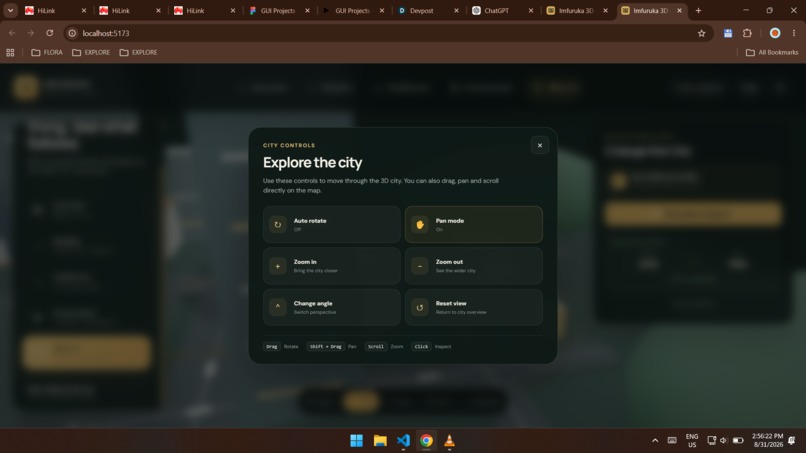
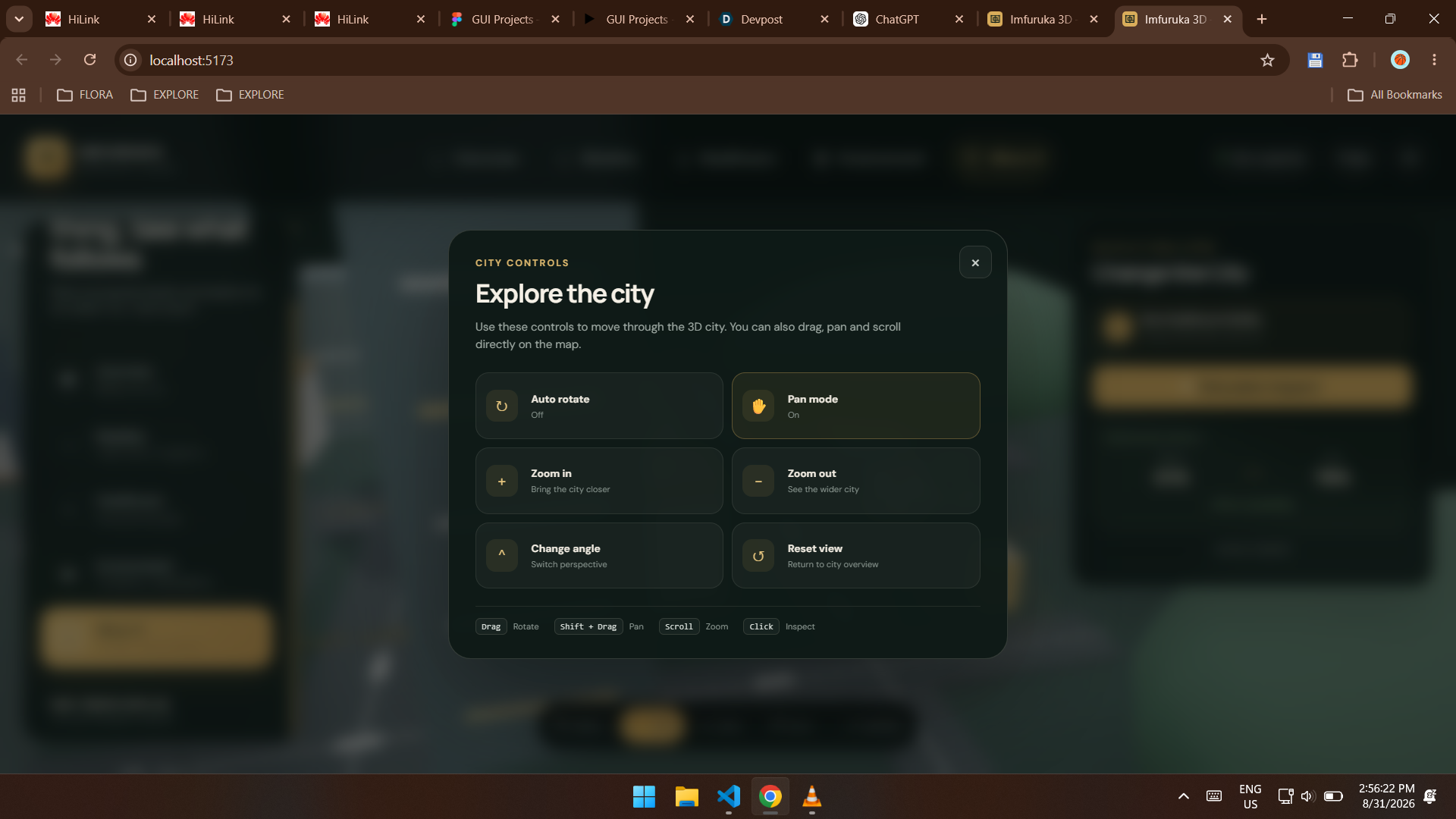
Imfuruka 3d - Help or support
-
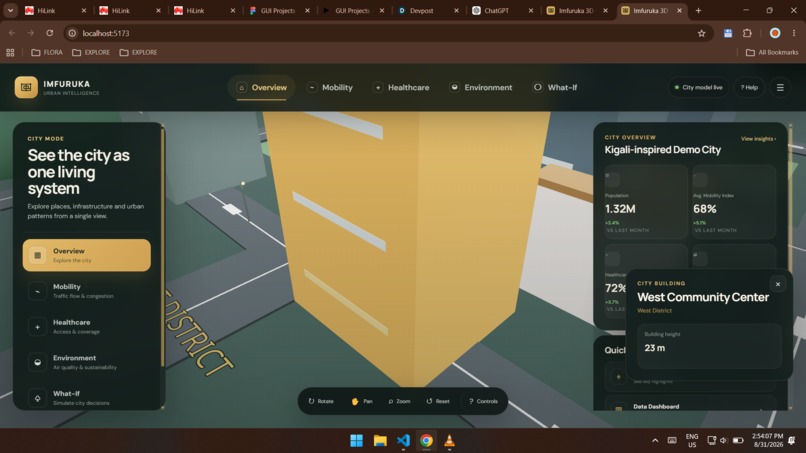
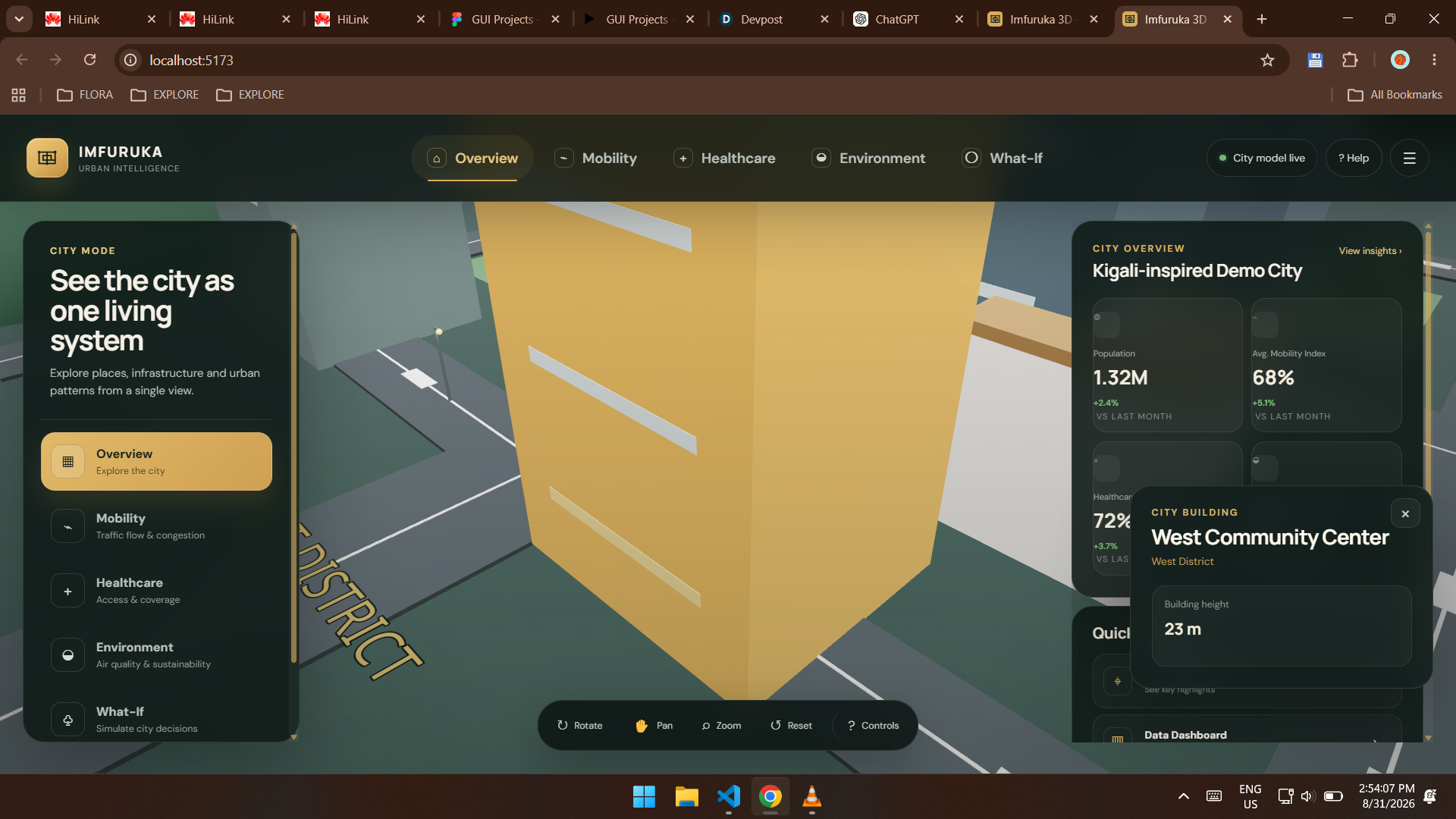
Imfuruka 3d - Selected building
-
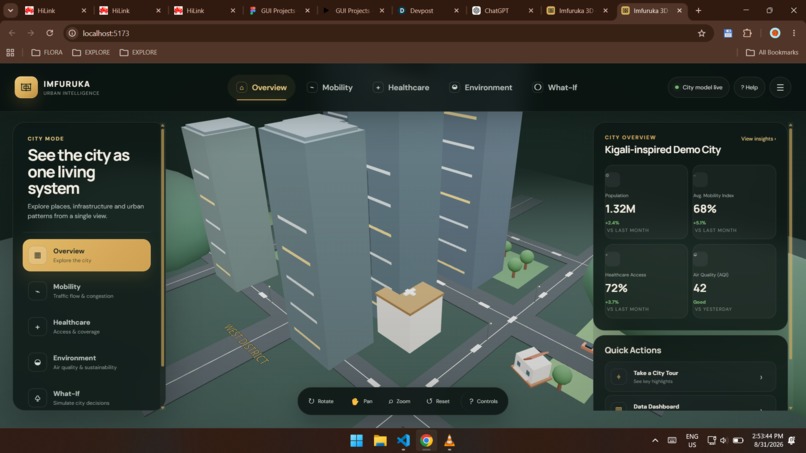
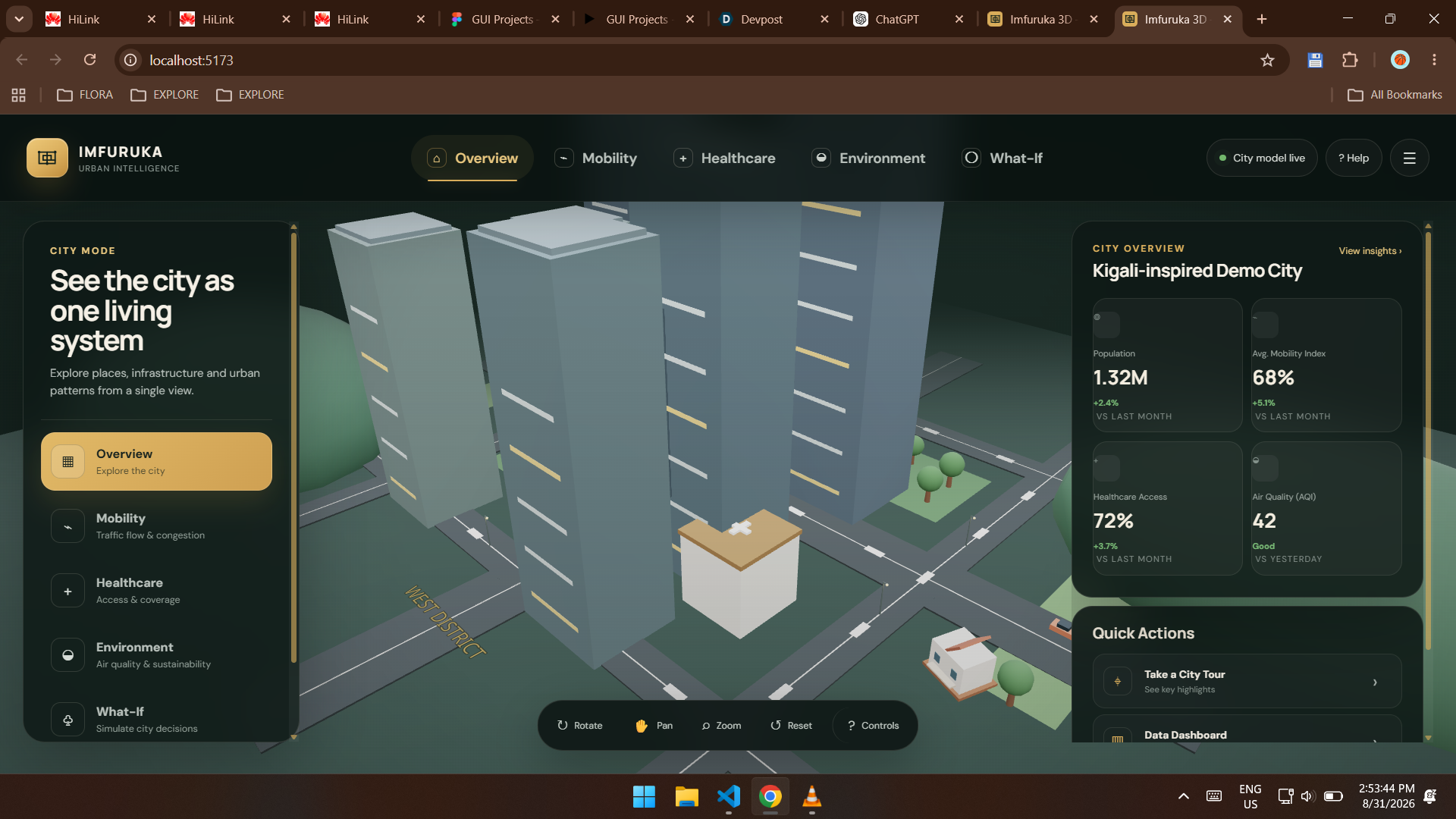
Imfuruka 3d - City Overview
-
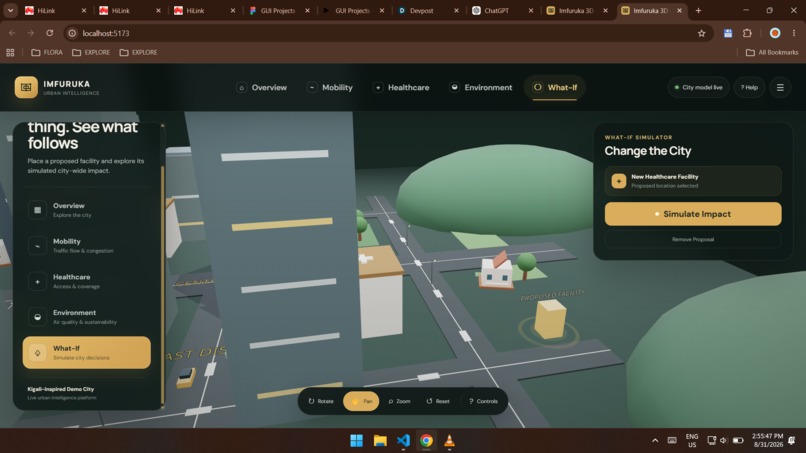
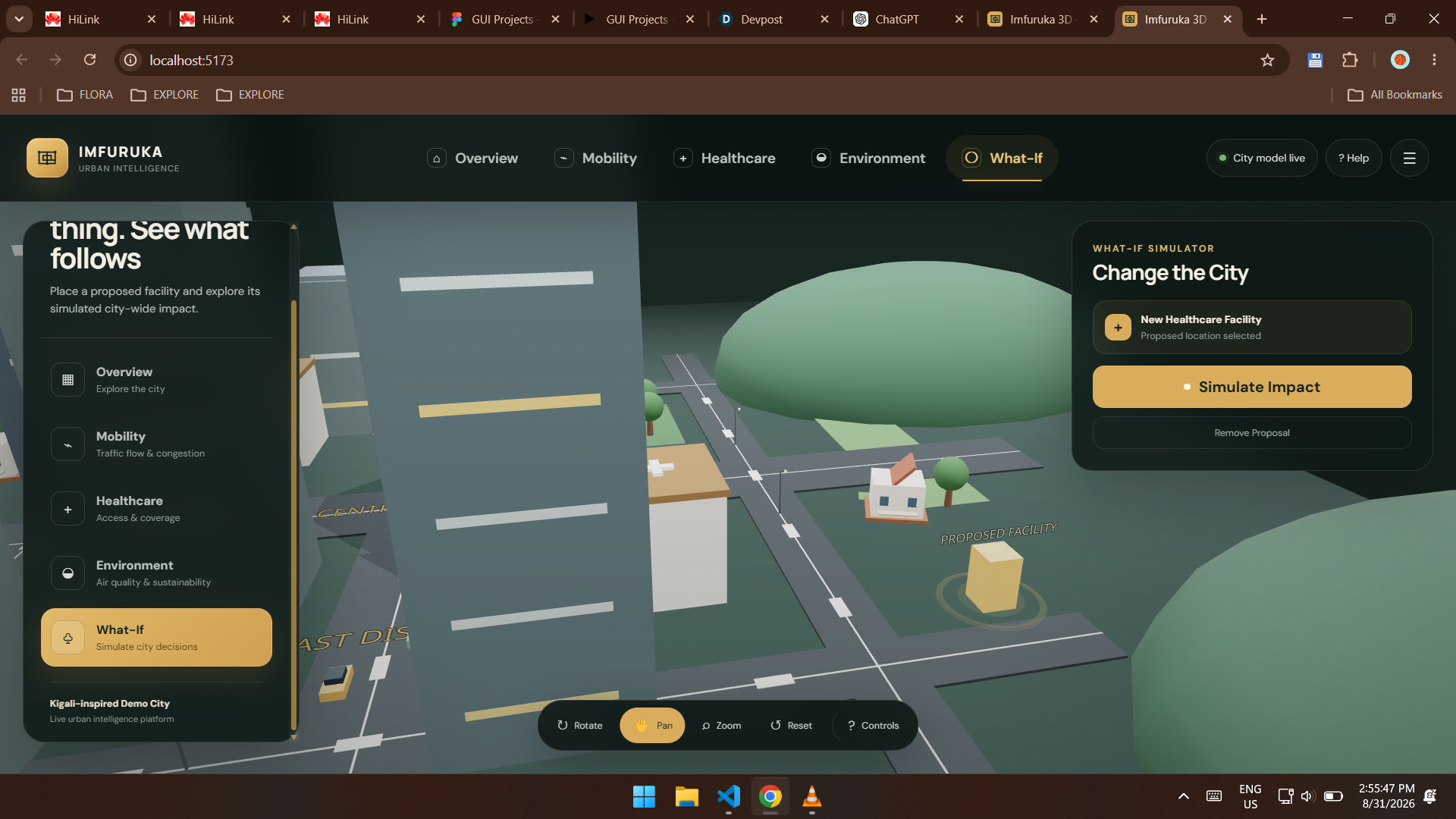
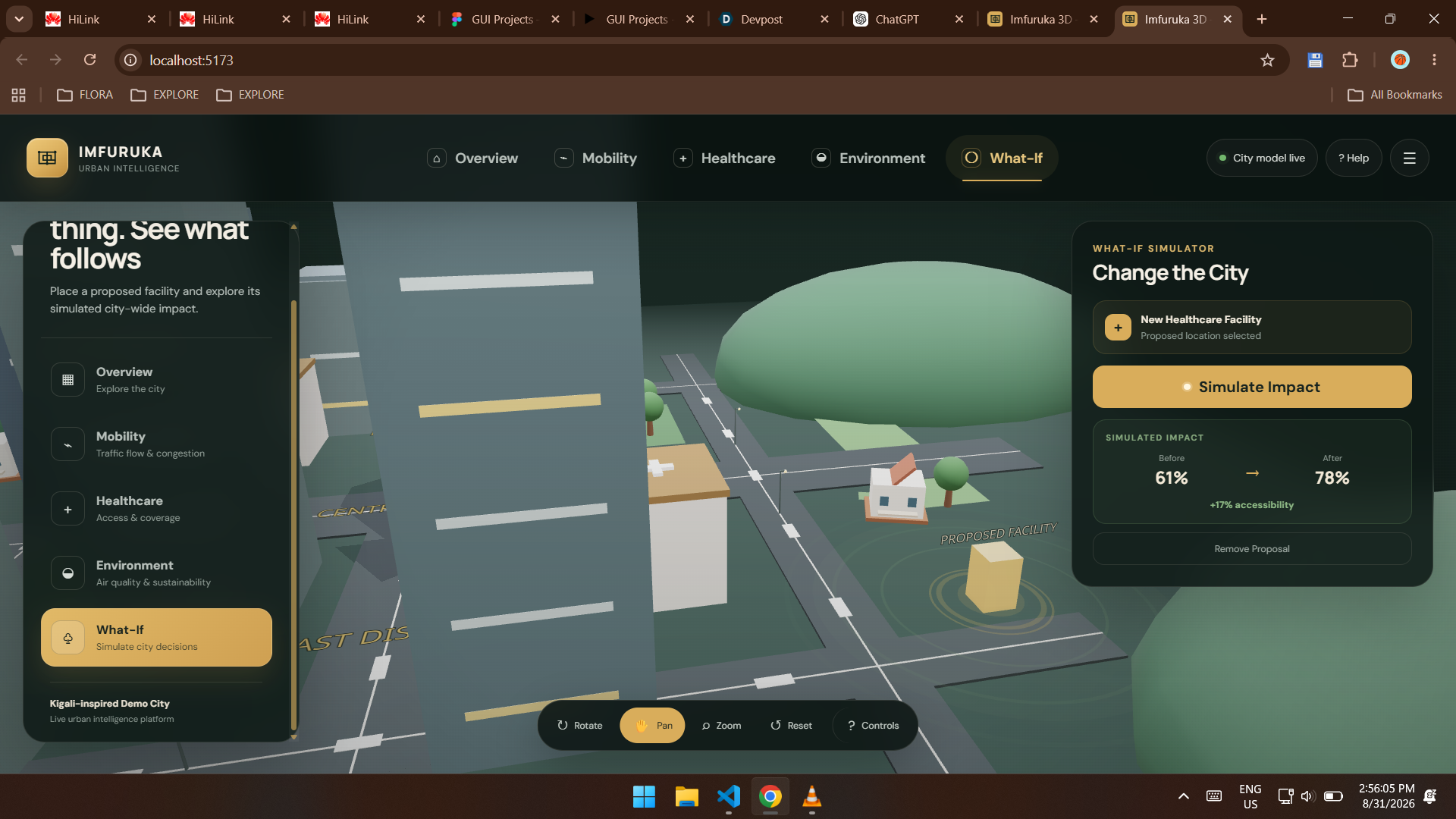
Imfuruka 3d - What-if Simulation
-
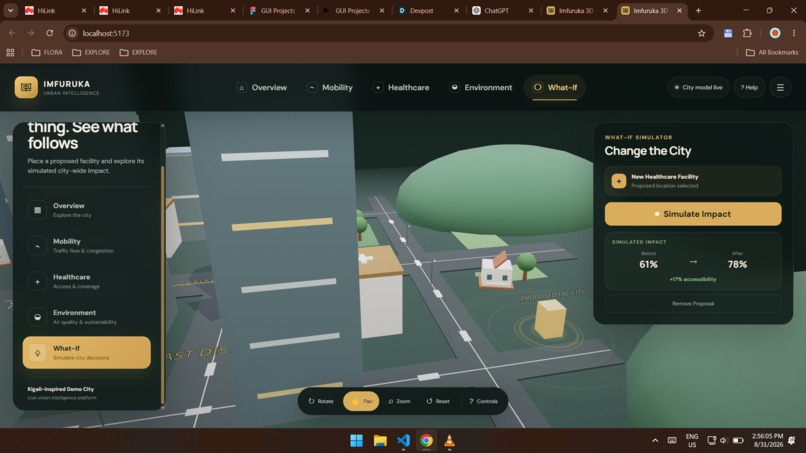
Imfuruka 3d - Simulated Impact
-
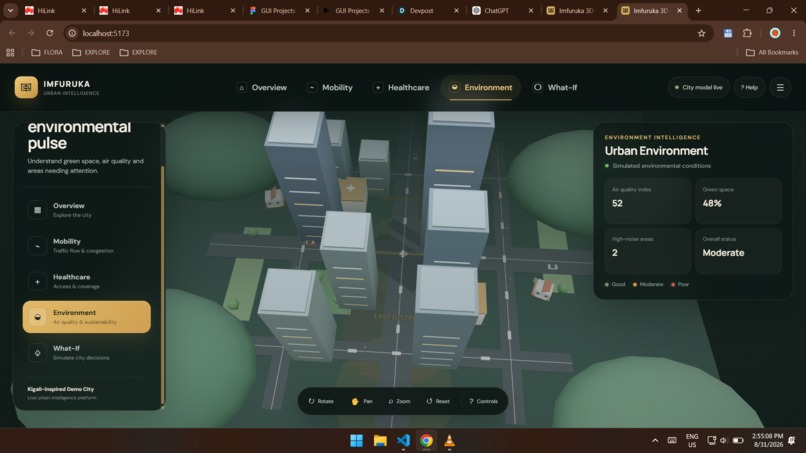
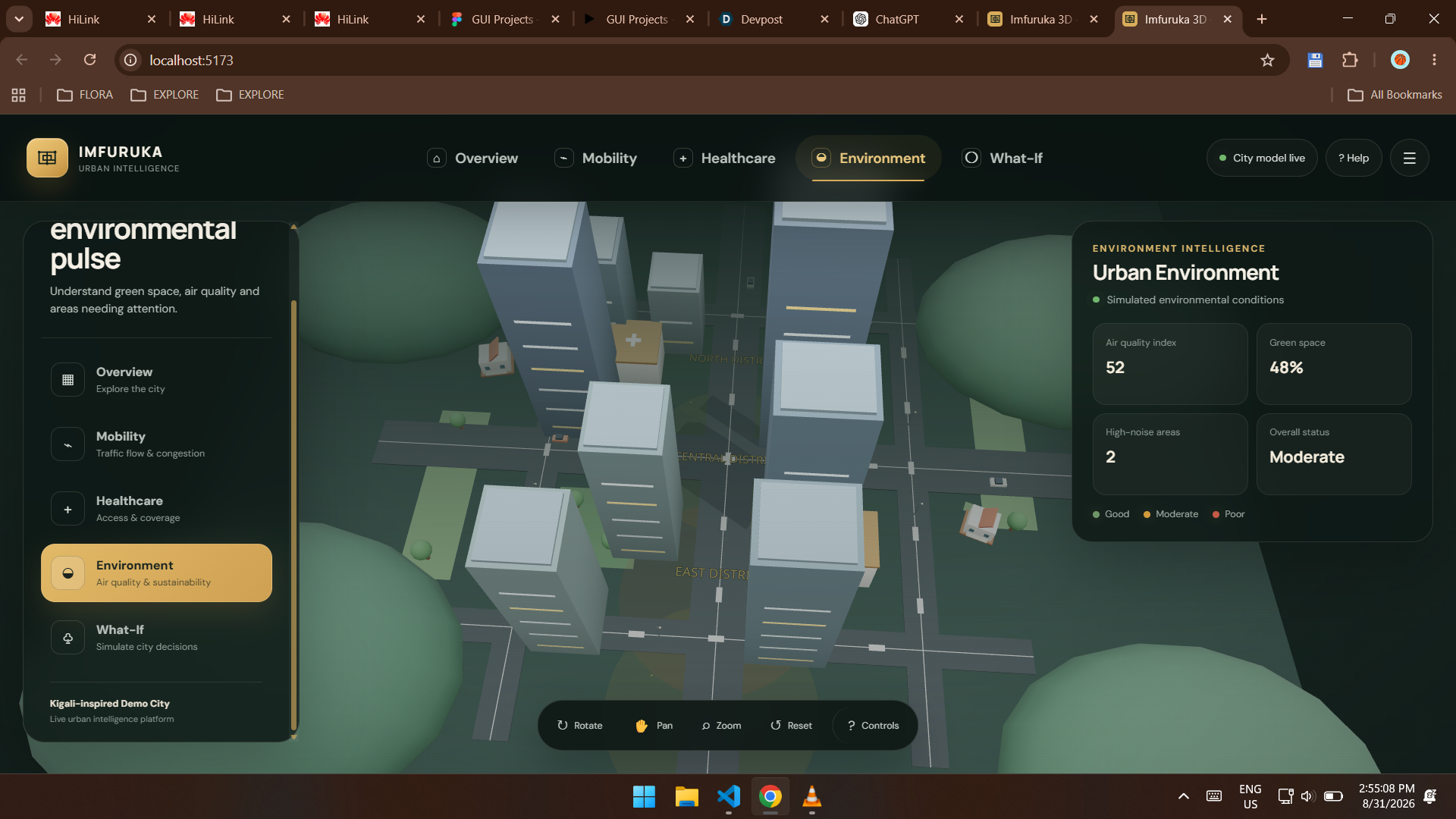
Imfuruka 3d - City Environment
-
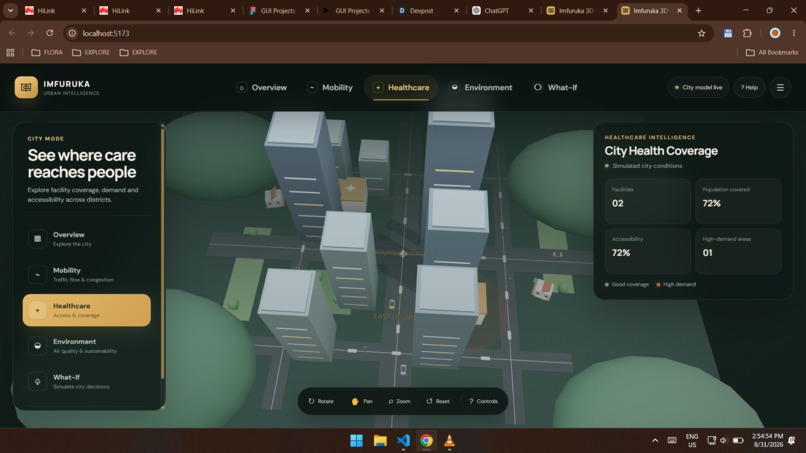
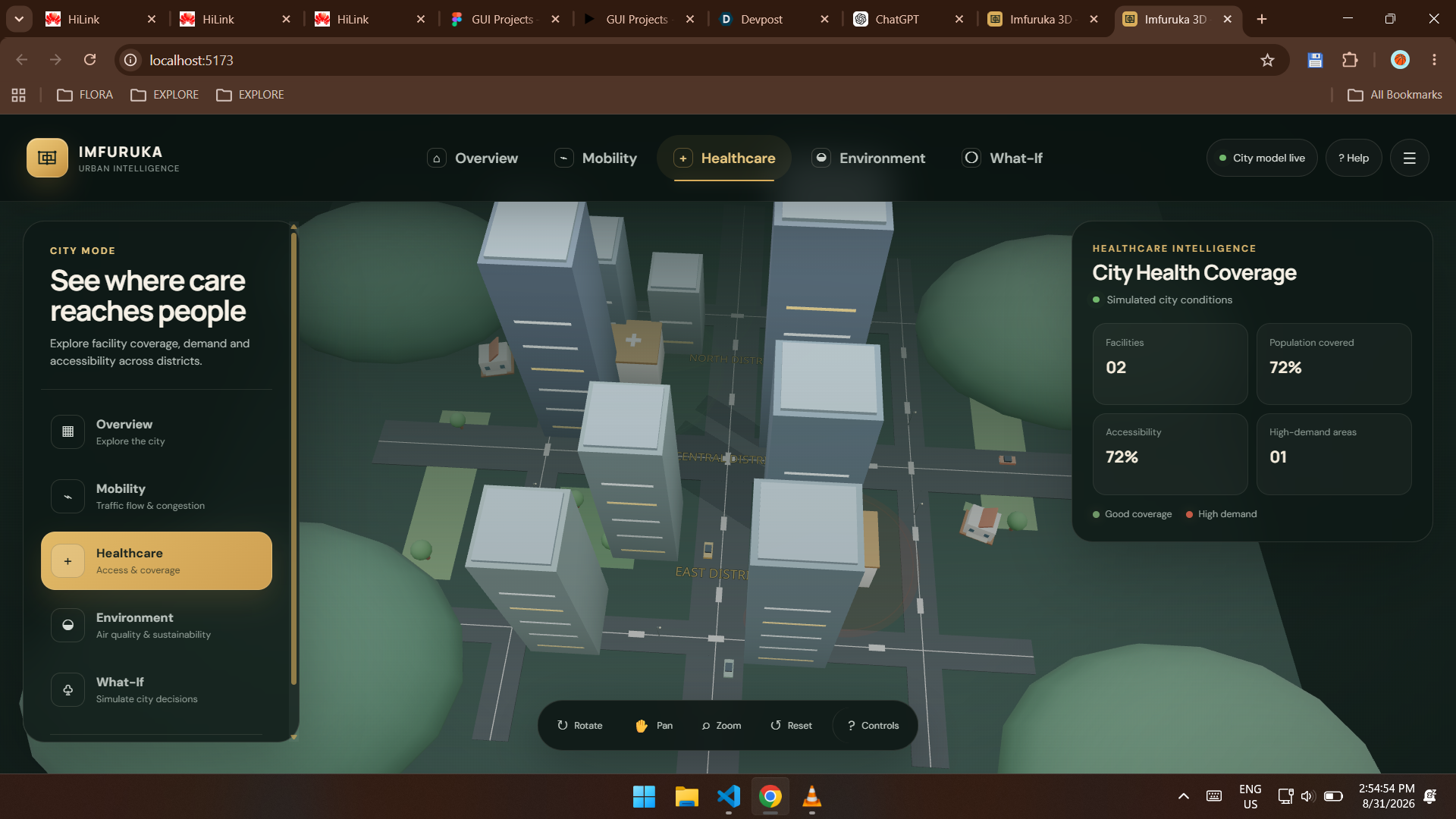
Imfuruka 3d - City Healthcare
-
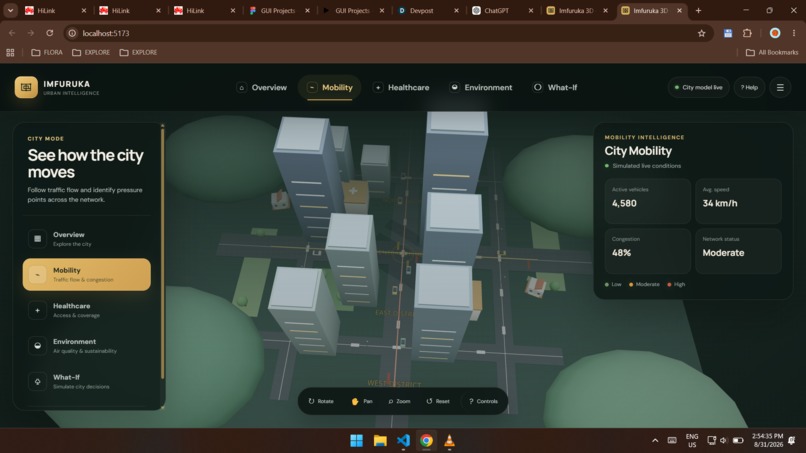
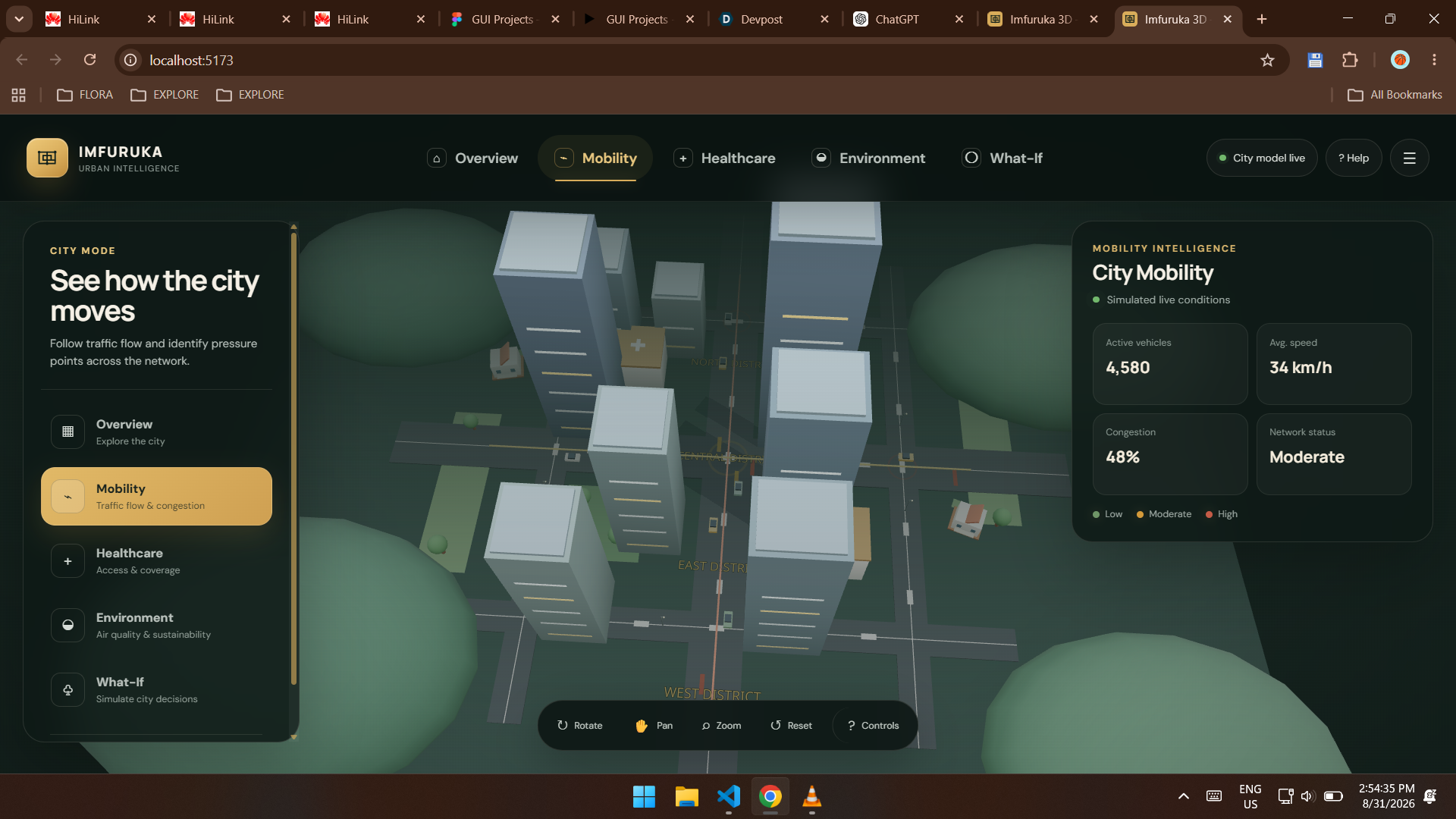
Imfuruka 3d - City Mobility

Imfuruka 3D
What inspired us
Cities are full of connections.
A road can affect emergency response. A change in rainfall can affect infrastructure. The location of a hospital can influence how easily people can access healthcare. Yet, when we try to understand these relationships, we often see them reduced to charts, tables, and disconnected data points.
We wanted to explore a different question:
What if people could actually see how a city responds to change?
That question inspired Imfuruka 3D — an interactive 3D urban simulation that lets users explore a city from different corners, experiment with changes, and understand how urban systems interact.
The name Imfuruka comes from the idea of exploring different corners or parts of a place. For us, it represents more than physical exploration: it represents discovering the connections that make a city work.
Why 3D?
We didn't want to add 3D simply because this was a 3D website hackathon.
We wanted 3D to be part of the solution.
A traditional dashboard can tell you that traffic increased, a healthcare facility is under pressure, or an area has higher environmental risk. But a 3D environment allows users to see where those changes happen and interact with them spatially.
In Imfuruka 3D, the city becomes the interface.
Users can explore the environment, select urban systems, change conditions, and watch the simulated city respond.
Our core interaction became:
Explore → Change → Simulate → Understand
How we built it
We designed Imfuruka 3D as a browser-based interactive experience.
The frontend is built around a 3D city environment, with the interface layered around it rather than treating the 3D scene as a simple background.
We created simplified urban systems for the prototype, including:
Mobility — simulated traffic and congestion Environment — simulated rainfall and environmental effects Healthcare — simulated facility demand and accessibility What If? — an interaction for testing possible changes AI City Analyst — an AI layer that interprets simulation results and explains what happened
The simulation produces structured information about the city's state. The AI then uses that state to provide contextual explanations and possible interventions.
This separation was important to us because we didn't want the AI to be a chatbot attached to a 3D scene simply. Instead, the AI is connected to the simulation and acts as an interpreter of what the user is seeing.
What we learned
One of our biggest lessons was that 3D does not automatically make a project better.
It is easy to add a 3D model, animations, and visual effects. The harder question is:
Why does this experience need to be 3D?
That question influenced many of our design decisions.
We learned to use 3D where spatial relationships matter and to keep the interface simple enough that the user can focus on the city itself.
We also learned about the importance of balancing visual ambition with browser performance. A city can quickly become expensive to render when it contains too many detailed models and animations, so we had to think about simplified geometry, efficient rendering, and keeping the experience responsive.
Most importantly, we learned to think about simulations as stories of cause and effect rather than just collections of numbers.
Challenges we faced
One of our biggest challenges was deciding how much of a city to simulate.
We initially imagined a much larger system with many urban variables, real-world datasets, advanced prediction, and a highly detailed city. That quickly became too ambitious for a focused hackathon project.
We therefore narrowed the experience to a smaller set of interactions that could demonstrate the core idea effectively.
Another challenge was making the AI meaningful.
We didn't want users to ask an unrelated chatbot questions while looking at a city. Instead, we designed the AI around the simulation itself: what changed, where did it change, what could it affect, and what might be worth investigating?
We also had to balance visual quality with performance. A beautiful 3D environment is not useful if it becomes slow or difficult to interact with.
What we hope Imfuruka 3D demonstrates
Imfuruka 3D is a prototype, not a replacement for professional urban planning systems or a claim to predict real-world city behaviour.
Instead, it explores an idea:
Complex urban systems can become easier to understand when people can see, manipulate, and experience their relationships.
We hope Imfuruka 3D shows how the web can move beyond static pages and dashboards toward interactive environments where users don't just consume information — they explore it, experiment with it, and understand it.
See every corner. Understand every connection.
Welcome to Imfuruka 3D.


Log in or sign up for Devpost to join the conversation.