-
-
-
-
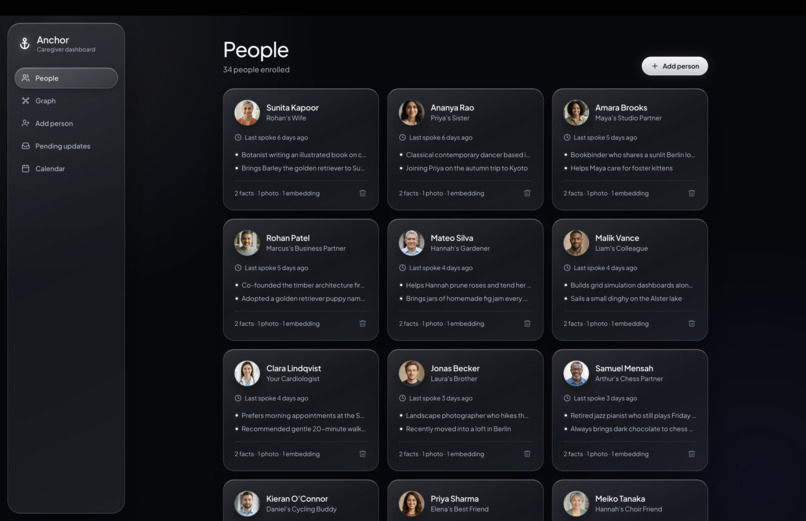
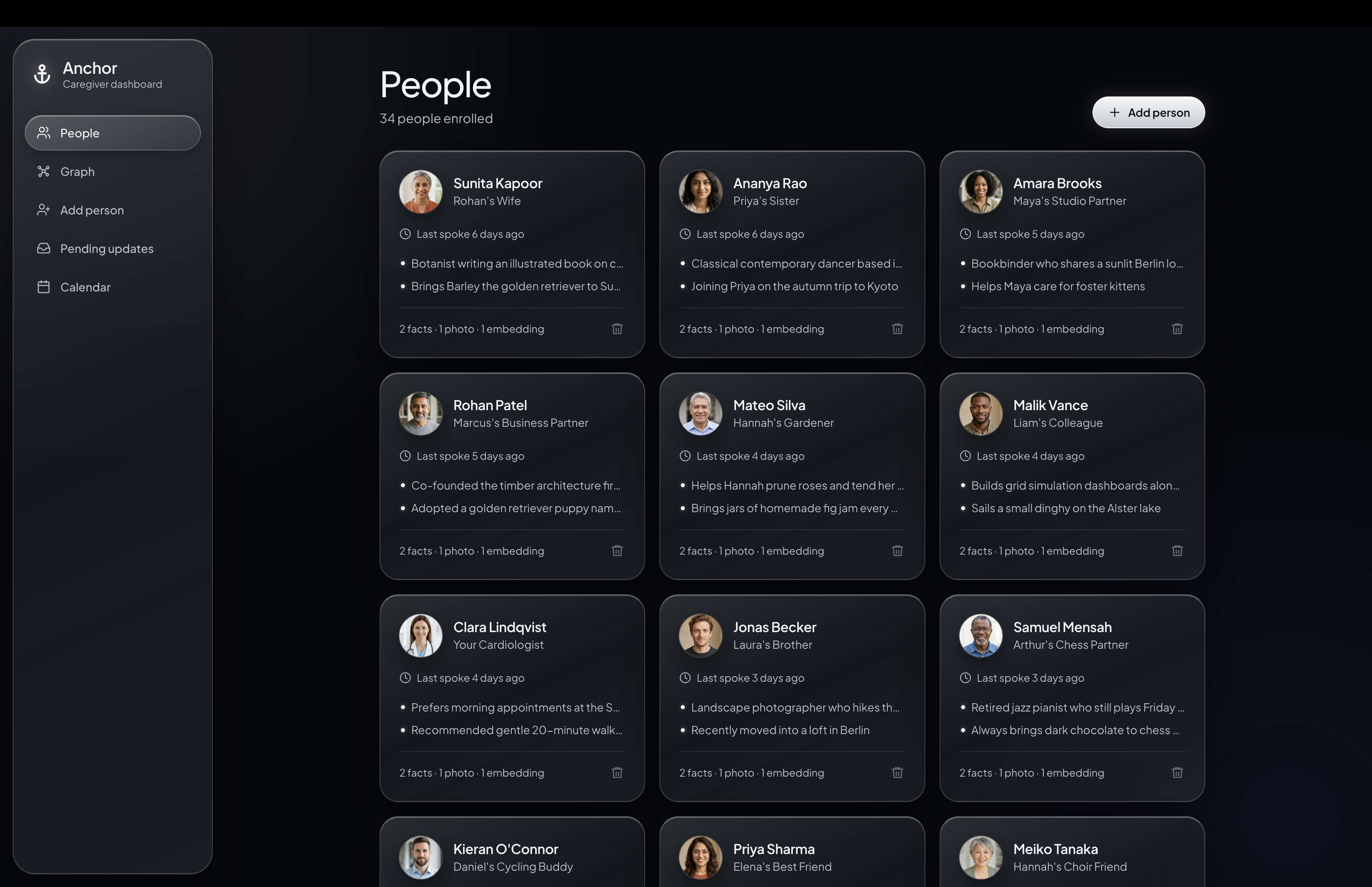
Database of all the people you know, updated manually or automatically
-
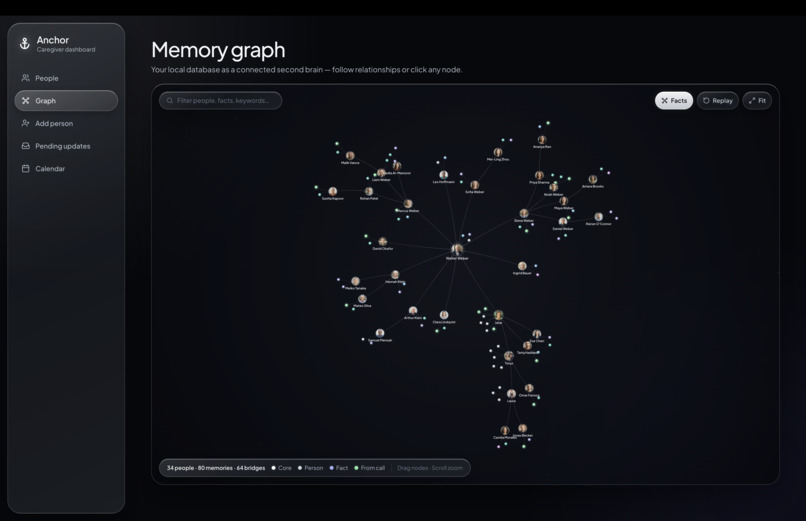
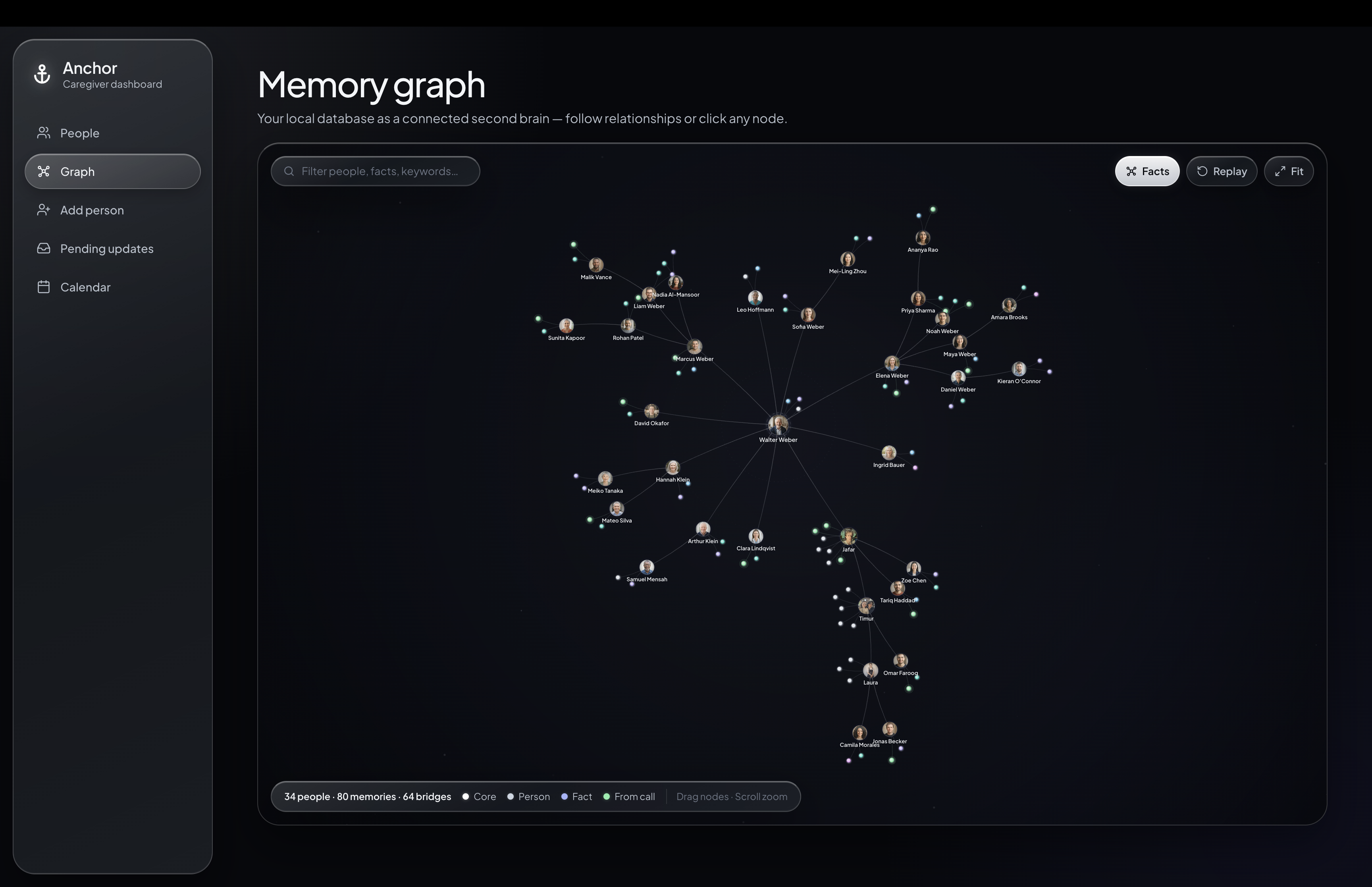
Your second brain, helping you to remember what is important
-
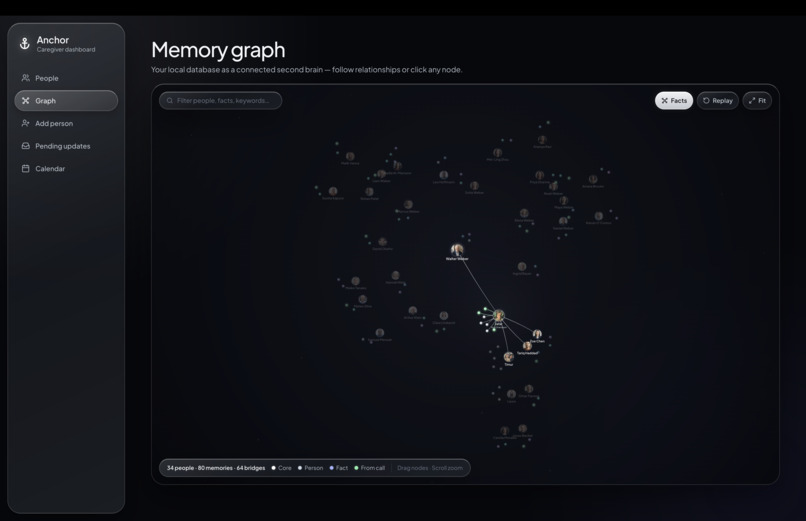
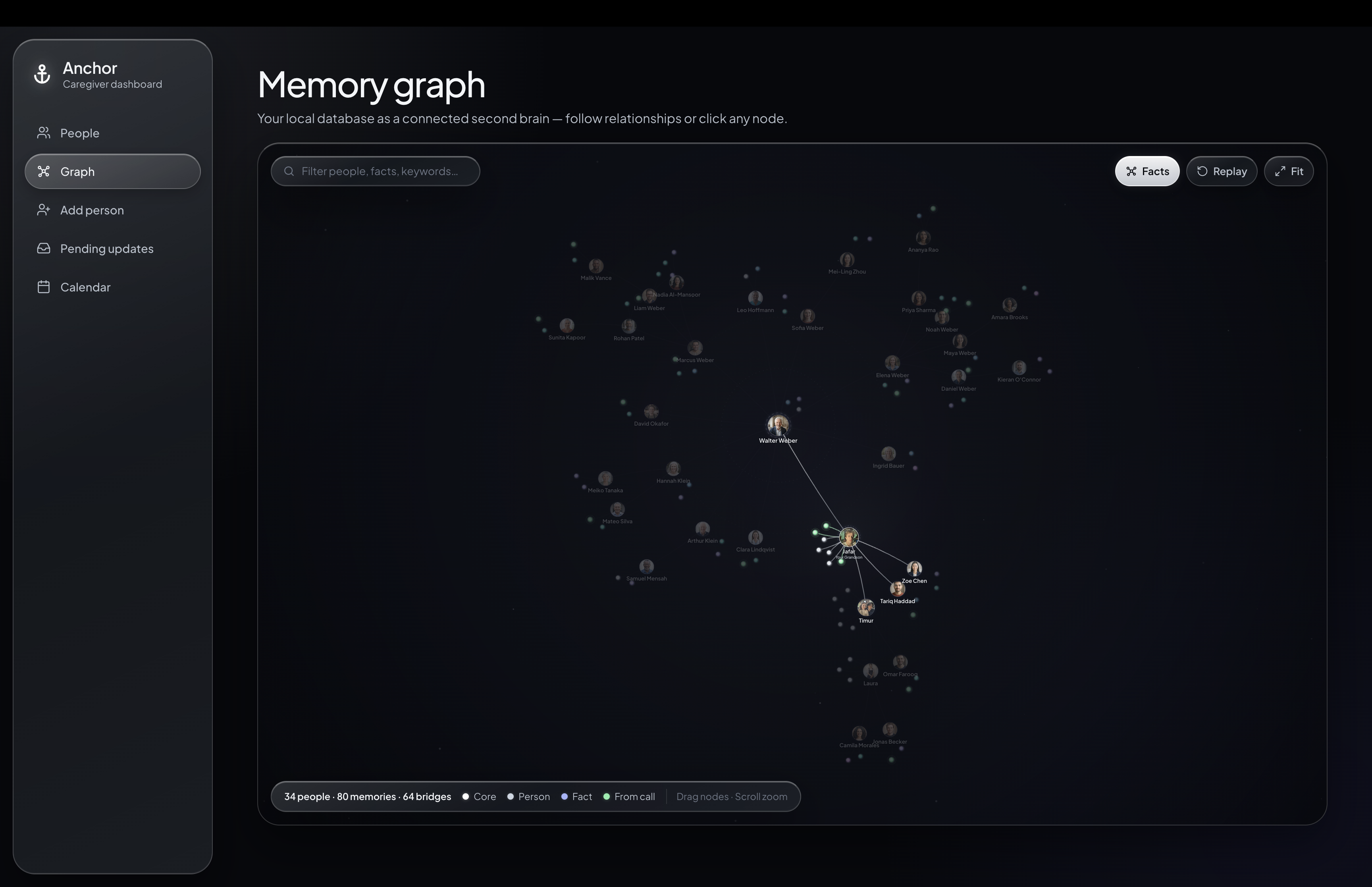
See the connections to everyone
-
Secure. Fast. Private. Free
Inspiration
57 million people live with dementia worldwide, 1.8 million of them in Germany. In the early stages, many still live at home and want to take part in conversations. What slips away first are the small things: a name, how you know someone, the story they told you last week.
Most technology for older adults is static (photo albums, reminder apps you have to open) or built for the caregiver. None of it helps in the moment, when someone is right in front of you and you can't place them. We asked: what if the right information just appeared on its own, exactly when it's needed?
What it does
Anchor quietly gives people living with dementia the information they need, right when they need it:
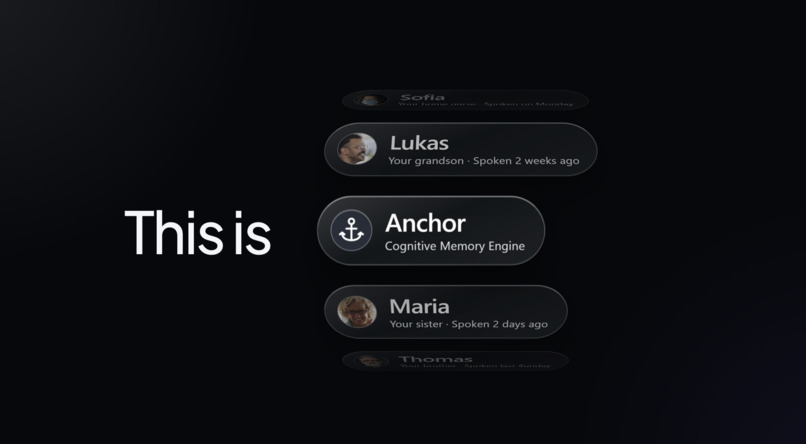
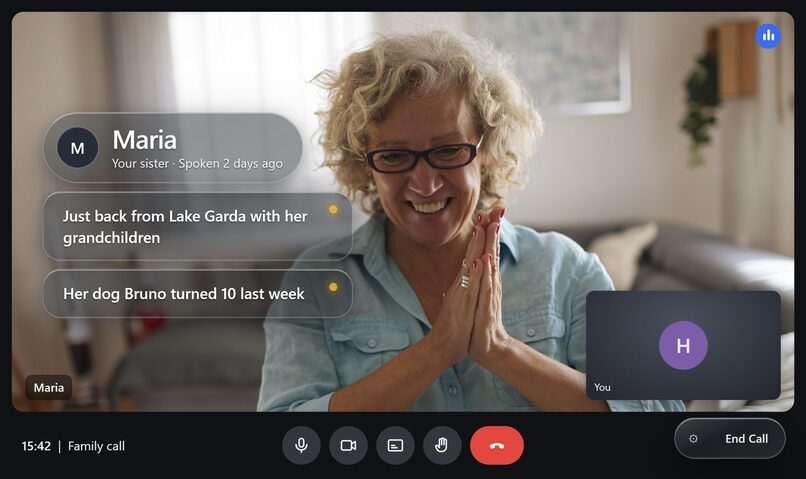
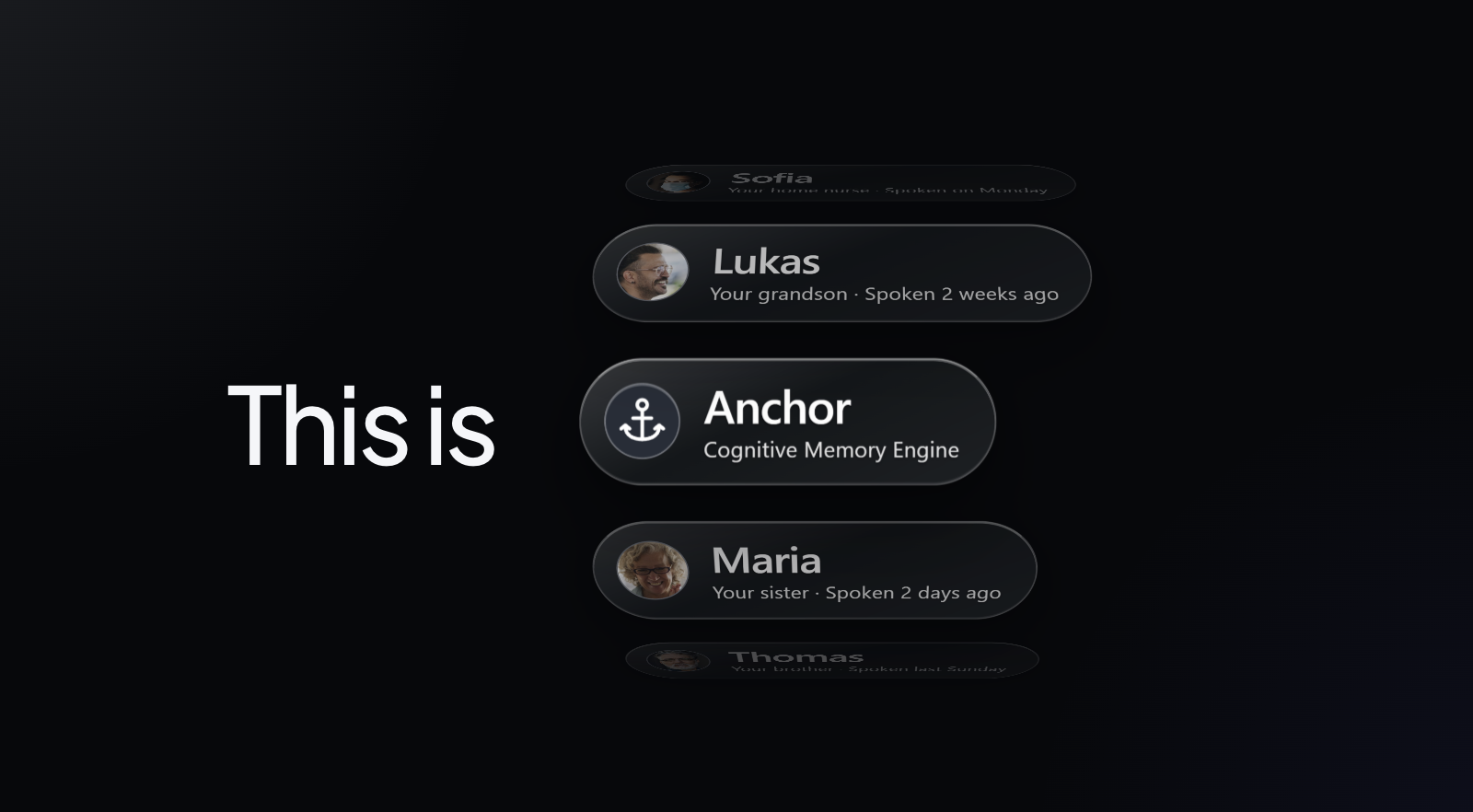
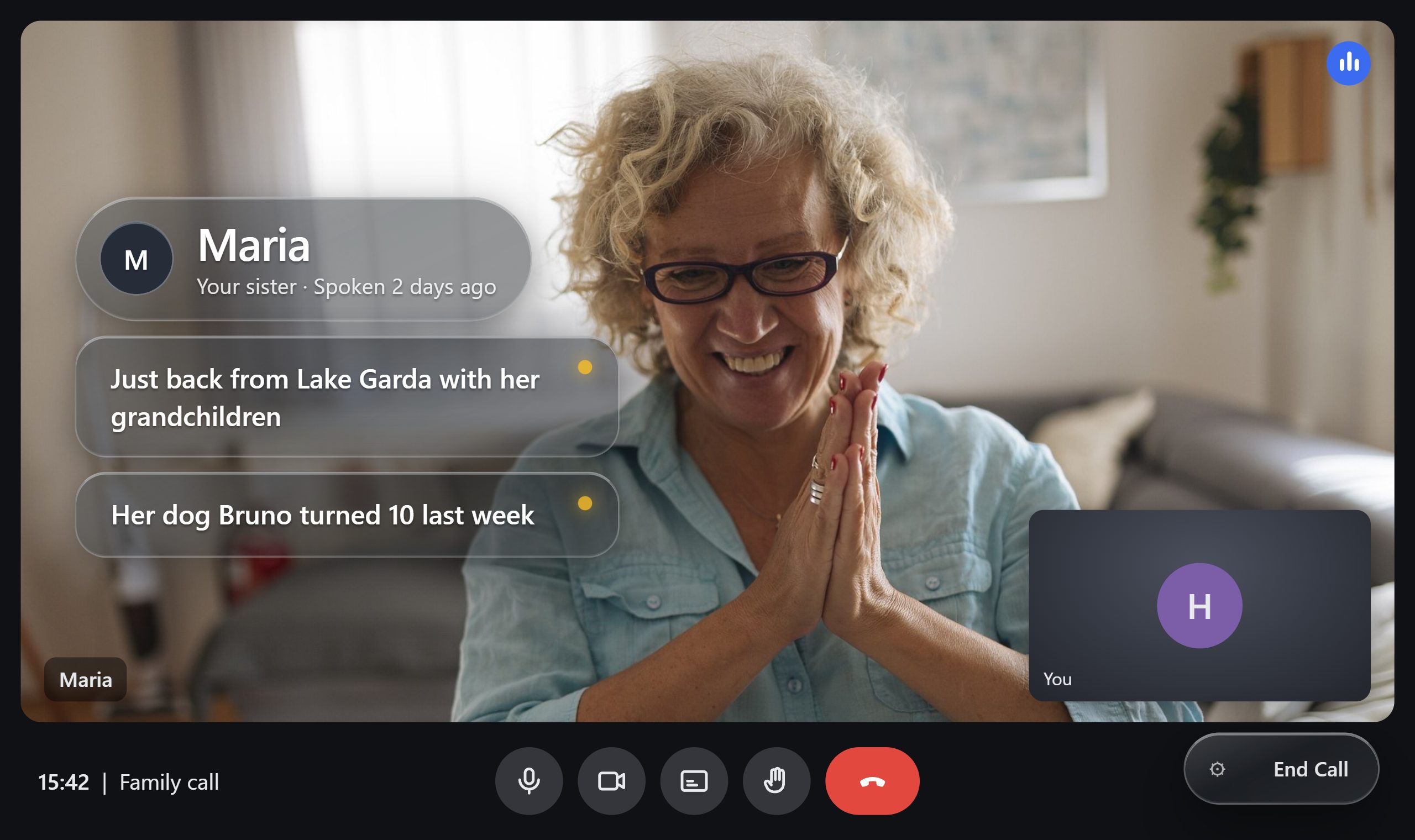
- Who's there: a soft card next to the person's face with their name, the relationship and when you last spoke.
- What matters: when a family member mentions a topic like "Bruno", a card appears: "Her dog Bruno turned 10 last week", with a photo.
- Gentle reminders: birthdays and shared memories, shown when the right person appears.
Family members set everything up in a simple dashboard. After a conversation, Anchor suggests new facts it heard, and a family member approves each one before it's saved. Everything runs 100% on the device. There's no cloud and nothing is recorded, and face photos are deleted right after enrolment.
In our demo, Anchor runs on top of a Google Meet call.
How we built it
- Engine (Python, FastAPI): InsightFace for face recognition, NVIDIA Parakeet for live speech recognition and a local LLM (Ollama) for suggestions after the conversation. Data is stored in SQLite on the device.
- Chrome extension: captures the call and shows a calm "glass" overlay that smoothly follows the person's face.
- Caregiver dashboard: plain HTML/JS, served by the engine.
Our most important rule is to never guess a name: Anchor shows a name only when it's clearly confident. Otherwise it shows nothing.
Challenges we ran into
- Chrome's tab capture is fragile: the capture stream IDs work only once, and capturing a tab mutes its audio.
- GPU libraries conflicted with each other, so we designed everything to run on an ordinary CPU.
- Early versions of live speech recognition were slow and inaccurate until we benchmarked the models and switched to Parakeet.
- Keeping the overlay calm instead of flickering over live video.
Accomplishments that we're proud of
- It works end to end in a real call: a face brings up a name, a spoken word brings up a memory.
- 100% local: no image, sound or transcript ever leaves the device.
- Family members stay in control: AI only suggests, people decide.
What we learned
- For people living with dementia, what you don't show matters as much as what you do. One calm card at a time.
- Small, phone-sized models are enough when they do one narrow job well.
- Privacy has to shape the design from day one.
What's next for Anchor
- Phone and smart glasses, so Anchor can help in face-to-face conversations.
- Feedback from dementia organisations and caregivers before we build further.
- Free distribution through non-profits like the Deutsche Alzheimer Gesellschaft.
Built With
- chrome
- css3
- fastapi
- github
- google-meet
- html5
- insightface
- javascript
- numpy
- nvidia-parakeet
- opencv
- pytest
- python
- qwen
- sqlite
- uvicorn
- websockets


