-
-
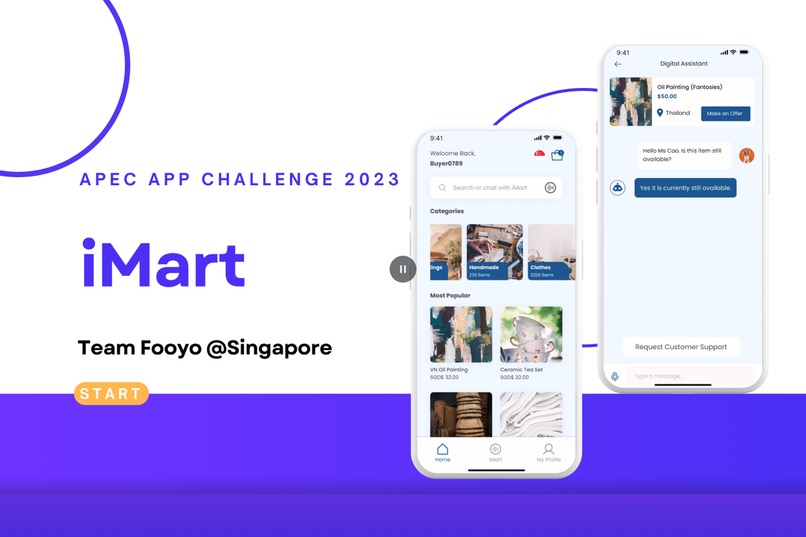
Banner
-
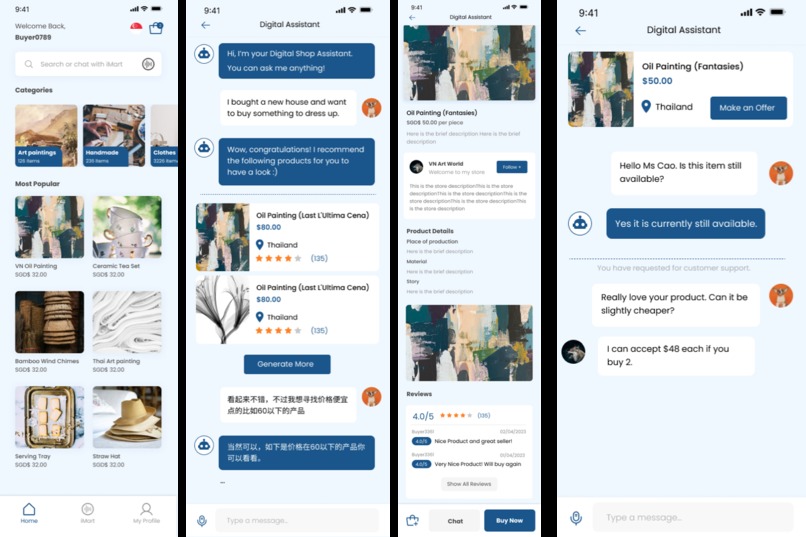
Product screenshots
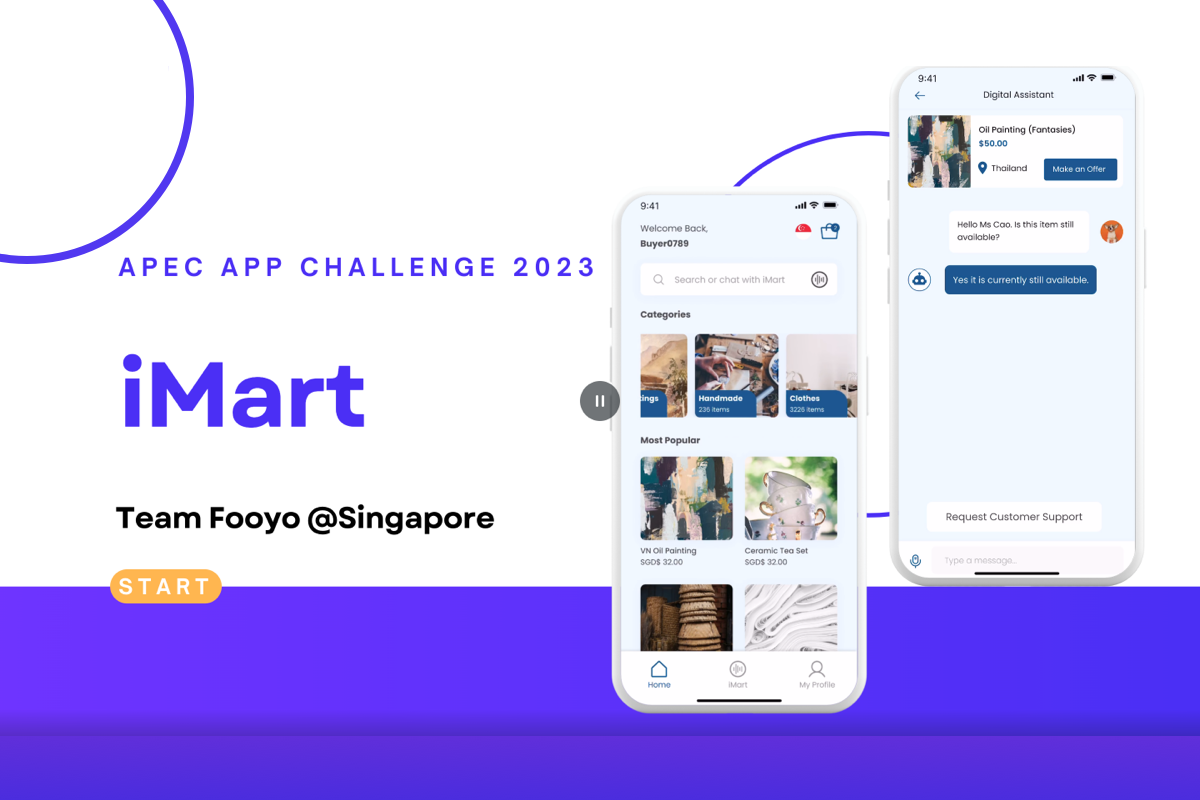
Inspiration
Linda is an individual business owner in Thailand, who owns a local tableware shop. She faces limited market exposure due to the absence of a digital channel to showcase and promote its traditional tableware products. This results in missed opportunities to sell to interested buyers worldwide. Language barriers and limited resources further hinder these small shop owners' ability to communicate and expand their businesses. With over 150 million MSMEs in the APEC region, there is a pressing need to help shop owners like Linda sell their products globally.
The need for a solution arises from the significant untapped potential for small businesses to engage in international trade. Digitally-enabled trade can lower the costs of internationalization, facilitating connections between MSMEs and global customers. This solution is crucial for underserved communities, remote areas, and rural regions, as it provides an opportunity for economic growth and market expansion.
The current situation in APEC economies reveals a lack of digital channels for micro small and medium enterprises (MSMEs) to showcase and promote their products internationally. Many small business owners, like Linda, who sells traditional tableware in Thailand, are limited to local customers and face barriers of language and limited resources. There is a need for a solution that enables MSMEs to access global markets, leveraging digital platforms and reducing the costs associated with international trade.
What it does
iMart is an innovative eCommerce marketplace designed specifically for Micro, Small, and Medium Enterprises (MSMEs) to sell their products directly to overseas buyers and distributors. This digital marketplace harnesses the power of Artificial Intelligence (AI) and the sophisticated language model ChatGPT to streamline the process and make international trade easy and hassle-free.
Features:
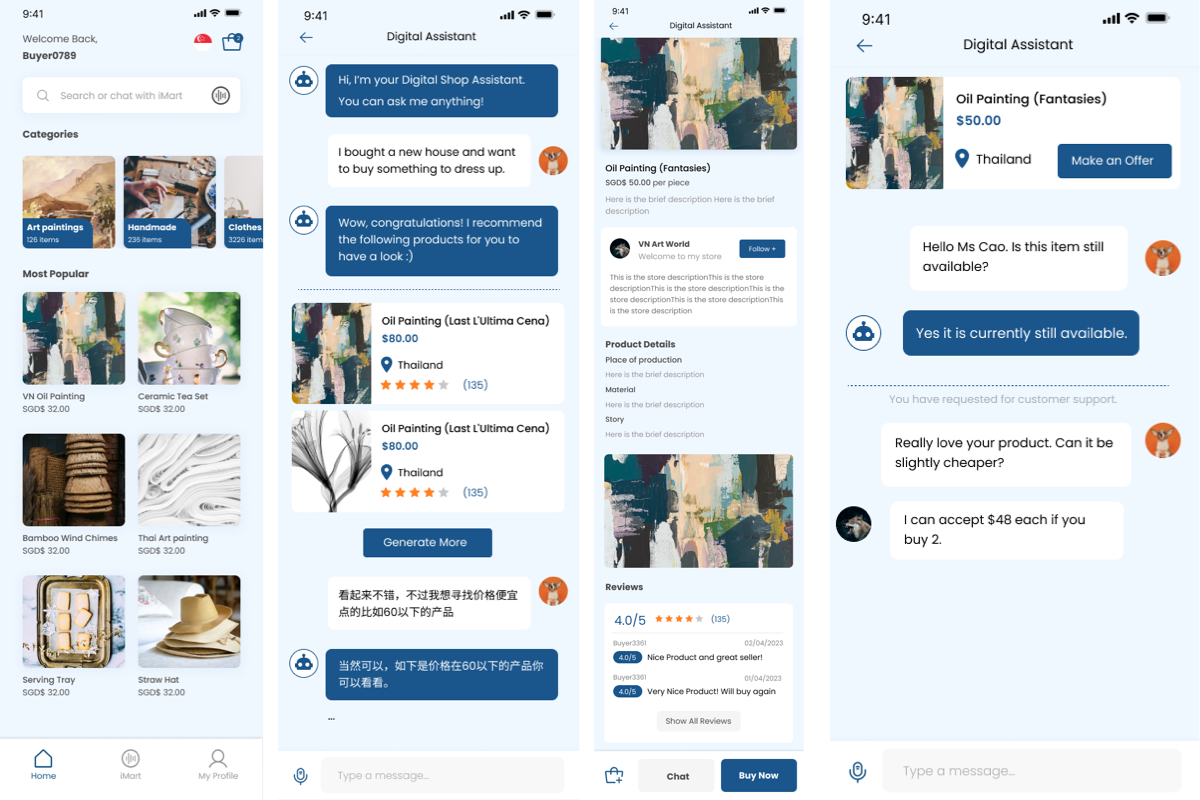
Product Search: The iMart platform features an easy-to-navigate homepage with a comprehensive listing of products for convenient browsing. For users who are uncertain about their needs, the iMart Digital Assistant provides intelligent recommendations tailored to individual preferences, leveraging the power of AI. This "Smart Recommendation" system assists users in discovering products that meet their needs.
Product Enquiry: iMart promotes direct communication between buyers and sellers or the iMart Digital Assistant. Language barriers are no longer an issue, thanks to the automatic translation feature that supports multiple languages, promoting inclusivity. Users can seek further clarification from the shop owners directly, and even negotiate prices and place orders with ease.
Customer Support: The iMart Digital Assistant is online 24/7, providing uninterrupted customer support. Users can also interact with the sellers for follow-ups and future transactions even after the completion of an order, thereby fostering long-lasting business relationships.
With iMart, MSMEs across APEC countries, including artisan shops, can establish direct connections with international buyers and distributors. This global reach was previously a challenging task for these enterprises due to linguistic and logistical barriers.
By harnessing AI and ChatGPT, iMart removes these obstacles, enabling seamless interactions between buyers and sellers regardless of their geographic location or language. This leads to increased business opportunities and the potential for MSMEs to expand their customer base globally.
Additionally, the 24/7 customer support and user-friendly interface make the platform accessible and easy to use, promoting a positive and efficient shopping experience for both buyers and sellers.
Overall, iMart leverages digital technologies to empower MSMEs, promote inclusivity, and create a marketplace that facilitates international trade, connecting businesses and customers like never before.
How we built it
We used Figma to do the wireframe and visual design. link
iMart was developed using NodeJS in the backend, with ChatGPT as the generative AI engine. The OpenAI audio-to-text API is used to support audio input. link
The frontend was developed in Vue.js, and takes the data from the backend through RESTful API. link
Challenges we ran into
We have a list of features intended to get developed, but due to the short timeline, we can only focus on a few of them. We prioritised the features and rearranged the timeline.
Accomplishments that we're proud of
- The team managed to create the MVP from zero to one in less than a week's time.
- We successfully integrated the Audio-to-text API and the ChatGPT API, which will be very useful and provide inclusiveness to the users of the system.
- The team managed to create the complete design workflow in Figma and showed great teamwork during the whole process.
What we learned
- Try to use more cloud collaborative tools, such as Figma and Canva, which can make teamwork more efficient.
- Remember to turn to the Mentors for advice, who will share good suggestions on ideation, execution, prioritisation, etc.
- Cheer up, the initial idea may not work or may not be feasible. Iterate, discuss, validate, and rework.
What's next for iMart
We have developed a Minimum Viable Product during this one-week APEC innovation challenge. It’s simple to scale up and reach large groups of MSMEs. Roadmaps to further improve the solution:
Improve operation process for product management, such as using image processing to upload products automatically
Smarter and more personalised recommendation algorithm based on multiple credentials such as product ratings, sellers’ credibility, sales and popularity
Complete flow for price negotiation and ordering process
Accessibility considerations such as screen readers for product descriptions for the visually-impaired users
Built With
- chatgpt
- node.js
- openai
- postgresql
- restfulapi
- vue.js

Log in or sign up for Devpost to join the conversation.