Inspiration
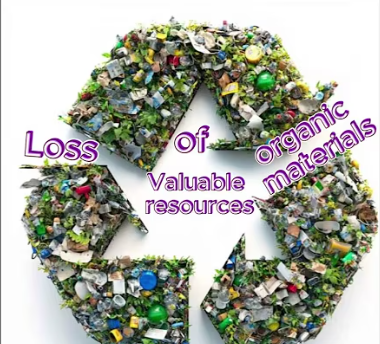
We were inspired by the growing industrial waste problem in Rwanda and globally, where most waste is not properly sorted or monitored. Less than 13.5% of industrial waste is recycled, and valuable materials like plastics, metals, and organic matter are often lost.
We also noticed that organic waste is left to decompose without control, releasing harmful gases like methane. This motivated us to design a smarter system that not only manages waste but turns it into a resource.
Our vision is a Rwanda where industrial waste is no longer a burden, but a source of value in a circular economy.
What it does
IMARI is a smart industrial waste management system that automatically sorts mixed waste into plastic, metal, and organic categories using sensors and mechanical components.
Organic waste is sent to a controlled decomposition chamber that monitors temperature, humidity, and gas levels to speed up compost production safely and efficiently.
The system also includes a real-time digital dashboard that displays bin levels, sorting performance, and system activity. This allows industries to track waste data and improve efficiency.
How we built it
IMARI is designed using a combination of hardware and software systems:
A conveyor system that moves incoming waste Servo motors that sort waste into different bins Sensors that detect and monitor waste conditions An Arduino microcontroller that processes sensor data A backend system that receives and organizes data A web/dashboard interface that displays real-time analytics
We also designed a system architecture for future integration of IoT and renewable energy (solar power).
Challenges we ran into
One major challenge was designing a system that could reliably sort mixed industrial waste with limited resources and hardware constraints.
Another challenge was integrating multiple components (sensors, microcontroller, and dashboard) into one unified system while ensuring real-time communication between them.
We also faced difficulties in balancing technical complexity with simplicity so the system could be scalable for both small and large industries.
Accomplishments that we're proud of
We are proud that we successfully designed a complete end-to-end smart waste management solution that combines automation, IoT, and data analytics.
We achieved a working system concept that can sort waste automatically and monitor composting conditions in real time.
We also developed a clear roadmap from simulation to real-world industrial deployment, showing that IMARI can scale beyond a prototype.
Most importantly, we are proud that IMARI directly addresses a real environmental problem in Rwanda and contributes to sustainable development goals.
What we learned
We learned that industrial waste management is not just a technical problem, but also an environmental and economic opportunity.
We also gained experience in system design, IoT integration, and thinking about real-world scalability.
Most importantly, we learned that impactful innovation comes from identifying real problems and designing practical, scalable solutions.
What's next for IMARI
Next, we will move from prototype design to full hardware implementation by integrating sensors, servo motors, and microcontrollers into a working physical system.
We also plan to develop real-time data streaming from the hardware to the dashboard for live monitoring in industrial environments.
After that, we aim to test IMARI in real industries in Rwanda to measure its impact on waste reduction, recycling efficiency, and compost production.
In the long term, we want to scale IMARI for both small and large industries and support Rwanda’s transition toward a cleaner, smarter circular economy.
Targeted Users
Primary Users Manufacturing industries Food processing industries Factories that generate mixed industrial waste Recycling companies Waste management companies Secondary Users Government environmental agencies Industrial parks Compost production facilities Small and medium-sized industries Environmental organizations Indirect Beneficiaries Farmers (through access to quality compost) Local communities (through cleaner environments and reduced pollution) Rwanda Environment Management Authority (REMA) and other environmental regulators Future generations through improved environmental sustainability Ideal User
An industry that produces significant amounts of mixed waste and needs an automated, data-driven system to sort waste, reduce landfill disposal, improve recycling efficiency, and convert organic waste into valuable compost
Built With
- arduino
- conveyorsystem
- javascript
- node.js
- react
- sensors
- servomotors

Log in or sign up for Devpost to join the conversation.